

Nothing announces a modern tiny house like matte black standing seam siding — until low sun rakes across the wall and the flat panels turn into a funhouse mirror. That waviness has a name, a cause, and a cure. This guide breaks down metal siding oil canning: why panels ripple, which specifications prevent it, and the installation habits that keep a tiny house exterior looking crisp, flat, and architectural for years.
1. At a Glance: Oil Canning in Brief
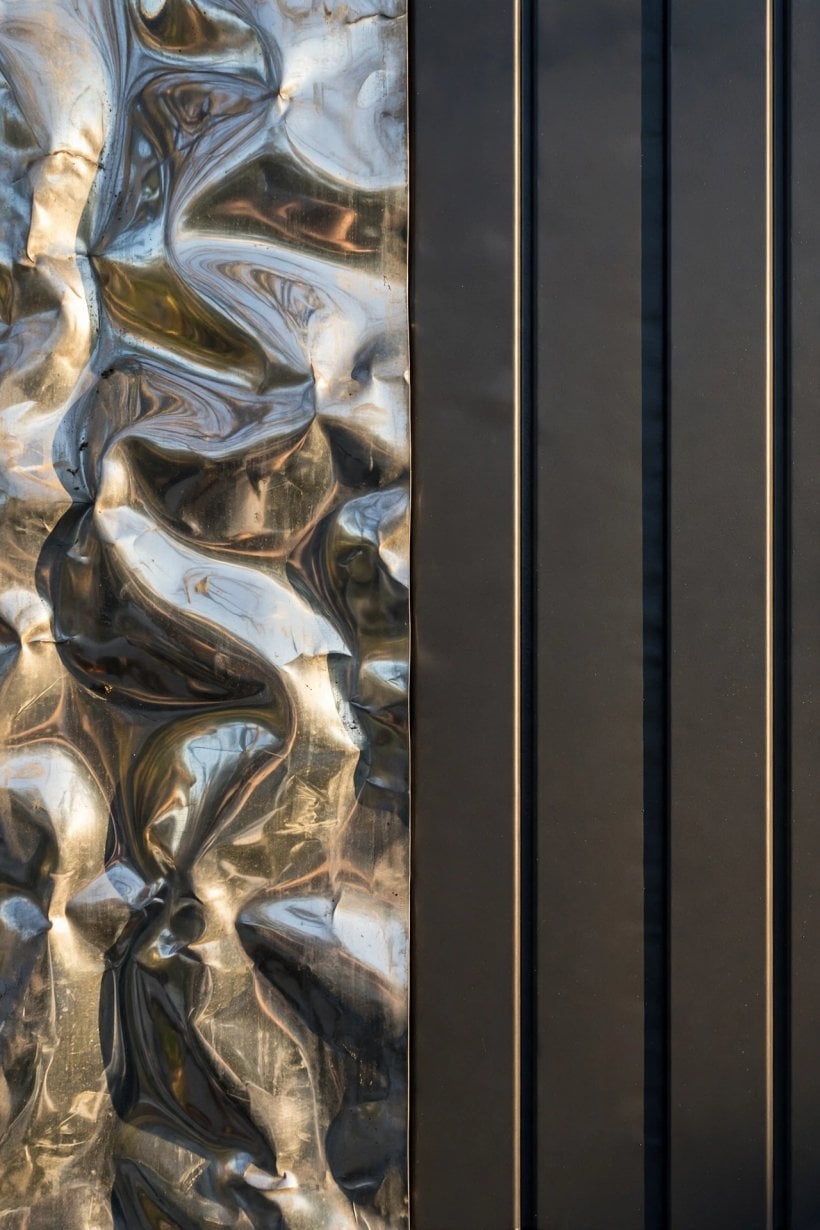
Oil canning is the visible waviness in the broad, flat areas of metal panels, most obvious when sunlight strikes the wall at a shallow angle. It is an inherent characteristic of flat metal formed into wide pans, not a material defect, and it does not mean the siding has failed: the wall still sheds water. What suffers is the clean, sharp look that made you choose metal. Because a tiny house is always viewed at eye level and arm’s length, even slight waviness reads loudly. The good news: almost every cause of oil canning can be designed out before the first panel goes up.
| Cause | What it does | The counter-move |
|---|---|---|
| Thermal expansion with nowhere to go | Sun-heated metal grows; pinned panels buckle outward into waves | Fasten at one fixed point and let the panel float on slotted clips |
| Thin, wide flat pans | Large unsupported flats flex and telegraph every stress as ripple | Choose a heavier gauge and a narrower panel width |
| Uneven substrate | Bumps in framing, sheathing, or wrap force the panel to follow them | Plane, shim, and flatten the wall before a single panel is hung |
| Over-tightened fasteners | Crushed screws pin the metal and concentrate stress around each fixing | Drive fasteners snug, never crushed, and centre them in the slot |
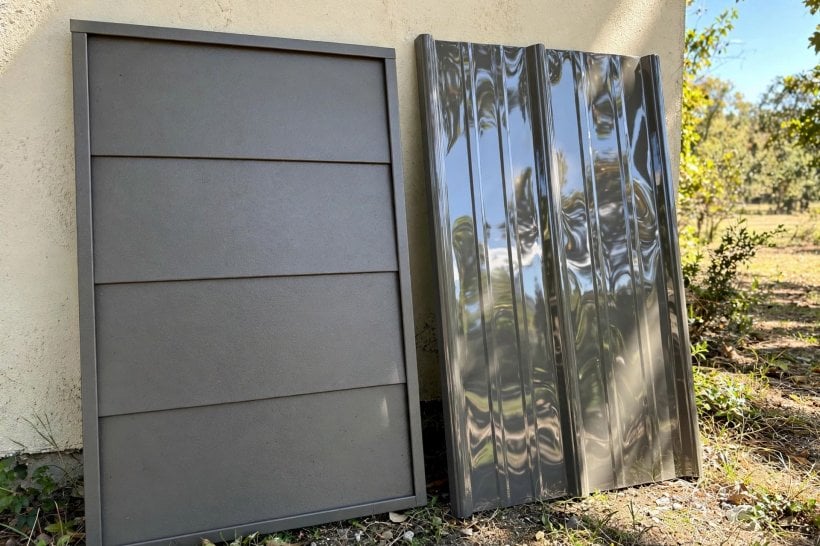
| Glossy finish and dark colour | Specular reflections advertise every deviation; dark colours move more with heat | Specify matte or textured finishes that scatter light instead |
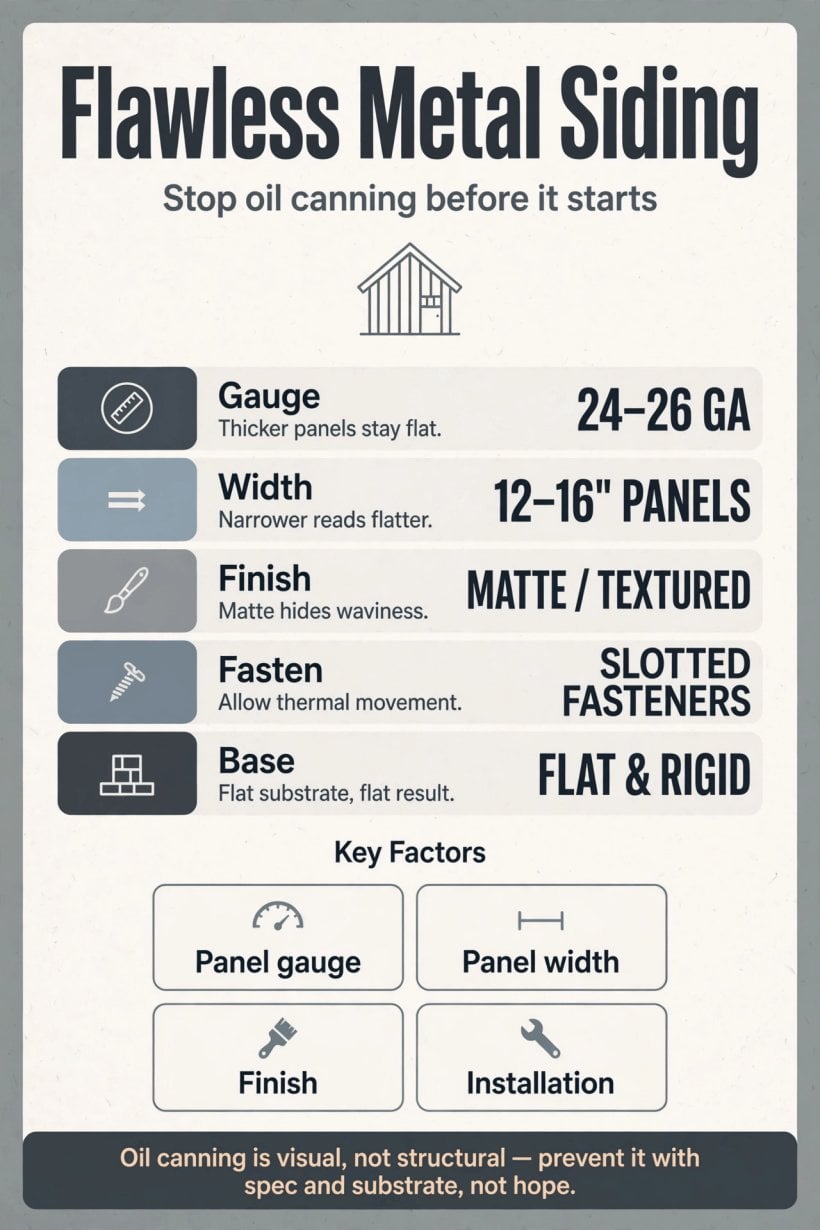
The five levers that decide whether a metal wall stays flat: gauge, width, finish, fastening, and the base beneath it all.
2. What Oil Canning Is and Why It Happens
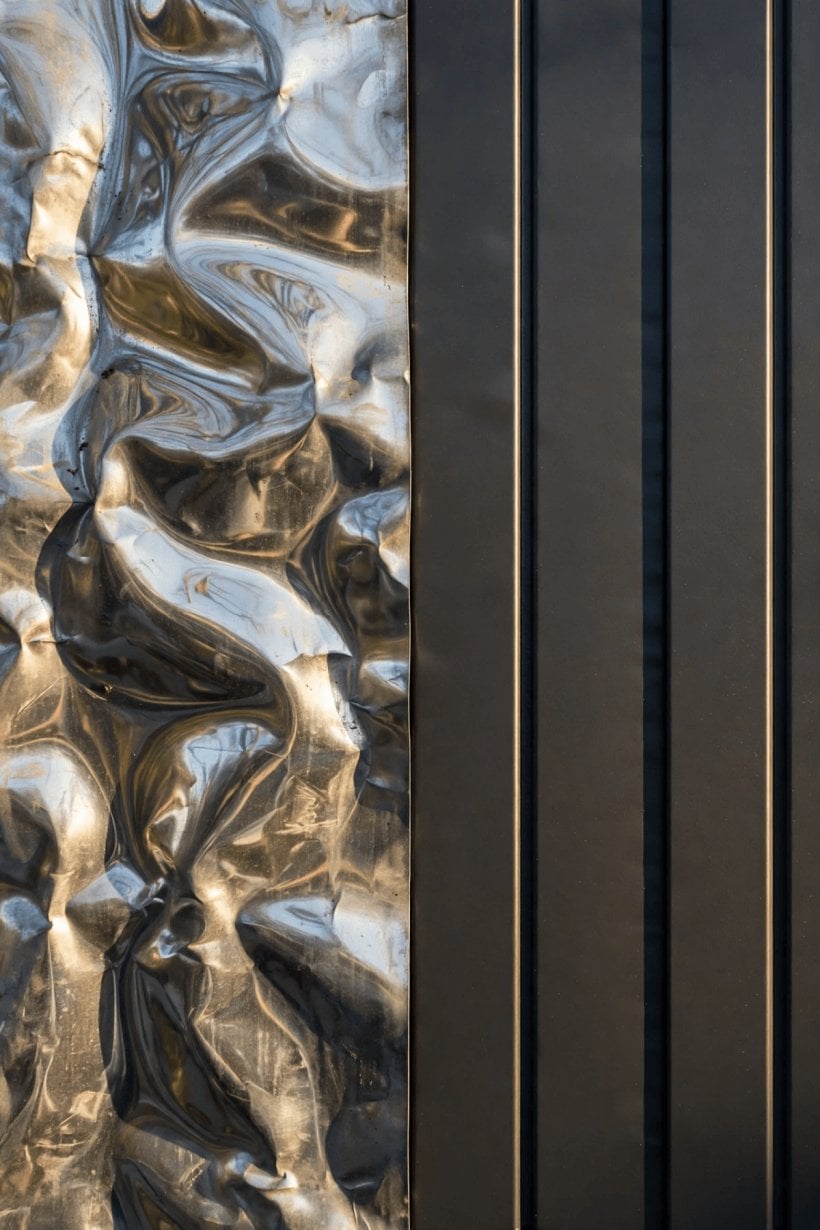
Start with the physics. Sheet metal is not rigid like timber or masonry; it is a thin membrane with a memory of every stress it has carried. Coils are wound under tension and panels are roll-formed through dies, locking residual stresses into the finished sheet. When those stresses meet a wide, flat, unsupported area — the pan between two standing seams — the metal relieves them the only way it can: by bowing slightly in and out. That gentle undulation is oil canning, named after the flexing bottom of an old-fashioned oil can.
Heat is the great amplifier. A sun-baked dark panel on a summer afternoon is measurably longer than the same panel at dawn. If it is free to slide on its clips, that growth is invisible; if it is pinned hard at both ends, or trapped against a bump in the wall, the extra length has to go somewhere, so the flat pan buckles into waves. This is why metal siding oil canning often looks worst at midday and nearly disappears on a cool, overcast morning — the panel has not changed, only the stress inside it has.
Two further forces feed the problem. The substrate: metal faithfully copies whatever lies beneath it, so a crowned stud or a bunched fold of house wrap becomes a permanent ridge in the finished wall. And handling: a panel bent over a shoulder, or dragged across a trailer edge, takes a set that no fastener can pull out. Some minimal waviness is accepted in light-gauge flat metal; the practical goal is not zero movement, but a wall where any residual ripple is too subtle to notice.
3. Panel Gauge and Width: The Two Big Levers
If you change only two things about your order, change these. Gauge is the thickness of the metal, and the scale runs backwards: a lower gauge number means a thicker, stiffer sheet. Thin agricultural-grade panels ripple at the slightest provocation, because there is not enough material to resist the stresses described above. A heavier residential gauge — 24-gauge is the widely used benchmark for quality standing seam work — holds its flatness through handling and shrugs off minor imperfections that telegraph straight through thinner stock. The trade-off is weight and cost, which matter on a house that tows; comparing helps you balance flatness against your trailer’s payload before you commit.
Width is the second lever, and it works by simple geometry. The visible pan is the flat valley between seams; the wider that valley, the more room a wave has to develop and the more light it can bend. A narrower panel — around twelve inches of coverage rather than sixteen or eighteen — subdivides the wall into smaller, stiffer bays too small to host a noticeable ripple. On a tiny house the narrower module also suits the building’s scale: more seams mean more vertical lines, and a wall that reads as intentionally architectural rather than a single sheet hoping to stay flat. When a wide flat pan is unavoidable, ask for stiffening features formed into the pan itself — which is exactly where the next sections lead.
4. Finishes and Colour: Why Matte Forgives
Waviness is only a problem because light reveals it. A glossy finish behaves like a mirror: it reflects the sky, the trees, and the opposite hillside in one continuous image, so the slightest bow in the panel bends that image and your eye catches the distortion instantly. A matte or low-sheen textured finish works the opposite way. Its micro-textured surface scatters light in thousands of directions, breaking the reflection into a soft glow in which small deviations vanish. This is the cheapest insurance in this guide: the same panel, installed by the same hands, looks dramatically flatter in matte than in gloss.
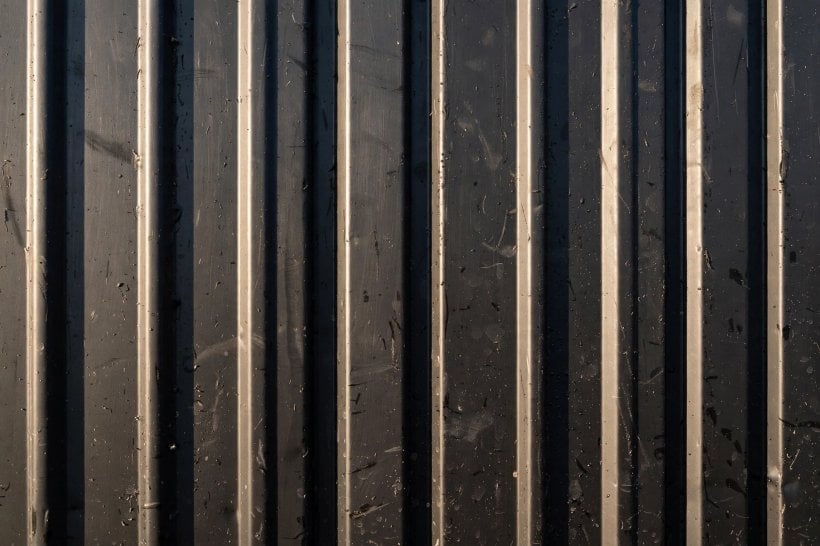
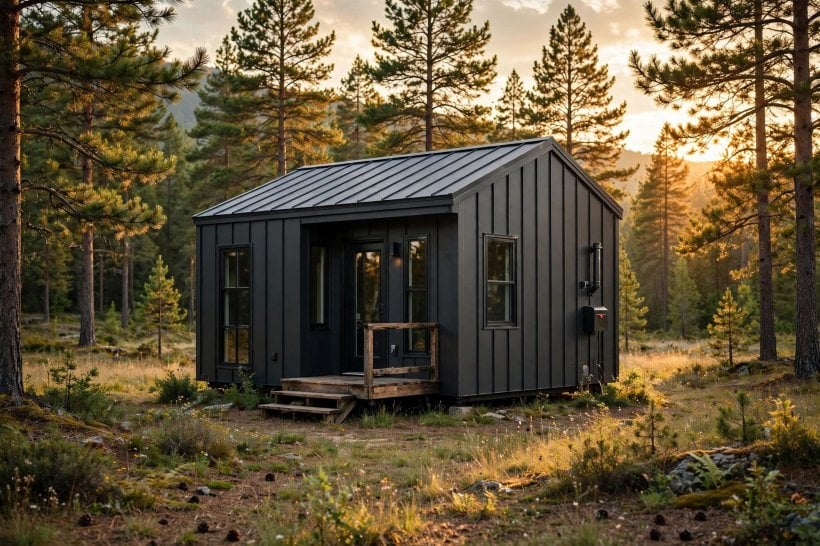
Colour pushes the same physics further. Dark colours — the charcoal and matte black so popular on modern tiny houses — absorb more solar heat, so the panel runs hotter, expands more, and cycles through a wider range of movement every day. That does not warp the metal permanently, but it demands a fastening system that genuinely allows the travel described in section 6. Lighter colours run cooler and move less, yet show waviness more honestly if the finish is glossy. The sweet spot chosen by most builders chasing that crisp contemporary look — visible across any — is a dark colour in a matte or textured finish on a heavier-gauge, narrower panel: every lever in this guide pulled at once, each one covering for the others.
5. The Substrate Rule: Flat In, Flat Out
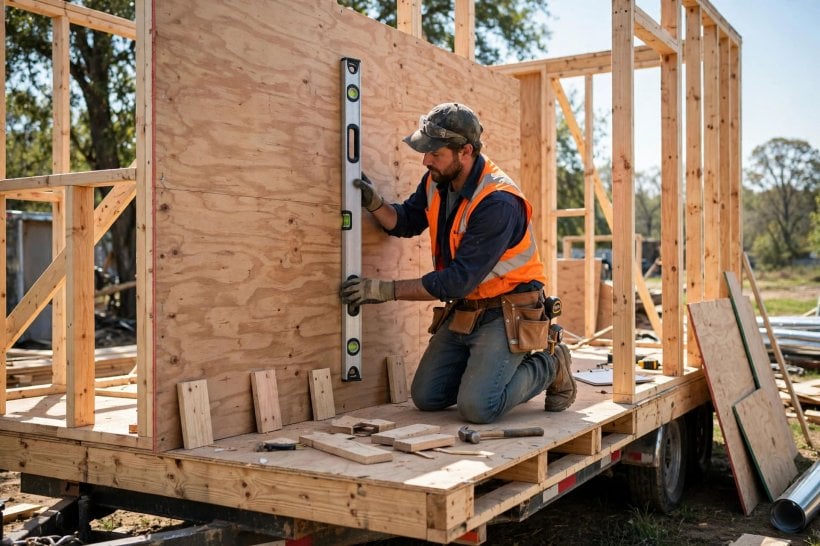
Here is the rule installers repeat like a proverb: the panel can only be as flat as what it is fastened to. Metal siding is a skin, not a structure, and it conforms to the wall beneath it with embarrassing fidelity. A stud crowned slightly proud, a lipped sheathing joint, a bunched fold of house wrap, even a heavy overlap of flashing tape — each becomes a visible ridge or hollow precisely where raking light will find it.
So flatten the wall before the siding arrives. Sight down the framed wall with a long straightedge, plane the high studs, shim the low ones, and re-check after sheathing. Lay building wrap smooth and tight, overlaps taped flat rather than folded. Think of the whole assembly as one layered system: the same wall build-up that carries your vapor barrier placement decisions and, in high-performance builds, even vacuum insulated panels must present one true plane to the cladding. Where the design includes a ventilated cavity behind the panels, the furring strips become the substrate — run the numbers with a rain screen siding ventilation calculator and shim the strips into a single flat plane, because the panel will faithfully copy every wave in the furring too. An hour with a straightedge at this stage is worth a decade of not seeing that bump every sunny morning.
6. Fastening That Allows Thermal Movement
More oil canning is created by a screw gun than by any other tool. The instinct to drive every fastener home hard — tight, secure, done — is exactly wrong for a material that changes length with the weather. A screw crushed through the fastening flange pins the panel rigidly. Multiply that by a dozen fixings and the growth has nowhere to travel, so the pan between fasteners bows out in protest. Over-tightening is the single most common installation error, and it is entirely self-inflicted.
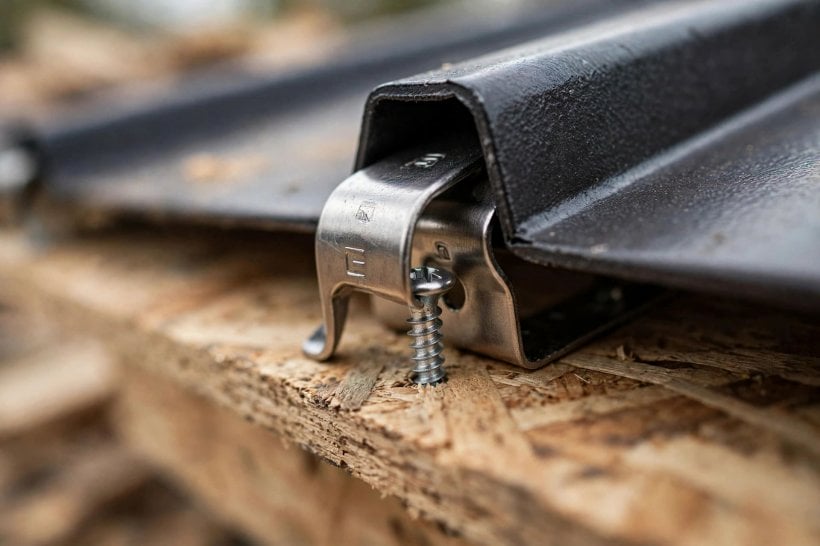
Correct fastening follows one principle: fix the panel firmly at one chosen point, and let it float everywhere else. In concealed-fix standing seam, the clips do this for you — one fixed clip anchors the panel, typically at the top, and the sliding clips grip the seam while permitting the metal to breathe as temperature swings. Where screws pass through slotted holes, centre the screw in the slot and drive it snug, never crushed: firm enough that the panel cannot rattle, loose enough that the metal can still slide beneath the head. Work from the fixed point outward rather than fastening both ends first, which traps stress mid-run. Get this right and a hot afternoon becomes a few millimetres of invisible travel at the panel’s free end — the difference between movement accommodated and movement advertised.
7. Striations, Backer and Other Visual Breakers
Sometimes the smartest response to a flat pan is to make it less flat — deliberately, invisibly, and by design. Striations are shallow ribs roll-formed into the pan, often just two subtle lines running the length of the panel. They do two real jobs. Mechanically, each rib is a tiny fold, and folds are stiff: a striated pan resists bowing far better than a featureless sheet of the same gauge. Optically, the ribs break the pan into narrower visual bands, chopping residual waviness into shorter, less noticeable segments. Pencil ribs and clip-relief profiles work on the same principle.
A foam backer rod run down the centre of the pan, between panel and substrate, presses the metal gently outward along its whole length. That light, even pressure holds the pan in slight tension — a shallow, controlled convex curve — instead of letting it flop between concave and convex as stresses shift. Add crisp corner flashings and closure strips — strong, straight reference lines for the eye — and the flat areas never have to perform perfection. They only have to look calm between the lines you gave the eye to follow.
8. Installing in Real Weather: Temperature and Handling
The weather on installation day is part of the specification whether you planned it or not. A panel installed at midday in peak summer heat is already at or near its maximum length. Fasten it in that state and the first cool night contracts it against its fixings; install it on a frosty morning and the afternoon sun demands expansion room a careless fastening pattern has not left. The calm middle path is to hang panels in moderate temperatures — morning or late afternoon in hot climates, never on metal too hot to hold a hand against — and to keep the fixed-point-and-float discipline consistent along every run.
Handling matters just as much. Long panels are most vulnerable between the pile and the wall: carry them vertically, on edge, a person at each end, supporting the sheet along its length rather than letting it drape over one pair of hands. A panel bent even once across its flat has taken a permanent set that no clip pattern can fully hide. Store the stack flat and dry, lift sheets off the pile rather than dragging them across the panel below, and — on a house that travels — check periodically that road vibration has not worked clips loose; snug but still sliding is part of owning the material.
9. Living With Minor Waviness: When It Is Only Cosmetic
Suppose the wall is built, the sun drops low, and you can see it: a gentle ripple in the longest pan, visible for an hour a day from one angle. Assess it honestly. Oil canning does not leak, does not rust the panel faster, does not shorten its working life. It is a visual characteristic of flat metal that manufacturers acknowledge and honest installers warn about in advance. Standards judge it from a normal viewing distance in ordinary light — not with your cheek against the wall at sunset, a position from which almost every metal building would confess to some waviness.

There are softening moves short of re-cladding. Landscaping that breaks the raking light — a shrub line, a pergola shadow, a fence — changes what the wall reflects, and a future repaint in a lower-sheen finish can calm a glossy wall considerably. A single panel installed under stress, with a hard crease rather than a soft wave, can usually be replaced without disturbing its neighbours. The dividing line is honest: soft, shifting waviness that comes and goes with temperature is the material behaving like metal; a sharp, permanent crease is damage, and it was preventable — almost always by one of the mistakes in the next section.
10. Mistakes That Guarantee a Wavy Wall
Nearly every bad metal wall can be traced to a short list of decisions, most of them made before the first panel was hung. Choosing the thinnest, widest, glossiest panel because it was cheapest assembles every risk factor in this guide into a single purchase. Fastening both ends of a long panel rigidly converts normal thermal movement into visible buckling. Hanging panels over an unprepared wall guarantees the metal will publish the framing’s mistakes. The same care applies where the wall meets the foundation: sloppy sealing and weatherproofing at sill plates and corners lets in water that no beautiful panel can excuse.
The remaining mistakes are matters of timing and touch: installing in extreme heat or cold, carrying long sheets by one end and letting them fold, dragging panels across each other or setting them down on gravel. None requires a professional to avoid — only the decision, before work starts, that flatness is a system: specification, substrate, fastening, finish, weather, and handling, all pulling in the same direction. Skip one element and the wall will tell on you every sunny day.
Final Considerations
A flawless metal wall is not an accident of good panels; it is the compound interest of small correct decisions. Specify a heavier gauge and a narrower pan, choose a finish that forgives, flatten the substrate as if the metal were a mirror, fasten so the wall can breathe, and handle every sheet like it is already finished — because it is. Do those things and oil canning shrinks to what it should be on a well-built tiny house: a technical term you understand, rather than a flaw you see.


1 Comment