

Think of a tiny house floor plan like choosing the right diamond cut: the shape changes everything. One story keeps life simple, two stories add privacy, and more bedrooms mean more comfort for families or guests. The right layout is never about squeezing in more — it is about matching the plan to the life that will be lived inside it.
1. Tiny House Floor Plans at a Glance
The Tiny House Floor Plans Calculator on this page works like a virtual architect consultation. Instead of browsing hundreds of plans and guessing which one fits, you answer four key questions about your life — family size, mobility, travel habits and style — and the finder recommends the specific floor plan archetype that fits you best, then draws it for you. The table below gathers the whole consultation in one place; the sections after it take each question, and each archetype, apart.
| Attribute | Detail |
|---|---|
| The Tool | The Perfect Floor Plan Finder — a “Virtual Architect Consultation” |
| The Method | Answer 4 key questions instead of browsing hundreds of plans |
| Question 1 | Who will live here? Solo / Couple, Small Family or Large Group |
| Question 2 | Can you climb ladders/stairs? Lofts, or a ground-floor bedroom |
| Question 3 | Will the house move? Nomadic, Parked THOW or Foundation |
| Question 4 | Style & Budget Priority: Budget, Modern, Rustic or Unique |
| The Output | One recommended Floor Plan Archetype matched to your answers |
| The Visualizer | A Layout Visualizer draws a simplified blueprint of your match |
| The Explanation | A “Why this fits you” reason tied to the answers you gave |
| The Archetypes | From the One-Story Cottage to the Standard 24′ Lofter |
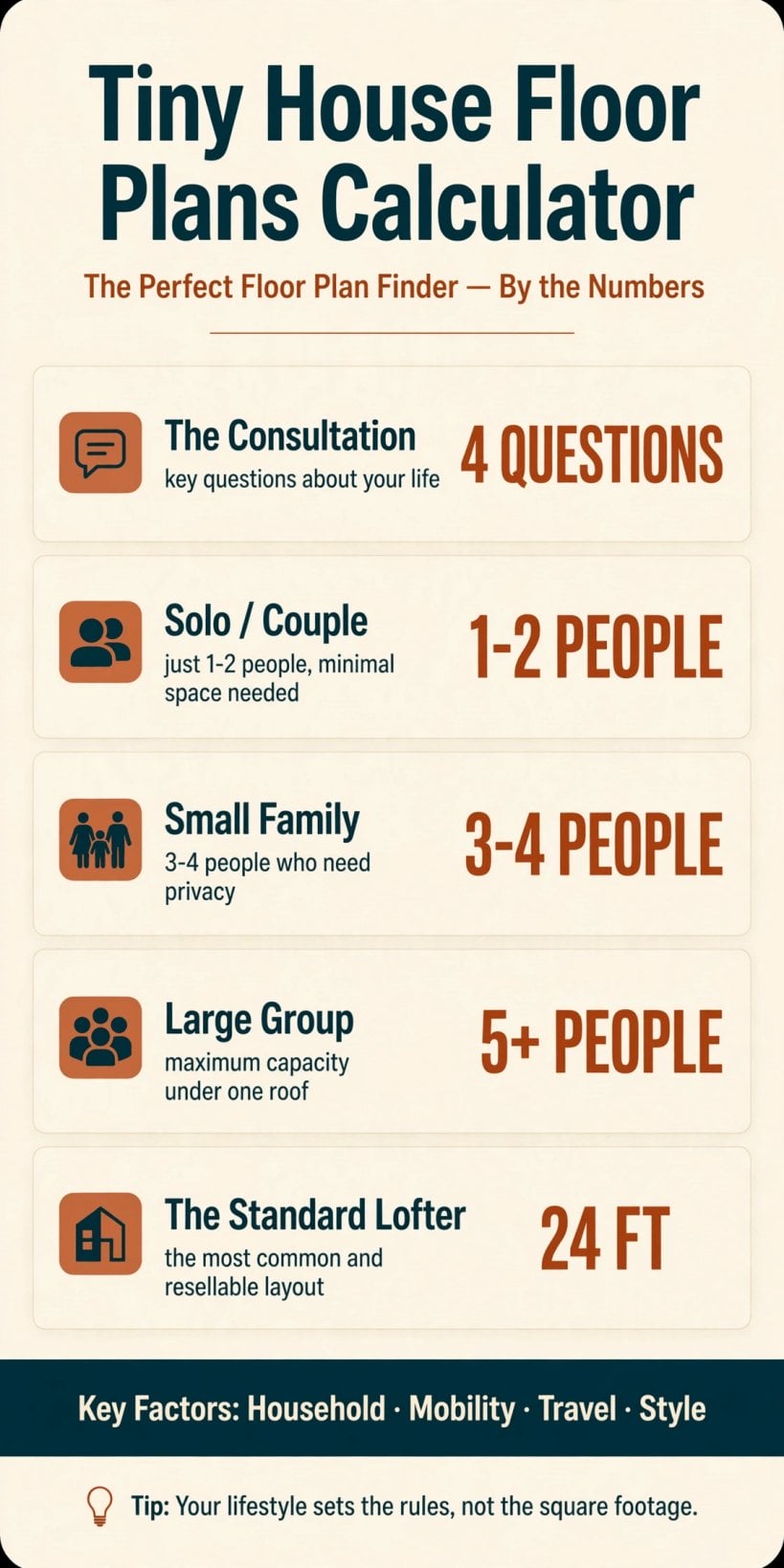
Four questions, three household sizes and one 24-foot benchmark layout — the consultation on one card.
2. Question One: Who Will Live Here?
The consultation opens with the household, because headcount is the load every floor plan has to carry. The finder offers three answers. Solo / Couple means just 1-2 people, and minimal space needed — one sleeping space, one living space, no compromises owed to anyone else. Small Family means 3-4 people who need privacy: the plan now has to separate sleepers from each other, not just from the weather. Large Group means 5+ people and maximum capacity, the point at which a single box starts to strain and the archetypes change character entirely.
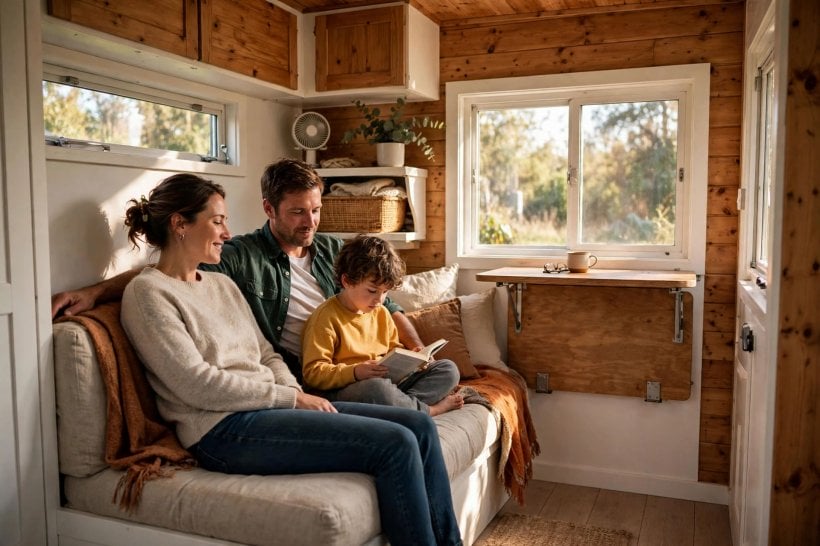
Notice what the question does not ask: it does not ask how many square feet you want. The original framing is deliberate — your lifestyle sets the rules, not the square footage — and the household answer quietly sets the square footage for you, because each band maps to a different family of layouts. A couple can live well in a plan that would be miserable for five, and a plan built for five is wasted volume for one. If you want the background first, our guide to how much square feet are in a tiny house walks the sizes, and the tiny house design that sleeps 4 shows what the small-family band looks like when it is drawn out in full.
3. Question Two: Ladders, Stairs and the Ground-Floor Bedroom
The second question is about mobility, and it is the one that divides tiny house plans more sharply than any other: can you climb ladders/stairs? Answer “Lofts are Great” and you are choosing to maximize floor space — the sleeping moves up into the roof volume, and the whole ground floor is freed for living, cooking and washing. Lofts are the classic tiny house move precisely because they let a small footprint hold two storeys of life.
Answer “Ground Floor Bedroom” and the plan reorganizes itself around a different promise: no climbing. The finder describes this route as retirement and accessibility focused, and its reasoning is plain — a layout that keeps you off ladders ensures you never have to climb to sleep or use the bathroom. Neither answer is the sensible one in the abstract. A loft that is charming at thirty is a daily negotiation at seventy, and a ground-floor bedroom spends floor space a young couple might rather give to living room. The question exists so the plan is honest about the body that will live in it, for all the years it will live there.
4. Question Three: Will the House Move?
The third question is about travel habits, and it sorts the archetypes by what holds them up. “Nomadic” means frequent travel — a tiny house on wheels or a skoolie, built to be hauled and lived in on the move. “Parked THOW” means the house sits on wheels but rarely moves: the trailer is a legal and practical foundation, not a lifestyle. “Foundation” means a permanent build — a shed, an ADU or a barn — that will never be towed anywhere.
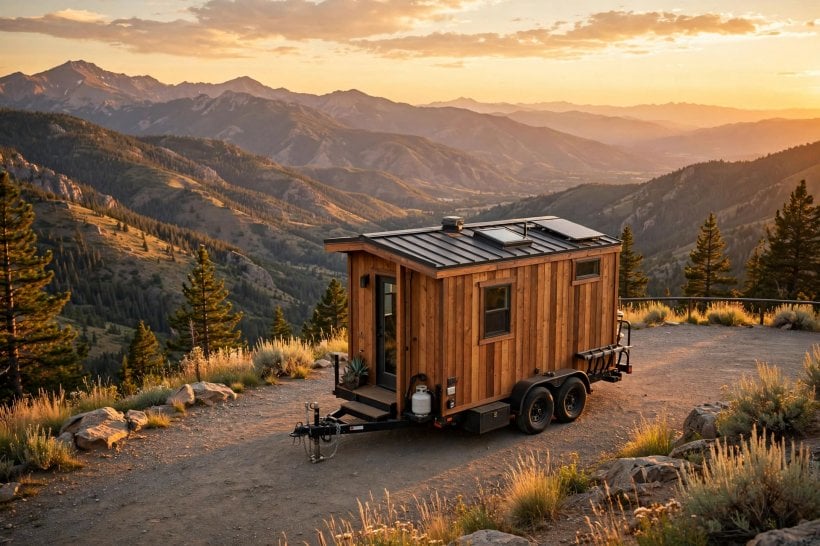
The answer matters because it changes what a floor plan is allowed to be. A nomadic plan lives inside a trailer’s limits and a tow vehicle’s patience; a parked plan can stretch toward comfort; a foundation plan can abandon the rectangle’s discipline altogether and become a converted shell or a circle. The finder’s archetypes are organized around exactly this fork — the same household, with the same mobility answer, will be matched to a different home depending on whether that home rolls, rests or is rooted.
5. Question Four: Style and Budget Priority
The last question is the honest one: what do you care about most? “Budget Friendly” means function over form — the plan that does the job for the least. “Modern/Sleek” means clean lines, glass and open space. “Rustic/Cabin” means woodsy, cozy and traditional. “Unique/Alternative” opens the door to yurts, domes and buses — the plans that do not look like houses at all.
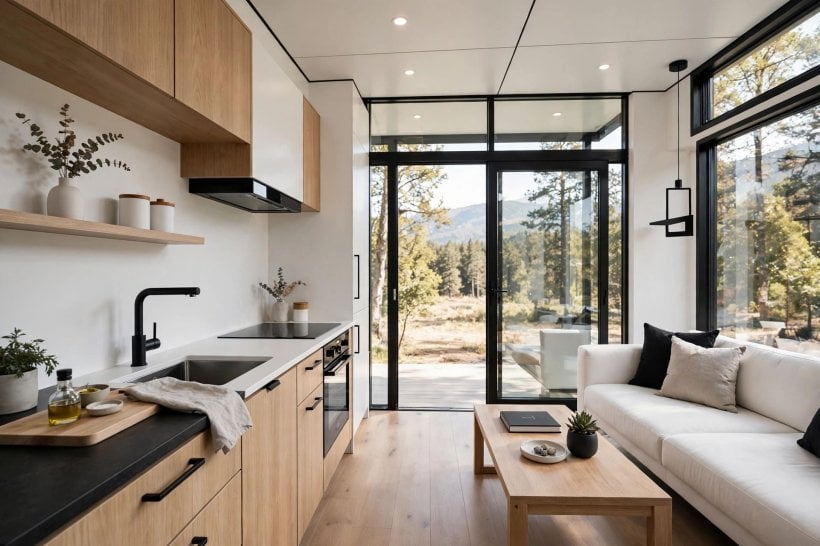
Style here is not decoration applied at the end; in the finder’s logic it is a structural input, because each priority points at a different construction. Budget points at shells and simplicity. Modern points at open plans and glass. Rustic points at the classic lofted cottage forms. Unique points off the trailer entirely, toward canvas, circles and conversions. Four questions, sixteen threads — and at the end of them, one archetype. The next three sections meet the eight layouts the finder can recommend, grouped the way the questions themselves group them.
6. The Single-Level Answers: One-Story Cottage and the Standard 24′ Lofter
Two archetypes anchor the classic end of the range. The One-Story Cottage carries the tag “Accessibility,” and its description is a direct answer to the no-climbing route: perfect if you want to avoid ladders, it features a ground-floor bedroom and high ceilings to make the space feel open. The high ceilings are doing real work in that sentence — a single-level plan gives up the loft’s second storey, so it buys its sense of space vertically instead, in the volume above your head.
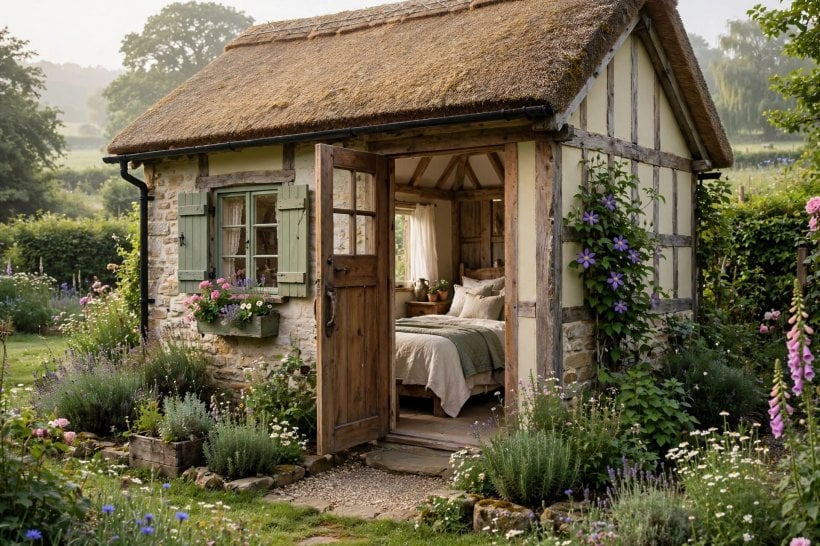
The Standard 24′ Lofter is the benchmark the finder measures everything else against — tagged “Best Resale” and described as the most common and resellable layout of all. Its arrangement is the canonical one: kitchen and bath under the loft, high ceilings in the living room. The finder’s reason for recommending it is a balance sheet: a solid choice for 1-2 people who want a balance of comfort, mobility, and resale value. If the cottage is the plan for one specific need, the Lofter is the plan for no disqualifying needs at all — the default done properly.
7. Lofts and Standing Height: Double Loft THOW and Gooseneck Family
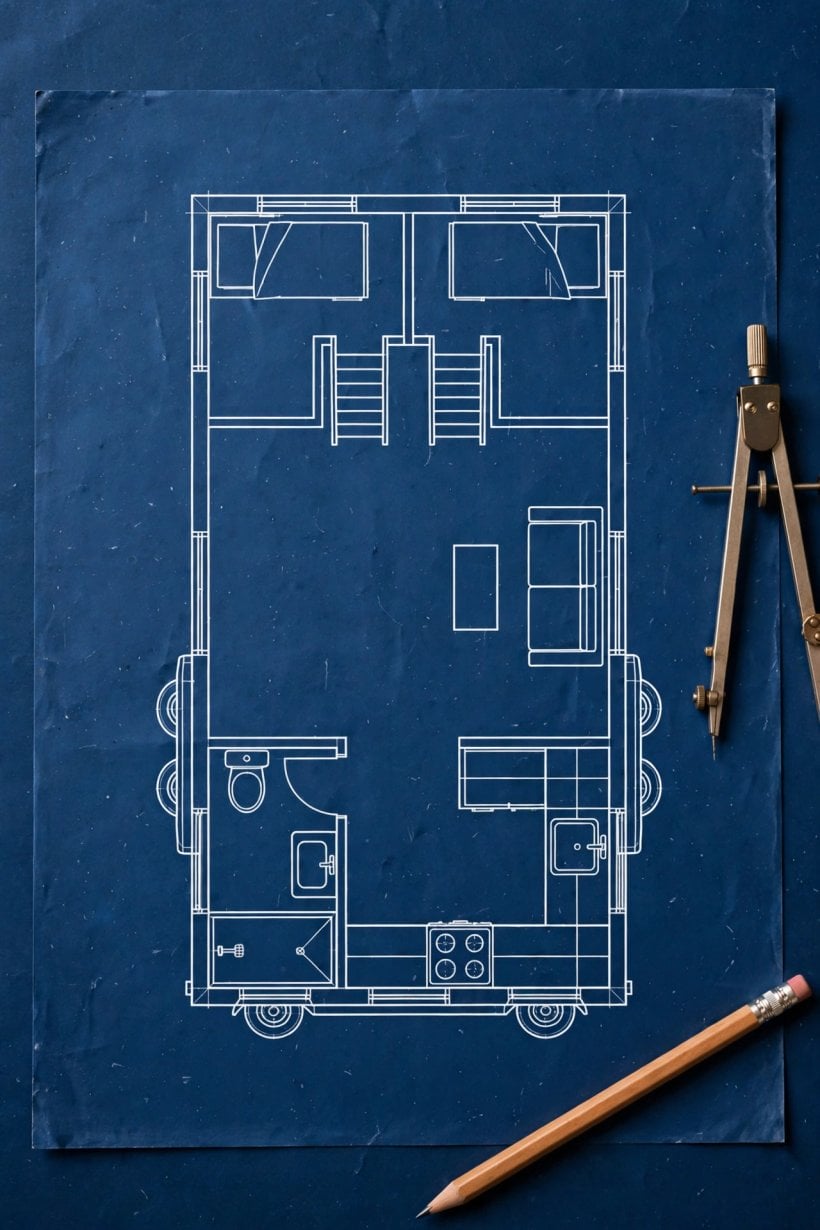
Climb willingly, and two larger archetypes open up. The Double Loft THOW — tag: “Max Capacity” — is the classic tiny house on wheels with sleeping lofts on both ends, maximizing the living and kitchen space on the ground floor between them. The finder’s reason reaches the household question again: great for families or couples who need a guest bed or office, for people who are okay with stairs and want maximum value per square foot. Two lofts turn one roof into two bedrooms, and the ground floor stops having to sleep anyone.
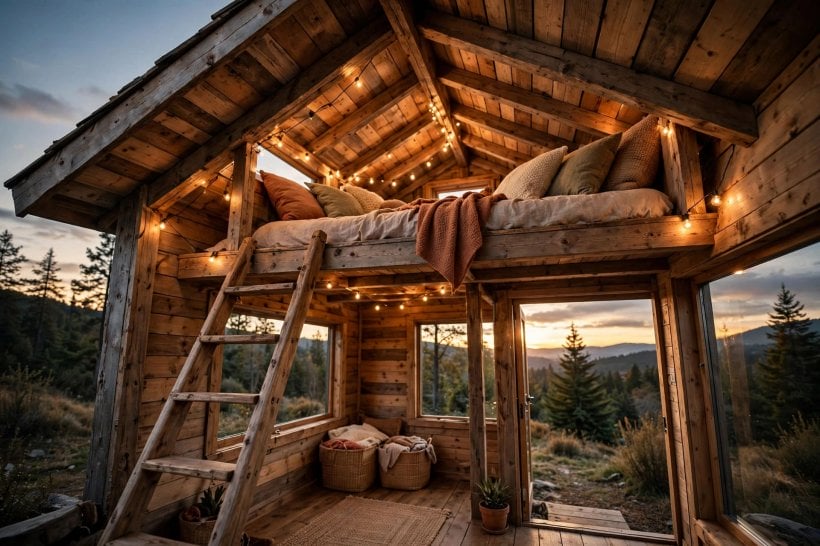
The Gooseneck Family answers a subtler problem: privacy. Its tag is “Master Privacy,” and its mechanism is the trailer itself — it utilizes the raised deck over the truck bed for a standing-height master bedroom, leaving the main floor for kids or living space. The finder’s reason names the prize: a private bedroom without crawling into a tight loft. It also names the price, in the same breath: this layout requires a heavy-duty truck. Standing height, in a tiny house, is never free — it is bought with deck geometry and towing capacity, which is why the tiny house gooseneck trailer question belongs in the same conversation as the floor plan it makes possible.
8. Beyond the Rectangle: Barndo, Yurt, Skoolie and Pods
The remaining four archetypes leave the standard trailer plan behind. The Barndominium / Shed — “Cost Effective” — is a conversion of a metal barn or shed shell, offering massive open space and high ceilings for a fraction of the cost of a wood frame build; it is the foundation answer and the budget answer arriving together. The Modern Yurt — “Circular Living” — is a semi-permanent structure with canvas walls and wood lattice, credited with incredible wind resistance and a spiritual vibe; the finder steers it to owners who chose Unique or Rustic and plan to stay put, calling yurts the fastest way to get a roof over your head.
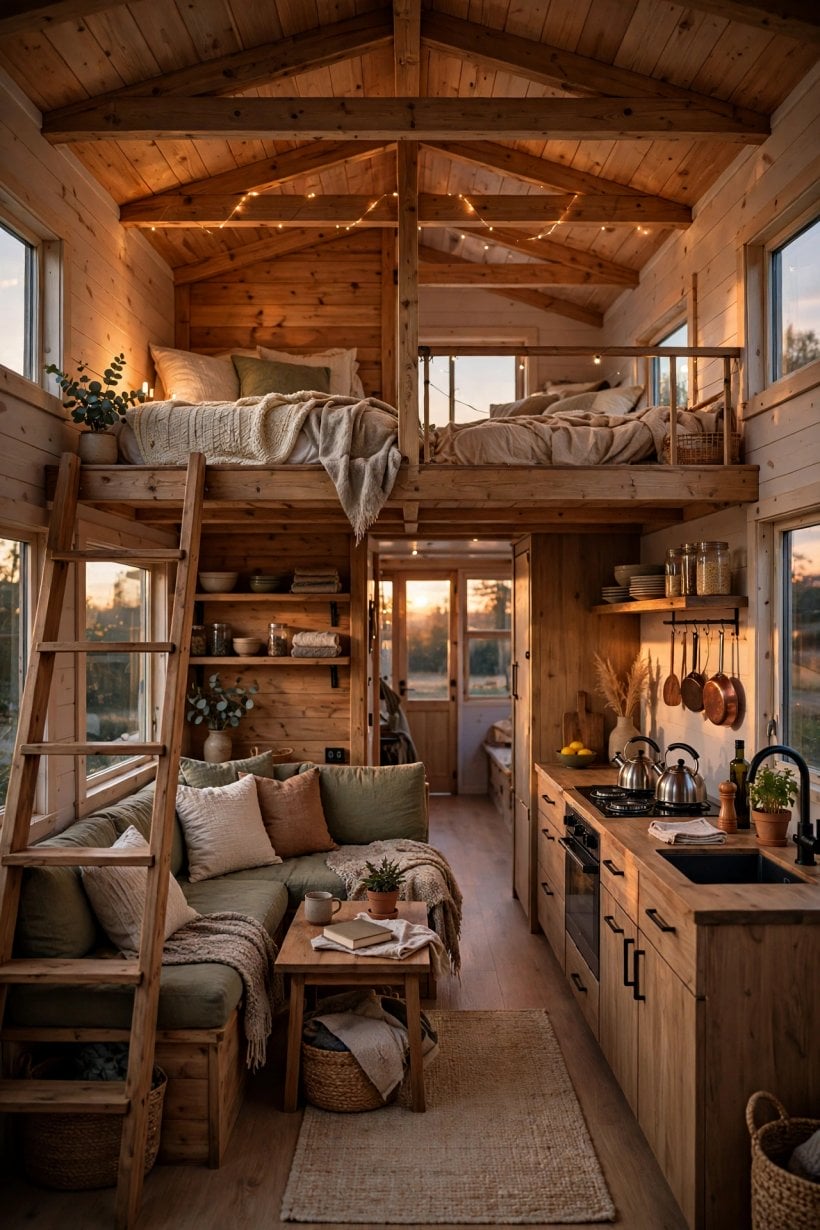
The Skoolie Conversion — “Adventure Rig” — is a converted school bus: built tough, diesel engine, ready for a cross-country road trip, and, in the finder’s reasoning, offering more floor width than RVs and infinite customizability for owners who identified as nomadic and unique. The conversion world behind it is explored in our school bus conversion guide. And the Attached / Pod Tiny — “Multi-Gen” — splits the household itself: two separate units connected by a deck or breezeway, one for living and kitchen, one for private bedrooms. Its reason is the bluntest in the set: for a large group of 5+, trying to fit everyone in one box is miserable — separate pods give sanity. Even the yurt has its own aftercare literature, in our guide to condensation control in yurts.
9. The Layout Visualizer: Your Match, Drawn
A recommendation you cannot picture is only half a recommendation, so the finder draws it. Alongside the archetype’s name, its tag and its description, the result carries a “Why this fits you” explanation that quotes your own answers back to you — you prioritized no stairs; you identified as nomadic; you have a large group. The reasoning is the consultation made visible: every match can be traced to the four answers that produced it, and changing one answer changes the plan for a stated reason, not by algorithm-magic.
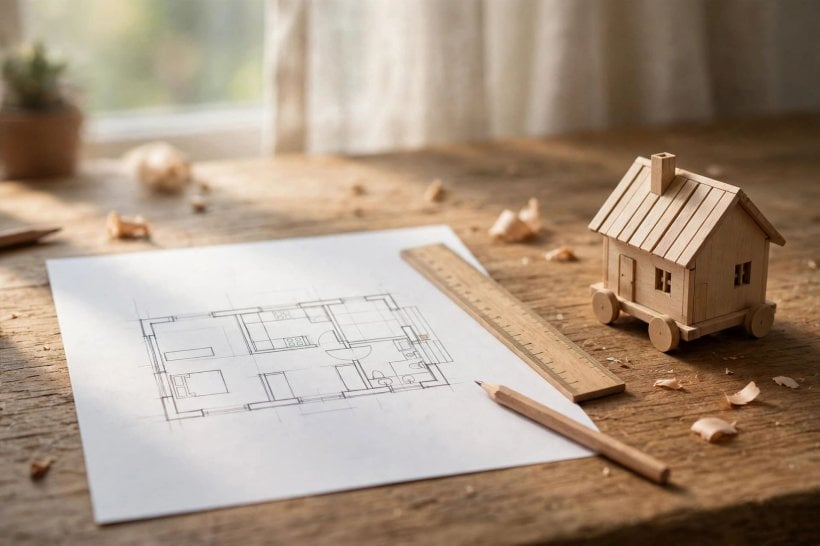
The drawing itself comes from the Layout Visualizer, which dynamically sketches a simplified blueprint of the recommended home — highlighting ground-floor bedrooms versus lofts versus circular yurts, so the geometry of your archetype is visible at a glance: where the sleeping sits, what the ground floor keeps, how the shape differs from the rectangle you may have assumed. It is a sketch, not a construction document — its job is comparison and confidence, the moment where an abstract archetype becomes a home you can imagine walking through. If the match surprises you, the Start Over button resets the consultation and the four questions begin again.
10. After the Match: From Archetype to a Real Plan
The archetype is a starting point, not a blueprint, and the natural next step is to see your family of plans drawn out in full. The finder’s own reading list points to our collection of floor plans to turn tiny houses into havens, where the layouts are set out plan by plan. When you are ready to work a layout of your own, the discipline of designing a tiny house on wheels floor plan takes the archetype’s logic — sleeping up or down, wet rooms stacked, living space defended — and applies it to your exact trailer and household.
From there, the wider library helps you pressure-test the choice: browse tiny house design plans to compare your archetype against its neighbours, and when the sketching turns serious, the roundup of free tiny house design software covers the tools that turn a matched archetype into measured drawings. The sequence is the consultation’s own logic, extended: lifestyle first, archetype second, drawings third — never the other way round.
Your Plan, Drawn for You: The Tiny House Floor Plans Calculator
Below is the consultation itself. Answer the four questions — who will live here, whether you can climb, whether the house will move, and what style you would spend on — and the Perfect Floor Plan Finder will match your lifestyle to its archetype, explain why it fits, and draw the layout for you. One story or two, lofts or a ground-floor bedroom, cottage, gooseneck, yurt or bus: the shape changes everything, and the right shape starts with four honest answers.
Think of a tiny house floor plan like choosing the right diamond cut. The shape changes everything. One story keeps life simple. Two stories add privacy. More bedrooms mean more comfort for families or guests. Your lifestyle sets the rules, not the square footage. Keep reading to see how the right floor plan can turn a tiny home into a place that truly works for you.
This tool acts as a “Virtual Architect Consultation.” Instead of browsing hundreds of plans, the user answers 4 key questions about their life (Family size, Mobility, Travel habits, and Style), and the tool recommends the specific Floor Plan Archetype that fits them best.
Read also: Floor Plans to Turn Tiny Houses into Havens
It includes a “Layout Visualizer” that dynamically draws a simplified blueprint of the recommended home (e.g., highlighting ground-floor bedrooms vs. lofts vs. circular yurts) and pulls in the specific advice from your text.
Perfect Floor Plan Finder
Answer 4 questions to find your ideal layout.
Stop Scrolling, Start Planning
From retirees needing single-level living to large families needing bunkhouses. We’ll match your lifestyle to one of 10 specific tiny house archetypes.
1. Who will live here?
2. Can you climb ladders/stairs?
3. Will the house move?
4. Style & Budget Priority
— —
—
Why this fits you:
—


8 Comments