

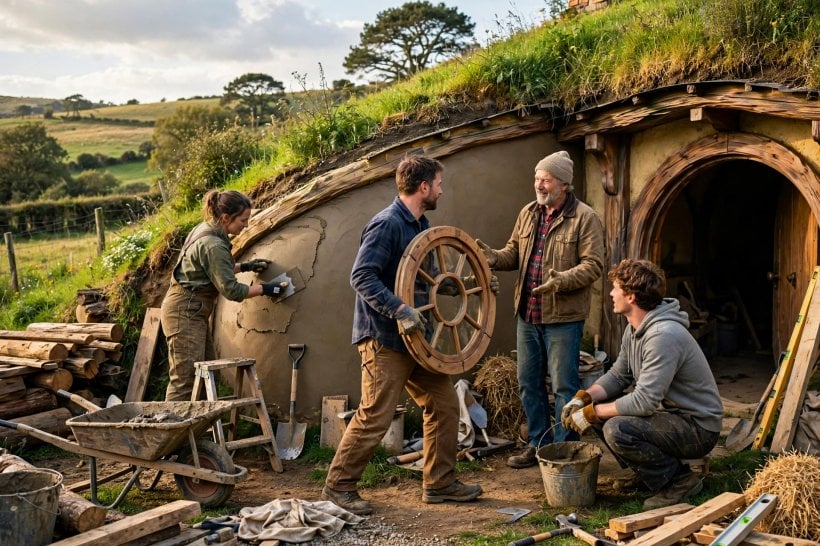
A hobbit house is the rare build that starts as a daydream and ends as an engineering problem. The round door and the warm wood are the easy part. The hard part is that your roof is a hill, your walls hold back soil, and every curve costs more than the straight line it replaces. This guide breaks down the budget — design, shell, waterproofing, finishes and labour — before the estimator below prices it.
1. The Hobbit House at a Glance
The hobbit house calculator further down this page prices a burrow in layers, the way a builder has to. First, the design — earth against the walls, or a home buried under the hill. Then the shell, the waterproofing, the finishes that make the inside feel like the Shire, and the fixed costs nobody can dodge, starting with digging the hole. Five decisions, one total. The table gathers them; the sections after it take each layer apart.
| Attribute | Detail |
|---|---|
| The Dream | A round-doored, earth-sheltered home that feels calm the moment you step inside |
| The First Decision | Earth-Bermed (soil pushed against the walls) or Fully Underground (living under the hill) |
| The Size Range | Floor area from 200 to 1,200 sq ft, growing in 50 sq ft steps |
| The Shell | Earthbag, timber frame, reinforced concrete or steel culvert — $25 to $90 per sq ft |
| The Waterproofing | EPDM rubber liners, drainage mats and french drains — typically 3x more than a regular roof |
| The Round Door | DIY plywood at $500, or custom joinery at $3,500 |
| The Finishes | A flat $80 per sq ft — the Shire look requires custom curves |
| The Fixed Start | $5,000 of excavation before a single wall goes up |
| The Labour Lever | Self-build at 1.1x materials, hybrid at 1.6x, turnkey contractor at 2.5x |
| The Output | A total budget, a per-square-foot figure, and a three-way breakdown: shell, waterproofing, finishes |
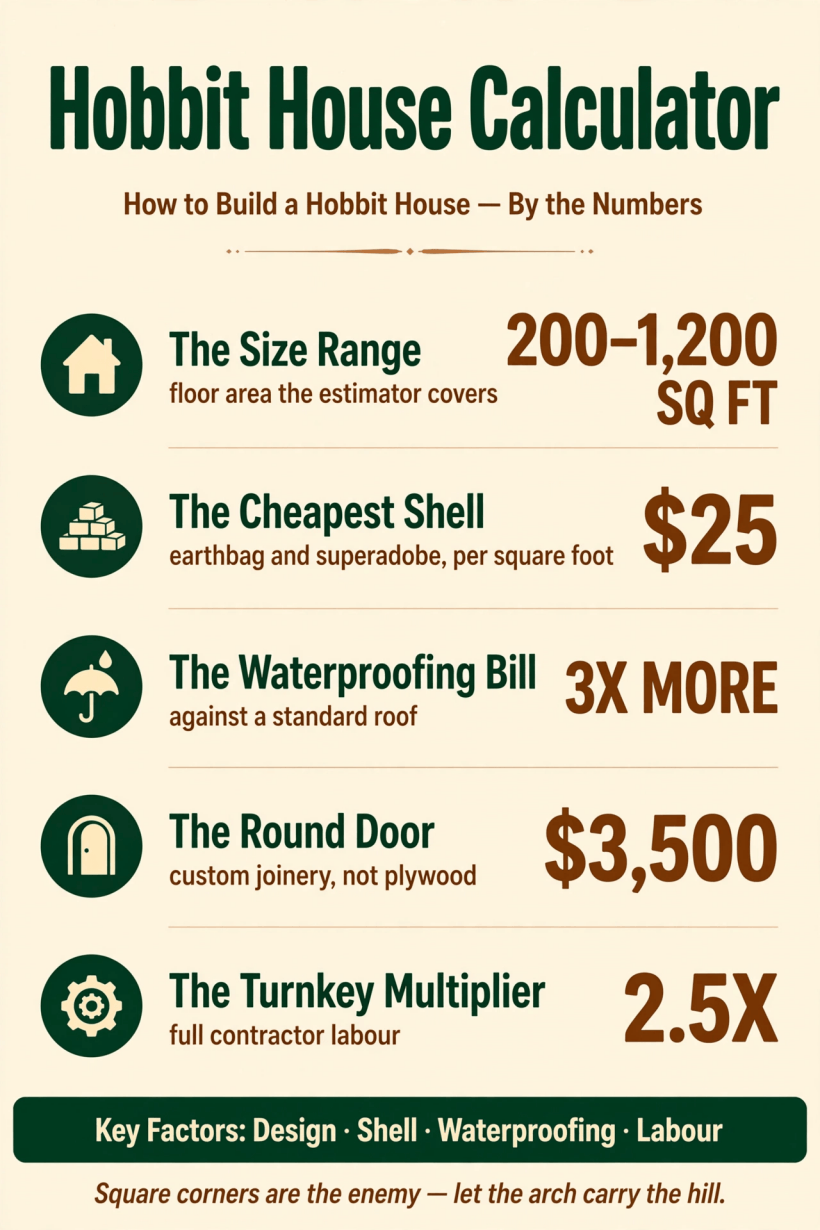
Four shells from $25 to $90 a square foot, a waterproofing bill three times a normal roof’s, and a door that can cost $3,500 — the burrow budget on one card.
2. Two Ways to Live in a Hill: Bermed or Underground
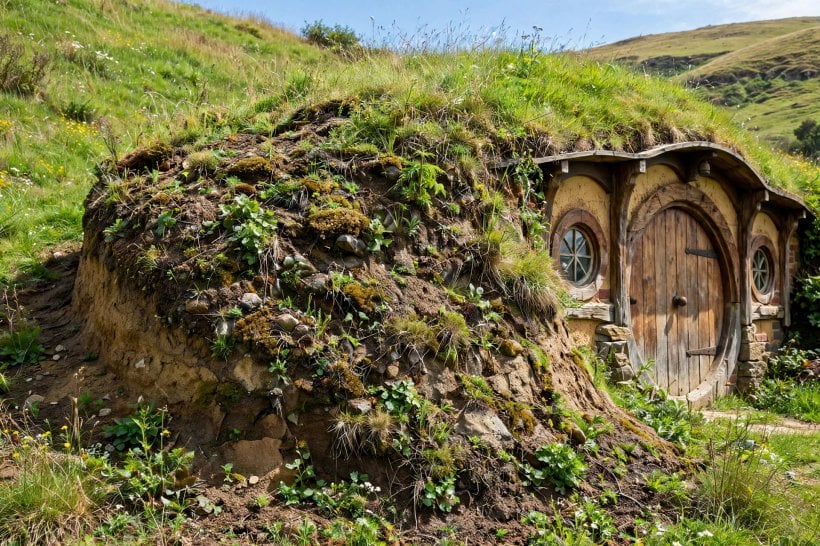
Every burrow begins with a single fork in the plan, and the estimator asks it first. An earth-bermed house keeps its front face open to the light while soil is pushed up against its walls — the hill leans on the house rather than covering it. A fully underground house goes the whole way: you live under the hill, with a living roof overhead and earth on every side. They are different buildings that share a round door, and the choice moves almost every number that follows.
Watch the cross-section when you flip between the two: the hill grows for the underground design, swallowing the house, while the bermed hill stays lower and leaves the front exposed. The underground roof is a true living roof — the same construction weighed, load by load, in our guide to green roofs on tiny houses. Bermed asks less of everything: less earth to move, less structure to carry it, and — as §6 shows — a lower waterproofing rate, because less of the building sits against wet soil. Choose the design for the life you want, but know that “fully underground” is the expensive answer to almost every question that follows.
3. The Round Door: The Signature You Budget For
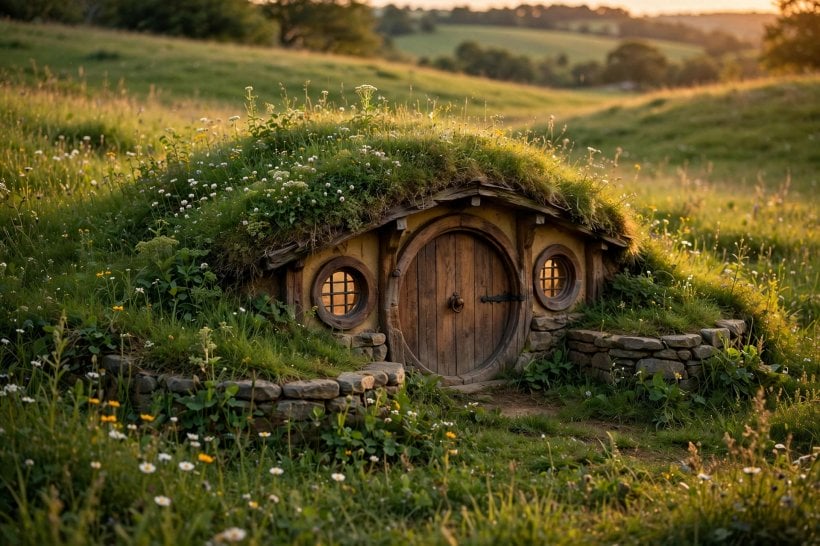
Ask anyone to picture a hobbit house and they picture the door: perfectly round, warm wood, a knob in the centre. It is the one element no burrow can skip, and the estimator prices it as a fixed cost with two settings. Build it yourself from plywood and the door costs $500. Commission custom joinery and the same circle costs $3,500. Seven times the money for the same hole in the wall, and most dreamers will pay it gladly, because the door is not a door; it is the signature the whole house is remembered by.
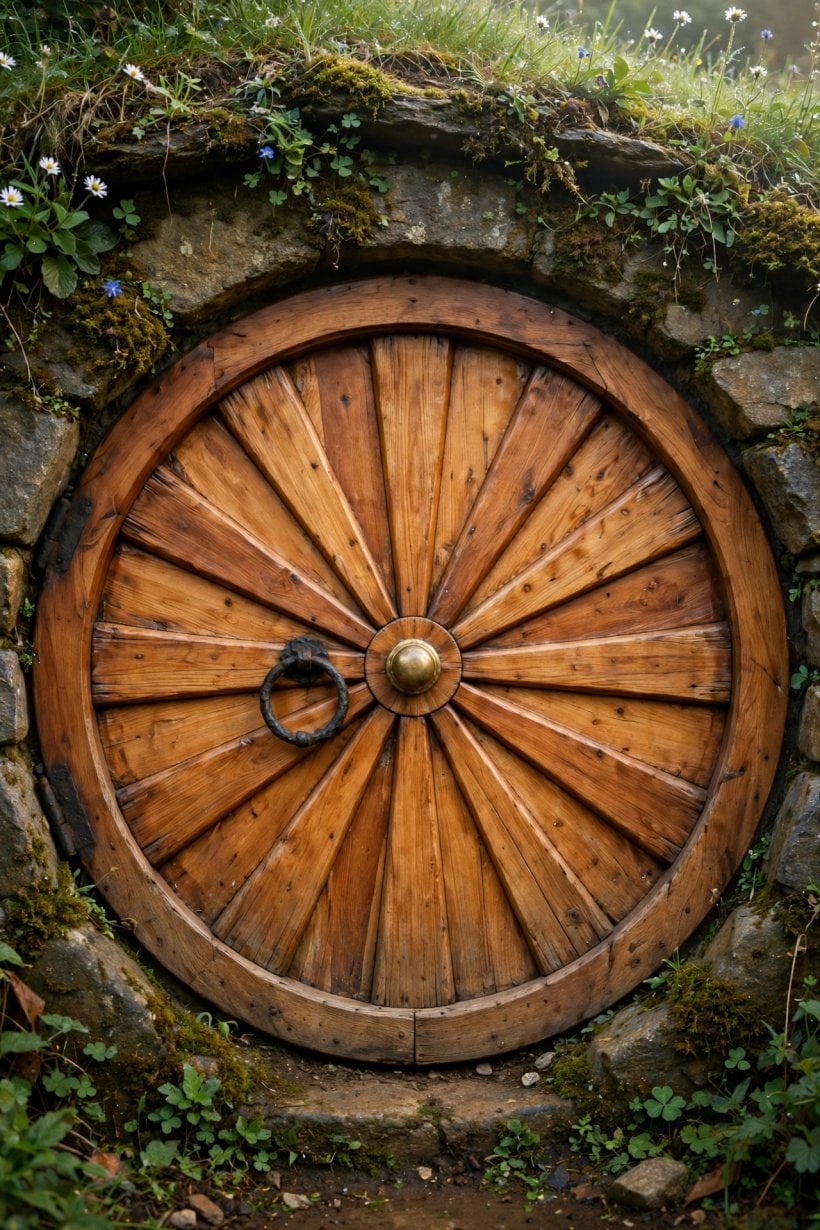
The estimator files that choice under fixed costs, alongside the $5,000 of excavation, because neither scales: a 200 sq ft burrow and a 1,200 sq ft burrow dig one hole and hang one door each. It is also why the original post singles out custom round joinery as one of the two specialised costs that make these builds unique — circles cannot be bought off a shelf or framed with standard lumber, so every round opening is a small act of bespoke carpentry. If you are planning the build rather than the budget, the companion walkthrough, Build a Hobbit House: Simple Steps to Cozy Living, takes the construction in order; this page makes sure the door — and everything behind it — is priced first.
4. The Arch: Why the Shell Is Curved
The curves are not decoration. A flat roof under two feet of wet soil will collapse — the estimator’s own engineering note is that blunt — because a flat span bends under weight it cannot shed. An arch turns the hill into an ally: earth’s weight compresses the curve, and a structure in compression grows stronger the harder it is pressed. That is why hobbit houses are built as arches and domes — in concrete, in steel culvert, in geodesic form — and why the same geometry appears wherever people build round and underground, from the dome cabins scattered through the woods to the small dome homes sold as kits.
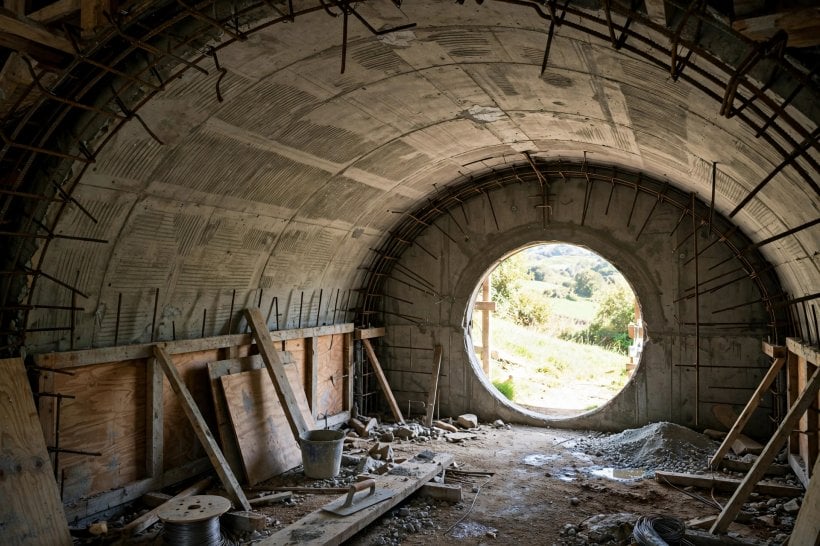
Square corners are the enemy here, in the estimator’s own words. Corners concentrate stress exactly where an earth-loaded building can least afford it; a continuous curve spreads the load around the whole shell. That is why the shell is the largest line in the breakdown: not merely wall and roof, it is a retaining structure holding back a hillside for the life of the building. Under-specify the arch and you have not saved money — you have gambled with the component that keeps the hill where it belongs.
5. Four Shells, Four Price Tags
The estimator offers four ways to build that arch, priced per square foot of floor area, materials only — and the spread is the widest in the whole model. Earthbag and superadobe is the cheapest at $25 per sq ft: bags of earth stacked and tamped into curves, the classic DIY shell. A steel culvert — the Quonset-style arch — is next at $50, a ready-made semicircle of corrugated strength. Timber frame, the standard option, is $65. And reinforced concrete tops the list at $90 per sq ft, the strongest shell of the four, and the one the estimator selects by default.
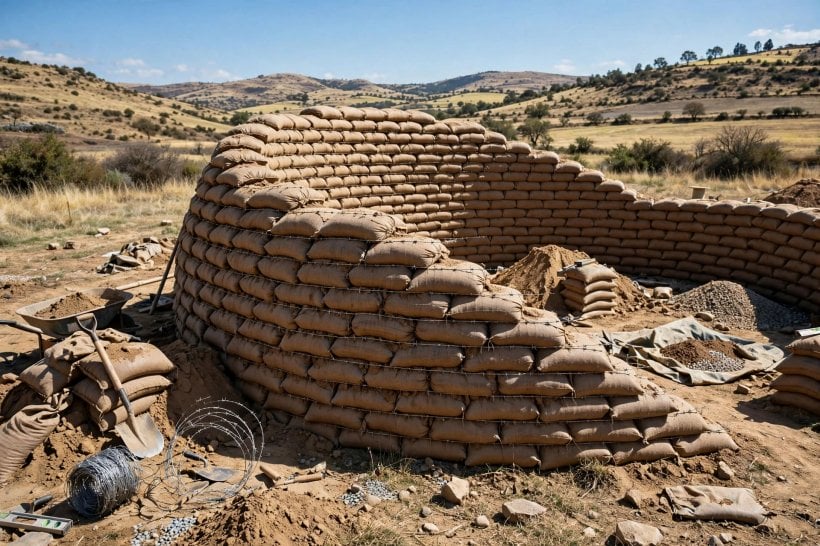
The cross-section visualiser redraws the shell as you choose: the culvert becomes a clean steel semicircle, the earthbags take on a dashed, earthen tone, and the concrete keeps the classic arch. Earth-walled building has a wider family — the rammed-earth walls of earthship homes answer the same questions with tyres and cans, and the inflatable igloo dome is a cousin that keeps the load-shedding curve. The four options price a trade between money and certainty: earthbag rewards your labour with the lowest materials bill on the page, while concrete asks for neither your weekends nor your faith — only your budget.
6. Waterproofing Is Everything
The estimator’s guide leads with the sentence that deserves its own section: you are not just building a house, you are building a boat that floats in dirt. A standard roof sheds water — rain lands, runs off, and is gone. A hobbit roof holds water: the soil above stays damp against the membrane for months. Waterproofing a burrow therefore typically costs three times more than roofing a conventional house, priced by the estimator as its own major line: $25 per sq ft for an earth-bermed build, $40 per sq ft fully underground, where walls and roof alike live against wet earth.
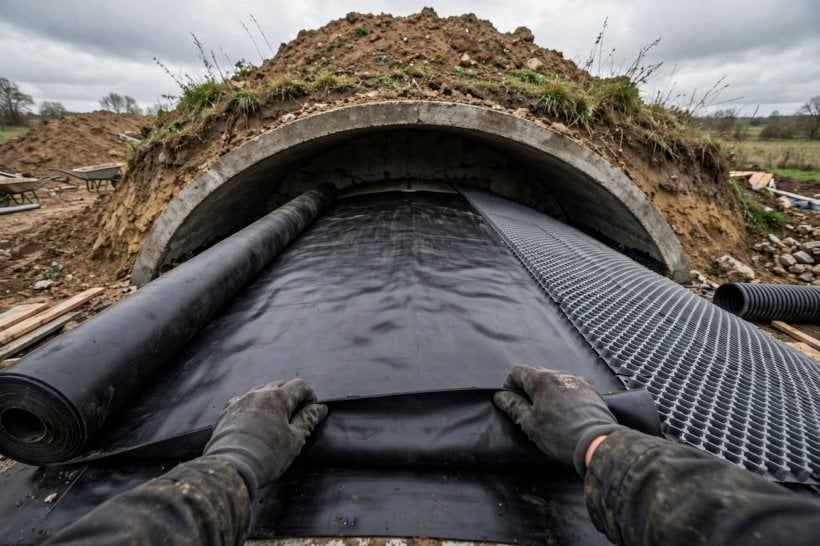
The system behind that rate has three named parts. EPDM rubber liners form the primary barrier, a continuous skin over the arch. Drainage mats give the water that reaches the liner a path to travel instead of a pond to sit in. And french drains carry it away from the building altogether, beyond the walls. Cheapen any layer and the failure is uniquely miserable: a leak in a burrow is somewhere under feet of soil, and finding it means excavating your own home. Waterproofing is the one line where the expensive option is the cheap one: priced like a luxury, it behaves like insurance.
7. Sizing the Burrow: 200 to 1,200 Square Feet
Floor area is the master dial of the whole estimate. The slider runs from 200 to 1,200 sq ft, in 50 sq ft steps, and starts at 400 — a generous burrow by tiny-house standards, small by any other. As you drag it, the house in the cross-section grows with your number, and every per-square-foot line in the model — shell, waterproofing, finishes — multiplies against the new area. Double the floor and you roughly double three of the four cost blocks, which is why size deserves answering first: so much of a burrow is surface — arch, membrane and finish — wrapped around the volume you live in.
The exception proves the rule. Two costs refuse to scale: the $5,000 excavation and the round door are fixed whether the burrow is a studio or a family home. That is why the per-square-foot figure falls as the house grows — the fixed thousands spread over more floor — and why very small burrows look deceptively expensive per square foot. It is not a bargain or a rip-off; it is arithmetic. Choose the size the household needs, then let the fixed costs land where they land.
8. Finishes: The Shire Look Costs Extra
Inside the hill, the budget stops behaving like a bunker and starts behaving like a storybook. The estimator prices finishes and systems — interior fit-out, electrical, plumbing, the warm wood and plaster — at a flat $80 per sq ft, the second-largest rate in the model. The reason is written into the design: the Shire look requires custom curves. Round windows and arched doorways take no stock door or straight run of trim, so the finishing trades charge for the geometry just as the shell did.
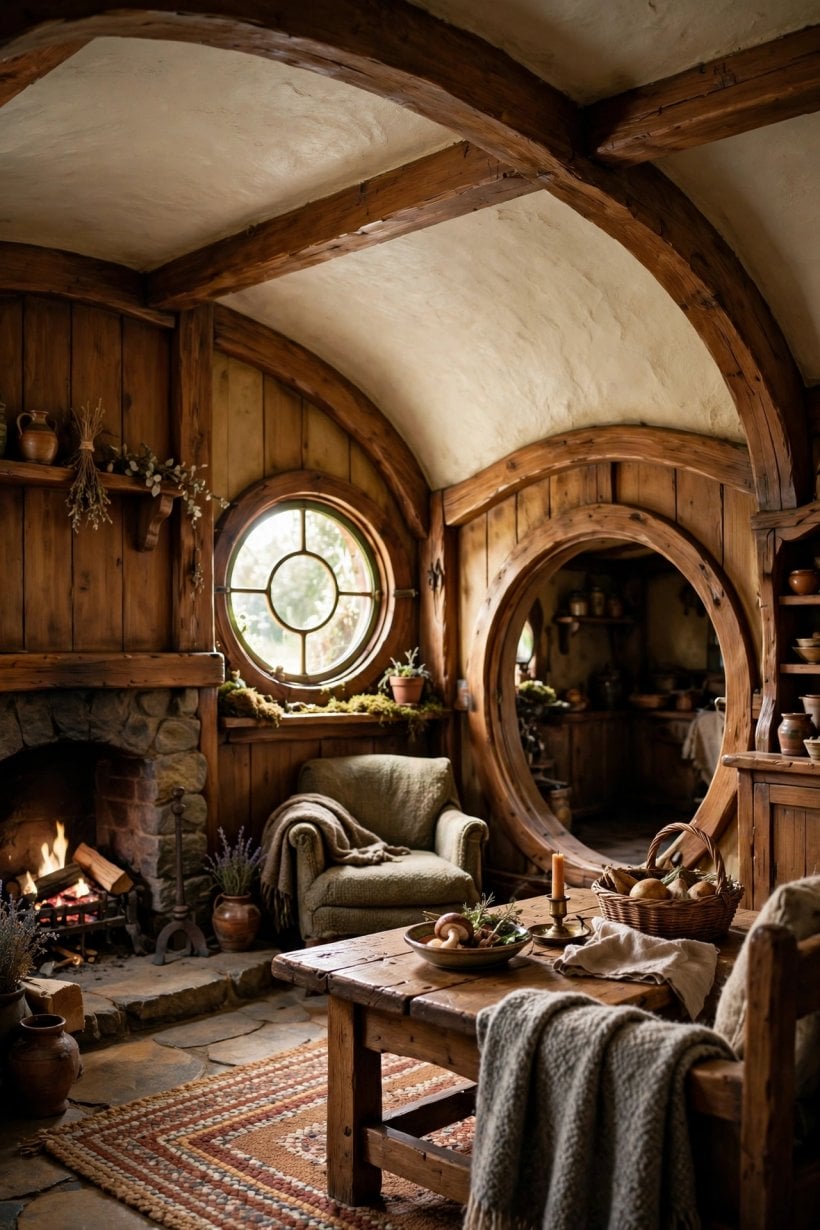
That money buys the entire emotional point of the build — the original post opens with it: round doors, warm wood, a home that feels calm the moment you step inside. A burrow finished cheaply and squarely is a basement with a round entrance; the finishes make it a hobbit house rather than a shelter. Round living has gentler precedents — the circular plan explored in our yurt living guide delivers some of the same embrace without a tonne of soil — but if the hill is non-negotiable, the $80 a square foot is not where savings live. It is the difference between living in the Shire and living under it.
9. Labour: The Multiplier That Decides the Total
Every figure so far has been materials, excavation and the door. Labour is applied last, as a multiplier over the whole subtotal — the single largest lever in the model, wider even than the choice of shell. Build it yourself and the estimator adds a tenth: 1.1x, a 10% contingency over materials. Split the work — professionals for the shell and the electrical, your own hands for the rest — and the hybrid route multiplies the subtotal by 1.6. Hand the whole build to a turnkey contractor and the multiplier is 2.5x: the same burrow, the same materials, two and a half times the money.
Read those three settings as a price on skill and risk rather than on effort. The hybrid option exists for the unforgiving operations — the arch, the membrane: pros take the shell and the systems, where a mistake is buried with the house, and the owner takes everything that can be redone. The earthbag shell makes a pure DIY burrow possible — but the 10% contingency notes that first-time builders buy some materials twice. Choose the multiplier as honestly as you chose the door.
10. Reading Your Estimate: The Three-Way Breakdown
Press the button and the estimator answers in four numbers. The headline is the estimated budget, with its per-square-foot figure beneath it — the two numbers worth writing down, because the second lets you compare a burrow against any other way of building the same floor area. Below them sits the three-way breakdown — shell, waterproofing, finishes — showing which layer is eating the budget. If the total shocks you, the breakdown tells you where the shock lives.
Run the defaults through the tool’s own rates and the anatomy shows. A 400 sq ft burrow in reinforced concrete prices its shell at $36,000; fully underground, its waterproofing is $16,000 and its finishes $32,000. Add the fixed $5,000 of excavation and the $3,500 custom door, and the materials subtotal is $92,500; at the default hybrid setting, the multiplier takes it to $148,000 — $370 per sq ft, all in. Move a control and every number moves: earthbag cuts the shell line by nearly two-thirds; bermed drops the waterproofing rate by more than a third. The estimate is not a quote. It is the shape of the decision, drawn to scale.
From Daydream to Budget: The Hobbit House Calculator
Everything above this section is the thinking; the estimator directly below is the doing. Set the design — bermed or underground — then walk the floor area slider and watch the cross-section burrow grow and shrink. Pick the shell you would actually build, choose the door you would actually pay for, and set the labour honestly — the Burrow Visualizer redraws the hill and the arch as you work, while the breakdown updates the three numbers that matter: structure, waterproofing, and the Shire finish. When the total on the screen is a number you can say out loud without flinching, the daydream has become a plan.
You don’t need magic to build a hobbit house. You need good plans, the right materials, and a clear process. That’s what this guide gives you. We’ll walk through each step, explain common mistakes, and share ideas that actually work. Whether you’re a Tolkien fan or just love unique homes, this guide helps you build a space that feels warm, grounded, and truly yours.
This tool helps dreamers plan their own “Hole in the Ground.” It distinguishes between Earth-Bermed (soil pushed up against walls) and Fully Underground (living under the hill), and calculates the specialized costs like heavy-duty waterproofing and custom round joinery that make these builds unique.
Read also: Build a Hobbit House: Simple Steps to Cozy Living
It features a “Burrow Visualizer” that updates the cross-section of your hill based on the construction method (Concrete Shell vs. Earthbags).
Hobbit House Estimator
“In a hole in the ground there lived a hobbit…”
1. The Design
2. The Shire Aesthetics
Specifics of the Shire
You aren’t just building a house; you’re building a boat that floats in dirt. Unlike a standard roof that sheds water, a hobbit roof holds water. You need expensive EPDM rubber liners, drainage mats, and french drains. This typically costs 3x more than a regular roof.
A flat roof under 2 feet of wet soil will collapse. Hobbit houses use Arches or Domes (Concrete, Steel Culvert, or Geodesic) because the weight of the earth compresses the structure, making it stronger. Square corners are the enemy here.

0 Comments