
How to tiny house: declutter, downsize, move in, and the lifestyle guide.

Liberate your living experience – unlock the boundless potential of off-grid living. Break free from the constraints of conventional housing and embrace a life of unparalleled freedom, simplicity, and regeneration. Craft your sanctuary, where the rhythms of nature harmonize with your deepest desires.
How to tiny house: declutter, downsize, move in, and the lifestyle guide.

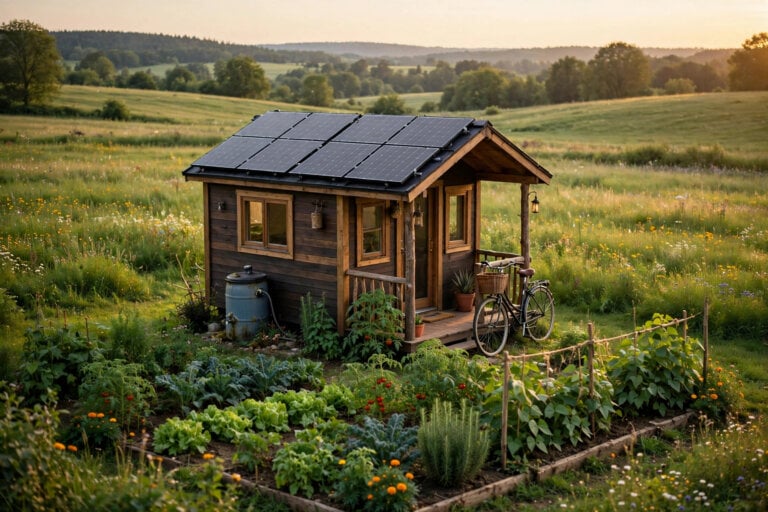
How to live off grid in a tiny house: solar, water, waste, skills, and the guide.
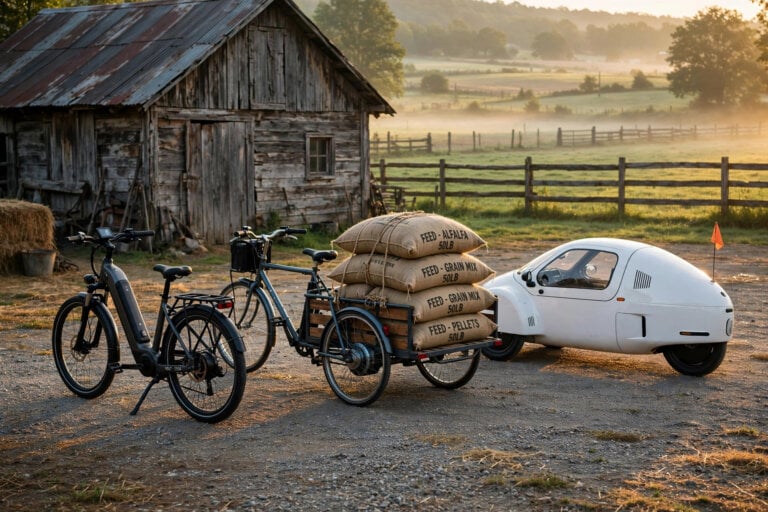
Sustainable micro-mobility, three ways: an e-bike at $1,500–3,000 covers 30–60 miles at ~15Wh a mile, a cargo e-bike hauls 400+ lbs for $3,000–5,000, and a velomobile cruises 60–100+ miles at ~10Wh a mile, enclosed against the weather. Any of them replaces the second car — $5,000–9,000 a year — and pays for itself in under two years.
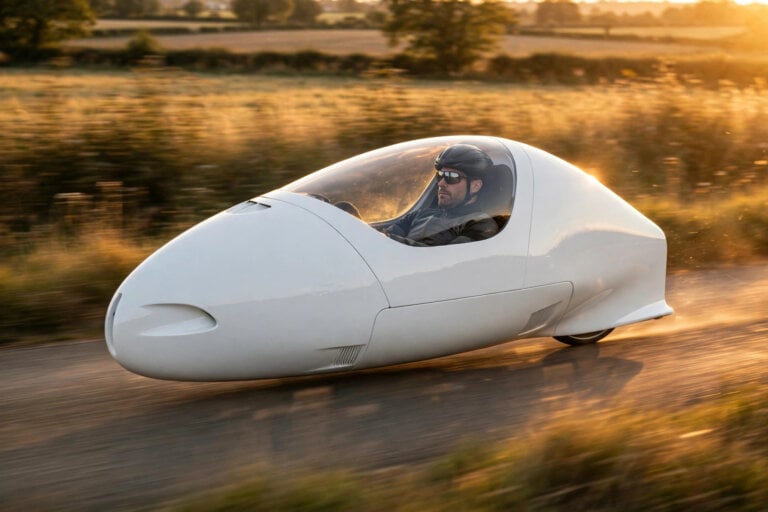
Velomobile drag coefficients, measured: the teardrop shell runs a Cd of 0.05–0.15 against a car’s 0.25–0.35, and a 0.5–0.7 m² frontal area compounds it into a CdA of 0.05–0.10 — class leaders at 0.07. That’s a 25–30 mph cruise on 150W, assist capped at 15–28 mph by law, and an 800W wall at 50 mph.
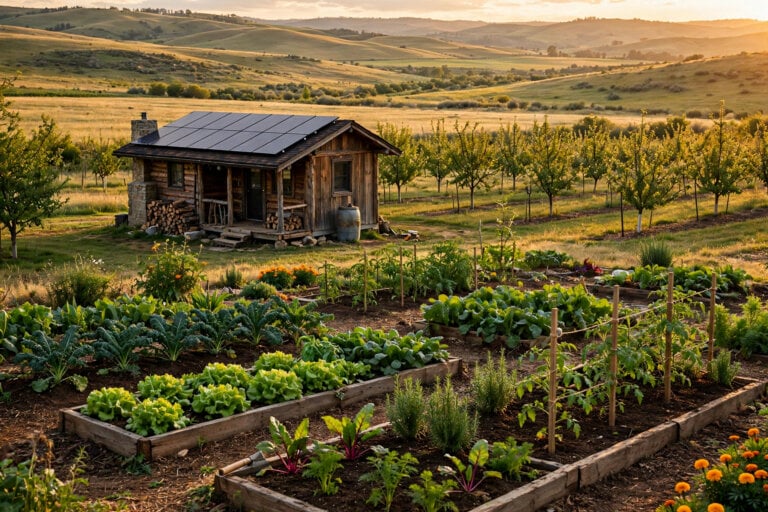
Homesteading economics, priced out: a typical off-grid homestead burns $20,000–40,000 a year with no mortgage, the freedom number is 25× that annual spend, and cutting the big three — housing, transport and food — frees $15,000–25,000 a year. Add remote work, a $5,000–20,000 market garden and zero consumer debt, and the full transition takes 3–7 years across four phases.

Navigate building codes for an unconventional eco-structure: the IRC as your county amended it is the real code. Appendix Q covers tiny homes of 400 sq ft and under, Appendix S legitimises straw bale, an engineer’s stamp ($1,000–3,000) carries earthbag and 3D-printed designs, and a 30-minute pre-application meeting maps the route before you submit. Expect 2–3 revision rounds.

Composting 101: the pile is a bioreactor running on a 25–30:1 carbon-to-nitrogen ratio: greens at 15:1, browns at 60:1, mixed 2:1 by volume. Build it 3×3×3 ft, hold 130–150°F, keep it at wrung-sponge moisture, turn it weekly, and the hot method finishes in 4–8 weeks — with cold piles, tumblers, worms and bokashi for other tempos.
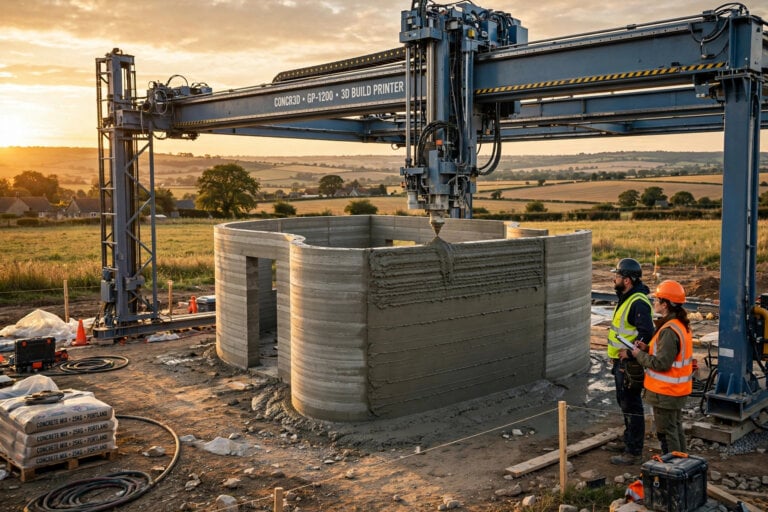
3D printed homes in honest numbers: a gantry printer lays concrete layer by layer, walls standing in 24–48 hours, at $150–250 per sq ft all-in for 400–2,000 sq ft builds. Wall labour halves, curves come free — but finishes are still 60% of the cost, and codes, appraisals and resale are still learning. The printed tiny is the compelling case today.

Micro-hydro from a small stream: power = head × flow × 0.18, so 20 ft of head at 50 gpm gives 180W around the clock — 4.3 kWh a day of baseload. DIY systems at 100–500W cost $2,000–6,000 and produce power at $0.05–0.10 per kWh over their life. Measure head and dry-season flow first, then match the turbine.
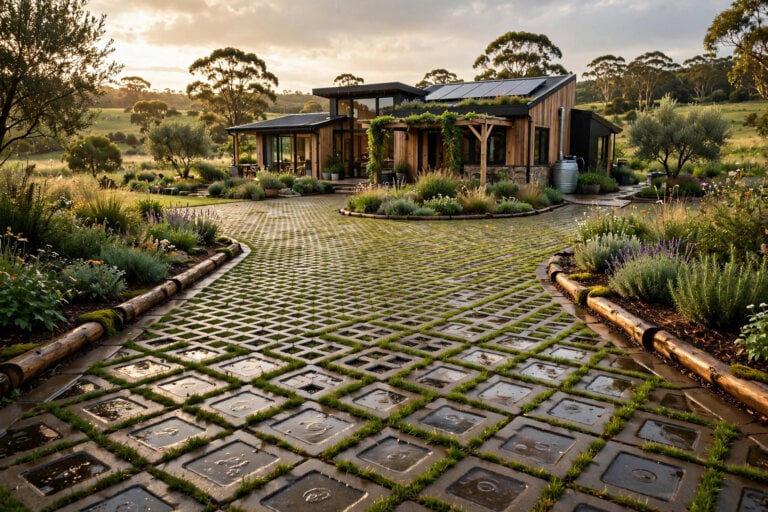
Eco-friendly driveway options, priced and compared: gravel at $1–3 per square foot with total drainage and an annual grading, permeable pavers at $5–12 draining 100% with zero runoff, grass pavers at $4–8 for light use, recycled asphalt at $2–4, and near-free wood chips for paths — all designed narrow, crowned at 2% and edged in timber or stone.

Is collecting rainwater legal? In most states the rain on your roof is yours; in a few it belongs downstream. Texas encourages harvesting with tax exemptions, Colorado’s 2016 law allows 110 gallons in 2 barrels, Utah registers systems at 2,500 gallons, and potable use needs filtration plus testing. Check your state in five minutes before you buy the tank.
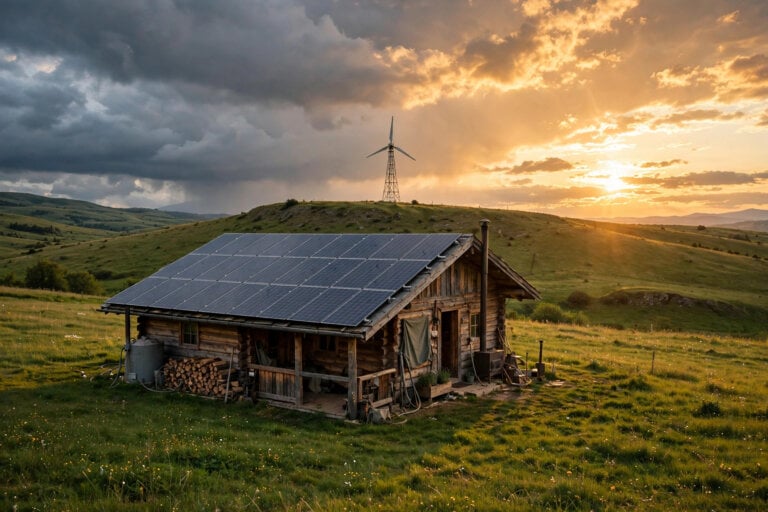
Solar vs wind for the homestead, decided by the site: solar delivers 4–6 sun-hours almost everywhere at $0.50–1.00 a watt and $0.06–0.10 per kWh, while wind needs a measured 10+ mph average and costs $2–5 a watt. Default to solar, audit the load first, and hybridise 80/20 only where a year of logging proves 12+ mph.
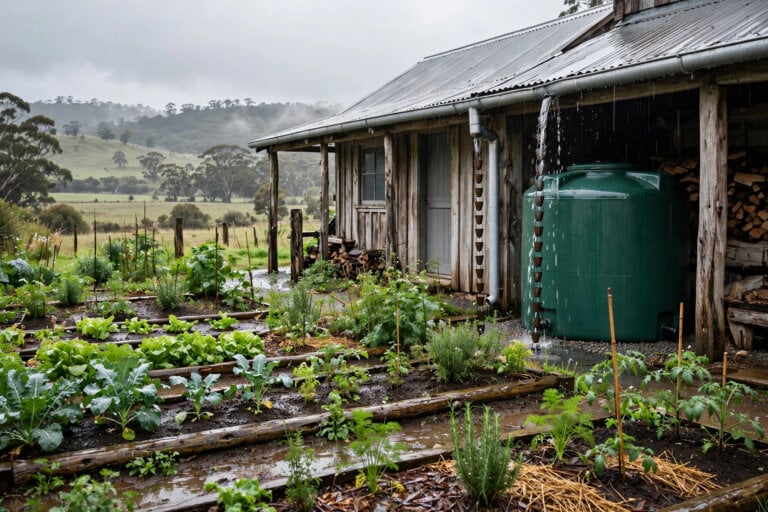
Rainwater harvesting sized right: a 1,000 sq ft roof in 30 inches of rain yields 18,690 gallons a year at 0.623 gallons per square foot per inch — after the 0.85 efficiency factor, a plannable supply. Size the tank to the dry-season gap: 90 days at 50 gallons a day means 4,500 gallons of storage.
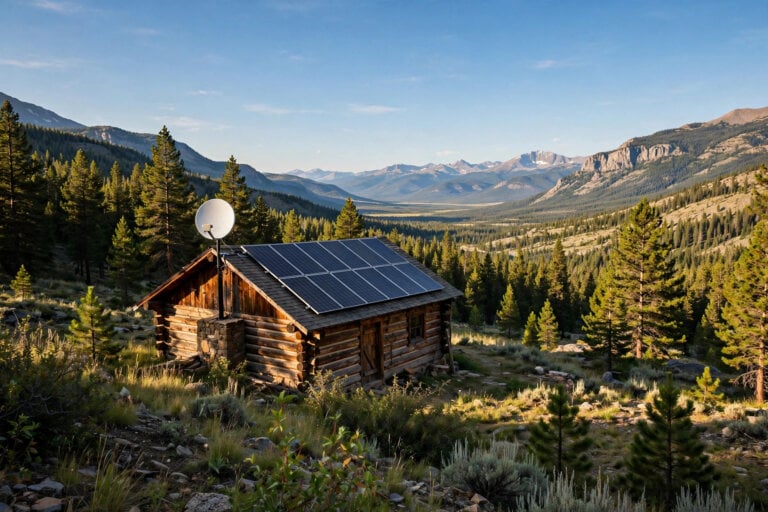
Off-grid internet, three ways: LEO satellite at 50–200 Mbps for $600 plus $120 a month and 2 kWh a day, a boosted cellular bar at 65 dB of gain sipping 0.2 kWh a day, or a $200 point-to-point bridge sharing 100+ Mbps across 10 miles of line-of-sight.
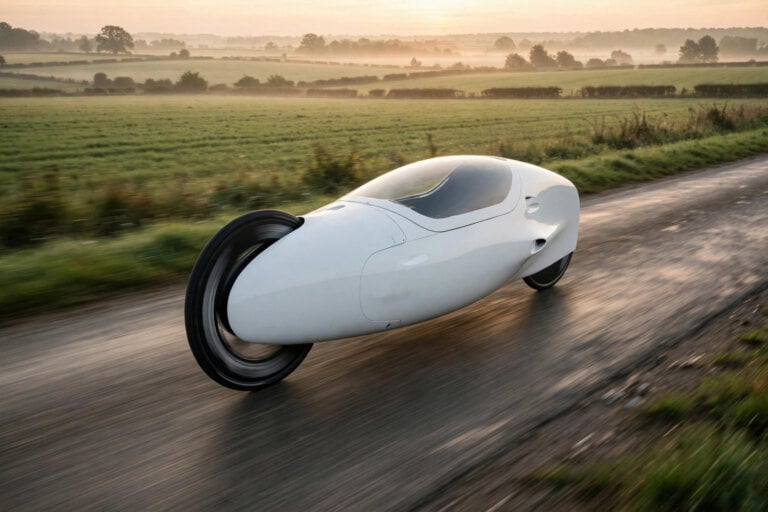
The physics of velomobiles in one equation — F = ½ρv²CdA: an upright cyclist drags 0.35–0.45 m² of CdA, a teardrop shell cuts it to 0.05–0.10, and the same 100 watts that hold 15 mph upright cruise at 23 mph enclosed. Here’s the drag math, the teardrop, and the rolling-resistance balance.

Weatherproofing an e-bike, priced out: an $8 tube of dielectric grease seals every connector, the motor is rated IPX4+, the chain gets a 2-minute wipedown, drying takes 5 minutes, and the full snow routine 10 — plus full fenders, tread for rain and carbide studs for ice.

Human power vs electric assist in a velomobile: a casual rider sustains 75–100W, the shell turns 100W into 22–25 mph, and a 250W motor makes 350W and 30+ mph — here’s the physiology of the partnership, the 500-mile recumbent adaptation, and how to dial the balance for fitness and fun.

Eco-friendly city match quiz: answer four questions — settlement, non-negotiable, work, community style — and match with Portland, Burlington, Asheville, Detroit or an ecovillage. Then test the match with a trial month, the meetups and the code check before you move. Find your people first, then find your place.
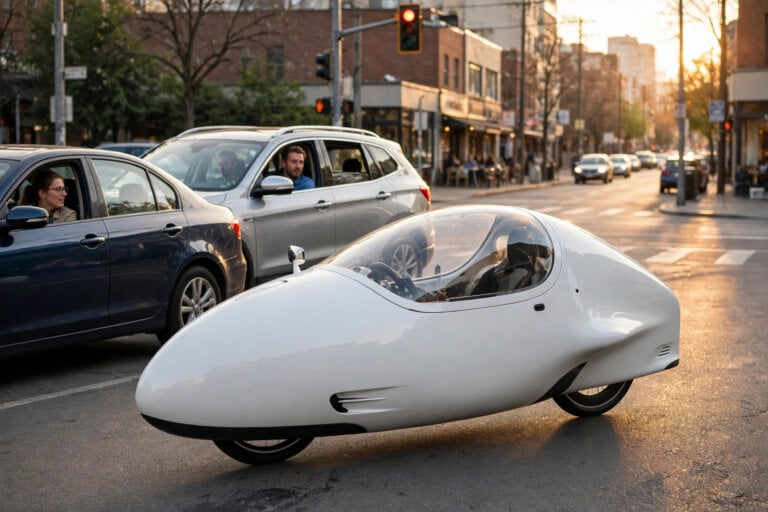
What is a velomobile? A human-powered vehicle in an aerodynamic shell: a reclined trike with a Cd of 0.05–0.10 that cruises at 25–30 mph on 150W plus assist, sips 8–15 Wh per mile, and runs from $500 DIY shells to $7,000–12,000 factory machines, at 1/25th of a car’s energy.
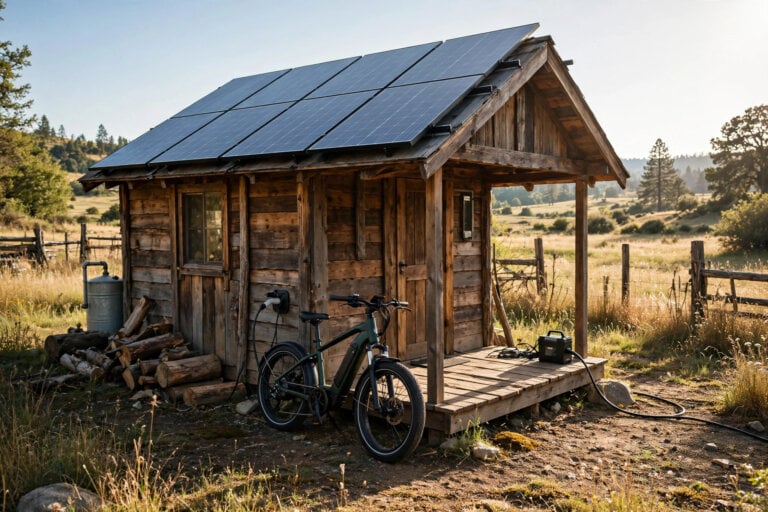
Charge an e-bike from off-grid solar: a full charge is just 0.5 kWh — free at midday from the house array, or from a 200–400W dedicated station at $250–500 yielding 1–2 kWh a day. Go DC-direct at 90%+, size panels at daily Wh ÷ 5 × 1.3, and unplug at 80%.
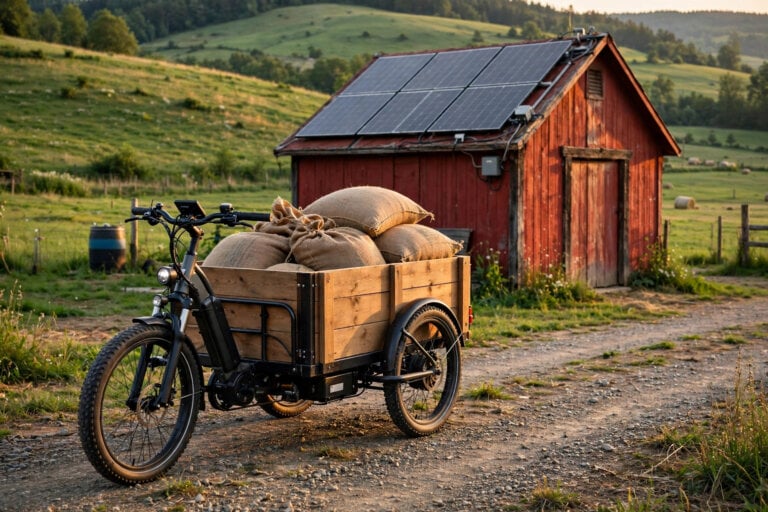
The best electric cargo bikes for off-grid homesteaders and eco-farmers: 400+ lbs of capacity, mid-drive torque of 80+ Nm, 4-piston brakes and a 500Wh battery charged from a 400W panel — the homestead truck with pedals that replaces 80% of farm-truck trips and pays back in under 2 years.
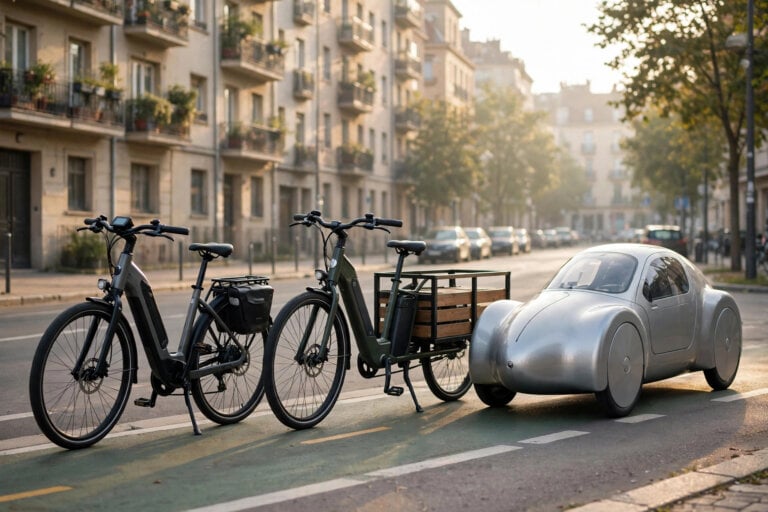
Sustainable transportation quiz: seven questions across distance, cargo, weather, terrain, budget and parking match you to your eco-vehicle — the commuter e-bike at $1,500–2,500 for most riders, the 400-lb cargo e-bike, or the $7,000–12,000 velomobile. Rule one: buy for the worst day, not the best one — the one you’ll ride in February.

Which US cities have the best urban agriculture and sustainable living codes? The ones granting all five permissions — chickens at the 4–6 hen standard, bees, front-yard gardens, rainwater and composting. Portland, Austin, Seattle, Detroit and Minneapolis lead; Denver allows 8 hens, and the 10-minute code check settles any city before you move.

Where to move to survive climate change, scored on data: a 95°F wet-bulb heat limit, a 3-foot sea-level century, aquifer trends and fire distance, ranked water, heat, fire, storms over a 30-year horizon to 2055 — favouring the water-rich Great Lakes, inland New England and Appalachia.
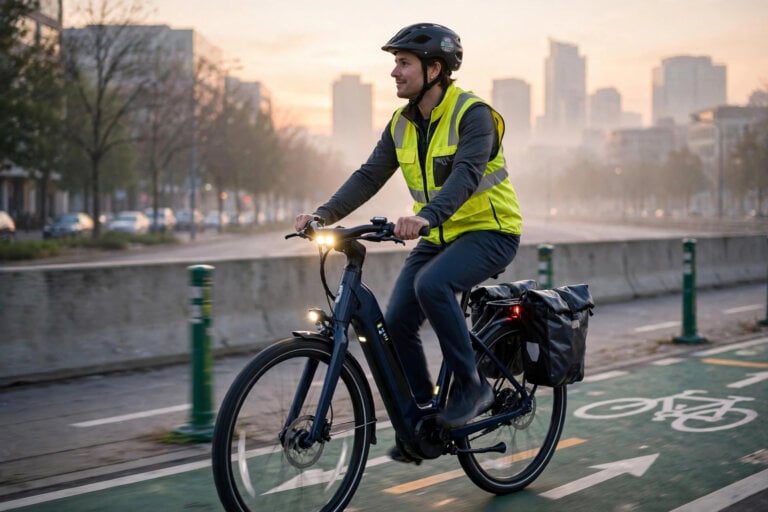
E-Bike Commuting 101: size your battery with the range math — 20 Wh per mile times your round trip times 1.5, so 20 miles needs 600Wh — pick hub for flat or mid-drive for hills on torque, demand hydraulic discs, charge to 80% daily, and pay it back in 6–18 months.
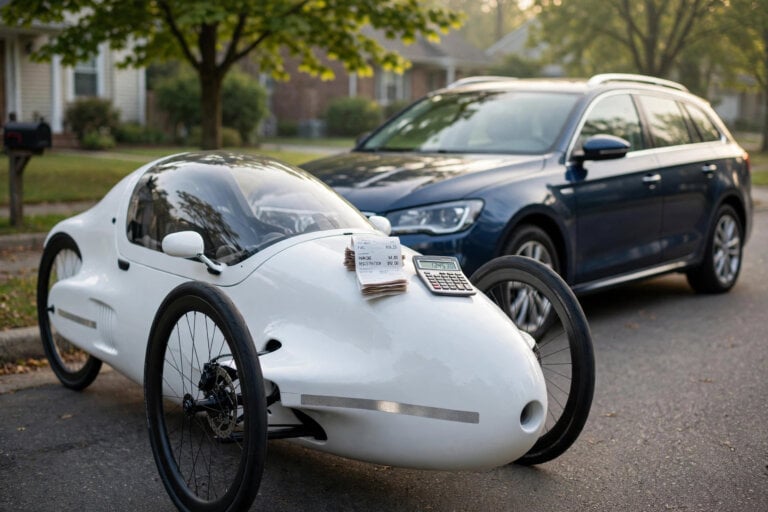
The cost of owning a velomobile runs from $7,000–12,000 new — or $3,000–6,000 used — then settles into bicycle money: $150–300 a year in maintenance, about $0.02 a mile in energy, EU specialty insurance at €100–300 a year, and a five-year total near $15,000 against a second car’s $50,000.
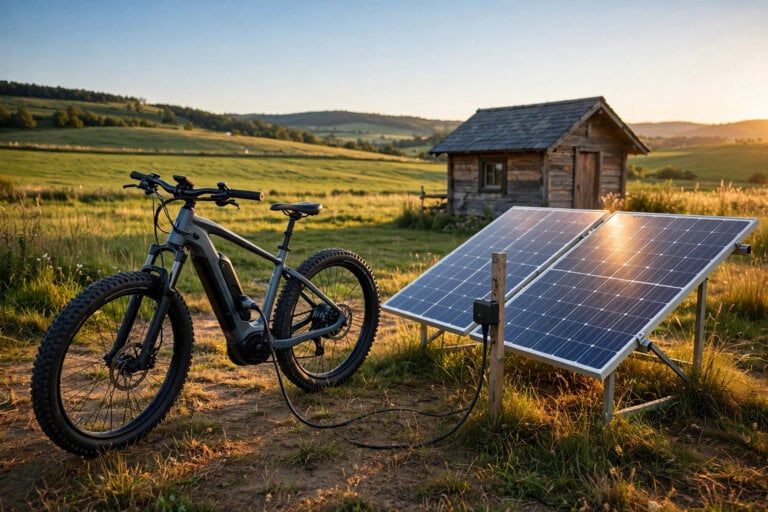
The best solar chargers for e-bikes, sized honestly: 200–400W of panel fills a standard 500Wh battery in a day of sun, MPPT boost chargers convert DC-direct at 90%+ efficiency, folding panels run $150–350, and a house array charges at $0 marginal cost — sunlight in, miles out.

Where to buy land for eco-living, scored out of 100: water carries 25 points (a 5 gpm well minimum, 30″+ rainfall), sun and soil 20 each, zoning 15, access and price 10 each — score three parcels, visit in February, and buy only at 70 or above.
Sustainable Living Quiz: score your ecological footprint across food, housing, transport, goods and services in global hectares — the average American runs ~8 gha against a sustainable share of ~1.6 — then shrink it with the ranked moves, from ditching the second car to stopping food waste.

Velomobile DIY kits put a streamlined machine within garage reach: kits at $1,500–4,000, plans at $50–200, a coroplast shell for $200–500 over a used trike, or fiberglass at $500–1,500 — $1,000–4,000 all-in against $7,000–12,000 factory, at 80–95% of the result.