

Once your tiny house is framed, one decision decides whether the walls stay dry and the heating stays affordable: how do you keep the water out and the air in? For a stationary house the answer is often a matter of preference. For a Tiny House on Wheels travelling down the highway at 60 MPH, the stakes are different — and the wrong barrier can be shredded before the siding ever goes on.
1. Tyvek and ZIP at a Glance
The Tyvek vs. ZIP System choice is a choice about where the weather barrier lives. In the traditional system it lives in a separate sheet: standard plywood or OSB sheathing goes up first, and a plastic weather-resistive barrier is stapled over the top. In the modern system it lives in the panel itself: the ZIP System is an integrated sheathing whose weather-resistant coating is fused to the face of the board during manufacturing, so you install the panel, tape the seams, and you are done. Everything else in this guide — the flapping, the nails, the weight, the verdict — follows from that one difference. The table gathers the whole battle in one place; the sections after it take each row apart.
| Attribute | Detail |
|---|---|
| The Job | One layer behind the siding that keeps water out and air in |
| The Traditional System | Plywood or OSB sheathing first, then house wrap stapled over it |
| The Modern System | An OSB panel with the weather coating fused to its face — nail it up, tape the seams |
| The Highway Factor | 60 MPH wind against a house that may travel before the siding is on |
| The Wrap’s Weakness | Loose plastic acts like a sail; every staple through it is a tiny hole |
| The Panel’s Weakness | An over-driven nail breaks the green coating and opens a leak point |
| The Weight Difference | ZIP panels run about 50–80 lbs heavier than standard 7/16″ OSB across a whole house |
| The Air Seal | Flat, rigid seams tape tighter than wrinkled plastic ever can |
| The Cost Shape | Wrap and standard OSB are cheaper; ZIP panels and their proprietary tape cost more |
| The Verdict | ZIP for most houses on wheels; Tyvek when budget, shelter or sourcing says so |
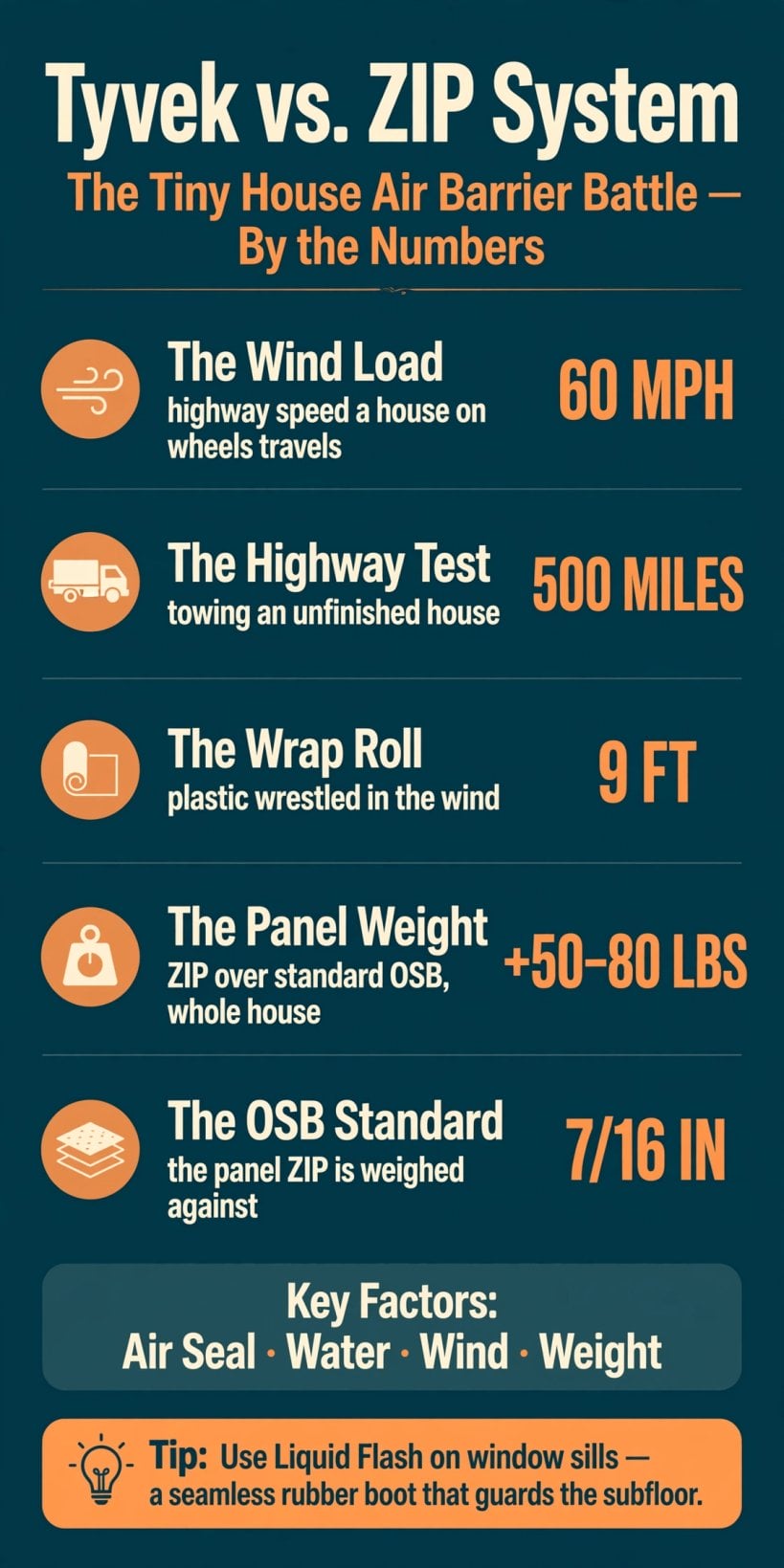
60 MPH of wind, a 500-mile tow, 9-foot rolls of plastic and a 50–80 lb weight gap — the air barrier battle on one card.
2. The Barrier’s Job: Water Out, Air In
Every wall in this comparison is asked to do two jobs at once, and they pull in opposite directions. The barrier has to shed the water that gets behind the siding — because some always does — while also stopping the air that leaks through every seam, corner and fastener hole. A wall that only sheds water still bleeds heated air all winter; a wall sealed tight against air but careless with water traps moisture where nobody can see it. The barrier layer is where both jobs are won or lost, which is why it deserves a decision of its own rather than whatever happens to be on the truck.
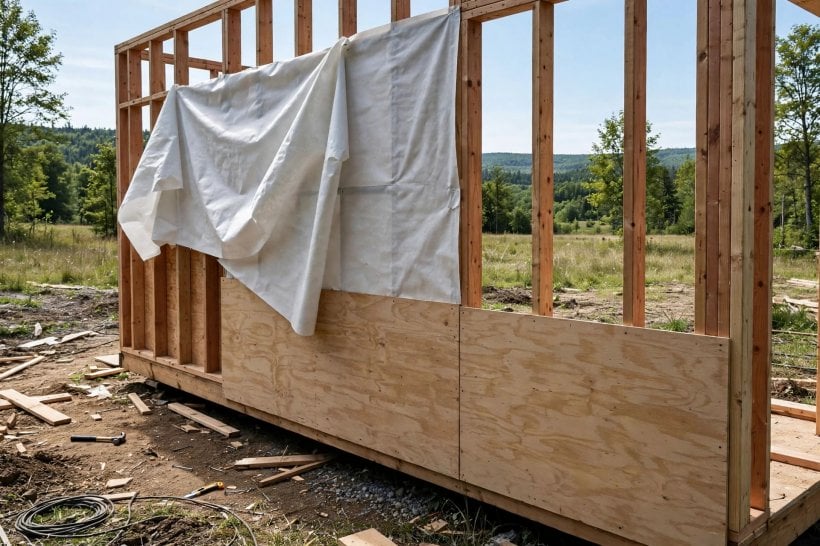
It also does not work alone. Above it, the roof edge decides how much water the wall ever sees — the work of eaves and overhangs for tiny homes is to throw rain clear before the barrier is tested. On its face, a ventilated gap can stand between the barrier and the siding, draining and drying whatever gets through: that is the assembly a rain screen installation builds, and it treats the barrier beneath as the actual water barrier of the wall. Whichever system you choose below, it becomes that layer — the last line the water meets and the line the air seal is measured by.
3. Two Ways to Build the Same Layer
The traditional route builds the barrier in two passes. First the structure gets its skin: standard plywood or OSB sheathing is nailed over the framing, giving the wall its rigidity. Then the weather layer is added as a separate material — a plastic sheet, the Weather Resistive Barrier — unrolled across the sheathed wall and stapled down, with windows and seams taped as part of the detailing. Two materials, two passes, and a finished layer that is only as good as the stapling, folding and taping done on the day.

The modern route collapses those two passes into one. The ZIP panel leaves the factory with its weather-resistant coating already fused to the face of the OSB, so the sheathing and the barrier are the same board. Install the panel and the wall is rigid and weather-coated in a single step; tape the seams between panels and the layer is continuous. There is no second material to unroll, nothing loose to staple, and no separate sheet whose condition depends on the weather during install week. Same job, same position in the wall — one system assembles the layer on site, the other manufactures it.
4. The Traditional Choice: House Wrap Over Sheathing
House wrap earned its decades as the standard answer honestly. The method is simple to describe and forgiving to watch: sheathe the house in plywood or OSB, then wrap it. The plastic sheet drapes over corners, folds into openings and covers the whole elevation in a continuous skin, held by staples and finished with tape at the seams and windows. For generations of builders on stationary houses, that was the end of the weatherproofing question — the wrap went on, the siding went over it, and the system quietly worked.
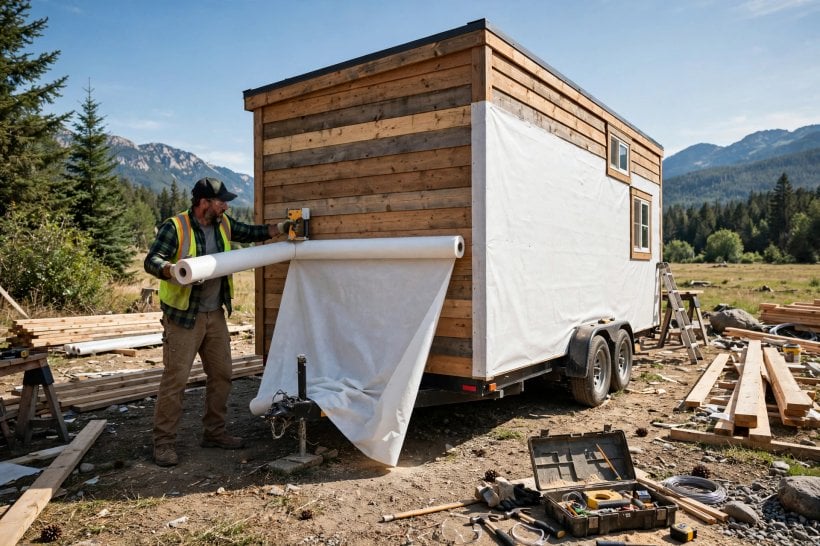
Understanding its strengths and its failures means holding one fact in view: the barrier in this system is a loose sheet, mechanically fastened at intervals, relying on laps, folds and tape for continuity. Everything good about it — the low cost, the forgiveness, the availability — flows from it being a simple roll of plastic. Everything that goes wrong with it on a tiny house flows from exactly the same fact. The next two sections take the two sides in turn.
5. Where Tyvek Wins: Cost, Forgiveness and Availability
Cost is the first and plainest advantage. Standard OSB plus a roll of house wrap is generally cheaper than ZIP panels — the traditional wall is built from commodity materials with no proprietary anything, and for a build where every line of the budget is contested, that gap is real money left for the parts of the house you can see and touch.
Forgiveness is the second. Framing a tiny house is imperfect work, especially a first build: studs wander, corners drift, cuts come out rough. If you are a messy framer, you can cover a lot of ugly carpentry with a sheet of Tyvek — the wrap drapes over the sins and presents a clean, continuous face to the weather regardless of what the sheathing underneath looks like. A rigid panel system, by contrast, shows every irregularity it is fastened over.
Availability is the third, and for rural builds it can be the deciding one. You can buy rolls of wrap and standard OSB at any rural hardware store — no special order, no waiting on a supplier who stocks the green boards, no project stalled because the one yard in the county does not carry your system. A barrier you can actually buy beats a better barrier you cannot source, every time.
6. Where Tyvek Fails on Wheels: The Flapping Factor
The biggest risk is the one a stationary house never presents. If you have to move your tiny house before the siding is installed, house wrap acts like a sail. Highway winds get under the loose sheet, and the outcomes compound: the wrap shreds, staples rip out, and your waterproofing is compromised before you even finish the build. The barrier was detailed for rain falling vertically on a parked wall; the highway delivers wind horizontally at 60 MPH against a house whose protective siding is not on yet.

The detailing is the second weakness. Properly taping windows and seams on loose plastic requires skill — the folds around corners are origami, and wrinkles in the wrap can trap water against the wall or fold into channels that move air exactly where the seal was supposed to be. The third weakness is built into the fastening itself: every staple you drive through the wrap is a tiny hole, and if those holes are not covered by siding or tape properly, each one is a potential leak point. None of these flaws matter much on a house that never moves and gets sided within the week. On a house that travels unfinished, they are the whole story.
7. The Modern Contender: The ZIP System’s Integrated Sheathing
The ZIP System starts from the opposite instinct: instead of adding the barrier to the sheathing, fuse them. The panel is OSB with its weather-resistant coating bonded to the face during manufacturing — the green boards that have taken over the custom home building world in recent years. What arrives on site is a rigid board that is structure and weather layer at once, with its surface already sealed before a single nail is driven.

Installation follows the panel’s logic. The boards are nailed up like any sheathing; then the seams between them are taped, and the wall is done — weather-tight, air-sealed, finished. There is no second pass with a different material, no loose layer waiting for its own install day. The system’s strengths and weaknesses both live in that integration, and they are the mirror image of the wrap’s: what the panel gains in rigidity and permanence, it risks at the points where its manufactured surface gets breached.
8. Where ZIP Wins: Road Durability, Air Sealing and Speed
Road durability is the headline. Because the barrier is fused to the wood, it cannot peel or tear off in the wind — there is nothing loose to catch the air. You can drive a ZIP-sheathed tiny house down the highway without siding, and it will remain waterproof at the other end. The failure mode that defines the wrap on wheels simply does not exist here.
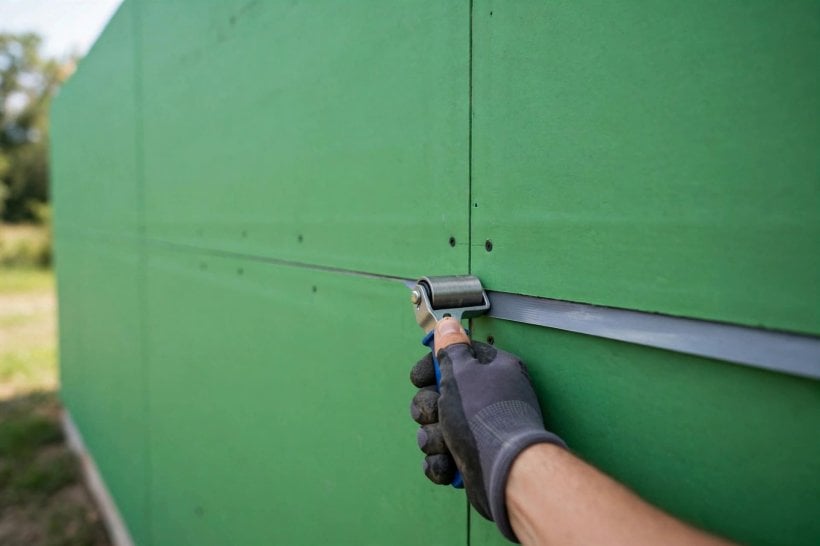
Air sealing is the second win, and it compounds for the life of the house. Taping flat, rigid seams is infinitely easier than taping wrinkled plastic, and the result is a tighter air seal — which makes the tiny house easier to heat and cool every day it is lived in. The barrier is half of that equation; the insulation inside the same studs is the other half, and the insulation strategy analyzer scores it on the wall’s own numbers. Speed is the third win: you skip an entire step. Once the sheathing is nailed up, you just tape the seams — no wrestling with 9-foot rolls of plastic in the wind while a half-wrapped wall waits.
9. Where ZIP Hurts: Over-Driven Nails, Cost and Weight
The Achilles heel is a nail gun setting. If you drive a nail too deep and break the green surface coating, you have created a leak point — the manufactured seal is only as good as its unbroken face. The discipline this imposes is absolute: you must go back and seal every over-driven nail with liquid flash or tape, which means inspecting the wall fastener by fastener and treating each breach as the hole it is.
Cost is the second count against it: the panels are more expensive per sheet than standard OSB, and the proprietary flashing tape the seams depend on is pricey — the system keeps charging its premium at the tape roll long after the boards are up. Weight is the third. ZIP panels are slightly heavier than standard 7/16″ OSB due to the density and resin, though the difference is usually negligible for a whole house, at approximately 50–80 lbs total. Negligible is not the same as imaginary on a trailer, where every pound is counted against the tow — the discipline behind the tiny house tongue weight calculator applies to sheathing choices too. None of the three is a reason to refuse the system; together they are the price of it, and a builder should pay it with eyes open.
10. The Highway Test and the Verdict for DIYers
The original comparison runs one thought experiment: imagine towing your unfinished tiny house 500 miles. Scenario A is the wrapped house. You must secure every inch of the wrap with cap nails and tape before you roll — and even then, wind can get under a seam and balloon the wrap, potentially tearing it away from the window flashings mid-journey. Scenario B is the panelled house: the air flows over the smooth, rigid surface, the acrylic tape — once rolled — bonds molecularly to the panel and gets stronger over time, and nothing flaps, nothing tears.
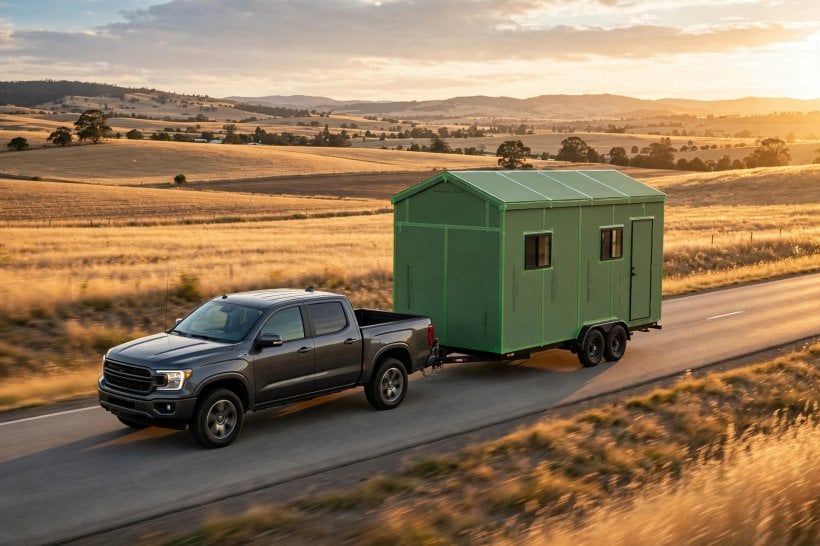
For a Tiny House on Wheels, the verdict follows: the ZIP System is generally the superior choice. It wins on risk reduction, eliminating the chance of your weather barrier tearing during construction or transport. It wins on simplicity, because taping seams is a more foolproof way for a DIYer to get a perfect air seal than the origami required to fold and tape house wrap around corners. And it wins, slightly, on rigidity — the structural adhesive in the tape helps a little with the overall stiffness of the shell, which is great for a moving structure. The same road-first thinking governs the glass, as selecting windows for road safety argues, and the cladding that eventually covers the barrier gets its own head-to-head in the Hardie vs. LP SmartSide siding showdown.
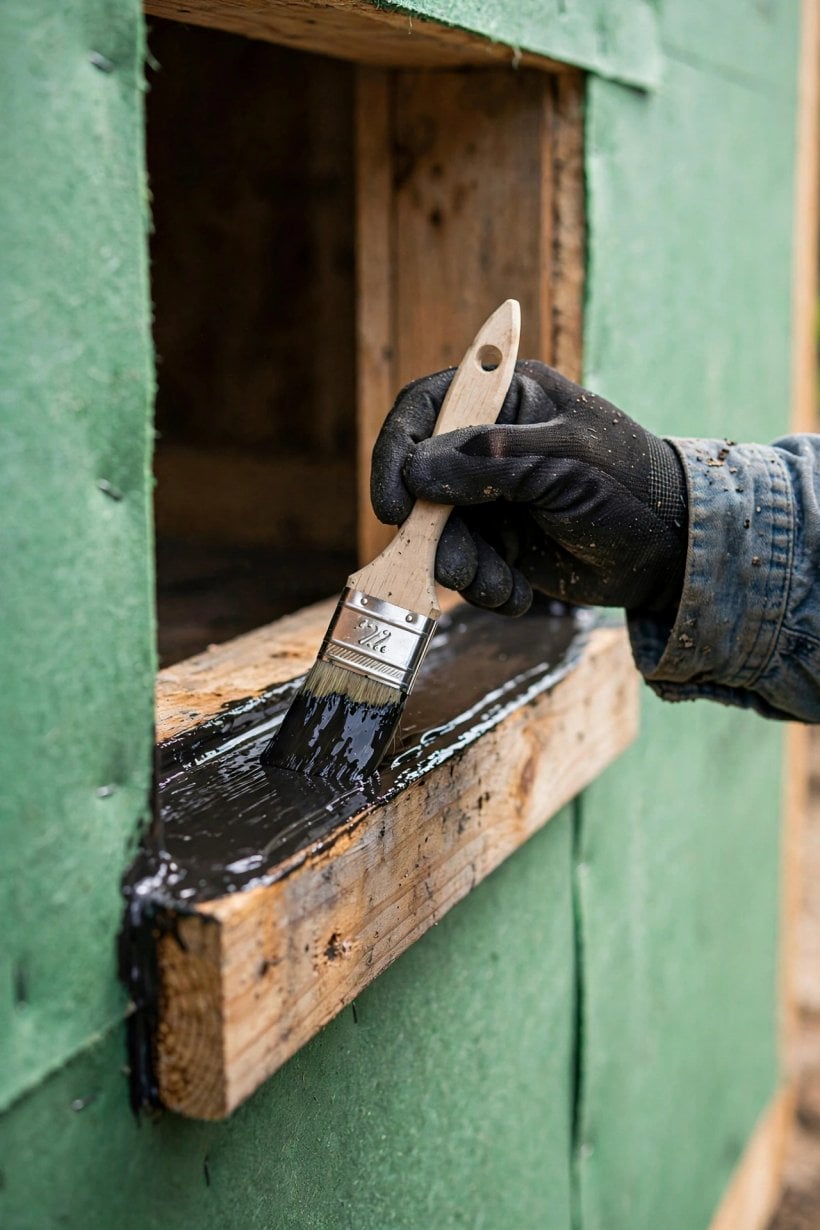
Stick with Tyvek in three situations: you are on a strict budget; you are building the house completely indoors and won’t move it until the siding is fully installed; or you can’t source ZIP panels in your area. And one pro-tip for ZIP builders: spend the extra money on their Liquid Flash for window openings. Instead of tape, you spread this goo over the window sill framing, and it creates a seamless, rubber-like waterproof boot that is impossible for water to penetrate — perfect for protecting your subfloor from window leaks.
Final Considerations
The barrier decision is really a decision about how your house will travel and who will detail it. A wrapped wall is cheaper, more forgiving and buyable anywhere, and on a house built indoors and sided before its first tow, those virtues can settle the argument. A panelled wall costs more, weighs a little more and punishes every careless nail — and in exchange it removes the one failure a house on wheels cannot afford, a barrier destroyed by the journey itself. File the idea that the two are interchangeable under the other tiny house myths: they do the same job in the wall, but they are built for different lives. Choose for the life your house will actually live — the miles it will tow, the order it will be finished in, and the hands that will tape its seams — and the wall will keep the water out and the air in for all of it.


2 Comments