
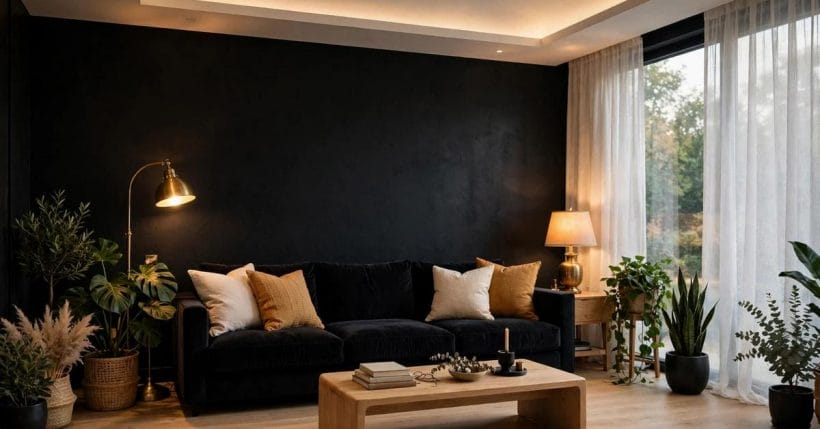
Black is a brave choice for a living room, and a rewarding one. Used as the dominant colour rather than a passing accent, black gives a room depth, calm and a sense of occasion, the way a darkened theatre makes the stage feel closer. The ideas below stay firmly in that black living room territory, so every suggestion assumes black walls, black seating or black furniture leading the room, with lighter colours playing a supporting part.
Black rooms succeed on balance. A black sofa needs light beside it, a black wall needs a lighter companion somewhere nearby, and a dark corner needs a lamp rather than another dark object. That balance is the thread running through all seventy-five ideas here: layouts that keep the room open, sofas that anchor rather than crowd, colours that warm black up, textures that keep it soft, and lighting layered so the room glows in the evening instead of disappearing into shadow.
One boundary matters throughout. Anything involving wiring, new circuits or fixed light fittings belongs to a qualified electrician, and this guide never asks you to do that work yourself. The lighting ideas here stick to what any householder can change safely: plug-in lamps, shades, placement, and asking a professional about anything fixed. With that settled, start with the wall, because in a black room the wall sets the tone for everything else.
1. Black Feature Walls That Anchor the Room
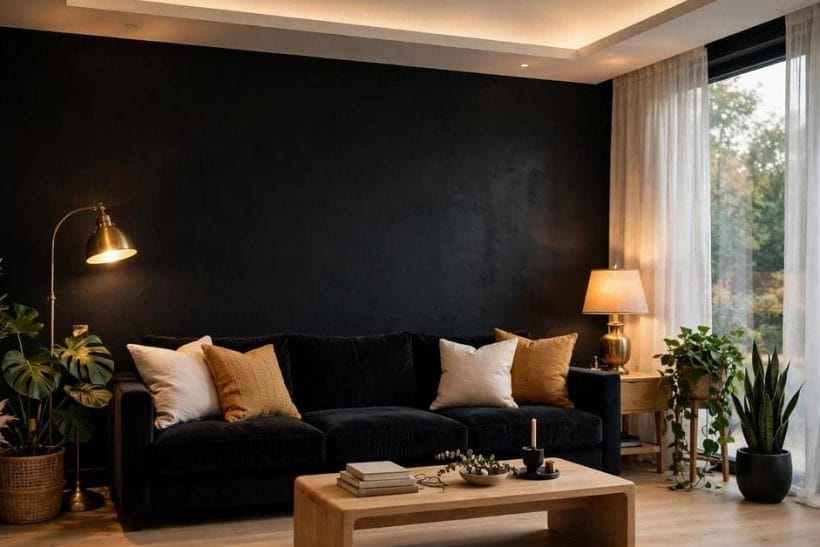
A black feature wall is the simplest way to commit to black without painting every surface dark. It gives the eye somewhere to land, it makes the sofa wall feel deliberate, and it leaves the remaining walls free to bounce light back into the room. Choose the wall you look at most, usually the sofa wall or the fireplace wall, and let that one carry the drama.
| Item | What it is |
|---|---|
| One Black Wall Behind the Sofa | Paint the wall behind the sofa black and keep the other walls light, so the seating reads as a composed group rather than furniture adrift in a dark box. |
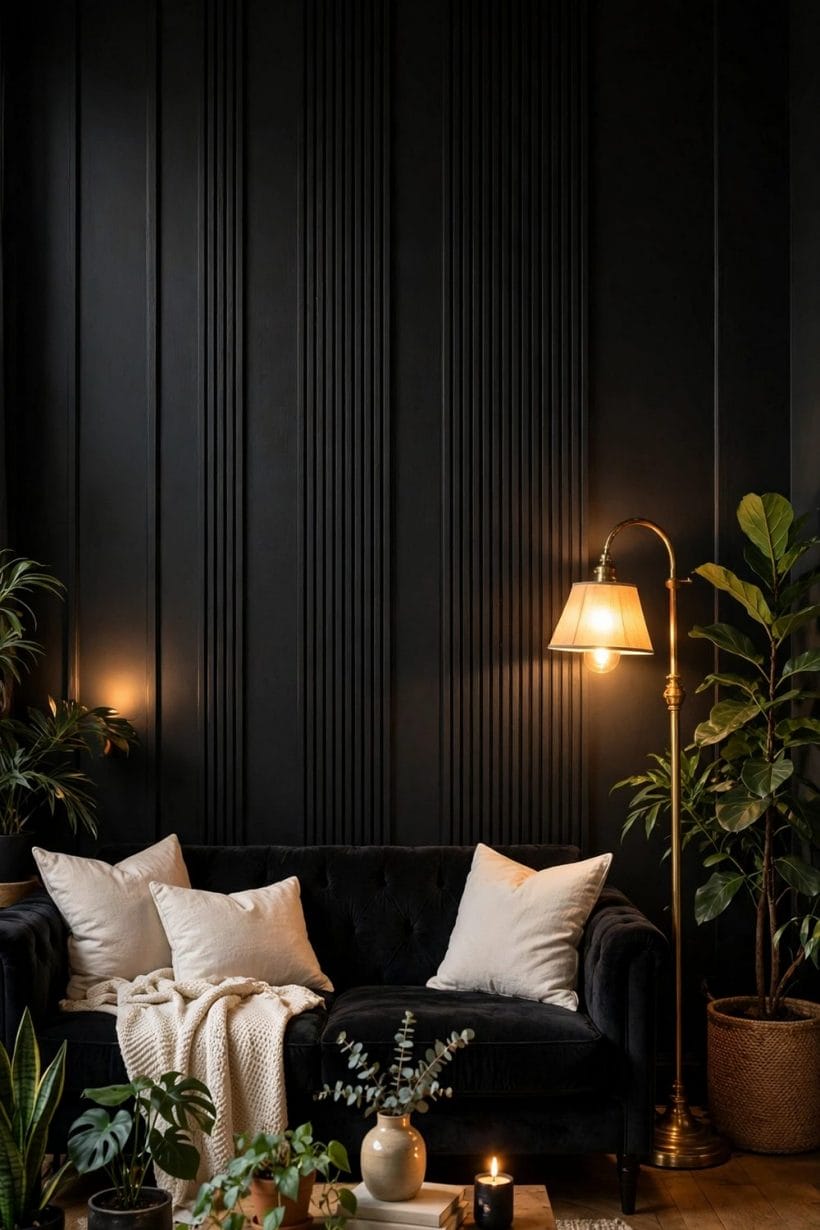
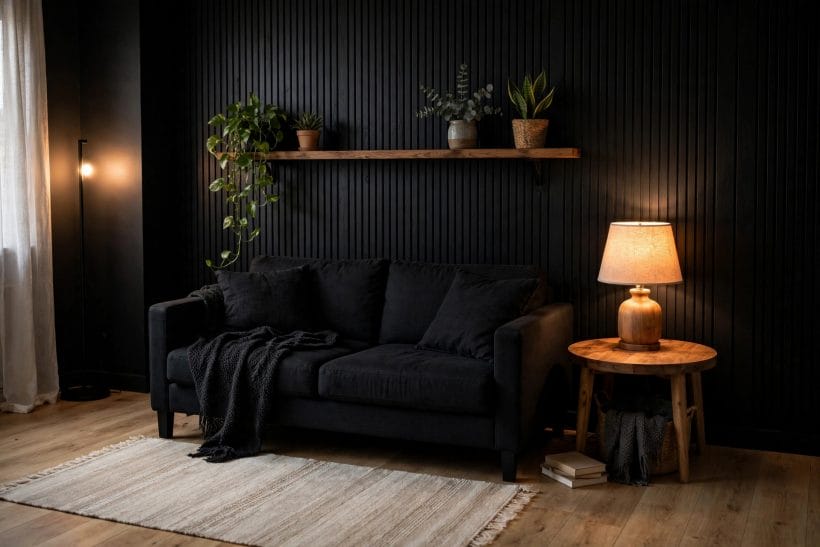
| Black Panelling for Depth | Flat black paint can look thin under strong light, while panelling or slatted boards add shadow lines that give the wall depth even in daylight. |
| Black Brick for Texture | A black brick wall, painted or naturally dark, brings a rough, tactile surface that softens black with variation from brick to brick. |
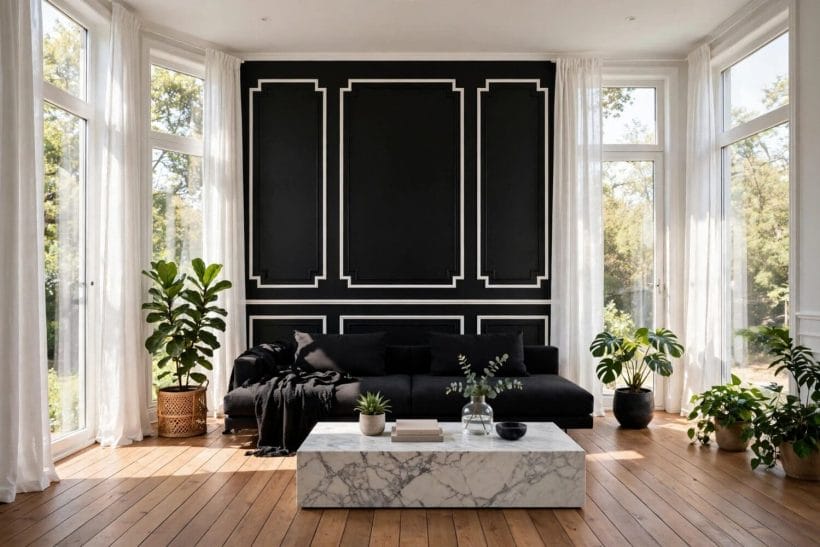
| Black and White Trim Contrast | Crisp white trim around doors, windows and skirting boards keeps a black wall from bleeding into the rest of the room. |
| Black Around the Television Wall | A television sits more quietly against a black wall, because the dark screen blends into the dark surface when it is switched off. |
| Black Alcoves and Recesses | Alcoves painted black read deeper than they are, which makes them ideal for displaying a vase, a plant or a small stack of books. |
| Black Half Walls with a Light Upper Half | If a full black wall feels too bold, paint only the lower half black and keep the upper half light. |
| Black Wallpaper with a Quiet Pattern | A black wallpaper with a subtle pattern, such as a faint damask, a fine stripe or a botanical outline in a slightly lighter black, adds movement without adding colour. |
| A Black Velvet Three-Seater | A black velvet three-seater is the classic centrepiece of a black living room, rich in texture and forgiving in shape. |
| A Black Leather Sofa | Black leather brings a tailored, structured look that suits rooms with clean lines and darker wood. |
| A Black Sectional for Family Rooms | A black sectional anchors a family room by giving everyone a corner, and its long shape naturally divides an open space into a seating zone. |
| Black Armchairs as Accents | If a full black sofa feels like too much, start with black armchairs flanking a lighter sofa. |
| A Black Loveseat for Small Rooms | A compact black loveseat gives a small room the drama of black without the bulk of a three-seater. |
| Black Seating with Cream Cushions | Cream cushions are the simplest softener for black seating, and they work in every season. |
| A Black Chaise for Reading Corners | A black chaise tucked into a corner, beside a window and a plug-in reading lamp, turns an awkward corner into the most fought-over seat in the house. |
| Mixed Black and Natural Seating | Mixing a black sofa with natural chairs, such as rattan, light wood or cane, stops black from dominating the room entirely. |
| Sofa Facing the Window | Placing the sofa opposite the main window means you look toward light rather than away from it, which keeps a black seating group feeling bright through the day. |
| An Open Plan Living and Kitchen Flow | In an open plan home, a black living area can sit beside a lighter kitchen without either space losing its character. |
| Floating the Sofa Away from the Wall | Pulling the sofa a little way off the wall creates a walkway behind it and stops a black sofa from merging visually with a black wall. |
| A Reading Corner by the Light | Reserve the brightest corner of the room for reading, with a comfortable chair, a plug-in lamp and a small table. |
| Twin Sofas Facing Each Other | Two sofas facing each other across a coffee table create a conversation room rather than a television room. |
| A Layout Around a Low Coffee Table | A low, light-toned coffee table is the hinge of a black seating group, because it breaks up the dark expanse at knee height where the eye naturally rests. |
| Keeping Walkways Clear and Wide | Clear walkways matter doubly in a black room, since dark furniture edges are harder to see in low light. |
| A Corner Arrangement for Conversation | An L-shaped corner arrangement gathers seating into a sociable nook and leaves the rest of the room open. |
| Cream and Ivory Softeners | Cream is black's kindest partner, softening every edge it touches. |
| Warm Wood Tones | Warm wood, from honey oak to deep walnut, stops black from feeling cold. |
| Brass and Gold Accents | Brass lamps, picture frames and table legs catch light and throw it back across black surfaces, which is why brass is the classic metal for black rooms. |
| Rust and Ochre Warmth | Rust and ochre cushions bring an autumn warmth that suits black beautifully, especially in rooms with wooden floors. |
| Soft Grey Layers | Soft greys bridge black and white, giving a black room a gradient instead of a hard contrast. |
| Green Plants Against Black | Green plants are the liveliest partner black can have, because their leaves glow against dark walls. |
| White Ceilings and Light Floors | A white ceiling and a light floor are the frame that keeps a black room from closing in. |
| Velvet Against Matte Walls | Velvet seating against a matte black wall is a study in light: the wall absorbs it, the velvet catches it in shifting folds. |
| Linen and Cotton Layers | Linen and cotton cushions and throws bring a casual, breathable softness that stops black from feeling formal. |
| Wool Throws and Knitted Cushions | Chunky wool throws and knitted cushions add a handmade warmth that contrasts with black's sleekness. |
| Natural Wood Tables | A natural wood coffee table or side table warms a black seating group from the centre outward. |
| Woven Baskets and Rugs | Woven baskets for throws and magazines, and a woven rug under the coffee table, add a basketry texture that black rooms love. |
| Leather and Metal Contrast | Pairing smooth leather seating with brushed or brass metal, in lamp bases, table legs or frames, gives a black room a tailored edge. |
| Sheer Curtains Over Dark Walls | Sheer curtains soften the meeting point between a black wall and a window, filtering daylight into a gentle glow. |
| Three Layers of Light | Start by listing the three layers for your room: a ceiling light for general brightness, lamps beside seating for reading and conversation, and small accent lights for features you want noticed. |
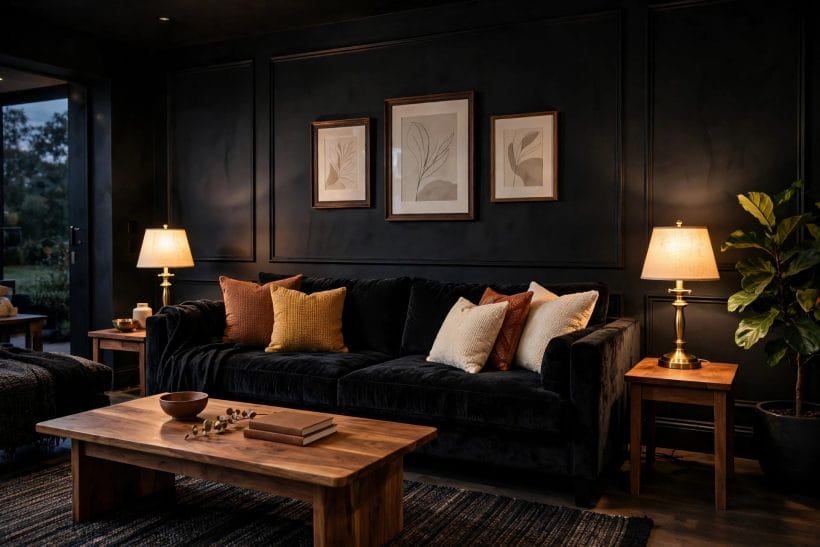
| Warm Table Lamps Beside the Sofa | A pair of warm-toned table lamps on side tables flanking the sofa is the single most effective move in a black living room. |
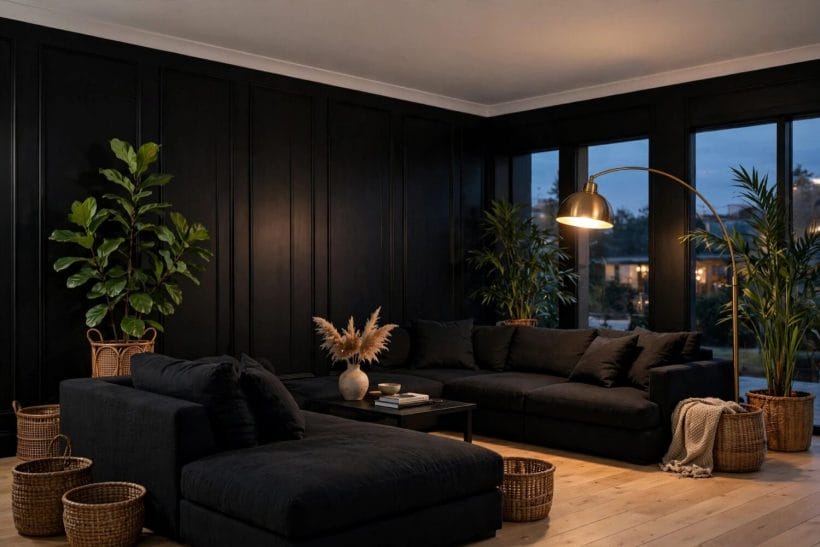
| A Brass Floor Lamp for Reading | An arc or standing floor lamp in brass gives a reading chair its own pool of light and adds a vertical line of warmth against a black wall. |
| Wall Sconces for Evening Glow | Wall sconces wash light up and down a black wall, revealing its texture and softening its edges. |
| Ceiling Glow Without Harshness | A ceiling light in a black room should glow rather than glare, so favour shaded fittings and warm-toned bulbs over bare bright sources. |
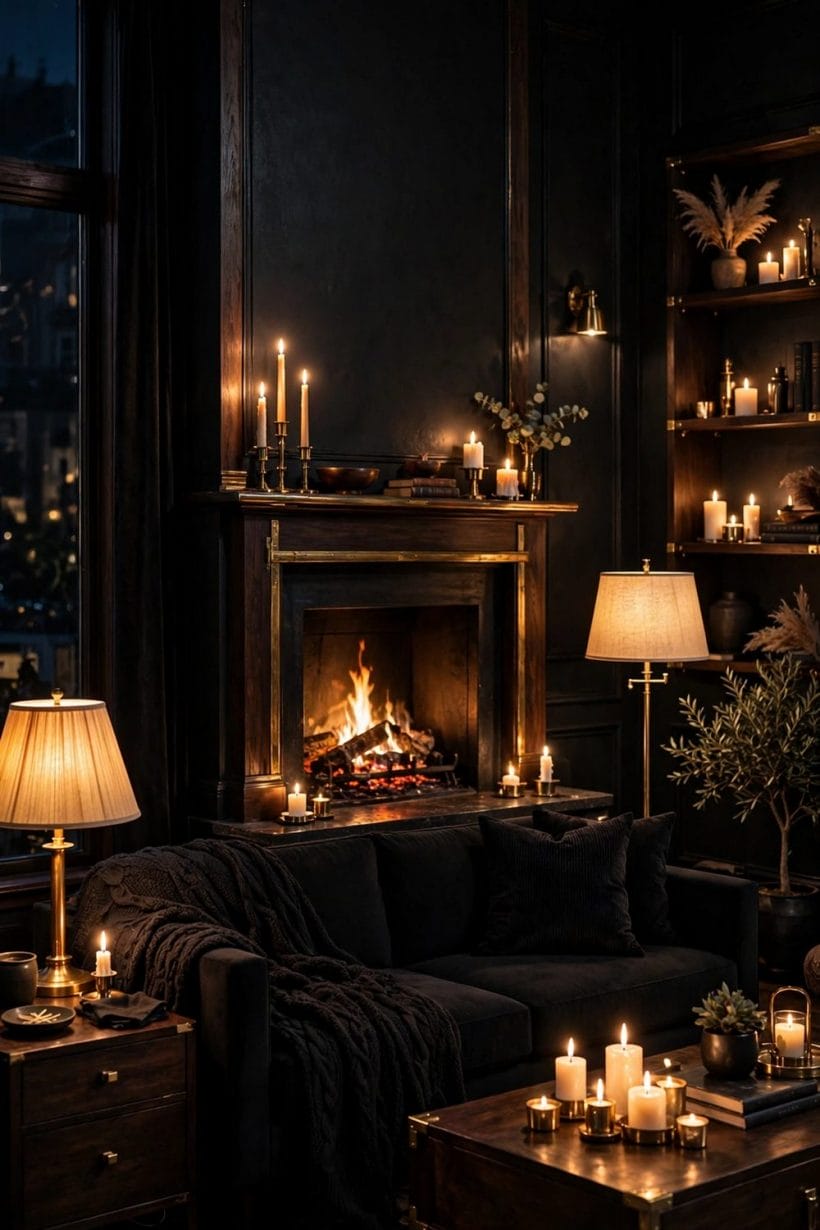
| Candles and Firelight | Candles in sturdy holders and a lit fireplace add a flickering warmth that electric light cannot quite copy, and they suit black rooms especially well. |
| Daylight as the First Layer | Before adding any lamp, make the most of daylight: keep windows unblocked, use sheer rather than heavy curtains in daytime, and place mirrors where they can bounce window light deeper into the room. |
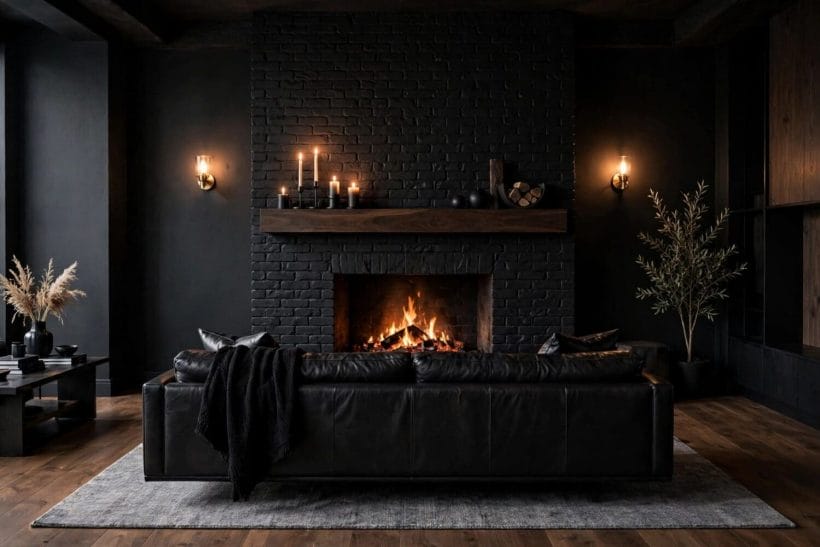
| A Black Fireplace Wall | Painting the whole fireplace wall black turns the fireplace into the room's anchor, with the fire opening as a bright centre against dark surroundings. |
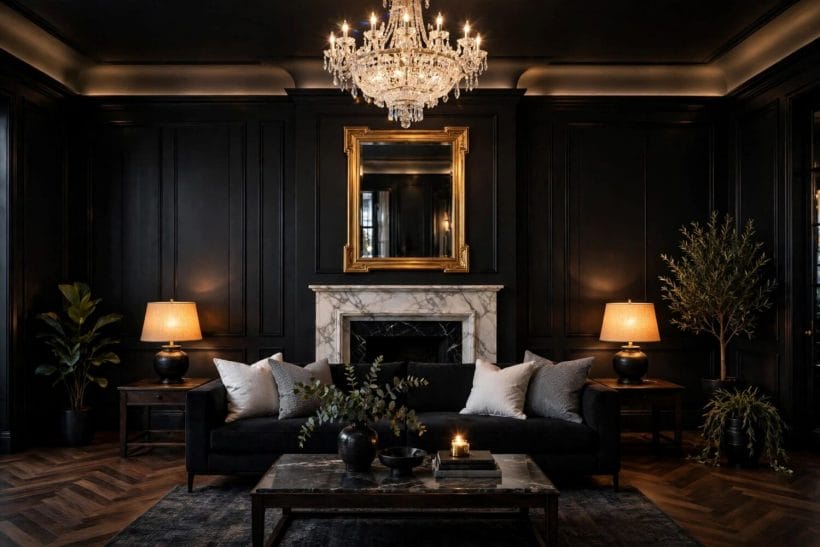
| A Marble Fireplace with Black Surround | A pale marble fireplace set into a black surround gains drama from the contrast, with the marble's veining standing out crisply against the dark wall. |
| A Mirror Above a Black Mantel | A mirror above a black mantel doubles the room's light and gives the fireplace wall a bright centre even when the fire is unlit. |
| Art as the Focal Point | A single large artwork on a black wall makes a stronger focal point than a gallery of small pieces, because the dark wall acts as a frame. |
| A Black Media Wall | A black media wall, with shelving and a screen set into dark panels, hides the clutter of boxes and cables behind a unified surface. |
| Bookshelves in Black | Bookshelves painted black turn a book collection into a textured wall of colour and shape. |
| One Bold Object, Not Many | In a black room, one bold object — a sculptural chair, a large vase, a striking lamp — does more work than a dozen small ones. |
| Black on a Single Wall Only | In a small room, restrict black to a single wall and keep the rest light. |
| Mirrors to Open a Black Room | A large mirror opposite a window doubles the daylight in a small black room and makes the dark wall feel less enclosing. |
| Light Rugs on Dark Floors | If the floor itself is dark, a light rug under the seating group creates a bright island that the eye reads as the room's centre. |
| A Compact Black Sofa | Choose a compact black sofa with slim arms and raised legs for a small room, so floor shows beneath it and the piece reads as furniture rather than a block. |
| Vertical Storage in Black | Tall, narrow black shelving draws the eye upward and uses wall height that would otherwise go to waste. |
| Black in a Tiny Living Room | Tiny living rooms can carry black surprisingly well when the black is concentrated: one wall, one sofa, one rug border. |
| Glass and Light Furniture Beside Black | Glass-topped tables and pale legged chairs beside black seating keep a small room visually light, because the eye passes through or under them. |
| Keeping Small Black Rooms Tidy | Clutter shows more harshly against black than against light colours, because every pale object stands out against the dark ground. |
| Modern Black Minimalism | Modern black minimalism pairs flat black walls with low, simple furniture and very little ornament. |
| Farmhouse Black with Warm Wood | Farmhouse black leans on warm wood, woven textures and comfortable, slightly worn furniture to keep black feeling homely. |
| Scandinavian Black and White | Scandinavian rooms use black as a graphic accent against white walls, pale floors and simple wooden furniture. |
| Traditional Black Elegance | Traditional black rooms pair dark walls with classic furniture shapes, framed art and brass details for an elegant, established feeling. |
| Rustic Black with Rough Wood | Rustic black rooms combine dark walls with rough-sawn timber, stone and leather for a cabin-like warmth. |
| Contemporary Black with Clean Lines | Contemporary black rooms favour smooth surfaces, geometric furniture and a restrained palette with one warm accent. |
| A Black Room with Vintage Finds | Vintage finds, such as a second-hand armchair, an old mirror or a flea-market lamp, give a black room a story that new furniture cannot. |
| Cushions You Can Change with the Seasons | Keep a small store of cushion covers in different tones, so the room can shift from cool linen in summer to wool and rust in winter. |
| Throws Within Easy Reach | A throw draped over a sofa arm or folded in a basket beside the seating is both decoration and invitation. |
| Trays to Keep Tables Calm | A tray on the coffee table gathers small objects into one composed group, which matters in a black room where scattered pale objects draw the eye. |
| Plants That Thrive in Living Rooms | Choose plants that suit your room's actual light rather than its imagined light, and place them where their green can glow against black. |
| Carrying Black to the Hall and Exterior | Black does not have to stop at the living room door: a black front door, black hallway details or black exterior trim can echo the living room and make the whole home feel connected. |
| Black Rooms with Children and Pets | Black rooms with children and pets work best with washable fabrics, leather or treated cotton, and rugs that can be cleaned. |
1. One Black Wall Behind the Sofa
Paint the wall behind the sofa black and keep the other walls light, so the seating reads as a composed group rather than furniture adrift in a dark box. Cream cushions and a light rug stop the dark wall from swallowing the sofa, and a pair of lamps on side tables gives the arrangement a warm frame after dark.
2. Black Panelling for Depth
Flat black paint can look thin under strong light, while panelling or slatted boards add shadow lines that give the wall depth even in daylight. The grooves catch lamplight in the evening and turn a plain wall into a crafted backdrop, which suits both formal rooms and relaxed family spaces.
3. Black Brick for Texture
A black brick wall, painted or naturally dark, brings a rough, tactile surface that softens black with variation from brick to brick. It pairs naturally with leather seating and wooden tables, and it makes a fireplace wall feel grounded rather than merely dark.
4. Black and White Trim Contrast
Crisp white trim around doors, windows and skirting boards keeps a black wall from bleeding into the rest of the room. The contrast sharpens the architecture, frames the dark surface like a picture, and gives the eye a light edge to follow around the room.
5. Black Around the Television Wall
A television sits more quietly against a black wall, because the dark screen blends into the dark surface when it is switched off. Keep shelving and consoles low and simple on this wall, so the screen does not compete with a crowd of objects, and add a soft lamp nearby so the corner is never only screen glow.
6. Black Alcoves and Recesses
Alcoves painted black read deeper than they are, which makes them ideal for displaying a vase, a plant or a small stack of books. A small plug-in light inside an alcove turns it into a gentle evening feature, and the darkness behind the object makes its shape stand out.
7. Black Half Walls with a Light Upper Half
If a full black wall feels too bold, paint only the lower half black and keep the upper half light. The dark lower section grounds heavy furniture, the light upper section keeps the ceiling feeling high, and a slim picture rail or trim line makes the join look intentional.
8. Black Wallpaper with a Quiet Pattern
A black wallpaper with a subtle pattern, such as a faint damask, a fine stripe or a botanical outline in a slightly lighter black, adds movement without adding colour. Keep the pattern quiet so the wall still reads as black from across the room, and let cushions or art supply any stronger detail.
2. Black Sofas and Seating Arrangements
The sofa is the largest object in most living rooms, so a black sofa is the fastest route to a black room. Fabric choice changes everything: velvet drinks light and looks plush, leather reflects it and looks tailored, and a woven fabric sits somewhere between the two. Pick the fabric for how you live, then soften it with cushions you can change.
9. A Black Velvet Three-Seater
A black velvet three-seater is the classic centrepiece of a black living room, rich in texture and forgiving in shape. Dress it with cream and ochre cushions for warmth, place a wooden coffee table in front, and let brass lamps on either side give it an evening glow.
10. A Black Leather Sofa
Black leather brings a tailored, structured look that suits rooms with clean lines and darker wood. It wipes clean more easily than fabric, which matters in busy households, and it pairs beautifully with wool throws that stop the leather feeling cool or formal.
11. A Black Sectional for Family Rooms
A black sectional anchors a family room by giving everyone a corner, and its long shape naturally divides an open space into a seating zone. Keep the chaise end near a window or a lamp so the longest stretch of black does not sit in shadow, and use a light rug to mark the seating area clearly.
12. Black Armchairs as Accents
If a full black sofa feels like too much, start with black armchairs flanking a lighter sofa. The chairs introduce black as a deliberate accent, they frame the seating group symmetrically, and they can move to another room later if your plans change.
13. A Black Loveseat for Small Rooms
A compact black loveseat gives a small room the drama of black without the bulk of a three-seater. Pair it with a round side table and a single floor lamp, and keep the surrounding walls light so the loveseat reads as a jewel rather than a blockage.
14. Black Seating with Cream Cushions
Cream cushions are the simplest softener for black seating, and they work in every season. Mix plain cream with one textured cream, such as linen or knitted cotton, so the palette stays calm but never flat, and add a single warm accent cushion for a touch of colour.
15. A Black Chaise for Reading Corners
A black chaise tucked into a corner, beside a window and a plug-in reading lamp, turns an awkward corner into the most fought-over seat in the house. A small side table for a book and a cup completes the corner, and a soft throw keeps it inviting through colder months.
16. Mixed Black and Natural Seating
Mixing a black sofa with natural chairs, such as rattan, light wood or cane, stops black from dominating the room entirely. The natural materials warm the palette, the contrast makes both seating types look intentional, and the room gains a relaxed, collected feeling.
3. Layouts That Keep Black Rooms Open
Dark colours shrink a room only when the layout traps them, so the arrangement of furniture matters more in a black room than in a light one. Pull seating away from walls where you can, leave clear paths through the room, and let the largest window stay unblocked. A black room laid out openly feels generous; the same furniture pushed into corners feels cramped.
17. Sofa Facing the Window
Placing the sofa opposite the main window means you look toward light rather than away from it, which keeps a black seating group feeling bright through the day. Sheer curtains soften the daylight without blocking it, and a light rug between sofa and window bridges the dark and bright halves of the room.
18. An Open Plan Living and Kitchen Flow
In an open plan home, a black living area can sit beside a lighter kitchen without either space losing its character. Keep the boundary soft with a rug and a shared timber tone, and let the kitchen carry lighter surfaces so the black seating zone reads as a deliberate contrast. For more open plan inspiration, see these kitchen ideas alongside your living room plans.
19. Floating the Sofa Away from the Wall
Pulling the sofa a little way off the wall creates a walkway behind it and stops a black sofa from merging visually with a black wall. A slim console or a row of plants behind a floating sofa adds a second layer to the room, and the gap lets lamplight reach the wall instead of being blocked.
20. A Reading Corner by the Light
Reserve the brightest corner of the room for reading, with a comfortable chair, a plug-in lamp and a small table. Black walls make a reading corner feel enclosed and private, which is exactly what you want there, while the nearby window keeps it from feeling gloomy.
21. Twin Sofas Facing Each Other
Two sofas facing each other across a coffee table create a conversation room rather than a television room. In black, the symmetry feels formal and calm, and a light coffee table between them stops the dark masses from facing off like opposing walls.
22. A Layout Around a Low Coffee Table
A low, light-toned coffee table is the hinge of a black seating group, because it breaks up the dark expanse at knee height where the eye naturally rests. Choose wood or pale stone, keep the tabletop mostly clear, and let one or two objects rather than a crowd do the decorating.
23. Keeping Walkways Clear and Wide
Clear walkways matter doubly in a black room, since dark furniture edges are harder to see in low light. Leave generous paths between seating and doorways, avoid small dark side tables in thoroughfares, and use a light rug edge to mark the route through the room.
24. A Corner Arrangement for Conversation
An L-shaped corner arrangement gathers seating into a sociable nook and leaves the rest of the room open. Place the corner piece against the black feature wall, angle a chair toward it, and keep the opposite side of the room light and uncluttered for balance.
4. Colour Partners for Black
Black is generous with its partners: almost every colour looks richer beside it, which is why restraint matters more than choice. Pick one or two partners and repeat them, rather than introducing a new colour with every object. The partners below all warm black up without competing with it.
25. Cream and Ivory Softeners
Cream is black’s kindest partner, softening every edge it touches. Use it for cushions, throws and lampshades, and repeat it in at least two places so it reads as a scheme rather than a single pale accident.
26. Warm Wood Tones
Warm wood, from honey oak to deep walnut, stops black from feeling cold. Wooden floors, coffee tables and picture frames all do this work quietly, and the grain gives the eye a natural pattern to rest on among flat dark surfaces.
27. Brass and Gold Accents
Brass lamps, picture frames and table legs catch light and throw it back across black surfaces, which is why brass is the classic metal for black rooms. Keep brass to a few pieces so it glints rather than glares, and match the finish across the room for a collected look.
28. Rust and Ochre Warmth
Rust and ochre cushions bring an autumn warmth that suits black beautifully, especially in rooms with wooden floors. These earthy tones sit close to black on the warm side of the palette, so they enrich the room without breaking its mood.
29. Soft Grey Layers
Soft greys bridge black and white, giving a black room a gradient instead of a hard contrast. Layer charcoal, mid grey and pale grey through cushions, rugs and throws, and the room gains depth without any new colour at all.
30. Green Plants Against Black
Green plants are the liveliest partner black can have, because their leaves glow against dark walls. Tall plants in corners, trailing plants on shelves and a large plant beside the sofa all work, and their green reads as fresh rather than decorative against black.
31. White Ceilings and Light Floors
A white ceiling and a light floor are the frame that keeps a black room from closing in. Even when every wall is dark, a pale ceiling lifts the room and a light floor reflects lamplight upward, so the room stays bright at ankle level as well as eye level.
5. Textures That Soften Black
Black without texture can feel flat, like a painted board, while black with texture feels like fabric, timber or stone. Texture is therefore not decoration in a black room; it is what makes black livable. Mix at least three textures in every black seating group, and let your hands confirm what your eyes suggest.
32. Velvet Against Matte Walls
Velvet seating against a matte black wall is a study in light: the wall absorbs it, the velvet catches it in shifting folds. This pairing alone can carry a room, and it needs little else beyond a warm lamp and a plain rug.
33. Linen and Cotton Layers
Linen and cotton cushions and throws bring a casual, breathable softness that stops black from feeling formal. Their slight wrinkles and matte finish suit relaxed rooms, and they wash easily, which matters for everyday seating.
34. Wool Throws and Knitted Cushions
Chunky wool throws and knitted cushions add a handmade warmth that contrasts with black’s sleekness. Drape a throw over one sofa arm rather than folding it away, so the invitation to sit down is visible the moment you enter the room.
35. Natural Wood Tables
A natural wood coffee table or side table warms a black seating group from the centre outward. The grain breaks up the dark mass, the warm tone echoes wooden floors, and a lighter wood reads clearly against both black seating and dark rugs.
36. Woven Baskets and Rugs
Woven baskets for throws and magazines, and a woven rug under the coffee table, add a basketry texture that black rooms love. The weave introduces tiny shadows of its own, which keeps the room interesting even where the palette is restrained.
37. Leather and Metal Contrast
Pairing smooth leather seating with brushed or brass metal, in lamp bases, table legs or frames, gives a black room a tailored edge. The contrast between soft leather and hard metal keeps the room from feeling either too plush or too industrial.
38. Sheer Curtains Over Dark Walls
Sheer curtains soften the meeting point between a black wall and a window, filtering daylight into a gentle glow. They also move with draughts, adding a living quality to a room that could otherwise feel still, and they keep the window from becoming a hard bright rectangle.
6. Layered Lighting for Black Rooms
Lighting decides whether a black room feels like a cosy evening room or a cave, so layer it deliberately. Aim for three kinds of light in the room: general light from above, task light beside seats, and accent light that picks out art, plants or shelves. No single ceiling light can do all three jobs, and black walls punish rooms that try.
39. Three Layers of Light
Start by listing the three layers for your room: a ceiling light for general brightness, lamps beside seating for reading and conversation, and small accent lights for features you want noticed. When all three are on together in the evening, black walls glow instead of vanishing, and the room feels complete rather than half-lit.
40. Warm Table Lamps Beside the Sofa
A pair of warm-toned table lamps on side tables flanking the sofa is the single most effective move in a black living room. They light faces for conversation, they throw a soft pool onto the black wall behind, and they can be switched on without any wiring work at all.
41. A Brass Floor Lamp for Reading
An arc or standing floor lamp in brass gives a reading chair its own pool of light and adds a vertical line of warmth against a black wall. Place it behind or beside the chair so light falls over the reader’s shoulder, and choose a shade that directs light downward rather than scattering it.
42. Wall Sconces for Evening Glow
Wall sconces wash light up and down a black wall, revealing its texture and softening its edges. Because fitting sconces usually involves fixed wiring, have a qualified electrician install them rather than attempting the wiring yourself, and enjoy them as plug-in pictures only where the fitting is genuinely plug-in.
43. Ceiling Glow Without Harshness
A ceiling light in a black room should glow rather than glare, so favour shaded fittings and warm-toned bulbs over bare bright sources. If you want dimmer controls or a new ceiling fitting, that is fixed electrical work for a qualified electrician, and it is worth doing properly because the ceiling light sets the whole room’s evening tone.
44. Candles and Firelight
Candles in sturdy holders and a lit fireplace add a flickering warmth that electric light cannot quite copy, and they suit black rooms especially well. Keep candles away from curtains and cushions, never leave them burning unattended, and let firelight be an occasional pleasure rather than the room’s only light.
45. Daylight as the First Layer
Before adding any lamp, make the most of daylight: keep windows unblocked, use sheer rather than heavy curtains in daytime, and place mirrors where they can bounce window light deeper into the room. A black room designed around its daylight needs far less artificial light in the evening.
7. Fireplaces and Focal Points in Black
Every living room needs one place for the eye to rest, and black rooms need that focal point more than most, because without one the eye wanders across dark surfaces looking for direction. A fireplace is the natural candidate, but art, a media wall or a bookcase can play the same role if the fireplace is absent or unremarkable.
46. A Black Fireplace Wall
Painting the whole fireplace wall black turns the fireplace into the room’s anchor, with the fire opening as a bright centre against dark surroundings. Keep the mantel simple so the fire itself remains the focus, and flank it with a lamp or a plant rather than a crowd of ornaments.
47. A Marble Fireplace with Black Surround
A pale marble fireplace set into a black surround gains drama from the contrast, with the marble’s veining standing out crisply against the dark wall. This combination suits traditional and contemporary rooms alike, because the materials do the talking without any extra colour.
48. A Mirror Above a Black Mantel
A mirror above a black mantel doubles the room’s light and gives the fireplace wall a bright centre even when the fire is unlit. Choose a mirror with a slim frame in brass or wood, hang it securely, and keep the mantel below it mostly clear so the reflection stays calm.
49. Art as the Focal Point
A single large artwork on a black wall makes a stronger focal point than a gallery of small pieces, because the dark wall acts as a frame. Pick art with light tones or warm colours so it stands forward from the wall, and light it with a plug-in picture light or a nearby lamp.
50. A Black Media Wall
A black media wall, with shelving and a screen set into dark panels, hides the clutter of boxes and cables behind a unified surface. Keep shelves sparse and symmetrical, leave breathing room around the screen, and let a soft lamp nearby stop the wall from feeling like a void.
51. Bookshelves in Black
Bookshelves painted black turn a book collection into a textured wall of colour and shape. Style the shelves loosely, mixing books with a plant or a vase, and avoid packing every shelf tight, since the gaps of black between objects are part of the effect.
52. One Bold Object, Not Many
In a black room, one bold object — a sculptural chair, a large vase, a striking lamp — does more work than a dozen small ones. Small objects disappear against black, while a single confident piece gives the eye a destination and the room a sense of intention.
8. Black Rooms in Small Spaces
Small rooms are often told to avoid black, but black used with discipline suits them beautifully, because a dark wall can make boundaries recede and a room feel deeper. The discipline is simple: black in one place, light everywhere else, mirrors used well, and clutter kept out. These tiny living room ideas and small living room ideas show the same principles at work in compact homes.
53. Black on a Single Wall Only
In a small room, restrict black to a single wall and keep the rest light. The dark wall adds depth without closing the room in, the light walls keep the ceiling feeling high, and the contrast makes the room look designed rather than dark by accident.
54. Mirrors to Open a Black Room
A large mirror opposite a window doubles the daylight in a small black room and makes the dark wall feel less enclosing. Lean a tall mirror against a light wall where hanging is impractical, and keep the mirror’s reflection tidy, since it doubles whatever it faces.
55. Light Rugs on Dark Floors
If the floor itself is dark, a light rug under the seating group creates a bright island that the eye reads as the room’s centre. The rug also marks the seating zone clearly, which helps a small room feel organised rather than crowded.
56. A Compact Black Sofa
Choose a compact black sofa with slim arms and raised legs for a small room, so floor shows beneath it and the piece reads as furniture rather than a block. A loveseat or a small two-seater is usually enough, paired with a chair that can move as needed.
57. Vertical Storage in Black
Tall, narrow black shelving draws the eye upward and uses wall height that would otherwise go to waste. Keep the shelves tidy and mostly closed at the bottom, with open display only at eye level and above, so the storage feels like architecture rather than clutter.
58. Black in a Tiny Living Room
Tiny living rooms can carry black surprisingly well when the black is concentrated: one wall, one sofa, one rug border. The key is repetition with restraint, and the reward is a room that feels like a snug den rather than a pale box. See also these tiny house living room ideas for compact black-friendly layouts.
59. Glass and Light Furniture Beside Black
Glass-topped tables and pale legged chairs beside black seating keep a small room visually light, because the eye passes through or under them. Use one glass piece rather than several, so the room keeps its warmth while gaining a sense of air.
60. Keeping Small Black Rooms Tidy
Clutter shows more harshly against black than against light colours, because every pale object stands out against the dark ground. A small black room therefore rewards a weekly reset: surfaces cleared, throws folded, and only the objects you love left on display.
9. Black Living Rooms for Every Style
Black is not a style in itself; it is a colour that every style can borrow. A black room can feel farmhouse or minimal, traditional or contemporary, depending on the furniture and textures around it. The styles below show how the same black foundation changes character with its companions.
61. Modern Black Minimalism
Modern black minimalism pairs flat black walls with low, simple furniture and very little ornament. The discipline is the decoration: clean lines, one or two materials, and surfaces kept clear so the room’s calm becomes its luxury.
62. Farmhouse Black with Warm Wood
Farmhouse black leans on warm wood, woven textures and comfortable, slightly worn furniture to keep black feeling homely. A black wall behind a wooden dresser or a chunky timber table feels rural rather than severe, and cream linen completes the picture. For the wider farmhouse look, see these farmhouse living room ideas.
63. Scandinavian Black and White
Scandinavian rooms use black as a graphic accent against white walls, pale floors and simple wooden furniture. The black sharpens the room without darkening it, appearing in frames, lamp bases and a single dark sofa, while white does the heavy lifting for light.
64. Traditional Black Elegance
Traditional black rooms pair dark walls with classic furniture shapes, framed art and brass details for an elegant, established feeling. The formality suits rooms with good proportions and ceiling height, and a chandelier or a pair of table lamps completes the traditional glow.
65. Rustic Black with Rough Wood
Rustic black rooms combine dark walls with rough-sawn timber, stone and leather for a cabin-like warmth. The rough textures stop black from feeling polished, and the room gains a grounded, outdoors character that suits fireside evenings.
66. Contemporary Black with Clean Lines
Contemporary black rooms favour smooth surfaces, geometric furniture and a restrained palette with one warm accent. The look is current without being cold, provided the lighting stays layered and the textures stay varied. A modern take on the same palette appears in these modern interior design living room ideas for tiny houses.
67. A Black Room with Vintage Finds
Vintage finds, such as a second-hand armchair, an old mirror or a flea-market lamp, give a black room a story that new furniture cannot. One or two vintage pieces are enough, and their worn surfaces sit beautifully against fresh black paint.
10. Finishing Touches and Everyday Living
The finishing touches are what turn a black showroom into a black living room, and they are mostly small, movable and cheap to change. Cushions, throws, trays and plants let you adjust the room with the seasons without repainting anything, and they are where your personality enters an otherwise disciplined palette.
68. Cushions You Can Change with the Seasons
Keep a small store of cushion covers in different tones, so the room can shift from cool linen in summer to wool and rust in winter. Changing covers is the cheapest way to redecorate a black room, and it keeps the sofa feeling fresh year after year.
69. Throws Within Easy Reach
A throw draped over a sofa arm or folded in a basket beside the seating is both decoration and invitation. Choose throws in cream, rust or soft grey to warm the black seating, and keep at least one within reach of every seat.
70. Trays to Keep Tables Calm
A tray on the coffee table gathers small objects into one composed group, which matters in a black room where scattered pale objects draw the eye. One tray, a candle and a small plant are enough for most tables, and the tray makes clearing up a one-move job.
71. Plants That Thrive in Living Rooms
Choose plants that suit your room’s actual light rather than its imagined light, and place them where their green can glow against black. A tall plant in a corner, a trailing plant on a shelf and a small plant on the coffee table together give the room a living layer at three heights.
72. Carrying Black to the Hall and Exterior
Black does not have to stop at the living room door: a black front door, black hallway details or black exterior trim can echo the living room and make the whole home feel connected. For the outside of that story, see these tiny house exterior ideas, and keep the exterior black to details rather than whole elevations unless the house suits it.
73. Black Rooms with Children and Pets
Black rooms with children and pets work best with washable fabrics, leather or treated cotton, and rugs that can be cleaned. Pet hair shows on black fabric, so keep a lint roller near the seating and choose cushions in tones that forgive a little daily life.
74. Cleaning and Caring for Black Surfaces
Black surfaces show dust more readily than light ones, so a quick weekly wipe of tables, shelves and lamp bases keeps the room looking sharp. Matte black walls hide marks better than gloss, and a soft cloth is kinder to both paint and velvet than any harsh cleaner.
75. Living with Black Day to Day
The final test of a black living room is ordinary life: morning light, evening lamps, books, conversations and quiet hours. If the room passes that test, black stops feeling like a statement and starts feeling like home, which is the best outcome any of these seventy-five ideas can offer.
Final Considerations
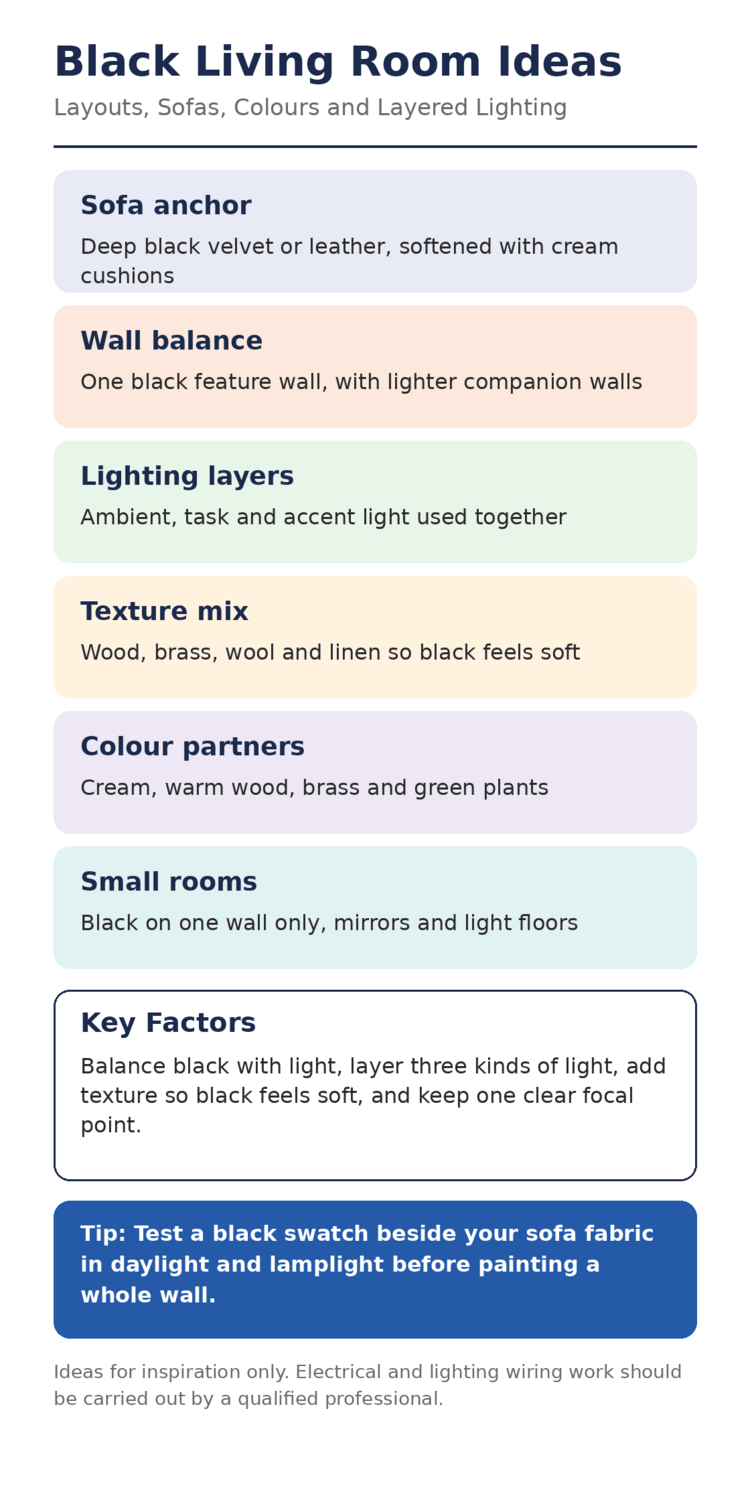
Before you commit, test black in your own light. Paint a large swatch on the wall you intend to darken, live with it through a bright day and a lamplit evening, and look at it beside your sofa fabric and your floor. Black changes dramatically with light, and a swatch tested properly saves a repaint later.
Order the room in the sequence that matters most: wall first, then sofa, then lighting, then colour partners and texture. Each step constrains the next in a helpful way, so decisions get easier rather than harder as you go, and the room keeps its balance from the first coat of paint to the last cushion.
Finally, remember the professional boundary wherever fixed work arises. Plug-in lamps, shades, cushions and furniture are yours to change freely, while wiring, new circuits and fixed fittings belong to a qualified electrician. Respect that line and your black living room will be as safe as it is beautiful, ready for years of ordinary, comfortable life.

0 Comments