
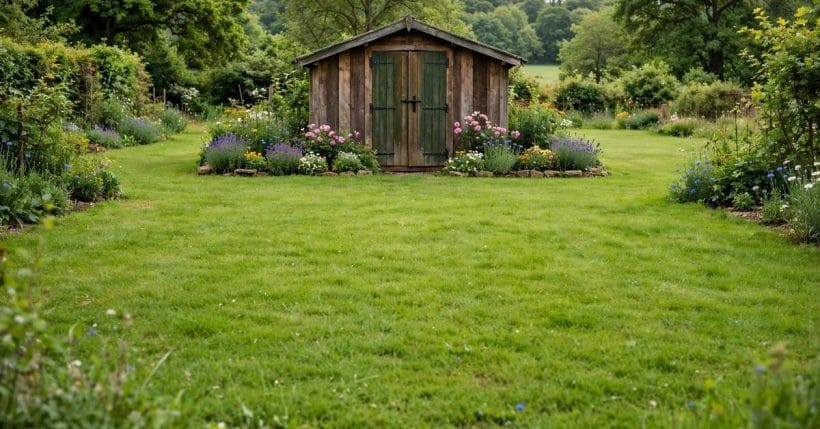
A small shed is one of the kindest buildings a garden can hold. It asks for little ground, it keeps its shape modest, and it repays that modesty by working hard: tools out of the rain, seeds started in shelter, a chair turned toward the evening light. Small shed ideas begin with that simple bargain, and the best of them never forget it. A shed that suits its job feels generous even when its footprint is small, while a shed chosen for looks alone can feel awkward from the first wet weekend.
This guide looks at small sheds only, in their general garden form. It is not a guide to pump houses, which are a separate form with their own needs around equipment and access, and it is not a survey of modern style sheds as a style on its own. Garden sheds in general have their own broader guide, which you can read alongside this one for the wider family, and the ideas here narrow the view to the small end of that family: the compact shed that fits a modest plot, a side passage, or a corner that would otherwise go unused. Garden shed ideas cover the full range, while this guide stays small on purpose.
What follows is organised by use first and by looks second, because use is what decides whether a small shed stays loved. Tool storage, potting, making, reading and quiet work each pull the shed in a slightly different direction, and the sections below follow those pulls. Colour, cladding, roofs, doors and windows come after use, and siting, bases and weatherproofing come with a clear note throughout: anything structural, anything to do with the base, the roof, drainage or wiring belongs to qualified professionals, and local rules should be checked before a shed is sited or changed.
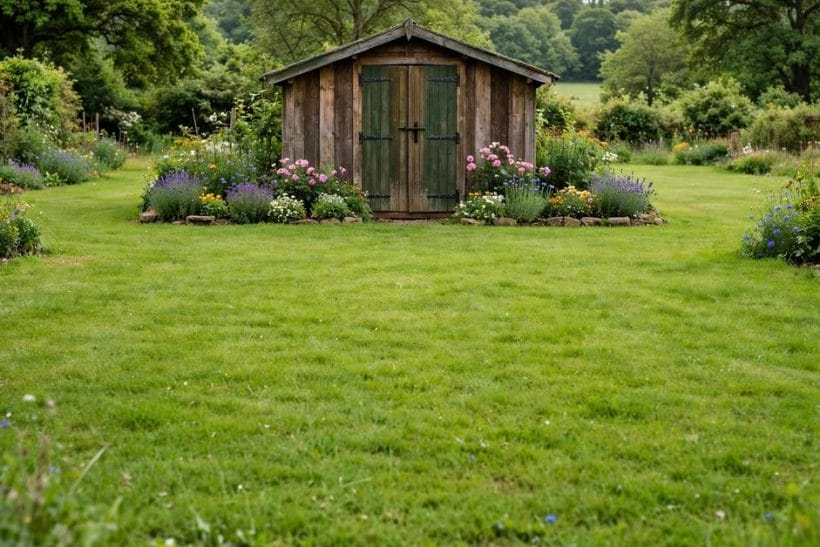
1. Small Shed Ideas at a Glance
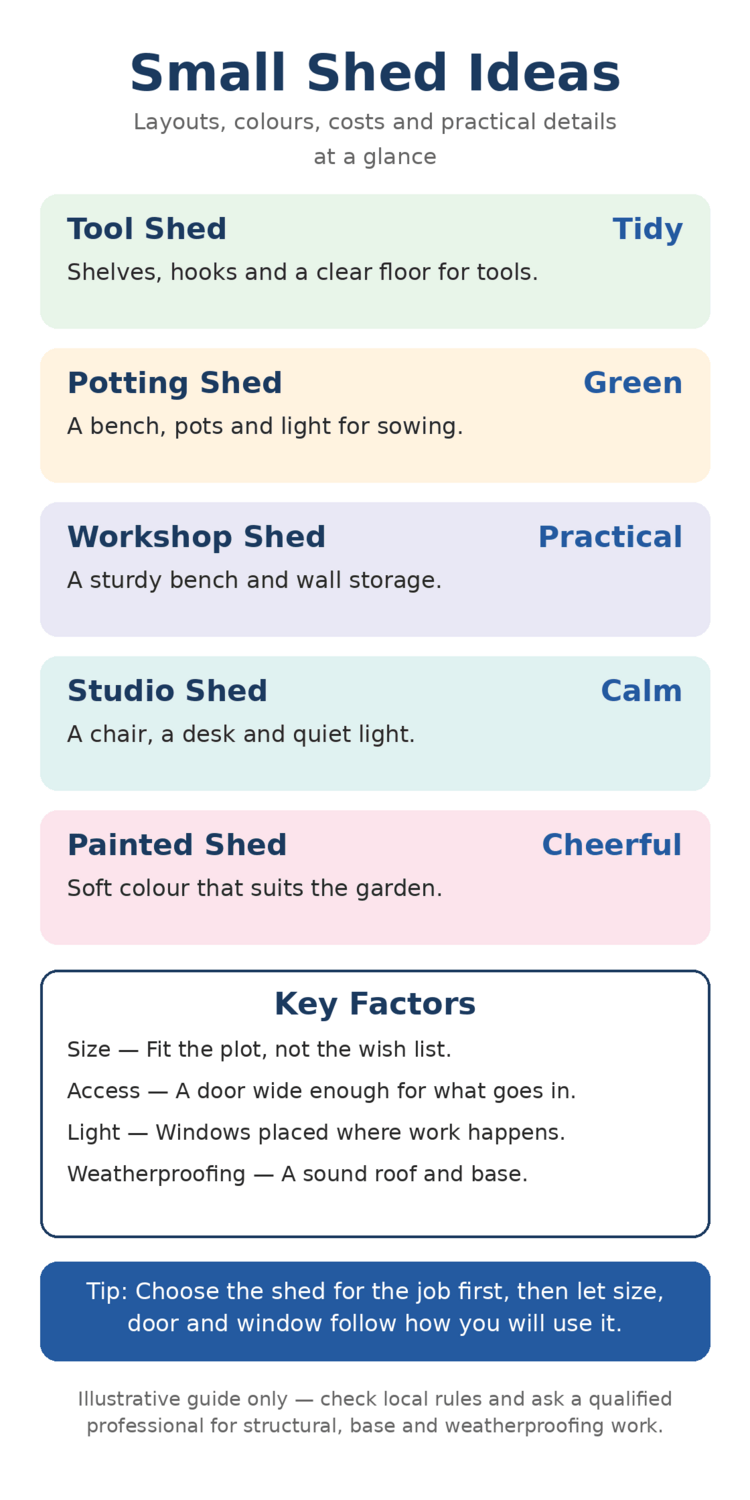
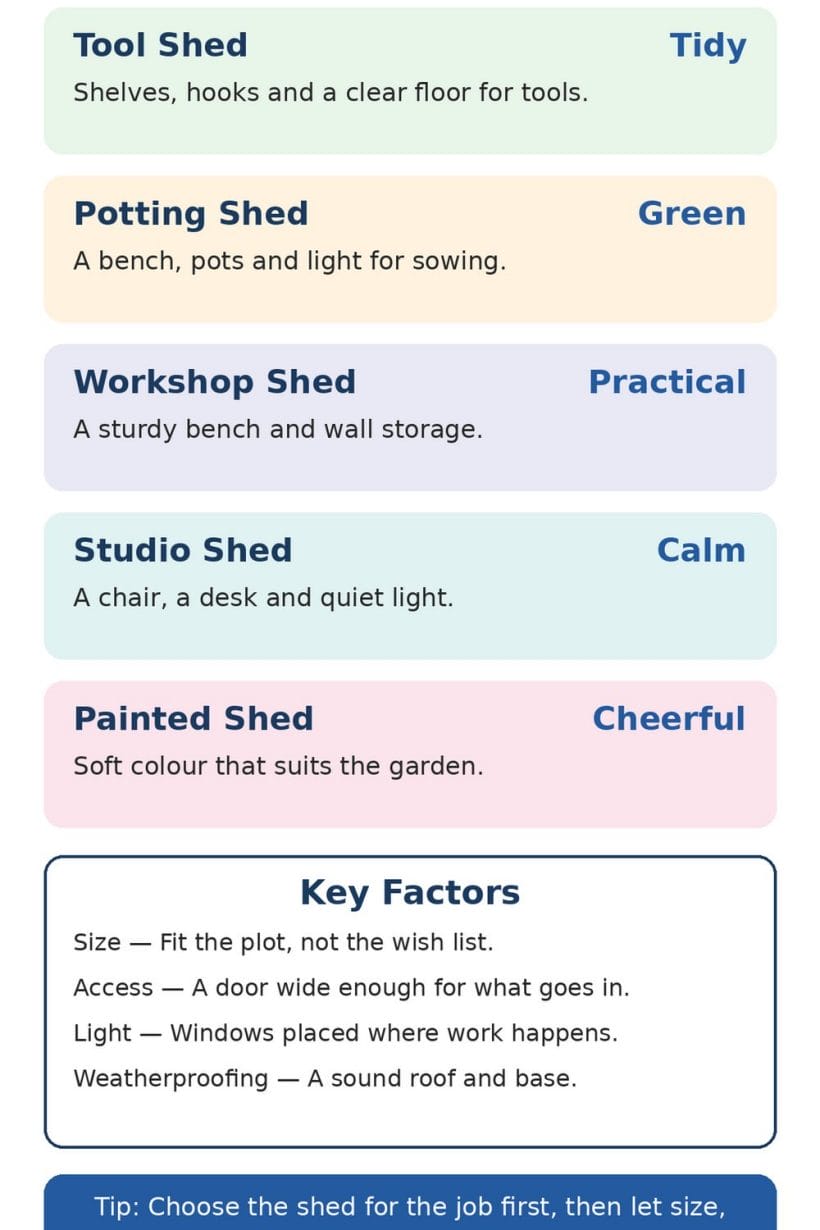
Before the ideas themselves, it helps to hold five small shed characters in mind, because almost every small shed you will meet is one of them, or a blend of two. The tool shed is the workhorse, tidy and plain, with shelves and hooks doing the talking. The potting shed is the green one, built around a bench and a window, with soil and seedlings close at hand. The workshop shed is the practical one, with a bench fixed firm and tools on the wall. The studio shed is the calm one, with a chair and a desk and light worth sitting in. The painted shed is the cheerful one, where colour does the work of making a plain box into a garden feature.
Across all five characters, a handful of questions keep returning, and they make a useful checklist for reading the seventy-five ideas that follow. Does the door open wide enough for what must pass through it, and does the path to the door stay usable when the ground is wet? Is there light where work happens, rather than light that only flatters the outside? Is the floor dry, the roof sound, and the air moving enough to keep stored things from going musty? Does the shed leave room around it for planting, for a chair, and for the simple pleasure of walking around it? And does the whole thing, cost included, stay honest: size, materials, roofing, glazing, base and fitting all weighed together, with nothing important left out of the plan?
2. Garden Tool Sheds and Everyday Storage
The tool shed earns its keep by saving steps. Every tool has a home it returns to without thought, and the shed itself stays a place you can walk into, take what you need, and leave again without a small expedition. The ideas in this section are about that ease: hanging, shelving, and keeping the floor clear enough that the shed never becomes a cupboard you dread opening.
| Item | What it is |
|---|---|
| A place for every tool, hung where the hand reaches it | Tools hung on the wall at hand height are tools that get put back, because putting them back costs no more effort than leaving them out. |
| Shelves that keep small things off the floor | Small things left on the floor are the first things lost and the first things tripped over. |
| A clear doorway path, kept free all year | A shed whose doorway is blocked by whatever was last put down is a shed that slowly stops being used. |
| Hooks by the door for the tools used most | The tools reached for daily deserve the best places in the shed, which means the hooks nearest the door. |
| A bench that folds away when work is done | In a small shed, a fixed bench can eat the very space the shed was built to save. |
| Boxes labelled by job, not by size alone | Boxes sorted only by size soon hide what matters, because a large box of mixed things is no better than a heap. |
| A corner for long handles, upright and out of the way | Spades, forks, rakes and brooms are happiest standing upright in a corner, where their handles cannot fall across the doorway. |
| A small shelf for gloves, string and spare parts | The smallest things cause the most searching, so give them a shelf of their own near the door. |
| A bench at a comfortable working height | Potting at a bench that forces stooping turns a pleasant job into an aching one, so the bench height matters more than its size. |
| Trays that catch soil before it reaches the floor | Soil on the floor becomes mud underfoot, and mud underfoot becomes a shed nobody enjoys entering. |
| Pots stored by size, largest at the back | Pots stacked anyhow become a leaning tower that collapses at the worst moment. |
| A window that gives seedlings gentle light | Seedlings want light they can grow toward without scorching, so the potting shed window earns its place by facing light that is bright without being harsh. |
| A watering can kept near the bench, not the door | Watering belongs where the plants are, so the can lives by the bench rather than by the door where it must be fetched and carried back. |
| A shelf for seed trays out of harsh sun | Seed trays left in harsh sun dry out between visits, while trays in deep shade grow leggy reaching for light. |
| A potting corner that can be swept clean in minutes | Potting is messy work, and a corner designed to be swept clean accepts that mess without complaint. |
| Herbs by the window for snipping while cooking | A pot or two of herbs by the potting shed window turns the shed into a small larder as well as a workshop. |
| A bench fixed firmly to the wall | A bench that wobbles makes every job harder, so fix it firmly to the wall and let the wall carry the strain. |
| Tools on the wall, with a place that shows when one is missing | Tools hung on the wall in their own places do more than stay tidy: the empty hook shows at once which tool is still out in the garden. |
| A vice that holds work steady | Much workshop frustration comes from work that will not stay still, so a vice fixed to the bench earns its space many times over. |
| Drawers for fixings, sorted by kind | Fixings mixed together in one box waste more time than any other workshop muddle, because the right screw is always at the bottom. |
| Light over the bench, not behind the worker | Light placed behind the worker throws a shadow exactly where the work is, which is the one place shadow is not wanted. |
| A floor that can be swept after sawing | Sawdust and shavings are part of making, and a floor that sweeps clean accepts them without fuss. |
| Offcuts stored upright in a tall bin | Offcuts laid flat become a pile that hides the piece wanted, while offcuts stored upright in a tall bin show their lengths at a glance. |
| A small stool for long jobs at the bench | Not every bench job is best done standing, and a small stool kept under the bench gives the worker a choice. |
| A chair turned toward the garden | A chair turned toward the garden gives the sitter something worth looking at, which is half the point of a garden room. |
| A desk facing the window, not the wall | A desk facing the window borrows daylight and a view for work that would otherwise feel shut in. |
| A bookshelf that fits the wall it stands on | A bookshelf wider than its wall crowds the room, while a shelf fitted to its wall looks made for the place. |
| Soft light for reading after dusk | Reading after dusk needs light that is soft enough to sit in for an hour without strain, so a lamp placed beside the chair matters more than a bright light overhead. |
| A rug that warms a timber floor | A rug does more than decorate a shed floor: it warms the feet, softens the sound of the room, and marks the sitting area as a place of its own. |
| Curtains that soften a plain window | Plain shed windows can feel bare from inside, and a simple curtain softens the glass without shutting out the garden. |
| A shelf for notebooks, pens and cups of tea | Creative work gathers small companions, and a shelf near the chair keeps them within reach. |
| A door that closes the world out for an hour | The quiet of a studio shed depends on a door that closes properly and stays closed, shutting out draughts, noise and the feeling of being on view. |
| Horizontal boards that read calm and even | Horizontal boards draw the eye along the shed, which makes a small building feel settled and even. |
| Vertical boards that lift a low shed | Vertical boards draw the eye upward, which gives a low shed a little extra presence without adding any height. |
| A painted door that announces the shed | When the shed itself is painted plainly, a door in a stronger colour announces it with charm, like a front door in miniature. |
| Soft sage that settles into planting | Soft sage green settles a shed into its planting so gently that the building and the garden seem to belong together. |
| Warm white that brightens a shady corner | A shady corner can swallow a dark shed whole, while warm white paint gives the same corner a lift. |
| Charcoal boards that recede behind leaves | Charcoal boards do the opposite of white: they recede, letting planting take the stage while the shed provides a dark, quiet backdrop. |
| A natural timber finish left to silver gently | Timber left to weather naturally silvers over time, and that silvering suits gardens with a wilder, more relaxed character. |
| Trim painted to match the house windows | Trim painted to match the house windows ties the shed to the house it serves, so the garden reads as one place rather than two. |
| A roof that sheds rain away from the door | Rain running off the roof onto the doorway turns every wet arrival into a small misery, so the roof should shed its water away from where people step. |
| A lean-to roof for a shed against a wall | A shed built against a wall suits a lean-to roof, which slopes gently away from the wall and keeps the building low and unobtrusive. |
| A pitched roof that gives headroom inside | A pitched roof gives a small shed headroom where it matters most, in the middle of the room, and it gives the outside a familiar, cottage-like silhouette. |
| Wide doors for a wheelbarrow and bulky things | Tools are not the only things a shed must admit: wheelbarrows, mowers and bulky bags all need a doorway that does not force a struggle. |
| Double doors that open the whole front | Double doors open the whole front of a small shed, which changes how the building feels on a fine day. |
| A stable door, top open for air | A stable door, with its top half open and its bottom half closed, gives a shed air without giving up security or shelter. |
| A window at bench height for working light | A window placed at bench height puts light exactly where hands work, which matters more than a window placed for the outside view. |
| A small high window for air without losing wall space | Wall space in a small shed is precious, and a small high window gives air and light without stealing any of it. |
| Shutters that close the shed against storms | Shutters that close over windows protect glass when storms threaten, and they give the shed a cared-for, traditional face when closed. |
| A shed tucked into the corner of the plot | A corner is often the most wasted ground in a garden, and a shed tucked into it turns waste into use. |
| A narrow shed along a side passage | Side passages are narrow, shaded and often ignored, yet a slim shed built to their measure can hold tools, bins and garden gear without stealing an inch from the main garden. |
| A shed beneath trees, clear of falling branches | Trees give a shed shade and shelter, but branches above the roof need thought, since falling limbs and constant leaf fall wear a roof faster. |
| A shed that shares a boundary wall | Sharing a boundary wall can save ground and give a shed a solid back, but boundaries carry rules and neighbourly considerations that must come first. |
| A path that stays usable in wet weather | A shed reached only across mud in winter is a shed that will be avoided in winter, which is when tools and shelter matter most. |
| Planting that softens the shed without crowding it | Planting around a shed should soften its edges, not swallow it, so shrubs and climbers need room to grow without pressing against walls or blocking the door. |
| A shed sized to leave room for a chair outside | A shed with no room for a chair outside it is a shed that sends its owner straight back indoors, while a shed with even a small sitting space beside it becomes a destination. |
| A corner shed with doors on the angle | A corner shed with its doors set on the angle opens toward the garden rather than toward a fence, which makes the whole corner feel welcoming. |
| A shed that frames a view from the house | Seen from the house, a shed is part of the garden picture, so siting it where it frames a view rather than blocks one repays the thought many times over. |
| A level base that keeps the floor dry | A level base is the first kindness a shed can be given, because a floor that sits true stays dry, keeps doors hanging straight, and stops water from pooling where it can rot timber. |
| Air beneath the floor to discourage damp | Air moving beneath a shed floor discourages the damp that ruins stored things and rots boards from below. |
| Gutters that carry water away from the walls | Rain running off a roof straight down the walls soaks boards and splashes mud back onto paintwork, while gutters catch that water and carry it away. |
| A roof overhang that shelters the door | A roof overhang above the door shelters the doorway from rain and gives the person entering a dry moment to find keys or shake off a coat. |
| Seals around doors and windows checked each season | Seals around doors and windows work quietly until they fail, and a seasonal check catches gaps before they let in rain, draughts and dust. |
| Ventilation that keeps stored things dry | A sealed shed can grow musty, since still, damp air settles on tools, fabrics and paper, while gentle ventilation keeps the air moving and things dry. |
| A base laid by a professional on soft ground | Soft, sloping or uncertain ground is no place for guesswork, and a base laid by a qualified professional on such ground is the only sensible course. |
| Local rules checked before siting near a boundary | Local rules govern where sheds may stand, how close they may sit to boundaries, and how tall they may rise, and those rules vary from place to place. |
| A shed set where sun dries the walls after rain | Sun on the walls after rain is nature's own drying service, and a shed set where morning or afternoon sun reaches it dries faster than one sunk in permanent shade. |
1. A place for every tool, hung where the hand reaches it
Tools hung on the wall at hand height are tools that get put back, because putting them back costs no more effort than leaving them out. Keep the everyday tools nearest the door and the rarely used ones higher or further back, so the wall reads like a map of the working week.
2. Shelves that keep small things off the floor
Small things left on the floor are the first things lost and the first things tripped over. A run of shelves along one wall lifts pots, boxes and spare parts into sight, and leaves the floor for feet and for the few large things that genuinely need to stand there.
3. A clear doorway path, kept free all year
A shed whose doorway is blocked by whatever was last put down is a shed that slowly stops being used. Keep a clear path from the door to the back wall, wide enough to carry something in both hands, and treat anything left in that path as a job to finish, not a place to store.
4. Hooks by the door for the tools used most
The tools reached for daily deserve the best places in the shed, which means the hooks nearest the door. Secateurs, a trowel, gloves and string hung just inside the door turn a quick garden job into a quick garden job, with no hunting through the darker corners first.
5. A bench that folds away when work is done
In a small shed, a fixed bench can eat the very space the shed was built to save. A bench that folds down for sharpening or potting and folds away afterwards gives back the floor for the rest of the week, and the shed stays flexible for jobs nobody planned.
6. Boxes labelled by job, not by size alone
Boxes sorted only by size soon hide what matters, because a large box of mixed things is no better than a heap. Label boxes by the job they serve, such as pruning, planting or repair, so the right box comes out first time and goes back without a second thought.
7. A corner for long handles, upright and out of the way
Spades, forks, rakes and brooms are happiest standing upright in a corner, where their handles cannot fall across the doorway. A simple rack or a pair of fixed brackets keeps them upright, keeps their edges off the floor, and keeps the rest of the shed free for everything else.
8. A small shelf for gloves, string and spare parts
The smallest things cause the most searching, so give them a shelf of their own near the door. Gloves, string, spare screws and fixings kept in one shallow tray are found in seconds, and the tray itself is a reminder to replace what runs out before it is needed.
3. Potting Sheds and Growing Space
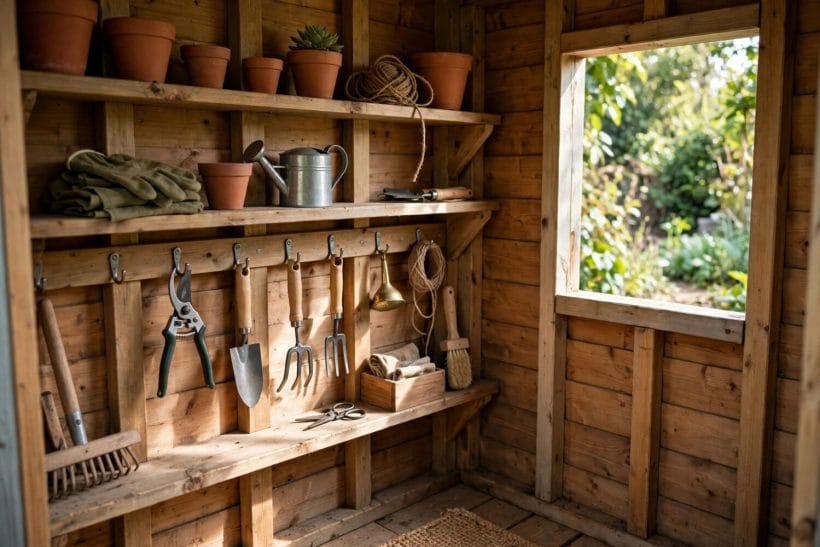
A potting shed is a workshop for green things, and it is judged by how kindly it treats soil, water and young plants. The bench is the centre of it, the window is its second centre, and everything else is arranged so that mess stays where it can be swept and seedlings stay where they can be seen. The ideas here keep potting a pleasure rather than a chore that spreads across the garden.
9. A bench at a comfortable working height
Potting at a bench that forces stooping turns a pleasant job into an aching one, so the bench height matters more than its size. A bench that lets you work standing with a straight back, with room for a tray and a pot side by side, will be used far more than a grander bench that hurts to stand at.
10. Trays that catch soil before it reaches the floor
Soil on the floor becomes mud underfoot, and mud underfoot becomes a shed nobody enjoys entering. Shallow trays under the working area catch the spill where it happens, and a tray emptied back into the soil bin keeps both the shed and the garden tidier.
11. Pots stored by size, largest at the back
Pots stacked anyhow become a leaning tower that collapses at the worst moment. Stored by size, largest at the back and smallest in front, pots are easy to count, easy to reach, and easy to put back, and the shelf itself looks cared for rather than merely full.
12. A window that gives seedlings gentle light
Seedlings want light they can grow toward without scorching, so the potting shed window earns its place by facing light that is bright without being harsh. A window above or beside the bench lets you watch growth while you work, and lets the plants do their own quiet work beside you.
13. A watering can kept near the bench, not the door
Watering belongs where the plants are, so the can lives by the bench rather than by the door where it must be fetched and carried back. Kept near the work, the can is filled, used and set down in one smooth round, and seedlings are watered little and often rather than in a rush.
14. A shelf for seed trays out of harsh sun
Seed trays left in harsh sun dry out between visits, while trays in deep shade grow leggy reaching for light. A shelf with bright but sheltered light, where trays can be checked at a glance, gives seedlings the steady conditions they need and gives the grower a daily pleasure in checking them.
15. A potting corner that can be swept clean in minutes
Potting is messy work, and a corner designed to be swept clean accepts that mess without complaint. A plain floor, a bench that wipes down, and nothing stored at ankle height around the working area mean the shed can be left tidy in minutes, ready for the next sowing.
16. Herbs by the window for snipping while cooking
A pot or two of herbs by the potting shed window turns the shed into a small larder as well as a workshop. Snipped on the way back to the kitchen, herbs connect the shed to daily cooking, and give even a working shed a fragrant, lived-in character.
4. Workshops in a Small Footprint
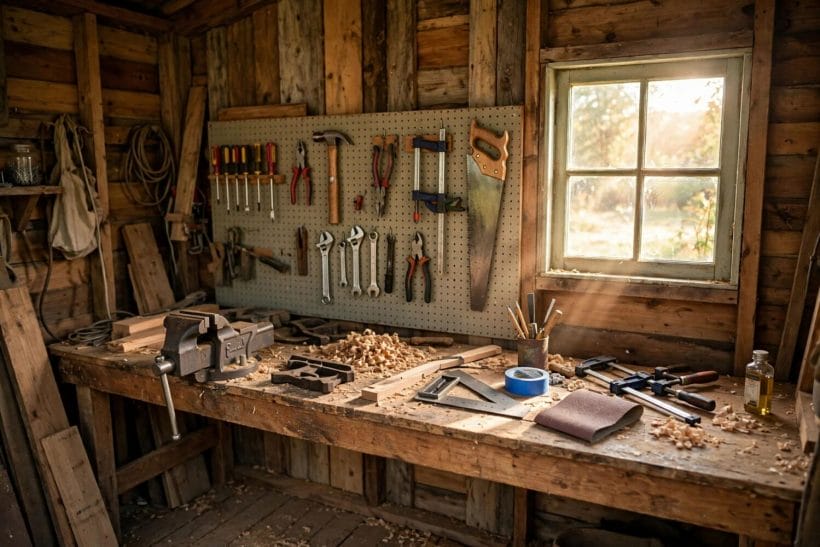
A workshop shed proves that small need not mean cramped, provided the work itself is allowed to set the layout. The bench comes first, the tools go on the wall around it, and storage is arranged so that making something never requires moving three other things first. The ideas in this section keep a small workshop honest: a place for real work, not a display of tools that never get used.
17. A bench fixed firmly to the wall
A bench that wobbles makes every job harder, so fix it firmly to the wall and let the wall carry the strain. A solid bench invites confident work, from sawing to sanding, and a bench that stays still is a bench that gets used for jobs large and small alike.
18. Tools on the wall, with a place that shows when one is missing
Tools hung on the wall in their own places do more than stay tidy: the empty hook shows at once which tool is still out in the garden. That small discipline saves the familiar hunt through drawers and corners, and it means the workshop is always ready for the next job.
19. A vice that holds work steady
Much workshop frustration comes from work that will not stay still, so a vice fixed to the bench earns its space many times over. Holding timber or metal firm while both hands work free turns awkward jobs into straightforward ones, and it keeps fingers further from blades and edges.
20. Drawers for fixings, sorted by kind
Fixings mixed together in one box waste more time than any other workshop muddle, because the right screw is always at the bottom. Drawers sorted by kind, with each drawer holding one family of fixings, turn choosing into a single glance and a single reach.
21. Light over the bench, not behind the worker
Light placed behind the worker throws a shadow exactly where the work is, which is the one place shadow is not wanted. Light over the bench, falling onto the work from above or from the side, shows the cut, the joint and the finish clearly, and makes careful work a pleasure.
22. A floor that can be swept after sawing
Sawdust and shavings are part of making, and a floor that sweeps clean accepts them without fuss. A plain, hard floor with nothing stored at ground level around the bench means the workshop can be left clean in minutes, and the next job starts on a clear stage.
23. Offcuts stored upright in a tall bin
Offcuts laid flat become a pile that hides the piece wanted, while offcuts stored upright in a tall bin show their lengths at a glance. The bin keeps usable pieces in circulation and makes it obvious when a piece is too small to keep, which keeps the workshop from slowly filling with scraps.
24. A small stool for long jobs at the bench
Not every bench job is best done standing, and a small stool kept under the bench gives the worker a choice. Seated work for careful, fiddly jobs and standing work for sawing and planing both have their place, and a stool that tucks away costs almost no space at all.
5. Studios, Reading Nooks and Quiet Rooms
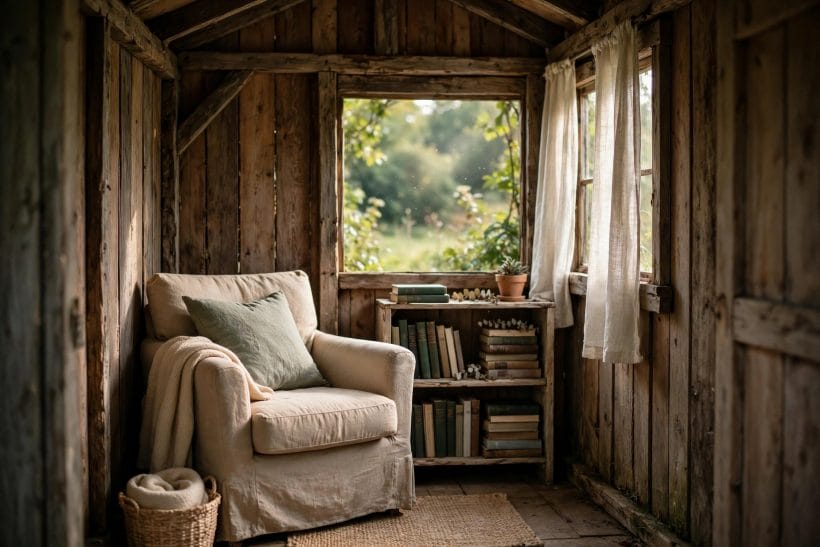
Some small sheds are not for tools at all, but for the person who needs a quiet room of their own. These sheds borrow their manners from small rooms indoors: a chair worth sitting in, light worth reading by, and a door that closes gently on the rest of the day. The ideas in this section treat the shed as a room first and a garden building second, which is why they pay such attention to comfort.
Small rooms indoors teach the same lesson, and the way a tiny interior makes a chair, a shelf and a window feel generous is worth borrowing here. Tiny house interiors show how little a room needs when every piece earns its place, and a studio shed follows the same rule: fewer things, each one chosen, each one placed where it will actually be used.
25. A chair turned toward the garden
A chair turned toward the garden gives the sitter something worth looking at, which is half the point of a garden room. Facing the window rather than the wall turns idle minutes into restful ones, and the shed becomes a place to sit rather than a place merely to pass through.
26. A desk facing the window, not the wall
A desk facing the window borrows daylight and a view for work that would otherwise feel shut in. Writing, drawing or reading with the garden in sight keeps the mind fresh, and the window becomes a natural pause between thoughts rather than a blank wall to stare at.
27. A bookshelf that fits the wall it stands on
A bookshelf wider than its wall crowds the room, while a shelf fitted to its wall looks made for the place. Measuring the wall first and choosing the shelf second keeps the room balanced, and books stored where they can be reached without moving the chair make reading a habit rather than an expedition.
28. Soft light for reading after dusk
Reading after dusk needs light that is soft enough to sit in for an hour without strain, so a lamp placed beside the chair matters more than a bright light overhead. Warm, low light turns the shed into an evening room, and any wiring for lamps belongs to a qualified professional, never to improvisation.
29. A rug that warms a timber floor
A rug does more than decorate a shed floor: it warms the feet, softens the sound of the room, and marks the sitting area as a place of its own. In a small shed, one rug well placed is worth more than several small ones, which only chop the floor into restless pieces.
30. Curtains that soften a plain window
Plain shed windows can feel bare from inside, and a simple curtain softens the glass without shutting out the garden. Curtains also give the room privacy in the evening when lamps are lit, so the shed feels like a room of its own rather than a display case.
31. A shelf for notebooks, pens and cups of tea
Creative work gathers small companions, and a shelf near the chair keeps them within reach. Notebooks, pens and a place to set a cup mean work need not be interrupted by trips back to the house, and the shed holds everything a quiet hour requires.
32. A door that closes the world out for an hour
The quiet of a studio shed depends on a door that closes properly and stays closed, shutting out draughts, noise and the feeling of being on view. A door that latches cleanly is a small thing that makes a large difference to whether the shed is truly restful.
6. Cladding, Colour and Garden Character
Cladding and colour decide how a small shed sits in its garden: whether it settles quietly among the planting, brightens a shady corner, or stands out as a deliberate feature. Because a small shed is seen whole, from every side and from the house, its outside deserves as much thought as its inside. The ideas in this section are about that outside face, and about choosing finishes that age gracefully.
33. Horizontal boards that read calm and even
Horizontal boards draw the eye along the shed, which makes a small building feel settled and even. Their regular rhythm suits gardens that are themselves calm and ordered, and they take paint or stain evenly, so the shed keeps its quiet character through the seasons.
34. Vertical boards that lift a low shed
Vertical boards draw the eye upward, which gives a low shed a little extra presence without adding any height. On a shed tucked under trees or beside a fence, that upward lift keeps the building from looking squat, and the vertical rhythm pairs happily with tall planting.
35. A painted door that announces the shed
When the shed itself is painted plainly, a door in a stronger colour announces it with charm, like a front door in miniature. The door becomes the detail visitors notice first, and repainting a door alone is a small job that refreshes the whole shed.
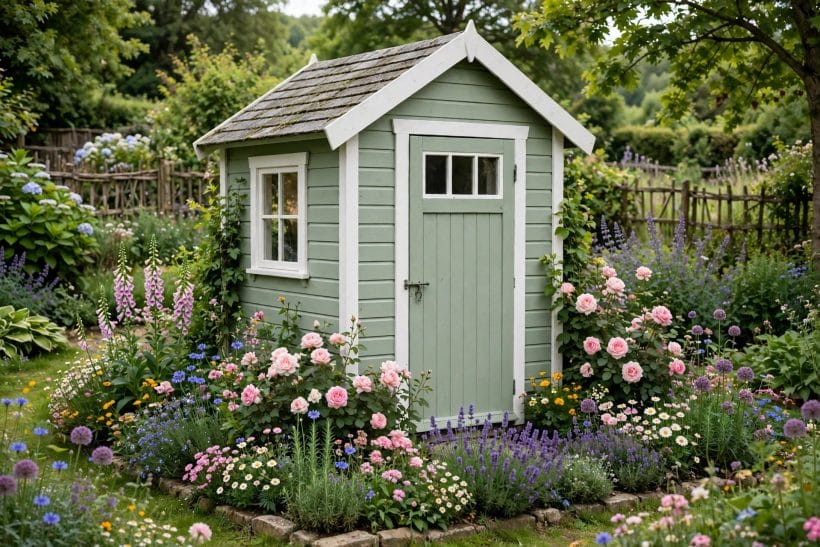
36. Soft sage that settles into planting
Soft sage green settles a shed into its planting so gently that the building and the garden seem to belong together. Among leaves and lawns, sage is a colour that never shouts, and a sage shed in a cottage garden feels as though it has always been there.
37. Warm white that brightens a shady corner
A shady corner can swallow a dark shed whole, while warm white paint gives the same corner a lift. White reflects what light there is, so the shed reads clearly even under trees, and planting in front of a white shed shows its colours more vividly.
38. Charcoal boards that recede behind leaves
Charcoal boards do the opposite of white: they recede, letting planting take the stage while the shed provides a dark, quiet backdrop. In a leafy garden, a charcoal shed can almost disappear in summer, which suits a gardener who wants the plants, not the building, to lead.
39. A natural timber finish left to silver gently
Timber left to weather naturally silvers over time, and that silvering suits gardens with a wilder, more relaxed character. A natural finish asks for no repainting, only for the owner to enjoy the way the shed changes colour with the years, settling deeper into its place.
40. Trim painted to match the house windows
Trim painted to match the house windows ties the shed to the house it serves, so the garden reads as one place rather than two. That small echo of colour costs little effort and makes even a plain shed feel considered, as though house and garden were planned together.
7. Roofs, Doors and Windows
Roofs, doors and windows are the working parts of a shed, and they deserve the most practical thinking in the whole guide. A roof keeps the weather out, a door decides what can pass in and out, and windows decide whether the inside is a pleasure or a gloom. The ideas in this section keep those parts simple, sound and suited to the shed they serve, with structural and roofing work left to qualified professionals throughout.
41. A roof that sheds rain away from the door
Rain running off the roof onto the doorway turns every wet arrival into a small misery, so the roof should shed its water away from where people step. A roof that throws water to the sides or the back keeps the doorway dry, and keeps the ground by the door from turning to mud.
42. A lean-to roof for a shed against a wall
A shed built against a wall suits a lean-to roof, which slopes gently away from the wall and keeps the building low and unobtrusive. The single slope is simple to understand and to keep sound, and it leaves the wall of the house or boundary to do half the sheltering work.
43. A pitched roof that gives headroom inside
A pitched roof gives a small shed headroom where it matters most, in the middle of the room, and it gives the outside a familiar, cottage-like silhouette. The extra height inside makes tall storage and comfortable standing possible, even when the footprint stays small.
44. Wide doors for a wheelbarrow and bulky things
Tools are not the only things a shed must admit: wheelbarrows, mowers and bulky bags all need a doorway that does not force a struggle. A door wide enough for the largest thing the shed will hold saves the paintwork, the door frame and the temper of whoever carries things in and out.
45. Double doors that open the whole front
Double doors open the whole front of a small shed, which changes how the building feels on a fine day. Open wide, the shed becomes a sheltered outdoor room, with light and air flowing through, and large things pass in and out without any awkward angles.
46. A stable door, top open for air
A stable door, with its top half open and its bottom half closed, gives a shed air without giving up security or shelter. Open at the top, the shed breathes and stays dry inside; closed at the bottom, tools and animals stay where they belong, and the shed keeps its tidy character.
47. A window at bench height for working light
A window placed at bench height puts light exactly where hands work, which matters more than a window placed for the outside view. Whether the bench is for potting, making or writing, light falling on the work itself makes the shed a pleasure to use through the day.
48. A small high window for air without losing wall space
Wall space in a small shed is precious, and a small high window gives air and light without stealing any of it. Set above shelves and hooks, a high window ventilates the shed while leaving every useful inch of wall free for storage and work.
49. Shutters that close the shed against storms
Shutters that close over windows protect glass when storms threaten, and they give the shed a cared-for, traditional face when closed. Fitted simply and kept in working order, shutters are a small addition that shows the shed is looked after through every season.
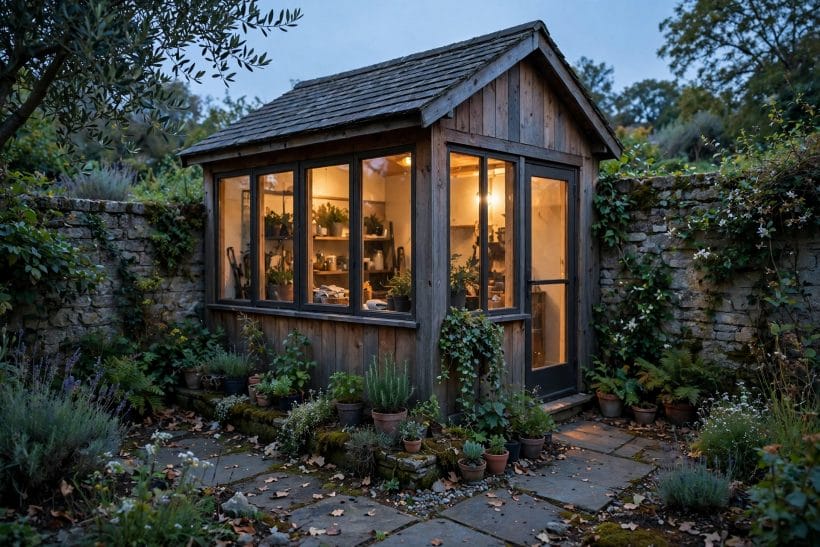
8. Layouts for Tiny Plots and Corners
Small sheds shine brightest where space is scarcest, because a compact building can turn an awkward corner or a narrow passage into the most useful part of the garden. Layout here is less about the shed itself and more about the ground around it: the path, the planting, the chair outside, and the view back toward the house. The ideas in this section keep small plots feeling generous rather than crowded.
Thinking in small footprints is a skill that transfers well, and the way compact homes plan every inch has lessons for shed layouts too. Tiny house floor plans show how a small shape can hold a full life when rooms are arranged with care, and a shed on a tiny plot follows the same principle. Storage, too, rewards the same thinking: tiny house storage ideas are a useful companion read for anyone fitting a great deal into a small shed.
50. A shed tucked into the corner of the plot
A corner is often the most wasted ground in a garden, and a shed tucked into it turns waste into use. Set diagonally or square into the corner, the shed leaves the middle of the garden free, and the corner itself gains a purpose it never had before.
51. A narrow shed along a side passage
Side passages are narrow, shaded and often ignored, yet a slim shed built to their measure can hold tools, bins and garden gear without stealing an inch from the main garden. A narrow shed suits a narrow place, and the passage becomes a working corridor rather than a dead strip.
52. A shed beneath trees, clear of falling branches
Trees give a shed shade and shelter, but branches above the roof need thought, since falling limbs and constant leaf fall wear a roof faster. A shed sited clear of the heaviest canopy, with room for a ladder to reach the roof for clearing, enjoys the shade without paying for it in repairs.
53. A shed that shares a boundary wall
Sharing a boundary wall can save ground and give a shed a solid back, but boundaries carry rules and neighbourly considerations that must come first. Local rules should be checked before siting near any boundary, and a shed that respects the boundary is a shed that stays a good neighbour.
54. A path that stays usable in wet weather
A shed reached only across mud in winter is a shed that will be avoided in winter, which is when tools and shelter matter most. A path of stone, gravel or paving that stays firm underfoot keeps the shed in daily use through every season, and it frames the approach attractively too.
55. Planting that softens the shed without crowding it
Planting around a shed should soften its edges, not swallow it, so shrubs and climbers need room to grow without pressing against walls or blocking the door. Planted with breathing space, greenery makes the shed look settled, while air can still move around the walls and keep them dry.
56. A shed sized to leave room for a chair outside
A shed with no room for a chair outside it is a shed that sends its owner straight back indoors, while a shed with even a small sitting space beside it becomes a destination. Leaving room for a chair, a pot and a patch of sun turns the shed from storage into a place to linger.
57. A corner shed with doors on the angle
A corner shed with its doors set on the angle opens toward the garden rather than toward a fence, which makes the whole corner feel welcoming. Doors on the diagonal catch light and air from two directions, and the shed itself becomes a feature instead of a box pushed out of sight.
58. A shed that frames a view from the house
Seen from the house, a shed is part of the garden picture, so siting it where it frames a view rather than blocks one repays the thought many times over. A shed placed at the end of a path, or glimpsed through planting, gives the eye a destination and the garden a sense of depth.
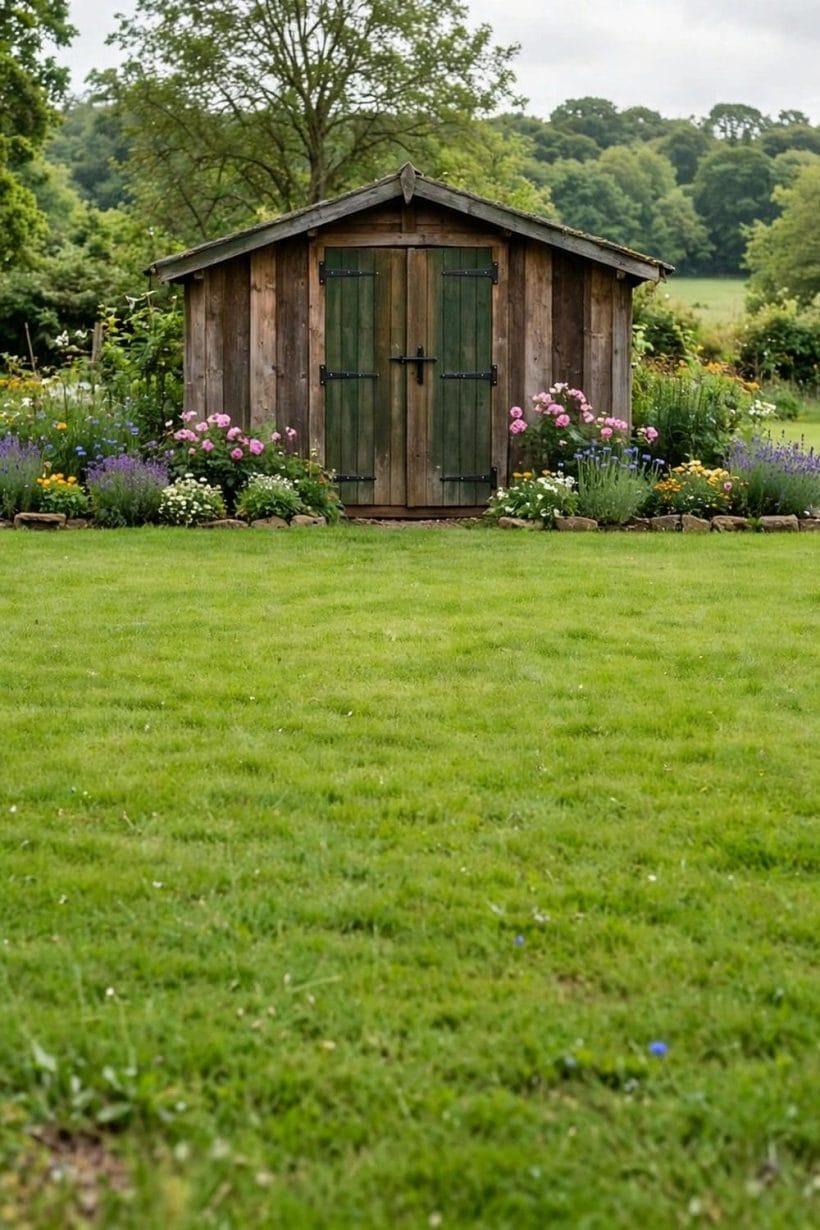
9. Siting, Bases and Weatherproofing
Siting, bases and weatherproofing are the unglamorous ideas that decide whether a small shed lasts, and they deserve to be read with particular care. A beautiful shed on a poor base will not stay beautiful, while a plain shed on a sound base, with water led away and air moving through it, will serve for years. Everything structural in this section belongs to qualified professionals, and local rules should be checked before any siting or building work begins.
59. A level base that keeps the floor dry
A level base is the first kindness a shed can be given, because a floor that sits true stays dry, keeps doors hanging straight, and stops water from pooling where it can rot timber. Levelling and base work are professional jobs on anything but the firmest ground, and a base done properly is worth every part of the care it takes.
60. Air beneath the floor to discourage damp
Air moving beneath a shed floor discourages the damp that ruins stored things and rots boards from below. A base that lifts the floor clear of the ground and lets air pass beneath it keeps the shed drier through wet seasons, and it is one of the quietest forms of protection a shed can have.
61. Gutters that carry water away from the walls
Rain running off a roof straight down the walls soaks boards and splashes mud back onto paintwork, while gutters catch that water and carry it away. Kept clear and led away from the walls, gutters protect both the shed and the ground around it, and they are a small addition with an outsized effect.
62. A roof overhang that shelters the door
A roof overhang above the door shelters the doorway from rain and gives the person entering a dry moment to find keys or shake off a coat. That small shelf of roof also throws water clear of the door frame, which keeps hinges and latches working smoothly for longer.
63. Seals around doors and windows checked each season
Seals around doors and windows work quietly until they fail, and a seasonal check catches gaps before they let in rain, draughts and dust. A few minutes each season, running a hand around frames and replacing what has perished, keeps the shed snug and its contents dry.
64. Ventilation that keeps stored things dry
A sealed shed can grow musty, since still, damp air settles on tools, fabrics and paper, while gentle ventilation keeps the air moving and things dry. Vents placed to let air pass through without letting in rain strike the balance, and stored things kept off the floor gain a further measure of protection.
65. A base laid by a professional on soft ground
Soft, sloping or uncertain ground is no place for guesswork, and a base laid by a qualified professional on such ground is the only sensible course. A professional can judge drainage, levels and bearing in a way that protects both the shed and the ground it stands on, and the cost of that judgement is part of the shed, not an extra.
66. Local rules checked before siting near a boundary
Local rules govern where sheds may stand, how close they may sit to boundaries, and how tall they may rise, and those rules vary from place to place. Checking them before siting saves the unhappy work of moving a finished shed, and it keeps the project on good terms with neighbours and authorities alike.
67. A shed set where sun dries the walls after rain
Sun on the walls after rain is nature’s own drying service, and a shed set where morning or afternoon sun reaches it dries faster than one sunk in permanent shade. Faster drying means less damp, less green growth on boards, and paintwork that lasts longer between refreshings.
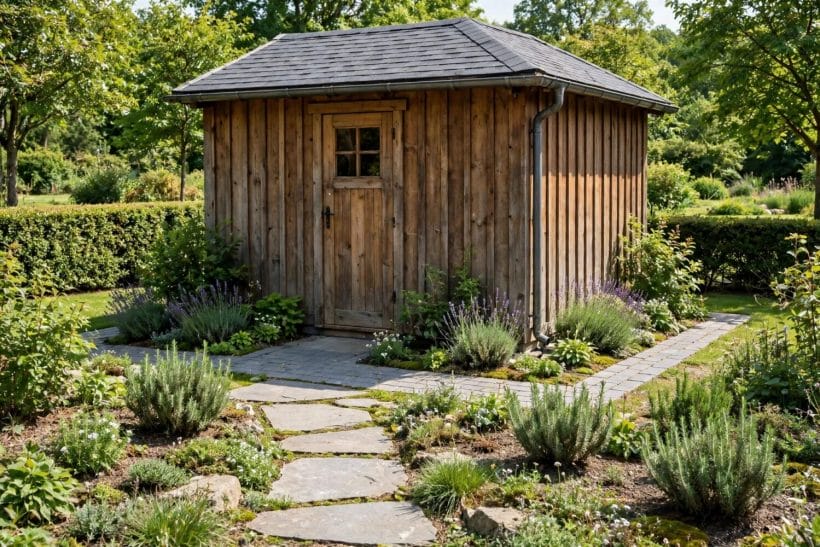
10. Costs, Size and Practical Decisions
Costs deserve honest, general treatment rather than figures that pretend to certainty, because what a small shed costs depends on so many local things that any single number would mislead. Size, materials, roofing, glazing, base, access and fitting all pull the total in different directions, and this section weighs those drivers in general terms, with no price quoted as fact. The aim is a plan that holds no surprises, not a promise about what any shed will cost.
The outside of a small home teaches the same lesson about weighing choices together. Tiny house exterior ideas show how cladding, roofing and colour are chosen as a set rather than one by one, and tiny house designs show how size, layout and finish are balanced in a single plan. A small shed repays the same joined-up thinking, with every driver considered before the first board is ordered.
68. Size first: the smallest shed that holds the job
The cheapest shed is often the smallest one that genuinely holds the job, because every extra inch adds boards, roofing, base and paint. Listing what must live in the shed before choosing its size keeps the building honest, and a shed sized to its contents rather than its ambitions leaves money for the things that truly matter.
69. Materials compared by care, not by price alone
Materials should be compared by the care they will need over the years, not by their first price alone, since a finish that needs frequent repainting can quietly cost more in time and materials than a dearer finish that asks little. Timber, painted boards and other claddings each carry their own rhythm of care, and choosing with that rhythm in mind keeps the shed affordable in the long run.
70. Roofing and glazing weighed against the plan
Roofing and glazing are the two drivers most often underestimated, because a generous roof and generous windows transform a shed while adding to its cost. Weighing them against the plan means asking what each window and each roofing choice truly adds to the shed’s use, and keeping what earns its place while letting go of what merely looks generous.
71. A base and access costed before the shed itself
A base and a path are easily forgotten until the shed arrives, and then they become urgent extras that strain the plan. Costing the base and the access before the shed itself, with professional help where the ground requires it, keeps the whole project honest and avoids the surprise of a shed with nowhere sound to stand.
72. Professional fitting allowed for in the plan
Professional fitting for structural work, bases, roofing and any wiring should be allowed for in the plan from the start, not discovered as an afterthought. Work done properly the first time lasts longer and needs less remedy, and a plan that includes professional help is a plan that respects both the shed and the people who will use it.
73. Finish and paint as part of the first plan
Finish and paint are sometimes treated as finishing touches to be worried about later, yet they protect every board they cover and set the shed’s character for years. Including finish and paint in the first plan, with their future care in mind, keeps the shed looking cared for from its first season onward.
74. Care through the seasons, planned from the start
Care through the seasons is a cost in time rather than money, and planning it from the start keeps it small: clearing gutters, checking seals, touching up paint, and sweeping out the shed each season. A shed whose care is planned stays sound with little effort, while a shed whose care is improvised slowly asks for larger and larger repairs.
75. A shed that earns its place, whatever its size
The final practical test is the simplest: does the shed earn the ground it stands on, whatever its size? A small shed that holds its tools tidily, shelters its seedlings, gives a reader a chair, or simply makes the garden prettier has earned its place, and that earning is the true measure of every idea in this guide.
Final Considerations
Choosing a small shed is, in the end, a matter of matching a building to a life. The gardener who pots daily needs a bench and a window; the maker needs a bench that stays still; the reader needs a chair and quiet light; the tidy keeper needs shelves and hooks. No single shed serves all of those lives equally, and the ideas above are best read as a menu from which a reader picks the few that fit their own garden, their own work, and their own way of spending an hour outdoors.
Small rooms of every kind reward the same discipline of choosing less and placing it well, and a final companion read is worth suggesting for anyone who loves compact living. Small living room ideas show how a small interior can feel generous when every piece earns its place, which is exactly the spirit to carry into a small shed. Keep the shed’s job in view, keep its base sound and its roof true with professional help where needed, check local rules before siting, and let colour and planting do the rest.
A small shed well chosen becomes part of the garden’s daily rhythm: the door opened in the morning, the tools taken down, the seedlings checked, the chair sat in as evening comes. It does not need to be large, and it does not need to be grand. It needs to be sound, dry, easy to use, and pleasing to look at from the house, and when those four things are true, the smallest shed in the garden can become its most loved building.


0 Comments