

A fireplace surround is the face a living room shows to the people who gather in it. Long before anyone notices the fire itself, the eye lands on the frame around it: the material that rises from the hearth, the shelf that runs across the top, and the way the whole arrangement sits against the wall. Fireplace surround designs shape that first impression, and they go on shaping the room through every season, lit or unlit, because the surround is there even when the fire is not.
This guide is a survey of living room surrounds only. It looks at the forms they take, the materials they are made from, the colours that suit them, the shelves that crown them, and the light that shows them at their best. It does not teach furniture placement, and it does not teach mantel bookcase built-ins, which are separate forms with their own guides. Anything involving the firebox, the flue or the chimney belongs to qualified professionals, and local rules should be checked before any change is made. What follows is simply a way of looking, so that when you walk into a room with a fire, you can read its surround and understand why it works.
| Item | What it is |
|---|---|
| What the Surround Does in a Living Room | A surround does three quiet jobs at once. |
| Stone Surrounds, Full and Textured | Stone is the most forthright of surround materials. |
| Painted Brick, Soft and Cosy | Painted brick is the friendly face of the fireplace world. |
| The Surround After Dark | A surround changes character when evening comes. |
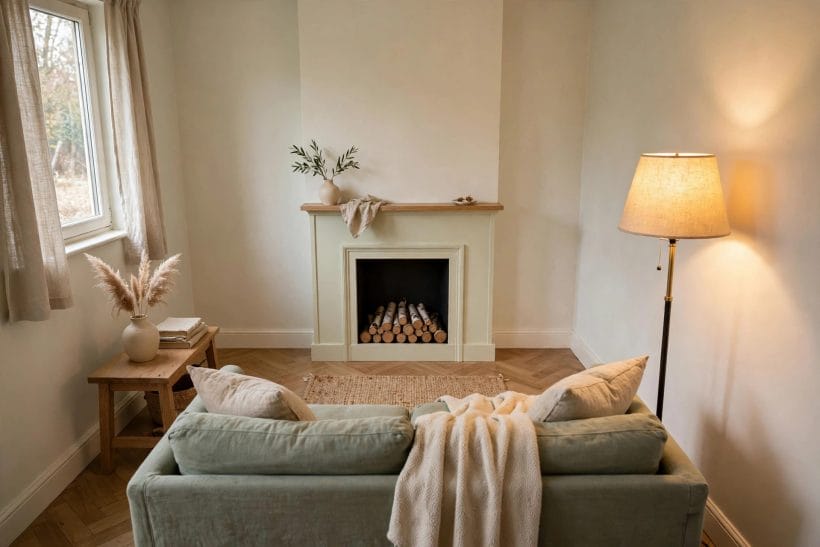
| Smooth Plaster and Quiet Lines | Smooth plaster surrounds are the quietest in this survey. |
| Marble, Classic and Bright | Marble brings a classical note to a living room surround. |
| Timber, Rustic and Warm | Timber surrounds speak the language of cabins, cottages and country rooms. |
| Layered Lighting Around the Surround | Layered lighting is the idea that no single light should carry a room. |
| Pale Surrounds in Bright Rooms | Pale surrounds are the brighteners of this survey. |
| Slim Surrounds for Small Rooms | Small rooms need surrounds that know their place. |
1. What the Surround Does in a Living Room
A surround does three quiet jobs at once. It frames the fire, giving the opening a finished edge instead of a raw hole in the wall. It gives the wall a centre, a place where pictures, candles and seasonal dressing can gather without looking scattered. And it sets the tone of the room, because a surround made of rough stone speaks differently from one made of smooth plaster, even when both rooms hold the same sofa and the same rug.
The parts are simple to name. The surround itself is the frame around the opening, running up the sides and across the top. The mantel shelf is the ledge that caps it, a place for a mirror, a clock or a row of candles. The hearth is the floor area in front of the fire, a practical apron that also marks the boundary between the fire and the rest of the room. Around those parts, the wall above and beside the surround matters too: a plain stretch of wall lets a strong surround lead, while a busy wall can fight it for attention.
Scale is the idea that ties the parts together, stated only in general terms. A surround that rises generously suits a room with height to spare, while a slimmer surround suits a lower, cosier room. A wide surround can anchor a long wall, while a narrow one can give a small room a focus without overwhelming it. Nothing here needs measuring or fitting: the point is to notice proportion with your eyes, and to leave all fitting, fixing and fire work to people qualified to do it.
For the room around the fire, tiny living room ideas show how a single strong feature can carry a small space. The surround is often that feature. When it is calm and well chosen, everything else in the room can stay simple, and the room still feels finished.
2. Stone Surrounds, Full and Textured
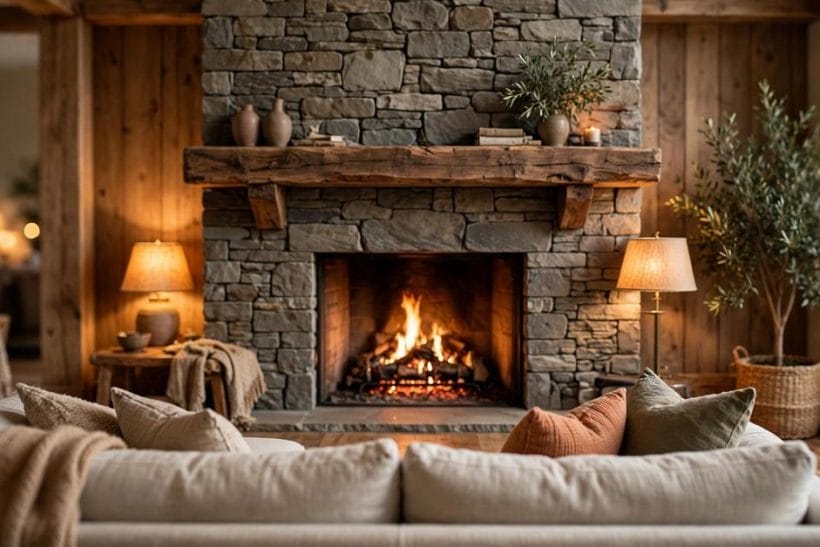
Stone is the most forthright of surround materials. It arrives with texture already in it: rough faces, soft colour variation, and joints that draw the eye across the wall. A full-height stone surround turns the fireplace into an architectural feature, something that looks as though it belongs to the bones of the house rather than to its decoration. In a room with timber beams or wooden floors, stone feels especially at home, because both materials carry the same natural, unpolished character.
The appeal of stone is also its warning. A heavy, textured surround dominates whatever stands near it, so the rest of the wall should be allowed to breathe. Plain plaster beside a stone surround reads as calm, while patterned wallpaper beside it can feel restless. The mantel shelf over stone is usually timber, thick and simple, which softens the top edge and gives the eye a horizontal line to rest on.
Stone surrounds suit rooms that want warmth without fuss. They look their best with soft furnishings in natural tones, with wool, linen and timber nearby, and with firelight doing much of the evening work. They are less suited to rooms chasing a sleek, minimal look, where the texture that makes stone charming can read as noise. Knowing which side of that line a room sits on is half the skill of choosing a surround.
3. Painted Brick, Soft and Cosy
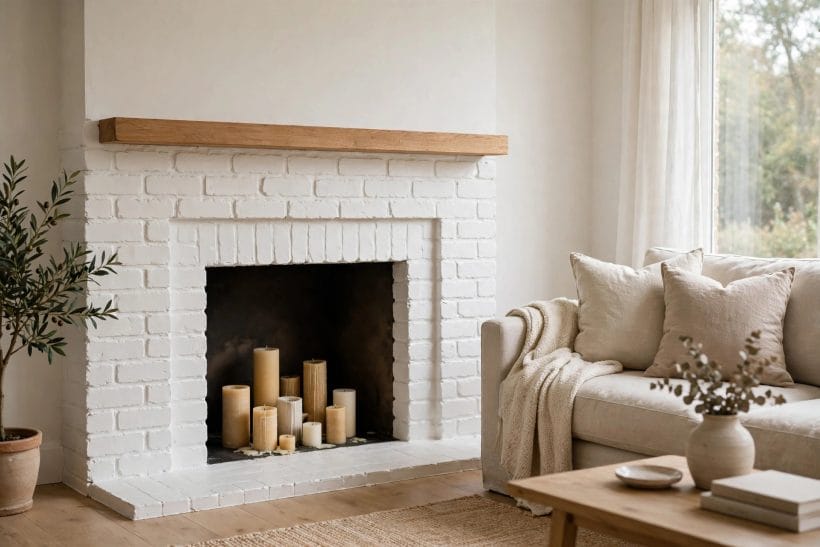
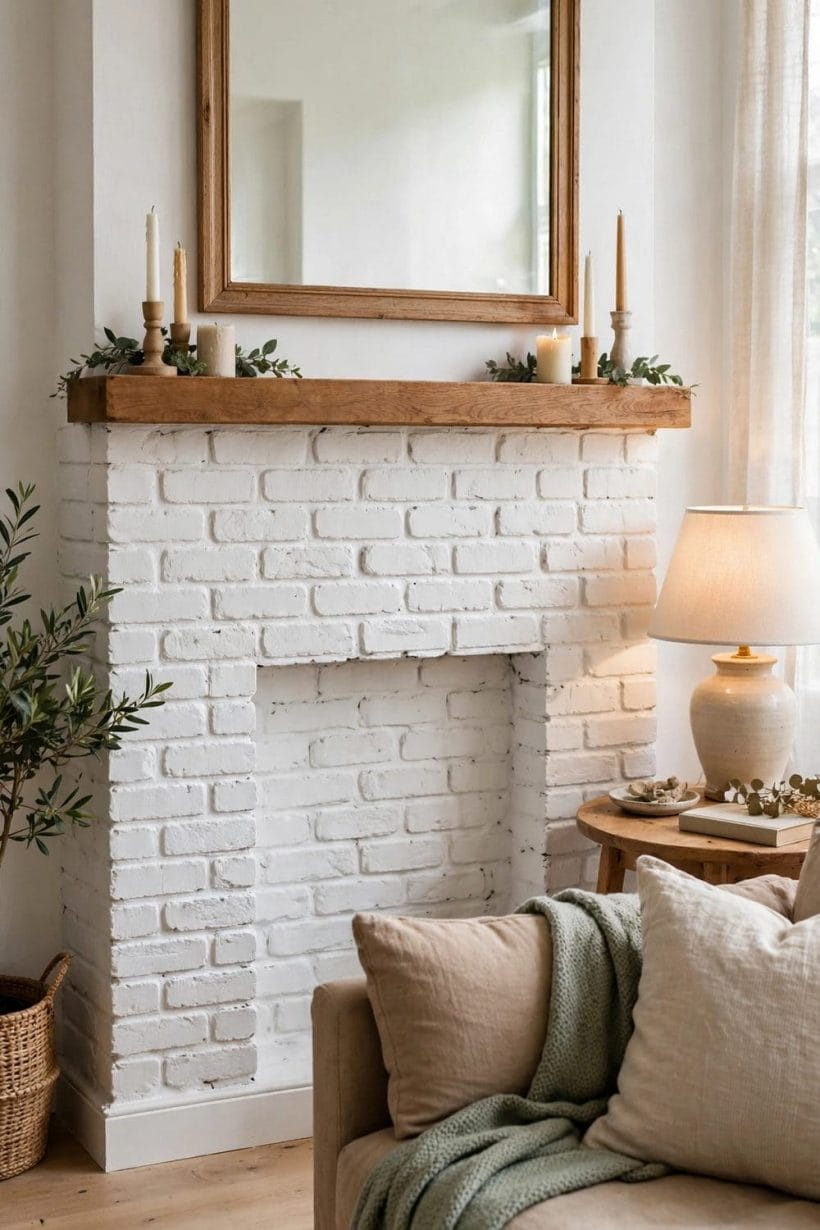
Painted brick is the friendly face of the fireplace world. The brickwork underneath gives the surround its rhythm, a steady pattern of small units, while the paint softens it into a single colour that sits easily with sofas, curtains and rugs. White is the familiar choice, because it brightens the wall and makes the fire opening read clearly, but soft grey, warm cream and gentle sage all play the same role: they let the surround be present without being loud.
A painted brick surround is forgiving to dress. Candles sit happily in an unlit opening, a simple mirror or a pair of pictures suits the shelf, and a garland or a row of small plants can mark a season without any rearrangement of furniture. Because the material is modest, the dressing can change often, and the surround still looks like itself underneath.
Painted brick also flatters rooms that mix old and new. The brick hints at the age of the house, while the paint keeps it fresh, so a modern sofa and an old surround can share a room without arguing. Keep the palette around it calm, and the painted brick will do the quiet work of making the room feel lived in rather than staged.
4. The Surround After Dark
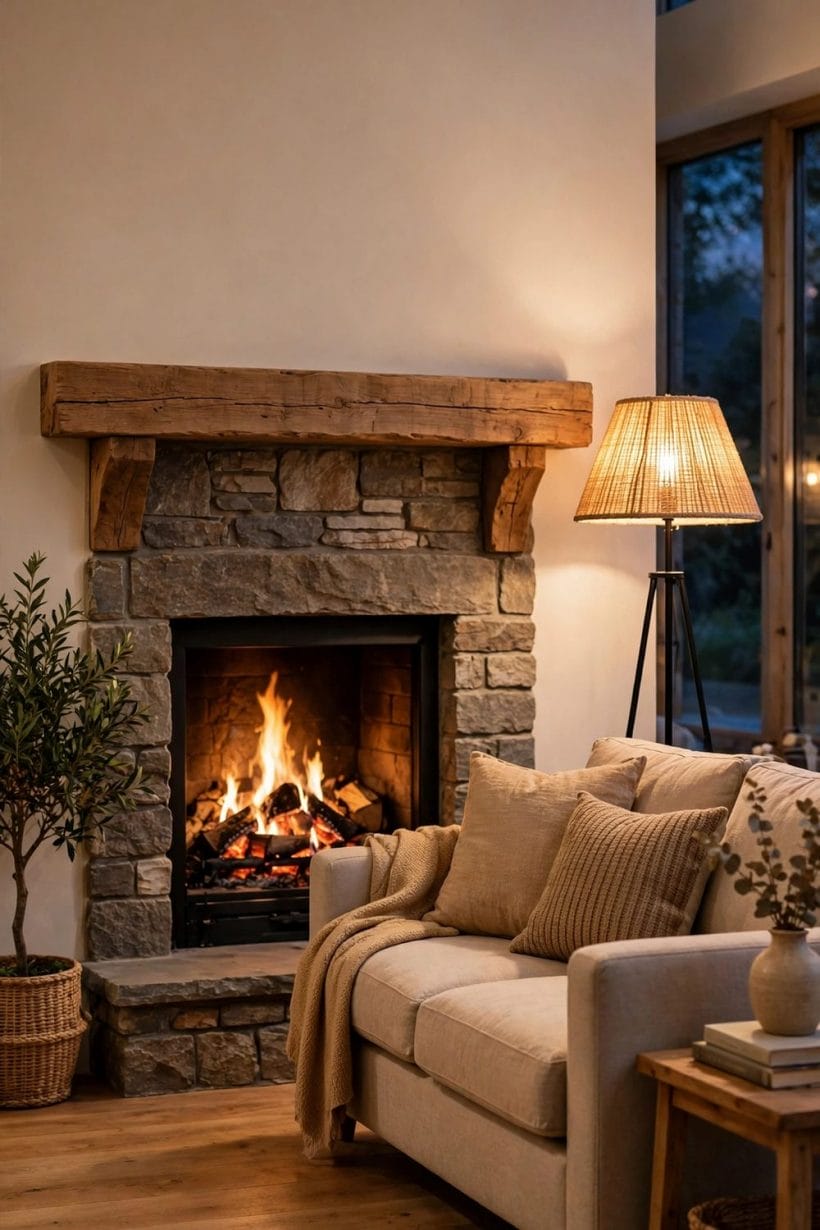
A surround changes character when evening comes. In daylight it is read by its material and colour; after dark it is read by its light. Firelight gives a surround a moving glow that no lamp can copy, pooling on the hearth and warming the material from below. Lamps beside the fire add a second, steadier light, so the surround is not left to the fire alone, and the room keeps its shape when the flames are low.
The evening view is also the sofa view. Most people meet their fireplace surround from a seat, across a rug, in lamplight, and that distance flatters the surround: texture softens, colour deepens, and the whole arrangement reads as one picture rather than a collection of parts. A surround that looks good from the doorway but harsh from the sofa has missed its main audience, so judge a surround from where you will actually sit.
For evening rooms, keep the light low and layered rather than bright and single. A floor lamp on one side, a table lamp on the other, and the fire itself give the surround three sources to play with, and each one shows a different part of it: the lamp shows the shelf, the fire shows the opening, and the second lamp shows the wall beside. The result is a room that glows rather than glares, and a surround that earns its place at the centre of the evening.
5. Smooth Plaster and Quiet Lines
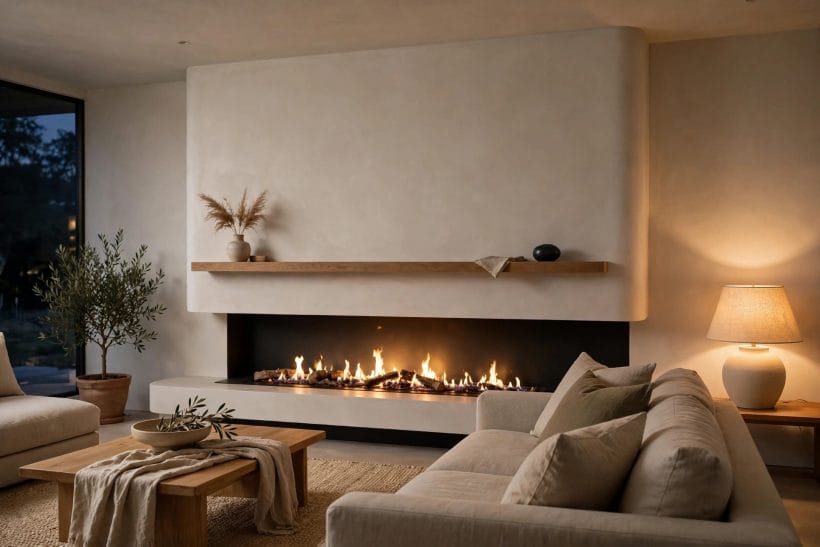
Smooth plaster surrounds are the quietest in this survey. Where stone shows texture and brick shows pattern, plaster shows almost nothing but form: a clean plane, a gentle curve at an edge, a long low opening. The effect is calm, and it suits rooms that already have plenty to look at, whether that is a view through large windows, a bold rug, or a wall of art elsewhere in the room.
The mantel shelf over plaster is usually slim, sometimes barely more than a ledge, because a heavy shelf would break the clean line the plaster is working to keep. Dressing stays light too: a single vase, a small sculpture, or nothing at all, letting the shape of the surround carry the wall. In the evening, a long low fire suits plaster well, drawing a horizontal line of light that echoes the shelf above it.
Plaster surrounds reward restraint in the rest of the room. When the sofa, the rug and the curtains are kept in soft, related tones, the plaster wall reads as intentional rather than empty. For rooms that want to feel serene, uncluttered and modern without feeling cold, a smooth plaster surround is often the right answer, and it is worth studying in contemporary home design ideas to see how quiet walls and strong shapes work together.
6. Marble, Classic and Bright
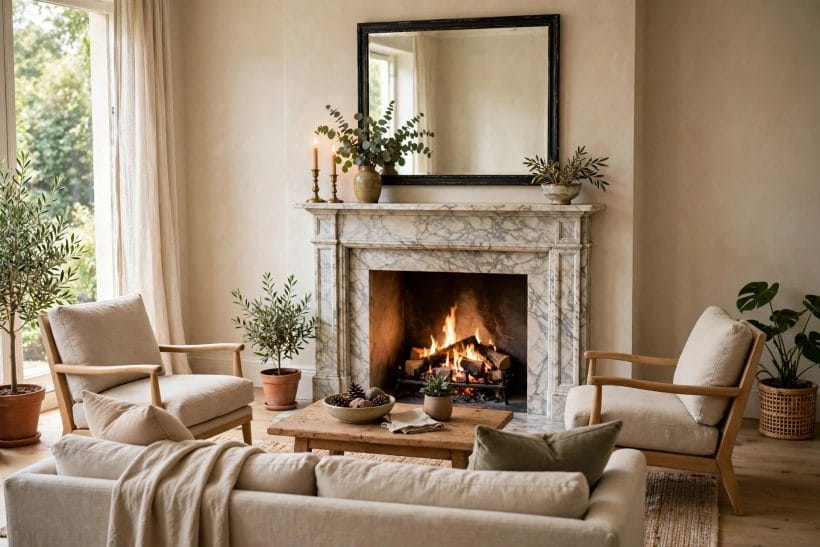
Marble brings a classical note to a living room surround. Its veining gives a plain wall a natural pattern, its pale surface brightens the room, and its smooth finish catches both daylight and lamplight in a way that rougher materials cannot. A marble surround with a traditional mantel shelf, a mirror above and a pair of chairs nearby is one of the most enduring pictures in interior design, because every part of it is familiar and none of it shouts.
The brightness of marble is practical as well as pretty. In a room that struggles for light, a pale surround reflects what light there is, while a dark surround would absorb it. That makes marble a kind friend to north-facing rooms and to rooms with small windows, where every pale surface earns its keep.
Marble asks for a little care in dressing. Because the material already carries pattern in its veining, the shelf above it suits simple things: a pair of candlesticks, a small plant, a mirror that doubles the light. Crowding a marble shelf with many small objects fights the very calm the marble is offering. Let the stone speak, and keep the rest of the shelf quiet.
7. Timber, Rustic and Warm
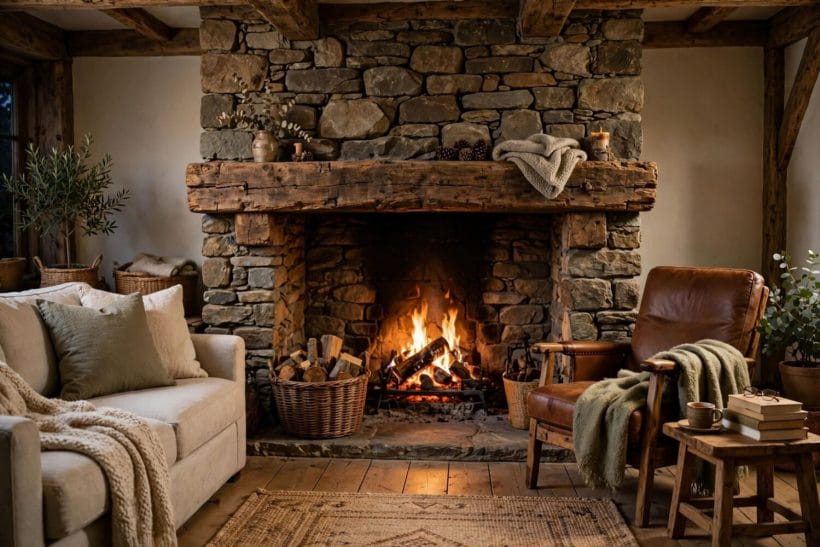
Timber surrounds speak the language of cabins, cottages and country rooms. A chunky beam for a mantel, rough stone or brick beneath it, a basket of logs beside the hearth: these are the ingredients of a room that promises warmth before the fire is even lit. Timber softens stone, warms brick, and gives any surround a hand-made feel that smooth materials cannot copy.
The character of the timber matters. A rough, dark beam reads as rustic and old, while a smoother, paler shelf reads as country-fresh. Either can work, but the choice should match the room: dark beams suit rooms with dark floors and deep colours, while pale timber suits rooms that want the rustic note without the weight. A reading chair and a small table near a timber surround complete the picture, because timber invites lingering in a way that sleek materials do not.
Timber also connects the fireplace to the rest of the room. Beams, floorboards, furniture legs and picture frames can all share the same wood tones, so the surround stops being an isolated feature and becomes part of a whole. For smaller homes, small living room ideas show how one warm material, repeated gently, can make a compact room feel coherent rather than crowded.
8. Layered Lighting Around the Surround
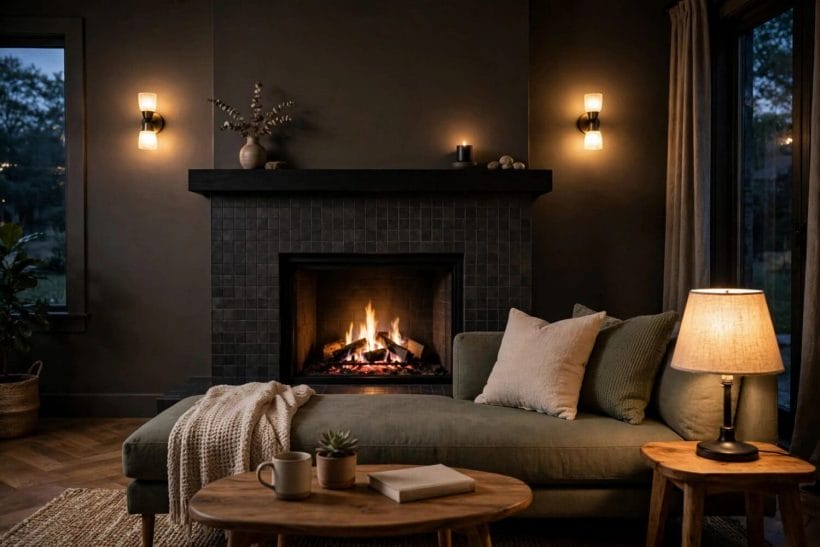
Layered lighting is the idea that no single light should carry a room. Around a fireplace surround, the layers are the fire itself, the lamps beside it, and the wall lights that wash the surround from above or from the sides. Each layer has a job: the fire gives movement, the lamps give steadiness, and the wall lights give the surround its shape after dark, picking out texture and colour that daylight showed for free.
Dark surrounds benefit most from layering. A dark tiled surround can disappear into a dim room if the fire is its only light, but a pair of wall lights and a table lamp bring it back, showing the tile, the shelf and the hearth as distinct parts. Pale surrounds need layering too, though for the opposite reason: without it, a pale surround in a bright room can look flat, while a lamp to one side gives it shadow and depth.
The practical rule is simple and needs no wiring knowledge: light the surround from more than one place, keep every light warm rather than harsh, and let the fire stay the brightest thing in the room. Anything involving wiring, fittings or work near a fire should be left to qualified professionals, and the same professional-only rule covers the firebox, flue and chimney throughout. Lighting is dressing, not engineering, and the line between them should be respected.
9. Pale Surrounds in Bright Rooms
Pale surrounds are the brighteners of this survey. White brick, pale plaster, cream stone and light marble all do the same generous thing: they lift a room, reflect light, and make a fireplace feel like part of the daylight rather than a dark hole in the wall. In a bright room with pale sofas and light floors, a pale surround disappears into the palette in the best sense, giving the room a centre without adding weight.
The risk with pale surrounds is sameness. A white surround against a white wall with a white sofa can wash out, losing the very focus it was meant to provide. The remedy is contrast in small doses: a timber shelf against white brick, a dark mirror frame above a pale surround, a coloured cushion or a rug that gives the eye somewhere to land. The surround stays pale, but it is no longer invisible.
Pale surrounds also suit rooms that change with the seasons. A light surround takes summer dressing, such as greenery and pale candles, as easily as winter dressing, such as garlands and deep colours, because pale is a background that accepts whatever is placed against it. For homes that like to refresh a room often, a pale surround is the most flexible choice in this guide, and tiny house designs show how pale surfaces keep compact rooms feeling open.
10. Slim Surrounds for Small Rooms
Small rooms need surrounds that know their place. A slim surround, with a narrow frame, a light shelf and a modest hearth, gives a small living room a focus without stealing its floor or its wall. The fire opening stays generous enough to enjoy, but the surround around it stays quiet, so the room keeps its breathing space.
The details that make a slim surround work are all about restraint. A pale colour keeps it light, a slim shelf keeps it from jutting into the room, and simple dressing keeps it from looking busy. A single floor lamp beside a slim surround can do the evening work that a whole set of wall lights would do in a larger room, because in a small room every light is closer to the wall it lights.
Small rooms also reward surrounds that match their architecture. A compact painted surround suits a compact cottage room, while a slim plaster surround suits a modern apartment, because the surround then looks like it was designed with the room rather than borrowed from a larger house. For the rooms themselves, tiny house interiors offer plenty of examples of small spaces where one well-chosen feature does the work of many.
Final Considerations
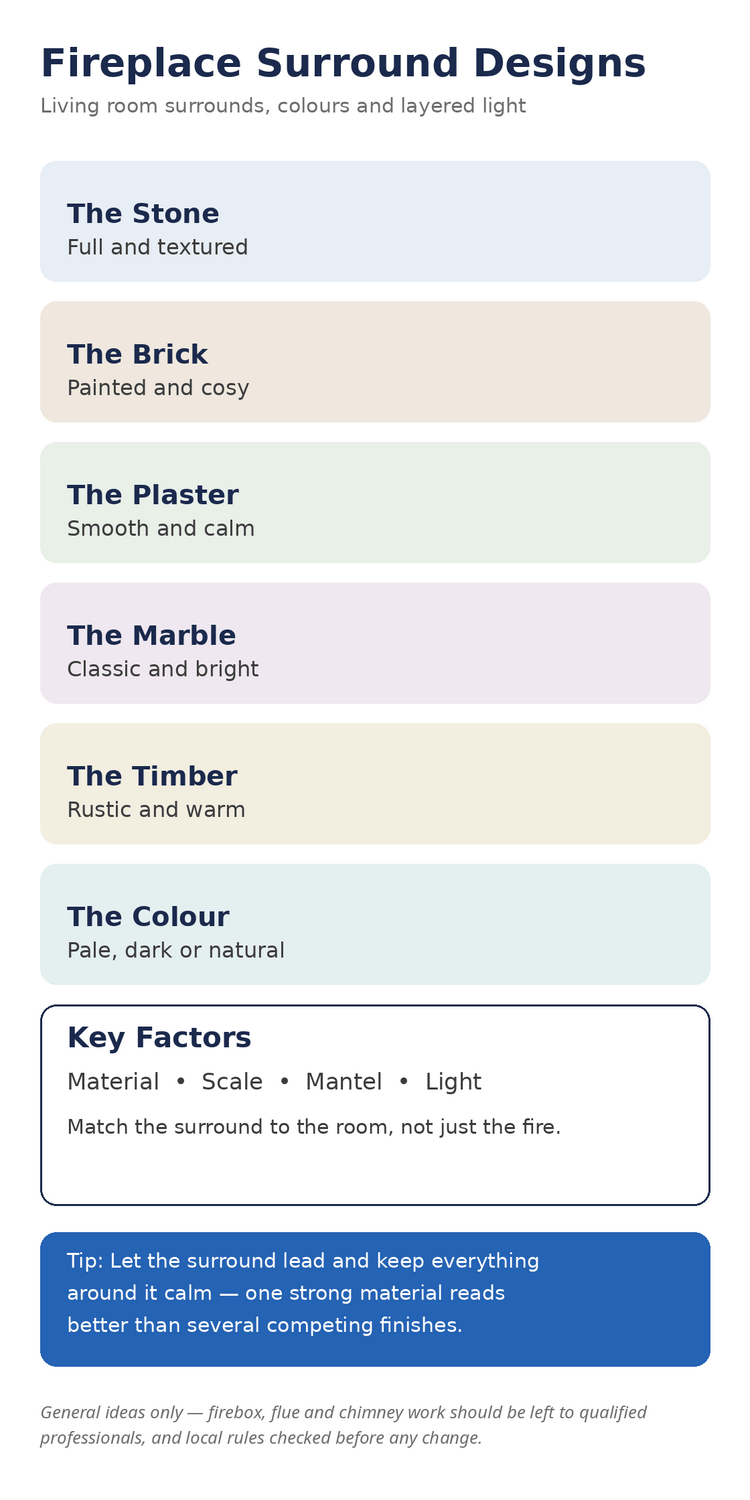
Choosing among fireplace surround designs comes down to reading the room first and the surround second. A room with height and timber suits stone, a room chasing calm suits plaster, a room needing light suits marble or a pale finish, and a room built for cosiness suits painted brick or timber. The surround should match the room it lives in, not the picture that first inspired it, because a surround that fights its room will never settle, however beautiful it looked elsewhere.
Two neighbouring topics deserve a clear boundary here, so this survey is not mistaken for them. How sofas and chairs are placed around a fire is a separate subject, covered in the guide to furniture arrangement around a fireplace, and it is not re-taught above: sofas appear here only as the view from which a surround is seen. Likewise, mantel bookcase built-ins, where shelving is built around the fire as joinery, are a separate form, covered in the guide to fireplace mantel bookcase built-ins, and they are not re-taught above either. This guide stays with the surround itself: its material, its colour, its shelf, its hearth and its light.
Finally, keep the professional boundary in mind. Admiring, choosing and dressing a surround are for the homeowner; anything touching the firebox, the flue, the chimney or the structure of the wall is for qualified professionals, with local rules checked first. With that boundary respected, a living room surround can be enjoyed for years, lit or unlit, as the calm centre of the room it serves.

0 Comments