
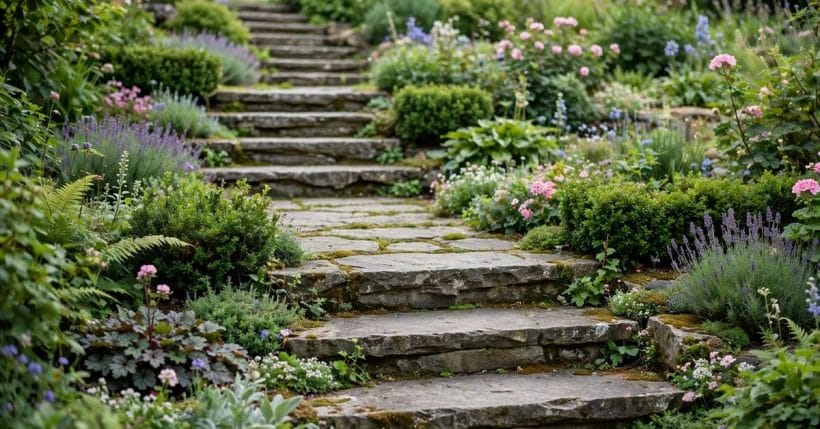
Garden steps do far more than join one level to another. In a planted garden they become part of the planting itself, a slow climb framed by leaves, scent and colour that changes with the seasons. A well placed flight can turn a slope from an awkward bank into a walk worth taking, while a poorly placed one can feel like an interruption in an otherwise gentle garden. This gallery looks at landscape steps as a garden feature in their own right, from the materials underfoot to the beds and paths that meet them at either end.
The ideas here stay with garden steps only. Entry steps at a front door belong to a different kind of design, shaped by arrival, shelter and the front of the house, and they are not re-taught here. What follows is about steps that live among planting, where beds, paths and seasonal change do most of the talking. Gardeners will find plenty to adapt, and any structural or drainage groundwork is work to discuss with a professional rather than to improvise.
It can help to walk a garden slope slowly before deciding anything, noticing where the ground feels awkward, where the eye naturally rests, and where planting already gathers. A flight that follows those clues will usually feel more settled than one placed by measurement alone, since gardens are lived in by eye and by foot rather than on paper. The sections that follow move from materials to planting, then to paths, slopes, light and seasonal care, so that each idea can be considered on its own before the whole climb is imagined together.
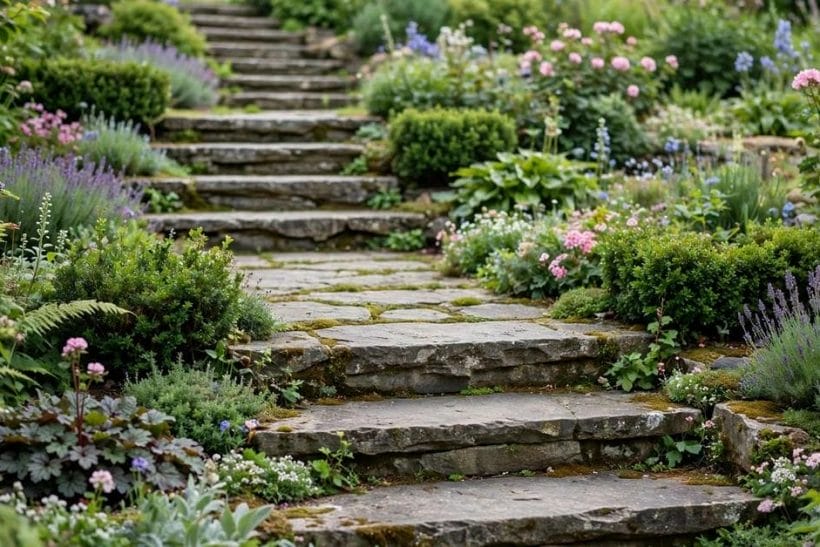
1. Stone Steps That Settle Into Planting
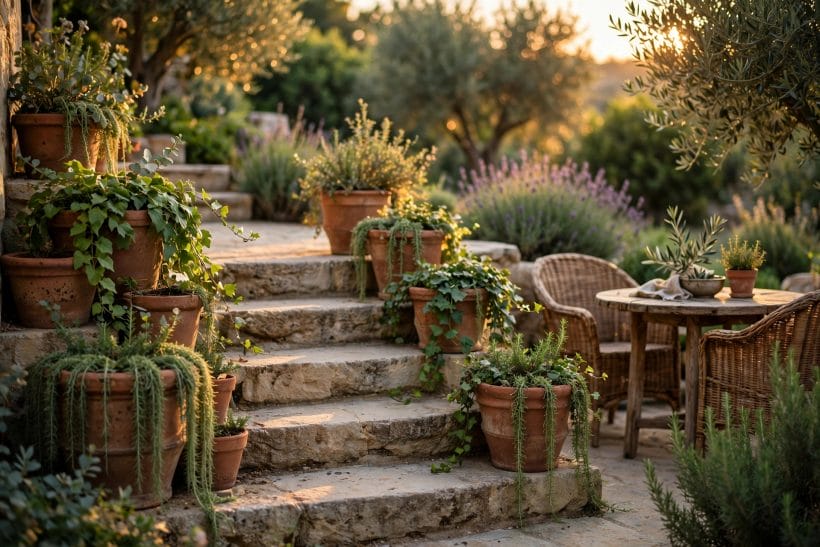
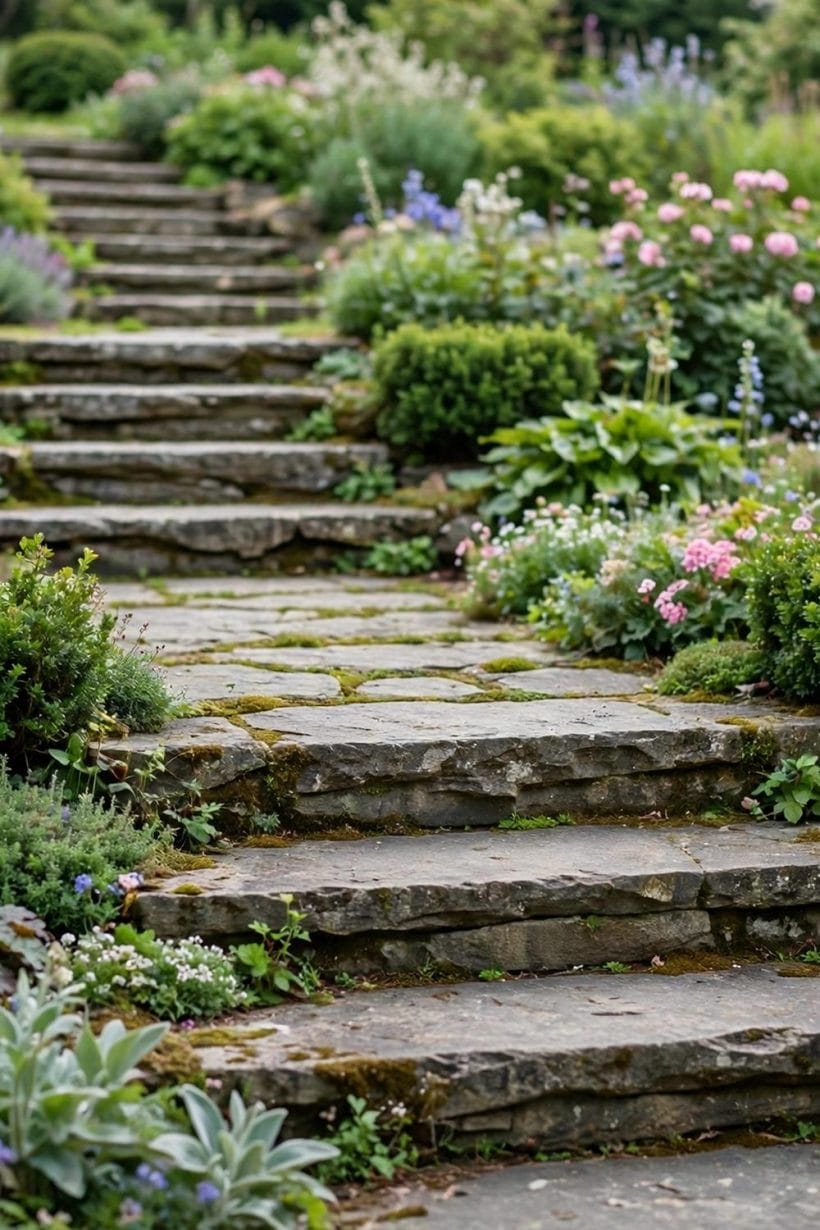
Natural stone has a way of looking as though it has always been in a garden, even when it was laid only recently. Its varied colour and rough texture sit comfortably beside soil and foliage, and the gaps between stones can soften further as low planting creeps in around the edges. A stone flight suits gardens where the planting is generous and slightly informal, since the material itself carries much of the character and asks little of the beds around it.
When stone steps work well, it is usually because the planting was planned with them rather than added afterwards. Low shrubs at the sides can steady the eye on the way up, while taller plants set back from the treads keep the climb feeling open. Groundcover near the edges can blur the line between step and bed, though it needs watching so that it never spills across the walking surface. The result, at its best, is a climb that feels like a path that happens to rise.
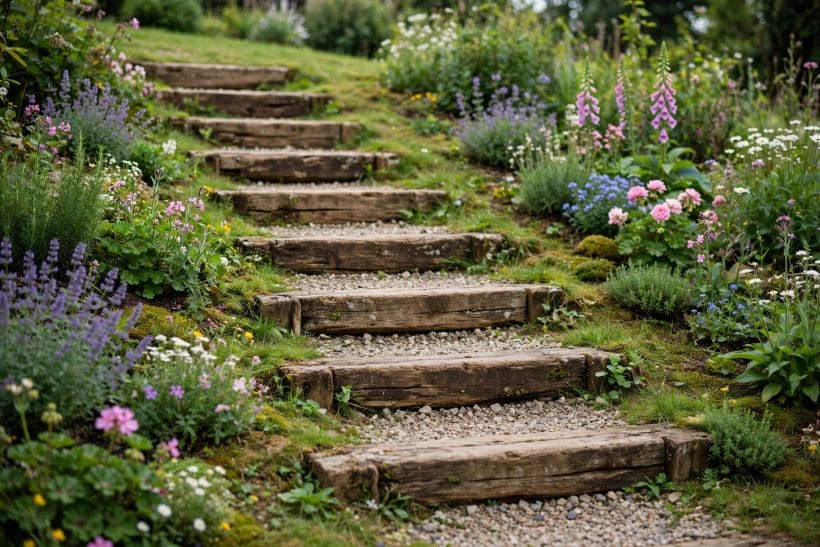
2. Timber Steps for a Softer Garden Climb
Timber brings warmth to a garden slope that stone and brick sometimes lack. Sleeper steps, with their deep treads and earthy tone, suit cottage planting and woodland edges, where the garden already leans towards soft textures and muted colours. Gravel between the timbers can add a gentle crunch underfoot and help the flight read as part of a path rather than a built structure.
Timber also invites a particular kind of planting. Ferns, grasses and trailing leaves sit happily against wooden edges, and the warm tone of the wood can make green foliage look richer by contrast. As with any garden timber, weathering is part of the story, and the look will mellow over time. Keeping the treads clear of fallen leaves and damp debris helps the flight stay pleasant to walk on through wet weather.
3. Brick Steps and Neat Garden Edges
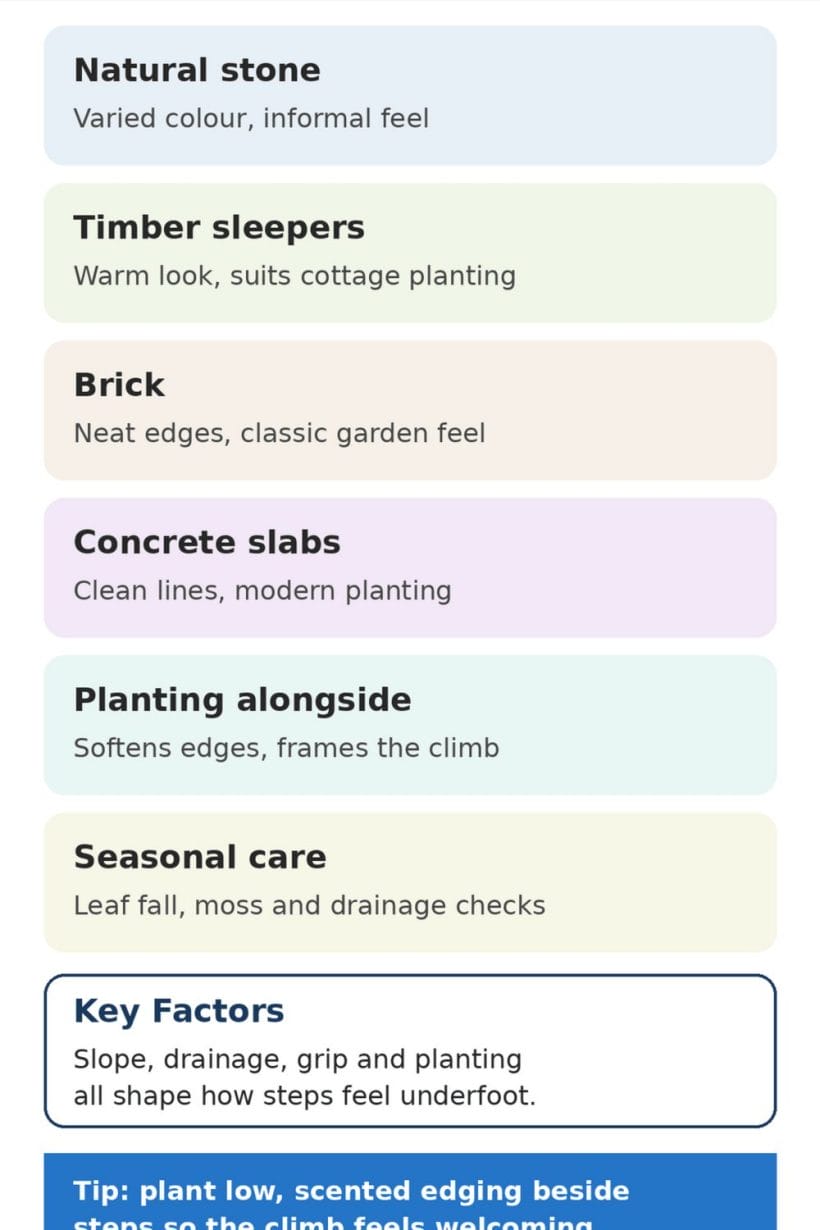
Brick steps carry a neatness that suits more formal planting. Their regular shape makes a curved flight possible, and a curve can be a lovely device in a garden, slowing the climb and opening up views of the beds as the walker turns. Roses, lavender and other scented planting beside brickwork can make the ascent feel like a small occasion rather than a mere route.
The colour of brick matters more than it might seem. Warm red tones glow in evening light and pair well with soft pinks and purples, while paler bricks can keep a small garden feeling light. Brick edges also give a clear line between step and bed, which can be a blessing where planting is vigorous and might otherwise wander. A tidy edge, kept free of soil spill, lets both the steps and the planting show at their best.
4. Slab Steps for a Modern Garden Look
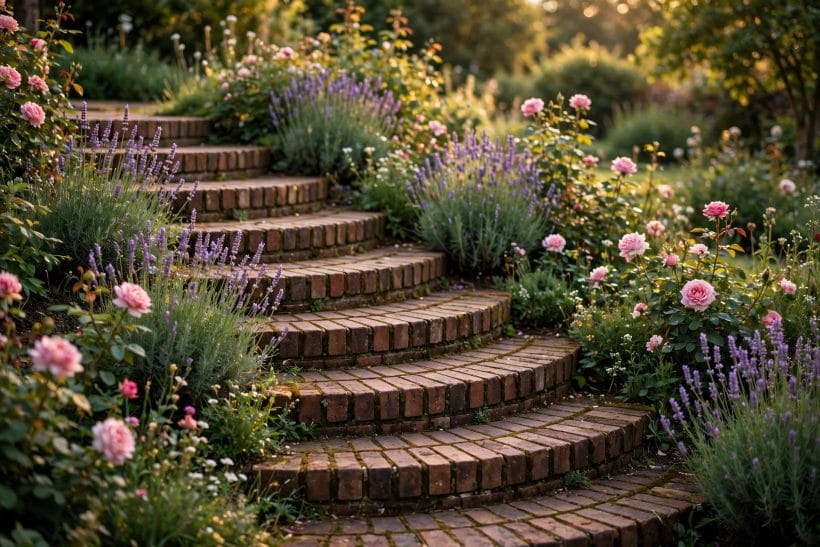
Wide concrete slabs offer a different rhythm altogether. Their clean lines and generous treads suit contemporary planting, where ornamental grasses and bold leaf shapes do the decorative work. A slab flight can feel almost like a series of low platforms floating through the planting, especially when gravel or groundcover fills the spaces between them.
Modern does not have to mean bare. Grasses that catch the light can soften the edges of each slab, and a single sculptural shrub placed with care can anchor the whole flight. The trick is restraint, letting a few plants earn their place rather than crowding the climb. When the planting is kept simple, the steps themselves become the garden feature, and the eye follows their calm progression up the slope.
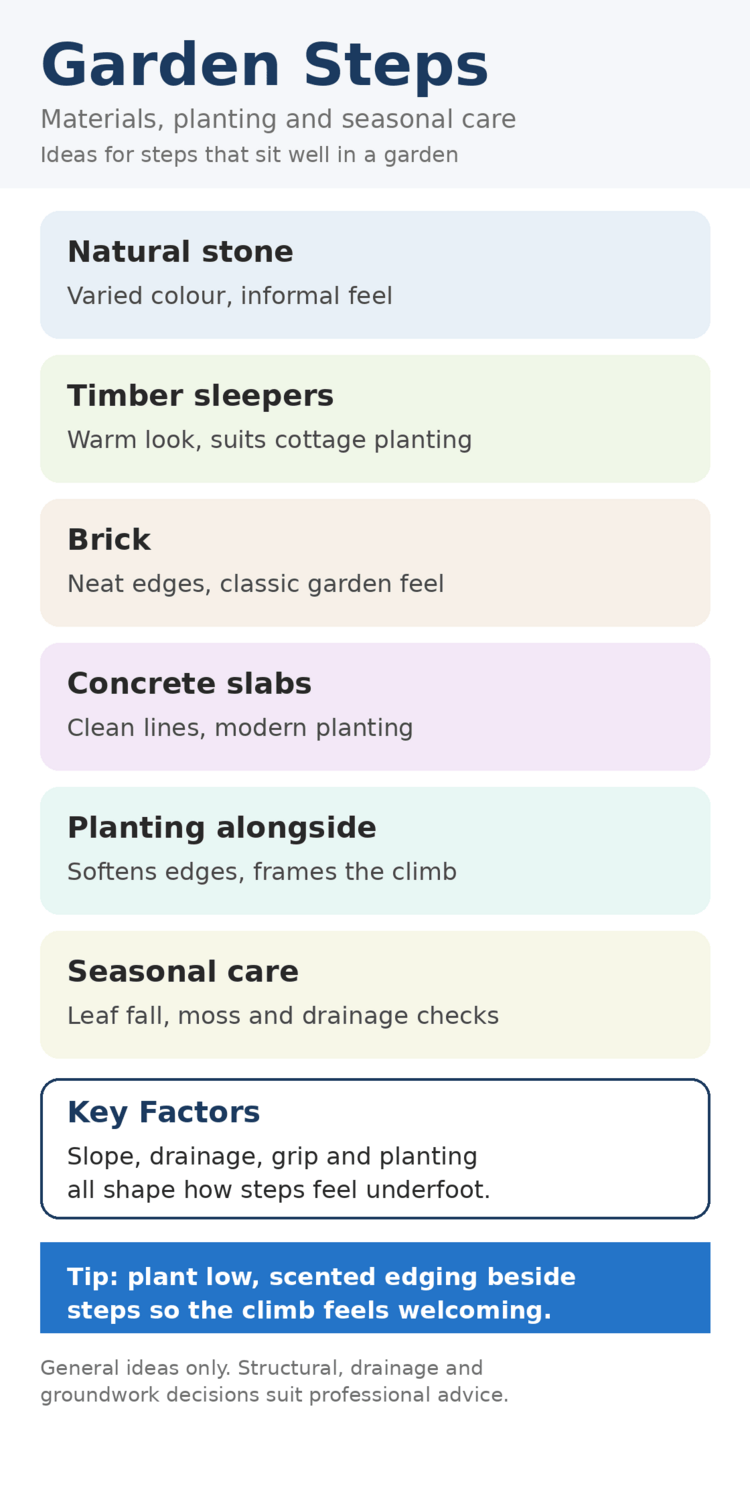
5. Planting That Frames Each Step
The planting beside garden steps does more than decorate. It frames the climb, guides the eye, and gives the walker something to enjoy at every stage. Low shrubs can mark the edges without closing in the route, while scented plants at hand height can reward a slow ascent. Taller plants are best set back, where they can provide a backdrop without shading the treads into dampness.
Seasonal thinking helps here. A bed that offers spring bulbs, summer scent and autumn colour in turn will keep the steps interesting all year, while evergreen structure can carry the scene through winter. The aim is not a perfect display at every moment, which no garden can promise, but a planting that always has something quietly going on. Gardeners often find that the steps themselves suggest the planting, with sunny flights suiting one palette and shaded flights another.

6. Paths and Beds That Meet the Steps
A flight of garden steps never stands alone. The path that arrives at its foot and the path that leaves from its top decide whether the climb feels natural or awkward. When the materials echo one another, stone steps meeting a stone path, or gravel treads meeting a gravel walk, the whole route reads as one continuous journey. A change of material can work too, but it needs a reason, such as marking the start of a different garden room.
Beds deserve the same thought. A bed that runs alongside the steps can knit them into the garden, while a bed that stops abruptly at the foot can leave the flight looking stranded. Planting that repeats on both sides of the climb can give a sense of balance, and a small landing planted at the top can offer a place to pause and look back. These are the details that make a garden walk feel considered, and they are worth sketching before any groundwork begins. For wider ideas on joining garden routes together, see these backyard landscaping ideas.
7. Steps That Suit a Sloping Garden
Sloping gardens ask the most of their steps, since the flight must handle the whole change of level gracefully. A long, gentle flight with wide treads can feel easier than a short, steep one, and a bend or a landing halfway up can break the climb into comfortable stages. Landings are also a chance to place a seat or a planted feature, turning a functional climb into a garden moment.
On a slope, drainage deserves attention from the start, since water will naturally follow the fall of the land. Steps that shed water well and beds that do not wash soil across the treads will stay more pleasant through wet seasons. This is groundwork territory, and it is worth professional advice before building, especially where the slope is steep or the soil is heavy. A flight planned with the slope, rather than imposed on it, tends to feel like it belongs. Rock landscaping ideas can offer further inspiration for sloping ground.
8. Gentle Light Along Garden Steps
Steps that are used after dusk benefit from gentle light, placed so that each tread is visible without glare. Low lights tucked into planting or set into the sides of the flight can mark the route softly, letting the garden keep its evening mood. The light itself becomes part of the planting, catching leaves and stone in a way that daylight never does.
Evening use also changes which plants shine. Pale flowers and silver foliage can glow in low light, while scented plants near the steps can make a dusk climb especially pleasant. Any electrical work for garden lighting is professional work, and the placement of lights is worth planning alongside the planting rather than as an afterthought. A softly lit flight can extend the garden day, giving the steps a second life once the sun has gone. Ideas for planting that performs well in pots near seating and steps can be found among these container garden ideas.
9. Keeping Steps Safe Through the Seasons
Grip underfoot is the quiet quality that makes garden steps a pleasure rather than a worry. Textured surfaces, clear treads and planting kept back from the walking line all help, as does a regular habit of sweeping leaves and clearing moss before it builds up. Shaded flights need a little more watching, since damp can linger there long after sunny steps have dried.
Seasonal checks need not be onerous. A walk up the flight with fresh eyes each season can reveal a loose edge, a plant crowding a tread, or a patch where water lingers. Small attentions like these keep the steps welcoming, and they also keep the gardener familiar with how the flight is ageing. Where a step itself needs repair or the ground beneath it has shifted, professional help is the sensible call rather than a makeshift fix. For scented edging plants that can frame a climb, see these herb garden layouts.

10. Seasonal Care for Steps and Their Beds
Each season asks something different of garden steps and their beds. Spring can bring a rush of growth that softens the flight, and a light trim can keep the route clear while the planting finds its shape. Summer is the season for enjoying the climb, when scent and colour are at their fullest and the steps become a destination in themselves.
Autumn is the busiest season for step care, as fallen leaves gather on treads and in corners. Clearing them regularly keeps the flight safe and lets the autumn planting show, while a mulch over the beds can help the soil through winter. Winter itself is a quieter time, when evergreen structure and the bare shape of the steps carry the scene. A garden that is planned for all four seasons will never leave its steps looking forgotten, whatever the month. A garden building near the steps can also anchor the scene, as in these garden shed ideas.
Final Considerations
Garden steps reward patience. The best flights are rarely the grandest, but the ones where material, planting and slope have been thought about together, and where the climb feels like part of the garden rather than an interruption of it. Whether the style is stone, timber, brick or slab, the planting alongside will do much of the work, softening edges, offering scent and carrying the scene through the seasons.
For anyone planning landscape steps, the practical sequence is worth keeping in mind. Start with the route and the slope, think about drainage and groundwork with professional advice, choose a material that suits the garden style, and then plant for the seasons rather than for a single moment. Entry steps at the front door are a separate design question, with their own demands around arrival and shelter, and they are best planned on their own terms. Kept distinct, garden steps can be exactly what they should be: a beautiful way through a planted garden. Wider exterior thinking can be found in these tiny house exterior ideas and tiny house porch ideas, the latter a reminder that a porch is an entry feature, not a garden flight.
Above all, a garden flight should be judged by walking it slowly in different lights and seasons, noticing where the planting crowds, where the tread feels uncertain, and where the view opens up. Small adjustments to planting or to the way leaves are cleared can change the feel of a climb more than any grand gesture, and a flight that is looked after gently will usually repay that attention. Gardens change year by year, and steps that are allowed to age alongside their planting often end up looking the most at home of all.
That slow, seasonal view is perhaps the kindest way to judge any garden feature. A flight that invites a pause, frames a favourite plant, and still feels safe underfoot after rain has done its job well, whatever its material or style. Every garden has its own pace, and the best steps simply follow it.



0 Comments