

The best herb bed is the one that fits your space, your sun and your cooking, in that order. A good herb garden layout does all three at once, matching plants to the light they love and the room they need.
Below are 27 complete layouts grouped by bed size, small, classic and family, and arranged by sun, with the sizing, spacing and soil rules that make every one of them work.
1. At a Glance: Bed Sizes, Sun and Plant Counts
Every layout in this guide builds on three bed sizes. Start from the size you have, or the size you can reach across comfortably, and the plant count follows from honest spacing rather than optimism.
| Small Bed | 3×3 ft, compact starter, 6–9 herbs |
| Classic Bed | 4×4 ft, square foot style, 12–16 herbs |
| Family Bed | 4×8 ft, room to grow, 20+ herbs |
| Sun Needed | Most herbs, full sun, 6–8 hours |
| Sun (Key Factor) | 6–8 hrs daily ideal |
| Soil | Well-draining, loose mix |
| Water | Keep soil moist, not soggy |
| Spacing | 8–12 inches between plants |
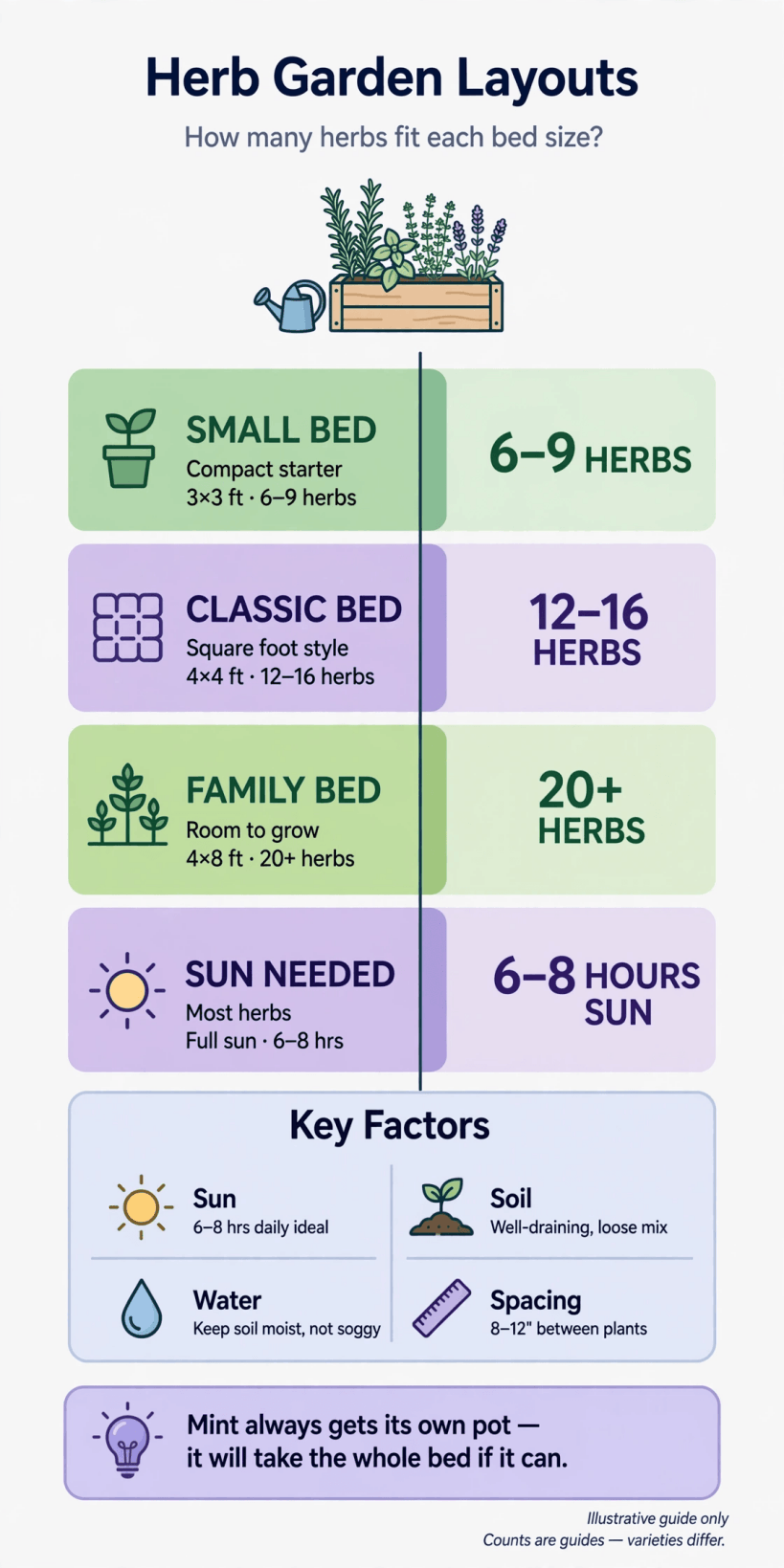
Bed sizes at a glance: a 3×3 ft small bed holds 6–9 herbs, a 4×4 ft classic bed 12–16, and a 4×8 ft family bed 20 or more, in 6–8 hours of sun.
One rule from the summary outranks every layout below: mint always gets its own pot, because it will take the whole bed if it can. Treat the counts as guides rather than promises, since varieties differ, and give each plant the spacing the table allows.
2. How to Read These Layouts: Sun, Soil, Water and Spacing
Each layout names its bed size, its sun position and its planting pattern, so you can lift one whole or borrow parts from several. The pattern always follows the same logic. Tall and sun-hungry plants stand where they will not shade their neighbours, sprawling plants go to edges and corners where they can spill without swamping anything, and the herbs you pick daily stand nearest the path, because a bed you must wade into is a bed you will stop harvesting.
The four key factors apply everywhere. Sun: most culinary herbs want six to eight hours of direct light, and the layouts assume that unless they say part shade. Soil: a well-draining, loose mix, because herb roots forgive drought far sooner than waterlogging. Water: keep the soil moist, not soggy, watering at the base in the morning where you can. Spacing: eight to twelve inches between plants, tighter for small, upright herbs and wider for bushy ones, so air can move and mildew struggles to settle.
Read your own plot before choosing. Watch where the sun actually falls across a whole day, note the corner that stays damp after rain, and measure honestly rather than pacing approximately. Ten minutes of observation will steer you to the right layout more reliably than any amount of rearranging afterwards, the same ground-first thinking that governs the sunken greenhouse (walipini) build for year-round growing.
3. Layouts 1–9: Small Beds, 3×3 ft, for 6–9 Herbs
Small beds are the compact starters of the summary: nine square feet holding six to nine herbs when spacing stays honest. They suit doorsteps, tiny-house plots and first attempts, and every one below assumes a sunny position unless it says otherwise. Keep the path on the picking side, and put the pot of mint beside the bed, never in it.
Layout 1 — The Doorstep Essentials. Basil at the sunny centre, parsley and chives along the front edge, thyme and oregano in the dry corners, coriander in the coolest spot. Seven plants within arm’s reach of the kitchen door for daily picking.
Layout 2 — The Tea Garden Square. Lemon balm at the back corner in a bottomless pot to restrain it, chamomile and mint-family leaves grouped along one side, with stevia-sweet herbs and edible flowers filling the front. Built for evening harvesting and calm, fragrant edges.
Layout 3 — The Salad Herb Square. Coriander and dill in succession rows on the cooler side, chives as a living border, parsley at the centre, and basil filling the sunniest square. Sow the fast leaves little and often so the bed never sits empty.
Layout 4 — The Italian Kitchen Nine. Nine plants in a true grid: basil in the warmest squares, oregano and thyme at the dry front corners, flat-leaf parsley and a small rosemary anchoring the back. A pizza-and-pasta bed for the sunniest wall you own.
Layout 5 — The Corner Culinary Bed. Designed for a bed tucked into a fence corner, with the tallest herbs at the back point, mid-height plants fanning forward, and trailers softening the front edge. The corner’s shelter suits tender leaves early and late in the season.
Layout 6 — The Beginner’s First Bed. Six forgiving herbs only: chives, parsley, mint in its pot alongside, thyme, oregano and one basil. Wide spacing, nothing temperamental, and early success guaranteed by plants that shrug off irregular watering and enthusiastic harvesting alike.
Layout 7 — The Pollinator Pocket. Flowering herbs left to bloom in rotation, borage stars, thyme mats and oregano clouds, with a few culinary plants at the front. Pretty, busy with bees, and best placed where the tiny-house garden meets wilder ground.
Layout 8 — The Part-Shade Small Bed. For a bed receiving bright light but limited direct sun: parsley, chives, coriander, sorrel-type leaves and mint in its pot at the damp end. These tolerate the cooler position that would starve basil of the heat it demands.
Layout 9 — The Windowsill Overflow Bed. A landing strip for pot-grown herbs graduating outdoors: small squares, generous spacing, and room to rotate pots in and out as seasons change. Ideal beside a tiny kitchen where indoor and outdoor growing blur together.
4. Layouts 10–18: Classic Beds, 4×4 ft, Square Foot Style
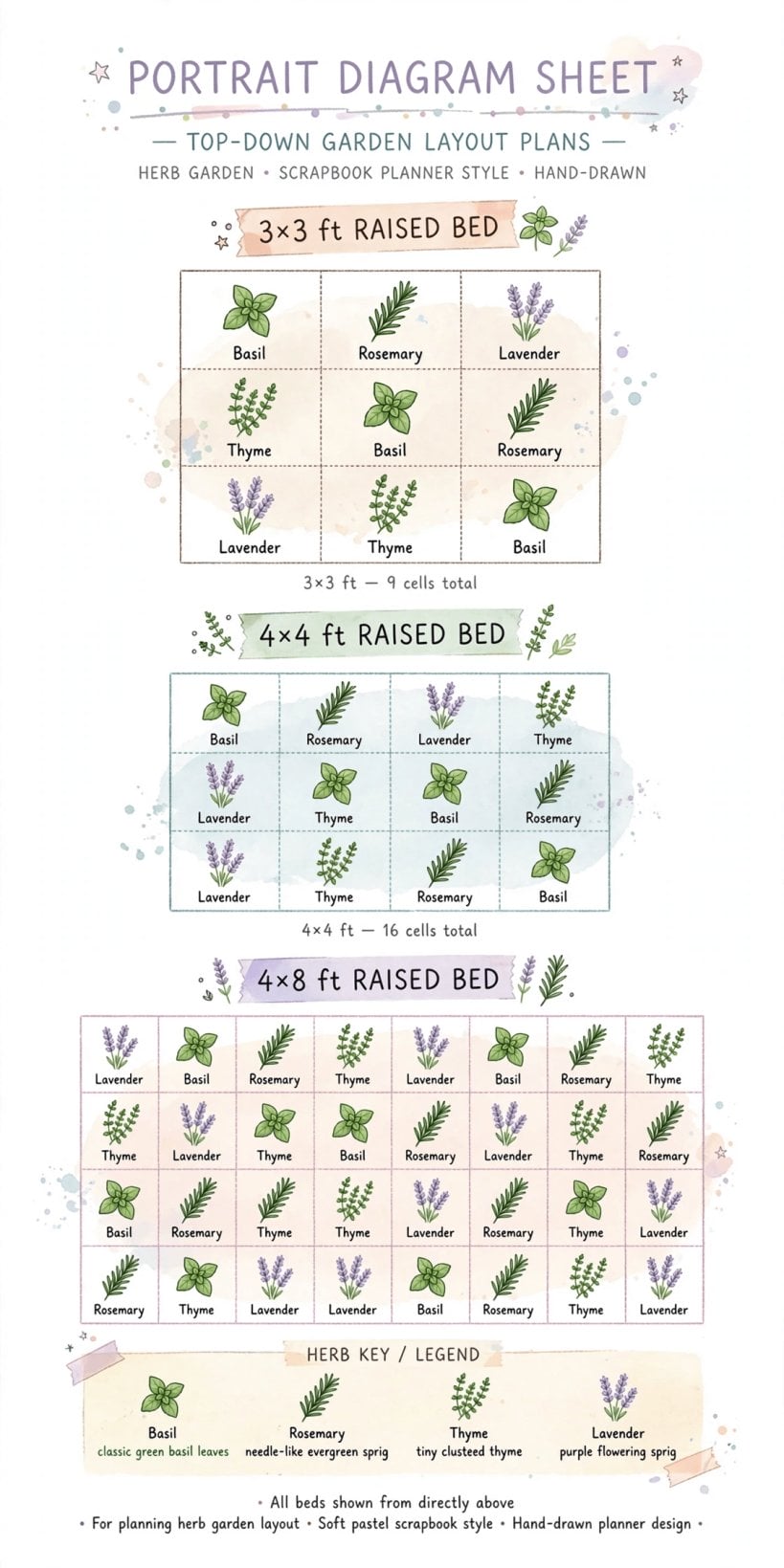
The classic bed of the summary, four feet square in square-foot style, holds twelve to sixteen herbs and is the size most home cooks should start with. Sixteen planting squares make planning simple: one herb per square for the bushy kinds, clusters for the slender ones, and a clear grid to rotate through the seasons.
Layout 10 — The Square-Foot Sixteen. One herb in each of sixteen squares, tallest at the back row, shortest at the front. The teaching bed: easy to label, easy to rotate, and the pattern from which every other classic layout here is a variation.
Layout 11 — The Mediterranean Classic. Rosemary at the back corner, sage and thyme across the dry, sunny middle, oregano spilling at the front, lavender-type flowers at the edge. Lean soil, sharp drainage and maximum sun suit these drought-happy plants perfectly.
Layout 12 — The Family Favourites Grid. The herbs a household actually uses weekly, basil, parsley, chives, coriander, thyme, in double squares for the favourites and single squares for the occasional. Planned around the shopping list rather than the seed catalogue.
Layout 13 — The Pesto Bed. Basil in several squares and successive sowings, garlic chives at the edge, parsley for blending, and a corner for nuts-and-leaves experimentation. Position it in the warmest sun, because basil sulks in cool, damp shade all summer long.
Layout 14 — The Soup and Stew Bed. Parsley, thyme, bay-type leaves in a pot at the corner, chives, winter savoury herbs and celery-leaf plants in rows. Deep, steady flavours for slow cooking, placed where autumn light still reaches after taller crops fade.
Layout 15 — The Herbal Tea Classic. Chamomile, lemon balm restrained in a sunken pot, mint in its own pot at the bedside, and flowering herbs for drying. Harvest little and often, dry small bunches promptly, and the bed supplies the teapot most of the year.
Layout 16 — The Edges-and-Centre Bed. A single tall centrepiece herb, low mounds ringing it, and trailers at every corner. The ornamental classic, as happy in a front garden or beside tiny house landscaping ideas as in a kitchen plot.
Layout 17 — The Part-Shade Classic. The sixteen-square grid replanted for a bed with morning sun only: leafy, moisture-loving herbs in most squares, chives as borders, coriander in succession, and no Mediterranean plants wasting their potential in the cool.
Layout 18 — The Cut-and-Come-Again Classic. Every square planted with herbs that regrow after cutting, arranged so one square is always resting while another is harvested. The highest-yielding classic for small households that cook with herbs daily.
5. Layouts 19–27: Family Beds, 4×8 ft, for 20 or More Herbs
The family bed, four by eight feet, holds twenty or more herbs and earns its keep when several cooks, a preserving habit or a market-garden streak demand volume. Reach matters most here: a centre path of stepping stones, or access from both long sides, keeps the middle harvestable without treading the soil.
Layout 19 — The Family Workhorse. Double rows of the household staples, parsley, chives, basil, coriander, thyme, with perennial anchors at both ends. The default family layout, balanced between fresh picking, freezing and drying across the whole season.
Layout 20 — The Two-Halves Bed. One sunny half for Mediterranean herbs in lean soil, one richer, damper half for leafy herbs, divided by the path. A single bed teaching the central lesson of herb growing: different families want different ground.
Layout 21 — The Preserve and Dry Bed. Large blocks of herbs grown for the store cupboard, drying bunches, frozen cubes and herb salts, planted in harvestable drifts rather than single plants. Best teamed with the preserving kitchen described in the complete solar oven guide for sun-powered processing days.
Layout 22 — The Chef’s Long Bed. Sequenced by the order dishes are cooked: aromatics at the near end, mid-cooking herbs along the path, finishing herbs and edible flowers at the far end. A bed designed around workflow, not alphabet.
Layout 23 — The School and Learning Bed. Labelled family groups, scented herbs at child height along the front, tasting-safe leaves near the path, and a square left for experiments each term. Generous spacing keeps every plant findable, nameable and pickable by small hands.
Layout 24 — The Perennial Borders Bed. Permanent herbs framing both long edges, rosemary, sage, thyme, chives, with the centre strip replanted annually for basil and coriander. Structure stays while the middle rotates, so the bed never looks empty in any season.
Layout 25 — The Annual River Bed. Flowing drifts of annual herbs planted diagonally across the bed, coriander giving way to basil giving way to dill as the season warms. Beautiful, informal, and planned on paper first so the drifts stay deliberate rather than muddled.
Layout 26 — The Community Share Bed. Clearly divided sections per household or per crop, shared perennials along the centre, and a picking rota written into the planting plan. Works wherever neighbours garden together and fairness needs designing in from the start.
Layout 27 — The All-Season Family Bed. The full rotation: spring leaves at one end, summer fruiting herbs in the sun trap centre, autumn roots-and-leaves at the far end, and perennials holding the frame. The most demanding layout here, and the most rewarding across a full year.
6. Choosing by Sun: Full Sun Beds and Part-Shade Beds
With the 27 in front of you, choose by light before size. If your plot offers the full six to eight hours the summary calls ideal, the Mediterranean and basil-led layouts, numbers 4, 11, 13 and 21 among them, will thrive, because those herbs convert strong light into flavour oils and grow compact rather than leggy. Give them the sunniest bed you have and the leanest, freest-draining soil in it.
If your sun is partial, a few bright hours or dappled light beneath a high canopy, choose from the shade-tolerant set, layouts 8, 17 and the leafy halves of 20, built around parsley, chives, coriander and leafy herbs that treat strong sun as a reason to bolt. Part shade also extends coriander and salad herbs through summer weeks that scorch their full-sun cousins, a genuine advantage rather than a consolation.
Mixed plots, the commonest kind, should mix layouts in the same spirit: a classic bed in the sun trap for the Mediterranean set, a small bed in the cooler corner for the leafy set, and pots, always pots, for mint and for tender plants that travel indoors when frost threatens. Gardeners battling the other small-space pest of damp corners will also appreciate how to get rid of tiny ants in the house once harvests start coming indoors.
7. Soil, Watering and Spacing Rules for Every Layout
Soil first. The summary asks for a well-draining, loose mix, and the practical translation is soil you can push a finger into after rain, crumbly rather than claggy, enriched modestly with compost but never so rich that Mediterranean herbs grow soft and flavourless. Raised beds forgive heavy native soil precisely because their mix is chosen, so fill them deliberately and top them up as the level settles each season.
Water second. Moist, not soggy, is the whole rule: water deeply at the base in the morning, let the surface dry between waterings for the Mediterranean group, and keep leafy herbs more consistently damp. Mulch the paths and bare squares with a light, clean cover to slow evaporation, but pull it back from stems so crowns stay dry and airy.
Spacing last, and most often flouted. Eight to twelve inches between plants looks sparse in spring and wise by midsummer, when an under-spaced bed turns into a mildew hotel. If a layout’s count tempts you to squeeze, remember the summary’s counts already assume honest spacing. A plant with air around it out-yields two crowded ones, and it dries after rain before disease can settle, season after season.
8. Companion Groupings and the Mint Rule
Herbs make good neighbours when their wants match. Group by thirst and temperament rather than by cuisine: the dry, sunny Mediterranean guild together, the leafy, moisture-loving guild together, and the vigorous spreaders, lemon balm and its cousins, where their enthusiasm inconveniences nobody. Tall plants shelter tender ones from wind; flowering herbs draw pollinators across the whole bed; chives and other allium leaves make a traditional, tidy edging that earns its place twice.
And then there is mint. The summary’s warning deserves its own paragraph in any layout: mint always gets its own pot, because it will take the whole bed if it can. Its runners travel underground and surface feet away, inside other plants’ root zones, within a single season. A pot, sunk or standing, gives you all the mint you want and none of the eviction work, and the same pot logic suits any herb whose vigour you admire but do not trust.
Keep a little discipline about rotation too. Perennials stay put, but annual herbs should not occupy the same square year after year; the grid layouts make this effortless, since last year’s plan is a drawing you can simply turn. Tired soil grows tired herbs, while a rotated bed, fed with compost as each crop clears, keeps its sparkle, neatly stored tools and folded garden linens aside, much as marie kondo folding for tiny wardrobes keeps small indoor spaces calm.
9. Common Layout Mistakes and How to Fix Them
The classic mistake is planting for the photograph instead of the harvest: favourites at the back, forgotten behind taller neighbours, while the front fills with herbs nobody cooks. Fix it by re-reading your own kitchen habits and moving the daily herbs to the path, even mid-season, since most herbs transplant happily in mild, damp weather with a good watering-in.
Next comes ignoring mature size. Seedlings lie about their futures; a small sage becomes a shrub, and a polite thyme becomes a mat. The spacing rule is the antidote, and where a perennial outgrows its square, the fix is division or a move to a border, not a summer of apologetic pruning. Beds are plans, not prisons, and every layout here survives sensible editing.
Finally, sun denial: placing basil in shade because the space was free, or Mediterranean herbs in a damp hollow because it looked pretty. Plants keep their own counsel and simply decline. The honest fix is the swap, basil to the sun trap, leafy herbs to the cool corner, and the whole bed usually transforms within a fortnight of putting each plant where its family actually wants to live.
10. A Season of Care: Keeping Your Layout Productive
Spring asks for tidying and feeding: cut back perennials as growth restarts, top up the bed mix, sow the first succession rows, and refresh labels while the plan is still legible. Summer asks for rhythm: harvest little and often so plants stay bushy, pinch flowering tips from leafy herbs you want to keep leafy, water at the base in the morning, and let a few chosen plants bloom for the bees.
Autumn is the preserving season, when family beds earn their size: dry, freeze and process the glut, lift tender plants into pots, and sow the hardiest leaves for a late crop. Winter asks only for protection and restraint, a mulch over roots where frosts bite, no cutting back of tender perennials until spring, and the pleasant indoor work of turning this year’s plan into next year’s better one.
Keep notes as you go, a single page per bed per season recording what thrived, what bolted, and what nobody picked. Those notes, more than any published plan including this one, design the perfect bed for your plot over time, much as tracking how much solar power a tiny house needs turns guesswork into a system sized by evidence.
Final Considerations
Choose the layout whose size matches your space, whose sun matches your plot, and whose herbs match your cooking, and the garden largely runs itself. Start with one bed, learn its light and soil for a season, and let the counts in the table, six to nine herbs in the small bed, twelve to sixteen in the classic, twenty or more in the family, guide your ambition at a sane pace. Above all, keep mint in its pot, keep spacing honest, and keep picking: a herb bed that is harvested is a herb bed that grows.


0 Comments