
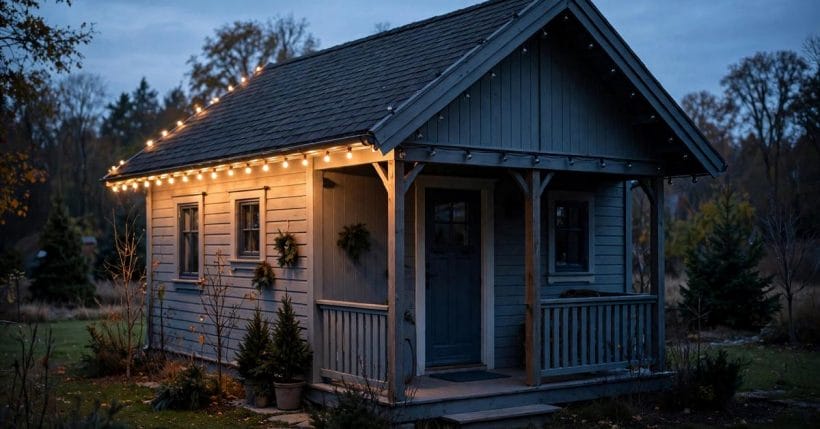
There is a particular kind of disappointment that arrives on the evening the Christmas lights go up. The tree is dressed, the roof line is hung, the switch is flipped, and then only part of the display answers. One stretch glows warmly while the next stays dark, and the whole display looks unfinished, as though the celebration stopped halfway. It is a common sight in December, and it is also a confusing one, because the dark section often looks exactly like the glowing section beside it, with no obvious sign of what went wrong.
This guide explains that half-lit pattern in general terms. It looks at how a strand of lights is divided into sections, why one section can go dark while the rest keeps glowing, and what the shape of the darkness can suggest about the cause. It does not offer repair instructions, and it does not promise a fix. Anything that involves opening a plug, handling wiring or working with mains electricity belongs to a qualified professional, and this guide says so wherever the line between looking and fixing comes into view.

Reading this guide works best with the display itself in mind. Think of the strand that is misbehaving, where it runs, which part stays dark, and whether the dark part is at one end, in the middle, or scattered through the display. Those simple observations are the whole starting point. The sections below move from the shape of the problem, through the usual explanations in plain language, to the question of when to stop looking and call a professional.
1. What Half On, Half Off Usually Looks Like
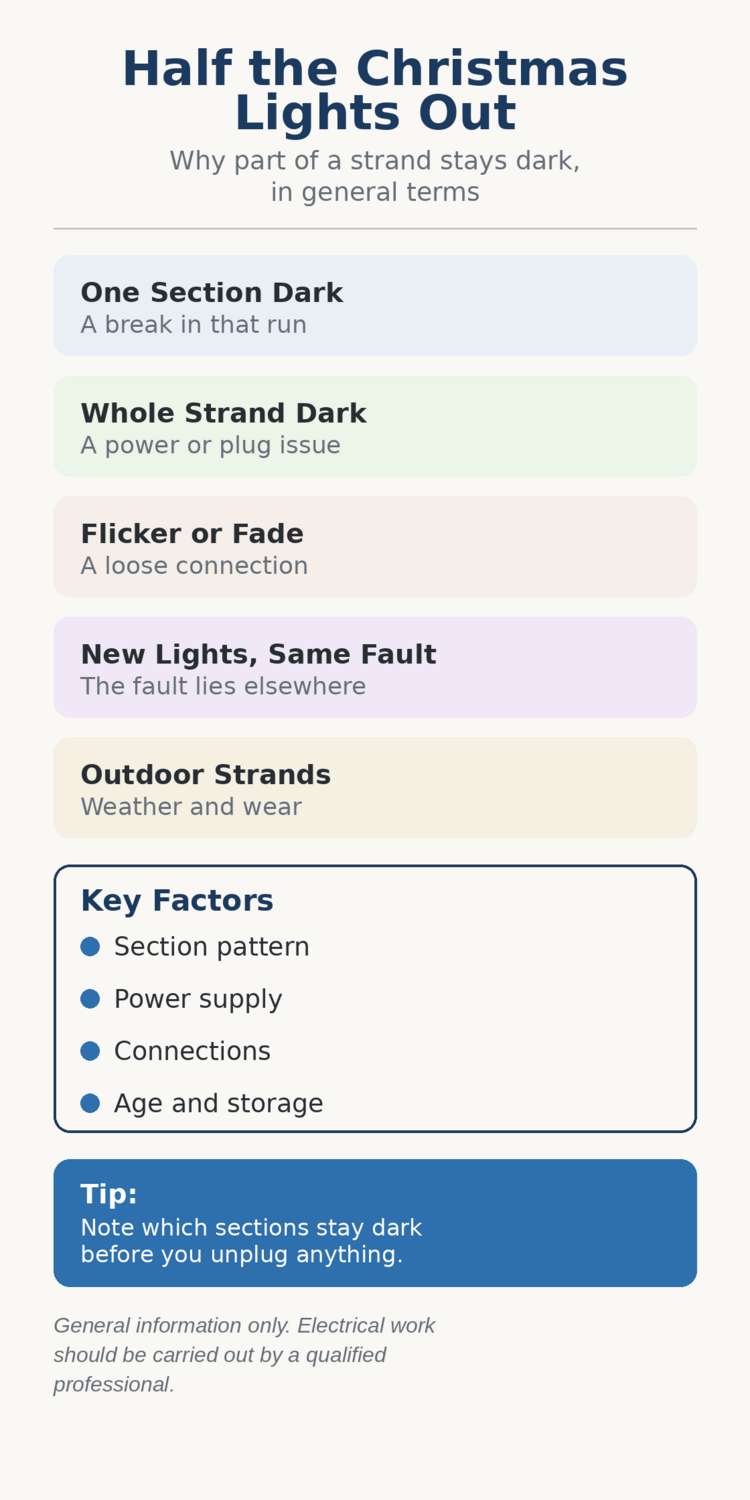
Half on, half off rarely means a neat split down the middle of a display. More often, one run of lights glows while a neighbouring run stays dark, or the lights on a tree shine brightly near the top and fade into darkness lower down. Sometimes the dark part is a single stretch between two points on a roof line, while the stretches on either side of it glow as normal. The pattern matters more than the proportion, and describing it accurately is the most useful thing a householder can do before anything else happens.
Another common shape is a display that worked last year and fails this year in exactly one place. The lights come out of storage, they are hung with care, and the same section that glowed last December stays dark now. That history is worth noting, because a fault that appears after storage points in a different direction from a fault that appears in a brand new strand. Storage, handling and the passing of time all leave their marks on lights, even when nothing looks damaged from the outside.
It also helps to notice whether the dark section is fully dark or only dim. A section that glows faintly is behaving differently from a section that shows no light at all, and a section that flickers when the strand is moved is behaving differently again. These are observations, not diagnoses, and they do not by themselves identify a cause. They do, however, give a professional something concrete to work from, which is far more useful than a general report that the lights do not work.
2. How a Strand of Lights Is Divided Into Sections
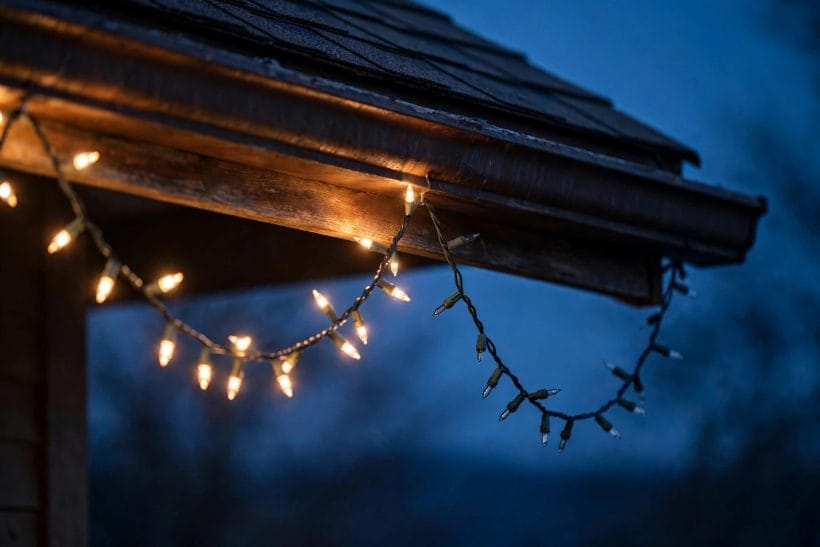
A strand of Christmas lights is not usually a single chain in which every bulb stands alone. In most designs, the bulbs are grouped into sections that share a path for the electricity, so that what happens in one section affects its neighbours in that section more than it affects bulbs elsewhere on the strand. That grouping is the reason a fault can darken a whole stretch at once while leaving the rest of the display untouched. The dark stretch is often one section, and the glowing stretches beside it are other sections going about their business as normal.
The sections are not always visible from the outside. On some strands, the wiring looks continuous from end to end, with no marker showing where one section ends and the next begins. On others, the grouping follows the shape of the display itself, with one section covering a roof line, another covering a porch, and a further section covering a tree. Either way, the practical point is the same: a strand behaves as a set of linked groups, not as a crowd of independent bulbs, and a single fault can therefore silence a group rather than a single light.
Understanding that grouping also explains why the dark part often has a clean edge. The glow stops at a particular bulb and resumes at another, and the boundary between lit and unlit can look surprisingly sharp. That sharp edge is not a mystery once the section idea is in mind. It is simply the place where one group ends and the next begins, and it is one of the most recognisable features of the half-lit pattern. Noting exactly where that edge falls is a genuinely useful observation to carry into any conversation with a professional.
3. Why One Section Can Go Dark While the Rest Glows
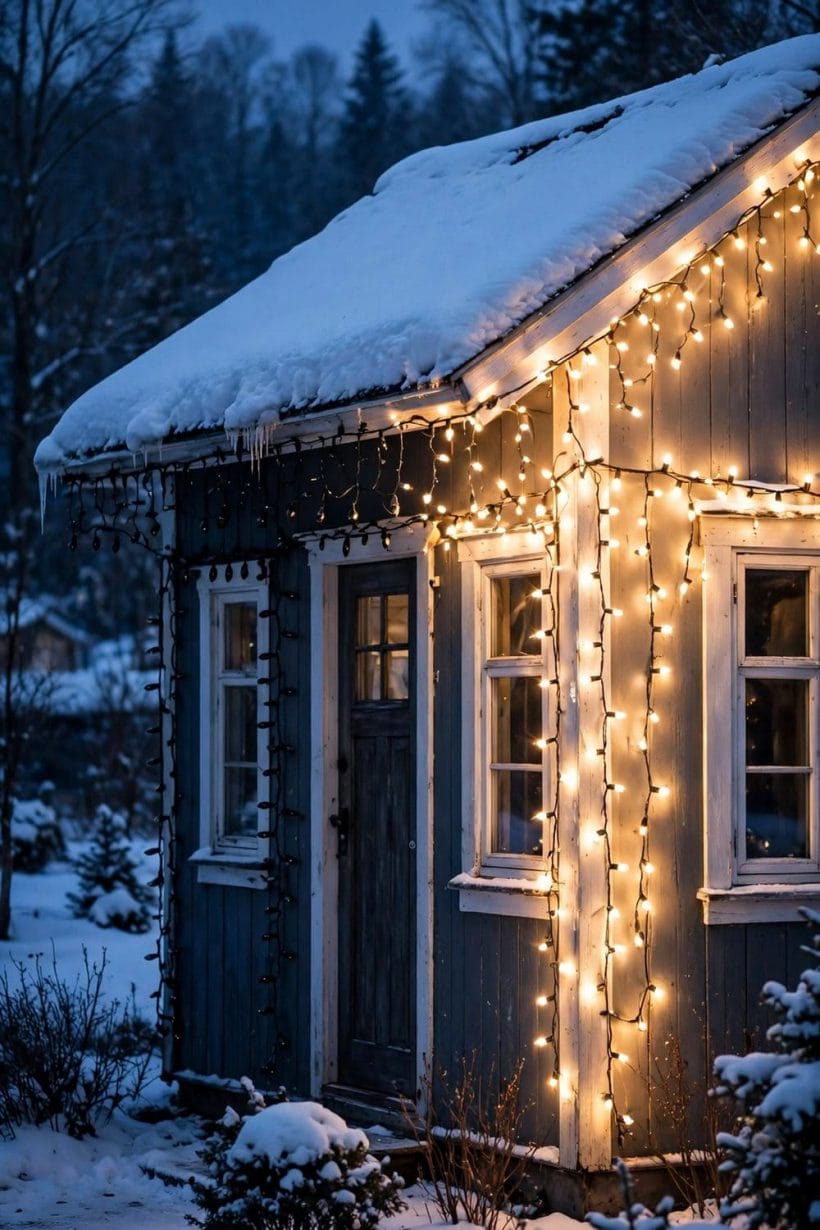
When one section goes dark and the rest glows, the most likely explanations in general terms are all local to that section. Something in the path that serves that section has been interrupted, so the electricity that reaches the rest of the strand no longer reaches the dark part. The interruption might sit at a connection, in the wiring, or at a bulb within the section, and from the outside these possibilities can look identical. The display itself does not advertise which one it is, which is why guessing at a cause from the ground is rarely reliable.
It is tempting to assume that a dark section means a single failed bulb, and sometimes that is indeed the shape of the trouble. But a dark section can equally reflect a loose connection where two parts of the strand meet, wear in the wiring after seasons of use, or damage from handling during storage and hanging. Each of these lives in the same dark stretch, and each would be approached differently by someone qualified to work on it. Treating them as the same problem, and reaching for the same remedy, is where well-meaning attempts at a fix tend to go wrong.
There is also a quieter possibility worth keeping in mind: the fault may not be in the dark section at all. A strand is a connected system, and a problem at a plug, a join or a controller can show itself downstream, in a section some distance from where the trouble actually sits. That is one reason this guide avoids pointing at a single culprit. The pattern of darkness describes where the symptom appears, and the cause may sit elsewhere in the chain. A professional traces the chain rather than trusting the symptom alone.
4. What the Pattern of Darkness Can Suggest

Different patterns of darkness suggest different directions, in broad terms only. A single dark stretch with glowing sections on either side suggests trouble local to that stretch, as described above. A whole strand that stays dark, from plug to final bulb, suggests something at the supply end of the chain, such as a plug or connection problem, rather than a fault in any one section. A display that fades gradually from bright to dim suggests something else again, a weakening along the run rather than a clean break.
Flickering carries its own hint. Lights that come and go when the strand is touched or moved suggest a connection that is no longer firm, while lights that stay steadily dark suggest a break that does not change with movement. Neither observation is a diagnosis, and neither should be tested by repeated handling, bending or tugging at the strand, which can only make a weak connection worse. The value of the observation lies in describing it to someone qualified, not in probing it further at home.
Timing adds another layer. A section that fails the moment the lights are first switched on after storage tells a different story from a section that glows happily for days and then goes dark mid-season. The first points toward storage or handling, the second toward wear during use or exposure to weather. Again, these are directions for thought, not conclusions. They help a householder describe the problem clearly, and they help a professional decide where to look first, but they do not settle the matter on their own.
5. Power, Plugs and the First Things to Notice
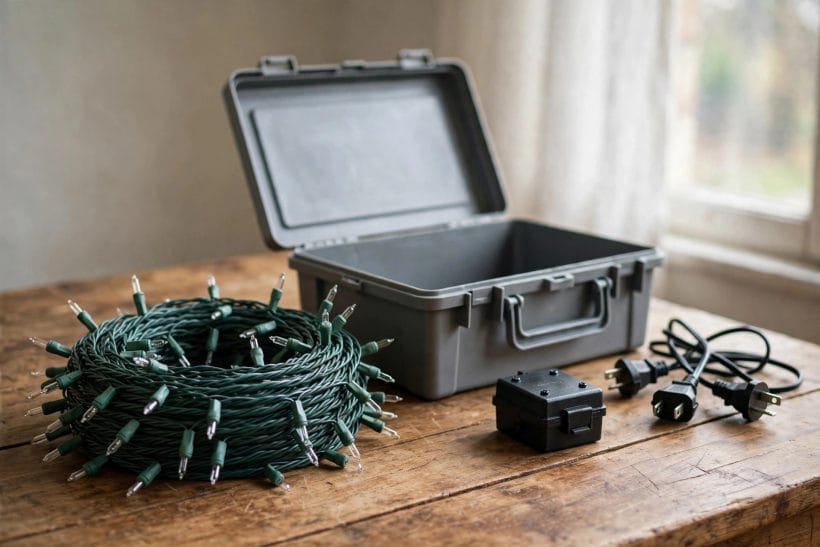
Before anything is examined closely, the simplest observations concern power. Is the strand plugged in fully, is the socket itself working for other things, and does the same darkness appear when the strand is tried in a different socket? These are questions of observation, not of repair, and they cost nothing to answer. A strand that behaves the same way in every socket is telling a different story from a strand that behaves differently from one socket to another, and that difference is worth noting.
Connections between sections deserve the same calm attention. Where one strand joins another, or where a section meets the next, the join should sit undisturbed and unstrained, without the weight of the display pulling on it. A join that hangs in mid-air under tension, or that sits where it is repeatedly knocked, is a join living a harder life than one that rests supported and still. Noticing strain is not the same as fixing it, and a strained or damaged join should be left alone and shown to a professional rather than pulled, twisted or taped.
One more observation belongs here, and it is easily missed: whether other lights on the same supply are affected. If a whole room of displays goes dark together, the trouble is unlikely to sit in any single strand, and the picture belongs to the wider supply rather than to the lights themselves. If only one strand is affected while its neighbours glow, the trouble is local to that strand. That simple comparison, one display against its neighbours, narrows the picture more than any amount of staring at the dark section itself.
6. Indoor Trees, Mantels and Shelves
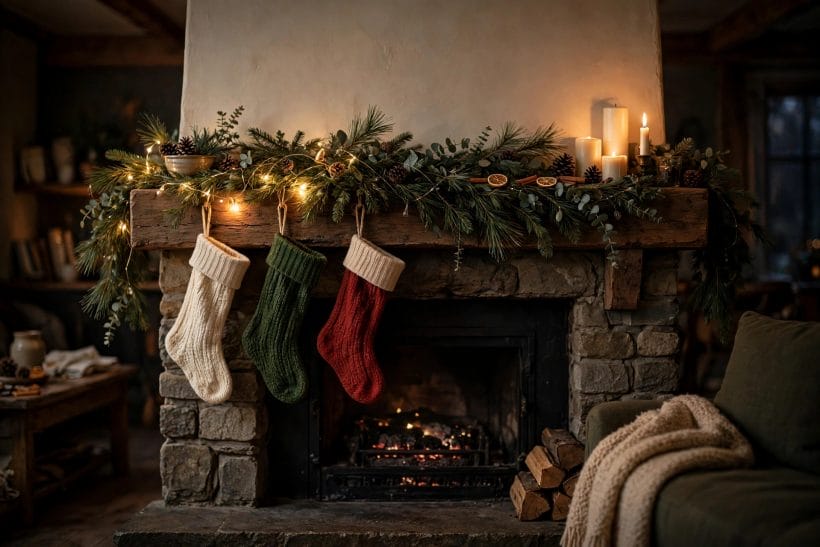
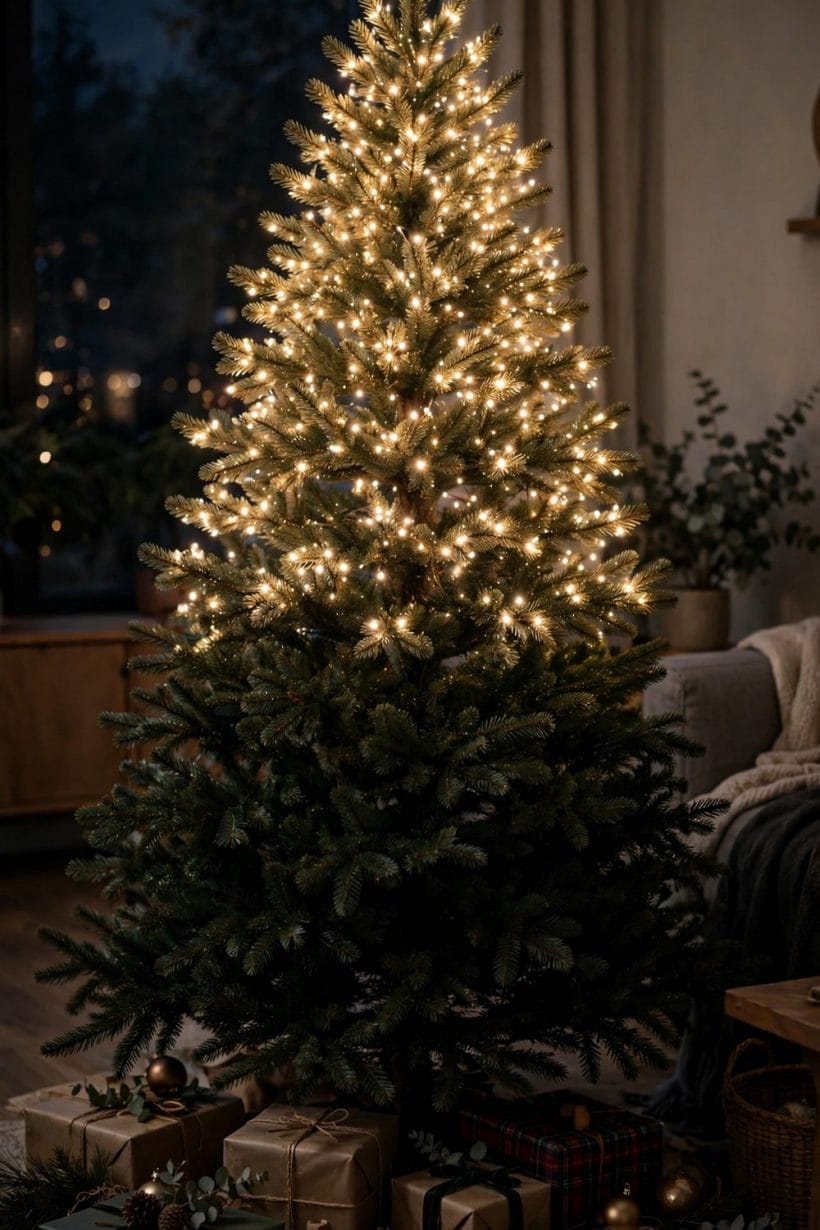
Indoor displays have their own habits. A tree is dressed once, the lights are woven through branches, and then the tree is rarely touched again until it comes down. In that quiet life, a section can fail without anyone noticing the moment it happens, and the darkness is often discovered only when the room is viewed as a whole in the evening. The branches themselves can hide the boundary between lit and unlit, so the dark section may look larger or smaller than it really is until the tree is viewed from more than one angle.
Mantels and shelves present a related puzzle. Lights draped along a mantel are often handled more than tree lights, adjusted for photographs, nudged when decorations are rearranged, and brushed past in daily life. That handling is gentle, but it accumulates over a season, and a connection that was firm in early December may loosen by late December without any single dramatic moment. Small living room ideas show how mantel displays sit at the heart of a room, which also means they sit where hands and movement are most frequent.
The indoor setting also shapes what a householder can safely observe. Looking at which sections glow, noting where the boundary falls, and checking whether the pattern changes from one evening to the next are all safe, useful observations. Opening plugs, handling wiring, or attempting to repair a strand indoors is not part of that list. Indoors, the temptation to fix things quickly before guests arrive is at its strongest, and it is exactly then that the professional-only line matters most.
7. Outdoor Roof Lines, Porches and Gardens
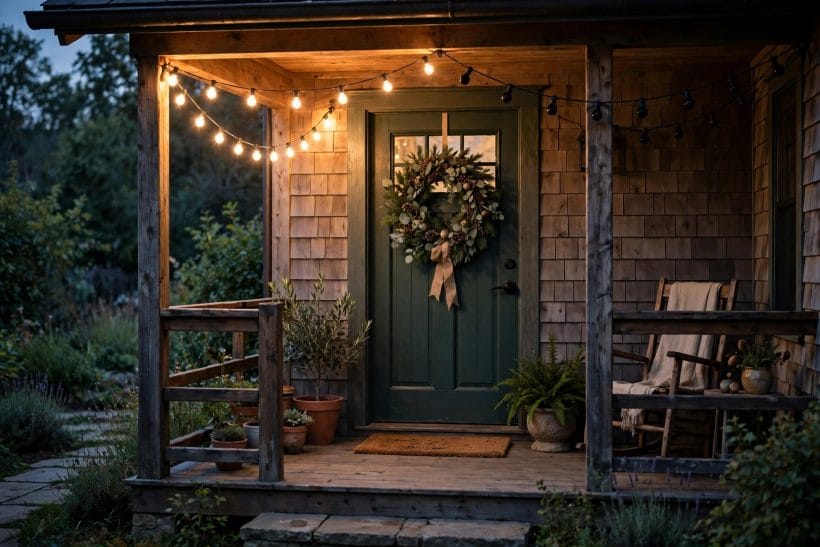
Outdoor displays live harder lives than indoor ones. Roof lines, porches and garden shrubs face wind, rain, frost and long hours of darkness, and the lights that decorate them face all of it without shelter. A section that fails outdoors may have suffered in ways an indoor section never meets: water finding its way into a join, wind working a connection loose over many nights, or frost stiffening wiring that was flexible in autumn. The weather does not need to be dramatic to leave its mark; ordinary winter weather, repeated night after night, is enough.
Porches deserve a special mention, because they sit at the boundary between indoors and outdoors. A porch display is sheltered from above but open at the sides, and its lights are handled whenever the door is used, the wreath is adjusted, or parcels are carried past. Exterior ideas for tiny houses show how porch lighting frames an entrance, and that framing role means porch lights are seen up close, so a dark section there feels more conspicuous than the same fault high on a roof line.
Safety outdoors carries an extra weight that indoor displays do not. Wet conditions, ladders and roof lines are a combination that calls for professional help rather than household improvisation, and any outdoor fault that involves a plug, a join or wiring exposed to weather should be treated as a professional matter from the start. Tiny house designs are a reminder that small exteriors are often decorated with great care, and that care should extend to leaving outdoor electrical work to someone qualified to do it safely.
8. Storage, Age and Wear Over the Seasons
Christmas lights spend most of their lives in storage, and storage shapes their fate more than most householders realise. A strand wound tightly, crushed under heavier boxes, or stored somewhere damp spends months under stresses it was never designed to enjoy. When it emerges the following December, the damage may show at once as a dark section, or it may show weeks later, once the strand has warmed and moved through a few evenings of use. Either way, the storage story is part of the fault story.
Age works in the same quiet way. Lights that have served for many seasons have endured many cycles of hanging, use, removal and storage, and each cycle leaves a small legacy in connections and wiring. An older strand is not necessarily a faulty strand, and many older strands glow perfectly year after year, but age raises the likelihood that a section will fail, and it lowers the value of trying to nurse a failing strand through one more season. Storage ideas for small homes show how careful, unhurried storage protects all kinds of household goods, and lights benefit from the same patience.
There is a practical habit worth adopting here, and it costs nothing: when lights come down, note which strands gave trouble during the season, and store that knowledge with the lights themselves. A simple label or note, kept with the box, turns next December from a fresh mystery into a continuing story. A strand that failed this year should not simply be hung again next year in hope; it should be shown to a professional or retired, and that decision is easier when the history travels with the box.
9. When to Stop and Call a Professional
The line between looking and fixing is the most important line in this guide, so it deserves a section of its own. Looking means observing which sections glow, where the boundary falls, whether the pattern changes, and whether other displays are affected. Fixing means opening plugs, handling wiring, replacing electrical parts, or working on a strand that is connected to power. The first is safe and useful; the second belongs to a qualified electrician, without exception, and no seasonal urgency changes that.
Certain signs should end observation at once and bring in a professional. A smell of burning, a plug or socket that feels hot, scorch marks, damaged or exposed wiring, or any sign that a strand has been wet inside its connections are all reasons to switch the display off at the socket, leave it alone, and call someone qualified. These are not problems to investigate further, photograph closely, or work around by using another socket. They are the moments when the display stops being a decoration question and becomes a safety question.
Even without dramatic signs, there is a plain rule worth following: if the cause is not obvious from observation alone, stop there. A dark section that cannot be explained by a loose plug or a clearly disconnected join is a job for a professional, not a puzzle to solve by handling the strand further. Tiny house interiors show how much warmth a well-lit room can carry, and that warmth is best protected by keeping electrical work in qualified hands, even when the fault looks small.
10. Choosing Replacement Lights in General Terms
When a strand has reached the end of its useful life, the question turns from repair to replacement, and replacement is best approached in general terms. Think first about where the lights will live: indoors or outdoors, sheltered or exposed, on a tree or along a roof line. Each setting asks for lights suited to it, and the suitability of a strand for its setting matters more than any single feature it carries. A strand made for a sheltered indoor tree and a strand made for an exposed roof line are different tools for different jobs, even when they look alike in the box.
Think next about the shape of the display rather than the number of lights it carries. A long, even run suits a roof line, a shorter, flexible strand suits a tree, and a display that must follow shrubs or a porch rail suits a strand that can follow curves without strain. Length, in other words, is a question of fit: a strand that must be stretched taut to reach its end is a strand living under tension, and tension is unkind to connections over a season. Bedroom ideas for tiny houses show how displays in small rooms work best when they fit the room without forcing, and the same gentle principle applies to lights.
Finally, think about the future as well as the present display. Lights that are stored with care, labelled with their history, and retired when they begin to fail will serve a household better than lights that are bought in haste, hung under tension, and stored crushed under heavier boxes. Closet design ideas for tiny houses are a useful parallel: a storage space that gives each thing its own place protects everything in it, and a box that gives each strand its own place does the same for next December. Replacement, approached this way, is not a defeat; it is the ordinary rhythm of lights that are used, enjoyed, and eventually renewed.
Final Considerations
Half the Christmas lights out is a frustrating sight, but it is rarely a mysterious one once the shape of the problem is understood. A strand is a set of linked sections, a fault in one section darkens that section while its neighbours glow, and the pattern of darkness, together with the history of the strand, describes the problem more usefully than any single guess at a cause. Observation, patience and a clear description are the householder’s real tools here, and they are worth more than any improvised fix.
The safety line runs through the whole subject and is worth repeating at the end. Look, note and describe, and leave anything involving plugs, wiring or electrical parts to a qualified professional. A display that glows only in part is an invitation to observe carefully and act calmly, not a reason to hurry. The lights will be there next December too, and the wisest way to enjoy them is to make sure they are safe as well as beautiful.




0 Comments