

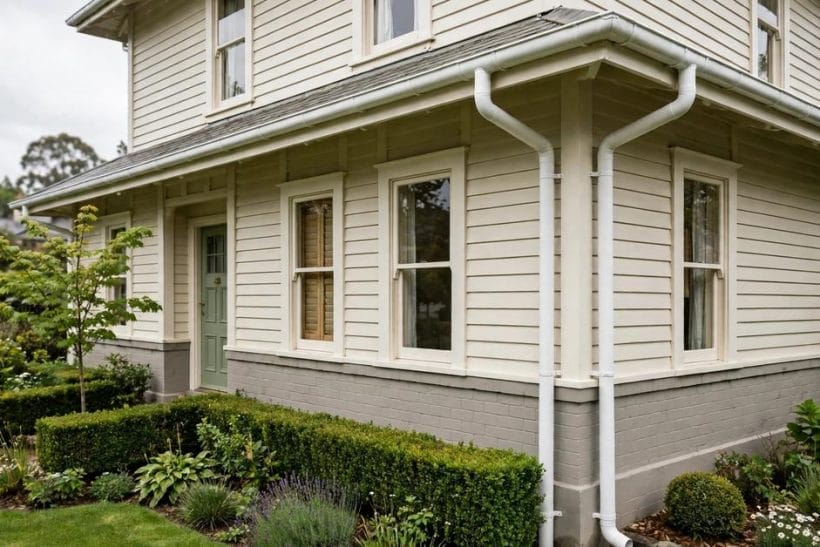
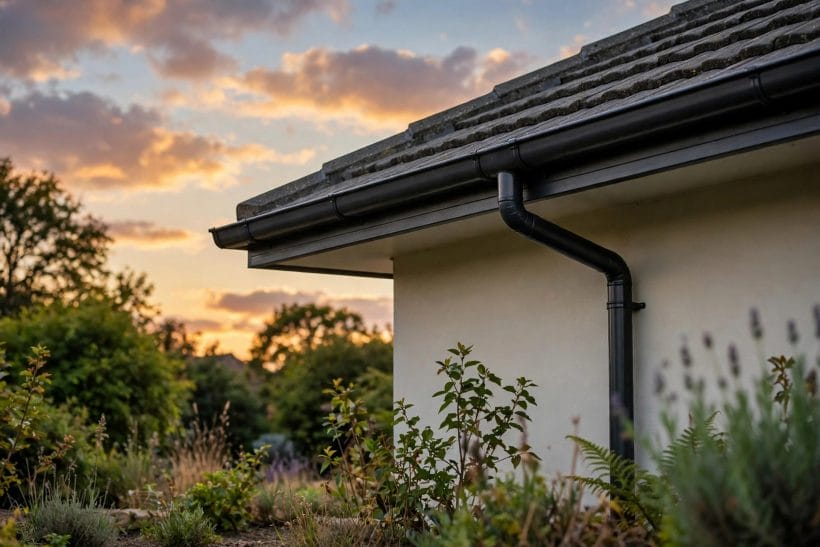
Pictures of gutters on houses show a quiet piece of design that is easy to overlook and hard to live without. A gutter is the channel that runs along the edge of a roof, catching rain as it leaves the roof surface and carrying it toward a downpipe. Seen from the street, it is a thin line beneath the roofline, sometimes blending into the trim and sometimes standing out as a clear part of the front. Seen up close, it is a shaped channel with joins, brackets and an outlet, all working together to keep water moving in one intended direction.
This guide looks at rain gutters on houses in general terms only: the forms they take, the materials described broadly, the colours that suit a front, where downpipes sit, and how care through the seasons keeps the whole arrangement looking tidy. It is not a building guide, and any work on a roof, a gutter run or a drainage outlet should be left to qualified professionals, with local rules checked before any change is made. Whether you are admiring houses, planning a front, or simply noticing gutters for the first time, the pictures in this guide show how much character such a modest feature can carry.
| Item | What it is |
|---|---|
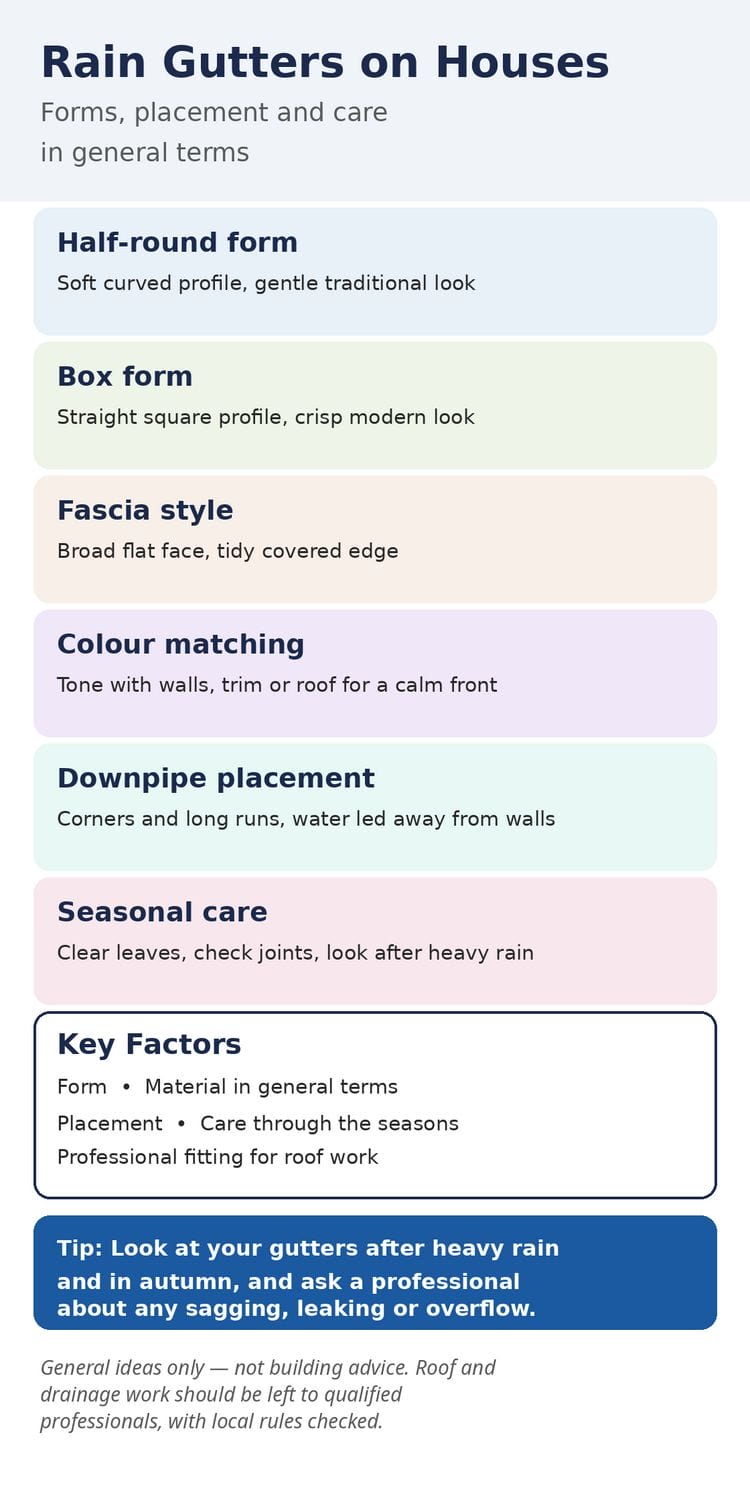
| What Rain Gutters Do for a House | A gutter gives rainwater a path. |
| The Half-Round Form | The half-round form is the curved channel, shaped like a trough cut in half lengthways. |
| The Box Form | The box form is the square or rectangular channel, with straight sides and a flat base. |
| Fascia Styles and a Covered Edge | Some gutters are fixed to a fascia board, the vertical board that closes the end of the roof. |
| Materials in General Terms | Gutter materials are best described in general terms, by how they look and how they weather, rather than by any claim about performance. |
| Colours That Sit Quietly on a Front | Colour is where a gutter either joins the front or steps forward from it. |
| Downpipes and Where Water Goes | A downpipe is the vertical pipe that carries water from the gutter channel down the wall. |
| Corners, Long Runs and Joins | Corners are where gutter design shows its care. |
| Gutters in Rain and Through the Seasons | Rain is the moment a gutter system proves itself, and pictures of gutters on houses in wet weather tell their own story. |
| Care, Checks and When to Call a Professional | Care for gutters is mostly a matter of looking, and looking at the right times. |
1. What Rain Gutters Do for a House
A gutter gives rainwater a path. Without a channel at the roof edge, water would fall straight from the roof in a sheet, splashing against walls, paths and planting below. With a channel in place, the water is gathered along the eaves and guided to a downpipe, which carries it down the wall to a drain or a garden outlet. The idea is simple, and the effect on a house front is considerable: walls stay drier, paths stay cleaner, and planting at the base of the wall is spared a constant drenching.
The channel itself is only part of the arrangement. Brackets hold it to the roof edge or fascia, joins connect one length to the next, and an outlet links the channel to the downpipe. Each part must sit in its proper place for water to travel smoothly, and a single sagging length or blocked outlet can change how the whole run behaves. That is why pictures of gutters on houses repay a second look: the tidy examples show every part aligned, with the channel running in a calm, continuous line beneath the roof.
Gutters also shape how a house reads from the street. A slim channel in a colour close to the trim can almost disappear, letting the roof and walls do the talking. A broader channel in a contrasting tone can frame the roofline, giving the front a finished edge. Either approach can suit a house, and the choice depends on the style of the front, the depth of the eaves, and the general character of the street. Tiny house exterior ideas show the same judgement at a smaller scale, where a single gutter line can change the whole front.
2. The Half-Round Form
The half-round form is the curved channel, shaped like a trough cut in half lengthways. Its soft profile has a gentle, traditional feel, and it suits houses with a classic front, a cottage garden, or a roofline that already carries rounded details. Water sits in the curve and travels along it readily, and the open shape makes the channel easy to see and to understand at a glance. In pictures, the half-round gutter often reads as a quiet, friendly line beneath the eaves.
Because the profile is rounded, it pairs well with round downpipes, and the whole arrangement can feel like one continuous piece of detailing rather than a set of separate parts. Brackets for a half-round channel are often simple straps or rings that follow the curve, and the joins are usually neat and unobtrusive. The form is at its happiest on fronts where softness is welcome: weatherboard walls, a pitched roof, planting close to the house, and a garden path that invites a slower look.
Colour matters with this form as much as shape does. A white half-round gutter on a pale front can look fresh and calm, while a darker tone on a brick or stone front can give the roofline a stronger edge. Either way, the curve itself does much of the work, softening the line where roof meets wall. Tiny house designs often use this traditional profile to keep a small front feeling warm rather than severe.
3. The Box Form
The box form is the square or rectangular channel, with straight sides and a flat base. Its crisp profile suits modern fronts, flat-roofed houses, and homes where straight lines already dominate the design. Where the half-round form softens a roofline, the box form sharpens it, giving the eaves a clean, architectural edge. In pictures of gutters on houses with a contemporary character, the box gutter is often the profile on show.
A box channel pairs naturally with a square downpipe, and the two together can read as a single, deliberate detail running from roof to ground. The straight faces catch light evenly, so the gutter looks tidy even in strong sunshine, and the flat profile sits well against a fascia board or a rendered wall. On a modern front, that tidiness is part of the appeal: nothing curves away from the design, and every line feels considered.
The box form also suits fronts where the gutter is meant to be seen as design rather than hidden away. A dark box gutter on a pale rendered wall, for example, can outline the roof in the same way a frame outlines a picture. A matching tone, by contrast, can let the channel blend into the wall and leave the windows and entry to take the eye. Contemporary home design ideas show how a straight profile like this can anchor a modern front without fuss.

4. Fascia Styles and a Covered Edge
Some gutters are fixed to a fascia board, the vertical board that closes the end of the roof. Others are made as a fascia gutter, where the gutter itself forms a broad, flat face that covers the roof edge. The fascia style gives a house a particularly tidy finish, because the roof edge, the gutter and the trim appear as one broad band rather than a stack of separate parts. From the street, the effect is calm and orderly.
The broad face of a fascia gutter also gives colour a larger role. A wide band in a tone close to the walls can make the roofline feel settled and quiet, while a band in a contrasting tone can draw a clear line around the top of the house. Either choice changes the front, so it is worth studying pictures of gutters on houses with this style before settling on a look. The band should suit the depth of the eaves, the height of the walls, and the general proportions of the front.
Fascia styles suit many house types, from suburban homes with generous eaves to smaller houses where a tidy edge matters all the more. The key quality is coverage: the roof edge looks finished, the gutter looks intentional, and no raw edge is left on show. When the band, the walls and the roof all sit comfortably together, the front reads as a whole rather than a collection of parts.
5. Materials in General Terms
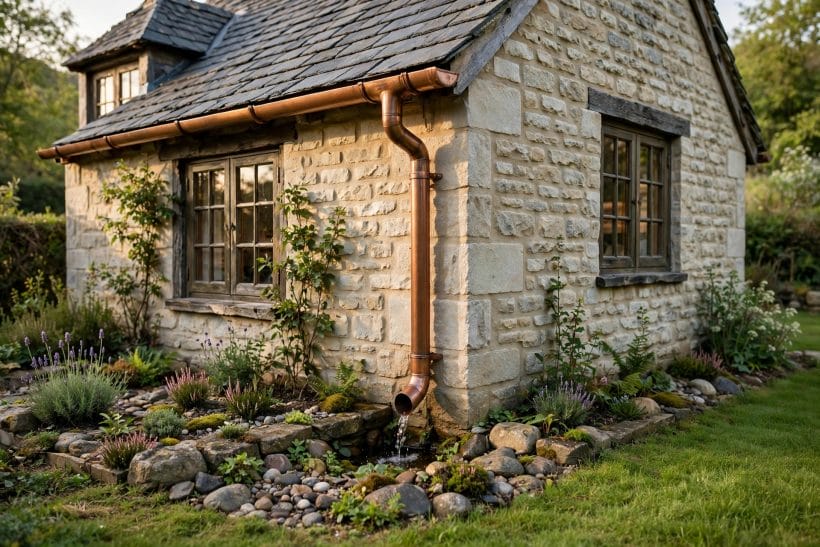
Gutter materials are best described in general terms, by how they look and how they weather, rather than by any claim about performance. Some channels have a smooth, painted finish that takes colour well and suits a crisp, tidy front. Others have a natural metallic look that weathers over time, gaining a softer tone as the seasons pass. Still others have a plain, practical finish that blends into the background and asks for little attention.
The choice of material shapes the character of a front in subtle ways. A painted channel can match trim, windows or a front door, tying the roofline into the rest of the house. A natural metallic channel can warm a stone or brick front, especially where garden planting already brings warm tones to the scene. A plain channel in a quiet tone can disappear against the eaves, leaving the roof and walls to carry the design. None of these choices is right for every house, and the happiest fronts are those where the material suits the house rather than fighting it.
Material also affects how a gutter ages in appearance. Painted finishes can be refreshed when the front is repainted, while natural finishes change gradually and develop their own patina. Both approaches have their admirers, and pictures of gutters on houses over several seasons show how each one settles into its setting. A professional can advise on what suits a particular roof, climate and front, and that advice is worth seeking before any change is made.
6. Colours That Sit Quietly on a Front
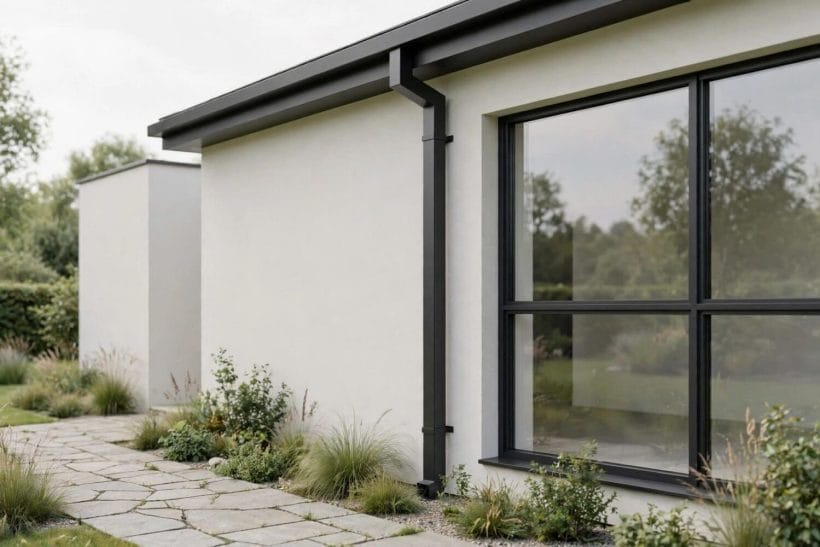
Colour is where a gutter either joins the front or steps forward from it. A gutter in the same tone as the trim or the fascia can look like part of the house itself, a natural extension of the roof edge. A gutter in the same tone as the walls can soften the roofline, while a gutter in a darker tone can give the roof a clear outline. Each approach changes how tall the house looks, how wide the front feels, and where the eye rests first.
White and pale tones are a common choice on pale fronts, where they keep the whole house feeling light and fresh. Dark tones suit brick, stone and darker rendered fronts, where a pale gutter might stand out too sharply. Warm metallic tones suit cottages and traditional fronts, where they echo garden stone, timber and planting. The aim is rarely to make the gutter the star of the front; it is to make it sit comfortably among the other parts.
When choosing a colour, it helps to look at the whole front together: roof, walls, trim, windows, entry and garden. A colour that looks pleasant on its own can still jar when set against a particular roof or wall, while a colour that seems plain in isolation can look perfect in place. Tiny house porch ideas show the same lesson at the entry, where a small detail in the right tone completes a front that a wrong tone would unsettle.
7. Downpipes and Where Water Goes
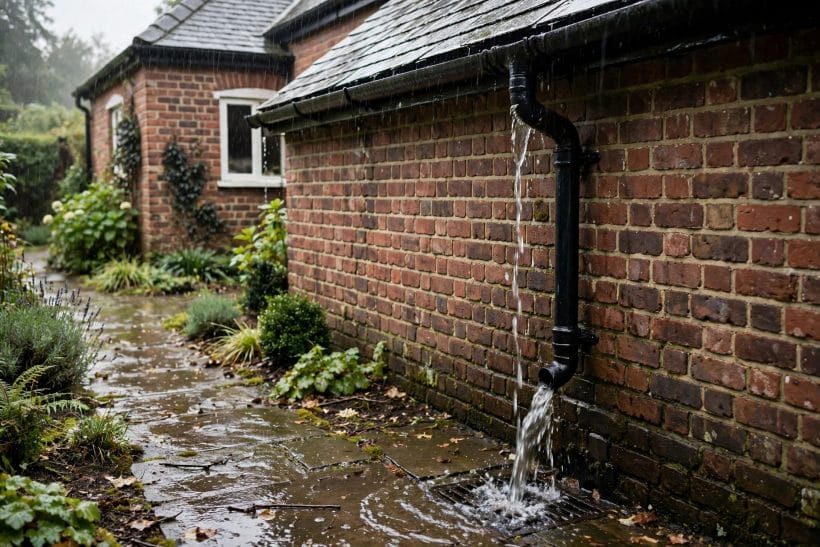
A downpipe is the vertical pipe that carries water from the gutter channel down the wall. It usually sits at a corner, where two gutter runs meet, or at the end of a long run, where water naturally gathers. From there, the water travels to a drain, a soakaway, or a garden outlet, depending on the arrangement of the house and its grounds. The downpipe is the most visible part of the system after the channel itself, and its placement shapes the front almost as much as the gutter does.
Downpipes look best when they follow the lines of the house rather than cutting across them. A pipe set neatly into a corner, or aligned with a window edge or a wall junction, can look like part of the design. A pipe that wanders across a wall, or sits awkwardly in the middle of a plain surface, can unsettle an otherwise calm front. Pictures of gutters on houses show both kinds, and the tidy examples are usually those where the pipe respects the geometry of the wall behind it.
Where the water goes at the base of the pipe matters for the garden as well as the house. Water led to a proper drain keeps paths and planting from becoming waterlogged, while water discharged into a garden bed can suit planting that enjoys moisture, provided the arrangement is planned and professionally advised. Backyard landscaping ideas show how paths, beds and drains can be planned together, so that water has a sensible place to go and the garden stays pleasant underfoot.
8. Corners, Long Runs and Joins
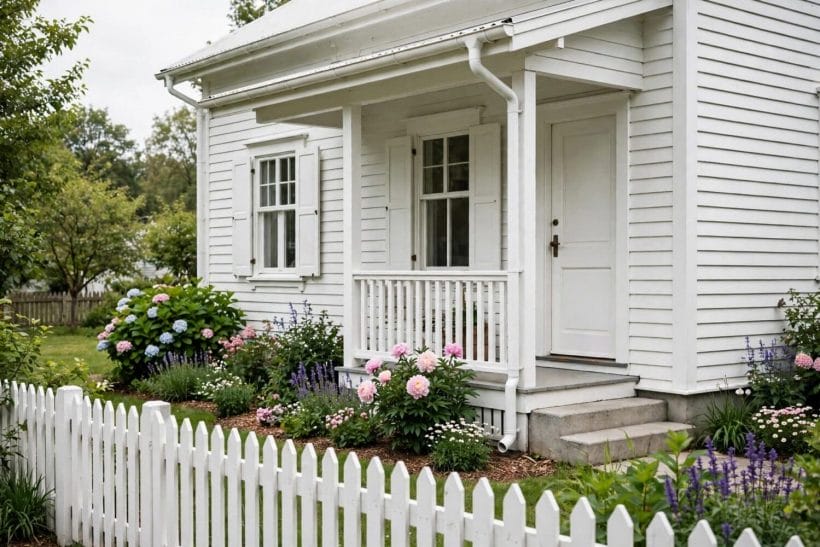
Corners are where gutter design shows its care. A corner join must turn the channel smoothly around the angle of the house, keeping water moving without spilling at the bend. On a well-made front, the corner looks like a natural continuation of the run, with the same profile and colour carrying around the angle. On a less careful front, the corner can look patched, with a change of tone or a visible seam breaking the line.
Long runs raise a related question: how far water should travel along a channel before it reaches a downpipe. A very long run with a single outlet can look stretched, and water may sit in the channel rather than flowing freely. Shorter runs with outlets at sensible points tend to look more balanced, with downpipes spaced in a rhythm that suits the length of the front. The spacing should be judged by a professional, taking the roof, the front and the drainage arrangement together.
Joins between lengths deserve the same attention as corners. A neat join is barely visible, sitting flush with the channel on either side, while a proud or mismatched join can catch the eye from the street. Over time, joins are also the places where a gutter may first show wear, so they are worth a look during any seasonal check. A front where corners, runs and joins all sit quietly together is a front that has been thought through as a whole.
9. Gutters in Rain and Through the Seasons
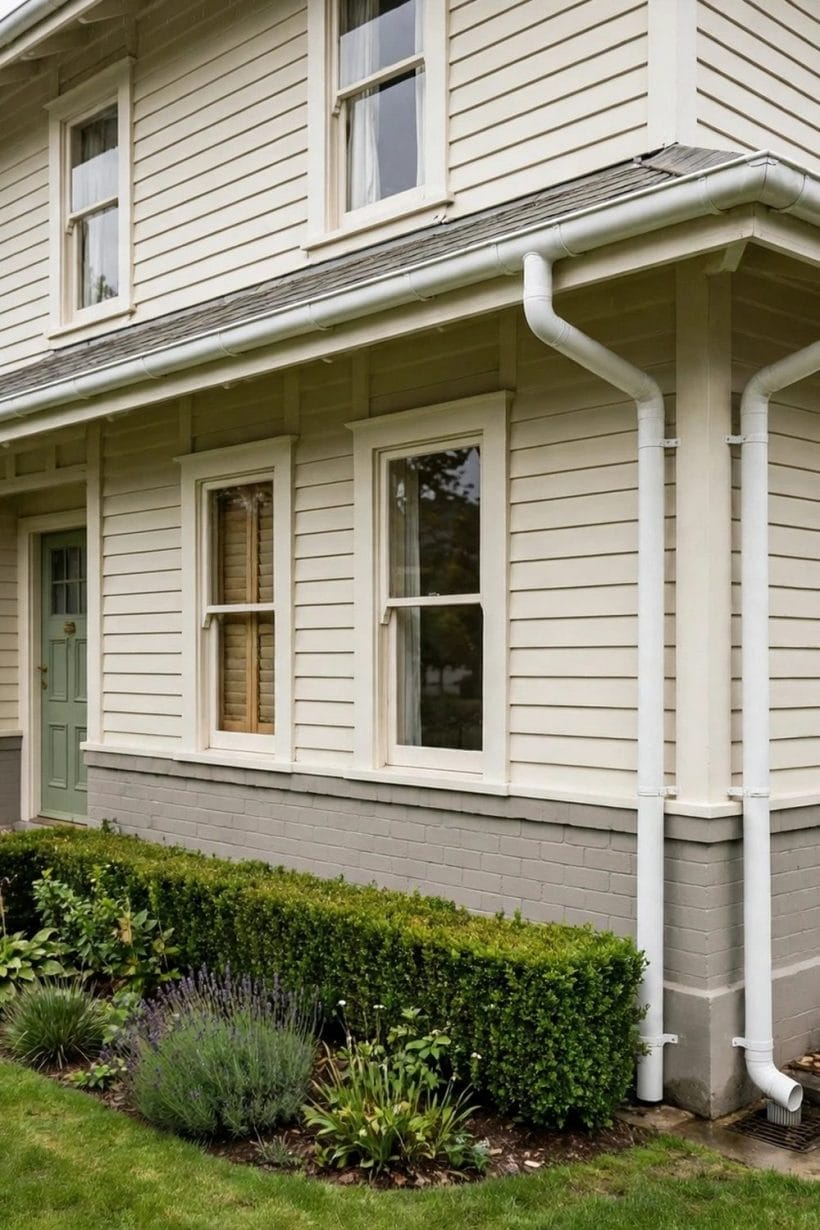
Rain is the moment a gutter system proves itself, and pictures of gutters on houses in wet weather tell their own story. In steady rain, water should travel along the channel and down the pipe in an orderly stream, with no spilling over the edge and no dripping from joins. In heavy rain, the system works harder, and any weakness in a run, a corner or an outlet is more likely to show. Watching a gutter in rain, from the ground and at a safe distance, is one of the simplest ways to understand how it behaves.
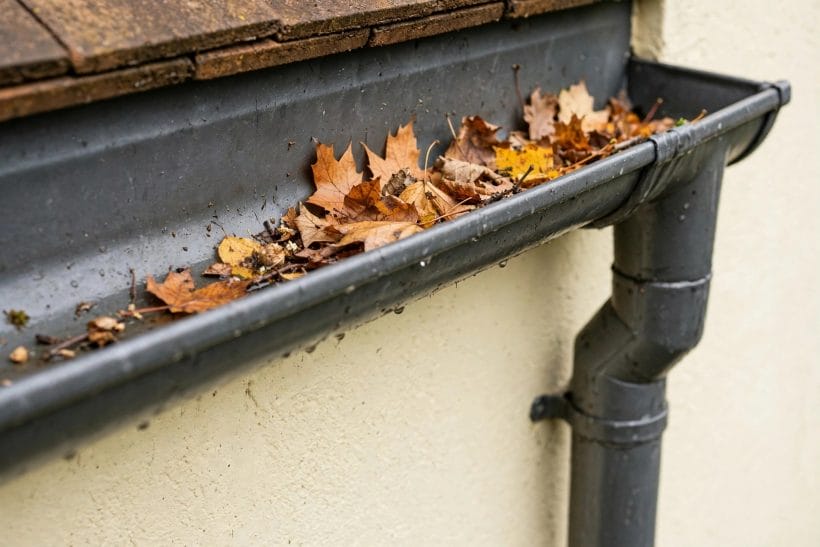
Autumn brings leaves, and leaves bring the most common seasonal challenge. Leaves settle in the channel, gather at outlets, and can slow water until it spills over the edge. Houses near trees feel this most, and the channel in the close-up picture in this guide, filled with autumn leaves, shows exactly what to look for. A regular seasonal look, with leaves cleared by a professional where the roof edge is out of safe reach, keeps the channel open and the water moving.
Winter and spring bring their own rhythms. Cold weather can make a blocked channel more troublesome, while spring growth around the house can hide a downpipe outlet behind new planting. Tiny house garden ideas show how planting and house detailing can be kept in balance, so that a garden bed never swallows the very outlet it was meant to receive. Through every season, the principle stays the same: water should have a clear path from roof to drain, and anything blocking that path deserves attention.
10. Care, Checks and When to Call a Professional
Care for gutters is mostly a matter of looking, and looking at the right times. After heavy rain, a glance from the ground can show whether water spilled over an edge, dripped from a join, or pooled where it should have drained away. In autumn, a look at the channel can show whether leaves have gathered. After a storm, a look at downpipes and outlets can show whether anything has shifted. None of this requires climbing onto a roof, and none of it should: work at height and work on a roof edge belongs to qualified professionals with the proper equipment.
The signs worth noting are straightforward. Sagging in a run, staining on a wall beneath a join, water spilling at a corner, or a downpipe that no longer discharges cleanly are all reasons to ask a professional for advice. So is any damage after a storm, or any change in how water behaves around the house. A professional can judge whether a bracket, a join or a whole run needs attention, and can carry out the work safely. Homeowners should not attempt roof or gutter repairs themselves, however simple they may appear from the ground.
Regular attention also protects the rest of the house. Walls, paths, planting and foundations all benefit when water is guided away in an orderly fashion, and a gutter that is looked after tends to look better for longer as well. The best routine is a gentle one: look often, note what changes, and call a professional promptly when something looks wrong. That habit, kept through the seasons, is worth more than any single repair.
Final Considerations
Rain gutters on houses are a modest feature with an outsized effect on how a front looks and how a house weathers rain. The form sets the character, whether soft and traditional, crisp and modern, or broad and covered. The material and colour decide whether the gutter blends into the front or outlines it. The downpipes and outlets decide where water goes, and the care through the seasons decides whether the whole arrangement keeps working as intended.
When you look at pictures of gutters on houses, look beyond the channel itself. Notice how the gutter meets the roof, how it turns a corner, where the downpipe sits, and what happens to water at the base of the wall. Notice, too, how the gutter relates to the rest of the front: the roof above it, the walls behind it, and the garden below it. A gutter that sits well in all those relationships is doing its job, quietly and completely.
Above all, keep the professional boundary clear. Admiring, choosing a look, and noting changes from the ground are all part of enjoying a house. Climbing, fitting, repairing or altering a roof edge is not, and should always be left to qualified professionals, with local rules checked first. Triangle roof ideas show how the roof edge itself shapes a front, and how gutter and roof belong to one design conversation. With that care in place, a simple channel along the eaves can serve a house well, season after season, without ever asking to be noticed.




0 Comments