

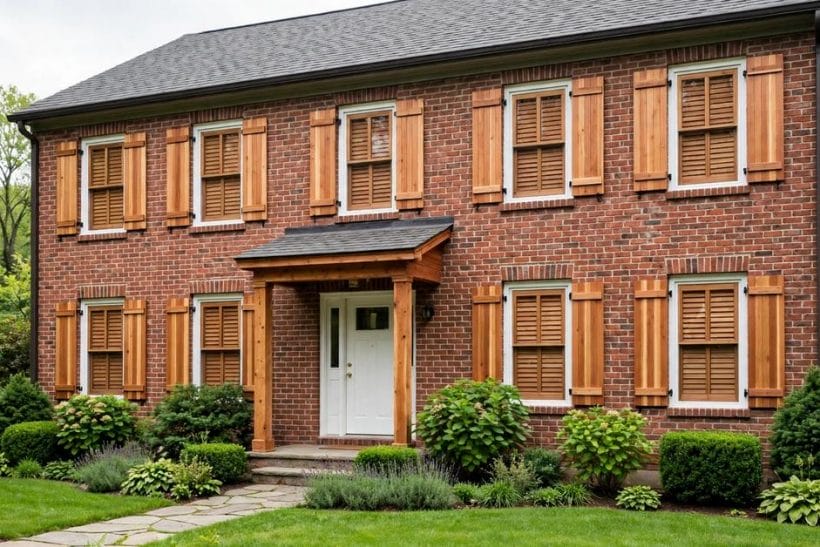
Red brick has a warmth that few other wall materials can match, and shutters are one of the simplest ways to shape how that warmth reads from the street. The pairing works because brick already carries so much character: deep red tones, a strong texture, and a sense of weight that grounds a house in its plot. Cedar shutters on red brick house fronts soften that weight with natural wood grain, and the contrast between fired clay and timber gives the facade a layered, finished look without any need for bold gestures.
This guide looks at the combination only: red brick walls dressed with shutters, with cedar as the leading material. It covers shutter styles, finishes, colours, trim, porches, fitting, care, planting and light, so the whole front can be planned as one picture rather than a collection of separate choices. The aim is a front that looks settled and coherent, where every element supports the brick rather than competing with it.
| Item | What it is |
|---|---|
| Why Cedar Suits Red Brick | Cedar brings a warm, mid-toned wood colour that sits naturally against red brick. |
| Louvred Shutters on Brick | Louvred shutters are the most familiar cedar shutter form, with angled slats that let air and a little light through while still reading as a solid panel from the street. |
| Panelled Shutters on Brick | Panelled shutters carry flat or raised panels within a frame, giving a calmer, more formal surface than louvres. |
| Board-and-Batten Shutters on Brick | Board-and-batten shutters are made from vertical boards held together by horizontal battens, and they bring a rustic, cottage feel that pairs beautifully with red brick. |
| Natural, Oiled and Weathered Cedar Finishes | The finish chosen for cedar changes the whole mood of the front. |
| Shutter Colours That Sit Well With Red Brick | While natural cedar is the focus of this guide, it helps to know the colour family around it. |
| Trim, Doors and Porches Around the Shutters | Trim is the frame that lets shutters shine. |
| Fitting Shutters to Brick Walls Safely | Fitting anything to a brick wall is structural and wall work, and it belongs with a qualified professional. |
| Seasonal Care for Cedar Shutters | Cedar shutters ask for modest, regular attention rather than heavy intervention. |
| Planting and Light Around a Brick Front | Planting softens the meeting point between brick and garden, and it can make cedar shutters look even more at home. |
1. Why Cedar Suits Red Brick
Cedar brings a warm, mid-toned wood colour that sits naturally against red brick. Where painted shutters can read as a sharp graphic accent, cedar reads as a material in its own right, with grain and variation that echo the variation found in brickwork itself. That shared natural quality is why cedar shutters on red brick house exteriors tend to look at home across many house forms, from cottages to larger two-storey fronts.
Cedar also weathers with character. Left untreated, it gradually silvers and softens, which can suit older brick and cottage gardens. Treated with oil, it holds a richer honey tone that keeps the front looking warm and cared for. Either direction can work, provided the choice is made deliberately and carried consistently across every window on the front. Mixed finishes on the same facade tend to look unfinished, while a single finish choice ties the whole elevation together.
Proportion matters as much as material. Shutters that look too narrow beside a wide window can feel like decoration pasted onto the wall, while shutters sized to the window opening read as part of the window itself. Judging proportion from the street, rather than close up, gives the truest sense of whether the pairing works, since the front is mostly seen from a distance.
2. Louvred Shutters on Brick
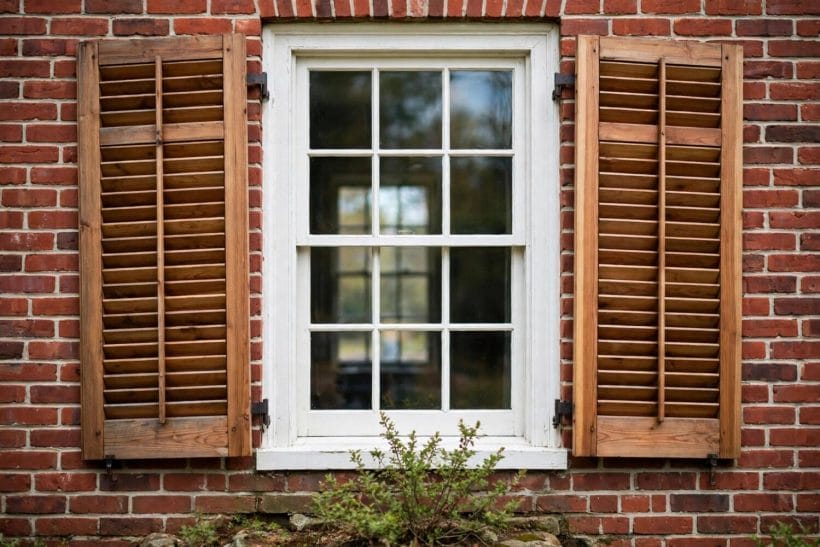
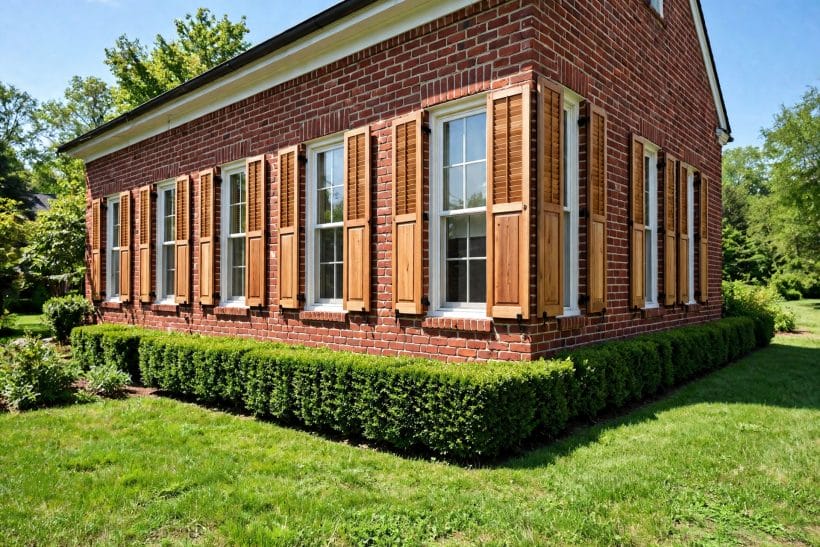
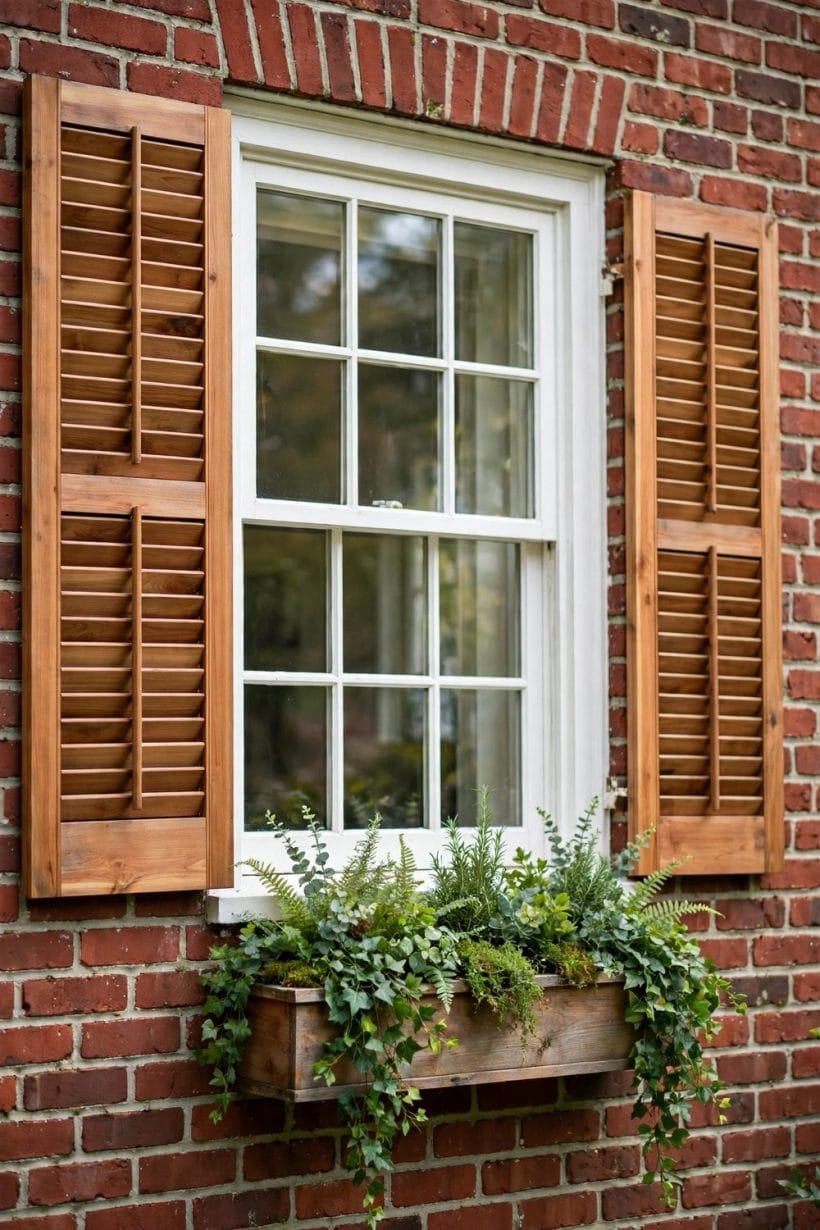
Louvred shutters are the most familiar cedar shutter form, with angled slats that let air and a little light through while still reading as a solid panel from the street. On red brick, louvres add a fine rhythm that breaks up the flat wall surface without introducing a new colour or pattern. The effect is gentle and traditional, and it suits both plain brick fronts and fronts with white trim.
The slatted surface also catches light through the day, so the shutters change subtly as the sun moves. In morning light the slats throw fine shadows across the wood, while in softer evening light the panels read as warm, even planes. This shifting quality keeps the front from looking flat, even when the overall scheme is restrained. For readers weighing the wider picture, tiny house exterior ideas show how small changes to a front can shift its whole character.
Louvred cedar also pairs well with planting, since the fine slat pattern sits comfortably beside leaves and stems without competing with them. A shrub beneath a louvred window and a climber beside the porch will soften the brick and wood together, and the layered result reads as a garden front rather than a bare wall. Keeping the planting slightly clear of the slats lets air move around the wood and keeps the louvres readable from the street, which is where the pattern does its best work.
3. Panelled Shutters on Brick
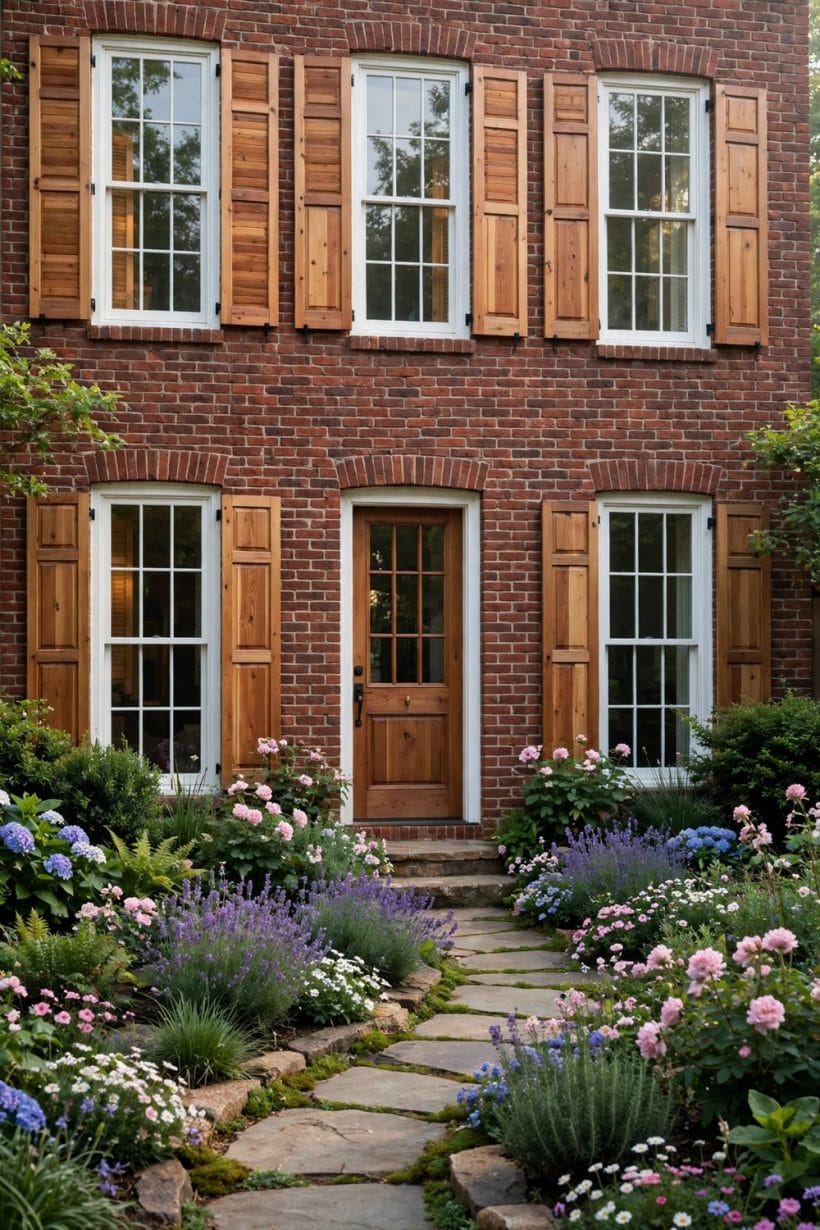
Panelled shutters carry flat or raised panels within a frame, giving a calmer, more formal surface than louvres. On red brick, that calm surface can be a welcome counterweight to the busy texture of the wall, especially on larger houses where many windows repeat across the facade. The panels give the eye somewhere to rest, and the frame lines echo the geometry of the window itself.
Panelled cedar suits fronts where the door, porch and trim already carry detail. When the porch has columns, the door has panels, and the trim is crisp, a panelled shutter completes the set without adding another visual language. The result is a front that feels composed rather than decorated, with each element speaking quietly to the next.
4. Board-and-Batten Shutters on Brick
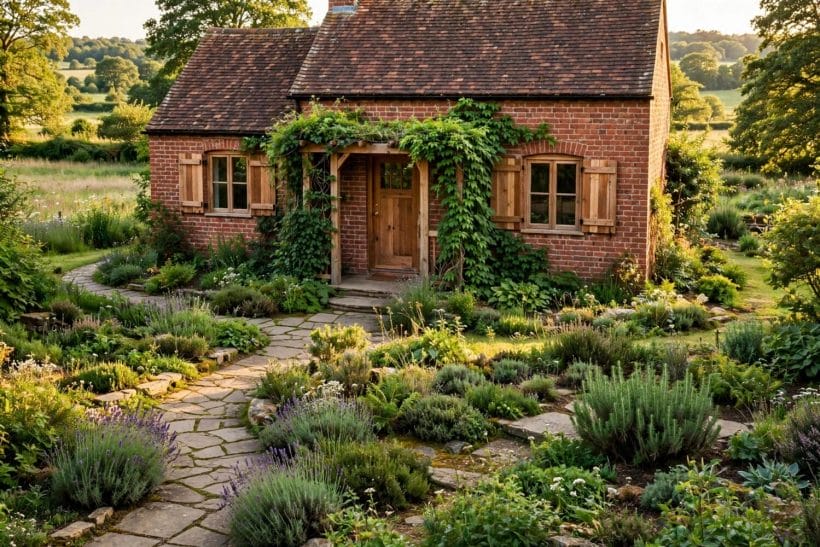
Board-and-batten shutters are made from vertical boards held together by horizontal battens, and they bring a rustic, cottage feel that pairs beautifully with red brick. The vertical lines draw the eye upward and give the window a taller appearance, which can help low, wide cottage fronts feel better balanced. The style suits garden settings, where planting softens the edges of the house.
Because board-and-batten shutters are visually simple, they work well where the brick itself is the star. A cottage with rich brick colour, a wooden door and a stone path needs little else, and plain cedar boards let those elements carry the front. The shutters add warmth and structure without asking for attention, which is often exactly what a cottage front needs.
5. Natural, Oiled and Weathered Cedar Finishes
The finish chosen for cedar changes the whole mood of the front. Natural cedar, freshly fitted, shows a warm honey colour with visible grain. Oiled cedar holds that warmth longer and deepens it slightly, giving a richer tone that stands out against brick. Weathered cedar, left to silver, takes on a soft grey that can look quietly elegant beside red brick, especially on older houses and in mature gardens.
Each finish asks for a different level of attention over time. Oiled finishes need regular reapplication to keep their colour, while weathered finishes ask for little beyond occasional cleaning and checking. The honest choice is the one that matches how much upkeep the household is happy to give, since a finish that is allowed to fade unevenly will look patchy, while a finish chosen with upkeep in mind will age gracefully.
Consistency across the front matters here too. If some shutters are oiled and others are left to weather, the front will read as two different schemes. Treating every shutter the same way, at the same time, keeps the elevation coherent as the seasons pass.
Weather also shapes the finish decision in a quiet way. Fronts that face strong sun will see oiled finishes fade faster on the sunniest side, while sheltered fronts hold their colour more evenly. A weathered finish, by contrast, tends to even out over time, since the silvering process is driven by the same exposure that fades oil. Neither outcome is a fault, provided it is expected, and both reward a quick look at the shutters when the seasons change so that any uneven patch can be noted and planned for rather than discovered late.
6. Shutter Colours That Sit Well With Red Brick
While natural cedar is the focus of this guide, it helps to know the colour family around it. Warm wood tones are the safest companion for red brick, since they share the same warm side of the palette. White and soft cream shutters offer a crisper contrast and can lift a dark brick front, while deep green or deep blue-grey shutters give a quieter, more traditional contrast that suits larger, formal houses.
What tends to work less well is a shutter colour that fights the brick. Very bright or cool colours can sit uneasily against warm red tones, making the front feel divided rather than composed. Holding a few sample boards against the brick in daylight, and viewing them from the street, is a practical way to test a colour before committing to it across the whole front.
Colour also needs to be considered alongside trim and door colour, since shutters are only one part of the front. A scheme where shutter, trim and door colours are chosen together will always look more settled than one where each element was chosen in isolation. For colour inspiration beyond the front, tiny house interior paint colors show how warm and cool tones behave in different lights.
7. Trim, Doors and Porches Around the Shutters
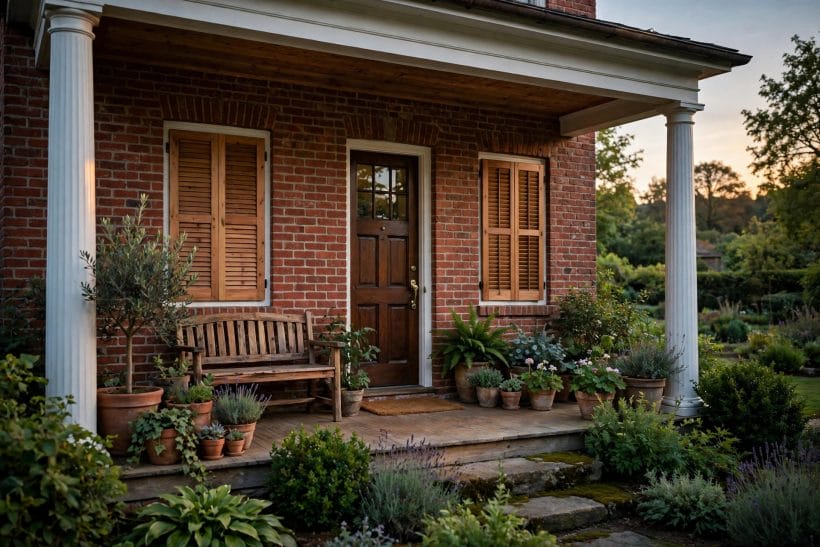
Trim is the frame that lets shutters shine. Crisp white trim around the window gives cedar shutters a clean edge against brick, and the same white carried onto porch columns, fascia boards and the door surround ties the front together. Soft cream trim offers a gentler version of the same idea, which can suit older brick with a more muted tone.
The front door deserves the same care as the windows. A panelled door in a colour that echoes the shutters, or in natural wood that matches them, completes the composition. Porches, too, should be read as part of the shutter scheme: a covered porch with columns gives the front depth and shelter, while an open porch keeps the facade flat and simple. Either can work, provided the porch, door and shutters share a common language. Readers planning the approach to the door may also enjoy tiny house porch ideas for porch layouts and welcoming details.
8. Fitting Shutters to Brick Walls Safely
Fitting anything to a brick wall is structural and wall work, and it belongs with a qualified professional. Brick, mortar and the wall behind them all play a part in holding a shutter safely, and the fixing method needs to suit the particular wall rather than following a generic approach. A professional can assess the wall, choose fixings suited to it, and make sure the shutters sit true against windows that may not be perfectly square.
Homeowners can still play a useful part by planning the look before any work begins: agreeing the shutter style, finish and colour, checking the proportions from the street, and confirming how the shutters should sit against trim and sills. Leaving the wall work itself to a professional protects both the brickwork and the shutters, and it avoids damage that can be difficult and disruptive to repair. This professional-only framing applies to any work that cuts, drills or loads the wall, and to any change that touches the window structure itself.
9. Seasonal Care for Cedar Shutters
Cedar shutters ask for modest, regular attention rather than heavy intervention. A gentle clean now and then keeps dust and green growth from settling into the grain, and a periodic look at the finish shows whether oiled shutters are ready for another coat. Checking hinges, fixings and edges once a season helps catch small changes early, before weather turns them into larger problems.
Care should stay gentle and general: soft cleaning, a visual check, and maker guidance followed where a product is involved. Anything that involves refixing, repairing the wall, or altering the window should go back to a professional, as in the previous section. With that rhythm, cedar shutters on red brick house fronts can keep their warmth for many years, ageing as a pair with the brick rather than against it.
Seasonal checks are also a good moment to look at the brick around the shutters, since mortar joints and sills tell their own story about weather and drainage. Staining, green growth or crumbling near a shutter may point to water sitting where it should run clear, and that kind of change is worth a professional opinion rather than a quick cover-up. Keeping gutters, sills and planting clear of the wall helps the whole front dry properly, which protects timber and brickwork alike through wet and cold spells.
10. Planting and Light Around a Brick Front
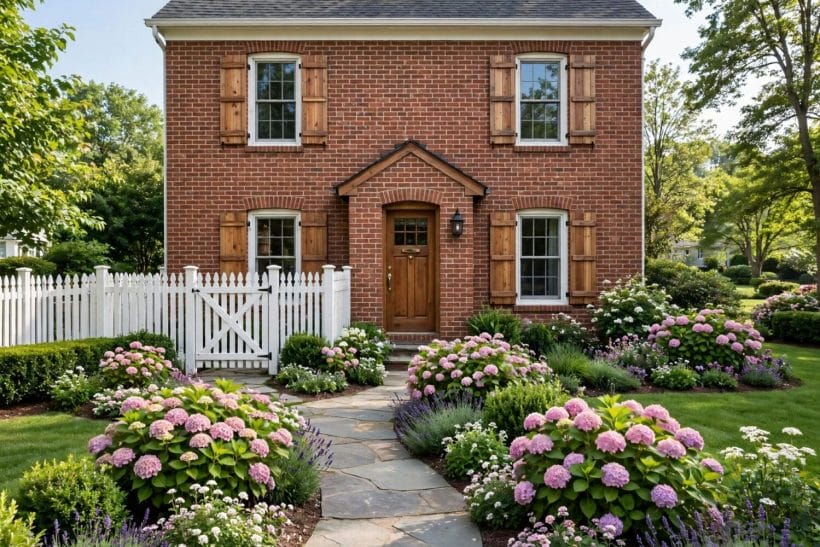
Planting softens the meeting point between brick and garden, and it can make cedar shutters look even more at home. Layered shrubs beneath windows give the front a planted base, while seasonal colour in beds and pots adds change through the year. Climbing plants beside a porch can frame the door beautifully, though they need keeping clear of shutters and trim so that wood and brick can dry properly after rain.
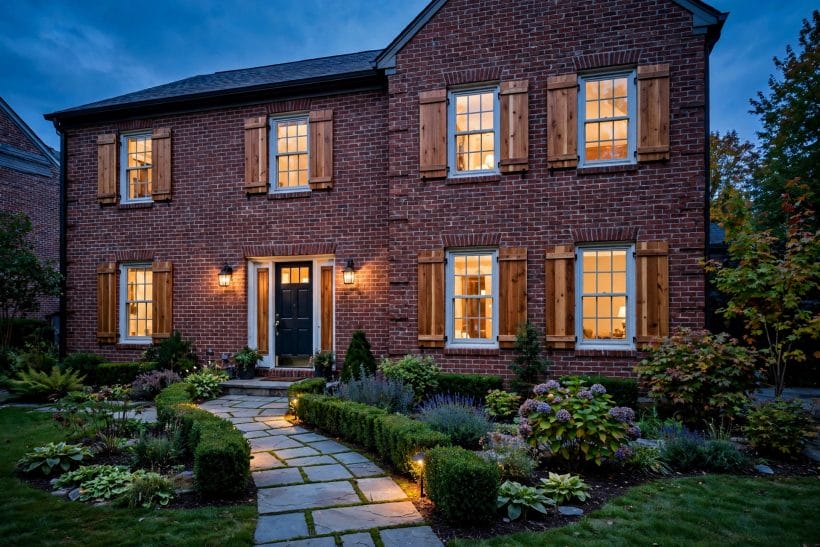
Planting results are never guaranteed: growth, flowering and shape all depend on soil, light, water and season, so plans should stay flexible and plant choices should suit the site rather than a picture. Evening light completes the scene, with warm lamps by the door and soft light through windows making the brick glow and the cedar read warmly after dark. For the wider garden picture, backyard landscaping ideas offer planting and layout inspiration, while tiny house patio ideas cover the outdoor living space beside the front. Readers thinking about the house as a whole may also find tiny house designs and contemporary home design ideas useful for seeing how exteriors, layouts and materials work together.
Final Considerations
A red brick exterior with shutters succeeds when the brick leads and everything else supports it. Cedar is a natural partner because its warmth, grain and weathering sit comfortably against fired clay, and because its styles, from louvred to panelled to board-and-batten, offer a form for cottages and larger houses alike. Choosing one finish, one colour direction and one trim language, then carrying them consistently across the front, is the simplest route to a settled result.
Plan the whole front together, judge it from the street, leave wall and window work to a qualified professional, and let planting and light do the softening. Done that way, cedar shutters on red brick house exteriors give a front that feels warm, grounded and complete, in every season.
Above all, resist the urge to add one element at a time without stepping back to see the whole. Shutters, trim, door, porch, planting and light each make sense on their own, but the front is judged as a single picture by everyone who passes it. A short pause at the kerb, a look at the house as a neighbour would see it, and a willingness to simplify where the picture feels busy will do more for the result than any single new feature. That patient, whole-front view is what turns a good combination of brick and cedar into a front that feels truly finished.



0 Comments