
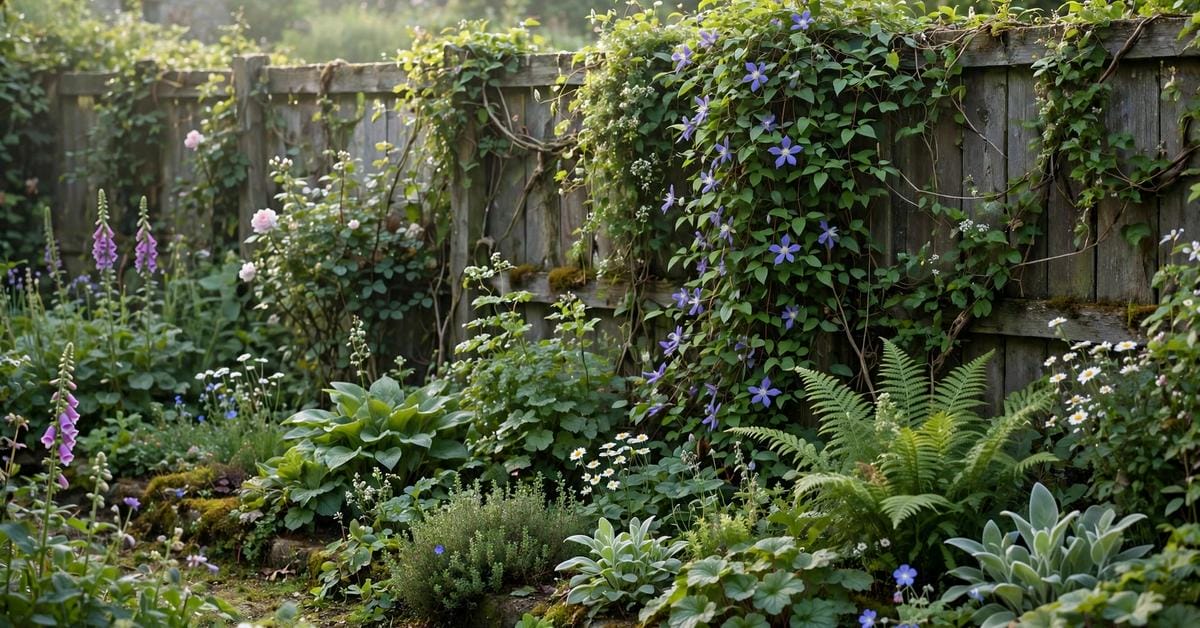
A plant appears at the edge of a garden bed, or along a hedgerow, and it looks familiar in a way that is hard to place. The leaves seem right, the flowers seem close, and yet something about the whole picture does not quite settle. That uncertainty is the honest starting point for this guide.
What follows is a careful way to look, compare and decide when to step back. It covers the plant group behind the question of deadly nightshade, the features that help a gardener observe well, the lookalikes that cause confusion, and the moment when a qualified professional should take over. It does not try to settle an identification from words and pictures alone.
1. What the Question Really Asks
When a gardener asks whether a plant belongs to a particular group, the real question is rarely about a single leaf or a single berry. It is about whether the whole plant, seen together, matches the general picture of that group closely enough to be sure. Certainty matters here because the stakes of a wrong guess are high, and because many garden plants share broad features. A careful gardener therefore approaches the question as a comparison exercise, not as a quick label to attach.
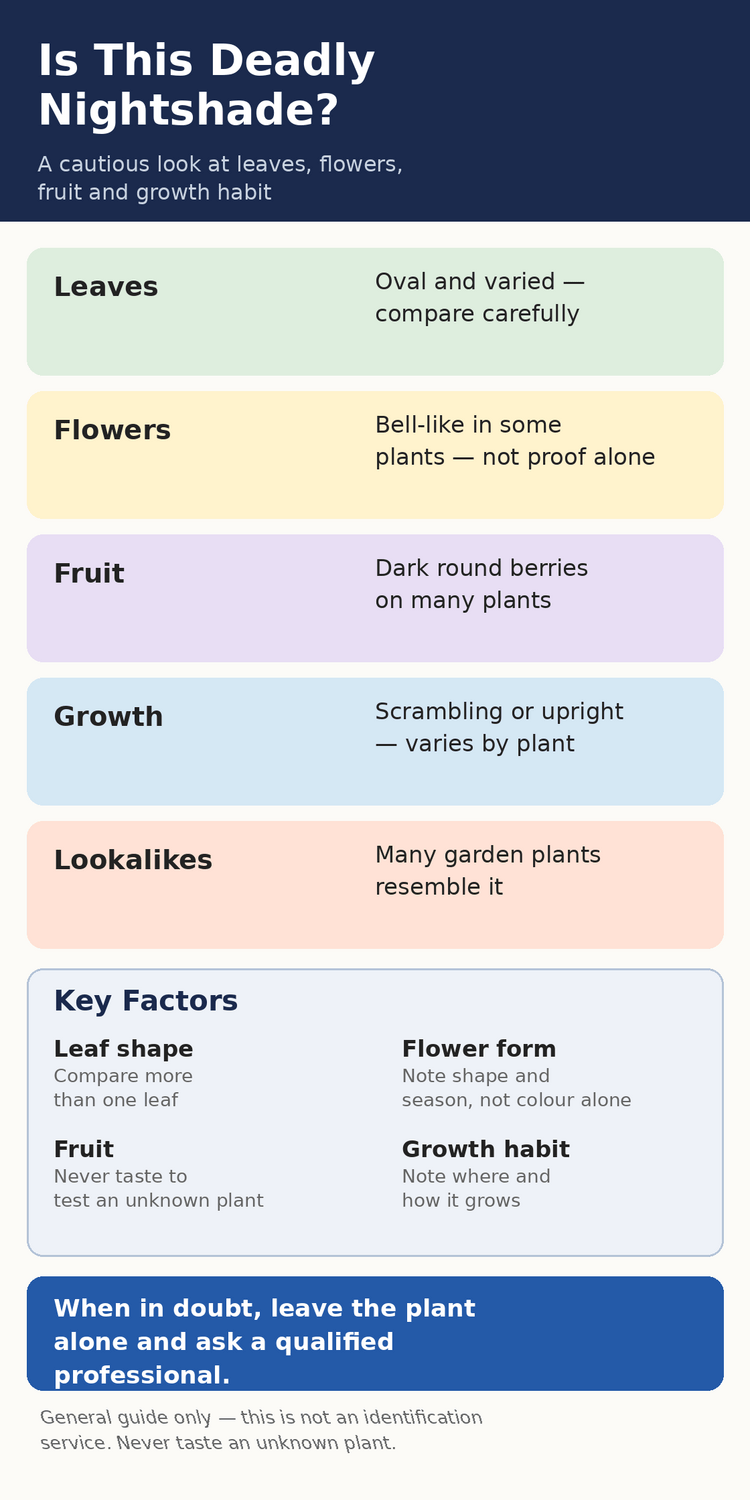
The plant group at the centre of this discussion is a small family of herbaceous and scrambling plants long known in gardens and hedgerows. Its members are generally described as having soft, oval leaves, bell-shaped flowers in some seasons, and round, dark fruit later in the year. That description is useful as a starting sketch, but it is not a checklist that proves anything on its own. Plenty of unrelated garden plants show oval leaves, and plenty show dark fruit. The sketch only becomes useful when every part of the plant is considered together, and when the gardener is willing to accept that the answer may remain open.
Gardens are full of plants that arrived without labels, grew from seed carried by birds, or spread quietly from a neighbouring plot. A plant found in such a setting deserves a slower look than a plant bought with a nursery tag. The setting itself is part of the evidence: a shaded border, a damp hedgerow base, a sunny fence line and a woodland edge each favour different plants, and each narrows the range of likely candidates without ever settling the matter alone.
| At a Glance | What to Notice |
|---|---|
| Whole plant | Form, height and spread seen together |
| Leaves | Shape, edge and arrangement along the stem |
| Flowers | Form and season, never colour alone |
| Fruit | Shape and colour, observed without handling |
| Lookalikes | Many garden plants share broad features |
| When unsure | Leave the plant alone and ask a qualified professional |
For gardeners planning the ground around a small home, the same patient observation applies to every planting decision, and the ideas in small garden planting ideas show how a modest plot can be arranged so that unknown plants are easy to see, reach and keep track of. A tidy, well-observed garden is not only easier to enjoy; it is also easier to question, because every plant has a place and a history the gardener can recall.
2. Start With the Whole Plant, Not One Feature
The most common identification mistake is to fix on one striking feature and let it carry the whole judgement. A dark berry, a purple flower or a pointed leaf can feel decisive, yet each of those features appears across many unrelated plants. A sound comparison starts instead with the whole plant: how it stands, how it spreads, whether it climbs or sprawls, and how its parts relate to one another. That overall impression, held lightly, is the frame into which details are fitted.
Begin by standing back and noting the growth form. Some plants in this group grow upright with soft, branching stems, while others scramble through neighbouring growth and lean on fences or shrubs for support. Neither form is a proof, but the form does change which lookalikes are plausible. An upright, free-standing plant invites a different comparison set from a tangled climber, and noting the difference early keeps the later comparison honest.
Next, look at the plant across the seasons in which it can be seen. A plant observed only in leaf may look quite different once flowers or fruit appear, and a plant seen only in fruit may hide the leaf detail that would have separated it from a neighbour. Where a plant can be watched over weeks, the gardener gains a fuller picture: the order in which leaves, flowers and fruit appear, and how the plant changes as the season turns. Patience is not a delay tactic here; it is part of the method.
Photographs help, provided they are taken with the same care as the observation itself. A useful set includes the whole plant in its setting, a stem with several leaves attached, any flowers or fruit in place, and the base of the plant where it meets the ground. Photographs taken from several angles, in clear daylight, give a professional far more to work with than a single close-up of one berry. Keep the plant undisturbed while photographing, and avoid picking stems or fruit for the sake of a picture.
3. Leaves: Shape, Arrangement and Variation
Leaves are often the first feature a gardener reaches for, and they reward a careful look. In the plant group discussed here, leaves are generally described as oval or broadly pointed, with smooth edges and a soft texture, carried singly along the stem rather than in opposite pairs. That description is a fair general sketch, and it is also a warning: oval leaves with smooth edges are among the most common leaf forms in gardens, and many unrelated plants match the sketch leaf for leaf.
Variation within a single plant is the detail that most often surprises newcomers. Leaves near the base of a stem may be larger and broader than leaves near the tip, shaded leaves may grow wider than sunlit leaves, and a young plant may carry leaves that look little like those of a mature one. A comparison based on one leaf, chosen because it looked typical, can therefore mislead even when the leaf itself was observed accurately. The better approach is to compare several leaves from different parts of the plant, and to note the range of shapes rather than a single ideal shape.
Arrangement along the stem deserves as much attention as shape. Note whether leaves alternate along the stem, whether they cluster near growing tips, and whether the stem itself is smooth, ridged or softly hairy. These are quiet features, easy to overlook, but they often separate plants that share a leaf outline. A notebook entry that records arrangement, size range and texture together is worth far more than a memory of a single leaf glimpsed in passing.
For gardeners who grow in containers, where plants are close at hand and easy to revisit, the guidance in container garden planting ideas offers a useful habit: keeping plants labelled, grouped and observed often, so that an unfamiliar seedling is noticed early rather than discovered once it has tangled into a border. The same habit serves any garden, large or small.
4. Flowers: Form, Season and Why Colour Misleads
Flowers tempt a gardener toward a quick answer because they are showy and memorable, yet colour is one of the least reliable features for identification. Flower colour can vary with soil, light and age, and it is shared across whole families of plants. Form is a steadier guide: the shape of the flower, the number and arrangement of its parts, and the way flowers are carried on the stem, whether singly, in pairs or in loose clusters.
In the plant group at the centre of this guide, flowers are generally described as bell-shaped or tubular, hanging or nodding rather than held boldly upright, and appearing through the warmer months. That picture is helpful only when it is held alongside the rest of the plant. A bell-shaped flower on a scrambling stem with oval leaves points in a different direction from the same flower shape on a woody shrub, and a flower seen out of season should prompt fresh caution rather than fresh confidence.
Season matters in a second way. A plant that flowers early and fruits late gives the gardener two separate chances to observe, and the two observations should agree before any conclusion is drawn. If the flowers suggest one group and the fruit suggests another, the disagreement is itself the finding: the plant is not yet identified, and the comparison must widen rather than narrow. A gardener who welcomes that disagreement is practising the safest form of identification, which is the willingness to remain unsure.
It is also worth noting what flowers cannot do. A flower cannot confirm an identification on its own, and a photograph of a flower, however sharp, cannot replace the whole plant. Flowers fade, drop and change shape as they age, so a flower past its best may look quite unlike the same flower at its peak. Note the flower in its prime, note how it is carried, and then return to the leaves, the stem and the growth form before drawing any conclusion at all.
5. Fruit and Berries: Why Resemblance Is Not Proof
Fruit draws the eye more strongly than any other feature, and it is the feature most likely to cause a hasty judgement. Round, dark berries appear on a wide range of garden plants, including ornamental shrubs, climbers and hedging plants that have nothing in common beyond that shared fruit form. A dark berry is therefore a prompt to look harder, not a verdict, and the wisest response to an unfamiliar berry is to leave it entirely alone while the rest of the plant is examined.
When fruit is present, the careful gardener notes its size range, its surface, whether it hangs singly or in clusters, and what remains of the flower at its base. The small star-shaped remnant where a flower once sat, for example, is a quiet feature that can separate one group from another, though it too must be read alongside leaves and growth form. Fruit colour as it ripens is worth recording as well, since many berries pass through green, red and dark stages, and a berry photographed at one stage may look like a different plant at another.
The strongest caution in this whole guide belongs here. An unknown berry should never be tasted in order to test an identification, and no feature of a berry, however familiar it seems, makes tasting a sensible experiment. The habit of leaving unknown fruit untouched protects the gardener, protects children and visitors who may follow the gardener’s example, and preserves the plant for a professional to examine. Observation, photography and patience are the only tools needed at this stage.
Garden structures and storage corners are places where unfamiliar plants often establish themselves unnoticed, and the planning ideas in garden shed and storage ideas remind gardeners to keep the ground around outbuildings visible and accessible, so that a plant growing against a shed wall is seen early and can be observed properly rather than discovered once it has spread.
6. Growth Habit and Where the Plant Sits
Where a plant grows is evidence, though it is never proof. The plant group discussed here is often found in shaded or partly shaded ground, at hedgerow bases, on woodland edges and in neglected corners where soil stays moist and competition is light. Those settings suit many plants, so the setting alone cannot identify anything, but a plant growing far outside its usual range of settings should make a gardener pause and widen the comparison.
Growth habit is the more telling of the two. Note whether the plant stands on its own stems, leans through neighbouring shrubs, or trails along the ground. Note whether it returns from the same base each year, whether it spreads by creeping stems, and how quickly it extends through a season. A plant that scrambles vigorously through a hedge behaves differently from a plant that forms a tidy, upright clump, and that difference in behaviour often separates lookalikes that share leaves and flowers.
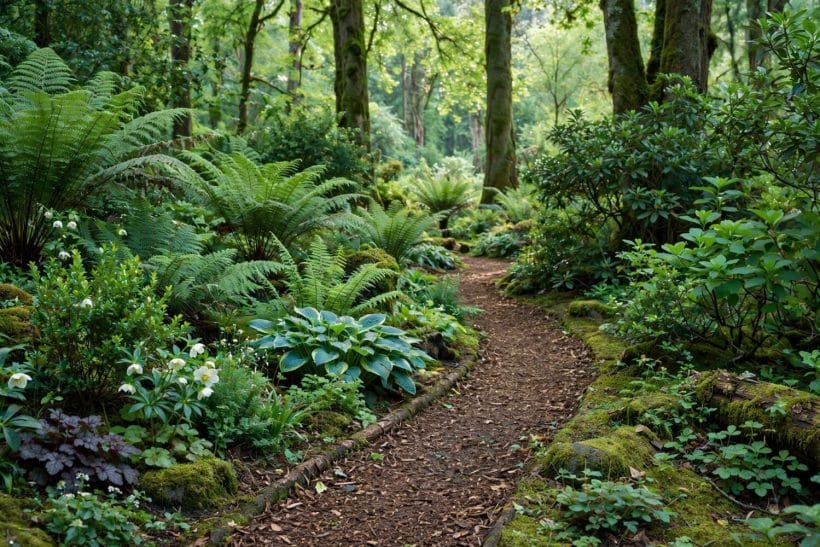
Neighbouring plants matter too. A plant growing among a known group of shrubs, or beside a well-labelled border, can be compared directly with its neighbours, and the comparison often reveals differences that a lone plant would hide. A leaf that seemed typical may look coarse beside a neighbour’s fine foliage, and a growth form that seemed upright may reveal itself as scrambling once the surrounding stems are traced. The garden as a whole is the gardener’s reference collection, and it should be used as one.
Disturbed ground deserves a special note. Soil turned by building work, a cleared border or a new path often brings up seedlings that were not planted by anyone, and those seedlings are the plants most likely to puzzle a gardener. A seedling found in fresh soil should be regarded as unknown until it has grown enough to show its full character, and it should be left in place while it does so, rather than moved or removed on the strength of an early guess.
7. Common Lookalikes in Gardens and Hedgerows
Lookalikes are the reason this guide insists on patience. Gardens and hedgerows hold many plants with oval leaves, bell-like flowers or dark berries, and several of them are familiar, widely grown ornamentals. A woody shrub with dark fruit may share the berry while differing entirely in stem, leaf arrangement and growth form. A herbaceous border plant may share the leaf while differing in flower and fruit. A climber may share the scrambling habit while differing in every other feature. Each shared feature is a trap for a gardener who compares one part at a time.
The way out of the trap is to compare whole plants, feature by feature, and to weigh every difference as seriously as every similarity. A plant that matches in leaf but differs in stem, or matches in flower but differs in fruit, is not a near match to be rounded up; it is a different plant, or an unidentified one. The discipline of counting differences, rather than collecting similarities, is what separates a careful observation from a hopeful guess.
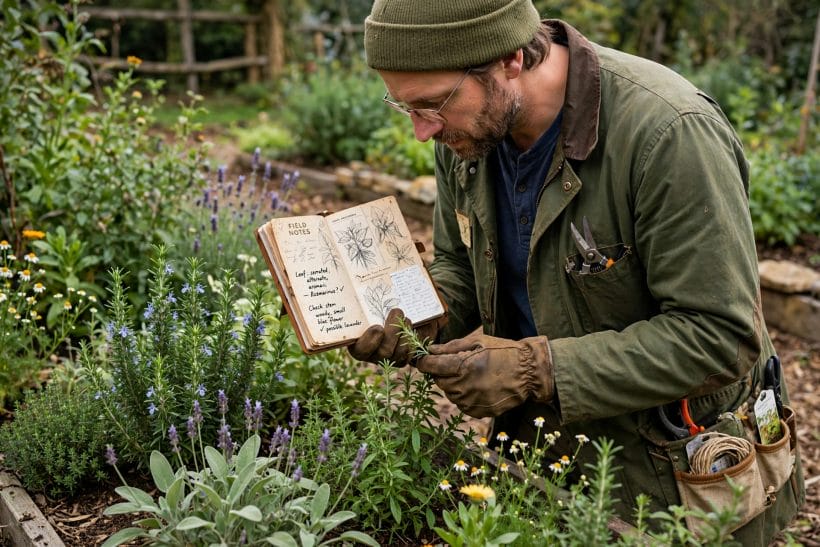
Some lookalikes are easier to separate by season than by form. A plant that flowers in one season and fruits in another may be confused with a neighbour that flowers at the same time but fruits differently, and only a gardener who watches both plants through the year will catch the divergence. Keeping simple dated notes, even a few lines per plant, turns a garden from a collection of impressions into a record that can be checked. The record need not be elaborate: date, setting, leaf, flower, fruit and growth form, written plainly, will serve.
For gardeners shaping the ground around a small home, the broader planning in small home landscaping ideas shows how planting in clear groups, with space between different plants, makes whole-plant comparison easier. When plants are not tangled together, their individual forms stay readable, and a lookalike is far less likely to hide inside a neighbour’s growth.
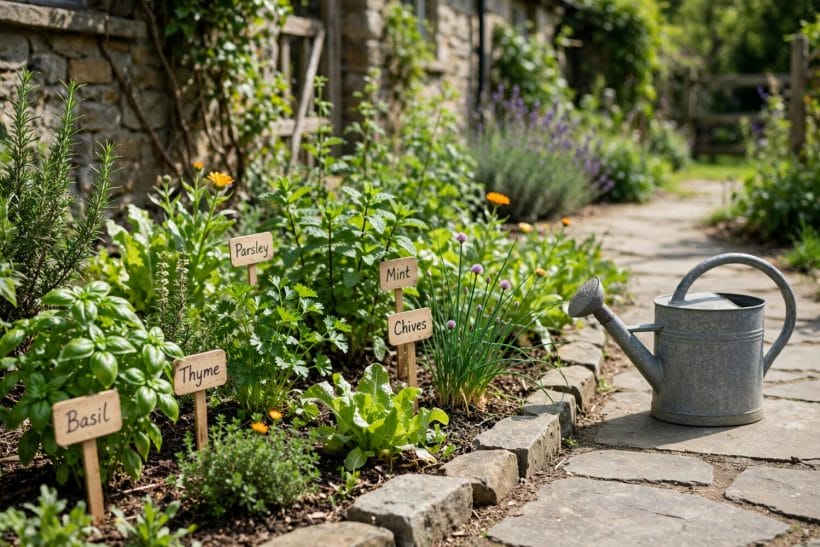
8. A Slow Comparison Routine for the Cautious Gardener
A routine helps because it removes the pressure to decide quickly. The routine below is deliberately slow, and each part of it can be repeated as the plant changes through the season. It asks for observation first, comparison second, and a decision last, and it counts an open answer as a successful outcome rather than a failure.
Begin with the whole plant and its setting, noting growth form, surroundings and the ground it grows in. Move to the stem, noting whether it is soft or woody, smooth or textured, and how leaves are arranged along it. Then examine several leaves from different parts of the plant, recording shape, edge and size range. If flowers are present, note their form and arrangement rather than their colour alone, and if fruit is present, note its form and clustering without handling it.
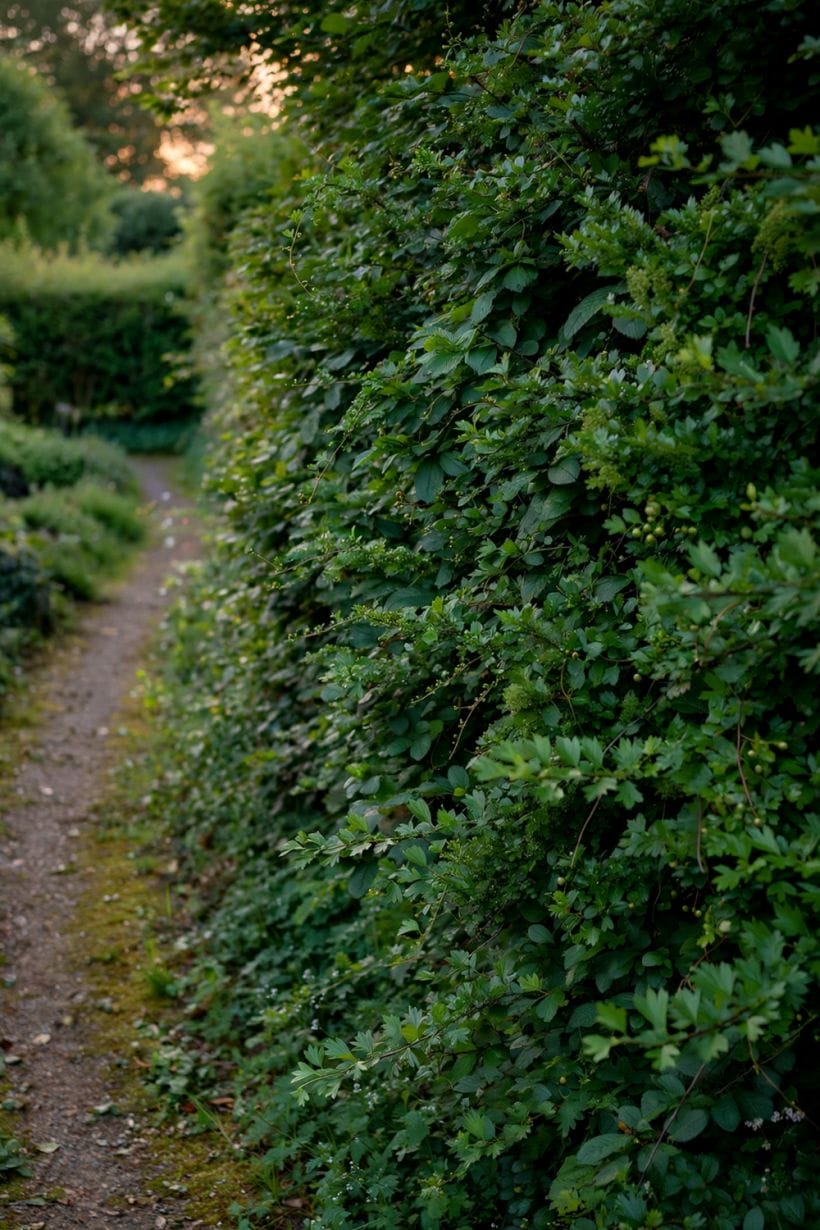
Next, widen the comparison. Look for the nearest plants that share any feature with the plant in question, and compare them feature by feature, counting differences as carefully as similarities. Check whether the plant’s setting matches the settings in which similar plants are usually found, and whether its seasonal behaviour matches as well. If the comparison produces a disagreement at any point, return to observation rather than forcing a conclusion.
Finally, record what was seen. A short written note, a dated set of photographs showing the whole plant and its parts, and a note of the setting together give a professional a far better starting point than a memory carried in conversation. The record also protects the gardener’s own future judgement, because a plant revisited months later can be compared with what was actually seen, rather than with what was half-remembered.
9. When to Leave the Plant Alone
There are moments when the right action is simply to step back. If a plant cannot be identified with confidence, if its features disagree with one another, or if it grows where children or visitors may encounter it, leaving it alone is the responsible choice. Leaving a plant alone costs nothing, preserves it for professional examination, and avoids the risk of acting on a guess. It is not neglect; it is the cautious gardener’s default.
Clearing work deserves the same caution. Cutting back, digging out or moving an unidentified plant can spread it, damage neighbouring plants, and bring the gardener into closer contact with a plant that should have been left undisturbed. Large, tangled or overgrown plants, and any plant growing through a hedge or fence where its stems cannot be traced, should be left for a professional to assess. The same applies to plants growing near paths, play areas or shared boundaries, where other people may meet them before the gardener returns.
Gardeners sometimes feel pressure to tidy a border quickly, especially when a plant looks out of place. That pressure is worth resisting. A border can wait a season while a plant is observed and identified, and a plant that turns out to be ordinary can be dealt with then, with full knowledge of what it is. A plant that turns out to need professional attention will be far easier to manage if it has been left intact, photographed and recorded, rather than cut back on a guess.
Outdoor living spaces repay the same patience. The ideas in small patio garden ideas show how a patio border can be kept open and readable, with plants spaced so that each one can be seen and identified, and with paths that keep visitors clear of planting they have not been told about. A readable garden is a safer garden, and it makes the cautious routine in this guide easy to follow.
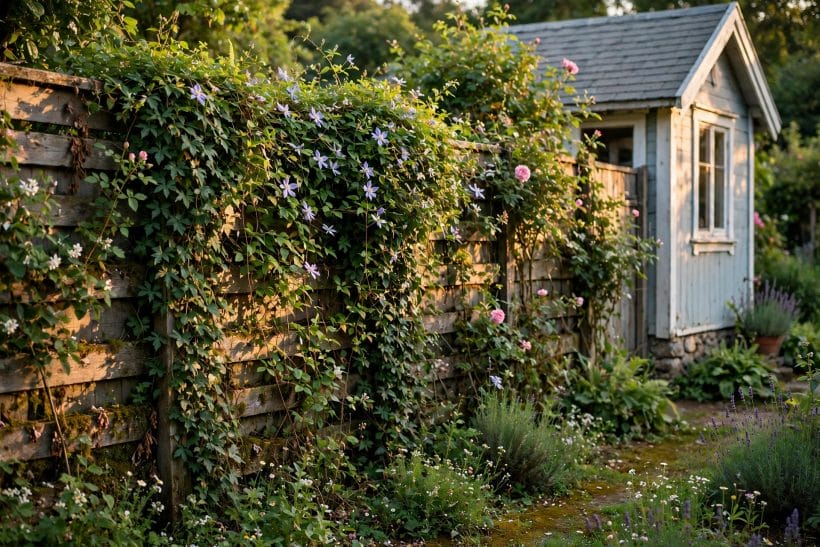
10. Asking a Qualified Professional: What to Show and Share
When observation leaves the question open, a qualified professional is the right next step. A botanist, a local extension service adviser, or a horticultural professional with identification experience can examine the plant with the training and reference material that a gardener cannot be expected to carry. The gardener’s job at this stage is not to persuade the professional toward an answer, but to present the evidence plainly and let the identification follow from it.
What helps most is the record built during observation: clear photographs of the whole plant in its setting, of stems with leaves attached, of flowers or fruit in place, and of the base of the plant, together with a short note of the setting, the season and the features that caused doubt. A note of what the plant is not, where features disagreed, is as useful as a note of what it resembled. Professionals work from differences as much as from similarities, and an honest record of doubt is a genuine contribution to the identification.
It is also helpful to say plainly that the plant is unidentified, rather than to present a suspected name as though it were settled. A suspected name can steer even a careful reader, and a professional given an open question will examine the plant more freely than one given a label to confirm or deny. Patience at this stage mirrors patience in the garden: the identification is worth more when it is reached without pressure, and the gardener who accepts an open answer has already made the safest decision available.
While waiting for professional advice, the plant should simply be left alone, and the area around it kept clear of casual contact. Marking the spot in a notebook, rather than with a sign that invites curiosity, keeps the record private and the plant undisturbed. If the plant grows where other people pass, a simple, unobtrusive barrier of garden routine, such as keeping that border unworked until advice arrives, is enough. The professional’s answer, when it comes, will say what, if anything, needs to happen next.
Final Considerations
Identification is a skill built on patience, comparison and a willingness to remain unsure. The plant group behind the question of deadly nightshade rewards that patience, because its general features are shared so widely that only a whole-plant comparison, checked against lookalikes and confirmed by a qualified professional, can settle the matter. A gardener who observes well, records honestly and steps back when unsure is practising the best form of plant care available: care for the garden, for its visitors, and for the truth of the identification itself.
Keep the routine simple and repeat it whenever an unfamiliar plant appears. Look at the whole plant before any single feature, compare several leaves rather than one, regard flower colour and dark fruit as prompts rather than proofs, and count differences as carefully as similarities. Photograph the plant in place, note its setting and season, and share that record with a qualified professional whenever doubt remains. A garden observed in this way stays readable, enjoyable and honest, and its plants, known and unknown alike, are given the attention they deserve.
For gardeners extending their outdoor space, the deck and porch planting ideas in small deck garden ideas and small porch garden ideas show how planting can be arranged so that every plant stays visible and identifiable, with clear paths and open borders that make the cautious routine in this guide a natural part of everyday gardening rather than an extra task.




0 Comments