
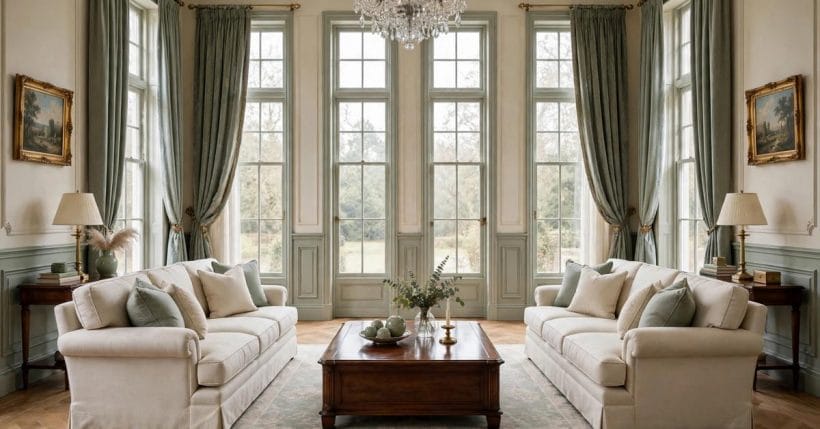
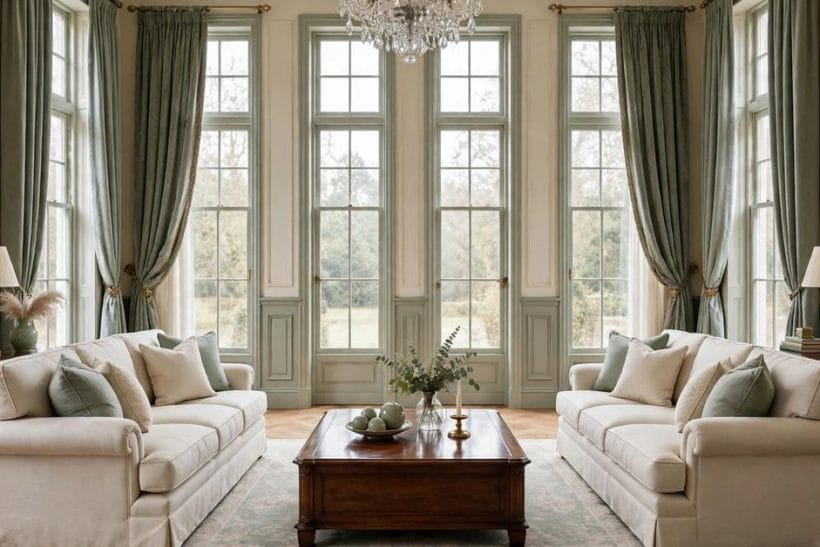
A formal living room earns its name the moment you walk in: everything feels placed, balanced and calm, yet the room still invites you to sit down and stay a while. These formal living room ideas gather seventy-five ways to reach that feeling, from the shape of the seating to the last layer of lamplight.
Work through the list in order and you will have a complete room plan, not a pile of disconnected tips. Each idea stands on its own, so you can also dip in, pick the handful your room needs most, and leave the rest for another season.
1. Start with Symmetry: Layouts That Look Formal
Formality begins with balance. When the two sides of a room echo each other, the eye settles, the room reads as intentional, and even modest furniture looks considered. Symmetry does not demand identical everything, but it does ask for a clear centre and a matching gesture on either side of it.
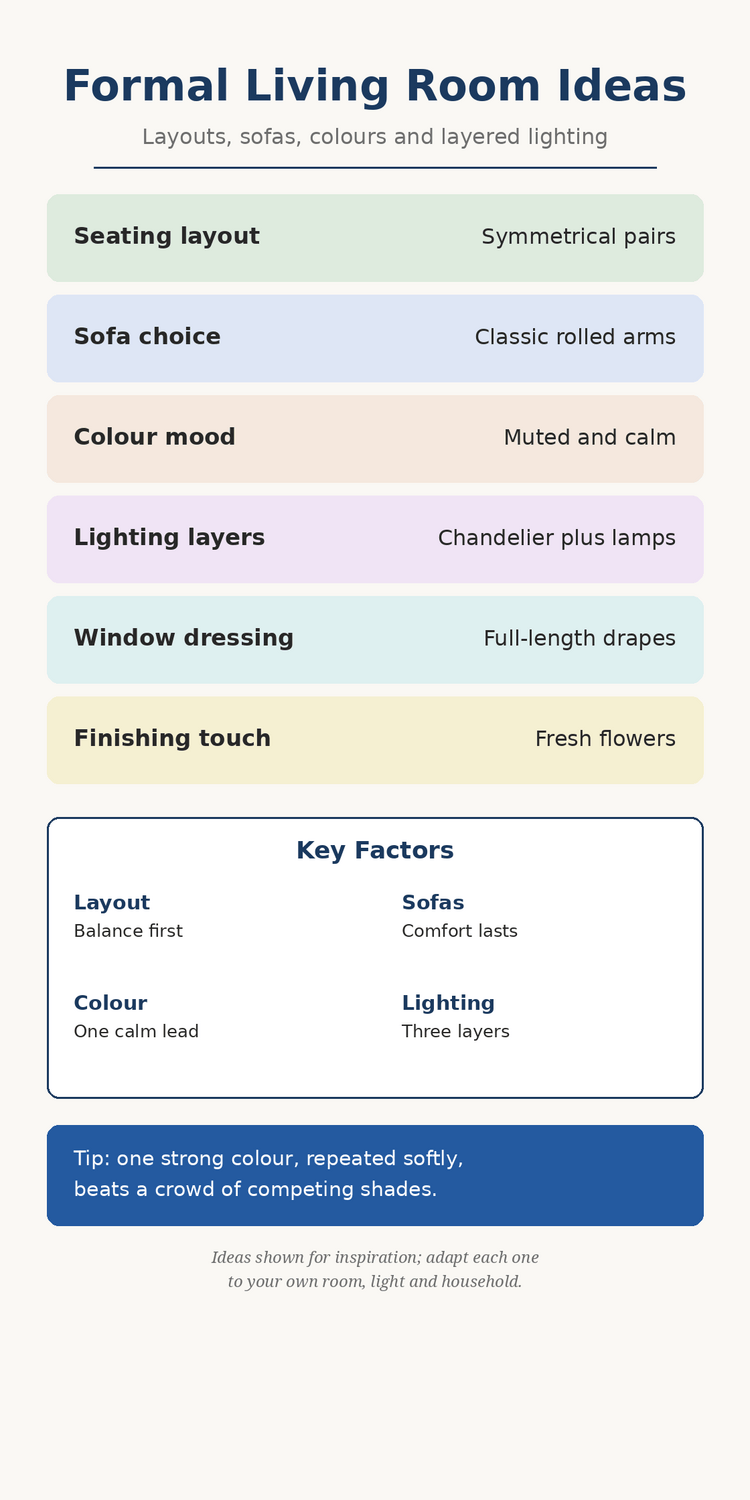
| Part of the room | The formal approach |
|---|---|
| Layout | Symmetrical seating pairs around one centre |
| Sofas | Classic rolled-arm shapes in quiet upholstery |
| Colour | One calm lead colour, softly repeated |
| Lighting | Chandelier, lamps and sconces in layers |
| Windows | Full-length layered drapes |
| Feeling | Calm, gracious and welcoming |
Idea 1: Face two sofas across a coffee table
Two sofas facing each other is the classic formal arrangement for a reason: conversation flows naturally, nobody has a bad seat, and the room gains an instant centre. Keep the distance between them comfortable for talk and for setting down a cup, and let the coffee table hold the middle of the composition.
Idea 2: Anchor the arrangement on a fireplace
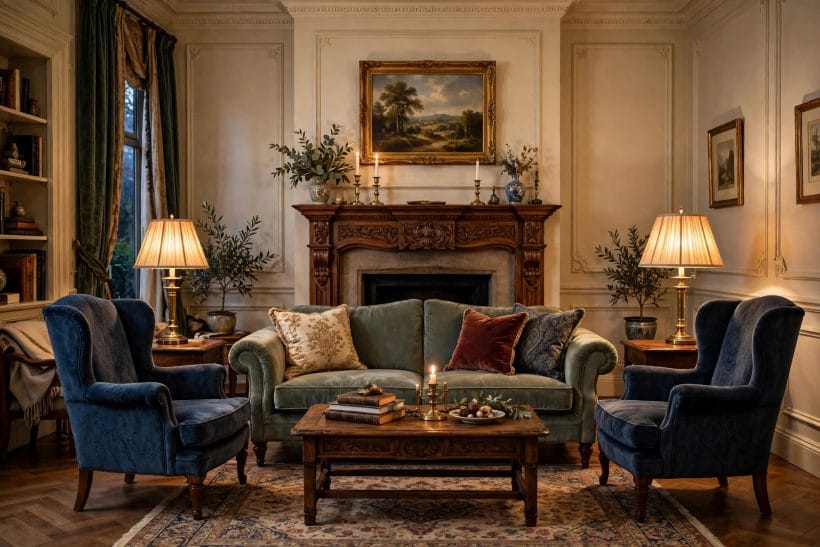
Where a fireplace exists, let it be the anchor and arrange the seating to face it, with the mantel as the room’s natural focal point. The fire draws the eye, the seating gathers around it, and the whole room inherits a sense of occasion, even on evenings when the fire stays unlit.
Idea 3: Let the rug set the seating boundary
A rug quietly tells everyone where the sitting area begins and ends, which is why it belongs under the seating group rather than floating in front of it. Choose one generous enough that the front feet of the sofas and chairs rest on it, and the whole group will feel grounded and together.
Idea 4: Leave a clear walkway around the group
Guests should be able to reach any seat without squeezing past furniture or stepping over a rug corner, so keep the paths around the seating group open and obvious. A room that is easy to move through feels gracious, while a room that traps its visitors feels awkward no matter how beautiful it looks.
Idea 5: Centre the coffee table between the seats
The coffee table is the hinge of a formal seating group, and it works hardest when it sits truly centred between the seats rather than drifting toward one side. Measure by eye from both sofas, straighten it whenever the room is tidied, and the whole arrangement will look deliberate instead of accidental.
Idea 6: Use matching side tables for balance
A pair of matching side tables, one at each end of the sofa or flanking the fireplace, gives the room its pleasing mirror quality without any effort. They also solve a practical problem, giving every seated guest a place for a glass, a book or a pair of reading spectacles.
Idea 7: Aim the seats toward conversation, not a screen
A formal room puts people first, so angle the seating toward one another and let any screen sit quietly to one side, or in another room altogether. When chairs face each other, talk comes easily, and the room earns its keep as a place for guests, family evenings and long, unhurried visits.
Idea 8: Keep one clear focal wall
Every formal room needs one wall that leads the eye, whether it holds the fireplace, a large painting or a pair of tall windows, and the rest of the room should defer to it. If two walls compete for attention, the room feels restless, so choose your focal wall early and let the furniture arrangement confirm the choice. Readers planning small living room layouts will find the same focal-wall thinking helps a compact room feel composed rather than crowded.
2. Choose Sofas with a Classic Silhouette
The sofa is the largest object in most living rooms, so its shape sets the tone for everything else. Formal rooms favour classic silhouettes: rolled arms, tailored backs and skirts or turned feet, shapes that have looked right for decades and will still look right when trends move on.
Idea 9: Choose a rolled-arm sofa silhouette
Rolled arms soften a sofa’s outline and signal traditional comfort, which is why they anchor so many formal rooms so well. They also give the room a forgiving shape: cushions, throws and guests all sit easily against a gentle curve, and the sofa never looks sharp or severe.
Idea 10: Pick a tight back for a tailored look
A tight, upholstered back holds its line day after day, while a loose arrangement of back cushions can slump and need constant plumping. For a room that should look ready for guests at any hour, the tailored back is the practical choice, and it photographs beautifully as well.
Idea 11: Favour a single long sofa in a small formal room
When space is limited, one generous sofa usually serves a formal room better than two cramped ones, because it leaves room for chairs, tables and clear walkways around it. The room keeps its gracious proportions, and the single sofa becomes a handsome piece in its own right. The same restraint shapes tiny house living rooms, where one well-chosen sofa does the work of a whole suite.
Idea 12: Add a settee where a second sofa crowds
A settee, smaller and lighter than a full sofa, is the formal room’s quiet problem-solver for corners and short walls where a second sofa would overwhelm the space. It keeps the symmetry of a two-sided arrangement while respecting the room’s proportions, and it gives guests a graceful perch.
Idea 13: Keep sofa cushions plump and even
Cushions are the first thing guests notice and the first thing to betray a tired sofa, so plump them daily, rotate them regularly and straighten their covers after use. A few minutes of care keeps the sofa looking newly made, which is half the battle in a room meant to look ready.
Idea 14: Choose upholstery that holds its shape
Formal rooms reward fabrics with body: woven textures, firm velvets and sturdy linens that keep their structure rather than sagging or wrinkling at once. Ask about the fabric’s weave and care before buying, and favour materials that will still look crisp after years of evenings and gatherings.
Idea 15: Let the sofa colour stay quiet
A quiet sofa colour, cream, soft grey, muted green or gentle taupe, lets the rest of the room breathe and gives you freedom to change cushions, art and flowers with the seasons. Loud sofa colours lock the whole room into one mood, while a calm sofa adapts gracefully for decades.
Idea 16: Test seat comfort before committing
Formality should never mean discomfort, so sit on any sofa properly before it comes home, lean back, put your feet up and stay a while. A formal room fails if guests perch politely on its edge, so choose a seat depth and cushion firmness that invite people to settle in.
3. Pair Chairs and Settees with Purpose
Chairs complete a formal room: they balance the sofa, fill the corners and give guests somewhere to sit that feels chosen rather than leftover. The best formal rooms treat chairs as partners to the sofa, matching in spirit even when they differ in detail.
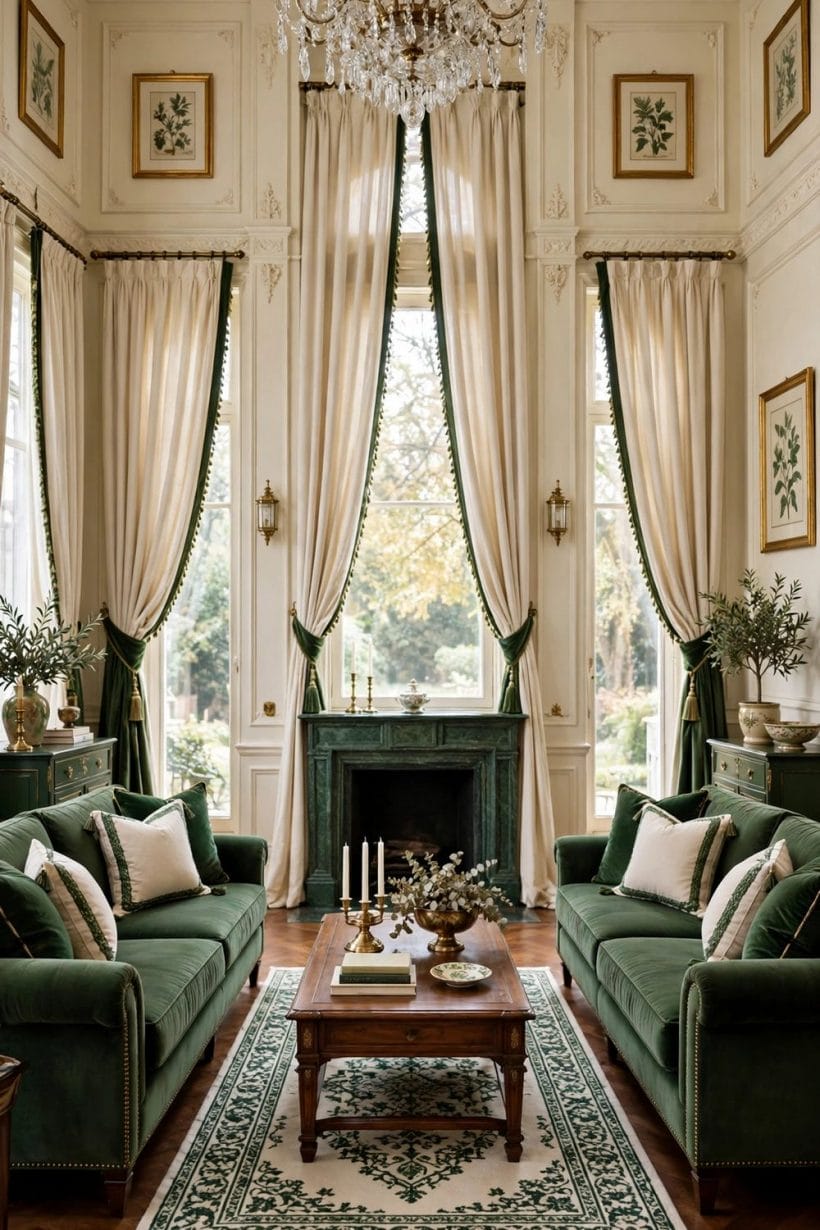
Idea 17: Pair matching armchairs opposite the sofa
Two matching armchairs facing the sofa close the seating group into a welcoming square and give the room its satisfying symmetry. Matching chairs also simplify decisions: one good chair, bought twice, does more for a formal room than two unrelated chairs ever will.
Idea 18: Add a wing chair beside the fireplace
A wing chair beside the fire is the formal room’s most inviting seat, sheltered, upright and close to the warmth, and it adds a vertical accent that balances the long lines of a sofa. Place it at a slight angle so its occupant can join the conversation or gaze at the fire with equal ease.
Idea 19: Use an occasional chair to fill a corner
Empty corners make a formal room feel unfinished, and a single occasional chair, perhaps with a small side table and a reading lamp, turns a dead corner into a purpose. The chair need not match the main suite exactly, but it should share its manners: similar height, similar formality, similar calm.
Idea 20: Keep chair heights in friendly proportion
When chairs tower over a sofa or sink beside it, the seating group looks uneasy, so aim for seat heights and back heights that sit comfortably together. Guests notice proportion before they notice style, and a group of seats at ease with one another makes conversation feel easy too.
Idea 21: Give every seat a surface within reach
No guest should have to hold a cup for an entire visit, so check that every chair and sofa end has a table, a stool or a wide windowsill within easy reach. This small courtesy separates a room that looks formal from a room that behaves formally, and guests will feel the difference at once.
Idea 22: Mix one patterned chair with plain sofas
One patterned chair among plain sofas adds life without disturbing the room’s calm, like a single bright voice in a quiet conversation. Keep the pattern’s colours drawn from the room’s existing palette and the chair will feel intentional rather than accidental, a deliberate accent rather than a stray.
Idea 23: Angle a chair slightly toward the room
A chair pushed flat against a wall can look like it is waiting to be used, while the same chair angled gently toward the seating group looks ready and welcoming. Small angles soften a formal room’s geometry, invite people in, and keep the arrangement from feeling like a showroom.
Idea 24: Leave breathing space between chairs
Chairs crammed shoulder to shoulder make guests feel crowded, so leave a comfortable gap between seats, enough for a side table or a stretch of rug to show. Generous spacing reads as confidence and hospitality, and it lets each piece of furniture be appreciated on its own. A contrasting note comes from farmhouse living rooms, where looser, gathered seating suits a relaxed mood that formal rooms deliberately refine.
4. Build a Colour Palette That Stays Calm
Colour does the emotional work in a formal room. The most enduring formal palettes are restrained: pale walls, one deeper lead colour, and small accents repeated with discipline, so the room feels rich without ever feeling loud.
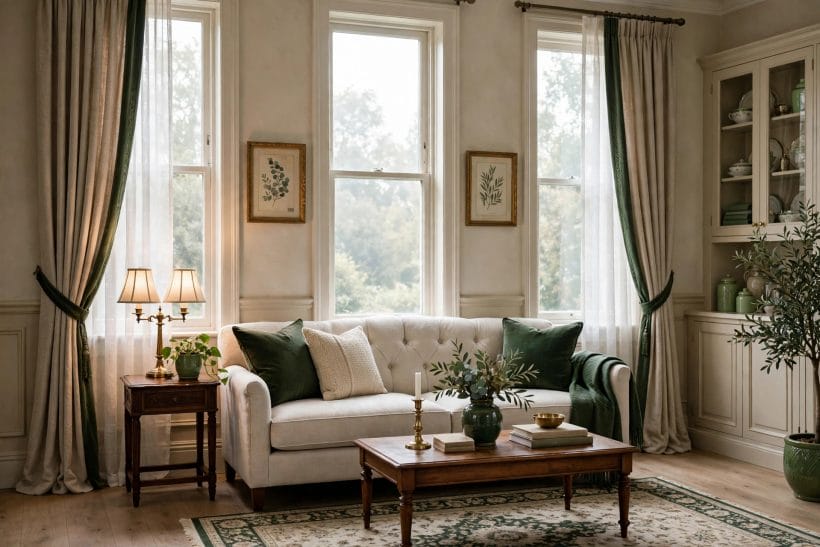
Idea 25: Start from one calm lead colour
Choose one lead colour for the room, a soft green, a dusty blue, a warm taupe, and let it guide the upholstery, the cushions and the art. One clear lead keeps decisions simple and the result coherent, while a room with several competing leads can feel busy even when every piece is beautiful.
Idea 26: Repeat that colour in three places
A colour repeated in three places, the sofa cushions, a vase and a painting, for example, reads as a deliberate thread running through the room. Fewer repetitions feel accidental, and many more feel forced, so three is the formal room’s quiet rule of thumb for making a palette feel planned.
Idea 27: Pair cream walls with deeper upholstery
Cream walls give a formal room its light and air, while deeper upholstery grounds it and keeps pale walls from feeling washed out. The contrast also flatters wood furniture, picture frames and plants, all of which stand out more crisply against a pale, warm background.
Idea 28: Use soft green as a restful accent
Soft green suits formal rooms because it recalls gardens and quiet landscapes, and it pairs gracefully with cream, wood and brass. Use it on cushions, drapes or a single chair, and the room gains a restful depth that never shouts, a colour guests feel rather than notice.
Idea 29: Let dusty blue cool a sunny room
Rooms that catch strong sun can feel heated by warm colours, and a dusty blue palette cools the mood without chilling it. Pair blue upholstery with cream walls and pale wood, and the room will feel fresh at midday and serene in the evening, a balance warm palettes struggle to hold.
Idea 30: Warm a shaded room with gentle gold tones
A room that receives little direct sun benefits from warm gold, honey and soft ochre accents that mimic sunlight and lift the mood. Use these tones on cushions, lamp shades and picture frames, and the room will glow gently even on grey days, without ever turning brassy.
Idea 31: Keep strong colour to cushions and art
Strong colour is easiest to live with when it sits on things that are simple to change, cushions, throws, flowers and framed prints, rather than on sofas, drapes and carpets. This way the room can shift its mood with the seasons while its expensive pieces stay calm and timeless.
Idea 32: Carry one metal finish through the room
One metal finish, brass, nickel or bronze, repeated on lamp bases, picture frames, curtain rods and handles, gives a formal room its polished thread. Mixed metals can work in relaxed rooms, but a single finish reads as discipline, and discipline is the formal room’s signature. Guidance on choosing wall colours that support such a palette appears among interior paint colours, where pale, warm bases do much of the same calming work.
5. Layer the Lighting, from Chandelier to Lamp
Layered lighting is what makes a formal room glow in the evening. One overhead light flattens a room, while a chandelier, table lamps and wall lights together give it depth, warmth and a choice of moods for every occasion.
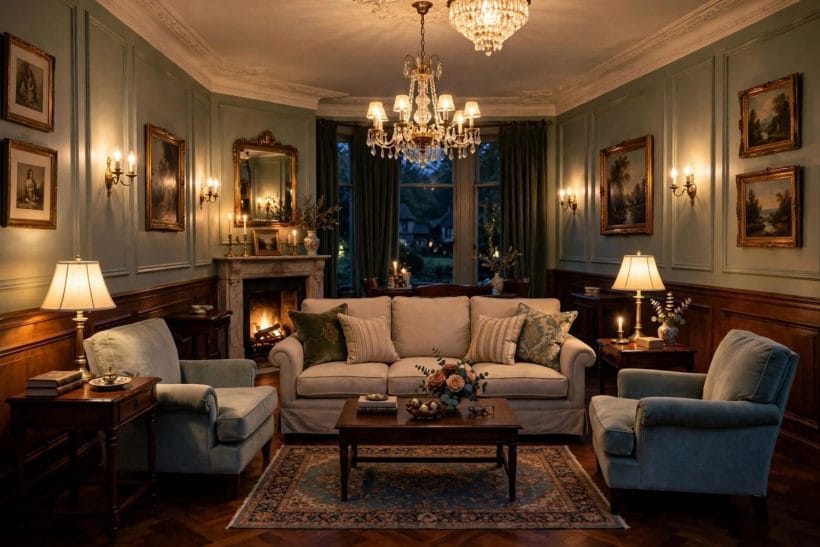
Idea 33: Hang a chandelier as the centrepiece
A chandelier is the formal room’s crown, drawing the eye upward and marking the room as a place for occasions. Choose a scale that suits the ceiling and the seating below it, hang it centred over the coffee table or the middle of the seating group, and let it set the room’s standard of elegance.
Idea 34: Add a pair of matching table lamps
Matching table lamps on either end of a sofa or on twin side tables double the room’s symmetry and give evening light a warm, low source that flatters faces. Their glow at sitting height is the light guests actually live in, softer and kinder than any overhead fitting alone.
Idea 35: Wash the walls with soft sconce light
Wall sconces spread a gentle wash of light across panelling, paintings and drapes, removing dark corners and giving the room a finished, architectural feel. They are especially kind in rooms used for dining or conversation after dark, when harsh light would break the mood.
Idea 36: Put lamps where people read and talk
Light should follow activity, so place a lamp beside every reading chair and within reach of the main seating group, rather than spacing lamps evenly for looks alone. A lamp that serves a real purpose earns its place, while a lamp placed only for symmetry can leave readers in shadow.
Idea 37: Let evenings dim the overhead light
A room that blazes at full brightness all evening feels like a waiting room, so fit dimming controls where the wiring allows and lower the overhead light as the evening deepens. Any changes to fixed wiring belong to a qualified electrician, but the effect is worth it: lamps take over, faces soften and the room turns intimate.
Idea 38: Light artwork with a gentle picture light
A small picture light over a painting turns art into an evening feature and adds another layer of warm light to the room’s walls. Keep the light soft and even, aimed to show the work without glare, and the whole wall will gain a gallery-like polish after dark.
Idea 39: Keep candlelight as an accent, never the only light
Candles add flicker and ceremony to a formal evening, but they cannot carry a room alone, and they demand care: steady holders, a watchful eye and distance from drapes and papers. Treat candlelight as the final garnish over a properly lamp-lit room, and it will feel luxurious rather than risky. The same layered approach runs through interior lighting ideas, where chandelier, lamp and wall light each play a distinct part.
6. Dress the Windows from Top to Floor
Windows set a formal room’s height and light, and their dressing should honour both. Full-length drapes, layered with sheers, frame the glass like a picture and give the room its finished, tailored edge.
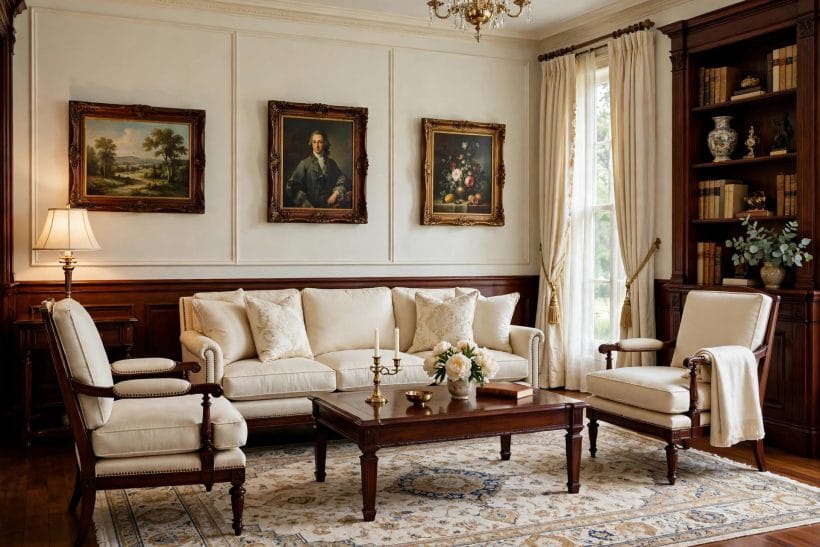
Idea 40: Dress windows from ceiling to floor
Drapes that run from near the ceiling to the floor make windows look taller and the whole room more generous, while short curtains can chop a wall in half. Hang the rod high, let the fabric fall in soft folds, and the room will gain height without any building work.
Idea 41: Layer sheers behind heavier drapes
Sheers soften daylight and guard privacy during the day, while heavier drapes close at night for warmth and intimacy, so the two layers together give the room a setting for every hour. Keep both layers in the same calm family of colours and the window will look composed open or closed.
Idea 42: Match drape colour to the room’s calm palette
Drapes cover a large area, so their colour carries real weight: choose a tone already present in the room, the sofa, the rug or the walls, and the windows will feel part of the whole. A drape colour borrowed from nowhere can dominate the room, while a matched one quietly completes it.
Idea 43: Let daylight in during the day
A formal room should enjoy its daylight, so draw the drapes back fully in the morning and let the sheers filter the sun rather than block it. Rooms that live in gloom feel stiff and museum-like, while rooms that welcome the day feel gracious and alive.
Idea 44: Close drapes in the evening for intimacy
As daylight fades, closing the drapes turns the room inward, shutting out the dark glass and making lamplight the room’s world. The ritual itself marks the change from day to evening, a small ceremony that suits a formal room’s sense of occasion.
Idea 45: Keep window hardware simple and consistent
Curtain rods, rings and finials should match throughout the room and stay simple enough not to compete with the fabric they carry. One consistent finish, echoing the room’s chosen metal, gives the windows a tailored finish and keeps the eye on the drapes and the view.
Idea 46: Frame a view, don’t block it
Where a window offers a garden, a street of trees or a distant view, let the drapes frame it like a picture rather than covering it, pulled fully to the sides by day. A view is a room’s free artwork, and a formal room treats it with the same respect it gives a painting.
7. Ground the Room with Rugs and Wood
Rugs and wood give a formal room its weight and warmth. A good rug gathers the seating into one composition, while dark wood furniture and floors add the gravity that keeps pale upholstery from floating away.
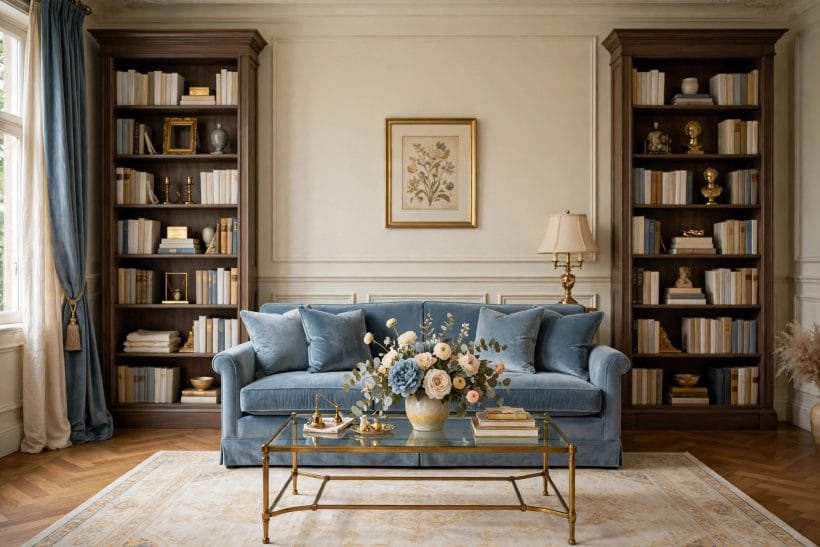
Idea 47: Choose a rug large enough for the seating group
A rug that stops short of the furniture makes the seating look scattered, while one that reaches under the front feet of every seat gathers the group into a single room within the room. When in doubt, choose the larger rug: generosity reads as formality, and a skimpy rug reads as an afterthought.
Idea 48: Pick a classic pattern that ages well
Traditional patterns, soft florals, quiet geometrics and bordered designs, have dressed formal floors for generations and will not date the room when fashions change. Keep the pattern’s colours muted and drawn from the room’s palette, and the rug will sit happily under everything else for years.
Idea 49: Let dark wood add weight to pale rooms
Dark wood tables, frames and bookcases give a pale formal room its anchor, the way a dark belt finishes a light suit. Without that weight, cream rooms can drift into blandness, so let at least a few substantial wood pieces hold the room down.
Idea 50: Repeat the wood tone in tables and frames
Wood tones need not match exactly, but they should belong to the same family, warm with warm, cool with cool, so tables, frames and shelves feel related rather than random. A room where every wood tone fights the next feels restless, while a room with a settled wood family feels calm.
Idea 51: Keep floors clear of small scattered rugs
Several small rugs scattered across a formal floor break the room into fragments and create tripping edges, so favour one generous rug for the seating group and bare, polished floor elsewhere. The eye then reads the floor as one calm plane, and the seating group gains importance.
Idea 52: Keep the rug palette quieter than the art
When rug and artwork both shout, the room has no resting place for the eye, so let the rug stay quieter and more muted than the paintings above it. The art then earns its wall, the rug earns its floor, and the room keeps a clear hierarchy of attention.
Idea 53: Clean rugs and wood with gentle, regular care
Formal rooms repay regular, gentle care: rugs brushed and aired, wood dusted with a soft cloth, spills lifted promptly before they set. Harsh treatments and neglected stains age a room faster than years of use, while steady small habits keep it looking considered without ever feeling fussy.
8. Style Tables, Shelves and Walls with Restraint
Restraint is the formal room’s finishing virtue. A few well-chosen objects, given space and symmetry, say more than crowded shelves ever can, and empty space is not waste but the frame that lets beautiful things be seen.
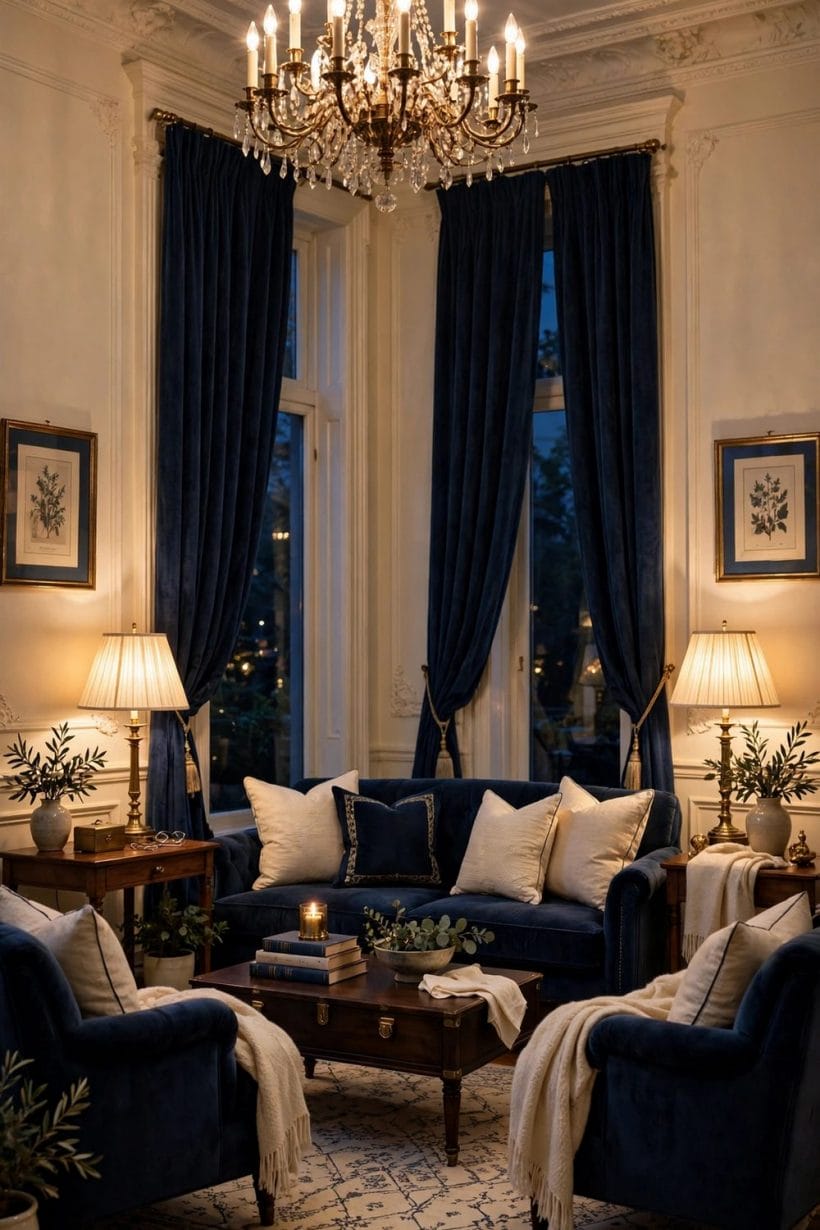
Idea 54: Style the coffee table in small groups
Group coffee-table objects in small clusters, a stack of books, a vase and one decorative piece, rather than lining them in a row or scattering them singly. Clusters read as compositions, leave breathing space between them, and give guests something pleasing to look at without cluttering the surface.
Idea 55: Keep one book stack, one vase, one object
One stack of handsome books, one vase of fresh flowers and one object with character is enough for most coffee tables, and the discipline keeps the table usable for cups and conversation. When a table is too full to serve its purpose, it has stopped being furniture and become a display shelf.
Idea 56: Leave empty space on every shelf
Bookshelves look formal when some shelves breathe, with gaps between groups of books and a few shelves holding a single vase or frame. Crammed shelves read as storage, while shelves with air read as curation, and the difference is simply the courage to leave space empty.
Idea 57: Hang art at eye level in a calm row
Art hung at eye level, in a straight row or a balanced pair, gives a formal wall its gallery composure, while art hung too high or scattered at random heights makes the wall feel unsettled. Measure by the centre of each piece rather than by its top edge, and the whole wall will sit right.
Idea 58: Use one large frame instead of many small ones
Over a sofa or a mantel, one generous framed piece usually serves a formal room better than a crowd of small frames competing for attention. The large piece gives the wall a single voice, the room a clear focal point, and the eye somewhere restful to land.
Idea 59: Add a mirror to bounce light around
A mirror opposite or beside a window doubles the daylight and the lamplight, brightens a shaded corner and makes the room feel larger without changing a wall. Choose a frame that matches the room’s formality, gilt or dark wood, and hang it where it reflects something beautiful rather than a blank wall.
Idea 60: Keep mantel dressing simple and symmetrical
A mantel dressed with a pair of candlesticks, a central vase or clock and little else honours the fireplace as the room’s centrepiece without turning it into a shelf. Symmetry on the mantel echoes the symmetry of the seating, and the whole room feels of a piece. The same restrained approach to walls and surfaces appears in interior design ideas, where calm walls let the furniture lead.
9. Make the Room Work for Guests
A formal room is judged by how it treats its guests. The best ones make visitors feel honoured without feeling watched, with seats that welcome, tables within reach and pathways that let a host serve with ease.
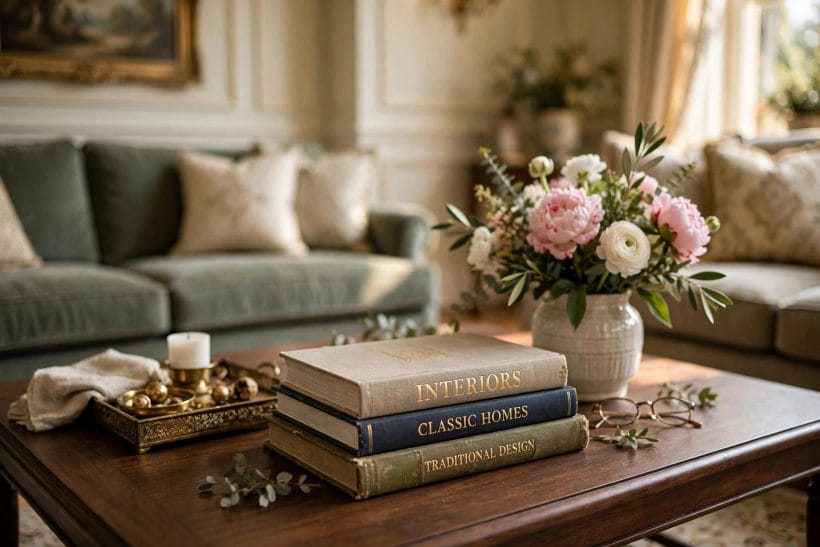
Idea 61: Seat guests in a circle of conversation
Arrange seating so guests can see one another’s faces without turning their heads, a loose circle or square rather than a row facing one direction. Conversation is the formal room’s true purpose, and an arrangement that favours it will always feel more hospitable than one that favours a wall.
Idea 62: Keep a tray ready for tea and coffee
A tray set with cups, a pot and a small plate of biscuits, kept ready on a sideboard or a low table, lets a host offer refreshment without a flurry of preparation. Guests feel expected rather than accommodated, and the tray itself, polished and orderly, suits the room’s manners.
Idea 63: Add a side chair that can move where needed
One light side chair, easy to lift and carry, lets a host add a seat to any gathering without dragging heavy furniture across the rug. Keep it near the seating group but not in it, ready to join the circle when an extra guest arrives.
Idea 64: Keep pathways clear for serving
A host carrying a tray needs a clear route from the door to every seat, so check the room as a server would, not only as a sitter. Move any stool, basket or plant that blocks the path, and the room will serve gatherings as gracefully as it serves quiet evenings.
Idea 65: Set a low table within every guest’s reach
Every guest deserves a place to set a cup down without leaning across a neighbour or balancing it on a knee, so audit the room seat by seat and add a small table wherever one is missing. This courtesy costs little and is remembered long after the visit ends.
Idea 66: Offer a soft throw on cooler evenings
A folded throw over a chair arm or in a basket by the fire tells guests they may stay as long as they like, whatever the evening turns into. Choose throws in the room’s palette, soft to the touch and easy to launder, and the gesture will feel generous rather than staged.
Idea 67: Keep the room tidy between gatherings
A formal room earns its reputation between visits, when cushions are plumped, tables cleared and flowers refreshed, so that the next guest walks into a room that looks prepared. Ten minutes of tidying after each use beats a frantic hour before guests arrive, and the room stays ready.
Idea 68: Let guests choose sun or shade seats
Some guests love a sunny window seat and others prefer the shade, so offer both within the same seating group where the room allows. Choice is the kindest form of hospitality, and a room that lets guests settle where they are comfortable will be the room they ask to return to.
10. Keep It Formal Without Making It Stiff
The final secret of a formal room is that it must still be lived in. A room too perfect to touch becomes a museum, while a room with a little softness, a little life and a little change keeps its formality warm.
Idea 69: Add one comfortable, sink-in chair
One deeply comfortable chair among tailored seating gives the room permission to relax, a place for long reads and longer talks. Its comfort does not undermine the formality; it proves the room was made for people, not for photographs.
Idea 70: Choose fabrics that forgive daily life
Formal rooms last longer when their fabrics forgive the odd spill, the muddy paw and the daily sitting, so favour materials that clean easily and wear gracefully. A room that fears its own household will slowly empty of life, while a forgiving room stays in daily use and keeps its polish.
Idea 71: Mix one modern lamp with classic furniture
One contemporary lamp among classic furniture stops a formal room from feeling frozen in time, a single fresh note that keeps the whole composition current. Keep the rest of the room traditional and the lamp will read as a confident accent rather than a contradiction.
Idea 72: Rotate flowers with the seasons
Fresh flowers changed with the seasons give a formal room its living heartbeat, a small, regular renewal that keeps the room from feeling static. Spring blossoms, summer roses, autumn foliage and winter evergreens each lend the room a different mood without changing a stick of furniture.
Idea 73: Keep a favourite book on the table
A well-loved book left open or stacked on the coffee table tells visitors that the room is read in, thought in and enjoyed, not merely kept. Choose something beautiful to look at and genuinely worth opening, and the room gains a personality no decoration can fake.
Idea 74: Let the room change slightly with the light
The same formal room is a different place at breakfast, at noon and by lamplight, and part of its pleasure is watching it change. Notice how the light moves across the rug and the walls through the day, and arrange seating and art to enjoy the room’s best hours rather than fighting them.
Idea 75: Review the room each season and edit one thing
Once a season, stand in the doorway and ask what the room no longer needs, then remove or move a single thing, a cushion, a vase, a chair that never gets used. Small, regular edits keep a formal room fresh and intentional, and they prevent the slow accumulation that turns elegance into clutter. Even tiny living rooms benefit from this seasonal edit, where one change can transform the whole space.
Final Considerations
Seventy-five ideas can feel like a great deal to hold at once, so begin with the structure and let the details follow. Settle the layout first, choose the sofa second, then build colour and lighting in layers, and the room will come together in the order its guests will experience it.
Above all, remember what these formal living room ideas are for: not a showpiece, but a gracious room where conversation comes easily, guests feel honoured and everyday evenings feel a little more special. Start with symmetry, keep the palette calm, layer the light, and edit as the seasons turn, and the room will reward you for years.


0 Comments