
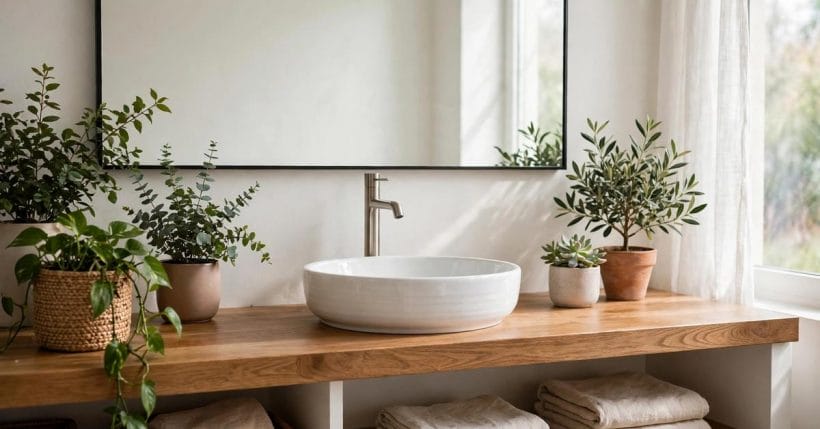
A vessel sink changes a bathroom by sitting in plain sight. Instead of dropping into the counter, the bowl rests on top of it, so its shape, its material and its height become part of the room itself. Choosing one is therefore less about hidden workings and more about form: what the bowl looks like from across the room, how it feels to stand at, and how it sits with the counter, the tap and the mirror around it.
This guide stays in that lane on purpose. It talks about form only, the shape of the bowl, the material it is made from, the height it adds above the counter, and the way it suits different rooms. It does not teach plumbing, and it does not walk through fitting or pipework. Anything that connects the sink to the water supply or the waste is work for a plumbing professional, and the guide returns to that point wherever fitting comes up, because a beautiful bowl fitted badly is no bargain at all.
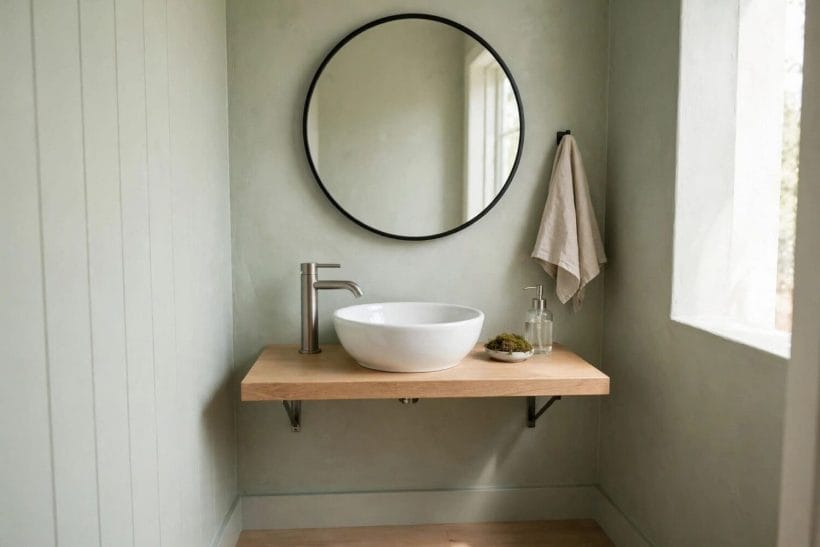
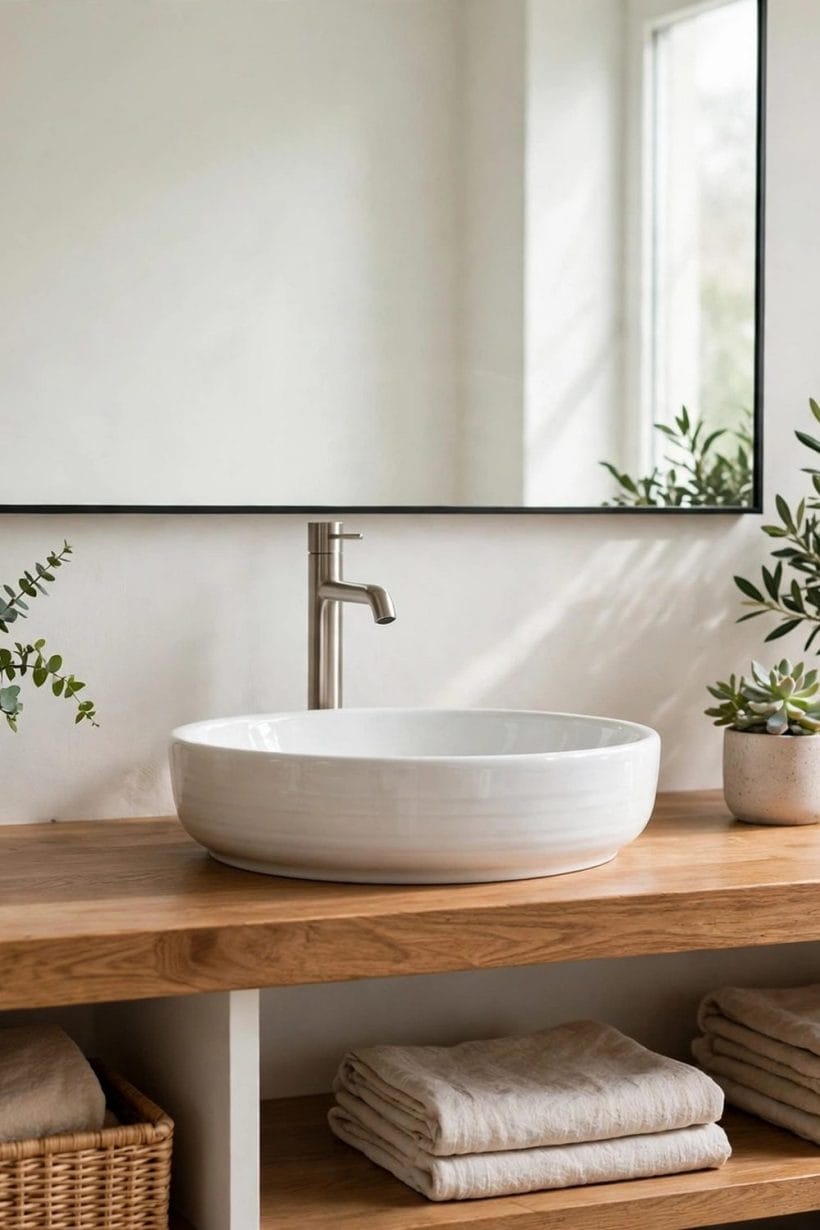
Start, then, with the room you already have. Look at the counter, the wall behind it, the mirror and the light, and picture a bowl sitting proud of the surface rather than sunk into it. The feature picture shows that idea at its calmest: a round white bowl on a warm wooden counter, with plants beside it and a large mirror above. If that picture feels right for your room, the sections that follow will help you narrow the form. If it feels too soft, too plain or too tall, the other forms below offer a different answer.
1. The Bowl That Sits on Top
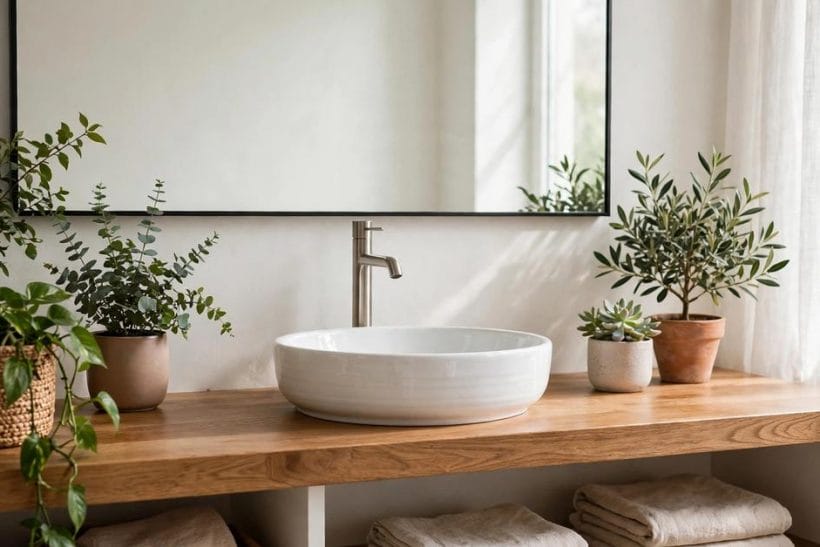
The first thing to settle in your mind is the silhouette. A vessel sink is a bowl first and a basin second, and its outline is what you notice when you walk into the room. A low, wide bowl reads as calm and generous. A taller, narrower bowl reads as sculptural and deliberate. Neither is right in every room, and the choice is worth making slowly, because the bowl will be the first thing the eye lands on at the counter.
Think of the bowl and the counter as a pair. A slim counter asks for a bowl that does not overwhelm it, while a long, generous counter can carry a wider bowl without looking crowded. The material of the counter matters to the eye as well: warm wood softens a white bowl, pale stone keeps a glass bowl feeling light, and a dark counter gives a stone bowl a quiet, grounded home. What matters is the pairing, not any single piece on its own.
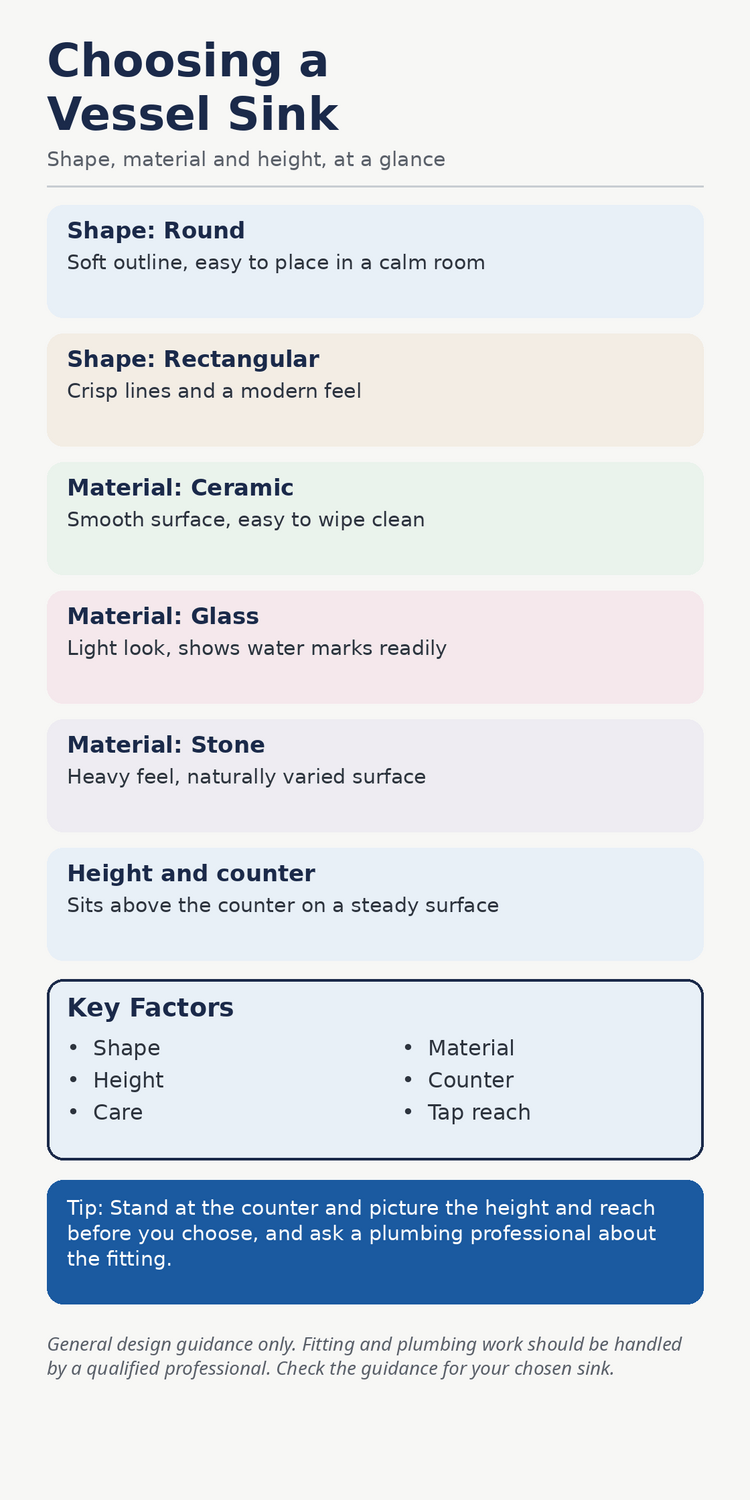
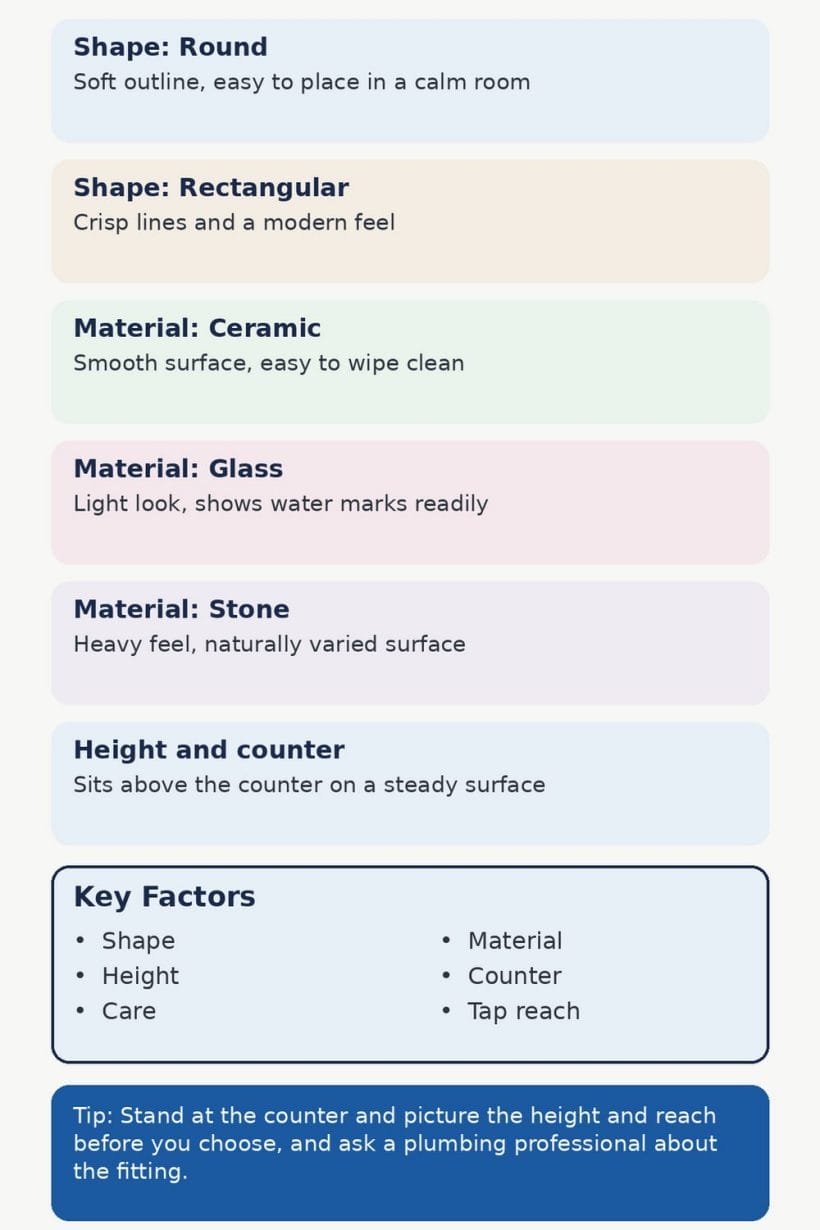
The summary below gathers the forms and materials in this guide at a glance, so you can compare them before reading on. Keep it beside you as you look at the rooms that follow, and notice which row you keep returning to. That pull, more than any rule, is often the best guide to the form that will suit your room for years.
2. Glass and Light
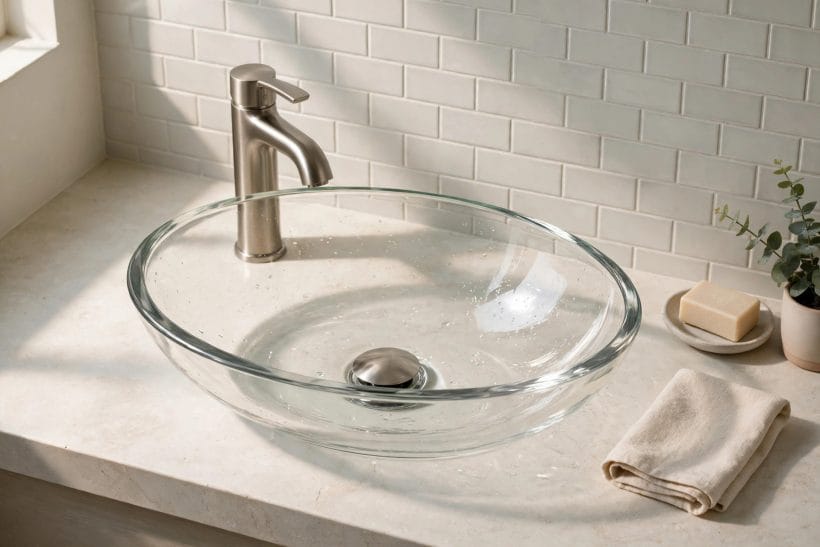
A glass vessel sink suits a bathroom that wants to feel light. Because the bowl is clear, the counter shows through it, and the room keeps an open, airy feeling even where the counter is modest. In a pale bathroom with white tiles and soft daylight, a glass bowl almost disappears, leaving the tap and the counter to carry the look. It is a good form where the room itself is the feature and the sink should not compete with it.
The trade-off is honesty about care. Glass shows water marks and soap traces readily, so a glass bowl asks for a quick wipe as part of the daily routine. If you enjoy that kind of tidy habit, the clarity repays it. If wiping the bowl every day sounds like a chore you will resent, a less revealing material may suit you better. Choosing a form means choosing its daily care as well, and it is better to know that now than after the bowl is in place.
3. Round Bowls and Calm Rooms
A round bowl is the gentlest form in this guide. Its outline has no corners to catch the eye, so it suits rooms that aim for calm: pale walls, soft towels, wood that has been left to look like wood. The feature bowl and the round bowls elsewhere in this guide all share that quality. They do not shout, and in a small or busy bathroom that quietness is a real virtue.
Round also forgives a slightly crowded counter. Because the bowl curves away at the sides, there is often a little more usable counter at the corners than a square bowl would leave, and a soap dish or a small plant can sit beside it without the counter feeling blocked. Picture your own counter with its everyday objects on it, and ask whether a curve or a corner would sit more happily among them. The answer tells you more than any catalogue description could.
4. Stone and Weight
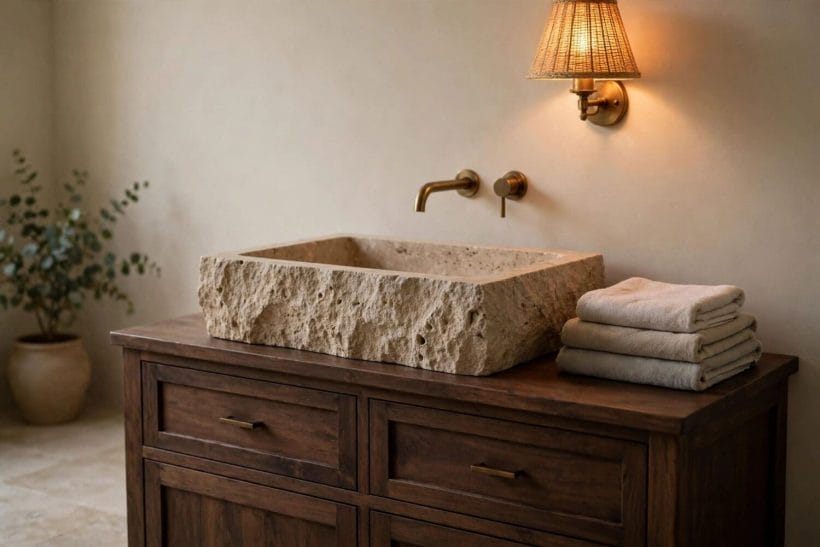
A stone vessel sink brings weight to a bathroom, in feeling as much as in fact. Its surface is naturally varied, with texture and tone that no two bowls share exactly, and it suits rooms that lean warm and earthy: dark wood, soft plaster walls, lamplight rather than bright daylight. Where a ceramic bowl feels crisp and a glass bowl feels light, a stone bowl feels grounded, and it anchors the whole counter.
That weight has a practical side, and it is one to discuss with a professional before you choose. A heavy bowl needs a counter that can carry it steadily, and the fitting needs to suit both the bowl and the counter beneath it. This guide does not describe how that fitting is done, because it is professional work, but it is worth raising early in any conversation about a stone bowl, so the counter and the bowl are chosen together rather than one after the other.
5. Metal and Warmth
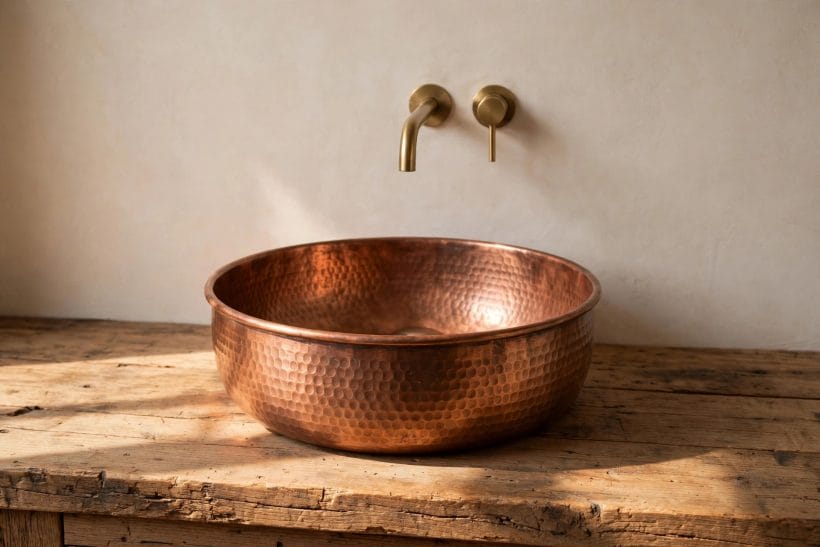
A metal vessel sink, in copper or a similar warm-toned metal, is the boldest form in this guide. Its hammered surface catches light in a way that smooth ceramic never does, and it gives a bathroom a focal point even before anything else is added. In a room with rustic wood and plain plaster, a copper bowl can carry the whole design, and the rest of the room can stay quiet around it.
Metal also changes with time, and that change is part of its character. Tones deepen and soften with use, so a metal bowl will not look exactly the same in a few years as it does on the day it arrives. Some people love that living quality. Others prefer a material that stays exactly as it was. There is no wrong answer, but it is worth deciding which kind of person you are before choosing a bowl whose surface is meant to evolve.
6. Small Rooms, Small Bowls
A small bathroom or powder room is where a vessel sink often earns its place. Because the bowl sits on the counter rather than inside it, a compact wall-mounted counter can carry a modest bowl without the bulk of a full vanity unit, and the room keeps floor space that a larger unit would take. The picture in this section shows that idea: a small white bowl on a slim wooden shelf, with a round mirror above and nothing else competing for attention.
In a small room, the mirror and the tap matter as much as the bowl. A round mirror echoes a round bowl and keeps the wall feeling open, while a tall, slim tap reaches over the bowl without crowding it. When you look at a small room, look at the whole wall as one composition, bowl, tap and mirror together, rather than judging the bowl on its own. If the three sit well together, the room will feel considered rather than cramped, and that feeling is worth more than any single feature.
For more on planning a compact wash space, the tiny bathroom ideas gallery shows how small rooms borrow light and storage without feeling squeezed, and the tiny house bathroom designs collection shows the same thinking in even tighter rooms.
7. Two Bowls on One Counter
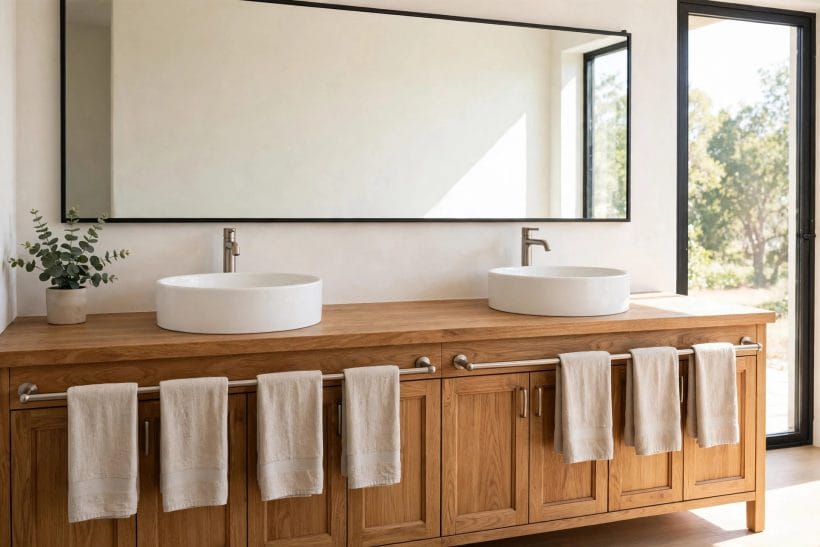
A long counter with two vessel bowls suits a shared bathroom, where two people use the room at the same time. The picture in this section shows the idea at its simplest: two matching round bowls on a long wooden vanity, each with its own tap, with towels hanging below. Matching bowls keep the wall calm, because the eye reads the pair as one rhythm rather than two competing features.
The question to ask here is about the space between the bowls. Each person needs comfortable room to stand and move, and the counter between the bowls should hold the everyday objects both people use without forcing them to reach across each other. Stand at your own counter, picture a second bowl beside the first, and notice whether the room still feels generous. If it does, a pair of vessels is a gracious choice. If it feels tight, a single wider bowl may serve the room better.
8. Height, Tap and Mirror
Height is the one practical form question every vessel buyer should picture carefully. Because the bowl sits above the counter, the rim sits higher than a sunk-in sink would, and the tap must reach over the rim comfortably while the mirror still sits at a useful height above it. These three, bowl, tap and mirror, are a set, and changing one changes the others.
The way to judge this is to stand at the counter and imagine it, rather than to measure it in the abstract. Picture washing your hands at a bowl that sits proud of the surface. Picture where your hands fall, where the water lands, and whether the mirror still shows your face at its centre. If any part of that picture feels awkward, the form may need adjusting, perhaps a lower bowl, a taller tap, or a mirror hung a little higher. Raise the whole picture with a plumbing professional before anything is fitted, because tap reach and fitting are professional questions, not guesses to make at home.
9. The Tiny House Corner
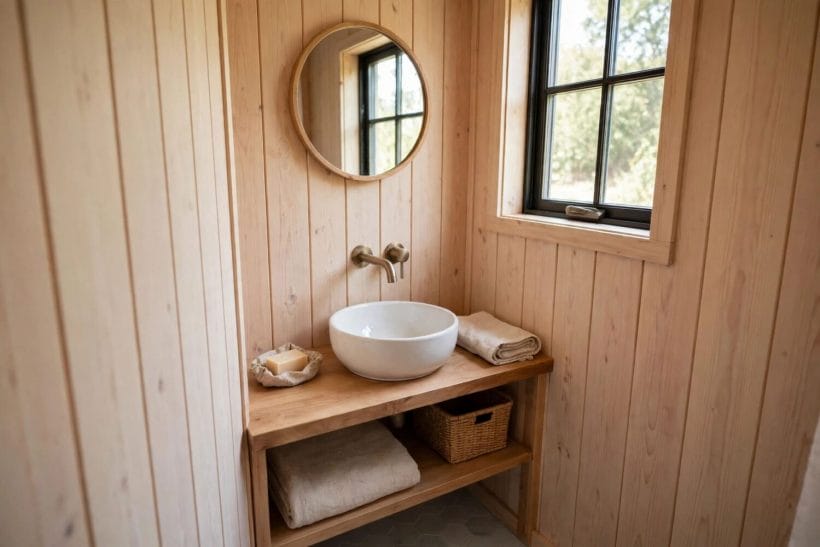
In a tiny house, a vessel sink can be a small luxury that does not cost floor space. The picture in this section shows a compact corner: light wood walls, a small window, a narrow counter, and a round white bowl that leaves room for a folded towel beside it. Nothing is grand, and nothing needs to be. The bowl simply makes a small wash corner feel finished rather than makeshift.
The lesson of a tiny house bathroom is restraint. One bowl, one tap, one mirror, each chosen to sit quietly with the wood around it, will serve the room better than a bolder form that fights the space. If your home is small, let the vessel be the quiet star of a small corner, and let the rest of the room stay simple around it. The tiny house designs gallery and the tiny house interiors collection both show that restraint in practice, room after room.
10. Living With the Choice
After form comes daily life, and it is worth picturing that life before you settle. A white ceramic bowl wipes clean easily and suits a busy household. A glass bowl rewards a tidy routine with clarity. A stone bowl asks for a steady counter and a professional conversation about its weight. A metal bowl offers warmth that deepens with time. Each form is easy to live with for the right household and a mild burden for the wrong one, and the difference is simply honesty about your own habits.
Care, in general terms, is gentle: wipe the bowl after use, keep harsh scouring away from softer surfaces, and follow the guidance that comes with your chosen bowl for anything more specific. If a stain, a mark or a fitting concern ever worries you, ask a professional rather than improvising a fix, because a bowl that sits on display deserves care that protects both the bowl and the counter beneath it. The floor and the surfaces around the counter matter too, and the tiny house flooring ideas gallery shows how floors and counters can be chosen to sit well together in a small home.
Finally, remember that a vessel sink is a visible choice, and visible choices age in public. A form you love at first sight but tire of quickly will stare back at you every morning, while a form you chose calmly, after picturing it in your own room, will keep pleasing you long after the novelty fades. Choose the bowl you would still like on an ordinary morning, not only on the day it arrives, and the rest of the room will follow. For broader room ideas beyond the wash corner, the contemporary home design ideas gallery is a good place to see how a single strong form can sit within a calm, modern home.
Final Considerations
Choose the form first: round for calm, rectangular for crispness, glass for light, ceramic for ease, stone for weight, metal for warmth. Then check the pairing, bowl with counter, tap with rim, mirror with height, and raise fitting with a plumbing professional before anything is fixed in place. A vessel sink chosen this way does not merely fill a counter. It gives the bathroom a centre, a shape to return to each day, and a quiet pleasure in a room that is used more than almost any other in the home.
If you take one thought from this guide, let it be this: the right vessel sink is not the most striking bowl you can find, but the bowl whose shape, material and height sit happily in your room, with your counter, your tap and your mirror, and whose daily care suits the household that will use it. Find that bowl, have it fitted professionally, and the bathroom will feel considered every time you walk into it.




0 Comments