
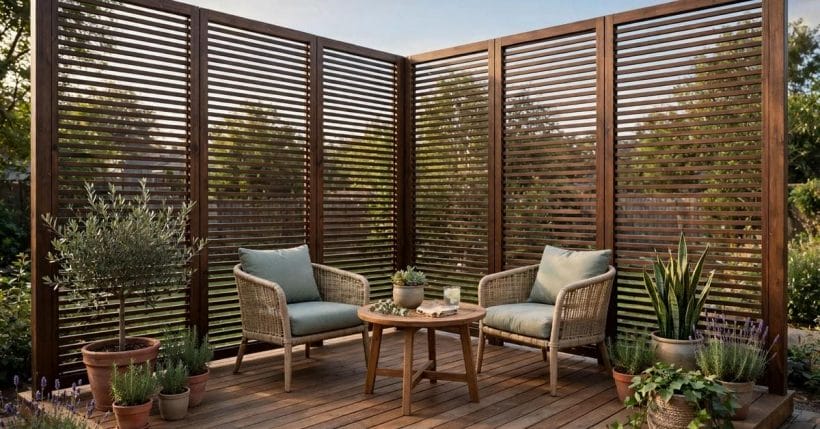
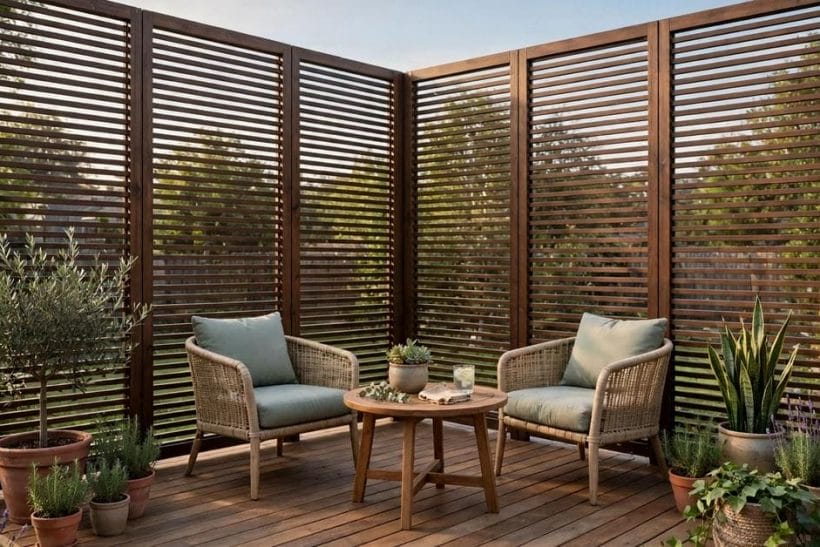
A deck without a roof can still feel like a room. The sky stays open above you, the breeze moves freely, and yet a ring of screens can soften the edges of the space, keep insects at bay, and give an ordinary deck a calmer, more settled feeling.
This guide explains how to screen in a deck with no roof, in plain terms: what screening can and cannot do when there is no roof overhead, the panel and door options worth comparing, and the practical checks that matter before any work begins.
1. What Screening Means When There Is No Roof
A screened porch is usually pictured with a roof, four walls of mesh, and a door that closes the whole space in. Take the roof away and the picture changes. The screens now guard the sides only, while the top stays open to sun, rain, and falling leaves. That single difference shapes every decision that follows, from the kind of mesh you choose to the furniture you place inside.
It helps to think of a roofless screened deck as a sheltered corner rather than an enclosed room. Insects are reduced rather than shut out entirely, because anything that can fly over the top of a screen can still drift down from above. Shade is partial rather than complete, and rain will still reach the boards. None of that makes the idea a poor one. It simply means the screens should be judged on what they genuinely add: fewer insects at seating height, less wind cutting across the chairs, a clearer sense of boundary, and a space that invites people to linger.
| Point to consider | What it means on a roofless deck |
|---|---|
| Screen coverage | Sides only, with the sky left open above |
| Insect relief | Noticeably less bother at seating height, not total exclusion |
| Weather shelter | Wind softened, rain and sun still reach the deck |
| Frame support | A frame that a professional has checked for the site |
| Daily use | An outdoor room that still behaves like the outdoors |
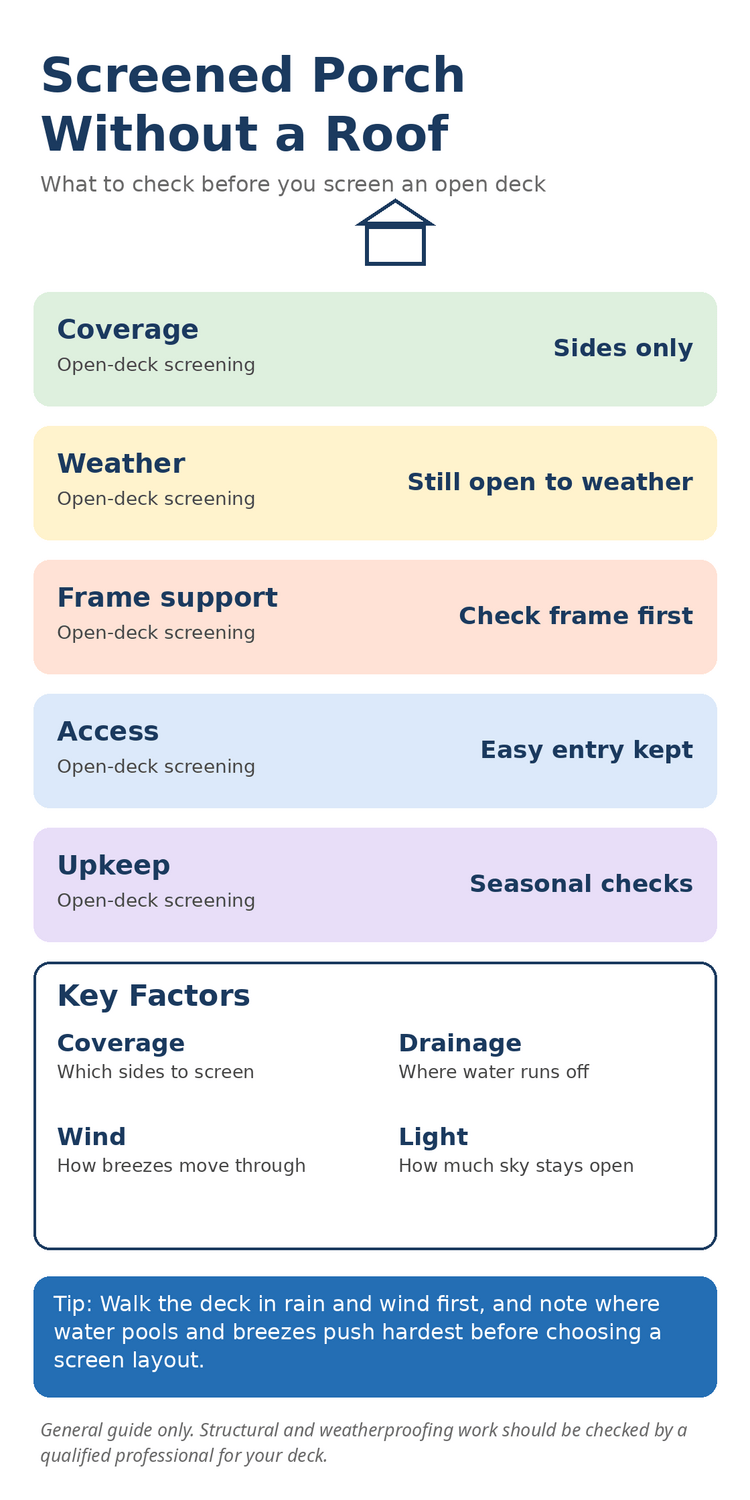
Before choosing anything, spend time on the deck itself at different hours. Notice where the sun falls in the afternoon, which side the wind comes from, and where people naturally sit. Those observations will tell you more than any catalogue, because every deck faces a slightly different mix of sun, breeze, and neighbouring views. A screen plan that follows how you actually use the space will always feel better than one copied from a picture.
It is also worth deciding early what the screens are for. If the main wish is calmer evenings with fewer insects, the plan will look one way. If privacy from a nearby path matters more, it will look another. If the goal is simply to make a wide, exposed deck feel cozier, the lightest touch may be enough. Naming the main wish keeps the project honest and stops it growing into something larger than the deck needs.
2. Fixed Screen Panels Along the Sides
Fixed panels are the simplest form of screening: mesh held in a frame along one or more sides of the deck, staying in place through the seasons. They suit decks where the seating area is settled and the sides that need screening are already clear. A fixed panel gives a clean, uninterrupted view through the mesh, and because nothing moves, there are no tracks to clean or sliders to stick.
The frame is the part that deserves the most attention. On a roofless deck there is no roof structure to tie into, so the frame must stand on its own supports, and those supports must suit the deck beneath them. This is work for a qualified professional to assess: the deck boards, the posts, and the way the frame meets the house all affect whether the result will stand steady through wind and weather. A frame that looks fine on a calm day can tell a different story in a storm, so this is not a detail to guess at.
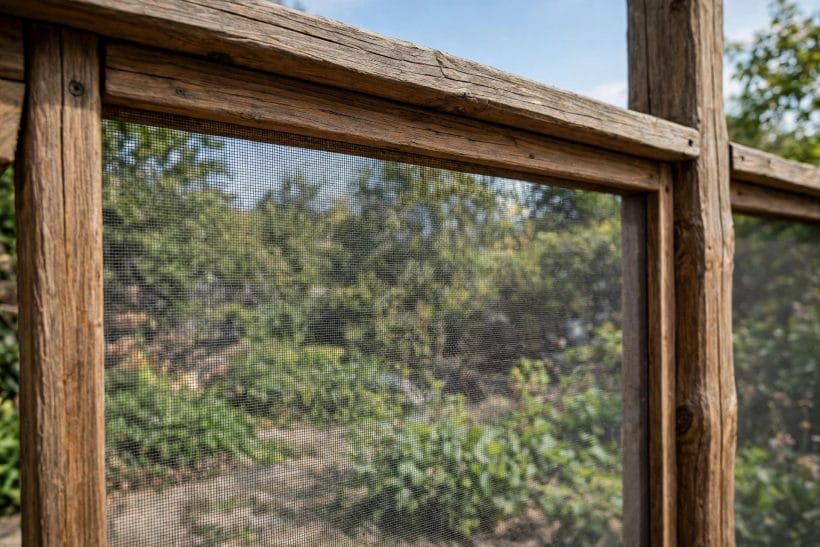
Mesh choice matters too, and it is worth looking at samples in daylight rather than choosing from a description. Finer mesh blocks smaller insects but dims the view slightly and catches more wind. Coarser mesh keeps the view bright and lets breezes through more freely, at the cost of letting the smallest insects pass. Neither is wrong. The right choice depends on whether insects or airflow bother you more, and on how exposed your deck is to the wind.
Colour plays a quiet role as well. Dark mesh tends to disappear against a garden background, so the eye looks through it rather than at it. Lighter mesh reads more clearly as a surface, which can suit a deck where the screens are meant to be seen as part of the design. Hold a sample against your own garden light before deciding, because mesh that looks subtle indoors can look very different in full sun.
Fixed panels also change how the deck feels in winter. They stay up through cold months, gathering leaves and weather, so plan for how they will be cleaned and checked when the season turns. A panel that can be reached safely for cleaning, without climbing or stretching, will be looked after far more often than one that cannot.
3. Retractable Screens for Flexible Days
Retractable screens roll down or slide across only when wanted, and disappear when they are not. They suit decks where the mood changes through the day: open to the garden in the morning, screened for a calm evening meal, open again when friends arrive. That flexibility is their main charm, and it is worth weighing honestly against their moving parts.
Because a retractable screen moves, it has tracks, rollers, and edges that need to stay clean and true. Leaves, grit, and garden debris can all find their way into a track, and a screen that sticks halfway is more annoying than no screen at all. If you choose this route, ask how the tracks are cleaned and what happens when a screen jams, and be realistic about whether that upkeep fits your habits.
Retractable screens also suit decks where only one side needs screening, or where a view is too good to cover permanently. A single retractable panel on the windward side, for example, can soften the breeze without closing the deck in. On other decks, two or three retractable panels can turn an open platform into a sheltered corner for an evening, then vanish again by morning.

There is a balance to strike with size. Very wide retractable screens can sag or billow in wind, and a screen that flaps loudly will not be used. Shorter runs tend to behave better, and a professional can advise on what spans suit your deck and its exposure. If a supplier promises a very wide screen for a very exposed deck, treat that promise with healthy scepticism and seek a second opinion.
For ideas on shaping the deck itself around seating and shade, the tiny house deck ideas collection shows how small outdoor spaces are arranged for daily living.
4. Screen Doors, Gates and Easy Access
A screened deck is only as good as its way in and out. Every screened side needs a sensible entry point, and the door or gate you choose will be used far more often than any other part of the screens. It should open easily, close firmly behind you, and stay shut in a breeze, or insects will simply follow you through.
Screen doors come in hinged and sliding forms, and the choice usually follows the deck layout. A hinged door suits a clear opening with room to swing, while a sliding door suits a tighter spot where a swinging door would hit furniture. Whichever form you choose, check the latch with your own hands. A latch that needs a firm tug will be left unlatched by children and guests, and an unlatched screen door is barely a door at all.
Gates deserve the same care. A garden gate in the screen line can double as the deck entrance, but it must meet the screen frame neatly, without gaps at the corners or beneath the bottom rail. Gaps are where insects enter and where draughts whistle, so walk the whole screen line slowly after installation and look for daylight showing through joints that should be closed.
Think about who uses the deck. A door that is heavy to open will frustrate older visitors and small children, while a door with a low threshold is kinder to everyone and easier to step through with a tray of food. These small comforts decide whether the screened deck becomes the favourite spot in the house or a space people avoid.
Access also matters for maintenance. Screens, frames, and tracks all need reaching for cleaning and repair, so a door placed for everyday coming and going should also give sensible access to the parts that need care. A screened deck that cannot be maintained will not stay pleasant for long.
5. Shade Without a Roof: Sails, Umbrellas and Planting
Screening the sides does nothing for the sun overhead, so shade needs its own plan. A shade sail can cover part of the seating area while leaving the rest of the sky open, and it has the advantage of being removable when the season changes. Umbrellas offer shade that moves with the chairs, which suits decks where seating shifts through the day. Planting, given time, gives the softest shade of all, as climbers and nearby trees filter the light rather than blocking it.
Each shade option carries its own cautions. A shade sail pulls on its fixing points whenever the wind rises, so those points must be assessed by a professional, just like the screen frame itself. An umbrella needs a base heavy enough for gusty days, or it becomes a hazard rather than a comfort. Planting needs patience and care, and climbers on a screen frame can add weight and trap moisture against the mesh if they are not kept in check.

The happiest shade plans mix approaches. A sail over the dining chairs, an umbrella that moves with the loungers, and a few well-placed planters can give a deck varied shade through the day without any single structure doing all the work. That variety also looks better, because a deck shaded in patches feels more like a garden and less like a covered box.
Watch how shade moves before committing. The sun that falls on the chairs at midday may be nowhere near them by late afternoon, and a sail fixed for one hour can be useless at another. A few days of noticing where the light actually lands will save you from fixing shade in the wrong place.
For broader porch inspiration, the tiny house porch ideas collection gathers seating, shade, and planting arrangements for compact outdoor spaces.
6. Rain, Drainage and Wet-Weather Checks
Rain is the great reality check for a roofless screened deck. Without a roof, rain falls straight onto the boards, and the screens do nothing to stop it. That is not a flaw in the plan, but it must be planned for, because a deck that stays wet will wear faster and feel less inviting.
Start by watching where water goes. After rain, look for puddles, damp patches that linger, and boards that stay dark long after the rest have dried. Those spots tell you where drainage is slow, and they are worth noting before screens go up, because screens can make damp corners harder to reach and slower to dry. A professional can advise whether boards, gaps, or the ground beneath need attention, and that advice is worth taking before the frame is fixed in place.
Furniture choice follows from the same thinking. Cushions that dry slowly will spend half the summer indoors, while quick-drying fabrics and furniture that can be wiped down will stay out and be used. Storage near the deck, even a simple bench box, makes it easy to tuck cushions away when rain is forecast, and that small habit protects both the furniture and the mood of the space.
Screens themselves need wet-weather care. Mesh that stays damp can stain and grow mildew, especially where leaves press against it. A regular rinse and a check for trapped debris will keep the mesh clear and the view bright. It is a small chore, but it is the difference between screens that look fresh for years and screens that look tired after one season.

Finally, think about what sits beneath the deck. Planting that thrives in damp shade will forgive a wet deck far better than planting that wants dry soil, so choose greenery that suits the conditions you actually have. Gardeners often find that a few hardy pots near the screen line do more for the space than a fussy bed that struggles.
7. Wind, Privacy and Neighbouring Views
Screens change how wind moves across a deck, and that change cuts both ways. On a breezy deck, screens soften the wind and make evenings noticeably calmer. On a still deck, the same screens can make the air feel heavy, because they slow the breeze that used to pass freely. The trick is to screen the sides that need it and leave the sides that carry the pleasant breeze more open.
Wind direction is not always what you expect. A deck that feels sheltered in the morning can catch a sharp evening breeze from a gap between houses, and a screen placed for privacy may turn out to be the one that blocks the wind best. Spend time on the deck in different weather before fixing the plan, and be ready to screen fewer sides than you first imagined.
Privacy is the other side of the same coin. Mesh softens a view without blocking it, so a screen gives a sense of seclusion while still letting you see the garden. If true privacy is the goal, mesh alone will not deliver it, and you may want to pair screens with planting or slatted panels on the side that faces the neighbours. That combination gives privacy where it matters and openness where it does not.
Neighbourly goodwill matters too. A tall screen wall can change how a neighbouring garden feels, especially if it blocks light or a valued view. A quick conversation before building, and a screen height that respects the shared boundary, will prevent far more trouble than any clever design detail. Good screens make good neighbours when they are planned with the street in mind.
For garden-side planning around decks and boundaries, the backyard landscaping ideas collection offers planting and layout approaches that sit well alongside screened spaces.
8. Furniture, Fabrics and Everyday Living
A screened deck earns its keep in daily life, not in photographs, so furniture should be chosen for how it is used. Deep lounge chairs invite long evenings, a dining table invites shared meals, and a small side table beside every seat means drinks and books always have a home. The screens set the mood, but the furniture decides whether people stay.
Fabrics deserve thought on a roofless deck, because they will meet rain, sun, and dust in a way indoor fabrics never do. Outdoor fabrics that dry quickly and resist fading will look better for longer, and covers that slip on easily will actually be used. Pale fabrics look lovely in pictures but show every mark from garden life, so weigh beauty against the reality of muddy paws, spilled drinks, and pollen.
Layout matters as much as the pieces themselves. Leave clear paths to the door, so nobody has to squeeze past chairs with a tray. Keep the dining area near the kitchen door if meals are the main use, and keep the lounging corner where the evening light falls if relaxation is the point. A screened deck that flows well will be used daily, while one that fights its users will sit empty.

Small comforts add up. A lantern or two for evenings, a throw for cool nights, and a few planters that soften the screen line can turn a practical space into a beloved one. None of these need to be grand. The best screened decks feel gathered rather than decorated, as if the furniture and plants arrived gradually and each earned its place.
For compact outdoor dining and seating ideas, the tiny dining room ideas collection shows how small tables and chairs can serve a household well without crowding the space.
9. Seasonal Care and Small Repairs
Screens repay regular care, and the work is mostly small. A gentle wash of the mesh, a wipe of the frames, and a check of the tracks and latches will catch most problems while they are still easy to fix. A torn corner of mesh, left alone, becomes a larger tear, while the same tear caught early can often be repaired simply.
Seasons each bring their own chores. Spring is the time to clear winter debris from tracks and check for damage from storms. Summer is the time to watch for mildew where leaves press against mesh. Autumn brings falling leaves that gather at the base of screens and hold damp against the frame. Winter is the time to check that fixings are still firm and that nothing has worked loose in the wind.
Keep a simple routine rather than an ambitious one. A quick look over the screens whenever you sweep the deck will catch far more than an annual deep clean, because problems are cheapest when they are small. Note what you find, even briefly, so that a recurring damp patch or a latch that keeps sticking gets attention instead of being forgotten.
Repairs to frames and fixings, like the original installation, belong with a professional when they involve structure or weatherproofing. Mesh patching and cleaning are everyday care, but anything that holds the screens up, keeps water out, or ties the frame to the house should be checked by someone qualified. That boundary keeps the deck safe and the screens standing.

Planting near screens needs the same regular eye. Climbers can be lovely against a screen frame, but they should be kept trimmed so they do not weigh on the mesh or trap moisture. Pots near the screen line should drain freely, so water does not pool against the frame. A little pruning and a little drainage care will keep both the plants and the screens happier.
10. When to Bring In a Professional
Some parts of a screening project are plainly professional work, and naming them early keeps the project safe. Any frame that stands without a roof to tie into, any fixing that must resist wind, and any change that affects how water drains from the deck should be assessed by a qualified professional. So should any work where the deck meets the house, because that junction carries both structure and weatherproofing.
A professional visit is also worth it when the deck itself is old, when boards feel soft or springy, or when you are unsure what lies beneath the surface. These are not reasons to abandon the project. They are reasons to get an honest assessment before spending on screens, because a screen frame is only as good as the deck it stands on.
When you brief a professional, describe how you use the deck and what you want the screens to do, rather than prescribing a solution. A good professional will ask about wind, drainage, and access, and will explain the options in plain terms. If the advice is unclear, or if it skips over drainage and wind entirely, seek a second opinion before proceeding.

Local rules may also apply. Some areas require permission for structures above a certain height, or set rules for how close a structure may sit to a boundary. Checking those rules early, through the proper local channels, avoids the frustration of building something that must later be changed. Rules vary by place, so treat general guidance as a prompt to check, never as a substitute for local advice.
For outdoor structures that sit near the house, the garden shed ideas collection shows how small buildings are placed with access, drainage, and boundaries in mind.
Final Considerations
A screened deck without a roof is a compromise, and like most compromises it works best when its limits are accepted gladly. The sky stays open, the rain still falls, and insects are reduced rather than banished. In return you get calmer evenings, a clearer sense of place, and a deck that invites people outside more often.
The wisest order of work is simple: watch the deck, name the main wish, screen the sides that need it, plan shade and drainage alongside the screens, and bring in a professional for the frame and any weatherproofing questions. That order keeps the project modest, honest, and suited to the deck you actually have.
Anyone wondering how to screen in a deck with no roof will find the answer is less about a single product and more about a set of choices made in the right order. Choose the sides with care, keep the door easy to use, let the breeze in where it pleases you, and leave the sky where it belongs: open above a deck that finally feels like a room, without ever pretending to be one.
For the wider outdoor picture, the tiny backyard ideas collection and the tiny house exterior ideas collection both show how decks, screens, and planting can sit together as one welcoming outdoor space.




0 Comments