

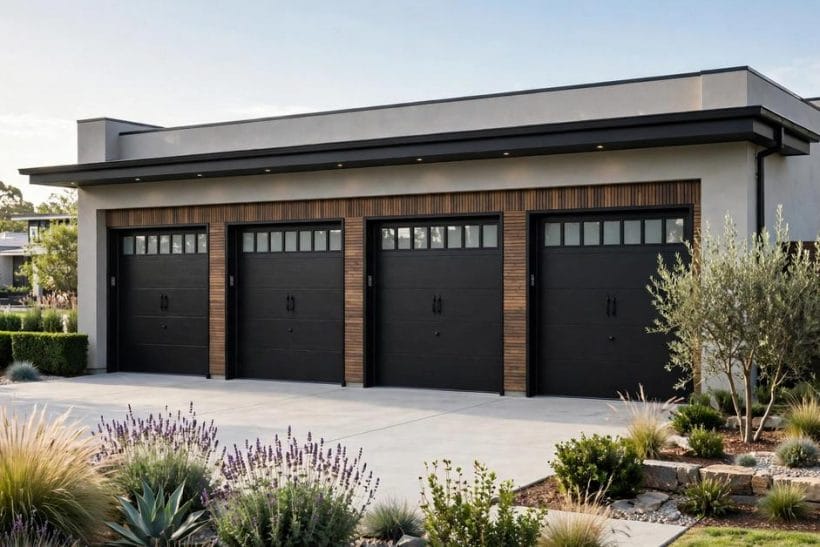
A four-bay garage can swallow four vehicles and still feel like wasted space, or it can work like a well-run outbuilding where every bay earns its keep. The difference is rarely size alone. It is layout, light, storage and habit, planned before the first car rolls in.
This guide gathers seventy-five practical ideas for a large garage, from door styles and colour schemes to workshop bays, wash corners and the daily habits that keep four bays tidy. Read it as a menu, pick the ideas that fit your household, and leave the rest.
1. Four-Bay Layouts
A large garage earns its keep when every bay has a job. The layouts below treat the space as four working places rather than one big empty room, so parking, storage and hobbies each get room without crowding the others.
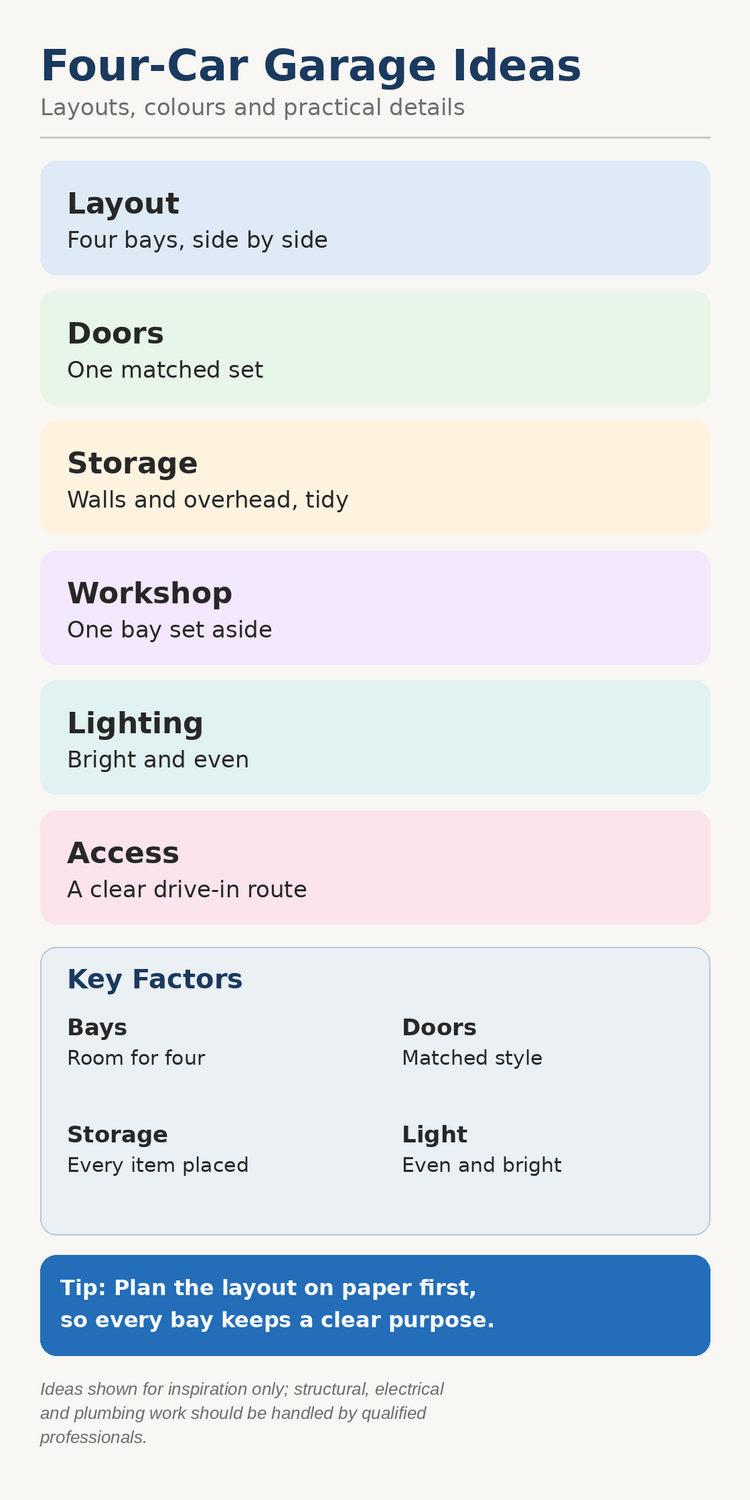
| Feature | Detail |
|---|---|
| Layout | Four bays, side by side |
| Doors | One matched set |
| Storage | Walls and overhead, tidy |
| Workshop | One bay set aside |
| Lighting | Bright and even |
| Access | A clear drive-in route |
Storage planning belongs with the layout, not after it, and these storage ideas for small homes show how wall and overhead storage can carry a whole household without crowding the bays.
1. Side-by-Side Bays
Four bays in a straight row give the simplest daily routine, with each vehicle having its own door and its own patch of floor. The straight row also keeps the view from the street calm and orderly, and it makes sweeping and tidying a straightforward job. Give each bay a small wall zone for the items that belong to that vehicle, so coats, chargers and cleaning cloths never drift into the next bay.
2. A Pair of Wide Bays
Two wide openings can serve four vehicles when each opening is shared by two cars parked side by side. This arrangement suits a household where two vehicles are used daily and two are used less often, because the everyday pair can sit nearest the doors. Keep the shared bays clearly marked with floor paint or mats so nobody blocks a neighbour out.
3. Two Plus Two Split
Splitting the garage into two pairs, with a wall or a storage spine between them, creates two quieter rooms inside one building. One pair can stay purely for parking while the other pair holds a workshop or hobby corner. The split also helps with heating, since a used corner can be warmed without warming the whole building.
4. A Bay for Each Driver
Assigning one bay per driver ends the daily shuffle of keys, seats and mirrors. Each driver keeps their own shelf, hook and charging point, and the family stops moving cars around just to free one vehicle. Label the bays lightly, with a small sign or a colour dot, so guests and younger drivers know where to park.
5. Daily Cars at the Front
Placing the most-used vehicles nearest the main doors saves steps on busy mornings. The less-used vehicles sit deeper in the building, where they can wait undisturbed for weekends or longer trips. This small habit also keeps the driveway clearer, because the daily cars leave first and return last.
6. A Visitor Bay
Keeping one bay free for visitors turns the garage into a welcoming place rather than a full one. Guests park under cover, out of rain and sun, and the household avoids the awkward dance of moving cars on arrival. The visitor bay can double as a project space between visits, provided it is cleared before guests arrive.
7. Tandem Parking Depth
Parking two vehicles nose to tail in a deep bay suits a long, narrow building where width is limited. The front vehicle should be the one used most, so the rear vehicle is rarely blocked in. Tandem bays need a clear agreement about who moves first, or the convenience quickly turns into a daily negotiation.
8. A Turning-Friendly Apron
A generous apron in front of the doors lets drivers swing in and out without reversing onto the street. The apron also gives space to wash a car, load luggage or let children play away from traffic. Keep the apron free of bins and planters, since anything stored there soon becomes an obstacle.
2. Door Styles and Frontages
Doors set the face of the building, and with four of them the choice matters more than usual. A matched set reads as one calm building, while mixed doors can look accidental, so the ideas here keep the frontage coherent.
9. Four Matched Doors
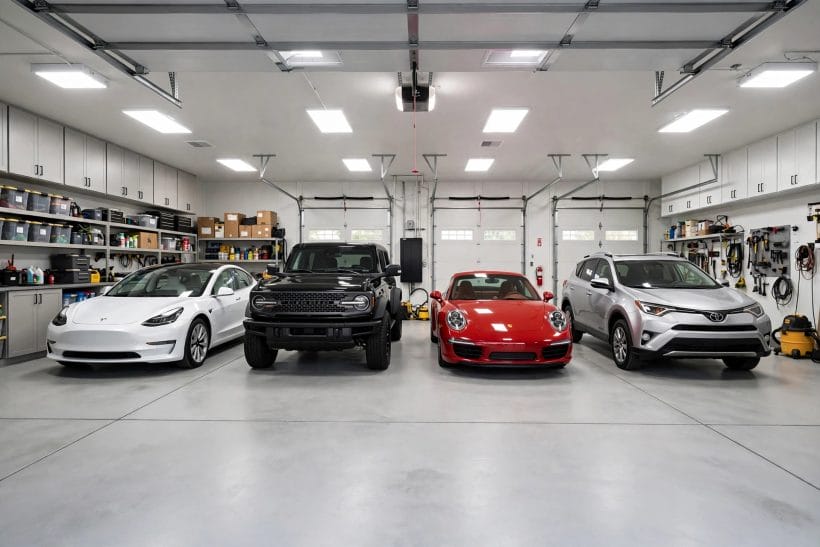
Four identical doors give the strongest, calmest frontage, and they suit almost any house style. Matching panels, windows and handles make the building read as a single piece of architecture rather than four separate sheds. When a door needs repair, matching it again keeps the set intact, so note the panel style and colour for future reference.
10. Two Wide Doors Instead
Two wide doors, each covering two bays, give a quieter frontage with fewer lines and fewer moving parts to maintain. Wide doors suit modern houses and long, low buildings, and they make backing out feel less boxed in. A qualified installer should fit and balance wide doors, since their weight and springs are not a casual job.
11. Glazed Top Panels
A row of glazed panels across the top of each door lets daylight into the garage without opening anything. The light makes the interior feel less like a cave and helps when searching for tools or luggage. Choose glazing that keeps prying eyes out, such as frosted or high-set panes, so daylight comes in while privacy stays.
12. Carriage-Style Doors
Carriage-style doors borrow the look of old stable doors, with cross-bracing and strap hinges, and they warm up a traditional house frontage. The style works best when the house already carries traditional details, so the garage echoes the main building rather than competing with it. Keep the hardware simple and sturdy, since decorative ironwork still has to survive daily use.
13. Modern Flat Panels
Flat, unadorned panels suit contemporary houses, where clean lines matter more than decoration. A smooth door in a muted colour lets the house itself do the talking, and the garage settles quietly beside it. Flat panels show dust and marks more readily, so a wash now and then keeps them looking sharp.
14. A Timber-Clad Frontage
Cladding the doors or the wall between them in timber softens a large building and ties it to fences, gates and garden structures. Timber needs regular care to keep its colour and resist weather, so choose a finish that can be refreshed without stripping the whole frontage. The warmth of timber pairs well with stone, brick or pale render on the house.
15. Doors in the House Colour
Painting the doors to match the house trim or shutters makes the garage feel like part of the home rather than an outbuilding. The trick is matching the trim exactly, not approximately, since a near-miss colour draws the eye more than a deliberate contrast. Carry a small sample of the trim colour when choosing paint, and test it in daylight.
16. Contrasting Doors as a Feature
A deliberate contrast, such as dark doors on a pale house, turns the garage into a design feature in its own right. Contrast works when it is bold and consistent across all four doors, so the building looks designed rather than mismatched. Keep the rest of the frontage quiet, letting the doors carry the statement alone.
3. Colour and Finish Combinations
Colour is the cheapest way to change how a large garage feels, inside and out. Pale walls open the interior up, dark doors ground the frontage, and a restrained palette keeps four bays from looking busy.
The outside of the building matters as much as the inside, and these exterior ideas for small homes show how a small home can carry a calm, coherent frontage too.
17. Pale Walls, Dark Doors
Pale interior walls bounce light around the garage, making it easier to find things and harder to miss a step or a spill. Dark doors on the outside ground the building and hide road dirt between washes. The pairing suits most houses and stays easy to live with, since neither colour dates quickly.
18. Warm White Throughout
A warm white scheme inside and out gives a large garage a clean, almost showroom feel. The warmth matters, since a cold white can feel clinical under electric light, while a warm white feels welcoming at any hour. Warm white also shows dirt honestly, which is useful, because a garage that shows dirt gets cleaned.
19. Soft Grey for Hard Work
Soft grey walls hide scuffs and tyre marks better than white, while still keeping the interior bright enough to work in. Grey pairs with almost any door colour and any floor finish, so it is a safe choice when the household cannot agree on a bolder scheme. Choose a mid-tone grey, since very dark grey can swallow light in a windowless bay.
20. A Single Accent Wall
One accent wall, perhaps behind a workbench or a seating corner, gives the garage a focal point without painting the whole building a strong colour. The accent can carry the household colour, a favourite shade or a tone picked up from the house. Keep the other walls pale, so the accent reads as a deliberate feature rather than a leftover tin of paint.
21. Brick and Render Mix
Mixing brick piers with rendered panels breaks a long frontage into pleasing rhythms, so four doors do not read as one flat wall. The brick adds texture and weight, while render keeps the building light. Match the brick to the house or to a garden wall, so the garage belongs to the property rather than standing apart.
22. Natural Stone Piers
Stone piers between doors give a large garage a solid, crafted feel, and they weather gracefully with little attention. Stone suits rural and traditional houses especially well, where it echoes boundary walls and garden features. A qualified builder should handle stonework, since piers carry weight and must be built to last.
23. Timber Trim Details
Timber trim around doors, eaves and corners warms up an otherwise plain building for modest effort. The trim can be stained to match fences or gates, tying the whole front garden together. Keep timber details simple and chunky, since fussy mouldings look lost at garage scale and collect dirt.
24. Colour-Matched Gutters and Trim
Matching gutters, fascias and door frames in one colour gives the building a finished, considered look. The unity matters most on a wide frontage, where mismatched trims chop the building into strips. Choose a trim colour that already appears on the house, so the garage and home read as one property.
4. Storage Walls and Overhead Storage
Four vehicles leave less wall space than a smaller garage, so storage has to be planned rather than improvised. Walls, ceilings and the spaces between bays all carry their share, and everything earns its place.
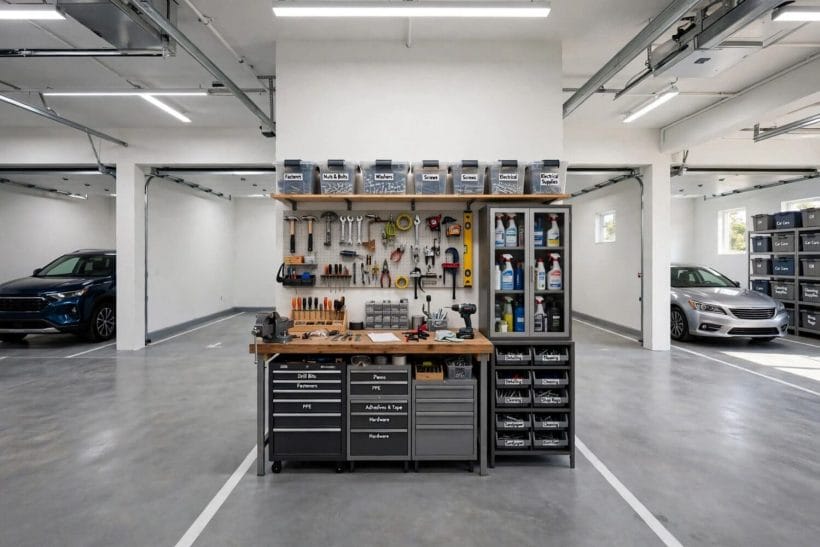
When wall space runs short, a separate outbuilding can take the overflow, and these garden shed ideas show how a shed earns its place beside a garage.
25. A Full Storage Wall
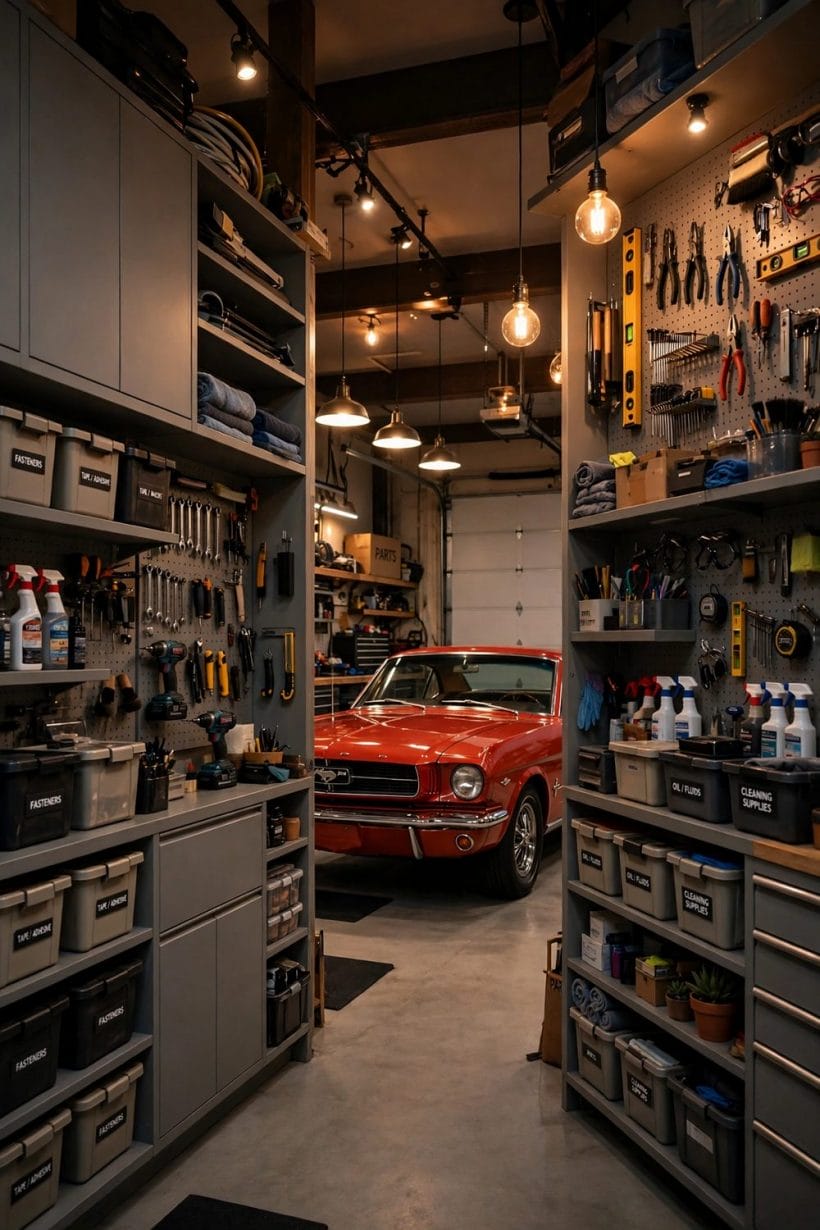
Dedicating one whole wall to storage, with cabinets, hooks and shelves from floor to ceiling, keeps the bays themselves clear for vehicles. The wall works best near the house door, where everyday items are grabbed on the way out. Group items by use, with garden tools together, car care together and sports gear together, so nothing hides behind something unrelated.
26. Overhead Racks for Seasonal Kit
Overhead racks lift seasonal items, such as festive decorations and camping gear, out of the way for most of the year. The racks suit light, bulky items rather than heavy boxes, and they should be fitted by a qualified installer who can fix into the structure safely. Label each bin clearly, so the right box comes down without emptying three others first.
27. Slat Walls for Flexibility
Slat walls accept hooks, baskets and shelves that can be moved as needs change, which suits a garage whose use shifts with the seasons. A slat wall behind a workbench holds tools in sight, while a slat wall by the house door holds coats and bags. The flexibility is the point, so leave some slats empty rather than filling every slot at once.
28. Cabinets That Hide the Clutter
Closed cabinets give a large garage its tidy look, hiding paint tins, cleaning products and oddments behind calm doors. Cabinets also keep dust off stored items and keep small hands away from things that should stay out of reach. Choose cabinets that can be wiped clean, since garage dust settles everywhere eventually.
29. A Bay-End Storage Nook
The dead space at the end of a bay, beyond a parked vehicle, makes a natural nook for tall items such as ladders and long-handled tools. The nook works only when it stays shallow, so nothing stored there blocks a door or a walkway. A simple upright rack keeps tall items from toppling onto a vehicle.
30. Labelled Bins for Every Bay
A set of labelled bins, one group per bay, stops the garage sliding into a single shared muddle. Each driver or each activity gets its own bins, and the labels mean anyone can put things away correctly. Clear bins show their contents at a glance, while solid bins look tidier, so choose by whether the garage is mostly working space or show space.
31. Sports and Leisure Lockers
Tall lockers give sports gear, helmets and outdoor clothing a home of their own, keeping muddy boots away from clean cars. Lockers with vents dry damp kit better than sealed boxes, which matters after wet weekends. Place lockers near the house door, so gear is grabbed on the way out and returned on the way in.
5. Workshop Bays
One bay set aside as a workshop turns a parking building into a genuinely useful outbuilding. The workshop bay needs light, power and a clear bench, and it needs boundaries, so work never creeps across all four bays.
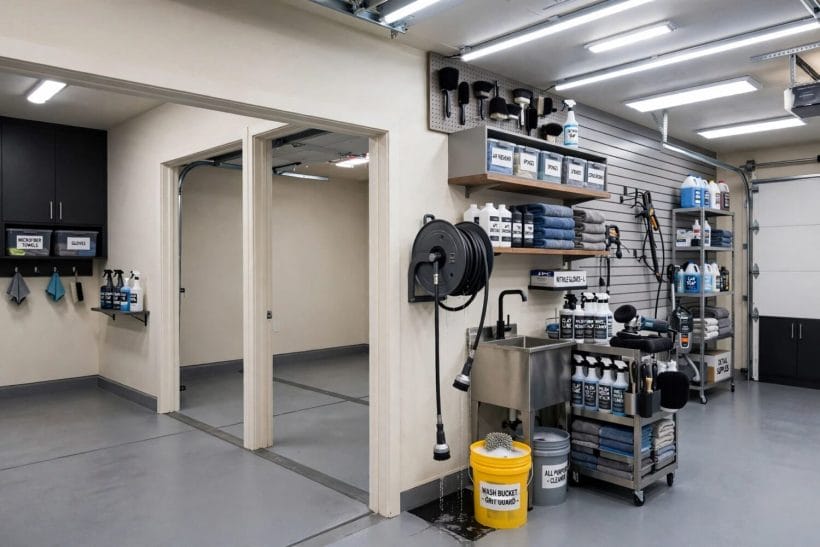
Workshop storage has cousins elsewhere in the garden, including these metal shed ideas, which suit tools and gear that live outside the main building.
32. A Bench Along One Wall
A sturdy bench along the workshop wall gives every job a home, from mending a chair to assembling flat-pack furniture. The bench should sit at a comfortable working height with light falling on it from above or beside, not from behind the worker. Keep the bench top clear between jobs, since a bench buried under clutter stops being a bench.
33. Tool Storage in Sight
Storing tools on a pegboard or an open rack keeps them visible and reachable, which means jobs start faster and tools return to their places. Outline each tool position on the board, so a missing tool shows as an empty silhouette rather than a vague feeling that something is gone. Sharp tools deserve guards and a height out of reach of children.
34. A Parts and Fixings Drawer Set
Small drawers for screws, bolts, plugs and fixings save endless trips to the shop mid-job. Sort fixings by size and type, label the drawers, and keep a small stock of the sizes used most. The drawer set earns its bench space many times over, since a job without the right fixing stops dead.
35. Dust Control Basics
Sawdust and sanding dust settle on vehicles, so a workshop bay needs a simple dust routine: sweep up after each job, keep dusty work near the door when weather allows, and cover nearby vehicles with a light sheet. A small vacuum kept in the workshop makes the routine quick enough to actually happen. Breathing protection belongs in the workshop for dusty jobs.
36. Power Points Where Work Happens
Power points placed along the bench wall and near the bay door mean extension leads rarely cross walkways. A qualified electrician should add any new points, since garage wiring must suit a damp, dusty outbuilding rather than a living room. Label the circuits lightly, so a tripped switch is found without hunting.
37. A Project Parking Rule
A simple rule, that a project may occupy the workshop bay but never the parking bays, protects the garage from slow takeover. Projects that outgrow the bay get finished, moved or stored, rather than colonising the next bay along. The rule sounds strict, but it is what keeps four vehicles parked and one bay working.
38. Good Light Over the Bench
Bright, even light over the bench prevents eye strain and mistakes, especially for fine work such as model-making or mending electronics. A mix of overhead light and a movable task lamp covers most jobs, since fixed light alone leaves shadows exactly where hands work. Any new lighting should be fitted by a qualified electrician.
6. Wash and Detailing Corners
A wash corner keeps car cleaning out of the driveway and out of the weather, and it protects the rest of the garage from water and spray. The corner needs drainage, storage for cleaning kit and a routine that keeps it tidy.
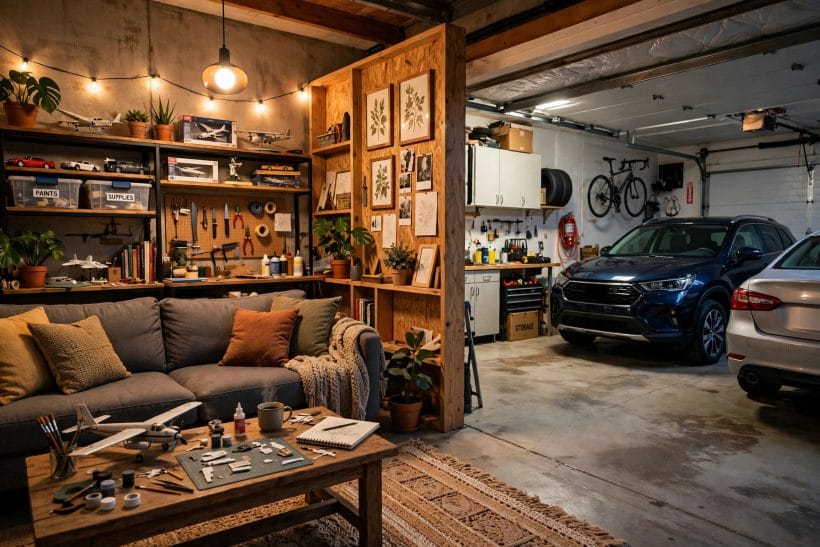
39. A Wash Bay with a Drain
A wash bay works when water has somewhere proper to go, so drainage and waterproofing should be planned by qualified professionals. The bay floor should slope gently toward its drain, and the walls nearby should resist splashes. Never let wash water run toward stored items or electrical points, and keep the drain clear of leaves and grit.
40. Detailing Kit on a Trolley
A small trolley holding wash mitts, cloths, brushes and bottles turns detailing into a ten-minute job rather than a treasure hunt. The trolley rolls to the vehicle being cleaned and rolls back to its corner afterwards, so kit never spreads across the bays. Restock the trolley after each wash, not before the next one.
41. A Drying and Polishing Spot
A sheltered spot for drying and polishing, away from dust and draughts, gives a better finish than a windy driveway. The spot needs good light, so swirls and missed patches show before the car leaves. A folding stool and a small side table make the job comfortable enough to do properly.
42. Mats That Catch Drips
Absorbent mats under a freshly washed vehicle catch drips before they spread across the floor. The mats also protect the floor finish from water marks and keep walkways dry for the next person through. Hang mats to dry after use, since a sodden mat left on the floor soon smells and stains.
43. A Hose Point That Reaches
A hose point placed centrally, with a hose long enough to reach every bay, saves dragging buckets across the garage. The hose should coil on a wall reel when not in use, so it never lies across a walkway as a trip hazard. Any new water point should be fitted by a qualified plumber, with proper backflow protection.
44. Cleaning Products Out of Reach
Cleaning products belong in a closed cabinet, high enough or locked enough to keep children and pets away from them. The cabinet should sit near the wash corner for convenience, but never where a spill could reach a drain or a vehicle. Keep product labels visible, and never decant products into unlabelled bottles.
45. A Weekly Wash Routine
A short weekly routine, one vehicle washed and dried properly, beats a rare marathon that cleans all four at once and exhausts everyone. Rotate through the vehicles so each gets attention in turn, and fold in small checks, such as tyre appearance and wiper condition, while washing. The routine keeps the fleet presentable without taking over weekends.
46. Protecting the Neighbouring Bays
Washing in a shared building means protecting the bays beside the wash corner with screens, mats or simple distance. Spray travels further than expected, so a light screen between bays saves neighbours from a film of droplets on a clean car. The courtesy is small and keeps four-vehicle households harmonious.
7. Hobby, Lounge and Guest Bays
With four bays to play with, one can serve life beyond parking. A lounge corner, a hobby bay or a guest room for a visiting vehicle all add value, provided parking still comes first.
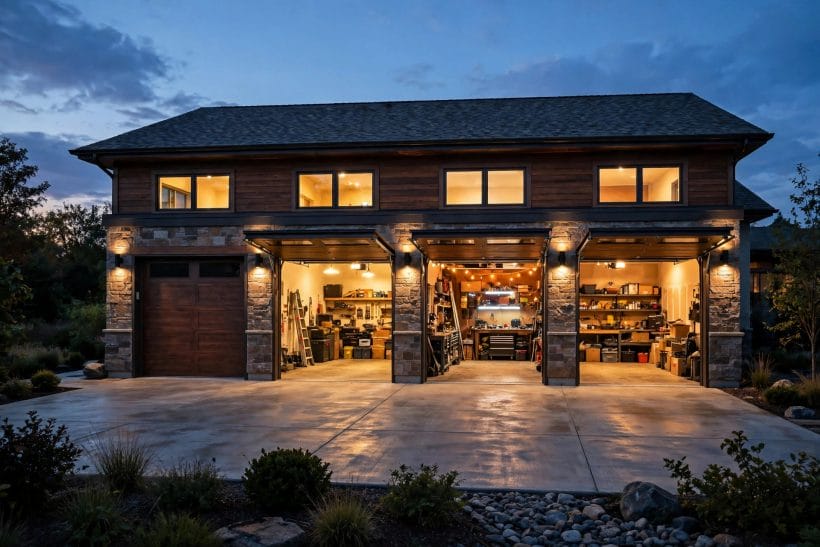
A garage lounge borrows its comfort from the house, and these small living room ideas show how a compact seating area can feel generous without taking much room.
47. A Lounge Corner by the Window
A small lounge corner, with a couple of chairs and a rug near a window, gives the garage a sociable side for watching a project or waiting out rain. The corner suits a bay that also holds a classic or weekend vehicle, so the seating overlooks something worth looking at. Keep soft furnishings washable, since garage dust and draughts are part of the setting.
48. A Hobby Bay for Making
A hobby bay, whether for modelling, painting or restoring furniture, benefits from the same bench, light and storage as a workshop bay, with more room for works in progress. The hobby bay should have its own storage, so half-finished pieces do not migrate onto parking bays. Good ventilation matters for paints and glues, so open a door or window while working.
49. A Guest Vehicle Bay
A bay kept for a guest vehicle, a borrowed car or a vehicle between owners, gives the household flexibility without permanent commitment. The bay can hold a project or seasonal storage between guests, provided it clears quickly when a guest vehicle arrives. A guest bay also suits households whose fleet changes with the seasons.
50. A Reading Nook in a Quiet Bay
A reading nook sounds unlikely in a garage, yet a quiet bay with a chair, a lamp and a bookshelf makes a peaceful retreat. The nook works best in a bay far from the workshop, where dust and noise rarely reach. A rug and a curtain across an open doorway soften the space and mark it as a room, not a leftover.
51. A Games Corner for Rainy Days
A games corner, with a table for board games or a dartboard on a clear wall, gives teenagers and visitors a place to gather without taking over the house. The corner needs a clear floor area and seating that can be stacked away when the bay returns to parking. Keep games in closed boxes, since garage dust settles on open boards quickly.
52. A Home Gym Bay
A home gym bay, with mats, weights and a bench, turns one bay into a daily-use room that justifies the whole building. Rubber mats protect the floor and deaden sound, while mirrors on one wall help with form. Heavy equipment should sit on a sound, level floor, and any structural changes need a qualified professional.
53. A Music Practice Bay
A music practice bay gives instruments a home where practice disturbs nobody in the house. The bay benefits from soft furnishings and rugs, which calm echoes, and from a lockable cabinet for instruments. Practice at reasonable hours keeps neighbours happy, since garage walls carry sound further than house walls.
8. Lighting, Floors and Everyday Comfort
Comfort in a large garage comes from light, floors and air, not from decoration. Get these right and every bay feels pleasant, safe and easy to use at any hour.
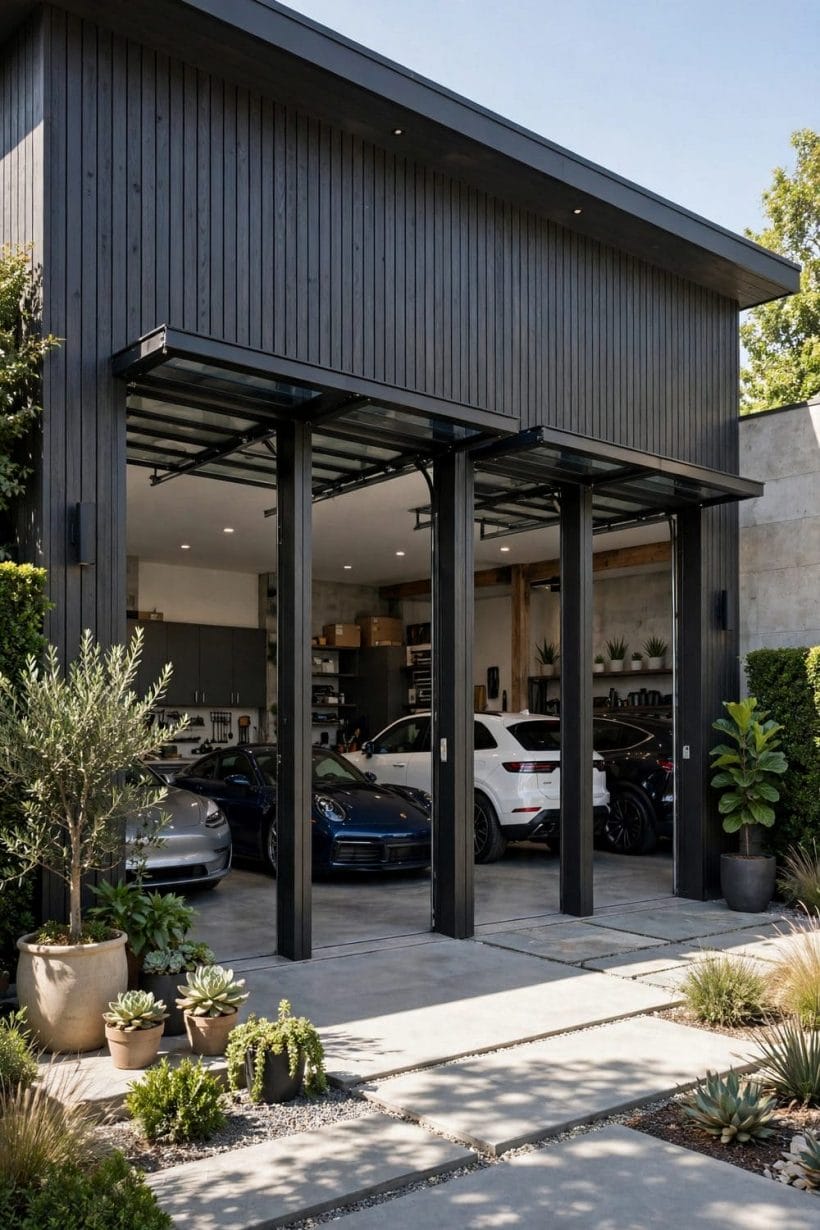
Comfort in a large outbuilding starts with structure and services, and these building design ideas for tiny houses cover the building choices that make a garage pleasant to use.
54. Bright Overhead Lighting
Bright overhead lighting across all four bays prevents the far corners from becoming gloomy caves. Even light matters more than dramatic light, so spread fittings across the ceiling rather than grouping them over one bay. A qualified electrician should fit new lighting, and motion sensors can switch lights on as drivers enter.
55. Task Lights Over Work Zones
Task lights over benches, wash corners and hobby areas give focused light where hands work, without lighting the whole building like a stadium. Adjustable arms let the light follow the job, from bench work to engine checks. Task lights pair well with dimmer overhead lighting for evenings, when full brightness feels harsh.
56. Windows for Daylight
Windows set high in the walls or in the doors bring daylight deep into the garage while keeping stored items out of sight. Daylight makes the building feel safer and more pleasant, and it cuts lighting use during the day. Windows should open for ventilation, since a sealed garage soon smells of fuel, paint and damp.
57. A Durable, Washable Floor
A durable floor finish, such as sealed concrete or interlocking tiles, resists oil, water and tyre wear while staying easy to sweep and mop. The finish should grip underfoot when wet, since garage floors get wet often. Choose a finish that can be repaired in patches, because a large floor will take knocks somewhere eventually.
58. Floor Colour That Hides Marks
A mid-tone floor colour, perhaps grey or warm tan, hides tyre marks and dust between cleans without looking dirty. Very pale floors show every mark, while very dark floors show every speck of dust, so the middle ground is the practical choice. A flecked or mottled finish hides marks better still.
59. Ventilation That Actually Works
Ventilation matters in a building that stores fuel, paint and damp gear, so vents or openable windows should sit high and low to move air through. A gentle through-draught keeps the air fresh without chilling the building in winter. Never run an engine inside a closed garage, since exhaust fumes build up dangerously fast.
60. Heating for the Used Bays
Heating only the bays that are used, such as a workshop or lounge corner, saves energy compared with heating all four bays. A small, safe heater suited to garage use, fitted and advised by qualified professionals, takes the chill off a working bay. Keep heaters clear of stored items, fuel and cloths at all times.
61. A Clear Walkway Through
A marked walkway from the house door to the far bay keeps pedestrians safe among four vehicles. The walkway can be painted, matted or simply kept clear by habit, but it must stay clear, since a blocked walkway forces people to squeeze between cars. Teach every driver the walkway route, and keep it free of bins, boxes and bikes.
9. Driveways, Approaches and Outdoor Links
A four-car garage needs an approach to match, or the building works well while the driveway frustrates everyone. The approach, planting and outdoor storage all shape how the garage serves the house.
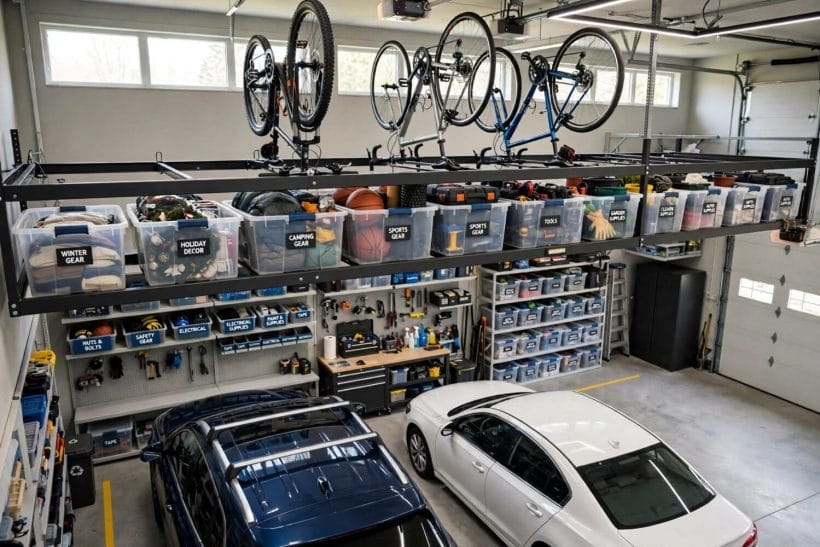
The approach to the garage is part of the design, and these backyard landscaping ideas show how the ground around a building can work as hard as the building itself.
62. A Driveway for Four
A driveway wide enough for four vehicles to enter and leave without shuffling makes the whole building work. The driveway should let at least one vehicle pass while another is parked, so departures never wait on arrivals. Keep the driveway surface even and well-drained, since puddles and ruts soon spread into the garage.
63. A Turning Circle or Hammerhead
A turning area in front of the garage lets drivers leave facing forward, which is safer than reversing onto a road. The turning area need not be grand, just wide enough for a comfortable swing, and it doubles as a wash and loading space. Keep it clear of parked vehicles, since a turning area full of cars is no turning area.
64. Planting That Softens the Frontage
Planting beside a wide garage frontage softens its scale, breaking a long wall into garden and building. Shrubs and small trees that may suit a sunny, dry spot near a driveway include lavender, rosemary and ornamental grasses, though local conditions vary and gardeners should check what thrives nearby. Keep planting clear of doors and sightlines, so growth never blocks access or views.
65. Outdoor Storage for Bins and Bikes
A small outdoor store for bins, bikes and garden tools keeps the garage bays for vehicles and workshop use. The store should sit near the house door for daily convenience, yet clear of the driveway swing. A tidy outdoor store also keeps the garage frontage calm, since bins lined up before four doors look untidy fast.
66. Lighting the Approach
Lights along the driveway and over each door make arrivals safe after dark and deter opportunistic visitors. Even, low-level lighting guides drivers without glaring into neighbours windows, and sensors switch lights on only when needed. A qualified electrician should fit outdoor lighting, with fittings suited to weather.
67. A Path from Garage to Garden
A path linking the garage to the garden turns the building into part of the property rather than a dead end. The path suits wheelbarrows, bins and garden tools, and it gives children a safe route that avoids the driveway. Keep the path level and clear, with a surface that stays grippy when wet.
68. Keeping Sightlines Clear
Clear sightlines from the garage doors to the road keep departures safe, especially where children play or pedestrians pass. Planting, fences and parked vehicles should stay low near the driveway mouth, so drivers see and are seen. Check sightlines from the driving seat, not just from the pavement, since the two views differ.
10. Keeping a Large Garage Tidy
A large garage invites accumulation, and four bays give clutter four places to hide. The habits below keep the building useful, so it never becomes an expensive store room that happens to hold cars.
69. A Place for Everything
The oldest tidiness rule works best at garage scale: every item has a named place, and anything without a place leaves the building. The rule needs a short annual review, when each shelf and bin is checked and anything unused is passed on. A garage that follows the rule stays usable, while one that ignores it slowly fills.
70. Seasonal Clear-Outs
A seasonal clear-out, perhaps each spring and autumn, keeps the garage matched to the year ahead. Winter gear goes overhead in spring, summer gear comes down, and broken or unused items leave. The clear-out takes an hour with four bays if it happens regularly, and a weekend if it has been left for years.
71. One In, One Out
A one-in, one-out rule for garage gear stops the building filling with every new hobby and tool. When a new item arrives, an old one leaves, whether by donation, sale or disposal through proper local routes. The rule is gentle, since it allows new things, but it keeps the total steady.
72. Children and the Garage
Children need clear garage rules: which bays are play-safe, which tools stay untouched, and where bikes and scooters live. A marked play corner, away from vehicles and tools, lets children enjoy the space safely. Teach children that a garage is a working building, not a playground, and that moving vehicles deserve a wide berth.
73. Pest and Damp Checks
A large garage, with its corners and stored boxes, suits pests and damp, so a quick check each season catches problems early. Look for droppings, nests, damp patches and musty smells, and act through proper local advice or qualified professionals where needed. Dry, sealed storage beats damp cardboard boxes every time.
74. A Shared Household Agreement
A short household agreement, covering who parks where, which bay is the workshop and what stays out of the bays, prevents most garage arguments. Write it down, keep it light, and review it when the household changes. The agreement matters most in four-vehicle households, where small frictions multiply across four bays.
75. The Annual Garage Day
An annual garage day, with the whole household sweeping, sorting and checking the building together, keeps the garage in good repair. The day covers floors, doors, lights, drains and storage, and it ends with the building clean and every bay in use. A shared day also reminds everyone what the garage holds, which stops duplicate purchases.
Final Considerations
A large garage succeeds when parking, storage, work and leisure each have a place, and none of them quietly takes over the others. Start with the layout, match the doors, plan storage before clutter arrives, and give one bay a second life as a workshop or hobby room.
For a household weighing up this kind of building, a car garage is best judged on daily use, not on showroom looks alone. Walk the layout in your mind on a busy morning, a wet weekend and a summer evening, and choose the ideas that still work in all three. Then keep the habits that protect the plan: a place for everything, a clear walkway, and a seasonal clear-out that stops four bays drifting into storage.
Structural, electrical, plumbing and gas work should always be handled by qualified professionals, and local rules should be checked before building or altering anything. With those safeguards in place, a four-bay garage can serve a household for years, holding vehicles, tools, hobbies and guests with room to spare.




0 Comments