

A tiny house gives a gift shop something big retail can never fake: intimacy. Every shelf is within reach, every object is seen up close, and the whole shop can be browsed in one slow, charmed loop. This guide designs that shop piece by piece — the concept, the displays, the light, the flow, the seasons and the sale.
Gift Shop Interior Design Ideas for Tiny Houses: At a Glance
The strongest gift shop interior design ideas start from one rule: the tiny sells the curated. A small shop wins by choosing few things and presenting them beautifully — slatted display walls that swap in minutes, a checkout nook that closes the sale warmly, light aimed at the featured piece, one browsing loop past everything. This guide follows the build in that order: the concept, the displays and the checkout, the lighting and the flow, the seasonal corner and the window, the scent, the music and the wrapping, the ten commandments, the local makers, the mistakes, the holiday rush — and the payoff and the shop’s long story.
| Topic | What It Covers | Key Fact or Figure |
|---|---|---|
| 1. The Tiny Retail Concept | Curation as the concept; the legal ground under it | The curated few outsell the cluttered many |
| 2. Display Walls & Checkout | Slatted walls, lit shelves and the small counter | The walls sell — the nook closes |
| 3. Lighting & Traffic Flow | Spotlighting the featured; the one-way loop | The flow browses — the tiny |
| 4. Seasonal Corner & Window | One rotated corner; the staged, lit window | The window invites — the passerby |
| 5. Scent, Music & Wrapping | Vanilla in the air, soft music, the free wrap | The senses sell — the gift |
| 6. The 10 Commandments | The ten rules of tiny gift shops, verbatim | 10 commandments |
| 7. The Local Makers | Consigned handmade stock; what sells best | The local sells — the authentic |
| 8. Mistakes & First Customer | Clutter, dim light, missing tags; the belled door | The first is the memory — the shop |
| 9. Holiday Rush & Planned Year | The December harvest; setup cost, slow seasons, cover | Setup: the $5,000–$20,000 — the fitted |
| 10. Payoff & Shop Story | Regulars, marketing, online — and the long cadence | The payoff is the community — the shop |
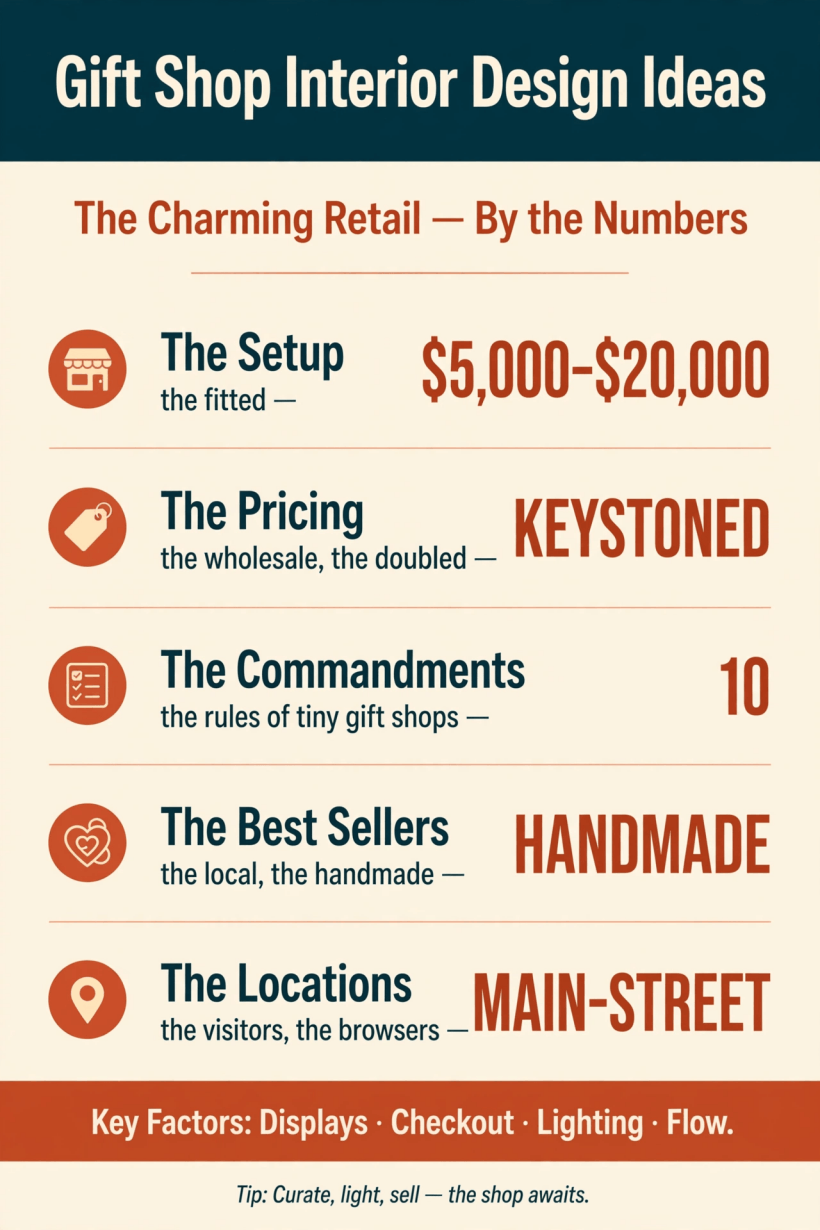
The gift shop by the numbers: setup $5,000–$20,000, keystone pricing, ten commandments, handmade best sellers, a main-street welcome.
1. The Tiny Retail Concept: Curated, Charming — and Legal
The concept is curation. The curated: the few — the loved. A tiny shop cannot stock everything, so it stocks the chosen: a short line of objects taken in at a glance. The charming: the browsed — the bought. Charm is not decoration here; it is the conversion mechanism — the feeling that makes a browser slow down and carry something to the counter. The rule underneath both: the tiny sells — the curated. The same logic runs through our guide to tiny commercial space interior design ideas, and each retail sibling curates its own niche — footwear in the shoe store interior design ideas for tiny houses.

Can you run a gift shop from a tiny house? Yes — the zoned, the permitted, the charming. The run is the legal: the business, the codes. A tiny house used as a shop is business premises to the local authority, so the ground is prepared first: the zoning, the registration, the signage rules. And do you need a permit for a tiny retail shop? The likely — the business, the zoning. The needed is the asked: the city, the current. Permits vary by place, so the question is answered by asking the authority that will enforce it, before money is spent on the fit-out. And where should that fit-out stand? The tourist, the main-street, the event. The best is the foot-trafficked: the visitors, the browsers.
2. The Display Walls and the Checkout Nook
The walls do the selling. The slatted: the hung — the swapped. Slatted display walls let hooks, pegs and small shelves move in minutes, so the wall can be re-dressed for a season, a holiday or a single featured maker. The shelved: the lit — the featured: fixed shelves carry the heroes under a spot, at eye level, with air around them. The rule: the walls sell — the tiny. How do you design a tiny retail space? The vertical, the lit, the flowed. The designed is the shopped: the displays, the loop. Height is the tiny shop’s extra floor: stock rises in clear tiers, the best pieces sit in the light, and nothing worth selling hides below knee level.
The checkout nook is where the browsing becomes a sale. The small-counter: the wrapped — the bagged. The counter stays small — just enough surface to wrap, bag and hand over warmly. The impulse: the beside — the added. Beside the till sits a tiny tray of small, giftable extras — the card, the candle — close enough to be added in the last ten seconds. The rule: the nook closes — the sale.
3. The Lighting and the Traffic Flow
Light is the shop’s second salesperson. The spotted: the featured — the glowed. Spotlights give the featured pieces a small stage; everything else sits in softer light so the heroes read instantly. The warm: the welcomed — the lingered. Warm light flatters wood, ceramic, paper and skin, and slows people down — a welcomed visitor lingers, and a lingering visitor browses twice. The rule: the light sells — the gift. There is no budget for flat, even lighting: contrast is what tells the eye where to go first.
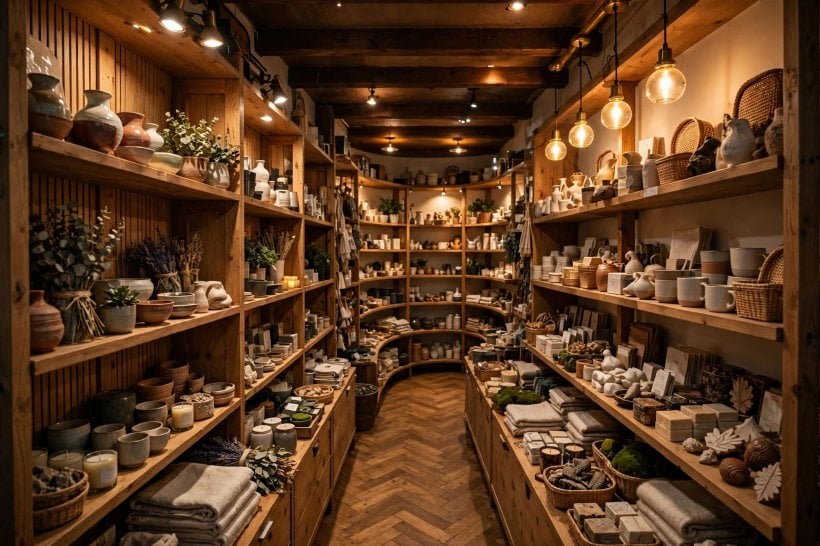
Flow is the choreography underneath the light. The loop: the guided — the browsed. The whole shop is arranged as one gentle loop — in the door, around the walls, and out through the checkout nook. The tiny-aisle: the one-way — the flowed. In a space this small, a one-way drift prevents two visitors shuffling in a gap built for one. The rule: the flow browses — the tiny. Nobody backtracks, squeezes or wonders where to go next; the loop answers every question before it is asked, and every display is seen by every visitor.
4. The Seasonal Corner and the Window Display
One corner of the shop is never finished. The rotated: the holidays — the fresh. The seasonal corner is re-dressed for every holiday and turning season, so the shop always holds something new for regulars. The tiny: the one-corner — the themed. Only one corner rotates: a whole shop changing at once confuses; one corner keeps it familiar and new at once. The rule: the seasonal returns — the customers. Retail deeper: our DIY-friendly tiny house plans and super-affordable tiny homes.
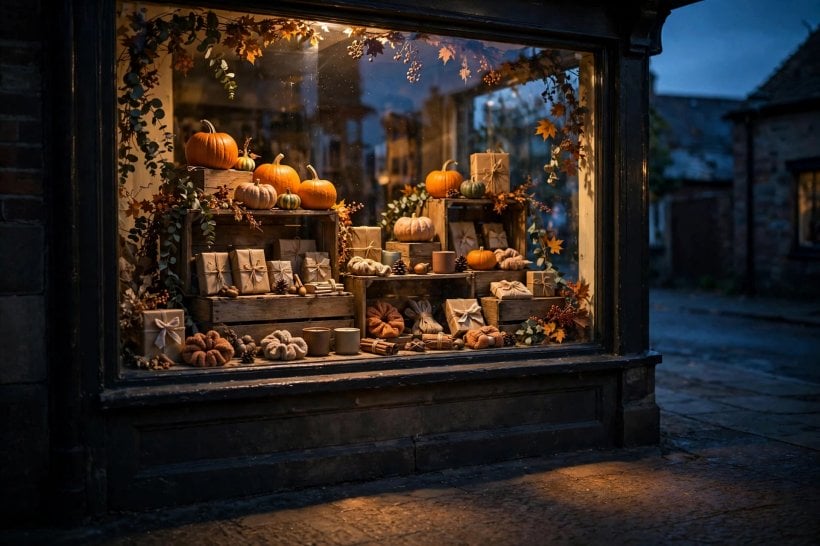
The window is the shop’s handshake with the street. The tiny-window: the staged — the stopped. A small window stages like a picture frame: one scene, few objects, one idea readable at walking pace. The lit: the evening — the glowed. After dark the lit window works alone, glowing on the pavement like a lantern. The truth: the window invites — the passerby. Most first visits begin as a stopped walk; the window’s whole job is to turn that stop into a step inside.
5. The Scent, the Music and the Wrapping Station
Two senses work quietly under the visuals. The diffused: the vanilla — the lingered. A soft, warm scent — vanilla is the original’s choice — settles and slows the visit; people stay where it smells like care. The played: the soft — the browsed-longer. Music stays low and gentle — a background texture, never a performance, so conversation at the counter never has to rise. The truth: the senses sell — the gift. Neither is noticed directly — that is how they work: the visitor feels the shop is pleasant, and pleasant opens wallets.

The wrapping station turns the purchase into a gift before their eyes. The tiny-counter: the papered — the ribboned. A stretch of counter holds the papers, ribbons, scissors and tags, so wrapping is a ceremony at the counter, not a scramble in a back room the shop lacks. The free-wrap: the offered — the remembered. Wrapping is offered free, every time — the cost is pennies, and the memory is the shop’s name carried into someone else’s home. The truth: the wrapping delights — the gifted. A wrapped gift advertises the shop at the moment of giving, in front of exactly the people likeliest to visit next.
6. The 10 Commandments of Tiny Gift Shops
Ten imperatives compress the whole design, reproduced exactly as the original lays them down:
- Curate the few.
- Light the featured.
- Flow the loop.
- Stage the window.
- Scent the air.
- Rotate the seasonal.
- Wrap the beautiful.
- Price the clear.
- Greet the warm.
- Sell the charming.

“Price the clear” carries the method. How do you price items in a tiny gift shop? The keystoned, the compared, the rounded. The priced is the math: the wholesale, the doubled. Keystone pricing — doubling the wholesale cost — is the tiny shop’s simple, survivable rule of thumb, compared with neighbouring shops and rounded to clean price points. Clear pricing matters as much as fair pricing: an item without a visible price is an item quietly unsold.
7. The Local Makers: What Sells, and Where It Comes From
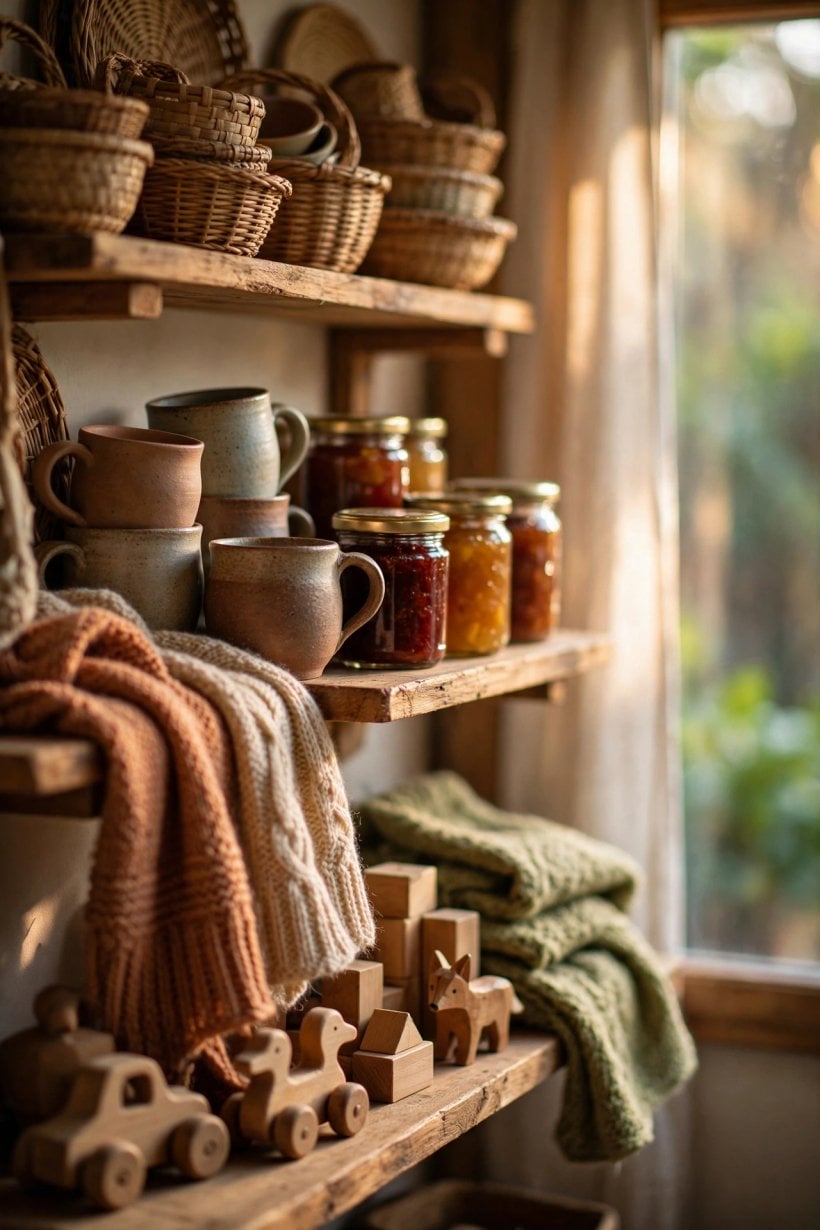
The consigned: the handmade — the storied. Local makers consign their work to the tiny shelves, and every piece arrives with a story — who made it, where, and from what. The tiny-shelves: the rotated — the fresh. Makers rotate through the shelves, so stock renews itself without buying depth the shop cannot store. The truth: the local sells — the authentic. What sells best in a tiny gift shop? The local, the handmade, the small. The sold is the curated: the unique, the giftable. Small, story-carrying, giftable objects are the natural stock for shelves, wrapping station and bag alike. The same craft logic runs through the commercial cluster — the tiny restaurant in our restaurant interior design ideas for tiny houses sells its makers’ work at the table too.
Supply is the quiet half of the makers’ model. How do you find wholesale suppliers for a tiny gift shop? The trade-shows, the Faire, the local. The found is the vetted: the terms, the minimums. Trade shows gather suppliers in one hall; wholesale marketplaces such as Faire put them online with terms a small shop can meet; and local makers are suppliers whose minimums are measured in dozens, not pallets. Vetting is the terms read carefully — minimum order, lead time, exclusivity — because a tiny shop’s cash lives in its stock, and the wrong minimum buys a year of one candle.
8. Gift Shop Mistakes to Avoid — and the First Customer
The mistakes are the commandments broken, and three cause nearly every failure. The cluttered: the overwhelming — the curated. A tiny shop stuffed to the ceiling reads as storage, not curation, and visitors leave faster than they entered. The dim: the missed — the lit. Flat, dim light hides the stock the shop exists to show. The priceless: the walked-away — the tagged. An untagged item makes the visitor choose between asking and leaving, and most choose leaving. The rule: the tiny forgives — the designed. Each is a design error, not a location error — fixed by returning to the walls, the light and the tags.
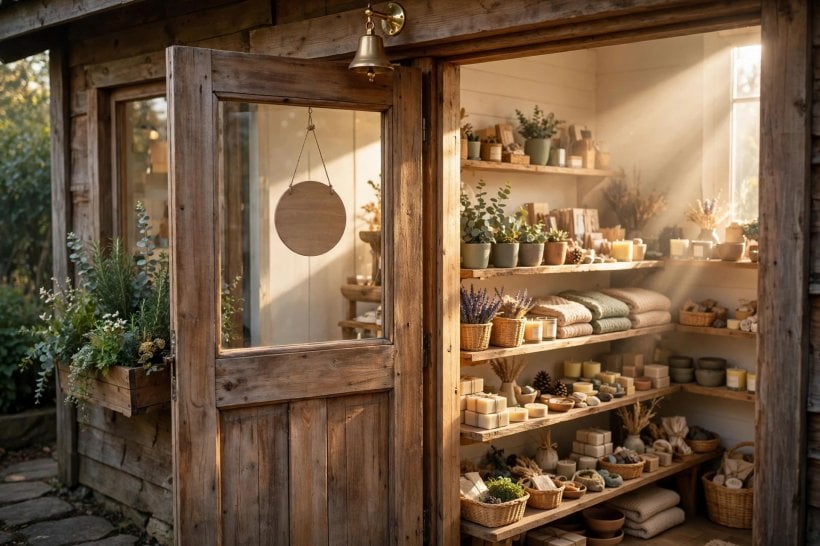
Against those mistakes stands the moment the design exists for. The belled-door: the entered — the browsed. The little bell over the door announces the first customer of the day — and of the shop’s life. The greeted: the warm — the helped. The greeting is warm and unhurried: help offered, space given, the loop left to work. The truth: the first is the memory — the shop. A first customer remembers the shop the way the shop remembers them; the design, the scent, the light and the greeting all cash out in that visit — and in whether it becomes a second.
9. The Holiday Rush and the Planned Year
The rush is the harvest the whole year grows toward. The stocked: the December — the wrapped. The shelves run deep, the wrapping station never stops, and the seasonal corner wears its biggest dress. The tiny: the bustling — the joyful. A tiny shop at full bustle is a joyful squeeze — the loop earns its design at its fullest. The truth: the rush is the harvest — the retail. How much does it cost to set up a tiny gift shop? The $5,000–$20,000 — the fitted. The cost is the budgeted: the buildout, the stock. That band is the founding number — fit-out and first stock — budgeted before it is spent.
How do you handle slow seasons in a tiny gift shop? The online-pushed, the events-hosted, the stocked-light. The handled is the planned: the cash, the calendar. Slow months push the online channel, host small events, and keep stock light. And what insurance does a tiny gift shop need? The liability, the inventory, the quoted. The needed is the covered: the agent, the policy. Liability cover for visitors in the loop, inventory cover for stock on the walls — quoted from an agent, in place before the door opens.
10. The Gift Shop Payoff and the Shop Story
The payoff is not a till total. The curated: the daily — the tiny. The sold: the always — the charming. The returned: the customers — the loyal. The truth: the payoff is the community — the shop. The invitation stands as the original leaves it: curate, light, sell — the shop awaits. Quiet days carry their own work: the Quiet Tuesday — the restocked, the dusted; the truth: the quiet is the work — the shop. And the Regulars are the business itself: the named — the greeted, the known; the truth: the regulars are the business — the shop. How do I market a tiny gift shop? The Instagrammed, the local-SEO, the events. The marketed is the seen: the social, the street. Should I sell online too? The yes — the photographed, the shipped. The online is the extended: the site, the sales. The same staged eye extends room by room in our room interior design ideas for tiny houses.
Then the long cadence: The Shop Story: the told — the years, the sold; the charming, the loved; the truth: the story is the shop — the always. The Last Word: the said — the curate, the sell; the done — the charming, the shop; the truth: the last word is the shop — the always. The Shop Blessing: the grateful — the sold, the tiny; the home — the retail, the loved; the truth: the blessing is the shop — the always. The Closed Sign: the flipped — the evening, the counted; the locked, the dreamed; the truth: the closed is the rest — the retail. The Always Shop: the kept — the curated, the years; the always, the charming; the truth: the always is the shop — the tiny. The Shop Grace: the moved — the daily, the sold; the lived — the always, the retail; the truth: the grace is the shop — the tiny. The Open Sign: the flipped — the morning, the welcomed; the lit, the invited; the truth: the open is the promise — the shop. The Morning Stock: the unboxed — the new, the priced; the staged, the sold; the truth: the morning is the fresh — the retail. The Tiny Sold: the bagged — the gift, the smiled; the rung-up, the thanked; the truth: the sold is the joy — the shop. The Retail Eternal: the kept — the shop, the years; the always, the charming; the truth: the retail is the eternal — the tiny. The Gifted: the wrapped — the given, the delighted; the remembered, the shop; the truth: the gifted is the purpose — the retail. The Last Sale: the rung — the final, the day; the closed, the counted; the truth: the sale ends — the shop dreams. The Charming Tiny: the small — the loved, the always; the retail — the forever, the gift; the truth: the charming is the tiny — the shop. The Shop Remains: the stood — the years, the main-street; the landmark, the loved; the truth: the shop ends — the story remains. The Tiny Charming: the small — the loved, the always; the sold — the forever, the gift; the truth: the charming is the tiny — the eternal.
Final Considerations
Gift shop interior design ideas for the tiny house are the retail made charming — the displays, the light, the sold. Design it well, sell it warmly daily.



1 Comment