
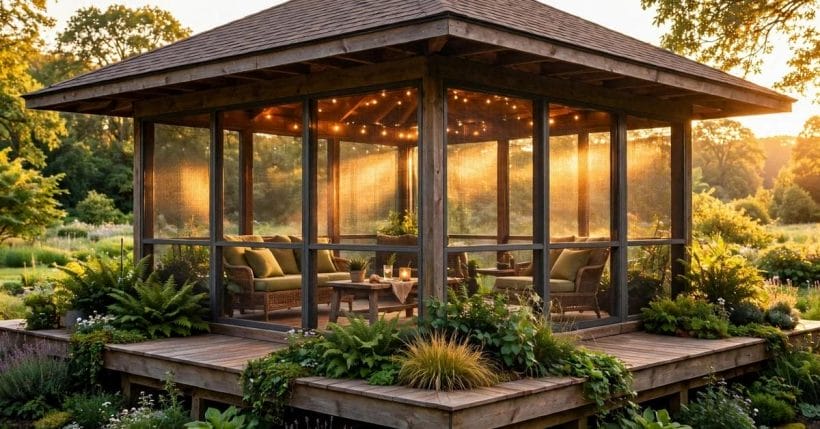
Evenings on a deck can end early. The light is still good, the air is still warm, and yet the chairs empty as insects arrive and the breeze turns cool. A screened room on the deck answers that moment directly, giving the outdoor hours a longer, calmer life.
This guide looks at one form only, the screened gazebo for deck living: what it is, how it sits on a deck, which screens, frames, colours and roofs suit it, and how to furnish and care for it. By the end you will know what to ask for, what to watch out for, and which choices matter most for your own deck.
1. What the Screened Form Is
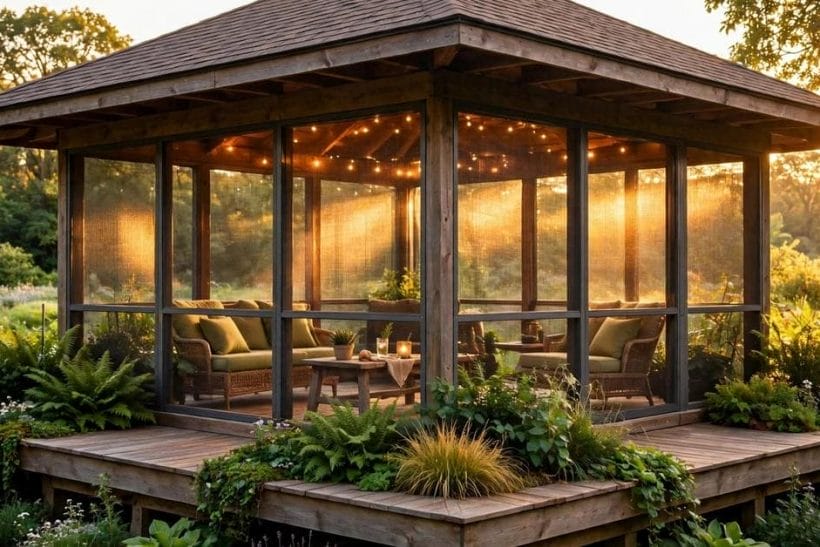
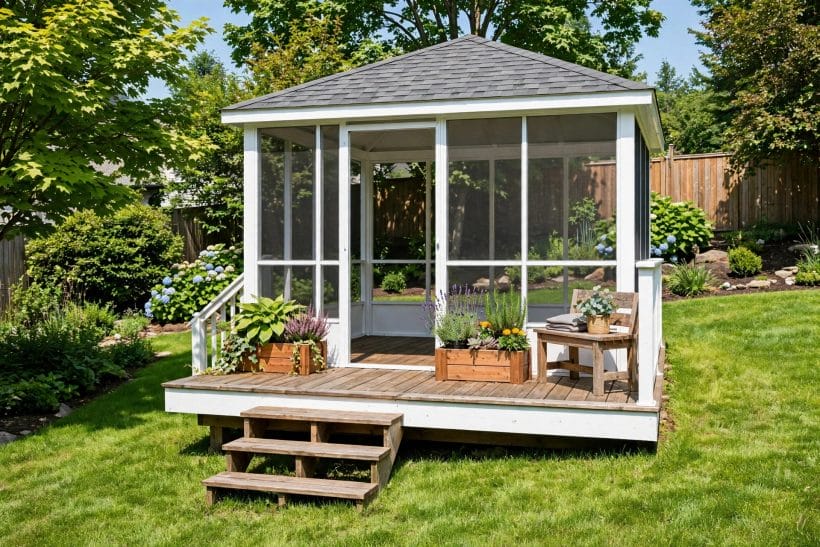
A screened gazebo is a roofed garden room whose walls are fine mesh rather than glass or solid boards. It stands on the deck, or beside it on its own footings, and it is used as an outdoor room through the milder months. The roof gives shade and shelter from light rain, while the mesh lets air move and keeps the view open. Insects are kept out far more effectively than on an open deck, though no screen can promise a completely insect-free evening, and a torn panel will undo the benefit until it is repaired.
The screened form is different from an open gazebo, which has no walls at all, and from a glass sunroom, which closes the space fully and behaves like an indoor room. The screened version sits between the two. It feels outdoors because the breeze passes through and the garden stays visible in every direction, yet it feels sheltered because the roof is overhead and the mesh softens wind and sun. That middle character is the whole point, and it is why the screened form deserves its own guide rather than sharing one with open gazebos.
| Point | At a glance |
|---|---|
| Form | Roofed room with mesh walls, set on a deck |
| Screens | Fine mesh panels with a screened door |
| Roof | Pitched cover with generous overhang |
| Deck fit | Deck-set or freestanding beside the deck |
| Best for | Long evenings, meals and quiet reading outdoors |
| Watch out for | Deck strength, drainage and door swing |
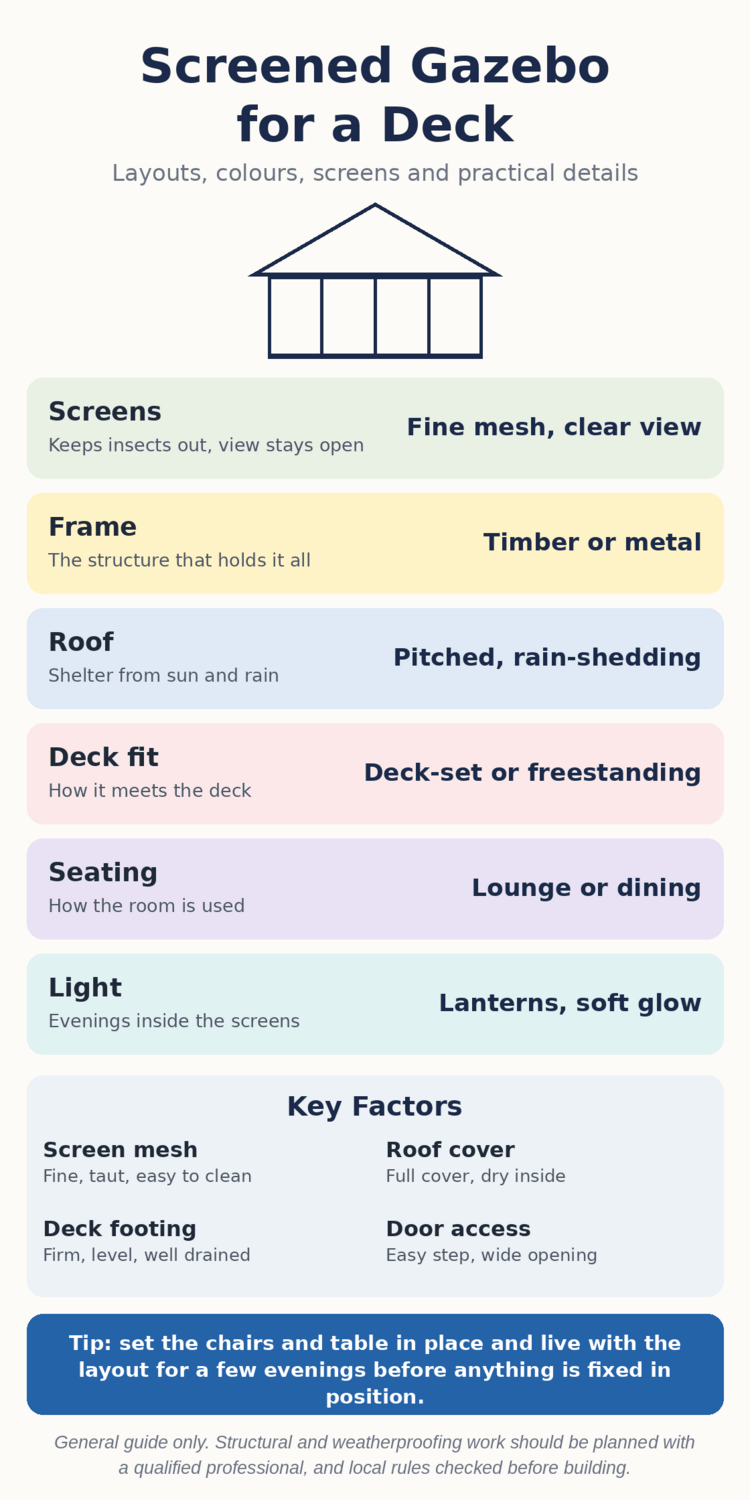
Before anything else, the deck itself deserves attention. A gazebo adds weight, wind load and foot traffic to one part of the deck, and older boards or fixings may not be equal to it. A qualified professional should check the deck structure, the footings and the way the gazebo will be fixed down, and any structural or weatherproofing work should be left to professionals. The rest of this guide covers the choices a homeowner can weigh up with confidence: layout, screens, colour, furniture and care.
For the deck beneath it all, see tiny house deck ideas, which covers deck layouts and outdoor furniture in general terms.
2. Deck-First Layouts
Start with the deck, not the gazebo. Walk the deck at the times you actually use it and notice where the sun falls, where the breeze comes from, which view you look toward, and where people naturally gather. The gazebo should sit where those answers point, not where the leftover space happens to be. A corner position often works well because it leaves the rest of the deck open for sunbathing, grilling and play, while still giving the screened room a view across the garden.
An edge position, with the gazebo along one side of the deck, suits long, narrow decks and keeps a clear path from the house door to the steps. A central position suits a generous deck that can spare the middle, turning the gazebo into the deck’s main room with open deck around it. Each arrangement changes how the deck feels, so it is worth marking the footprint with chairs and a table before committing, and living with that outline for a few evenings. If the path to the steps feels cramped, or the door of the gazebo swings into a chair, the layout needs adjusting while it is still only furniture on boards.
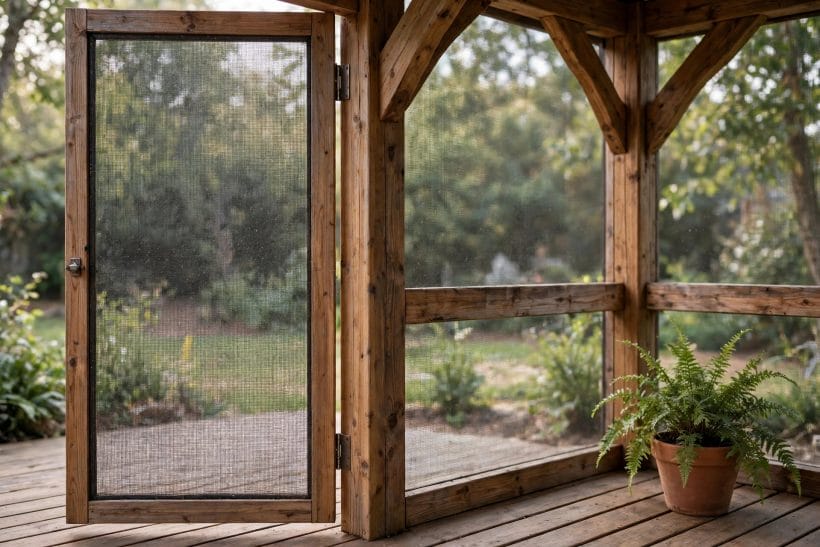
Door swing and step access matter more than they first appear. The screened door should open without hitting furniture, planters or the deck rail, and the step from the deck into the gazebo should feel easy in bare feet and in the dark. Where the gazebo stands beside the deck rather than on it, the join between the two surfaces needs care, so that nobody trips on a lip or a change of level. These are small details, but they decide whether the room is used daily or only on special occasions.
Think also about how the gazebo relates to the house. A gazebo close to the kitchen door makes carrying food and drinks easy and encourages everyday use. One at the far end of the deck feels more like a retreat, quieter and more separate, but further from the house in bad weather. Neither is right in itself. The right answer follows how you live, and it is worth being honest about whether you want a second dining room or a quiet corner.
3. Screen Choices and the View
The mesh is the most important material in the whole structure, and it is worth choosing with care. Finer mesh keeps out smaller insects and softens the breeze a little more, while more open mesh gives a clearer view and stronger airflow. Neither is simply better. A garden beside water or woodland may reward finer mesh, while a breezy, open garden may reward the clearer view. Ask to see samples in daylight and look through them toward a garden, not just at them in a showroom, because the view through the mesh is what you will live with.
Screen colour changes the view too. Dark mesh tends to disappear against the garden, so the eye passes through it and the garden feels closer. Light mesh is more visible and can catch the light, which suits some pale timber frames but can make the walls feel more present. The frame colour and the mesh colour should be judged together, in daylight, because the combination decides whether the walls read as almost nothing or as a definite enclosure.
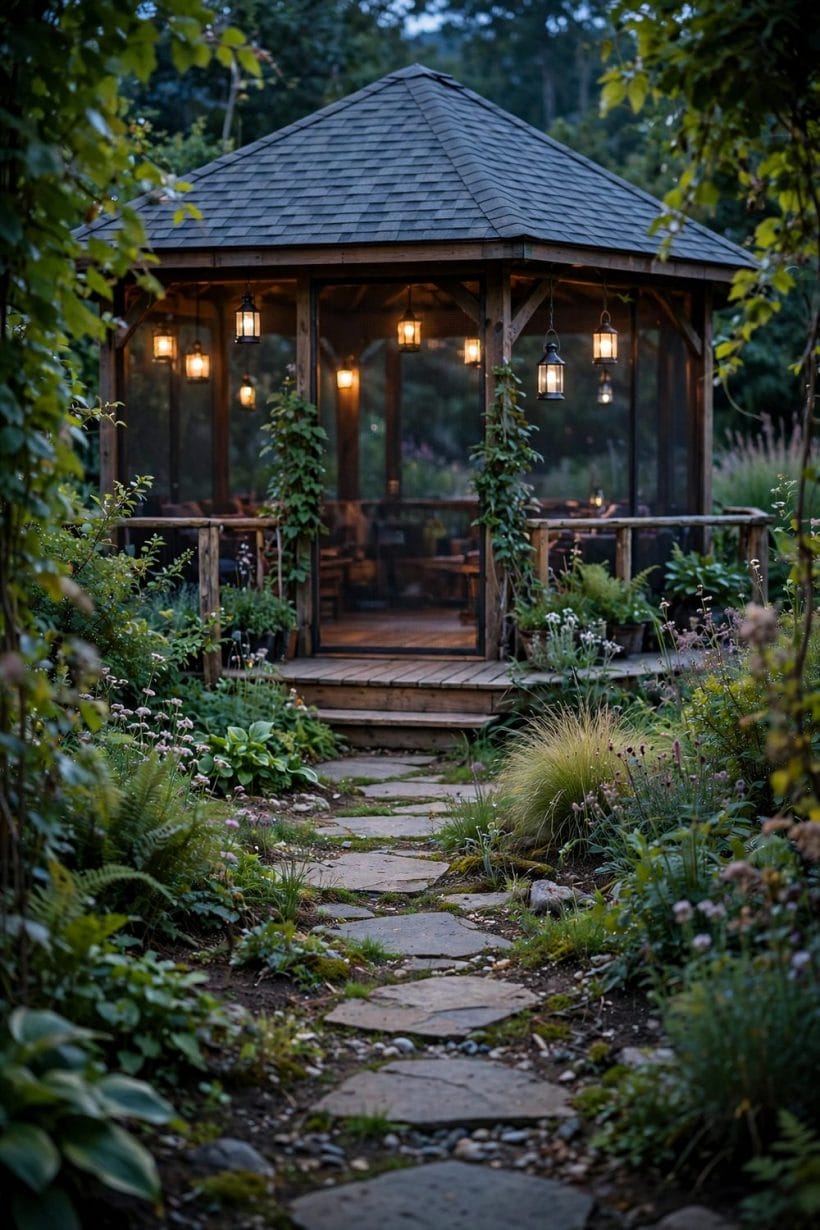
Doors deserve the same attention as the walls. A screened door should close firmly on its own, so that it is never left ajar by accident, and its latch should be easy to work with hands full of plates or a book. A second door, on the garden side, can be a blessing on a deck that leads to a lawn, saving the walk around the outside. Where pets or small children use the room, a sturdier lower panel on the door can save the mesh from claws and bumps, and a worn panel should be repaired promptly, since one tear lets in the very insects the screens exist to exclude.
For the related world of screened porches attached to the house, see tiny house porch ideas, which covers porch rooms and their furnishing in general terms.
4. Frames, Colours and Character
Timber frames bring warmth and a natural feel that suits wooden decks and planted gardens. They can be stained to match the deck or painted for contrast, and they age gracefully when they are cared for, softening in colour over time. Metal frames bring a slimmer profile and a crisper, more modern line, and they suit contemporary houses and pale, minimal decks. The choice is partly practical and partly a matter of taste, and it should be made alongside the house itself, not in isolation.
Colour is where a screened gazebo either settles into the garden or insists on attention. A frame that echoes the deck boards or the house trim tends to look settled and calm, while a contrasting colour turns the gazebo into a feature. Dark frames, such as deep green, charcoal or dark bronze, recede against planting and make the mesh seem to vanish, which suits a gazebo meant to feel like part of the garden. Pale frames, such as white, cream or soft grey, stand out against green and give a bright, classic feel, especially with pale cushions and light furniture inside.
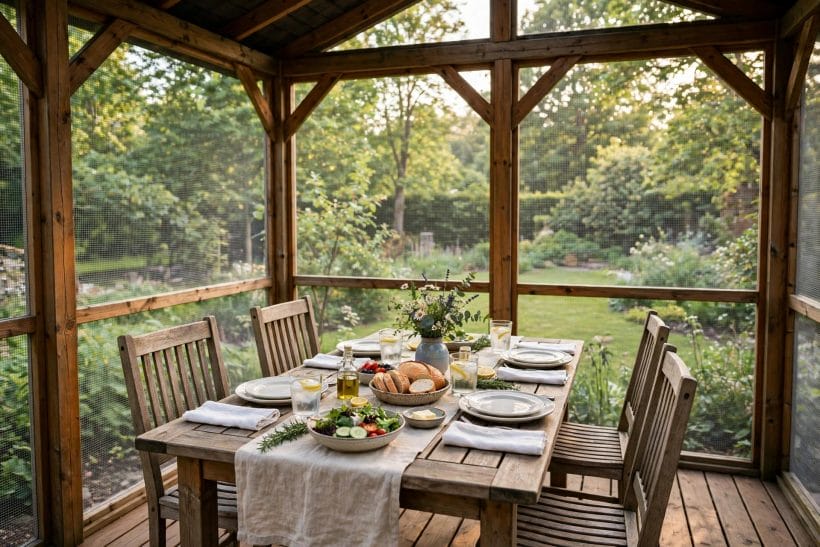
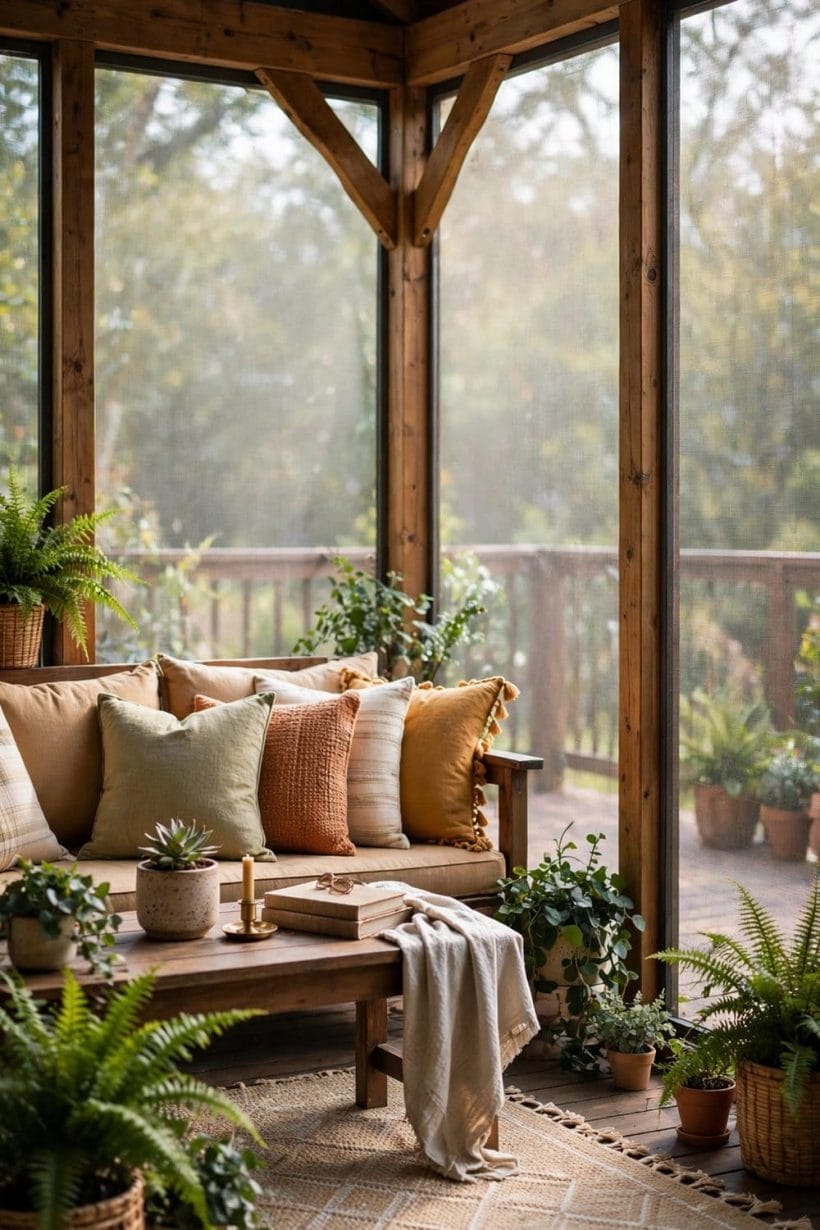
Inside, colour can be braver than outside, because cushions, rugs and throws are easy to change. A calm frame with lively cushions gives the best of both worlds: the structure stays quiet while the room feels cheerful. Outdoor fabrics that resist fading and damp are worth seeking out, and a rug that can be shaken out and dried will last longer than a delicate indoor one. Keep the palette simple, with one or two accent colours repeated in cushions and planters, so the room feels designed rather than assembled from leftovers.
Roof colour matters too, though it is often chosen last. A roof that matches the house roof ties the gazebo to the house, while a contrasting roof makes it a garden feature in its own right. Either can work, but the roof is the largest single area of colour, so it should be chosen deliberately, in daylight, with the frame and deck beside it for comparison.
5. Roofs, Shade and Rain Behaviour
The roof decides how the gazebo behaves in sun and rain. A pitched roof sheds rain readily and gives the room height and air, which helps on hot days when warm air needs somewhere to go. A flatter roof gives a lower, more modern profile but needs careful drainage, and standing water on a flat surface will shorten the life of any roof. Overhang matters as well: generous eaves throw rain clear of the screens and shade the walls in high summer sun, keeping the room cooler and drier.
Shade inside a screened gazebo is softer than shade under a solid roof alone, because the mesh filters the light a little and the breeze still moves. Even so, the sunniest side may need extra help at certain hours. A fabric shade, a planted screen beside the deck, or a movable parasol inside the room can all tame low evening sun without changing the structure. The aim is a room that is comfortable through the afternoon, not only at midday, so watch the sun across the whole day before deciding that the roof alone is enough.
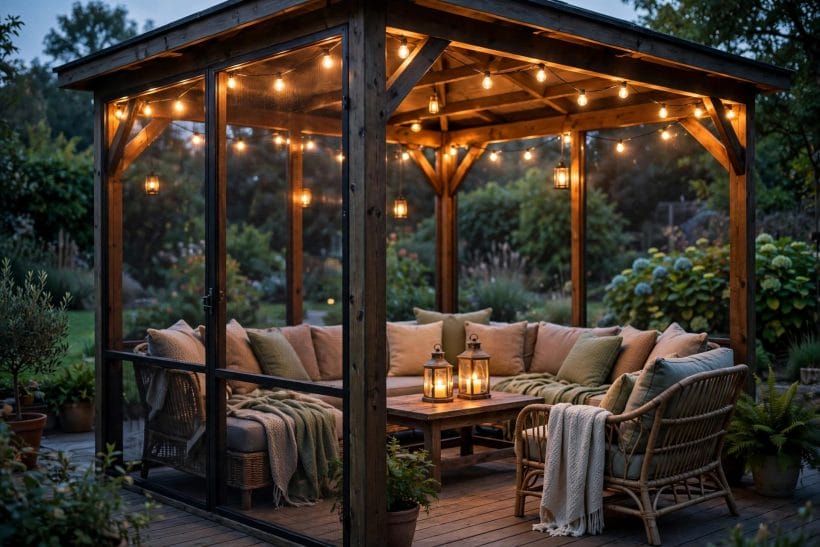
Rain behaviour is worth testing in the mind before building. Where will water run off the roof, and where will it land? If it lands on the deck boards beside the screens, the deck will stay wet and the screens may splash. If it is led away properly, the deck stays drier and the room stays pleasant during a shower. Drainage, flashing and the join between roof and posts are weatherproofing matters, and they belong to qualified professionals, not to hopeful improvisation. A roof that looks right but drains wrongly will disappoint every time it rains.
For another garden structure that shares the same roof and drainage questions, see garden shed ideas, which covers garden buildings and their siting in general terms.
6. Seating and Dining Inside the Screens
How the room will be used should decide the furniture, not the other way round. A lounge arrangement, with deep chairs, a sofa and a low table, suits long evenings, reading and conversation, and it makes the gazebo feel like an outdoor living room. A dining arrangement, with a table and chairs that can seat the household comfortably, suits meals outdoors and turns the gazebo into a second dining room for the milder months. A mixed arrangement, with a small table and a couple of lounge chairs, suits a quieter room used for morning coffee and evening reading.
Flexibility is a virtue in a room of this size. Light chairs that can be moved, a folding side table, and a bench that can serve as extra seating all let the room change from a quiet corner to a gathering place without a rearrangement project. Leave room to pull a chair out, to walk around the table, and to open the door fully. A room that is furnished to the walls feels smaller than an emptier one, and the view through the screens is part of the furniture, so it should never be blocked by tall pieces.
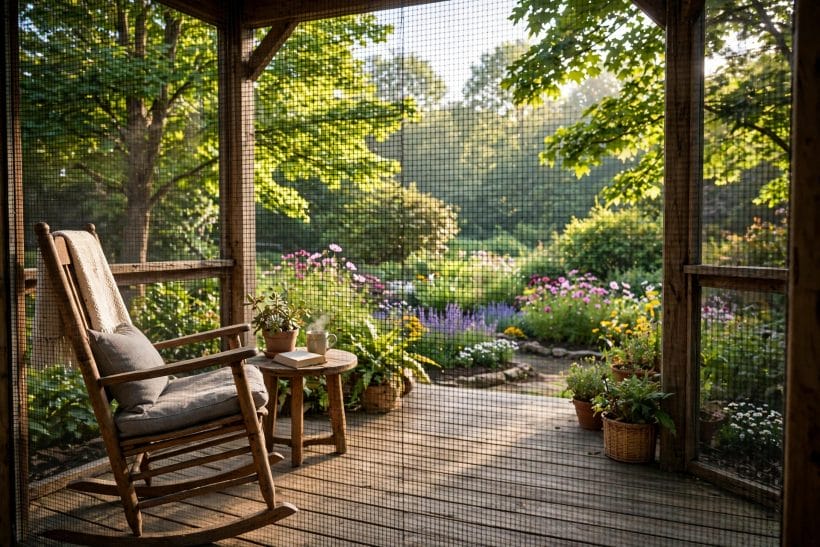
Comfort depends on small things. Cushions thick enough to sit on for an hour, a throw for cool evenings, a place to set a drink within reach, and a light that can be dimmed all matter more than any single grand piece. Storage helps too: a bench with space inside for cushions keeps them dry and the room tidy, and it means the room can be ready in a moment rather than after a trip to fetch everything from the house.
For dining rooms generally, and the table sizes and seating arrangements that suit them, see tiny dining room ideas, which covers dining layouts in general terms.
7. Light, Evenings and Atmosphere
Light transforms a screened gazebo after sunset, and it is worth planning rather than adding as an afterthought. Warm, soft light suits the room far better than harsh, bright light, which makes the mesh glare and the garden disappear. Lanterns, candles in safe holders, and battery or solar lights all give a gentle glow that keeps the garden visible beyond the screens, and they can be moved around as the evening changes. String lights along the roof beams give a festive feel and a surprisingly even light, and they suit the gazebo’s scale well.
Fixed lighting, and any wiring at all, is work for a qualified electrician. Outdoor electrics and damp air are a poor combination for improvisation, and a proper installation will be safer and longer lasting than any temporary arrangement. The same applies to heaters: a portable heater used exactly as its maker directs is one thing, while a fixed heater or any fuel-burning appliance inside a mesh room needs professional advice, since ventilation and clearances matter in an enclosed space.
Atmosphere comes from more than light. A rug softens the floor and deadens echoes, plants at the entrance make the doorway inviting, and a wind chime or a small water feature nearby adds sound without intruding. Keep it simple, though. A screened room that is over-decorated loses the calm that makes it attractive, and every object inside is one more thing to bring in when the weather turns. A few well-chosen pieces, repeated colours, and space to breathe will serve the room better than a crowded collection.
8. Plants, Privacy and the Garden Edge
Planting around a screened gazebo does work that walls cannot do. Planters at the entrance soften the doorway, tall plants at the deck edge give privacy from neighbours without blocking the breeze, and scented plants near the seating make evenings more pleasant. Choose plants that suit the light and the wind on your deck, and remember that plants in pots need watering and feeding, so they should be within easy reach of a tap or a watering can.
Climbers need a word of caution. A climber grown on a trellis beside the gazebo can be beautiful, giving shade and scent, but a climber grown directly on the mesh will damage the screens and block the view they exist to provide. Keep climbing plants on their own support, a little away from the mesh, so that they can be pruned and the screens can be cleaned without a tangle. The same care applies to overhanging branches: shade is welcome, but branches that rub the roof or drop debris on it will shorten its life, so they should be kept clear by a professional where they are high or heavy.
Privacy is a balance, not a wall. A fully private gazebo can feel cut off from the garden, while a fully open one can feel exposed. A hedge or a row of tall planters on the neighbour’s side, with the garden side left open, often gives the best of both. Consider the view from inside as well as the view from outside: privacy planting should frame the garden, not hide it, and it should leave the breeze a way through, since still air on a warm evening is the one thing a screened room cannot fix.
For the wider garden around the deck, see backyard landscaping ideas, which covers planting, paths and garden rooms in general terms.
9. Care Through the Seasons
A screened gazebo repays gentle, regular care. Mesh can be brushed or washed with mild soapy water and left to dry, and a soft brush will clear dust and pollen without tearing the weave. Frames can be wiped down and checked for loose fixings, and any finish that is wearing thin can be refreshed before the wood beneath is exposed. Cushions and rugs should be brought in during heavy rain and stored dry over winter, so that they do not mildew or fade.
Seasonal checks are worth making a habit. In spring, look over the screens for tears, the roof for slipped or damaged covering, and the deck boards beneath for softness or movement. In autumn, clear leaves from the roof and from the deck around the gazebo, since trapped leaves hold damp against timber and mesh alike. Any repair that touches the structure, the roof covering or the fixings should be left to a professional, while simple tasks such as brushing mesh, moving cushions and clearing leaves are safe for any homeowner.
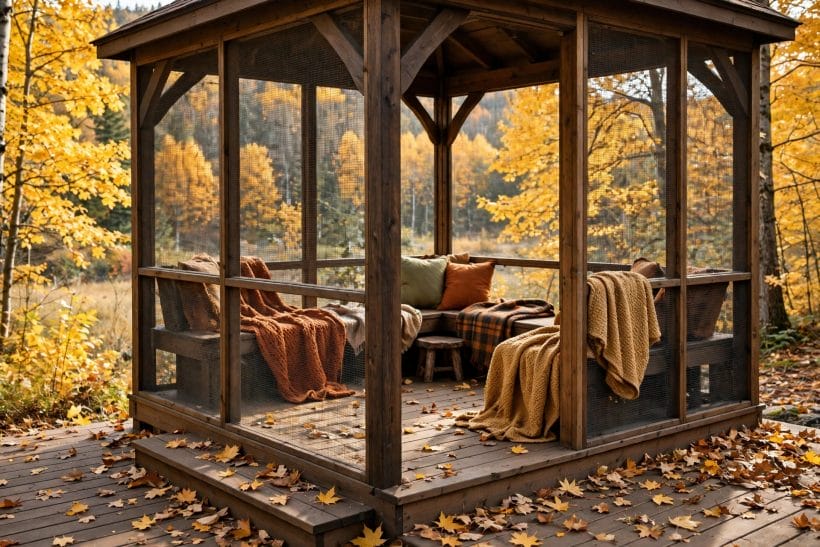
Winter use depends on climate and construction. In mild climates the room may be usable on bright winter days with warm clothing and a throw, while in harsh winters it is better left as a garden feature, with cushions stored and the screens left to weather the season. Do not be tempted to close the mesh with solid panels unless the structure was designed for it, since solid walls catch wind very differently from mesh and can overload a frame built for screens. If winter use matters to you, raise it at the planning stage, when the structure can be specified accordingly by a professional.
10. Planning Checks Before You Commit
A few checks before committing will save disappointment later. Local rules vary, and some areas require permission for garden structures of certain kinds, or have rules about height, distance from boundaries, and drainage. Check with your local authority in general terms before building, and do not assume that a neighbour’s gazebo sets a precedent for yours. Where a structure will be fixed to the deck, the deck’s condition and its footings should be checked by a professional, as noted earlier, and any work on the structure itself should be specified by someone qualified.
Neighbours deserve a thought too. A gazebo that overlooks a neighbour’s garden, or that places evening conversation close to a bedroom window, can strain a good relationship. A quiet word before building, and planting that softens the view, will usually prevent any difficulty. The same courtesy applies to light: bright lights left on all evening can disturb neighbours, so choose warm, modest lighting and switch it off when the room is not in use.
Think about longevity as well. A screened gazebo is a long-term addition to the deck, and its materials, roof and screens should be chosen for the climate they will face, not only for how they look on the day they are installed. Ask about maintenance, about replacement screens, and about how each material ages, and weigh those answers alongside appearance. A room that still looks good and works well after several seasons is worth more than one that dazzles for a single summer.
For the backyard as a whole, and how a gazebo fits among lawns, paths and planting, see tiny backyard ideas, which covers small outdoor spaces in general terms.
Final Considerations
A screened gazebo on a deck succeeds when it is planned as a room, not as an object. The deck beneath it, the screens around it, the roof above it, and the furniture within it all have to work together, and the choices that matter most are the quiet ones: where it sits, how the door swings, how fine the mesh is, and how the roof drains. Get those right, and the room will be used through the milder months, morning and evening, for meals, reading and long conversations.
Keep the scope honest as well. This guide covers the screened form only, and it does not try to teach general gazebo building, which is a different subject with its own structures and rules. Structural, roofing and weatherproofing work belongs to qualified professionals throughout, and local rules should be checked before anything is built. With those boundaries respected, a screened gazebo for deck evenings is one of the most rewarding additions a deck can gain, turning fair-weather boards into a room that the household reaches for again and again.
For the deck that supports it all, return to tiny house deck ideas when you plan the boards, rails and steps around your new outdoor room.



0 Comments