
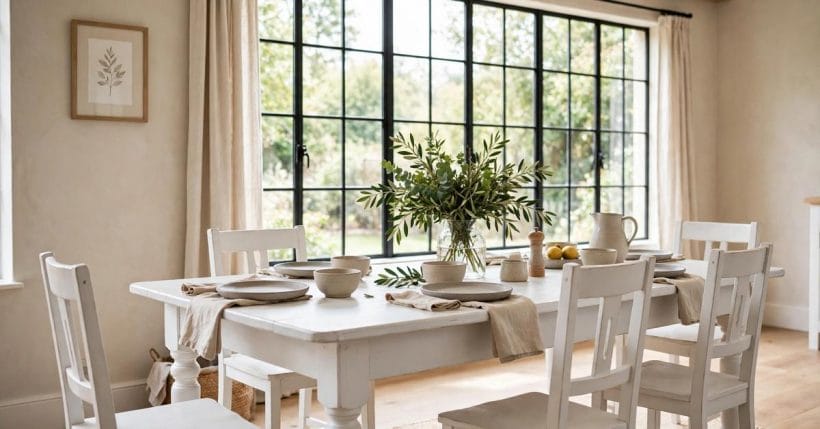
A painted dining table changes the mood of a room before a single plate is set down. Where bare wood asks to be admired for its grain, a painted surface asks to be lived with: it softens a formal room, brightens a dark corner, and lets a well-loved table start a second life in a new colour. This guide stays with that one idea, the painted finish itself, and looks at how colour, sheen and pairing shape the table you gather around every day.
Painted kitchen tables earn their place in homes of every style, from farmhouse kitchens to small city dining corners, because paint is forgiving in a way bare timber is not. A scuff can be touched up, a dated stain can be covered, and a table that feels too heavy or too dark can be lightened without replacing the piece underneath. The sections below follow the decisions in the order you will actually make them: colour first, then finish, then chairs, then the room around the table.
1. What a Painted Finish Does for a Dining Table
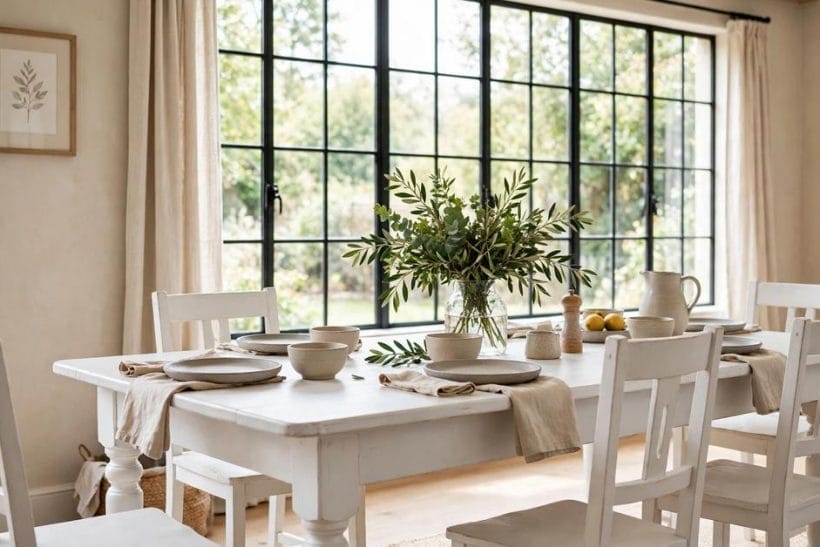
A painted finish does three jobs at once. It sets the colour of the room’s largest piece of furniture, it changes how light moves across the tabletop, and it gives the surface a layer that can be refreshed when daily life leaves its marks. A light paint lifts a room and makes a small space feel larger, while a dark paint anchors a room and gives it a sense of occasion. Neither choice is better in the abstract; the right one depends on the light in your room and the way your household actually eats.
The finish also changes how the table ages. Bare wood shows every ring and scratch as part of its character, which some households love and others find distracting. Paint turns those same marks into maintenance rather than history: a touched-up edge blends back in, and a fresh coat years later can make the same table feel new again. That repairability is the practical heart of the painted table, and it is why painted tables suit busy family rooms as well as they suit styled showpiece dining rooms.
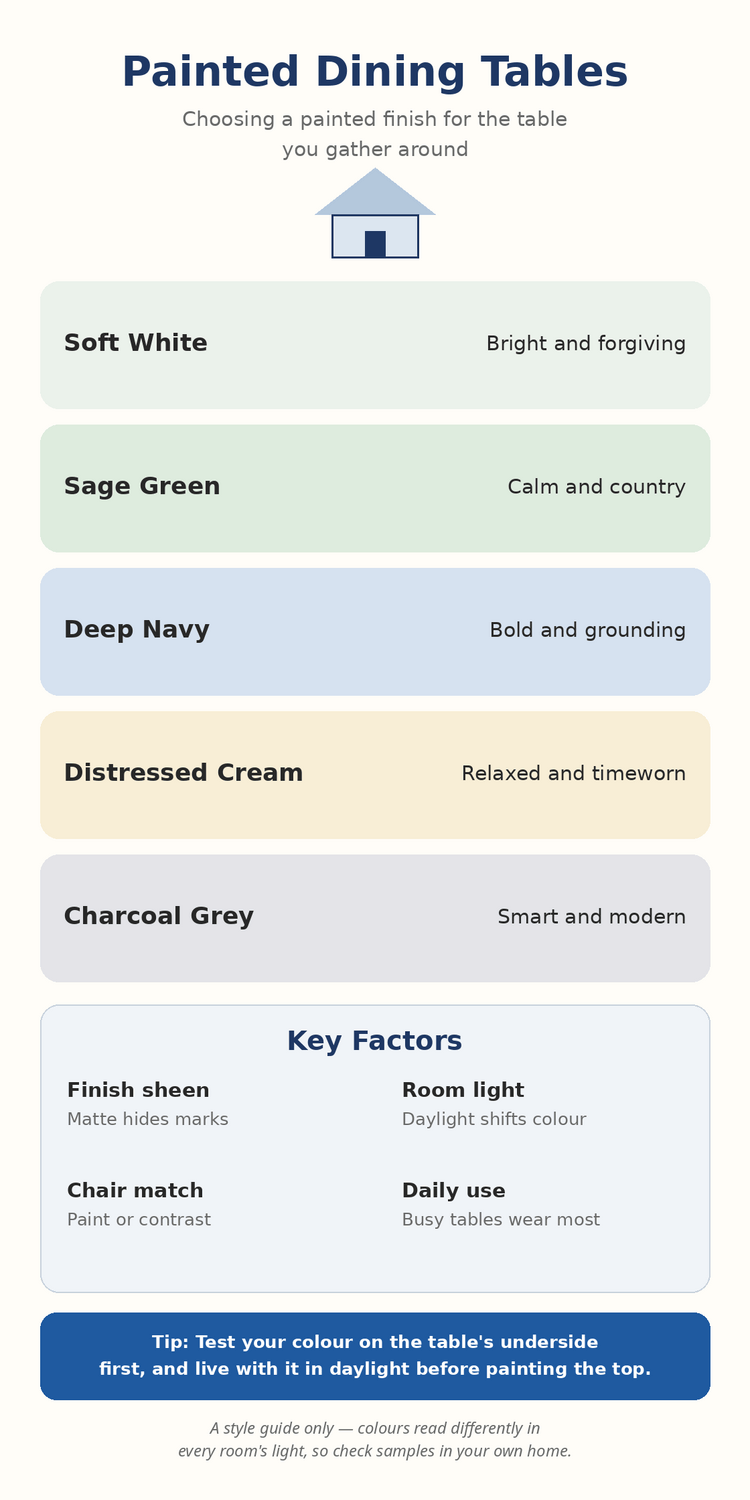
| Painted finish | Room feeling | Best suited to |
|---|---|---|
| Soft white | Bright and open | Small rooms and dark corners |
| Sage green | Calm and country | Relaxed family dining |
| Deep navy | Bold and grounded | Rooms that need an anchor |
| Distressed cream | Relaxed and timeworn | Cottage and collected rooms |
| Charcoal grey | Smart and modern | Evening gatherings and formal meals |
The table above is a starting map, not a rulebook. A soft white table can look formal with linen and candlelight, and a charcoal table can look relaxed with a checked runner and everyday plates. Paint gives you that flexibility because the colour is a backdrop, not the whole story: the chairs, the lighting and the way you set the table all pull the same piece in different directions. Keep that flexibility in mind as you read the colour sections, and choose the finish that fits your room on an ordinary Tuesday, not only on a special occasion.
2. Soft White and Cream: The Brightest Painted Finishes
Soft white is the most forgiving painted finish a dining table can wear. It reflects daylight, lifts a room that gets little sun, and sits comfortably beside almost any chair, wall colour or floor. In a tiny dining room, a white table is often the difference between a corner that feels cramped and one that feels welcoming, because the table itself stops being a visual weight in the room and starts behaving like light.
Cream is white’s warmer cousin, and the difference matters. Where soft white can feel crisp and clean, cream feels gentle and lived-in, especially beside wooden floors and natural linen. A cream table suits rooms with warm light and earthy furnishings, while a cooler white suits rooms with grey or blue tones. If you are choosing between them, look at the room at the time of day you most often eat: the finish that looks calm in that light is the one to choose.
White and cream finishes also show their use honestly. Crumbs, rings and small marks are more visible on a pale surface than on a dark one, which some households find reassuring because nothing hides, and others find tiring. The trade is a simple one: a pale table asks for a quick wipe after meals and rewards it by always looking fresh. A table runner down the centre, or placemats at each setting, protects the busiest stretch of the top while leaving the painted edges visible.
3. Sage, Blue and Green: Colour with a Calm Temperament
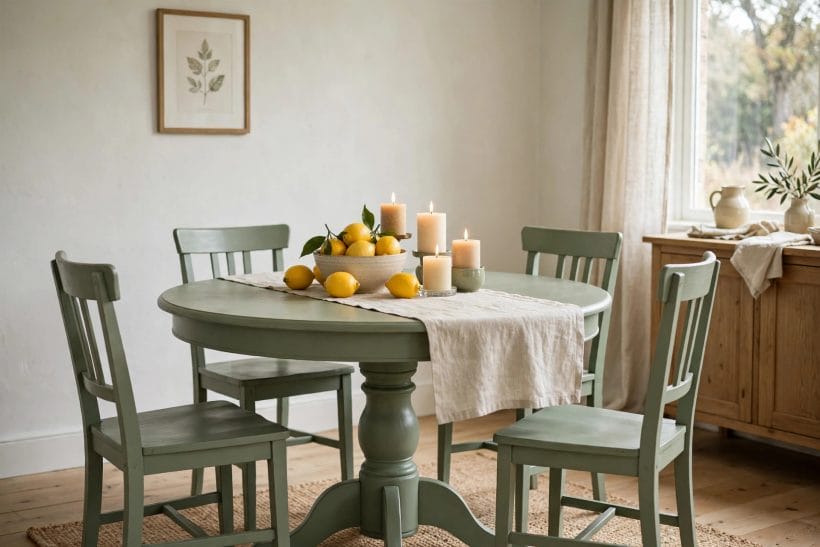
Green painted tables have a quiet confidence. Sage green, the soft grey-green that suits cottage and farmhouse rooms alike, brings a hint of the outdoors inside without shouting about it. It pairs naturally with wooden floors, linen textures and plants on the windowsill, and it has the rare quality of looking good in both bright daylight and soft evening lamplight. A sage table rarely dominates a room, which makes it a kind choice for a space where the table must share attention with a kitchen, a reading corner or a view.
Blue painted tables cover a wider emotional range. A dusty blue feels as calm as sage but a little cooler and more coastal, while a deeper blue starts to behave like the dark finishes in the next section. The paler blues suit breakfast corners and small dining nooks, where their lightness keeps a tight space airy, and they sit beautifully beside white walls and sheer curtains. If your room already carries a lot of warm wood, a blue table can balance it; if your room is already cool and pale, a blue table deepens it gently rather than changing its character.
What greens and blues share is forgiveness. Small marks and everyday wear blend into a mid-toned painted surface more easily than into either a stark white or a very dark finish, so these colours suit households where the table works hard: homework, crafts, board games and long Sunday lunches all leave the same table looking much as it did before. For a table that must be both beautiful and genuinely useful, a muted green or blue is often the easiest colour to live with.
4. Navy, Charcoal and Dark Painted Tables
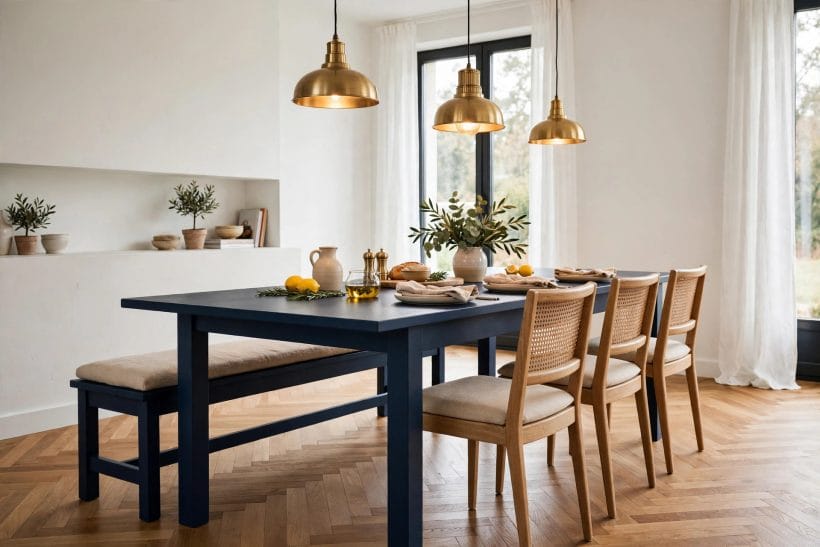
Dark painted tables make a room feel deliberate. A deep navy table or a charcoal grey table anchors the space around it, giving the eye a place to land and giving the room a sense of occasion even on an ordinary evening. Dark finishes suit rooms with generous daylight or strong evening lighting, where the colour reads as rich rather than heavy, and they pair beautifully with brass, glass and linen in warm tones.
The practical trade of a dark finish is dust and light marks. Where a pale table shows crumbs, a dark table shows dust, water spots and pale scratches more readily, so it asks for a different kind of attention: a soft cloth and a little regularity rather than constant vigilance. Upholstered chairs in a warm fabric, or a pale runner, soften the contrast between a dark top and the rest of the room, and stop the table from feeling like a solid block in the middle of the floor.
Dark tables also change how a room photographs and how it feels at night. Under pendant lights, a navy or charcoal top glows rather than shines, and the table becomes the natural centre of an evening gathering. If your dining room comes alive mostly after dark, a dark painted finish may suit you better than any pale colour, because it is designed, in a sense, for candlelight and lamplight rather than for midday sun.
5. Distressed and Timeworn Painted Looks
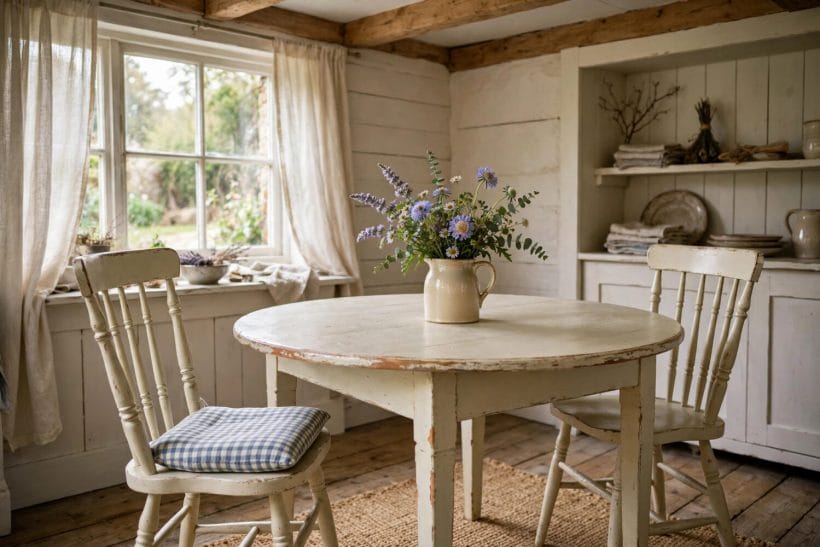
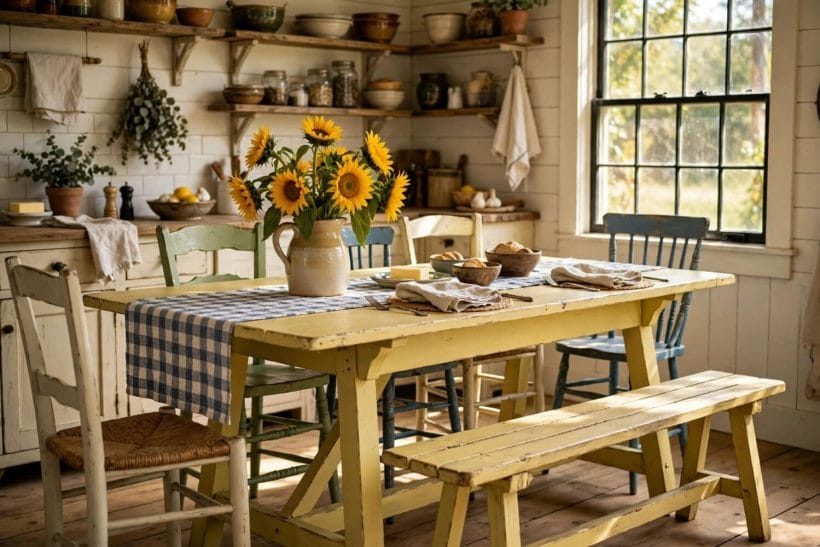
A distressed painted table wears its history on its surface. The finish is deliberately softened at edges and corners so that hints of the wood or an earlier colour show through, giving a new table the relaxed presence of a piece that has been in the family for years. This look suits cottage rooms, collected interiors and homes where perfection would feel out of place, because the table itself gives permission for the room to be comfortable rather than pristine.
The appeal of distressing is partly practical. A finish that already carries gentle wear does not punish the next small knock or scratch the way a flawless coat does; new marks join the existing texture instead of standing out against it. That makes distressed tables a kind choice for households with children, for rooms where chairs are pulled in and out many times a day, and for anyone who would rather enjoy a table than guard it.
Distressing also needs restraint to look intentional rather than damaged. The softening belongs on edges and raised details, the places a table would naturally wear over time, while the broad centre of the top stays even and usable. A distressed cream or soft grey table beside plain painted chairs can carry a whole room’s character on its own, so the rest of the room can stay simple: a plain runner, everyday plates and a jug of flowers are all the dressing it needs.
6. Matching Chairs: Painted to Match or Left to Contrast
The chairs decide whether a painted table looks like a set or like a collection. Painting chairs to match the table exactly creates a calm, unified piece of furniture: the table and chairs read as one shape, and the room feels orderly and intentional. This approach suits formal dining rooms and small spaces, where visual calm matters, and it lets the table setting itself — the plates, the glasses, the centrepiece — carry the colour and interest.
Leaving chairs to contrast gives the room a more collected feeling. Painted chairs in a different colour, natural wooden chairs, or a bench on one side and chairs on the other all break up the block of colour and add texture. A white table with wooden chairs feels warm and farmhouse-like, while a navy table with pale chairs feels bright and modern. Contrast works best when one element repeats: the chair colour might echo the curtains, the rug or the wall, so the contrast feels chosen rather than accidental.
A bench deserves a special mention, because it changes how a painted table is used. A bench tucks fully under the table when not needed, seats a flexible number of people, and suits families and casual gatherings. Painted to match, a bench disappears into the set; left in natural wood, it warms the whole arrangement. Either way, the bench is a practical answer to the most common dining-room problem, which is fitting one more person around a table that already feels full.
7. Painted Tables in Small Dining Rooms and Kitchen Corners
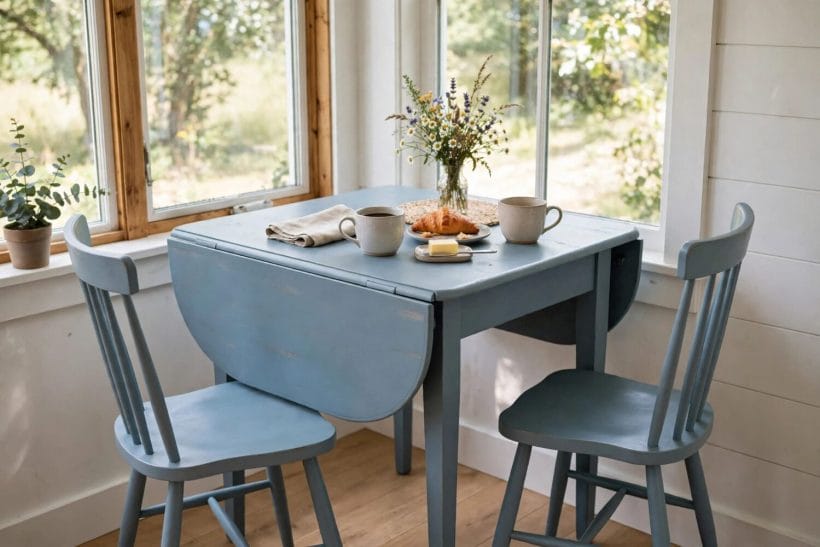
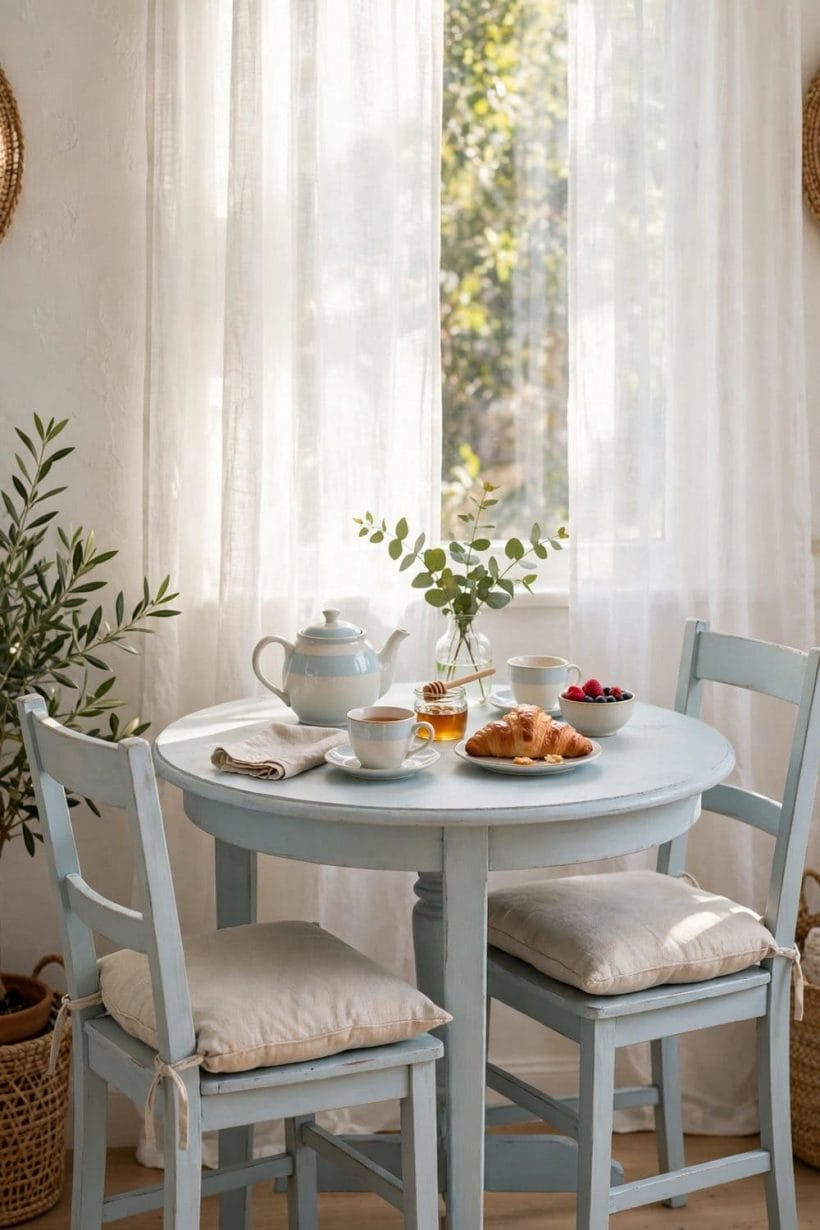
Small rooms are where painted tables earn their keep. A pale painted table in a tiny kitchen corner takes up the same floor space as a dark wooden one but feels lighter, and a drop-leaf or pedestal form painted in a soft colour can make a breakfast nook feel like a room rather than a leftover corner. The paint matters here because the table is seen from every angle at close quarters, often from the kitchen counter or the sofa, so its colour becomes part of the whole living space, not just the dining area.
Form matters as much as colour in a small room. A round pedestal table leaves legroom all the way around and lets chairs slide in from any side, while a rectangular table against a wall seats the same household in a narrower footprint. A painted finish suits both, because it lets the table blend with the wall colour when the room needs calm, or stand out as a feature when the room needs a focal point. The same table can do both jobs at different times of day, simply by changing the runner or the centrepiece.
Lighting completes the small-room picture. A painted table near a window gains a second life in daylight, when the colour reads at its truest, and a pendant light above it at night turns the same surface into the room’s centre. If your small dining space has only one good light source, place the table to catch it, and choose a finish that looks good in that light specifically. A table that glows in your room’s real light will always please you more than a colour that looked perfect somewhere else.
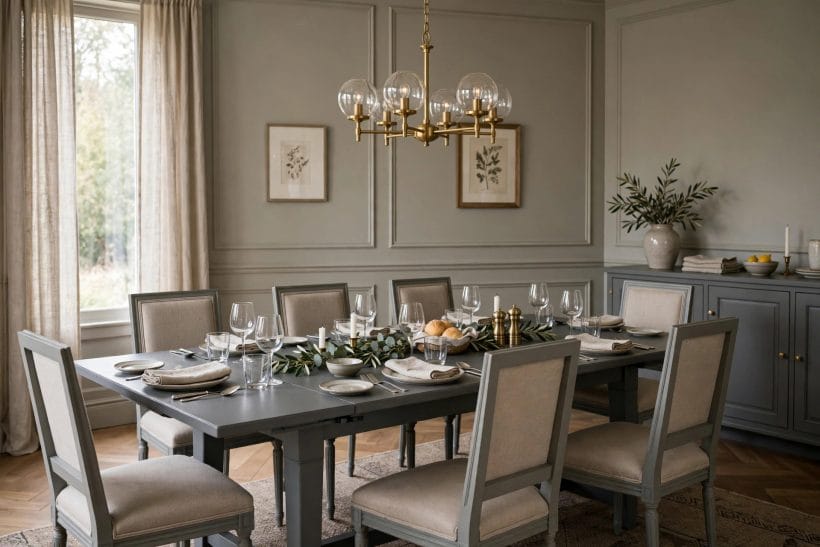
8. Table Settings That Suit a Painted Surface
Setting a painted table is a pleasure because the colour does half the work. On a white or cream table, almost any plates look good, and the setting can change with the seasons: bright bowls in summer, deep colours in winter, plain stoneware all year round. On a dark table, pale linen and glassware create the contrast that lets the setting shine, while a simple runner protects the centre and frames the meal. The painted surface is a backdrop, and the best settings are the ones that let it stay one.
Centrepieces deserve restraint on a painted table. A low arrangement — a bowl of fruit, a short vase of flowers, a few candles — leaves sightlines open across the table and lets conversation flow, while a tall arrangement can dominate a small room and hide the very colour you chose. Candles suit painted tables particularly well, because their warm light softens the paint and makes the whole table glow, but a tray or mat beneath them protects the finish from heat and wax alike.
Everyday settings matter more than special-occasion ones, because most meals are ordinary. Placemats in a natural texture, a washable runner and plates you actually like using will serve a painted table better than a formal set kept for guests. The table’s job is to gather people, and a setting that invites daily use — rather than one that must be protected — is the setting that keeps a painted table at the centre of household life. For ideas on shaping the room around the table, a small living room layout can show how dining and sitting areas share light and colour.
9. Living with a Painted Table: Marks, Cleaning and Touch-Ups
Daily care for a painted table is gentle and regular. A soft cloth, warm water and a mild cleaner handle most spills, and wiping up promptly matters more than any special product: paint is a protective layer, but standing liquid and harsh scouring will wear it faster than ordinary use ever will. Hot dishes deserve a mat or trivet, not because paint is fragile, but because a little protection keeps the finish even for years rather than months.
Marks are part of life with a painted table, and the finish is designed to accommodate them. A small touch-up, applied to a clean and dry spot and left to settle, blends a scuff back into the surrounding coat, and the repair is usually invisible at a normal viewing distance. Keeping a small amount of the original paint, where possible, makes touch-ups straightforward, and it is worth noting the finish you chose so that a future refresh matches the table you already love. This repairability is the painted table’s quiet superpower, and it is why a painted table often outlasts a bare one in a busy home.
Over longer stretches, a painted table may ask for a fuller refresh, and that is a project rather than a chore. A fresh coat, applied after gentle preparation, can change the table’s colour entirely or simply renew the one it already wears, giving the same piece a second chapter in the same room. If the table’s structure needs attention, or if the work involves anything beyond the surface finish, that is work for a professional rather than a weekend experiment. The finish is yours to enjoy and maintain; the bones of the table deserve expert hands when they need them.
10. Choosing Your Colour: Light, Room and Everyday Use
Choosing a painted colour comes down to three questions, asked in order. First, what is the light in your room like at the time you eat? Second, what else in the room already carries colour — the walls, the floor, the curtains, the chairs? Third, how hard does your table work, and how much visible wear are you comfortable seeing? Answer those three honestly and the colour almost chooses itself: pale for dark rooms, muted for busy households, dark for rooms that gather in the evening.
Testing matters more than theory. A colour that looks perfect in a shop or on a screen can shift dramatically in your room’s light, so live with a sample in the room before committing to the whole table. Look at it in morning light and in evening lamplight, beside your chairs and against your wall, and notice whether it calms the room or competes with it. The right colour is the one that still pleases you on the third day of looking, not only in the first exciting hour.
Finally, remember that a painted table is not a permanent verdict. Unlike a stain that soaks into the grain, paint can be changed, and a table repainted in a new colour is the same good table in a new mood. That freedom is worth holding onto: choose the colour you love now, live with it well, and know that the table can change its coat whenever your room, or your taste, changes with it. A paint colour guide for small homes can help you see how one finish relates to the rest of the house, and a kitchen ideas collection shows painted tables in rooms where cooking and eating share the same light.
Final Considerations
A painted dining table is, above all, a practical piece of furniture that happens to be beautiful. Its colour sets the room’s mood, its finish forgives daily life, and its surface can be refreshed whenever the household needs a change. Whether you choose soft white for brightness, sage for calm, navy for occasion or a distressed cream for comfort, the best painted table is the one that fits your room’s light, your household’s habits and your own sense of home.
Keep the scope of the decision in view: this is a guide to the painted finish, not a guide to remaking a table from scratch. Choose the colour with care, pair the chairs with intention, set the table simply, and let the painted surface do what it does best — gather people around it, day after day, in a room that feels like yours. For the wider dining picture, a tiny living room plan and a tiny bedroom plan show how the same calm, painted palette carries through a small home, room by room.

0 Comments