
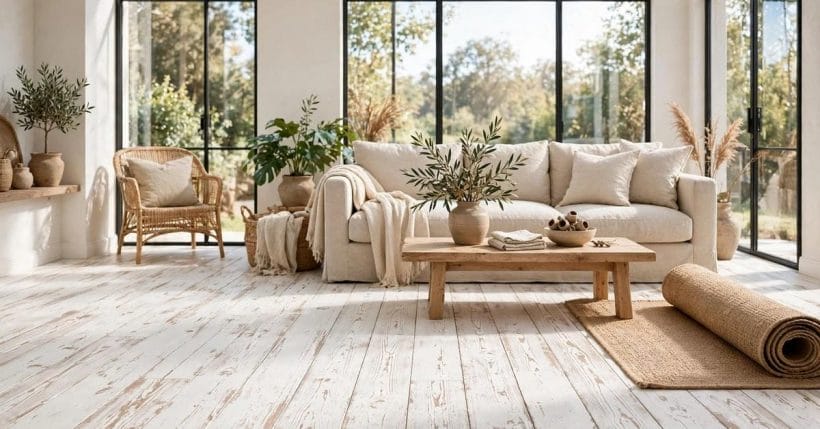
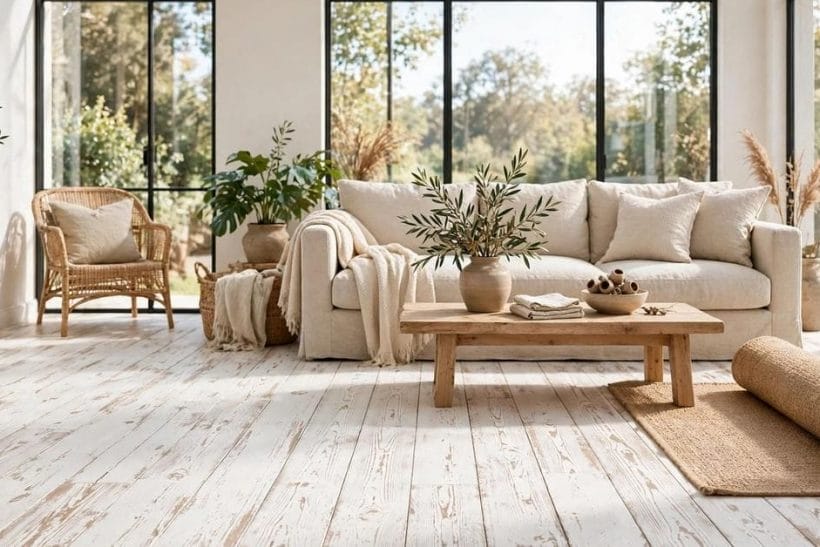
A tired wooden floor does not always need replacing. A coat of paint can lift a dark hallway, calm a busy living room, and give an old bedroom a clean, quiet start — grain still showing through.
This guide to painted wood floors ideas covers the finish itself: colour and sheen, gentle preparation, thin coats, and everyday care. Structural questions stay where they belong, with a professional.
1. What a Painted Floor Finish Actually Is
A painted floor is a wooden floor whose surface carries a layer of paint rather than a clear finish. The paint sits on top of the boards and gives them a new colour, while the grain, the gaps between boards, and the small marks of age often remain faintly visible underneath. That is part of the appeal. A painted floor rarely looks like a factory-made surface. It looks like wood that has been given a fresh coat, with all the warmth and slight unevenness that comes with it.
That surface layer is also what makes a painted floor different from other ways of changing a floor. The colour is the point, not a side effect. You are choosing a tone for the room as much as a treatment for the boards, and the colour will shape how light moves around the space, how furniture sits against the floor, and how clean or calm the room feels. A pale tone can open up a small room. A deep tone can ground a large one. A mid-tone can quietly tie furniture and walls together without drawing attention to itself.
It helps to be honest about what paint can and cannot do. Paint can refresh the look of boards that are sound but dull, stained, or patched with mismatched tones. It can unify a floor where boards have aged unevenly. It cannot repair boards that are loose, springy, damp, or damaged, and it cannot fix problems underneath the boards. Where the floor itself is in doubt, the right first step is advice from a professional, not a paintbrush.
| Question | At a glance |
|---|---|
| What it is | A colour layer over sound wooden boards, with grain often still visible |
| Best for | Sound boards that look dull, stained, or uneven in tone |
| Colour choice | Guided by room light, room size, and how busy the room is |
| Sheen choice | A softer sheen tends to sit quietly; a glossier sheen shows more light and more marks |
| Care | Gentle cleaning, rugs in busy paths, and touch-ups when wear shows |
| Not for | Loose, damp, or damaged boards, or any structural or subfloor problem |
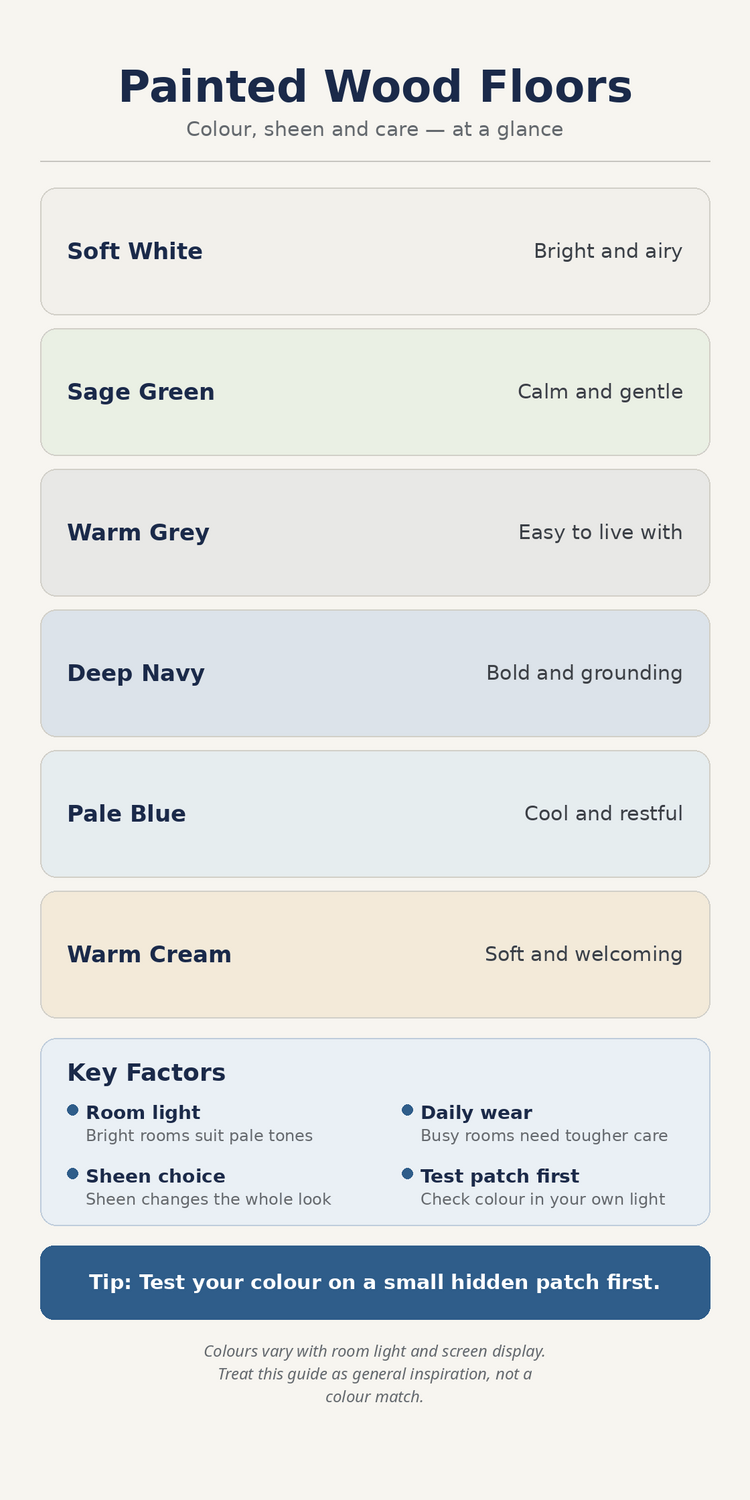
Think of the painted finish as a room decision first and a floor treatment second. The most successful painted floors are the ones where the colour was chosen for the room, the light, and the daily traffic, rather than picked from a small swatch in isolation. The rest of this guide follows that order: colour and light first, preparation and painting second, and everyday care last.
2. Choosing a Colour That Lives Well
Colour is where most painted floors succeed or disappoint, and the reason is usually light. A shade that looks calm in a shop or on a screen can feel cold in a north-facing room or surprisingly loud in a small, bright one. Before settling on anything, look at the room through the day. Morning light, afternoon light, and lamplight all change a painted floor, and the tone you live with will be the one you see under your own lamps in the evening, not the one you first admired elsewhere.
Pale tones are the most forgiving starting point for small or dim rooms. Soft white, warm cream, and pale grey tend to bounce light around and make a floor feel less heavy underfoot. They also show dust and scuffs more readily, so they suit rooms where you are happy to sweep often and where shoes come off at the door. In a flooring guide for small homes, pale floors often appear for exactly this reason: they help a compact footprint feel open without changing a single wall.
Mid-tones are the quiet workhorses of painted floors. Sage green, warm greige, and soft grey-blue sit comfortably with both light and dark furniture, and they hide everyday wear better than very pale or very dark tones. A mid-tone is a good choice when the room is used hard, when pets or children pass through often, or when you want the floor to support the room rather than lead it. These colours tend to age gracefully, gathering small marks that read as character rather than damage.
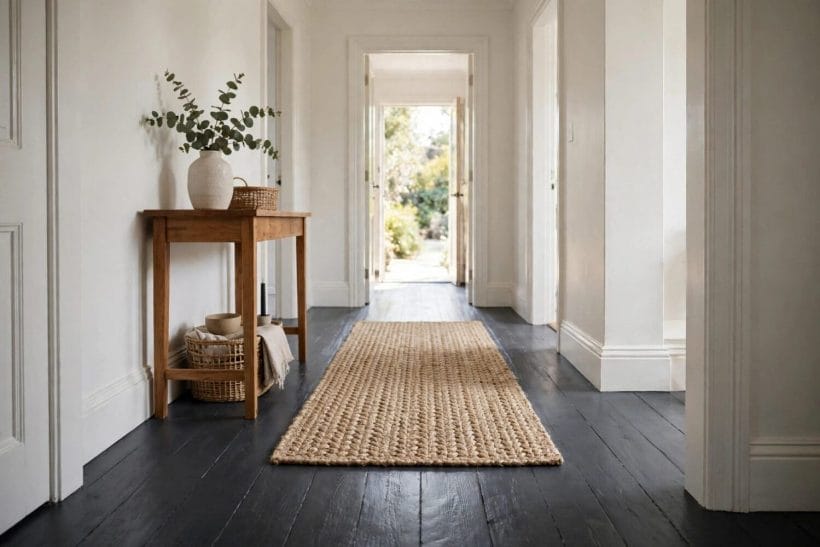
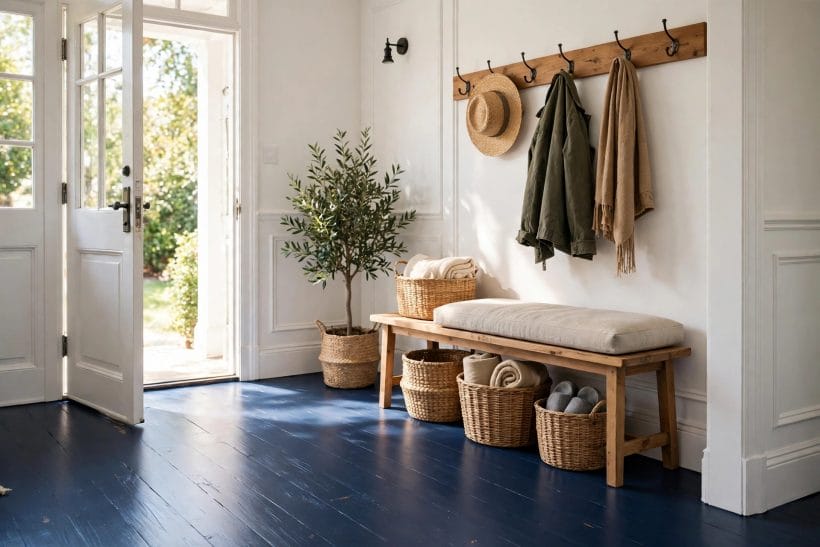
Deep tones make a statement and need a room that can carry them. Navy, charcoal, and deep green can look striking in a hallway, an entryway, or a bedroom with generous daylight and light walls. They ground furniture beautifully and give a room a settled, deliberate feel. They also show dust and pale scratches more clearly, and they can make a dim room feel smaller, so they are best tried first in a space with good light and a clear reason for drama, rather than applied throughout a whole home at once.
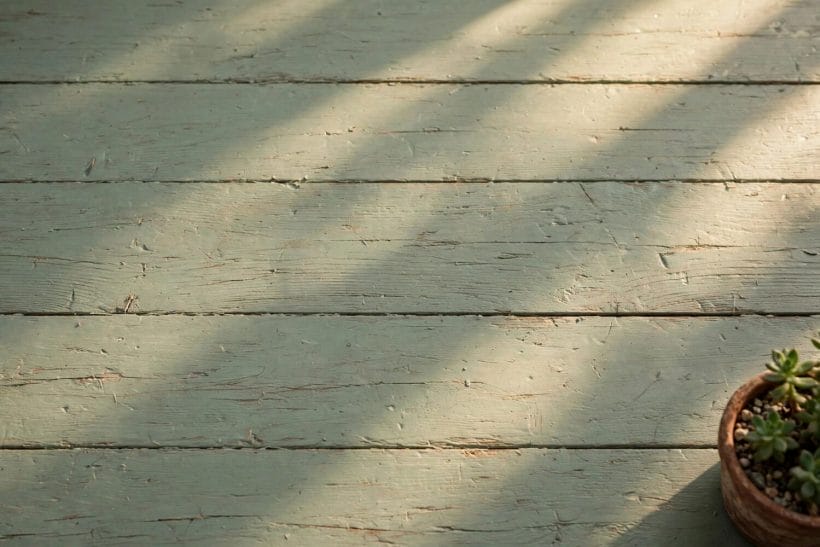
Whatever tone you lean toward, test it on the floor itself before committing. Paint a small patch in a corner that is usually hidden, or on a board under furniture, and live with it for a few days. Look at it in daylight and lamplight, beside your furniture and rugs, and against the wall colour. A test patch costs little time and answers the one question no swatch can: how this colour behaves in your room, under your light, next to your things.
3. Sheen, Light and the Way a Room Feels
Sheen is the quiet partner of colour. It describes how much light the painted surface reflects, from a flat, chalky finish that absorbs light to a glossy finish that bounces it back. The same colour can feel entirely different at different sheens: flat and soft at one end, bright and crisp at the other. Choosing sheen is therefore part of choosing the mood of the room, not a technical afterthought.
A softer sheen is usually the easiest to live with on a floor. It forgives small unevenness in the boards, softens glare from windows, and tends to show scuffs less starkly than a glossier surface. Rooms meant for rest, bedrooms, reading corners, and quiet living rooms, often feel more settled under a softer sheen, because the floor recedes and lets furniture, textiles, and daylight carry the room. If you are unsure where to start, a soft sheen is a sensible default.
A glossier sheen has its place, particularly where light is scarce and you want the floor to help brighten the room. It reflects lamps and daylight, which can lift a hallway or a small entryway, and it can make a deep colour look richer. The trade-off is honesty: a glossy surface shows every dent, scratch, and uneven board more plainly, and it can feel slippery or stark underfoot in a way that surprises people. It suits smooth, sound boards in rooms where the floor is meant to be noticed.
Light ties colour and sheen together, so judge them as a pair. A pale colour with a soft sheen feels calm and matte, almost like linen. A pale colour with a glossier sheen feels brighter and crisper, closer to a freshly cleaned surface. A deep colour with a soft sheen feels velvety and grounded, while the same colour with gloss feels dramatic and formal. When you test a colour, test it at the sheen you intend to use, because the two decisions shape each other.
There is one more light question worth asking: what does the room look like at night? Many floors are chosen in daylight and lived with under lamps, and the two can disagree. Warm lamplight deepens warm tones and softens cool ones, while cool daylight does the reverse. A colour and sheen that feel right in both lights are worth more than a combination that only flatters the room at midday. The interior design ideas for compact homes often return to this point: small rooms are lived in around the clock, so finishes must work under lamplight as well as daylight.
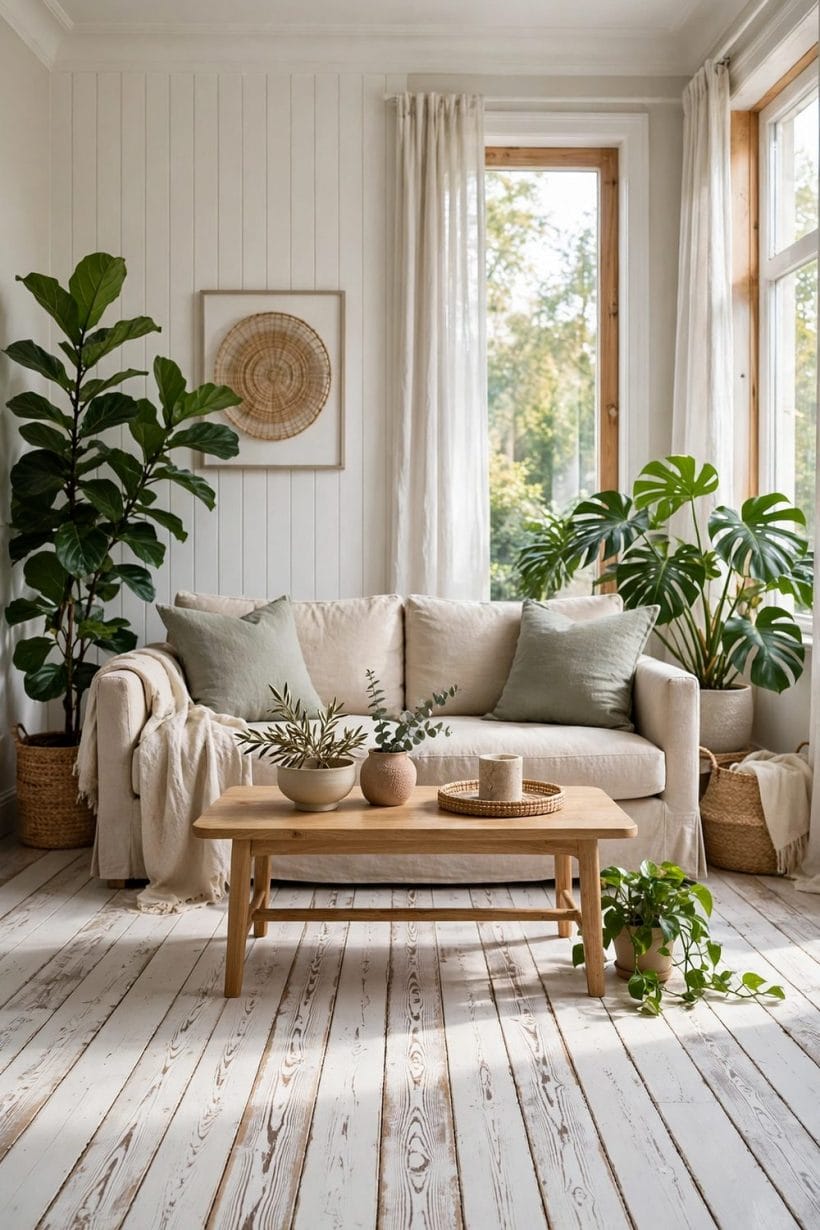
4. Getting the Boards Ready, Gently
Preparation decides how well a painted floor lasts, and it need not be dramatic. The goal is a clean, sound, dry surface that paint can grip, with no loose boards, no damp patches, and no flaking old finish lifting underneath. Most of this work is inspection and cleaning rather than heavy labour, and it is worth taking slowly, because paint will faithfully show whatever it is painted over.
Start by walking the floor and looking closely. Check for boards that move, squeak badly, or feel springy underfoot, and for any sign of damp, staining, or damage near doors, windows, and plumbing. Sound boards that are simply dull or uneven in colour are good candidates for paint. Boards that are loose, soft, warped, or wet are not a painting problem at all. They are a repair problem, and they belong with a professional who can judge what is happening underneath before any paint is considered.
Cleaning comes next, and it should be thorough but gentle. Sweep and vacuum well, including along skirting boards and between boards where dust gathers, then clean the surface with a mild, general-purpose cleaner suitable for painted or wooden floors, following whatever guidance the cleaner itself gives. Let the floor dry fully before going further. Painting over dust, grease, or dampness is one of the most common reasons a painted floor disappoints, and it is also one of the easiest to avoid.
Where an old finish is flaking or peeling, that loose material needs attention before painting, because new paint will only lift with it. Small, stable areas can often simply be cleaned and left alone, while widespread flaking calls for a judgement call about whether painting is the right approach for that floor at all. If you are unsure, or if the floor has layers of unknown old finishes, ask a professional before proceeding rather than guessing. The same caution applies to any floor that may have been treated with something unusual in the past.
Finally, protect everything you do not intend to paint. Remove furniture where you can, cover what must stay, and mask skirting boards, door frames, and thresholds with care. Ventilate the room well while you work, opening windows and keeping air moving, and plan the order of work so you are never painted into a corner. Good preparation is unglamorous, but it is the difference between a floor that looks painted and a floor that looks considered.
5. Painting in Thin Coats, One Room at a Time
Painting a floor rewards patience more than speed. The work itself is simple, edges first, then the open field of boards, working toward the door so you can leave the room without walking over wet paint. The discipline lies in the coats: thin, even layers, each allowed to dry properly before the next, rather than one heavy coat that pools, drags, and takes far longer to settle. Thin coats also keep the grain faintly visible, which is usually the look people want from a painted wooden floor.
Begin with the edges, using a brush along skirting boards, around door frames, and into corners where a roller cannot reach cleanly. Then roll or brush the main field in steady passes along the length of the boards, keeping a wet edge so each pass blends into the last without hard lines. Work in manageable sections rather than racing across the whole room, and resist the urge to go back over paint that has begun to set. Going back over half-dry paint is how brush marks and texture appear where none were wanted.
Between coats, let the floor dry fully and inspect it in good light. Look for thin spots, missed edges, and any dust that has settled into the surface, and deal with small imperfections gently before the next coat. The number of coats a floor needs depends on the colour change involved and the condition of the boards, and it is better to add one more thin coat than to force coverage from a single heavy one. A pale colour over dark boards will naturally need more patience than a small tonal shift.
Choose a paint that is made for floors, since floors take a kind of wear that walls never do. Floor paint is formulated to stand up to foot traffic, furniture, and cleaning in a way that ordinary wall paint is not, and using the right product is one of the simplest ways to protect all the preparation work. Follow the guidance on the product itself for drying and recoating, and treat that guidance as the authority for your particular floor rather than relying on general habit.
Work one room at a time, and keep the room out of use until the paint has dried and settled properly. Rushing furniture back onto a freshly painted floor is a common regret, since chair legs and heavy pieces can mark a surface that is dry to the touch but not yet fully hardened. A little extra waiting at this stage is repaid every day afterward, in a floor that looks calm and even rather than hurried.
6. Small Rooms Where Painted Floors Shine
Painted floors are at their best in small rooms, where a single colour underfoot can unify the space and make it feel intentional rather than improvised. A bedroom, a hallway, a study, or a reading nook does not need a large floor to make an impression. It needs a floor that agrees with the walls, the furniture, and the light, and paint is one of the cheapest ways to reach that agreement.
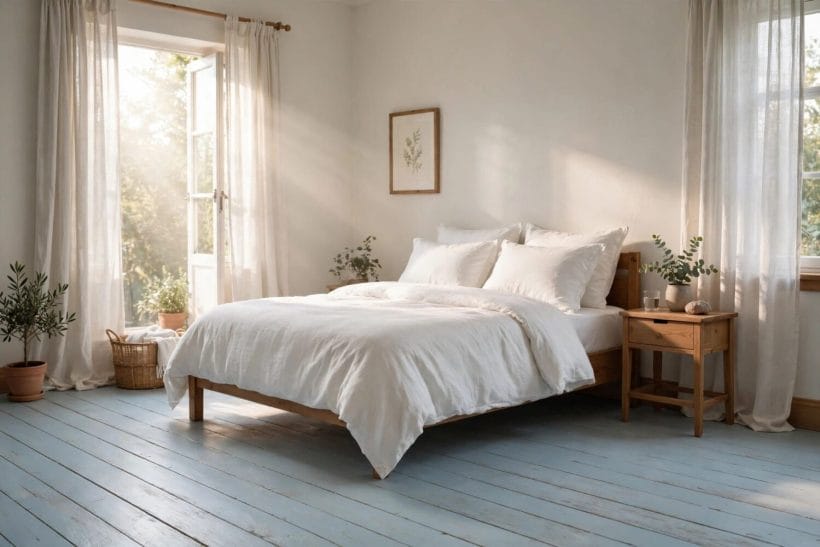
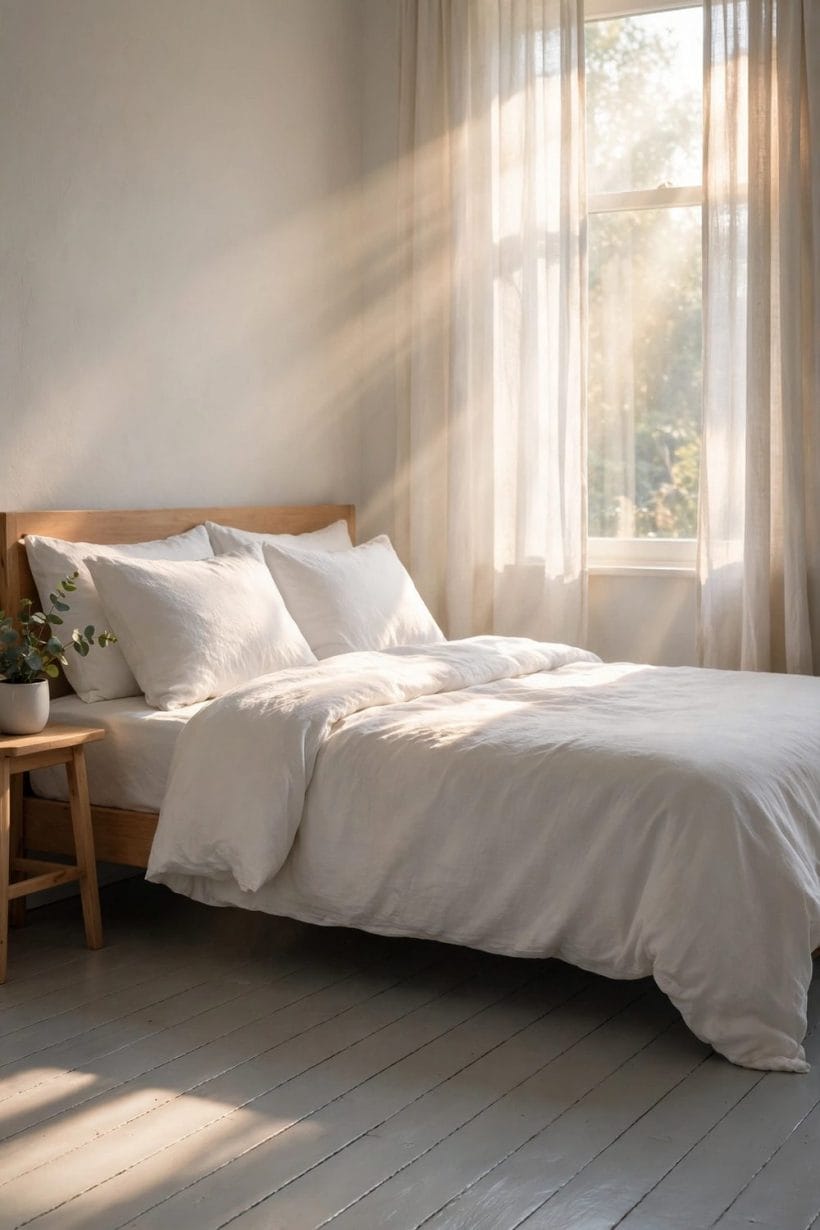
Bedrooms suit painted floors particularly well. The traffic is gentle, shoes are often left at the door, and the room is seen mostly in soft light, which flatters both pale and deep tones. A pale blue or soft grey floor under white bedding can make a bedroom feel airy and restful, while a deeper tone can make the same room feel cocooning in the evening. Either way, the floor becomes part of the room’s calm rather than a distraction from it. For a small living room or bedroom scheme, a painted floor also helps rugs sit more quietly, since the floor beneath them is already a considered colour rather than a competing pattern.
Hallways and entryways are a different test, because they take the hardest daily traffic in the home. Here a painted floor earns its keep by being easy to refresh: scuffs at the door can be touched up without redoing the whole house, and a mid-tone or deep tone can hide the wear of boots, bags, and paws better than a very pale one. A runner rug over the busiest path protects the paint where it matters most, while still letting the colour show at the edges.
Small studies, nooks, and landings are ideal first projects for anyone trying a painted floor for the first time. The area is manageable, the commitment is contained, and the result teaches you how the colour behaves in your home before you take it into larger rooms. Many people discover their favourite painted floor this way, in a corner they painted almost as an experiment, and then carry the same tone confidently into the rooms around it.
The lesson of small rooms is to let the floor serve the room, not dominate it. In a compact space, a painted floor should feel like a quiet decision that makes everything else easier: furniture sits more calmly, rugs read more clearly, and the room feels finished even when it is simply furnished. When a painted floor achieves that, it has done its job.
7. Kitchens and Living Rooms: Living With the Finish
Kitchens and living rooms ask more of a painted floor than any other rooms, because they are lived in all day. Cooking, eating, playing, and gathering all pass over the same boards, and the floor must cope with spills, dropped things, chair legs, and bare feet without becoming a source of worry. A painted floor can do this well, provided the colour and care are chosen for real life rather than for a photograph.
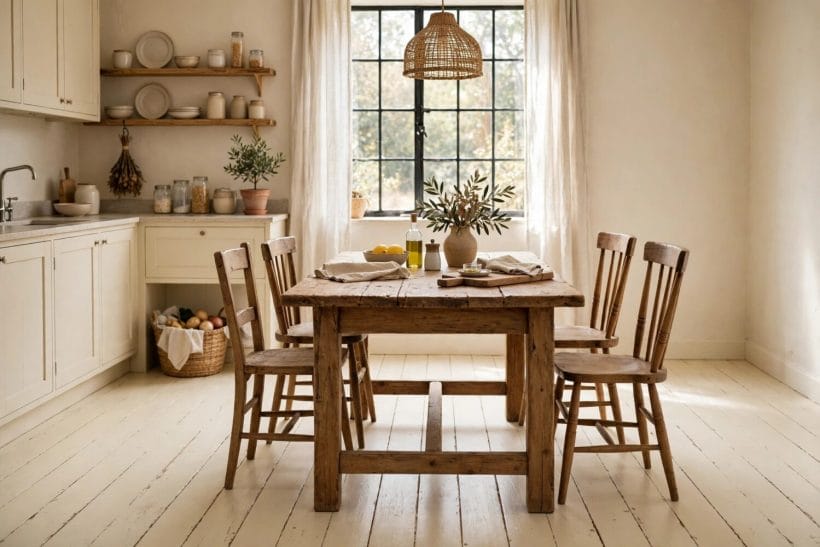
In a kitchen, a mid-tone is usually the wisest choice, since it forgives crumbs, splashes, and the daily scuffs of cooking. A pale kitchen floor can look beautiful when freshly cleaned and tiring within a day of normal use, while a very dark one shows every pale scratch and dust mark. A warm cream or soft grey floor, protected by a washable runner in front of the sink and cooker, tends to stay looking good between cleans. Wipe spills promptly, clean with a gentle product, and avoid soaking the floor, since standing water is unkind to any wooden floor, painted or not.
Living rooms give a painted floor an easier life, but they bring their own wear in the form of furniture. Sofas, coffee tables, and chairs that are dragged rather than lifted will mark any floor over time, painted included. Felt pads under legs, a rug under the seating group, and a habit of lifting rather than dragging are small courtesies that extend the life of the finish considerably. They also protect the furniture itself, so the habit pays twice.
For a tiny bedroom or living space that opens directly into a kitchen, a single painted tone carried through both rooms can make the whole footprint feel larger and more coherent. The eye travels without interruption, and the home reads as one considered space rather than a collection of separate floors. Where rooms have different characters, though, there is no rule against letting them differ. A kitchen floor can be practical and mid-toned while the bedroom beyond it is pale and restful, and the threshold between them becomes a gentle change of mood.
The honest measure of a painted floor in a busy room is not whether it stays flawless. No floor does. It is whether it stays good-looking with ordinary care, and whether the wear it gathers reads as life rather than neglect. A painted floor that is swept, wiped, and touched up when needed usually passes that test for years, and when it finally looks tired, a fresh coat is a far smaller undertaking than replacing the floor.
8. Stripes, Borders and Quiet Patterns
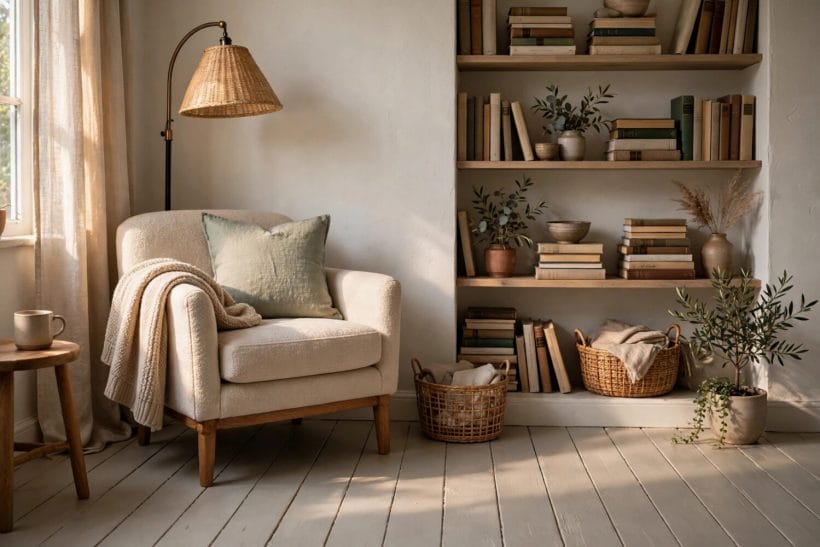
Once the idea of a painted floor feels comfortable, patterns offer a next step that is still gentle. A painted border around the edge of a room, a wide stripe running down a hallway, or a simple checked panel in an entryway can give a floor character without turning it into a feature that overwhelms the room. The best painted patterns are the quiet ones: a second tone that agrees with the first, rather than competing with it.
Borders are the easiest pattern to live with. A band of a deeper or contrasting tone around the edge of a room frames the floor the way a rug frames a seating area, and it can make a plain room feel tailored. In a hallway, a border draws the eye along the length of the space. In a bedroom, it can echo the colour of bedding or curtains and tie the room together. Because a border sits mostly under furniture and along walls, it also wears more slowly than the open field of the floor.
Stripes suit long, narrow spaces best. Wide, calm stripes in two close tones can make a hallway feel longer and a small room feel more deliberate, while narrow, high-contrast stripes can feel busy and tiring over time. If stripes appeal, keep them wide, keep the tones close, and try them first in a passage or landing where the pattern is glimpsed in passing rather than stared at all day. A stripe that feels lively in a hallway can feel restless under a dining table.
Checks, diamonds, and stencilled motifs belong in rooms where the floor is meant to be noticed: an entryway, a porch room, or a playful children’s space. They are more work to lay out and more demanding to keep looking crisp, since every small chip shows against a geometric edge. They repay that effort in rooms that are seen briefly and fondly, at the door or on the way upstairs, rather than in rooms where the floor must quietly support furniture and conversation for hours.
Whatever pattern you consider, paint the base colour first and live with it for a while before adding a second tone. A floor that already looks good in a single colour will only improve with a careful pattern, while a pattern laid over a colour you have not yet settled on can lock you into a decision you regret. Patience at this stage is not caution for its own sake. It is how a painted floor ends up looking designed rather than decorated on impulse.
9. Cleaning, Touch-Ups and Recoating
Everyday care for a painted floor is simple, and simplicity is the point. Sweep or vacuum regularly, since grit underfoot is what dulls a painted surface fastest, and clean with a gentle, general-purpose floor cleaner rather than anything harsh or abrasive. Avoid soaking the floor, wring out mops well, and wipe spills when they happen rather than leaving them to sit. These habits matter more than any special product, and they suit every painted floor regardless of colour or sheen.
Rugs are the painted floor’s best friends, provided they are used thoughtfully. A rug in a busy path, under a dining table, or beside a bed protects the paint where wear concentrates, while still letting the colour show around it. Choose rugs with a backing that will not trap dampness against the floor, and lift them now and then to clean beneath. A rug that never moves can hide a problem as easily as it prevents one, so the habit of lifting and checking matters as much as the rug itself.
Touch-ups are where painted floors quietly beat most other finishes. A scuffed corner, a chipped edge, or a worn path by the door can be cleaned, lightly prepared, and painted over without redoing the whole room, and the repair usually blends in far better than people expect, especially in mid-tones. Keeping a small amount of the original paint, clearly labelled and stored well, makes touch-ups a short job rather than a colour-matching puzzle. Note the colour name and where it was used, while you still remember.
Recoating the whole floor is a bigger decision, but a much smaller one than replacing it. When wear has spread beyond what touch-ups can quietly fix, or when the room itself is being refreshed, a fresh coat over a well-prepared surface can renew the floor entirely. The preparation matters just as much the second time: clean thoroughly, deal with any flaking or damaged areas honestly, and let each coat dry properly. A recoat done patiently can look as good as the first coat, and it is one of the strongest practical arguments for choosing paint in the first place.
There is a rhythm to caring for a painted floor that suits most homes: sweep often, clean gently, protect the busy paths, touch up small wear promptly, and recoat when the whole surface asks for it rather than when a single corner does. Followed loosely, that rhythm keeps a painted floor looking considered for a long time, without turning floor care into a project of its own.
10. When to Call a Professional
Some floor questions belong with a professional from the start, and recognising them early saves both money and disappointment. If boards are loose, springy, or soft underfoot, if there is damp, staining, or a musty smell near the floor, or if the floor slopes, sags, or feels uneven in a way that suggests movement underneath, painting will not help and may hide a problem that needs attention. A professional can judge the structure, the subfloor, and the source of any dampness before any finish is discussed.
The same caution applies to floors in older homes, where layers of old finishes, unknown treatments, or previous repairs may complicate a simple paint job. A professional eye can tell you whether the floor is a good candidate for paint at all, and what preparation it honestly needs. That advice is worth having before you buy paint or clear a room, because it can change the plan entirely, and a changed plan early is far cheaper than a painted floor that fails within months.
Structural and subfloor work is professional-only, without exception in this guide. Levelling, replacing boards, repairing joists, or dealing with damp and its cause are not painting tasks, and they should never be improvised as part of a decorating project. The same applies to stairs and to any floor where safety depends on the structure beneath: a beautiful finish over an unsound floor is not a success, it is a risk politely covered up.
There are also happy reasons to call a professional. A large or complex floor, a whole-home colour scheme, or a pattern that needs precise layout can all benefit from experienced hands, and the result often justifies the help. Hiring a professional for part of the job, the assessment, the repairs, or the final coats, while you handle cleaning and colour testing yourself, is a sensible middle path that many homeowners choose.
Knowing where your project ends and a professional’s begins is not a limitation on a painted floor. It is what makes the painted part of the project succeed. Paint does its best work on a sound floor, and a sound floor is sometimes a professional’s work first.
Final Considerations
A painted wooden floor is a modest, forgiving way to change a room. It costs little compared with replacing a floor, it can be refreshed again and again, and it lets the wood itself remain part of the room, grain and all. The floors that work best are rarely the boldest. They are the ones where colour, sheen, and light were considered together, where preparation was taken seriously, and where the finish was chosen for the life the room actually leads.
If you are still deciding, start small. Paint a bedroom, a hallway, or a nook, and live with it through different lights and seasons before taking the colour further. Notice how it feels underfoot in the morning, how it looks under lamps at night, and how it copes with the traffic of an ordinary week. That lived experience will tell you more than any guide can, including this one, and it will guide the next room with confidence.
For more painted wood floors ideas, keep the principles in this guide beside you: sound boards first, colour tested in your own light, thin coats with proper drying, gentle care, and a professional called in whenever the floor itself is in question. A painted floor chosen on those terms is not a compromise or a cover-up. It is a finish in its own right, and a room that carries one well tends to feel calm, considered, and quietly personal.
Related reading: lighting ideas for small interiors, tiny living room ideas, and home design ideas for the wider room around your floor.



0 Comments