
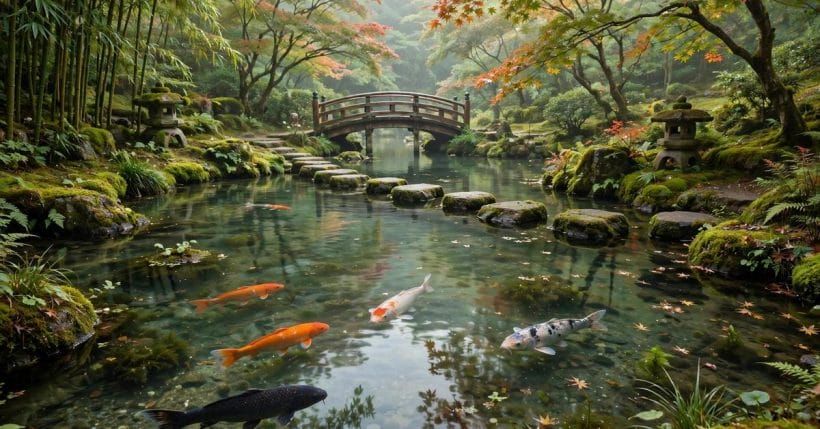
There is a moment, just before evening, when a koi pond stops looking like a garden feature and starts feeling like a room without walls. The water darkens a little, the fish rise slowly, and the whole garden seems to lower its voice. That quiet is the real subject of this guide, and it is the reason a japanese pond rewards patience more than novelty.
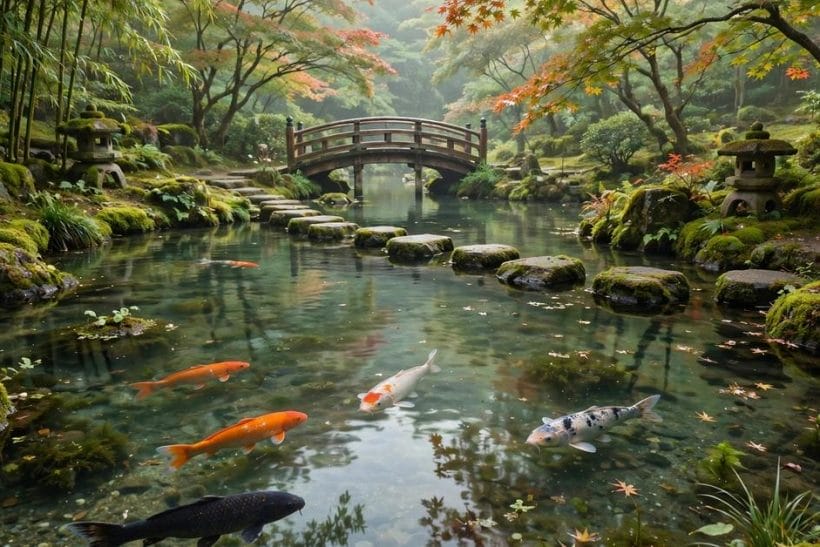
The ideas that follow stay with one form only: the Japanese koi pond, shaped by stone, planting and still water, and meant to be looked at as much as walked around. They cover shape, edges, bridges, planting, seating, shade, sound and care, in general design terms, so that a reader can recognise what suits a particular garden before speaking with a pond professional about the water and electrical work, which belongs with qualified hands.
1. The Shape Comes First
A koi pond begins with its outline, and the outline decides almost everything that follows. A soft, curving edge tends to feel like a natural pool, while a straight, formal edge tends to feel like a courtyard basin, and neither is better in itself. The right choice is the one that sits comfortably with the house behind it and the paths that already cross the garden, so the pond reads as though it had always belonged there rather than as something placed on top of the lawn.
Curves also change how the pond is seen. From a window, a curving pond can hide one end behind planting, which gives the garden a sense of depth even when the ground itself is modest in size. From a path, the same curve can draw the eye slowly around the water instead of giving the whole scene away at once, and that slow reveal is part of what makes a Japanese garden feel restful. A formal shape, by contrast, suits a garden that is already ordered, with clipped hedging and straight walks, where symmetry is the point and the pond acts as a calm centre.
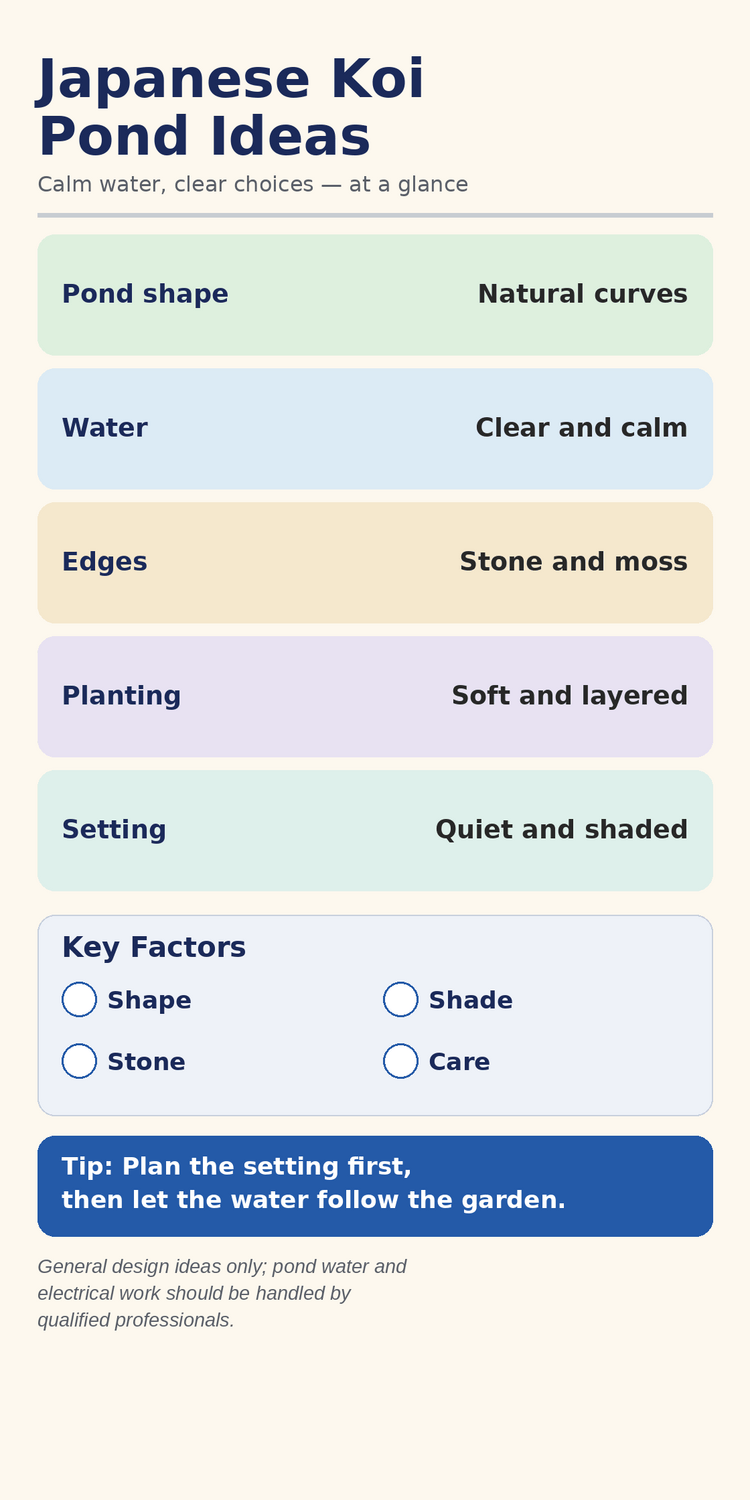
| Part of the pond | At a glance |
|---|---|
| Shape | Natural curves or a calm formal outline |
| Water | Clear and calm, easy to look into |
| Edges | Stone and moss, softened by planting |
| Planting | Soft and layered, never crowded |
| Setting | Quiet and shaded, with a place to sit |
Before any shape is settled, it helps to walk the garden at different times of day and notice where light falls, where shade gathers, and where people naturally pause. A pond placed where it can be seen from a favourite window will be enjoyed far more often than one tucked into a corner that is rarely visited, and a pond near a seating spot invites the slow looking that koi ponds are made for. Readers planning the wider garden may find tiny house garden ideas useful for thinking about how a water feature sits beside paths, planting and small outdoor rooms.
2. Still Water and Clear Views
Still water is what makes a koi pond different from other garden water. A fountain that throws water high into the air can be beautiful, but it breaks the surface into spray and makes the fish hard to see, while a calm surface acts like a mirror that carries reflections of trees, sky and stone, and lets the fish show themselves as slow colour moving beneath it. For that reason, many of the most restful koi ponds keep the water surface as quiet as possible, with movement kept gentle and low.
Clarity matters for the same reason. When the water is clear, the pond can be enjoyed from above, from a bridge, or from a low seat at the edge, and the fish become part of the garden rather than a rumour beneath the surface. Keeping water clear is a matter for a pond professional, who can advise on filtration and care in general terms for a particular pond, and it is worth asking about maintenance honestly before a pond is built, so that the pleasure of looking does not turn into a chore that nobody enjoys.
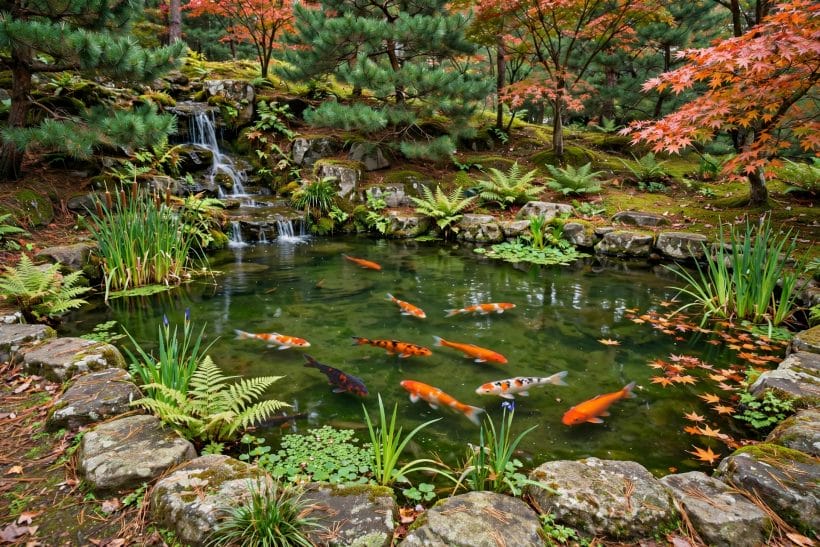
Views into the water can be helped by the garden around it. Low planting at the edge frames the pond without blocking it, a pale stone or a patch of gravel can lighten a dark corner, and a simple timber deck or flat stone at one side gives a natural place to stand and look down. The aim is not to show everything at once, but to give the eye a comfortable place to rest, with the fish as the slow centre of attention. A related calm-water tradition appears in Japanese zen rock garden design, where raked gravel and stone carry a similar quiet.
3. Stone Edges and Stepping Stones
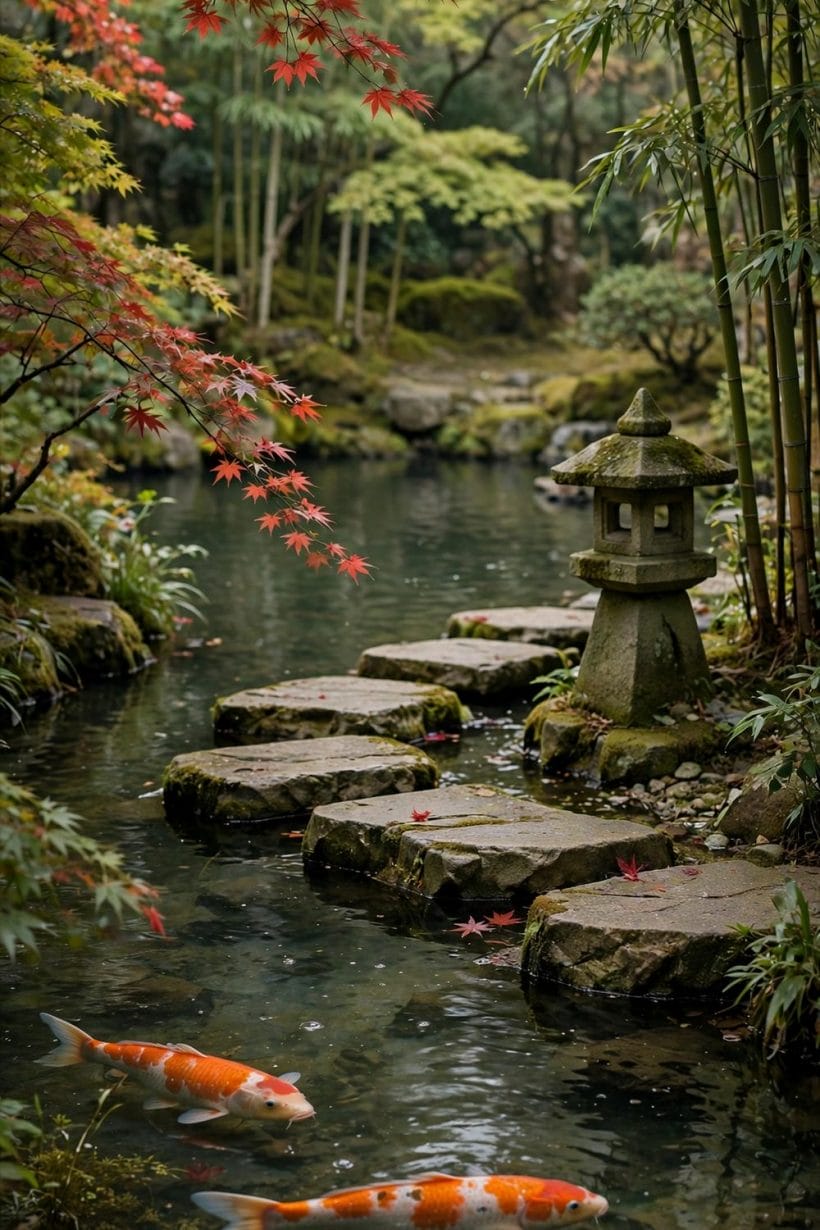
Stone gives a koi pond its weight and its age. A raw, newly cut edge can look harsh for a long time, while weathered stone, moss and planting at the margin help the pond settle into the garden quickly, as though the water had found its own place among the rocks. Flat stones set slightly over the water soften the line where garden meets pond, and they give birds a place to drink, which adds a small, living detail to the scene.
Stepping stones carry the same idea further. A short run of flat stones across a shallow margin, or beside the pond rather than over it, lets a visitor cross the garden slowly, looking down at the water with each step, and that slow pace suits the mood of a Japanese garden. Stones should sit firmly and feel safe underfoot, with gaps that suit a relaxed stride, and any stonework near water is best discussed with a professional, since a stone that shifts underfoot near deep water is a hazard rather than a charm.
The colour and character of the stone matter more than any particular type. Warm, grey or dark stones each change the mood of the water beside them, and a mix that is too busy can distract from the fish, which are the pond’s real colour. A limited palette, repeated through the garden in walls, paths and lantern bases, tends to hold the whole scene together, and it lets seasonal colour from maples and planting do the changing while the stone stays constant. For the house side of the same question, tiny house exterior ideas shows how outside materials can echo the house itself.
4. Bridges That Belong to the Garden
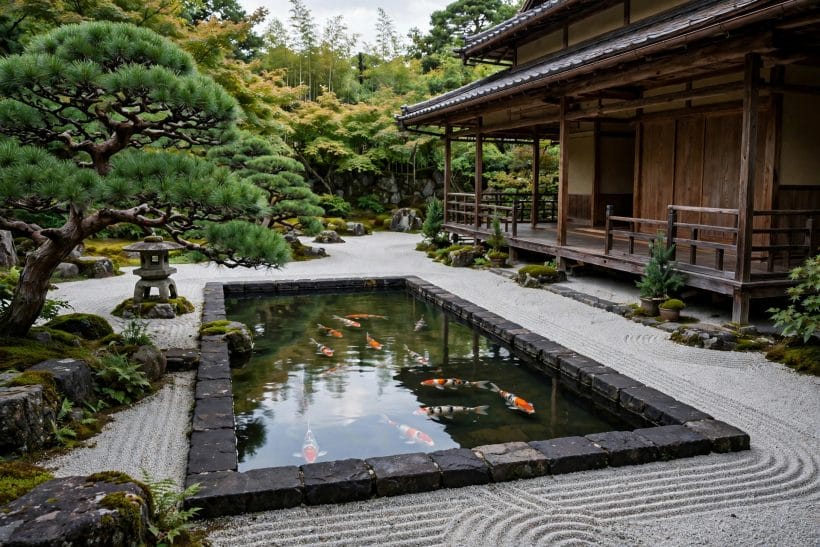
A bridge is often the first thing a visitor remembers about a koi pond, and it is also the easiest element to get wrong. A bridge that is too grand for a small pond can dominate the garden, while a bridge that is too slight can look like an afterthought, and the happiest bridges are those that seem to grow out of the paths on either side. A low, gently arched timber bridge suits a natural pond, while a flat, simple crossing suits a formal pond, and in both cases the bridge should feel like part of the walk rather than a separate attraction.
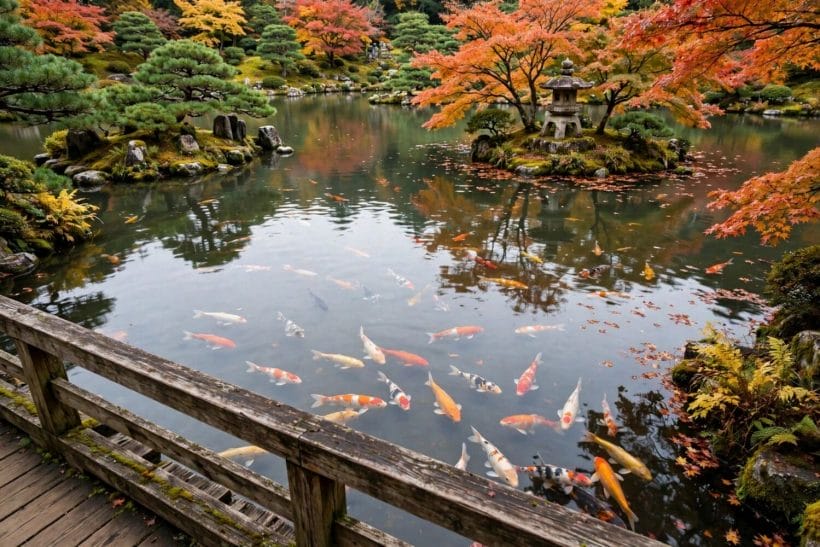
From a bridge, the pond is seen in a way that no other viewpoint allows. The water opens below, the fish pass beneath, and the garden shows itself from both directions, so a bridge placed where the pond is widest gives the fullest view. A bridge also changes the sound of a garden walk, since timber underfoot and water below make a small, pleasant contrast, and that sensory detail is part of why bridges appear so often in Japanese garden design.
Safety deserves a plain word here. A bridge over water should be built soundly, with handrails or edges that suit the people who will use it, including children and older visitors, and any structure over water is work for a qualified builder rather than a casual weekend project. When the bridge is sound, it can be enjoyed without a second thought, which is exactly how a garden bridge should feel.
5. Planting in Layers
Planting around a koi pond works in layers, much like the planting of a woodland edge. Tall trees give shade and height, shrubs give shape through the year, and low ground cover softens the stone at the water’s edge, so that the pond sits inside a green frame rather than standing alone on bare ground. Maples are a familiar choice for their changing colour, pines for their steady green through winter, and bamboo for the sound and movement it brings, though bamboo needs careful containment, since it can spread well beyond where it was first planted.
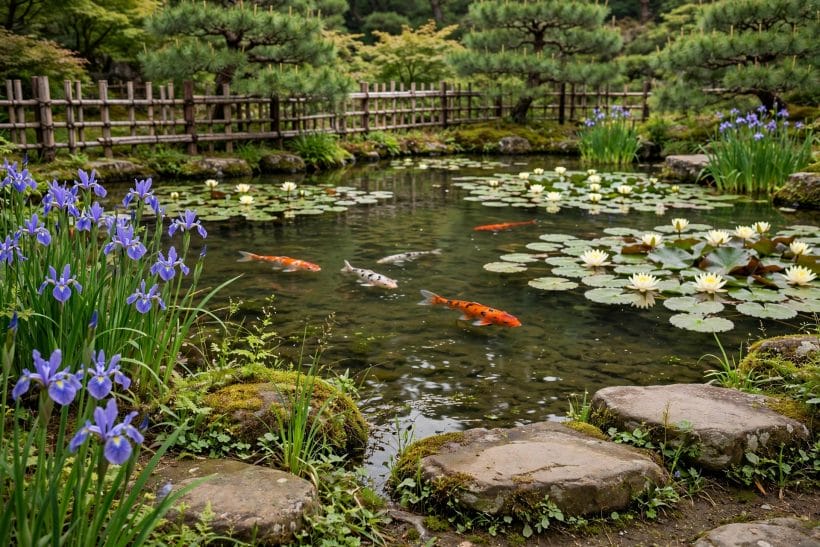
At the water’s edge, planting should be restrained. A few well-chosen marginal plants, irises and low grasses can soften the stone without hiding the water, while too much planting at the margin can make the pond feel overgrown and can drop leaves and debris into the water. Water lilies, where they suit the pond, give floating leaves and seasonal flowers that rest on the surface, and they also give the fish shade, which is a practical kindness as well as a visual pleasure.
Planting choices also depend on the garden’s size and shade, and a small garden can still carry a koi pond well if the planting is kept in scale. A single maple, a few shrubs and a drift of ground cover can be enough, and restraint often reads as more Japanese than abundance, since the tradition values empty space as much as full planting. Readers working with a compact plot may like tiny backyard ideas for ways to keep a small garden feeling generous.
6. Lanterns, Bamboo and Quiet Details
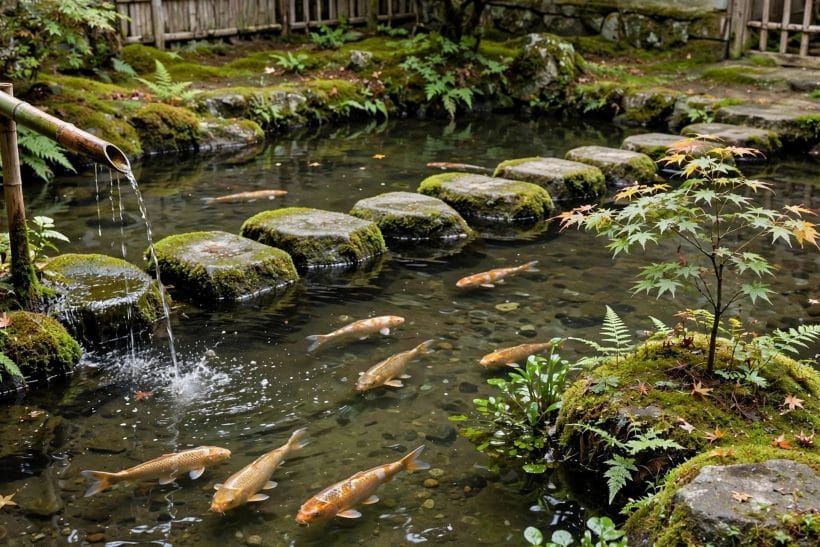
Stone lanterns are the quiet punctuation of a Japanese garden, and around a koi pond they work best when they are few and well placed. A single lantern near a turn in the path, or beside a flat stone where a visitor might pause, can anchor a view without competing with the water, while a row of lanterns around a small pond can quickly feel like decoration rather than garden. A lantern that has weathered a little, with moss on its base, tends to sit more comfortably than a bright, new one, and patience with weathering is part of the design.
Bamboo brings a different quality: movement and sound. A bamboo grove behind a pond gives a soft, rustling backdrop, and a bamboo fence can screen a neighbouring view while keeping the garden feeling natural. A bamboo water spout, where one is used, adds a gentle, rhythmic sound and a small point of movement, and it is best treated as a garden ornament whose water supply and any associated electrical work are handled by a professional, since water and wiring together are never a matter for improvisation.
Other details can be kept to a minimum. A simple wooden bench, a flat stone for sitting, a gravel area for standing, or a single sculptural rock can each give the pond a sense of purpose without clutter, and the space left empty around them is part of the design rather than a gap waiting to be filled. The entry to such a garden can carry the same restraint, and Japanese genkan entryways shows how a calm threshold sets the tone for the garden beyond it.
7. A Place to Sit and Watch
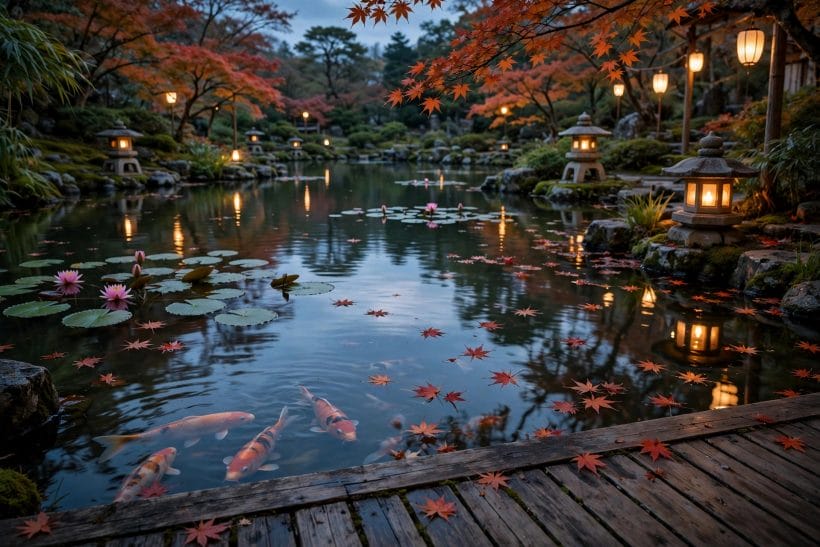
A koi pond is made to be watched, and watching needs a seat. A low timber deck at the water’s edge, a stone bench under a tree, or a sheltered veranda looking over the pond each give a different kind of watching, and the best seat is often the one that is already in shade at the time of day when the household most enjoys the garden. A seat that faces the water, rather than sitting with its back to it, invites longer stays, and a seat that is comfortable enough for a quiet hour will be used far more than a beautiful seat that nobody can sit on for long.
Seating also shapes how the pond is shared. A single seat suits solitary watching, while a small group of seats suits conversation, and the choice between them says something about how the garden will actually be used. A pond beside a dining terrace can become part of meals and gatherings, while a pond at the far end of a garden can become a place for retreat, and both are valid, provided the pond’s place in daily life is thought about before it is built rather than after.
Paths to the seat matter too. A path that arrives at the pond slowly, with a turn or a planting screen that delays the first full view, makes the arrival feel like a small discovery, and gravel underfoot gives a soft sound that suits a quiet garden. The house and its rooms can be planned with the same idea in mind, and tiny house designs offers a sense of how small houses open their rooms toward the garden they sit in.
8. Shade, Seasons and Changing Colour
A koi pond changes through the year, and that change is one of its great pleasures. In spring, fresh leaves and new planting lighten the garden, and the fish become more active as the weather warms. In summer, shade becomes precious, both for the people watching and for the fish below, and trees that overhang the water can help keep the pond cooler, though falling leaves in autumn then need to be cleared, since a pond covered in leaves loses both its clarity and its calm surface.
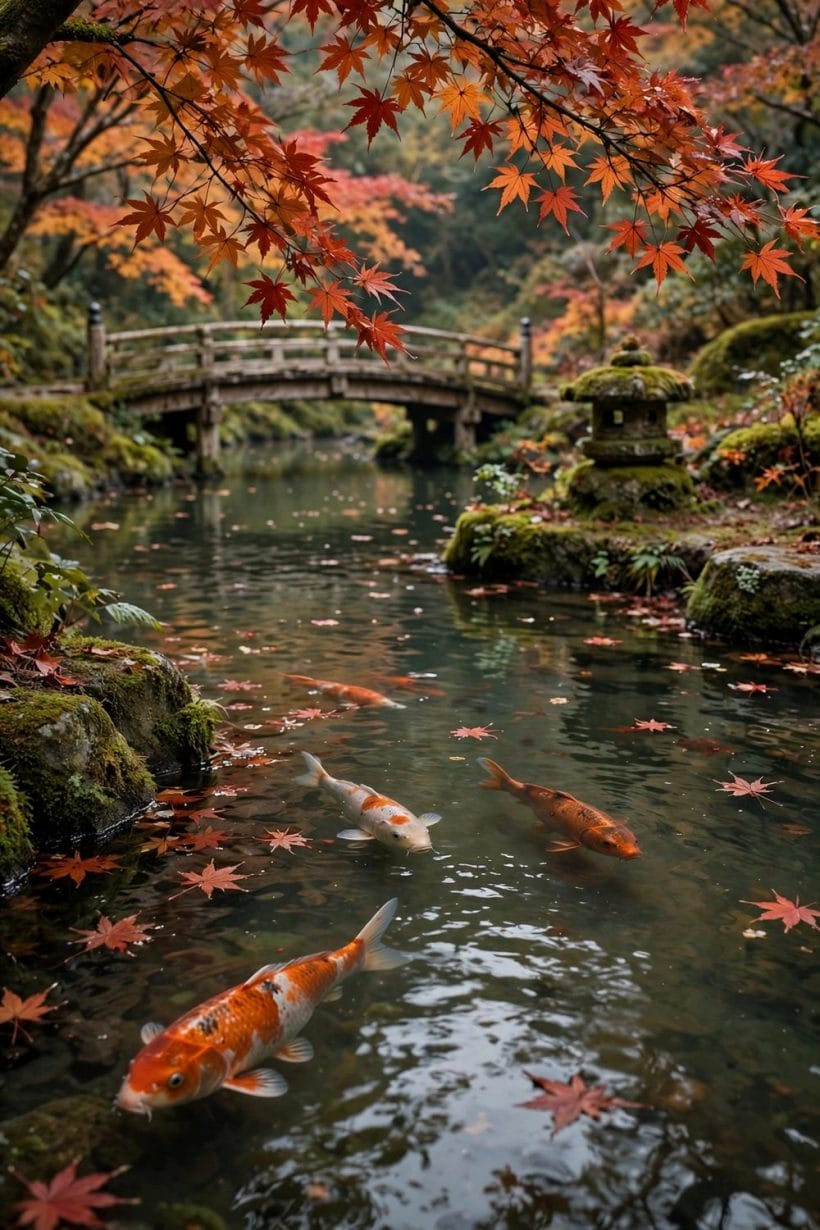
Autumn is often the most beautiful season for a Japanese koi pond, when maples colour and their reflections double the colour in the water, and the fish, in orange, white and black, move against a background of fallen leaves and dark stone. Winter brings a different quiet, with bare branches reflected in still water and evergreen pines holding the garden’s shape, and a pond that is designed to look well in winter, rather than only in summer, will reward its owners through the whole year.
Seasonal thinking also helps with planting choices. A garden that relies on a single season for its beauty can feel empty for much of the year, while a mix of evergreen structure, spring flowers, summer shade and autumn colour gives the pond a changing frame that never quite repeats itself. That variety is best planned in general terms, with local garden advice for what grows well in a particular place, since a plant that thrives in one climate may struggle in another, and no guide can promise how any single plant will behave in a particular garden.
9. Water Movement Without Noise
Water movement in a koi pond is a matter of balance. A pond with no movement at all can feel stagnant, while a pond with a loud waterfall can drown conversation and startle the fish, and the most restful ponds tend to keep movement gentle: a low cascade over stone, a slow stream joining the pond, or a quiet trickle that can be heard only when the garden itself is quiet. Sound, like planting, is best kept in scale with the pond, so that the water is a background presence rather than a performance.
A small waterfall over rocks can also give the pond a sense of direction, since the eye follows the water down into the pond and then across its surface, and a stream that enters the pond from behind planting can suggest a longer watercourse than the garden actually holds. These are design effects worth discussing with a pond professional, who can advise on how water is moved and filtered, and on the safe provision of any pumps or wiring, which should always be installed and maintained by qualified people, with no improvised electrical work near water at any stage.
Inside the house, the same respect for quiet can be carried through the rooms that look out onto the pond, since a calm interior helps a calm garden, and interior design ideas can suggest ways to frame a garden view from within. The connection between inside and outside is part of what makes a Japanese garden feel complete, with the pond as a shared focus rather than a separate feature.
10. Care Through the Year, Gently
Care is the part of koi keeping that deserves the most honest discussion, since a pond that looks effortless usually rests on regular, gentle attention. Leaves need clearing, planting needs trimming, the water needs watching, and the fish need feeding in a way that suits their needs and the season, with advice from a pond specialist for the particular pond rather than from general rules alone. A pond that is too large or too demanding for the household that owns it will not stay beautiful for long, and choosing a scale that can be cared for happily is a design decision in its own right.
Fish care, in particular, should be approached with humility. Koi can live for many years, and they respond to calm handling, clean water and a stable routine, but they are living creatures rather than ornaments, and any sign of trouble in the water or among the fish is a reason to seek specialist advice promptly rather than to try a remedy found at random. No treatment or additive should be used without professional guidance, and this guide deliberately offers no recipes or chemical instructions, since what suits one pond may harm another, and a specialist who can see the pond is the right person to advise.
Seasonal care can be kept simple when it is kept regular. A short, steady routine through the year, with tasks spread across the seasons rather than left to a single heavy session, tends to keep both pond and garden in good heart, and it also keeps the owner in touch with the pond’s changing character. That regular attention is, in the end, part of the pleasure, since a koi pond rewards the person who looks at it often with small changes that a hurried glance would miss.
Final Considerations
A Japanese koi pond succeeds when it feels inevitable: when the shape suits the garden, the stone looks settled, the planting frames rather than crowds, and the water stays calm enough for the fish to be seen. The ideas in this guide are meant to be held lightly, as starting points for conversation with a pond professional, rather than as instructions to be followed without thought, and the best pond for any garden is the one that fits its place, its household and its capacity for care.
It is worth ending with a simple test. Stand where the pond would be seen most often, look at the garden as it is, and ask whether the pond would make that view calmer, deeper and more worth returning to. If the answer is yes, then a japanese pond in that place has a good chance of becoming a lasting part of the garden, not because any single feature guarantees it, but because shape, stone, planting, shade and quiet water have been considered together, and because the work of water and wiring has been left, properly, to qualified hands.



0 Comments