
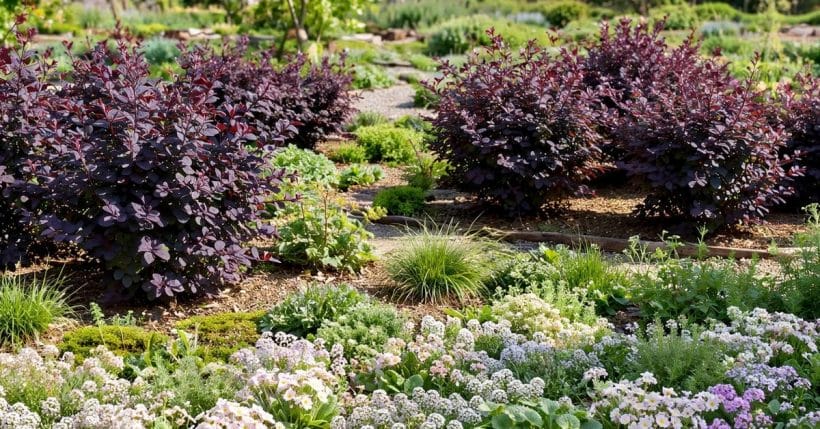
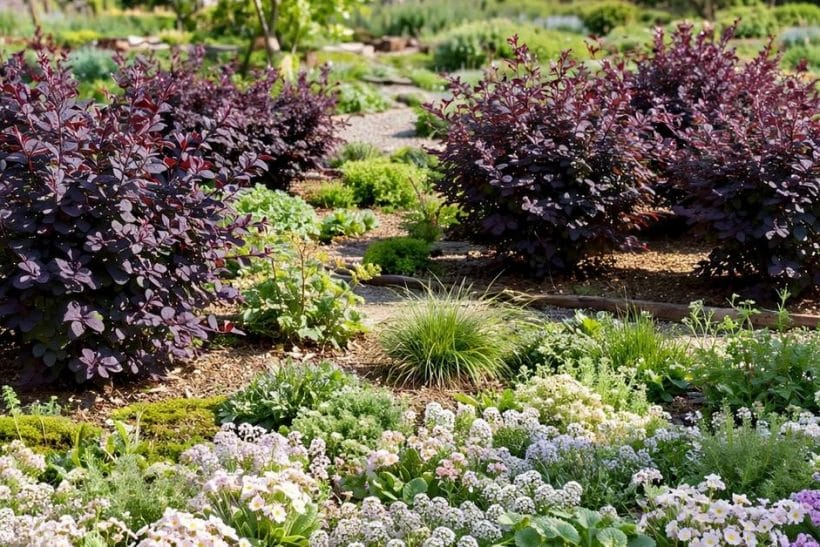
Deep purple leaves can change a garden bed the way a dark frame changes a picture. They hold the eye, steady a busy border, and give pale flowers a quiet backdrop to shine against.
This guide looks at purple leaved shrubs through five well-loved kinds, then covers choosing a spot, planting, care and pairing, so you can judge which ones may suit your own garden.
1. Five Purple-Leaf Shrubs at a Glance
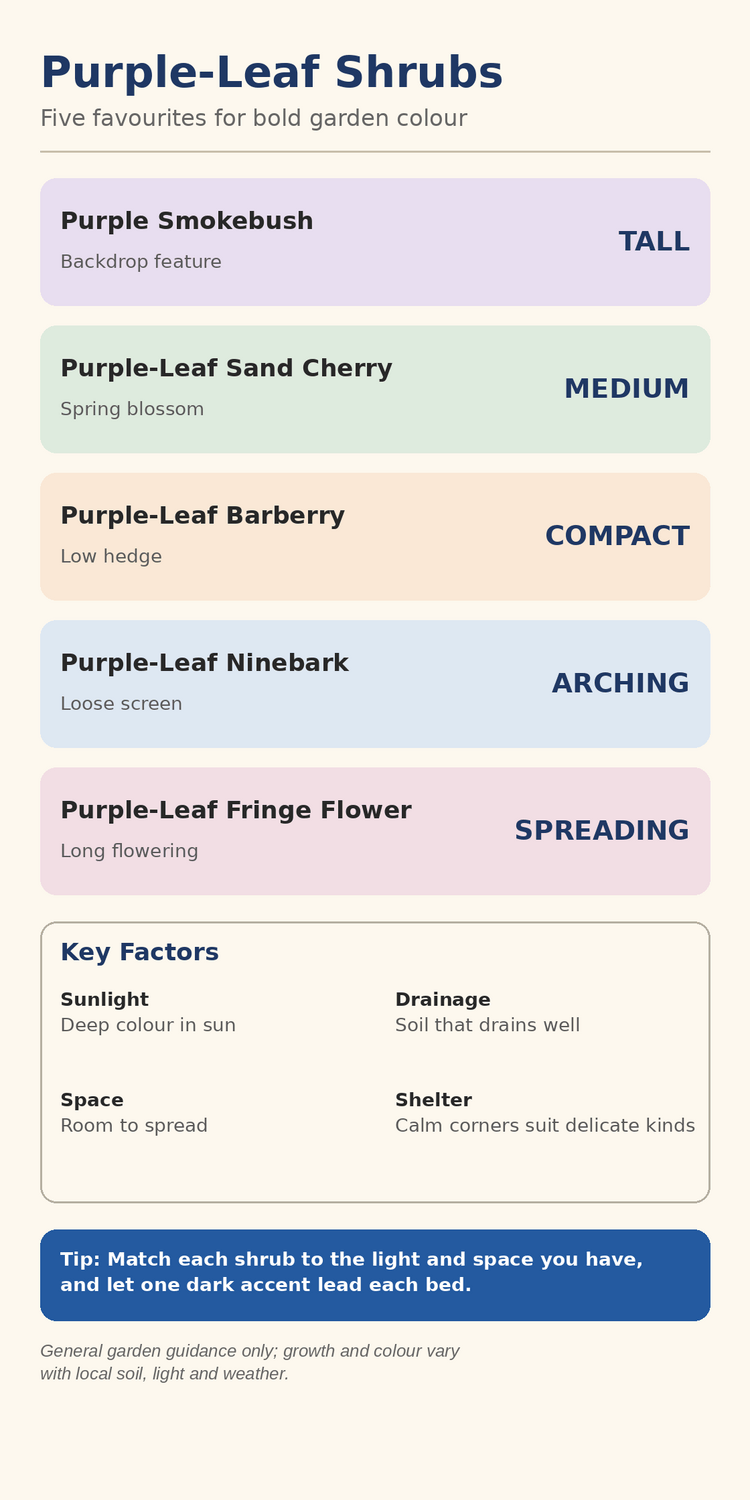
The five shrubs below are the whole cast of this guide. Each one earns its place for a different reason: one for airy height, one for spring flowers, one for a dense hedge, one for arching form, and one for a long flowering season. Read the table first, then meet each shrub in turn.
| Shrub | Foliage | Size and shape | Where it shines |
|---|---|---|---|
| Purple Smokebush | Dusky purple, rounded leaves | Tall and broad, airy outline | A backdrop or a single feature plant |
| Purple-Leaf Sand Cherry | Deep purple, pointed leaves | Medium and rounded | A mid-border accent or a low hedge |
| Purple-Leaf Barberry | Small, deep purple leaves | Compact and dense | A low hedge or a border edge |
| Purple-Leaf Ninebark | Lobed, deep purple leaves | Medium to tall, arching | A screen or a mixed border |
| Purple-Leaf Fringe Flower | Fine, deep purple leaves | Medium and spreading | A border accent or a container planting |
Sizes vary with soil, light and pruning, so treat these notes as a general guide rather than a promise. A shrub that stays compact in one garden may grow broader in another, and local conditions always have the last word.
2. Purple Smokebush
Purple smokebush is the tallest presence in this group, and it earns its name from the soft, smoky plumes that rise above its leaves in summer. The plumes catch the light and give the whole plant a hazy outline, which is why it works so well at the back of a border, where its height can frame everything in front of it without hiding it.
Its rounded leaves carry a dusky purple tone through much of the growing season, and they often warm toward red and orange shades as autumn arrives. That slow shift means the plant offers more than one look across the year, even before its plumes appear. Give it room to spread, because a crowded smokebush loses the open, airy shape that makes it so appealing, and its branches need air and light to colour well.
It suits a sunny, sheltered corner where it can grow into a natural backdrop, and it pairs well with lower plants in front that hide its bare lower stems as it matures. If you are planning a whole bed around a feature shrub like this, our backyard landscaping ideas may help you see how a tall backdrop plant sits within a wider layout. Prune lightly and with a clear purpose, since heavy cutting can remove the flowering wood and change the shape you planted it for.
3. Purple-Leaf Sand Cherry
Purple-leaf sand cherry is a medium, rounded shrub that gives you two shows in one plant: pale blossoms in spring, followed by deep purple leaves that carry the colour through the rest of the season. The blossoms open before or beside the young leaves, so the plant looks soft and light in spring and darker and richer as summer settles in.
Its pointed leaves hold their purple tone best where the plant receives generous sun, and they may turn greener in deeper shade, which is worth knowing before you choose a spot. The rounded habit makes it easy to place: it can stand as a single accent in a small bed, or sit in a loose row where you want a low, informal hedge that still lets light and air through.
It tends to be shorter-lived than some shrubs, so plan for that honestly rather than expecting it to anchor a bed forever. Enjoy it as a mid-border accent while it thrives, and be ready to replace it in time if it fades, which is a normal part of garden life rather than a failure. For small beds where every plant must earn its place, our tiny house garden ideas show how compact shrubs can shape a modest plot without crowding it.
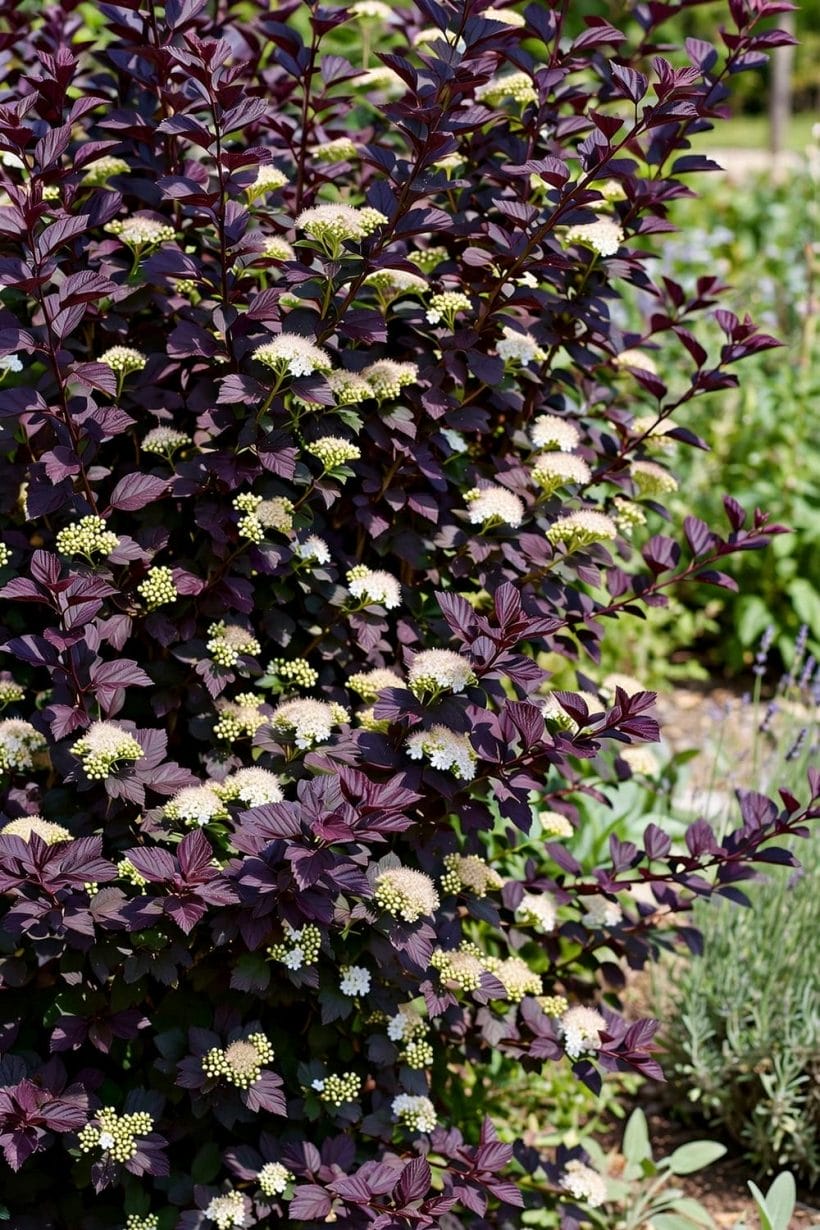
4. Purple-Leaf Barberry
Purple-leaf barberry is the compact member of this group, a dense shrub with small, deep purple leaves that form a neat, tidy mound. Its small scale makes it useful where larger purple-leaf shrubs would overwhelm the space, such as along a path, at the front of a border, or as a low hedge that marks a boundary without blocking a view.
Its stems often carry small thorns, so wear sturdy gloves when you prune or weed around it, and keep it away from narrow paths where passers-by might brush against it. That same dense, thorny habit is part of its value as a hedge, since it forms a thick screen that can discourage casual wandering through a bed. The leaves often colour further as autumn approaches, adding a late-season glow to a spot that might otherwise fade early.
Because it stays compact, barberry works well in pairs or short runs, where repetition gives a border a calm rhythm instead of a scattered look. It also suits a porch-side bed, where its low height keeps windows and steps clear while its colour still draws the eye. Our tiny house porch ideas may help you picture how a low hedge sits beside an entrance without crowding it. Trim lightly to keep its shape, and step back often to check the outline as you work.
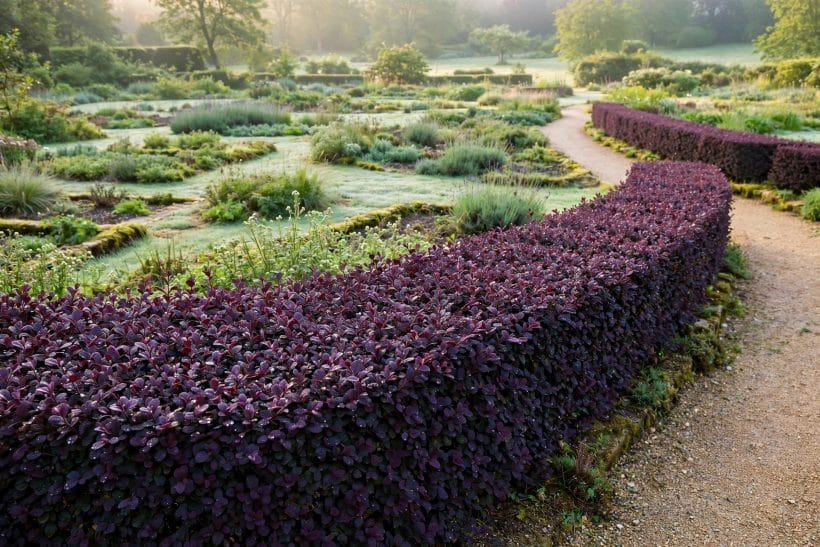
5. Purple-Leaf Ninebark
Purple-leaf ninebark brings a looser, arching shape to this group, with lobed leaves in deep purple and bark that peels away in strips as the plant matures. The arching stems give it a fountain-like outline, so it rarely looks stiff or formal, even when it is planted in a straight row. It is a good choice where you want a screen that still moves in the breeze and lets dappled light through.
Its leaves hold a rich purple tone through the growing season, and small pale flower heads in late spring add a soft contrast before the foliage takes over again. The peeling bark adds winter interest too, since the stems catch the eye once the leaves have fallen, which is a welcome bonus in a garden that can look bare in the cold months. Give it room for its arching stems to spread, because cutting it back hard can spoil the natural fountain shape.
Ninebark suits a mixed border, where its height and colour can anchor a group of softer plants, and it also works as a loose screen between two parts of a garden. If you like to grow shrubs in pots as well as in beds, our container garden ideas show how larger plants can be balanced with potted displays nearby. Prune out older stems from time to time to keep the plant open and airy, and let its natural shape lead the way.
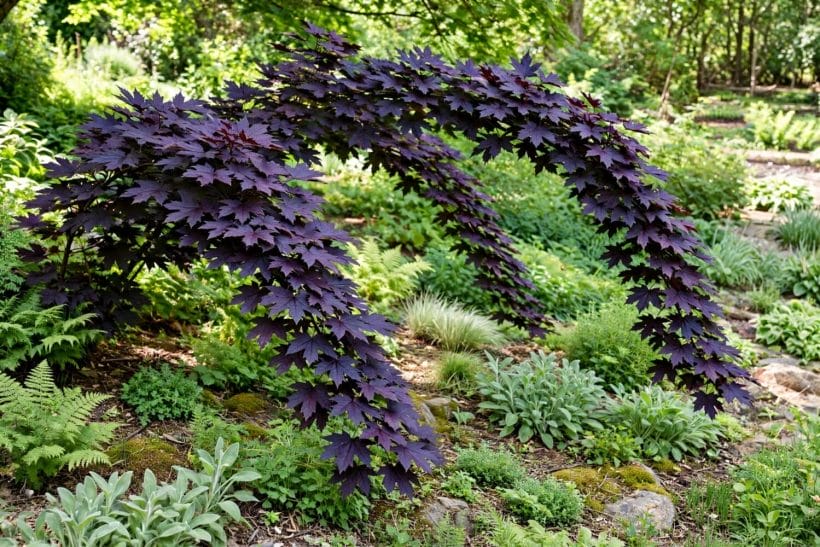
6. Purple-Leaf Fringe Flower
Purple-leaf fringe flower is the most delicate-looking shrub in this group, with fine, deep purple leaves and unusual fringe-like blooms that give it a soft, almost feathery appearance in flower. The blooms are usually pale, which makes them stand out gently against the dark foliage rather than shouting for attention, and the plant can flower over a long stretch of the growing season in mild conditions.
Its spreading habit makes it useful in the middle of a border, where it can fill a gap without dominating its neighbours, and it also grows well in a large container, where its fine leaves can be admired up close. In a container, it needs regular watering and a pot with good drainage, since confined roots dry out faster than roots in open ground, and a pot-bound plant can lose vigour if it is left too long without attention.
It prefers a sheltered spot, since cold winds and hard frosts may damage its leaves, so a position near a wall or among other plants often suits it better than an exposed corner. Treat it as a plant that rewards a little shelter and steady care, and it may repay you with months of quiet colour. Keep its shape tidy with light trimming after flowering, and avoid cutting into bare wood, where regrowth can be slow.
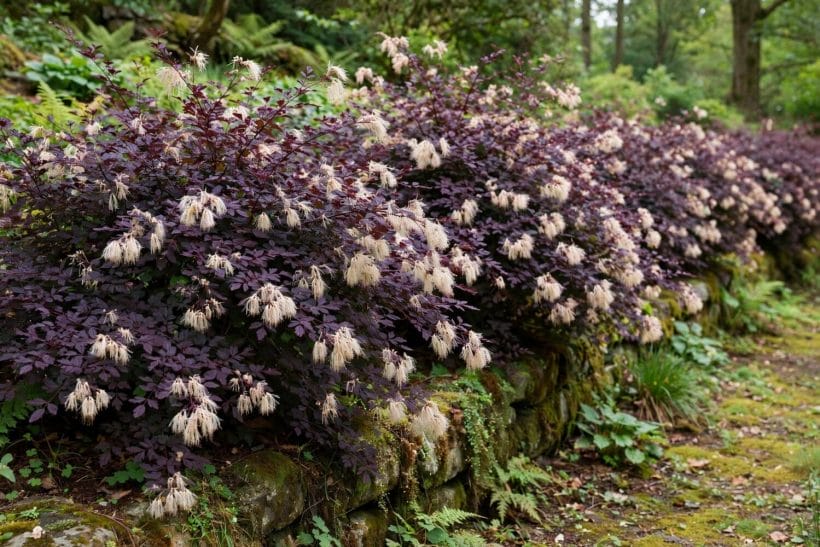
7. Choosing the Right Spot
Light comes first when you place any purple-leaf shrub, because leaf colour often depends on it. In generous sun, purple tones tend to stay deep and rich, while in deeper shade the same plant may turn greener and lose some of its drama. That does not make a shady spot wrong, but it does change what you can expect, so match the plant to the light you actually have rather than the light you wish you had.
Soil matters almost as much. Most of these shrubs prefer ground that drains well and does not stay waterlogged after rain, since roots sitting in wet soil can struggle. If your ground holds water, consider raising the bed slightly or improving drainage before planting, and always check how wet a spot stays after heavy rain rather than judging it on a dry day. Space matters too: measure the mature spread you hope for, then leave room around each plant for air, light and easy pruning access.
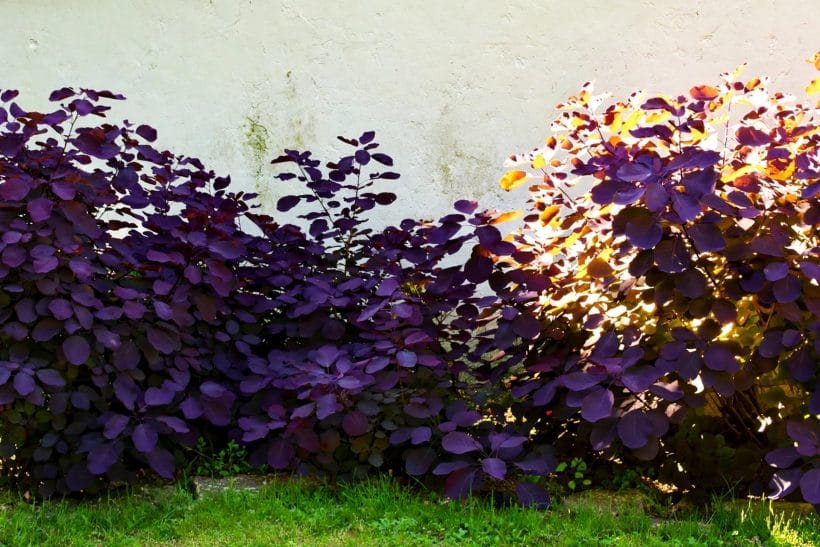
Think about the backdrop as well. Purple leaves show up best against pale walls, light gravel, soft green foliage or open sky, and they can disappear against dark fences or dense shade. A patio-side bed often gives you both sun and a pale backdrop, which is why purple foliage tends to shine there. Our tiny house patio ideas may help you see how planting beside a paved area changes the light and the view. Finally, consider wind and frost pockets, and favour sheltered ground for the more delicate members of the group.
8. Planting for a Strong Start
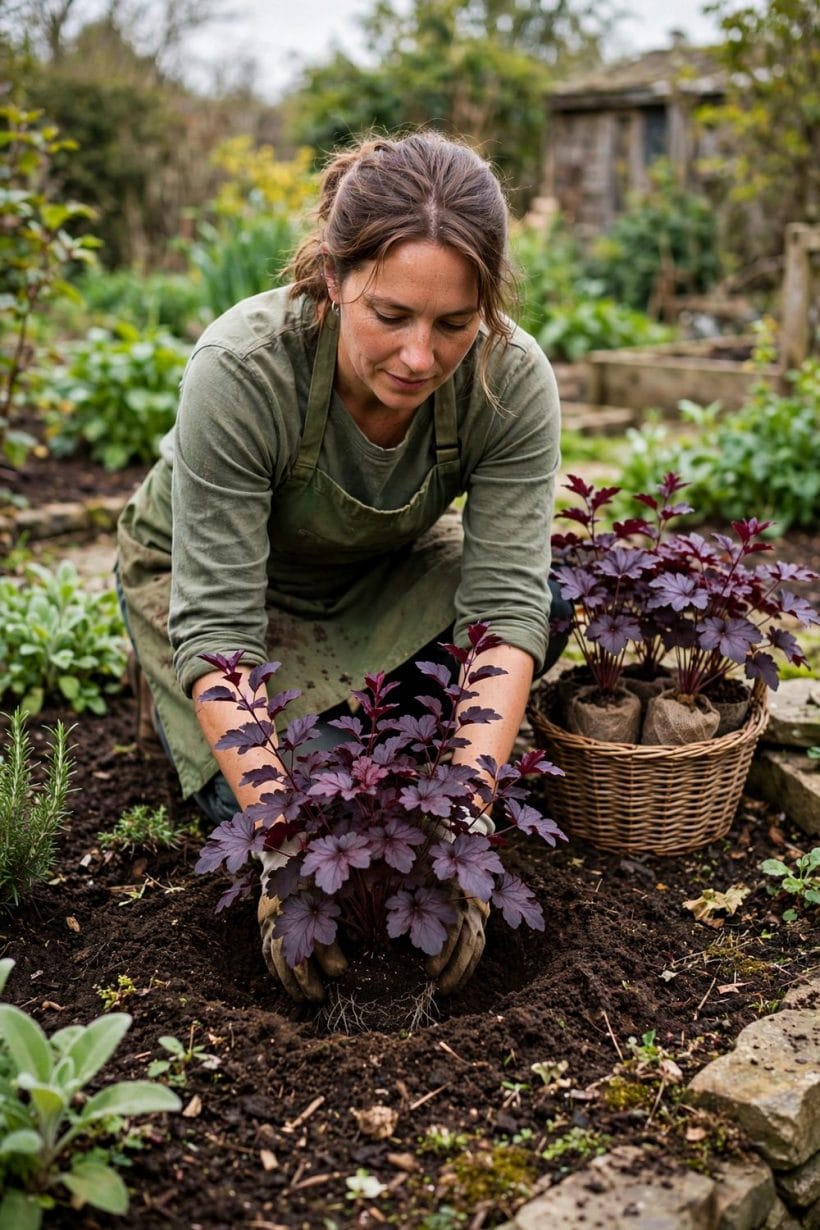
Good planting starts before you dig, with a clear plan for where each shrub will go and how much room it will need as it grows. Mark the positions, step back, and view them from the places you actually sit and walk, since a shrub that looks right on paper can still feel wrong from a window or a path. Once the positions feel right, prepare each hole wider than the root ball, so the roots can settle into loosened ground rather than pushing against a hard wall of soil.
Set each plant at the same depth it grew at before, firm the soil gently around the roots, and water it in well so air pockets close and the roots meet moist ground. A layer of mulch over the surface can help hold moisture and keep weeds down, but keep it clear of the stems, where trapped damp can cause trouble. If a plant is large or heavy, ask for help or hire a professional to lift and place it, since a strained back or a dropped root ball helps no one.
Keep tools, ties and spare mulch close at hand while you work, and a tidy storage spot nearby makes the whole job easier. Our garden shed ideas show how a small storage building can sit neatly beside a planting area without dominating it. After planting, water regularly while the roots establish, and resist the urge to feed heavily or prune hard in the first season, since a new plant needs time to settle before it faces major change.
9. Seasonal Care Through the Year
Seasonal care is mostly a matter of watching and responding, rather than following a rigid routine. In spring, walk the beds and look for winter damage, broken stems and new growth, and clear away debris that may hide slugs or trap damp against the stems. This is also a good time to refresh mulch and to check ties and supports, since a plant that starts the season tidy tends to stay that way.
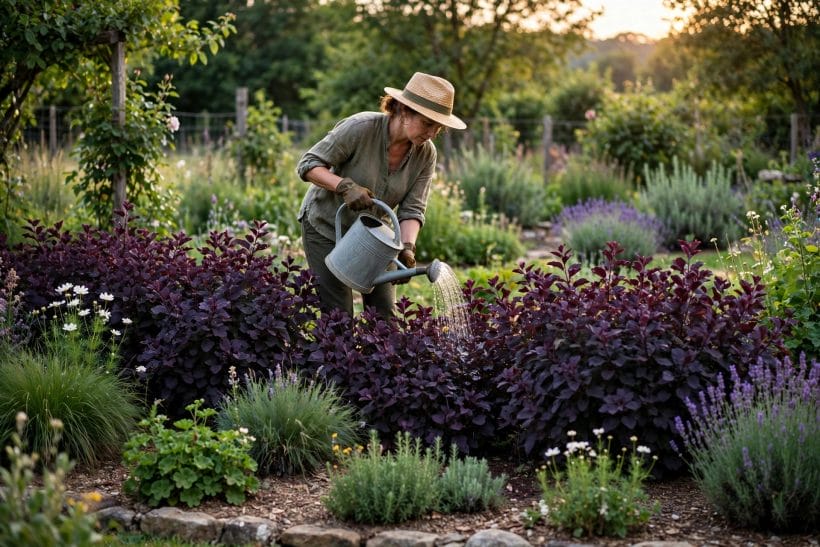
Through summer, watering matters most, especially for container plants and for shrubs planted in their first year. Water deeply and less often where you can, so moisture reaches the roots rather than wetting only the surface, and water in the cooler parts of the day when evaporation is lower. Watch the leaves: drooping or scorched edges may signal dry soil, while yellowing leaves can mean wet ground, so check the soil with your fingers before you act rather than guessing.
In autumn, let the plants wind down naturally, and avoid heavy pruning late in the season, since soft new growth may not harden before cold weather arrives. Tidy fallen leaves from paths, but leave some cover over the beds, where it can shelter the soil through winter. In winter itself, the main job is patience: avoid walking on frozen ground near roots, and wait for spring before judging damage, since a shrub that looks bare in January may still leaf out well when warmth returns.
10. Pairing Purple Leaves with the Rest of the Garden
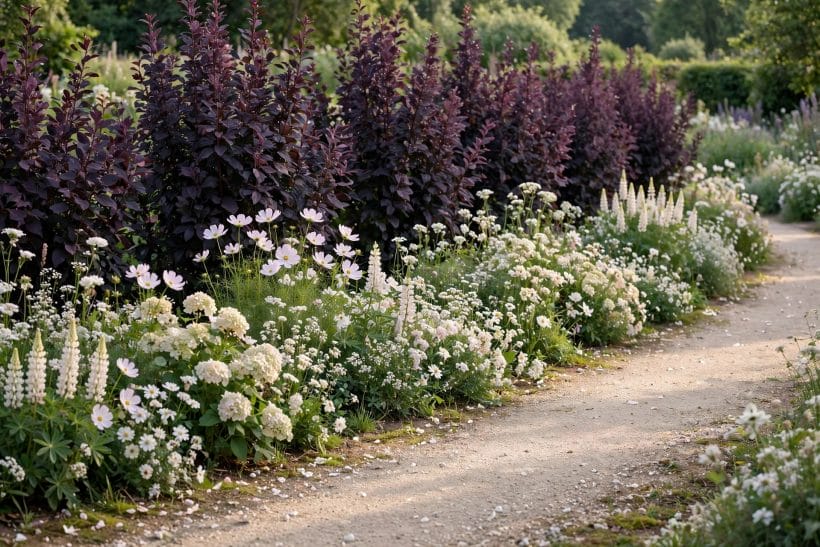
Purple leaves are strong characters, so pairing them well is mostly about restraint. One purple-leaf shrub in a bed can anchor the whole planting, while too many dark plants together can make a border feel heavy and closed in. A useful habit is to repeat one kind of purple foliage through a bed in a few places, rather than crowding many dark plants into one corner, so the colour leads the eye along the border instead of stopping it.
Pale flowers are the natural partners for purple leaves, since light blooms glow against a dark backdrop without competing with it. Soft green foliage plants also help, because they lighten the overall picture and give the eye somewhere to rest between dark accents. Silver-toned foliage can add a further lift, especially in sunny spots, where its pale leaves catch the light beside deep purple ones. Keep the supporting plants simple and generous, and let the purple foliage do the talking.
Think about shape as well as colour. A tall, airy shrub pairs well with low, mounded plants in front, while a compact hedge pairs well with taller, softer plants behind it. If you are dressing the area beside an outdoor sitting space, our tiny house deck ideas may help you see how planting frames a deck without closing it in. Step back often as you plant, and trust your eye: if a combination feels heavy, lighten it with more green or more pale blooms, and if it feels flat, add another note of purple further along the bed.
Final Considerations
Choosing among purple leaved shrubs comes down to the space you have, the light your garden offers, and the role you want the plant to play. A tall backdrop, a mid-border accent, a low hedge, a loose screen and a container plant each answer a different need, and the five shrubs in this guide cover those roles between them. Start with the role, then match the plant, and you are more likely to end up with a shrub that suits its spot for years.
Keep expectations honest and hedged: leaf colour may shift with light and season, growth may vary with soil and weather, and no shrub will thrive everywhere. Visit local gardens and nurseries where you can, look at mature plants in real beds, and ask growers in your area what tends to do well nearby, since local knowledge often beats general advice. With a good spot, steady watering while roots establish, and light, thoughtful pruning, purple foliage can give your garden a quiet drama that lasts well beyond any single flowering season.




0 Comments