
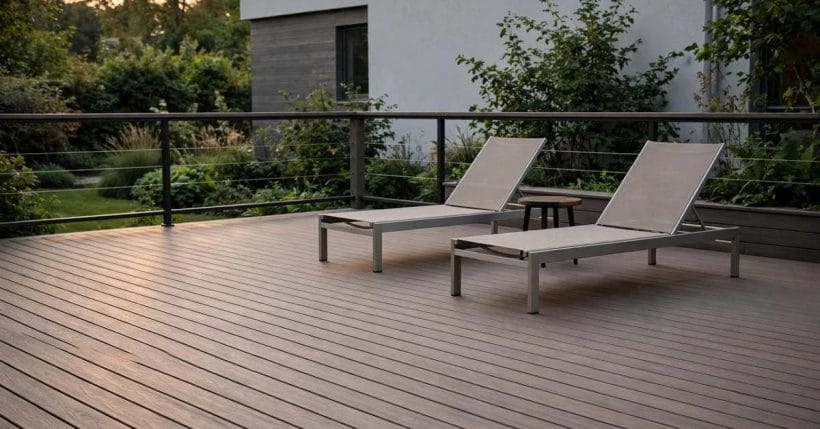
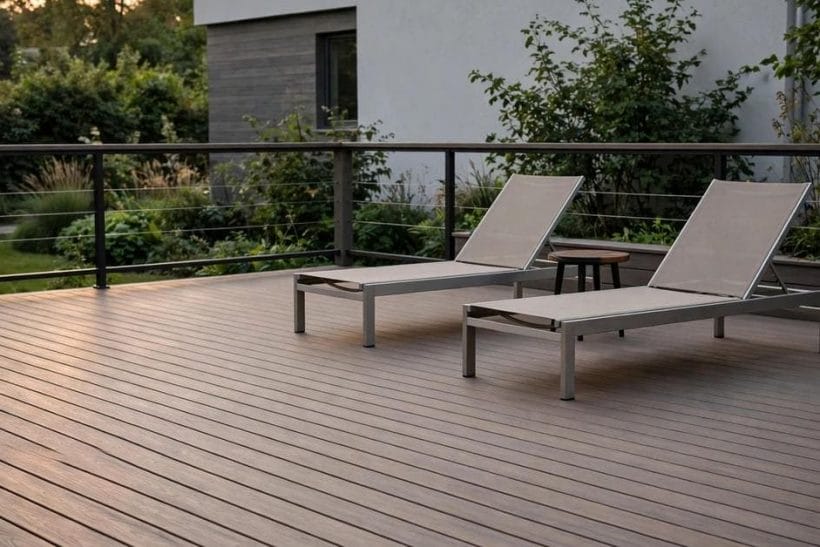
A deck should feel like a room outdoors, with space to sit, to eat, and to walk without squeezing past chairs. The best ones are rarely the biggest. They are the ones where shape, boards, railing and furniture were planned together.
This gallery of composite deck ideas walks through layouts, board tones, railings, steps, built-in seating and furniture zones, so you can picture what suits your home and your garden before any work begins.
1. Start With the Shape of the Deck
Every good deck starts with its outline. A long straight deck suits a garden you look down, while a wide shallow deck suits a house where the doors open across the whole back wall. An L-shaped deck can wrap a corner and give you a sunny side and a shaded side in one build. A raised deck lifts you above a sloping garden, while a deck that sits close to the ground feels more like a terrace and steps easily onto the lawn.
Walk the garden at different times of day before settling on a shape. Notice where the sun falls in the morning, where the wind comes from, and which view you actually want to sit and look at. A deck that faces the prettiest part of the garden will get used far more than one that faces the bins or the back of a shed. These composite deck ideas share one habit: the shape follows the garden and the way the household lives, not the other way round.
Think about the doors as well. A deck works best when it connects smoothly with the rooms behind it, so stepping outside feels easy rather than like an expedition. Wide doorways, a level threshold and a clear path from the kitchen or living room all help. If the deck has to turn a tight corner or dodge a drain cover, plan around those fixed points early, because they are much harder to move later.
| Shape | Suits best | First question to ask |
|---|---|---|
| Straight run | Long, narrow gardens | Where does the walk lead? |
| Wide and shallow | Full-width back doors | Is there room for two seating zones? |
| Corner wrap | Sun and shade in one deck | Which side gets the evening sun? |
| Multi-level | Sloping ground | How will the steps meet the lawn? |
| Low and level | Easy garden access | How does rainwater drain away? |
For a broader look at deck shapes in general, general deck ideas show how small and large decks alike are planned around doors, views and garden paths. The structure beneath any deck, including its supports and fixings, is work for a qualified professional, and local rules should be checked before building begins.
2. Straight Runs, Corners and Open Edges
A straight run of boards is the simplest layout to picture, and it suits many gardens beautifully. The boards run in one direction, the eye follows them toward the garden, and furniture can sit along either side without blocking the walk. A straight deck also makes it easy to add a bench or a planter later, because there are no awkward angles to work around.
Corners deserve just as much thought as the main run. A soft corner, where the deck turns gently or steps down in a wide tread, feels welcoming and is easy to furnish. A sharp corner can become a dead spot where nothing quite fits, so it helps to plan a purpose for every corner: a chair, a planter, a small table, or simply open space to stand and look at the garden.
Open edges are worth planning too. A deck without a railing on one side can flow straight onto the lawn, which suits low decks and level gardens. Where a drop or a busy path makes an edge less safe, a low rail or a row of planters can mark the boundary without closing off the view. Keep the main walk clear from the door to the steps, and leave enough room for two people to pass with a tray of drinks.
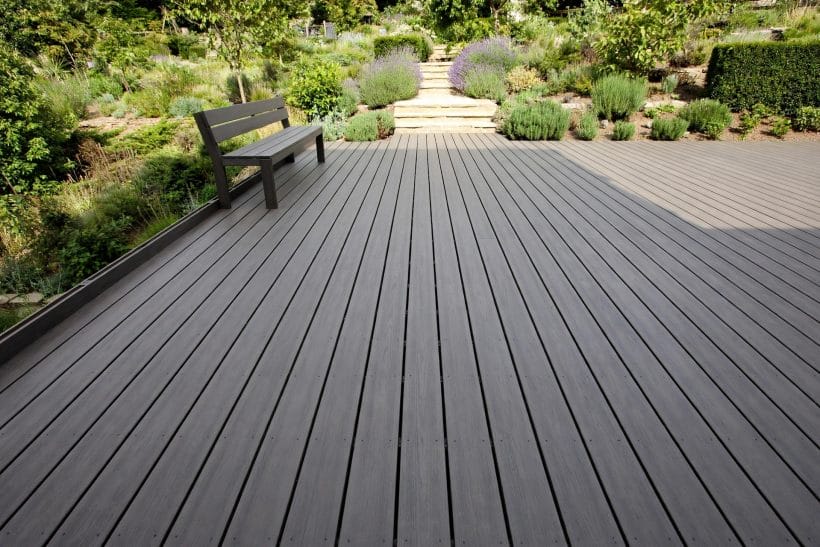
Board direction can change how big a deck feels. Boards that run toward the view draw the eye outward, while boards that run across the deck can make a narrow space feel wider. There is no single right answer, and the best choice depends on the shape of the deck and the view beyond it. Try standing on the ground where the deck will sit and imagining the lines under your feet.
3. Board Tones and the Border Detail
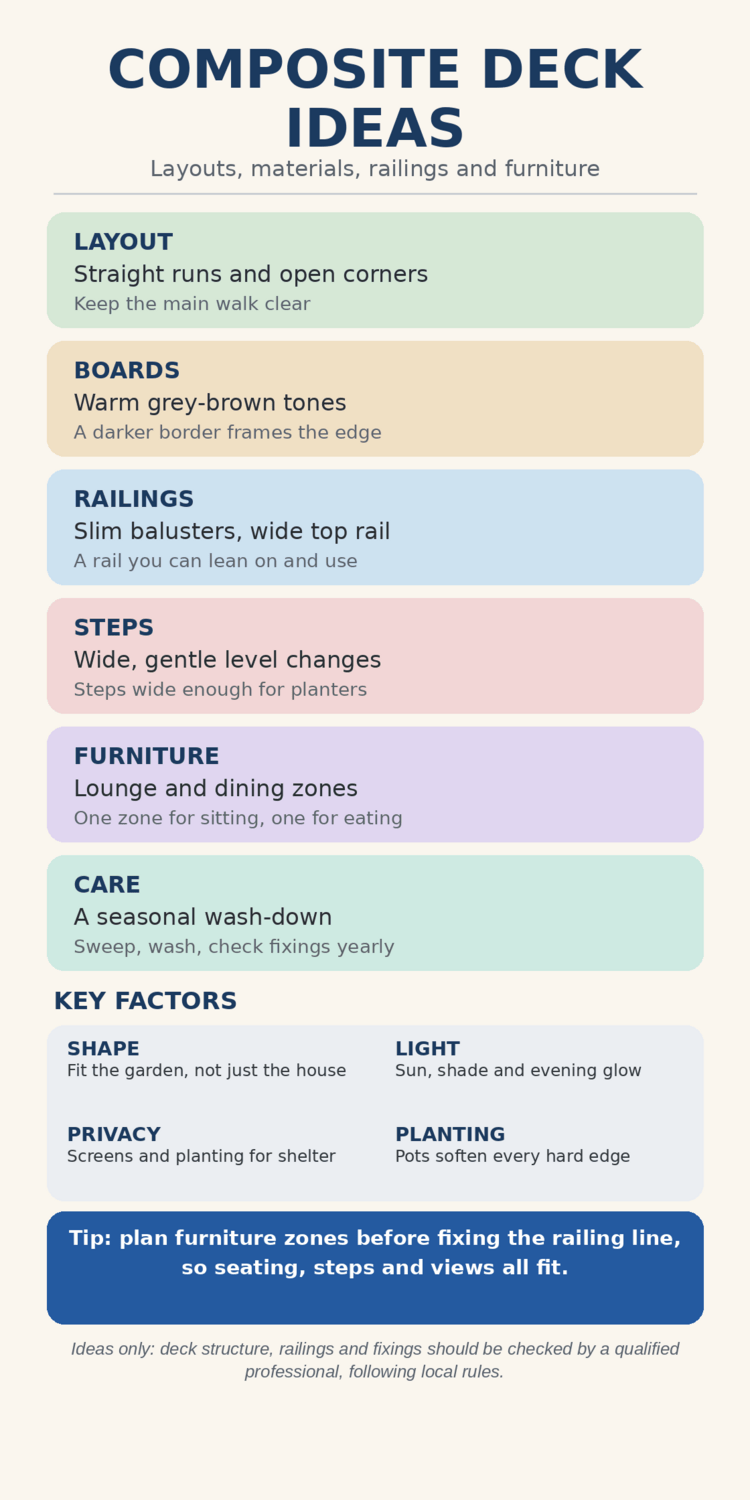
Composite boards come in a wide range of tones, from pale weathered greys to warm browns and deep charcoal shades. The tone you choose sets the mood of the whole space. Pale boards keep a small deck feeling bright and open, while darker boards can ground a large deck and make green planting stand out. Mid-tones are forgiving, hiding dust and fallen leaves better than very pale or very dark boards.
Look at board samples outdoors, not just indoors. Sunlight changes how a tone reads, and a board that looks warm in a showroom can look cool in north light. Lay samples on the ground where the deck will sit, and check them in morning and evening light. Also check them against the house wall, the fence and any stone or brick nearby, because the deck will be seen alongside those materials every day.
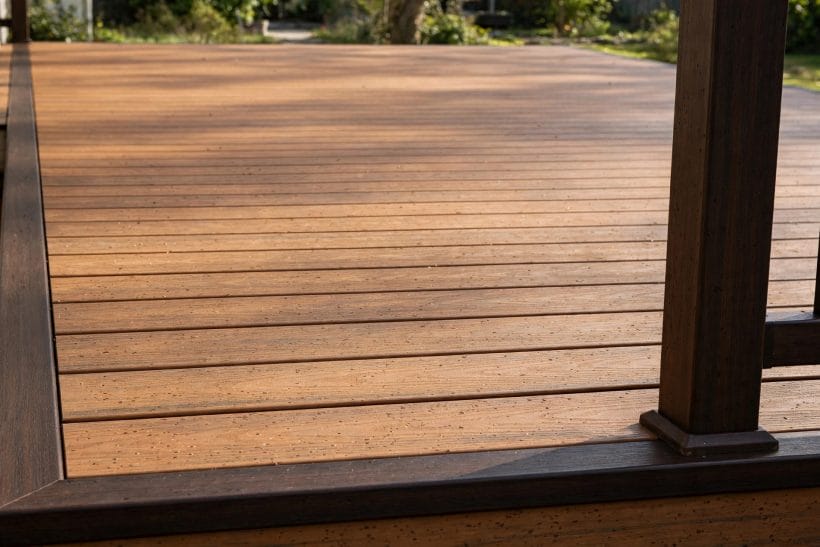
One detail that lifts many decks is a border board. A single board in a darker tone, run around the edge of the deck like a picture frame, gives the whole surface a finished look and neatly hides cut ends. It also marks the edge of the deck clearly, which helps at dusk. A border works with straight runs and with corners, and it costs little in extra material compared with the visual difference it makes.
Mixing tones needs a light touch. Two tones, such as a main field and a darker border, usually look calmer than a patchwork of many shades. If you love a strong contrast, use it in one place, such as the border or the steps, and keep the main field quiet. That way the deck feels designed rather than busy, and furniture and planting can add the colour.
Think about heat and glare as well as looks. Dark boards can feel warm underfoot on a hot day, while pale boards reflect more light. Neither is wrong, but it is worth knowing before you choose, especially if the deck faces the midday sun or if children will play on it barefoot. A rug or a shaded corner can soften the warmest spots.
4. Railings: Open Views or a Solid Hand
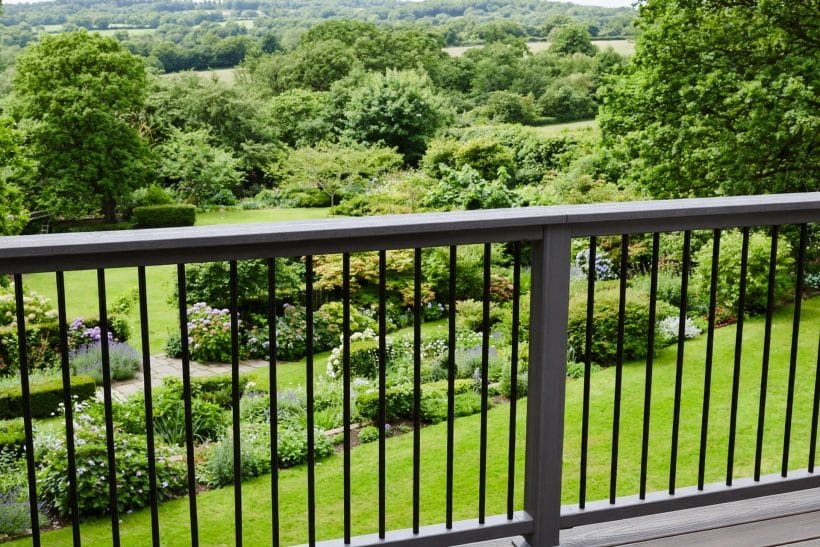
Railings do two jobs at once: they keep people safe at an edge, and they frame the view. Slim balusters, thin metal uprights or clear panels all keep the view open, while a solid top rail gives you somewhere to rest a hand or a cup. A wide flat top rail is one of the most useful details on any deck, because it turns the railing into a shelf for drinks, planters and lanterns.
Height and spacing matter for both safety and looks. A railing that is too low feels uneasy, while one that is too tall can block the garden completely. Spacing between balusters should be close enough that small children cannot slip through, and the whole railing should feel firm when leaned on. Railing design, fixings and any structural connection to the deck are work for a qualified professional, and local rules should be checked before installation.
Style follows the house. A simple metal railing suits a modern home, while a timber-look rail suits a traditional one. Cable or glass-look panels suit decks where the view is the whole point, because they almost disappear. Whatever style you choose, keep it consistent around the whole deck, including the steps, so the deck reads as one finished space rather than a collection of parts.
For more railing styles and practical details, deck railing ideas gather layouts, materials and finishes in one place. Gates deserve a mention too: if the deck has steps to the garden, a small gate at the top can keep toddlers and pets safely on the deck while still letting adults pass easily.
5. Steps and Level Changes
Steps are where decks succeed or fail in daily use. Wide, gentle steps feel generous and are easy to carry things down, while narrow or steep steps feel like an afterthought. A good rule is to make steps as wide as the deck allows, and to keep every tread the same depth so nobody stumbles on an unexpected change.
Level changes can also be a design feature. A deck that steps down in two shallow stages to the lawn feels more interesting than a single high drop, and each stage can hold a planter or a seat. Wide steps can double as informal seating when friends gather, especially if they face the garden or a fire bowl. Keep the landing at the bottom clear and level, so the last step never lands on uneven ground.
Lighting on steps is worth planning from the start. A small light on each step, or a strip of light under the top tread, makes evening use far safer and looks lovely at dusk. Solar lights are an easy retrofit, but wired lights give a steadier glow. Either way, the wiring and any fixings are best left to a qualified professional, and the lights should be rated for outdoor use.
Handrails on steps help everyone, not just older visitors. A rail that runs the full length of the steps, at a comfortable height, gives confidence on wet days and in the dark. Match the step rail to the deck railing so the whole edge reads as one design, and check that the rail is firm along its full length before the deck is finished.
6. Built-In Benches and Storage Seats
Built-in benches are one of the smartest uses of deck space. A bench along one edge gives permanent seating without the clutter of loose chairs, and it leaves the middle of the deck free for a table or for standing room when friends visit. A bench with a backrest is more comfortable for long sits, while a simple flat bench suits a quick perch or a place to set down a tray.
Storage seats are even harder working. A bench with a lift-up lid hides cushions, throws, garden games and tools, keeping the deck tidy without a separate box. Make sure the lid is easy to lift and stays open while you reach inside, and that the storage stays dry in rain. Ventilation matters too, because a sealed damp box can smell musty by spring.
Place benches where people actually want to sit: facing the garden, catching the evening sun, or beside the dining area as extra seating. A bench that faces a fence will sit empty, however well built. Corners are good bench spots, because two benches meeting at a corner create a natural gathering place, and the corner itself stops being wasted space.
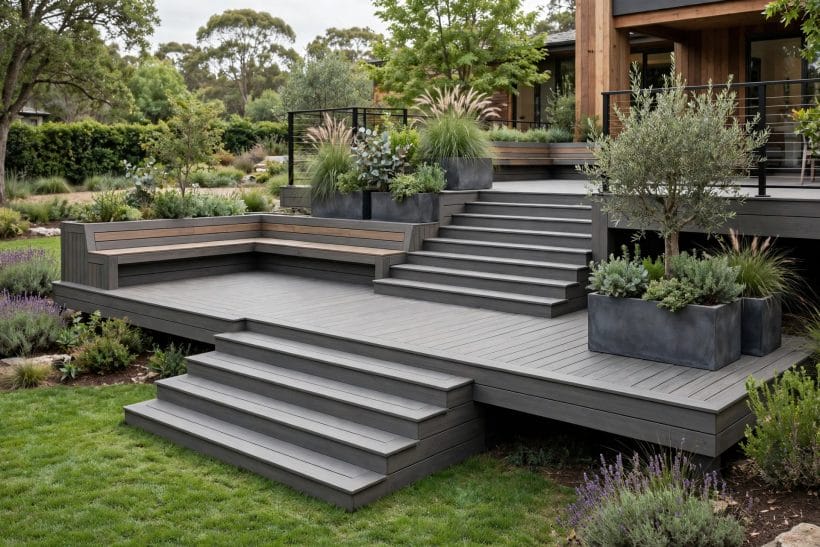
For bench layouts, materials and seating details, deck built-in bench ideas show how fixed seating can shape a whole deck. Built-in benches should be fixed securely and checked for stability, especially where children will climb on them, and any structural fixing is work for a qualified professional.
7. Furniture Zones: Lounging and Dining
Most decks work best with two zones: one for lounging and one for eating. The lounge zone wants deep seats, soft cushions and a low table, placed where the view is best and the sun lingers. The dining zone wants a table with room to pull chairs out, close enough to the kitchen door that carrying food is easy, and with enough light for evening meals.
Size furniture to the deck, not to the catalogue. A sofa that fills the whole deck leaves no room to walk, while a tiny bistro set on a large deck looks lost. Measure the deck, mark out furniture footprints with tape or cardboard, and walk the routes between zones before buying anything. Leave a clear path from the door to the steps, and room to push chairs back without hitting the railing.
Materials for outdoor furniture should suit the weather it will face. Timber warms up a deck and ages gracefully, metal stays slim and sturdy, and woven or cushioned pieces add softness. Cushions in outdoor fabric dry faster after rain, and a storage bench nearby makes it easy to tuck them away in a storm. Choose pieces you can move, because the best layout in summer may not be the best layout in autumn.
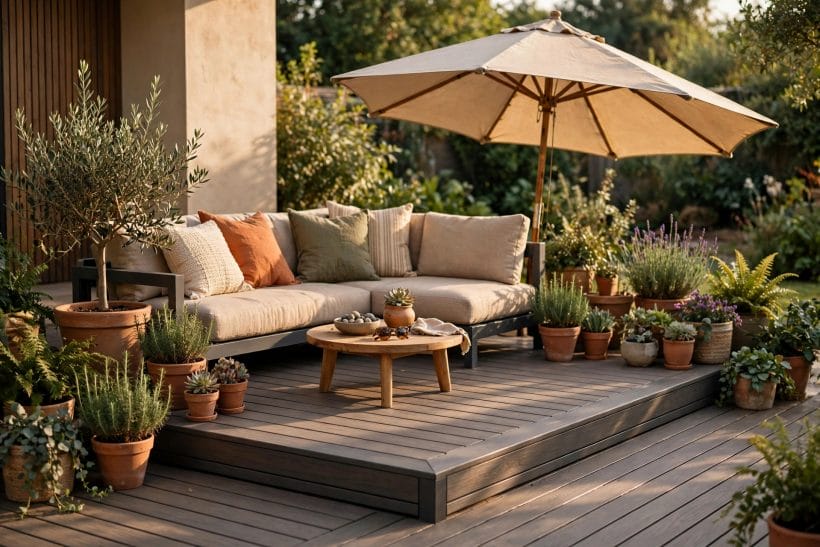
For how patios and decks share furniture ideas, tiny house patio ideas show compact seating arrangements that translate well to decks of any size. A small side table beside every seat is a detail worth copying: a place for a drink within arm’s reach makes any seat feel considered.
8. Shade, Light and Evening Use
A deck that is lovely at noon can be unusable in glare, and a deck that is perfect in summer can sit empty on cool evenings. Shade is the fix for the first problem. A pergola, a sail, a large umbrella or a retractable awning all give relief, and each suits a different deck. A pergola gives dappled shade and a frame for climbing plants, while a sail gives broad cover and a modern look.
Evening light is the fix for the second problem. Warm lights along the railing, a lantern on the table, and soft light on the steps can stretch a deck’s useful hours well past sunset. Keep the light low and warm rather than bright and white, because harsh light flattens a garden and attracts insects. Lights on a dimmer or a timer make evening use effortless.
A covered area changes how a deck is used across the seasons. Even a partial cover over one zone gives a dry spot in a shower and shade in high summer, while the rest of the deck stays open to the sky. For covered layouts and how they pair with open decking, covered deck ideas show roofs, pergolas and shade structures in context.
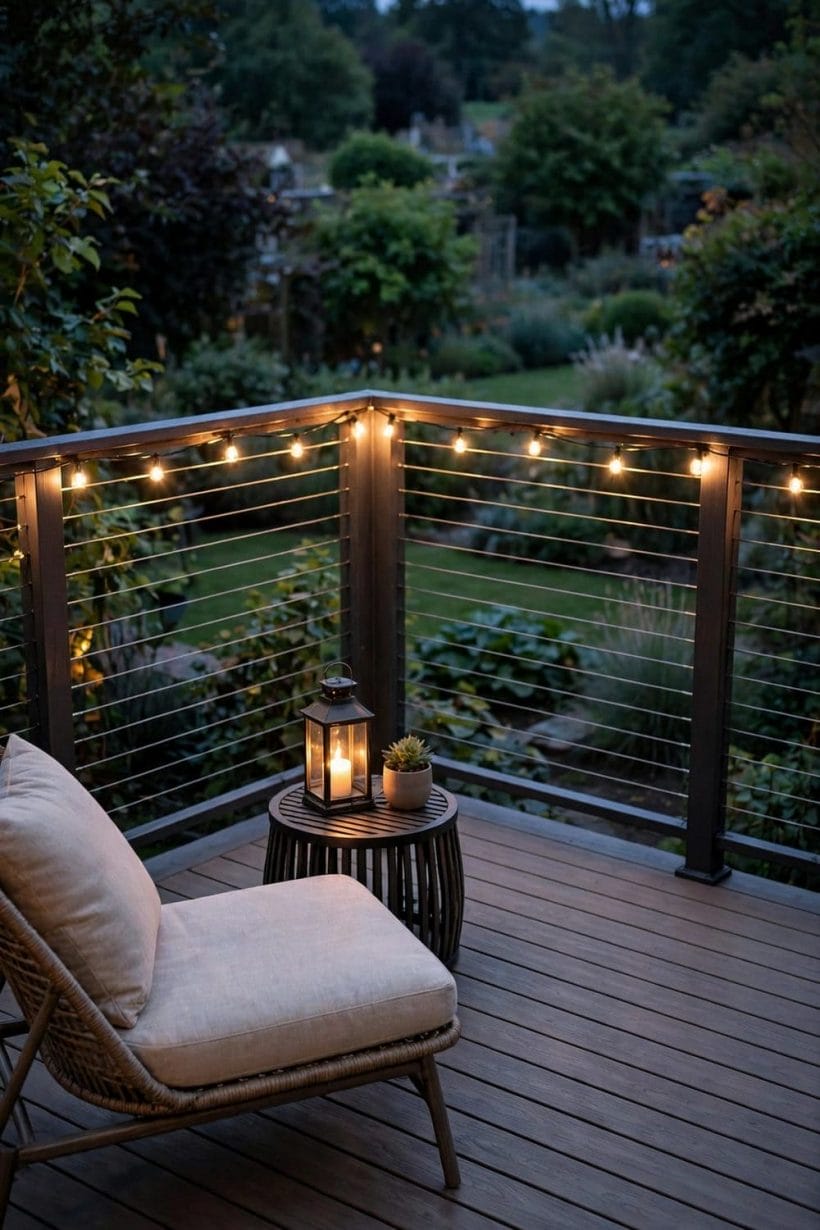
Warmth extends the season further. A fire bowl or a chiminea can anchor an evening seating area, but fire needs clear space, a stable base and respect for neighbours and dry planting. For fire-side seating, placement and safe design, deck with a fire pit ideas gather forms and safety-aware layouts. Any gas or electrical work for heaters or lighting is work for a qualified professional, and open flames should never be left unattended.
9. Planting, Privacy and the Edges
Planting is what stops a deck feeling like a platform and starts making it feel like a garden room. Large pots at the corners soften hard edges, trailing plants spill gently over a low wall, and a tall planter can screen a view you would rather not see. Choose pots that are heavy enough not to blow over, with drainage holes and saucers that protect the boards beneath.
Privacy needs a thoughtful touch. A tall fence can feel defensive, while layered planting, a trellis with climbers, or a slatted screen can give privacy while still letting light and air through. Screens work best when they shield the seating area specifically, rather than walling off the whole deck. Leave gaps for breeze and for glimpses of the wider garden, so the deck never feels boxed in.
Edges are where deck meets garden, and they deserve finishing. A neat edging board, a row of stones, or a planted border all stop the junction looking raw. Grass should be kept trimmed back from the boards, and fallen leaves cleared regularly, because trapped damp and debris can stain boards and hide fixings that need checking.
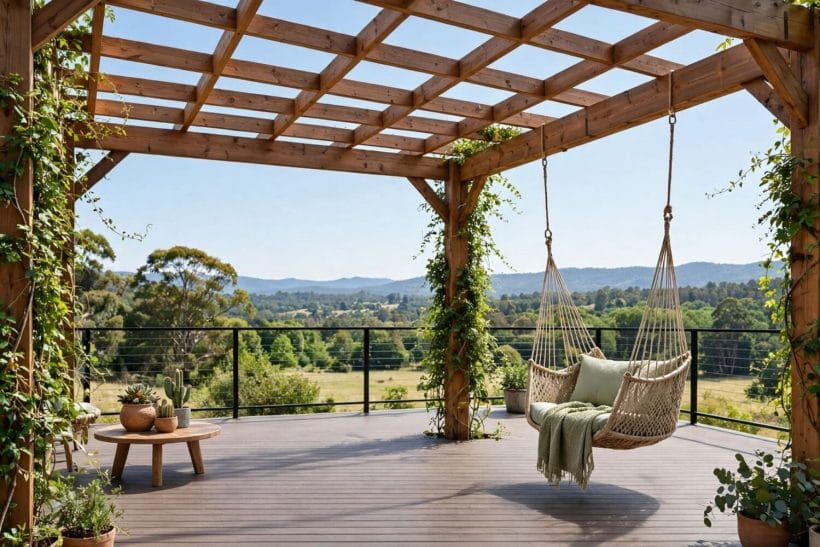
For how decks sit within the wider garden, backyard landscaping ideas show paths, beds and planting that connect a deck to the rest of the outdoors. The best decks feel like one stop on a garden walk, not a separate stage: lawn, beds, paths and deck all flowing into each other.
10. Care Through the Seasons
Composite decking is chosen partly for its easy care, but easy does not mean none. A regular sweep keeps grit from grinding into the surface, and a wash with mild soapy water lifts pollen, bird marks and everyday grime. Stains are easiest to shift when fresh, so a quick rinse after a spill saves a harder scrub later.
Each season brings its own small jobs. In spring, clear winter debris, check fixings and look for boards that have shifted. In summer, move rugs and planters occasionally so the boards beneath do not mark unevenly. In autumn, clear leaves before they mat down and stain. In winter, keep the deck clear of snow and ice with a plastic shovel rather than a metal one, and avoid harsh de-icing chemicals on the boards.
Check the structure as well as the surface. Look under the deck where you can, and check that supports, fixings and railing posts still feel firm. Any soft spots, loose rails or damaged boards should be looked at by a qualified professional rather than patched over. A short seasonal check keeps a deck safe and good-looking for years, and it takes far less time than a major repair.
Finally, refresh the soft details each year. New cushion covers, a different planter arrangement, or a fresh lantern can make a familiar deck feel new without any building work at all. Decks age best when they are lived on and lightly refreshed, rather than built and forgotten.
Final Considerations
A good composite deck is a balance of shape, tone, railing, steps, seating and planting, planned as one space rather than bought as separate parts. Start with the garden and the way you live, choose tones in real daylight, and give every zone a purpose: somewhere to lounge, somewhere to eat, and a clear walk between them.
Keep safety and structure with qualified professionals, check local rules before building, and plan shade and light so the deck works in the evening as well as at noon. Then furnish it simply, plant it generously, and use it often. The decks people love most are rarely the grandest. They are the ones that fit their garden, their household and their habits, and that invite one more evening outside.


0 Comments