
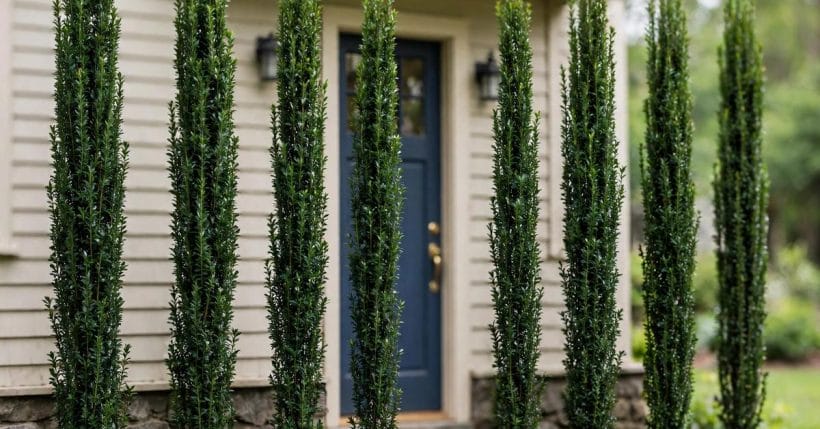
A tall, narrow shrub beside a front door raises an obvious question: how tall will it actually get? Sky Pencil holly is planted for exactly that upright line, a green column that rises beside an entrance, along a wall or at the corner of a small house without spreading sideways into the path. Gardeners who choose it usually have a height in mind, and the question that comes up most often is whether it will grow over eight feet. The honest answer is that it can grow tall over time, but no single height can be promised for any one plant in any one garden. Growth depends on light, soil, water, climate and care, and the same cultivar can behave quite differently in two gardens on the same street.
This guide stays with the Sky Pencil holly cultivar only. It does not cover other hollies, and it does not borrow habits from broad, spreading or berry-heavy kinds, which grow in very different ways. Everything here is stated in general terms, because gardening advice that sounds precise about a living plant is usually pretending. What follows works through what this shrub is, how its height develops, what shapes its pace, and where to place it around a small house so that its height becomes an asset rather than a surprise. If you are searching for ilex sky pencil growth rate, the useful answer is not a number but a picture of how this plant grows and what helps or hinders it.
It helps to begin by looking at the place rather than the plant. Stand where the shrub will go and look up. Is there open sky above, or do eaves, gutters, wires or a neighbour’s branches cross the space? Is the spot open to sun for much of the day, or does a wall shade it for long stretches? A narrow evergreen that is meant to grow tall needs headroom first and light second, and both are easier to judge on site than from a catalogue description. The sections below take those questions in turn, so that by the end you can judge whether this cultivar suits your spot and what to expect from it over the seasons.
1. What Sky Pencil Holly Actually Is
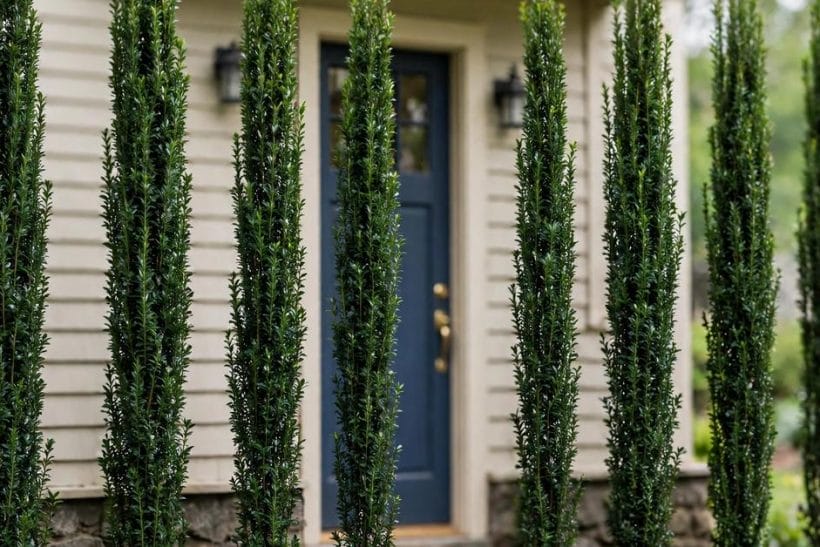
Sky Pencil holly is a Japanese holly cultivar grown for its shape. Left to itself it forms a very slim, upright column of small, dark green leaves, with branches that reach upward rather than outward. That column is the whole point of the plant. Where many shrubs grow wider as they grow taller, this one keeps its narrow outline, which is why it suits tight spots beside doors, along paths and in narrow beds where a spreading shrub would quickly become a nuisance.
Its foliage stays green through the year, so it gives structure in winter as well as in summer. The leaves are small and smooth-edged, quite unlike the spiky leaves people picture when they hear the word holly, and the plant is grown for foliage and form rather than for showy flowers or fruit. That evergreen presence is part of its appeal around a small house: a slim green upright that marks an entrance or screens a corner without darkening a window or swallowing a path.
Knowing the cultivar matters because hollies vary enormously. Some form broad bushes, some grow into small trees, and some spread low and wide. Advice about those kinds does not transfer to this one, and a height that is normal for a broad holly says nothing about what a Sky Pencil will do. Judge this plant on its own habit: tall, narrow, slow to widen, and happiest when it is allowed to grow upward in its own shape rather than being forced into a different one.
2. The Short Answer on Height
So, can Sky Pencil holly grow over eight feet? In general terms, yes, it can grow into a tall shrub over time, and in a favourable spot with room above it, passing that height is entirely plausible. But that is not a promise. Some plants stay shorter for a long while, especially where light is limited, soil is poor, or the plant is regularly trimmed back. Others push upward steadily and surprise their owners by how tall they eventually stand beside the house.
The question is better asked the other way round: is there room for a tall, narrow evergreen in this spot if it keeps growing? If the answer is yes, with open sky above and no wires, eaves or windows in the way, then the plant’s height is something to enjoy rather than manage. If the answer is no, because the space above is already claimed by a roofline or a service line, then even a plant that might stay modest for years is a risk, because you cannot be sure it will stay modest.
Time is the other half of the answer. This is not a plant that shoots up in a single season and then stops. Its height builds gradually, season by season, and the garden changes around it as it grows. That slow build is actually good news for a small garden, because it gives you time to watch, to trim lightly if you wish, and to adjust the planting around it. The mistake is to plant it under something low and hope it will stop in time. Plant for the tall plant it may become, and any shorter outcome is a bonus.
3. Why It Grows Tall and Stays Narrow
The column shape comes from the way the plant grows. Its leading shoots reach upward strongly, while side shoots stay short, so the plant gains height faster than it gains width. That habit is in the cultivar itself rather than something a gardener creates by trimming, although light trimming can keep the outline tidy. Left alone, a healthy plant keeps its pencil outline for years, which is rare among shrubs and the reason it is chosen for narrow beds.
Width matters as much as height when you are judging a spot. A plant that stays narrow can stand close to a path or a wall without blocking either, and several can stand in a row without merging into a hedge. That is why it works as a vertical accent: it draws the eye upward and gives a small house a sense of height, while the ground beneath it stays usable for low planting or mulch. The narrow spread also means less shade cast sideways, so neighbouring plants and nearby windows keep more of their light.
There is a trade-off to understand. A very narrow plant has less leaf area than a broad shrub of the same height, so it leans on steady conditions rather than on vigour alone. A plant that is shaded on one side may lean or thin on that side, and a plant in a windy, exposed corner may grow less evenly than one with a little shelter. The column is a strength, but it is a shape that shows its conditions plainly, and a plant that looks thin or lopsided is usually telling you something about its spot.
4. What Sets Its Growth Pace
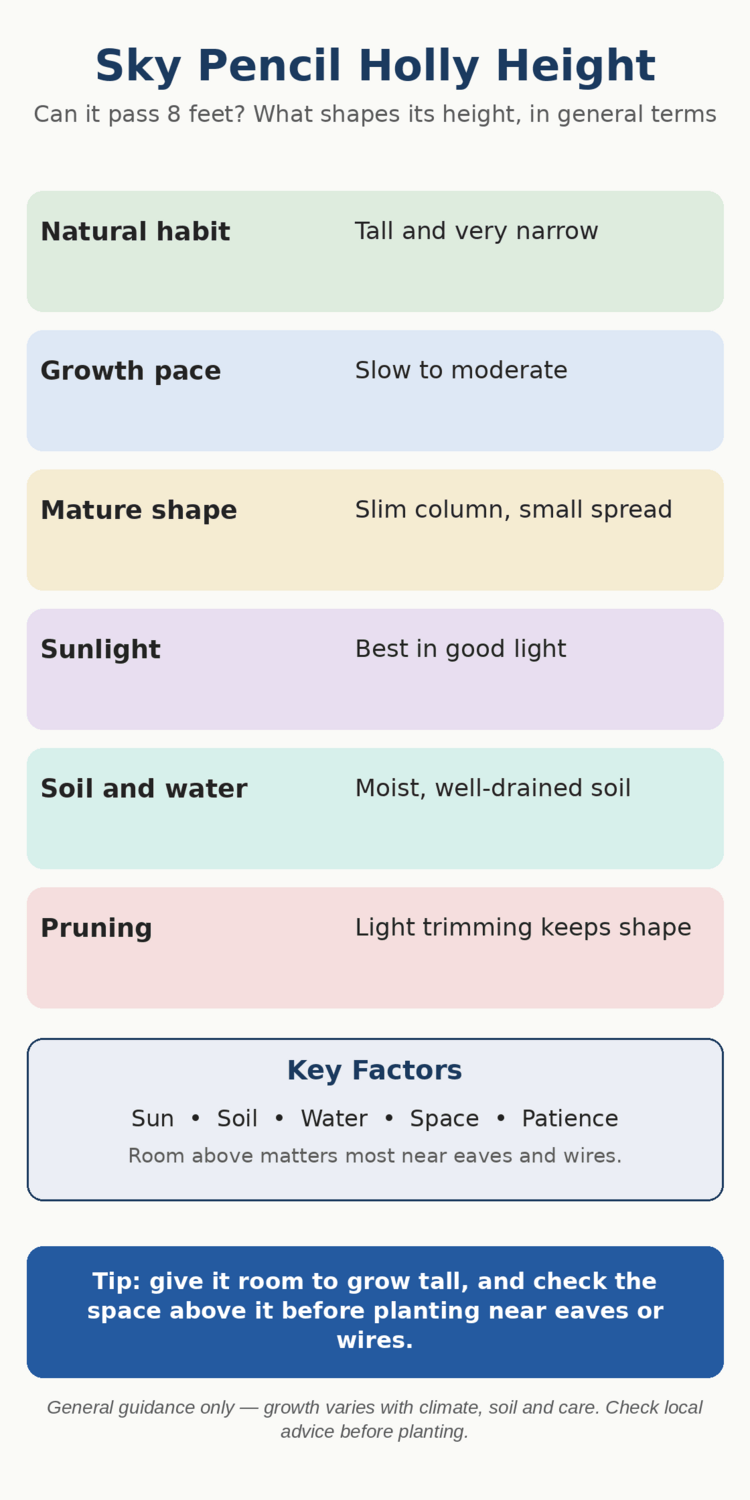
Growth pace is where general language matters most. Sky Pencil holly is usually described as slow to moderate in its growth, and that description fits what most gardeners see: steady upward progress rather than a rush, with the plant adding height gradually over the seasons. It is not a plant for someone who wants a tall screen by next summer, and it rewards patience more than feeding or fussing.
Several things set the pace. Light is first among them, because a plant in good light grows more strongly than one in shade. Soil comes next: a moist, well-drained soil that holds some richness suits it, while very dry, waterlogged or exhausted ground slows it down. Water matters most while the plant is settling in, when regular watering through dry spells helps roots establish, and less once the plant is settled, when it tolerates ordinary garden conditions better.
Climate and position shape the rest. A sheltered spot with mild winters suits it better than a cold, windswept one, and a plant that suffers damage in a hard winter may spend a season recovering rather than growing taller. None of this can be reduced to a rate, and anyone who quotes one for your garden is guessing. The practical approach is to watch your own plant: if it puts on steady new growth each season and keeps a dense, green column, it is doing well, whatever pace that turns out to be.
5. Sunlight and the Shape It Takes
Sunlight shapes this plant more visibly than almost anything else. In good light, the column stays dense from top to bottom, with fresh green growth clothing the stem. In shade, growth slows and the lower part of the column can thin out, leaving a plant that looks leggy at the base. That is worth knowing before planting, because a thin base is hard to fix once it has happened, while a plant sited in good light from the start rarely needs corrective work.
Full sun suits it in most gardens, and light shade is generally tolerated, but deep shade is a poor bargain for a plant chosen for its shape. The best spots give the plant sun for a good part of the day while sheltering it from the harshest exposure. A south-facing wall that bakes in summer may stress it, while a north-facing corner that never sees direct sun will leave it thin. The middle ground, bright and open without being scorched, is where the column looks its best.
Light also decides how the plant behaves beside a house. A shrub planted tight against a wall gets light from one side only, and may grow less evenly than one with open sky around it. Leaving a little breathing room between plant and wall helps light reach more of the foliage and air move around it, which keeps the column fuller. When you look at a spot, notice not just whether it is sunny, but whether the sun reaches the plant from more than one direction across the day.
6. Soil, Water and Steady Establishment
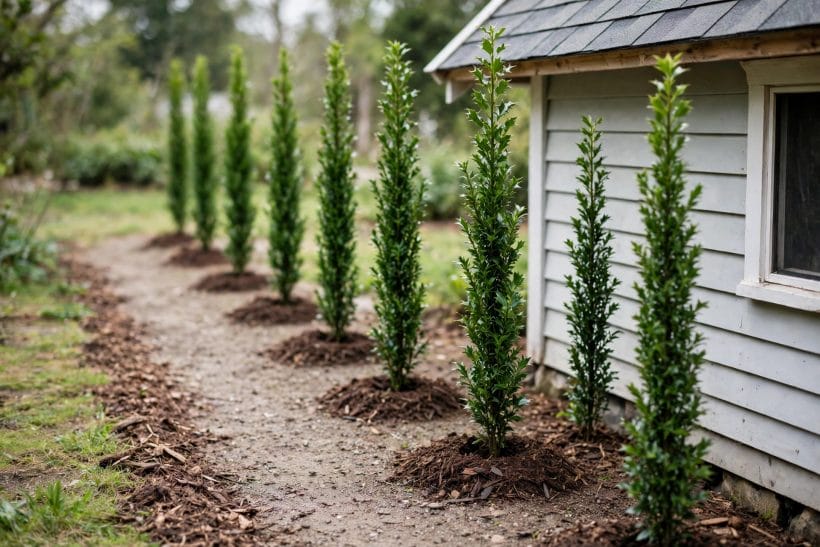
Good establishment is quiet work that pays off for years. At planting time, the ground should be workable and free of rubble, with the plant set at the same depth it grew at before and the soil firmed gently around its roots. A mulch of organic material over the root area helps hold moisture and keeps the soil temperature steadier, and it also suppresses weeds that would compete with a young plant. Keep mulch away from direct contact with the stem, where trapped damp can cause trouble.
Watering deserves attention early on. A newly planted shrub has a small root system and depends on you through dry spells, so regular, thorough watering in its early seasons matters more than any later care. Once established, the plant copes better with ordinary variation, but long dry periods still slow it, and a plant that is repeatedly stressed will show it in thinner growth. The aim is steady moisture in a soil that drains freely, never a soggy bed and never a parched one.
Soil type itself is less fussy than gardeners sometimes fear. A reasonably fertile, well-drained garden soil suits it, and heavy clay or very sandy ground can be improved with organic matter worked into the planting area. What matters most is drainage: roots that sit in standing water suffer, while roots in a soil that holds moisture without waterlogging thrive. If your spot puddles after rain, it is a poor place for this plant, and a raised bed or a different spot is a kinder choice.
7. Where to Plant It Around a Small House
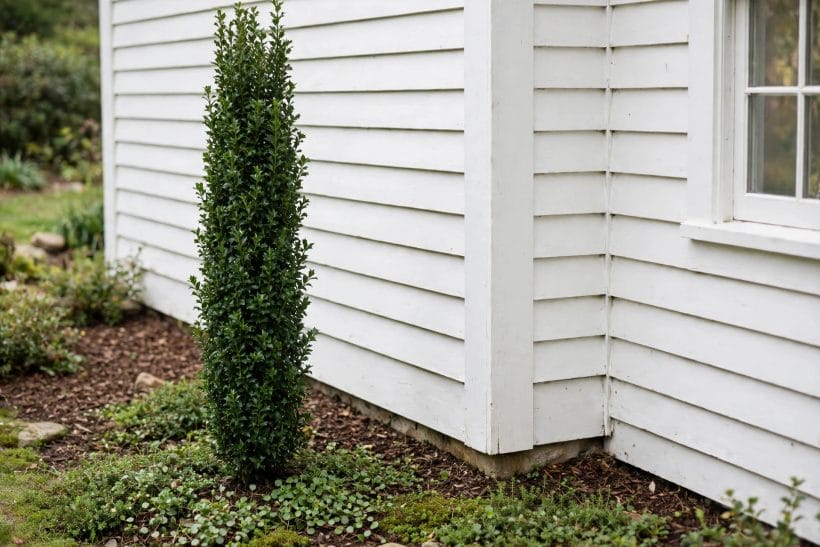
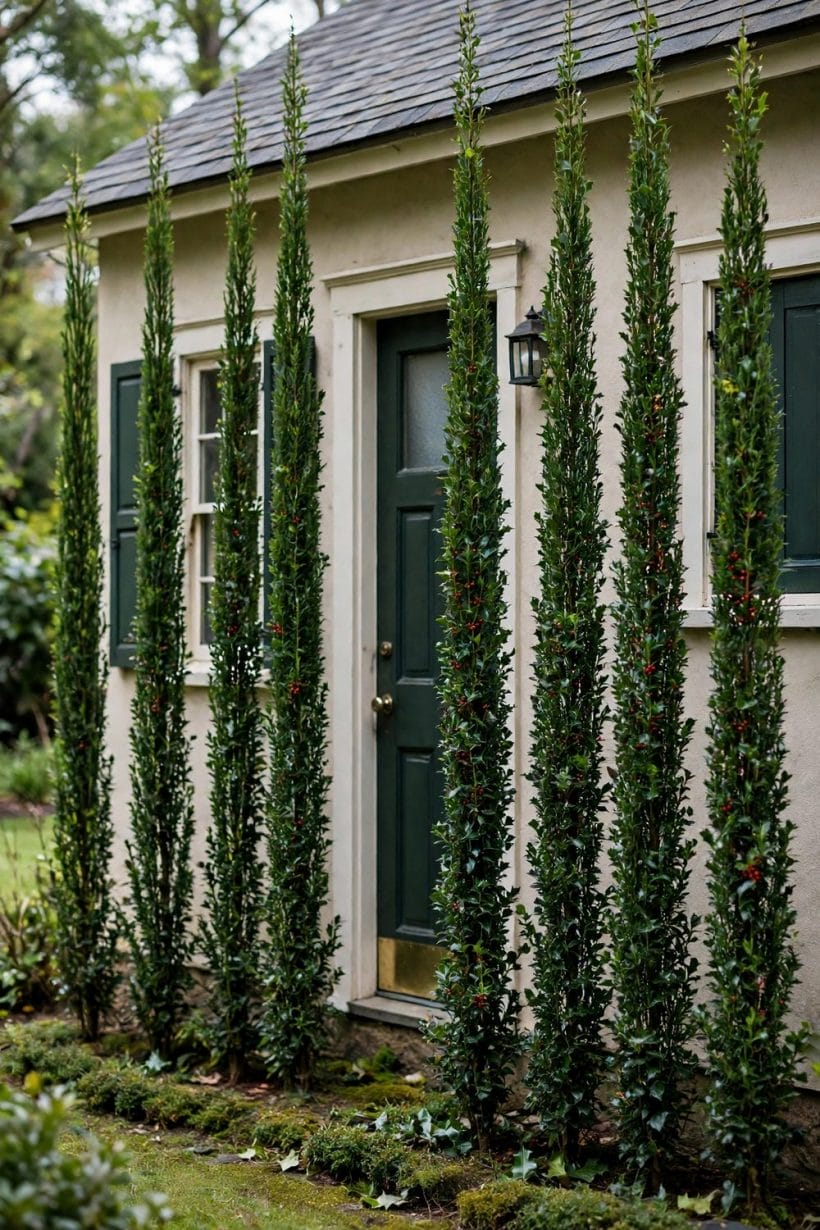
Around a small house, this cultivar earns its keep in narrow places. Flanking a front door, it frames the entrance without blocking the step or the view from the door. At a house corner, it softens the edge and gives the building a vertical line to balance a low roof. Along a side path, a row of them makes a green colonnade that guides the eye without narrowing the walk. In each case the plant’s narrowness is what makes the design work, because a wider shrub in the same spot would quickly outgrow it.
Spacing deserves thought even though the plant stays slim. Each plant needs room for its own roots and for air to move around its foliage, so planting them shoulder to shoulder is a false economy. A little space between plants lets each one keep its own column and makes later care easier, and it also means that if one plant struggles, its neighbours are less affected. Plan the row on paper first, marking the door swing, the path edge and any windows, so that the mature plants enhance those features rather than crowding them.
The view from the street matters too. A tall, narrow evergreen beside an entrance gives a small house presence, and a pair framing a door can make a modest facade feel composed. That is the same quality that makes it useful in backyard landscaping ideas, where vertical plants break up flat fences and long walls. Think of the shrub as architecture in green: a line that organises the space around it, best placed where a vertical line is genuinely wanted.
8. Pots, Planters and Tight Spaces
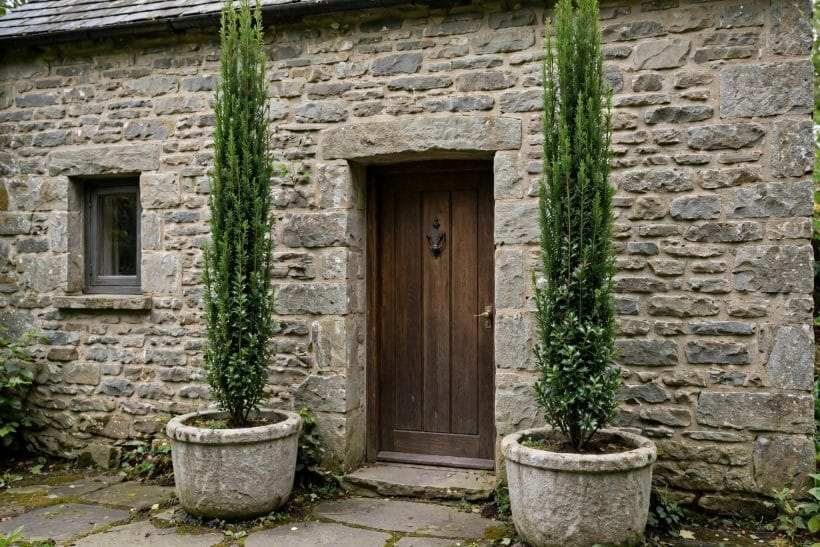
Containers suit this plant well, and they suit small gardens especially, because a pot can go where a bed cannot. A pair of tall, narrow shrubs in large planters beside a door gives the same framing effect as planted specimens, with the added freedom to move them if the arrangement does not work. Choose a generous container, because a tall plant in a small pot is top-heavy and dries out quickly, and make sure the pot drains freely so that roots never sit in water.
Container plants need more attention than planted ones. Their soil dries faster, their roots are more exposed to cold, and they depend entirely on you for water and food. Regular watering through dry spells and a general garden feed in the growing season, used exactly as its own instructions direct, keep a potted plant in good heart. In very cold weather, a pot can be moved to a more sheltered spot, which is an advantage no planted shrub enjoys. For more on growing in pots, container garden ideas cover the practical side of keeping potted plants happy.
Tight spaces are where this cultivar genuinely shines, but tight does not mean cramped. Even in a pot, the plant needs headroom, light and air, and a plant squeezed under a low porch roof will not thrive no matter how narrow it is. The same rule applies in narrow beds: give the plant sky above and a little space around its foliage, and it will repay you with a clean column. The smallest gardens benefit most from this plant precisely because it gives height without taking ground, and that bargain only holds if the height has somewhere to go.
9. Pruning Without Spoiling the Column
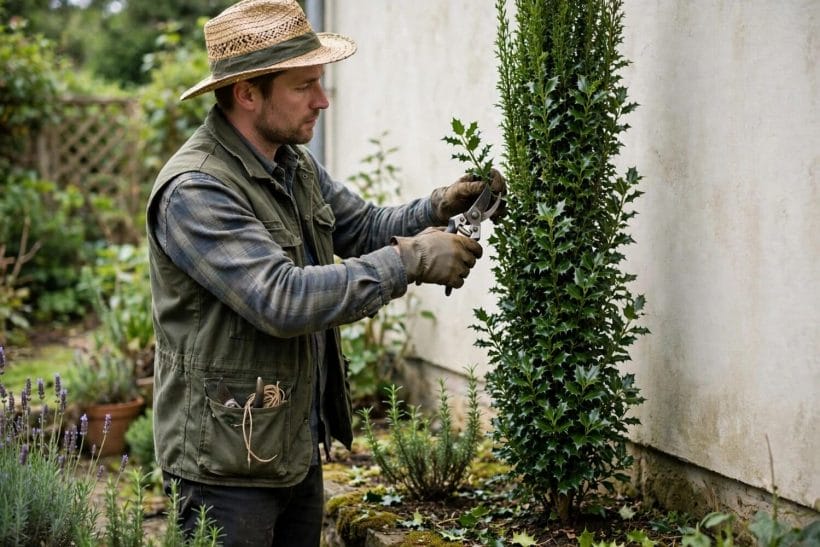
One of the pleasures of this plant is how little pruning it asks for. Its natural shape is already the shape most gardeners want, so heavy cutting is rarely needed and usually unwise. Light, occasional trimming is enough: removing a stray shoot that breaks the outline, or shortening a leader that has grown beyond the space available, keeps the column tidy without disturbing its character. Always step back and look at the whole plant before cutting, because a column is judged as a whole and a single harsh cut shows plainly.
Timing matters more than technique. Pruning in the growing season, when the plant is active, lets it respond with fresh growth that fills in quickly. Hard cutting in cold weather or during a dry spell stresses the plant and leaves bare patches that take a long time to recover. Use clean, sharp tools, cut back to a healthy leaf or side shoot rather than leaving stubs, and remove no more than is needed to restore the outline. If a plant has grown far beyond its space, it is usually better to accept that the spot was wrong than to fight the plant every year.
There is one decision that pruning cannot fix. If a plant is already brushing eaves, gutters or overhead lines, trimming buys time but does not change the plant’s nature, and work near overhead lines should always be left to the appropriate professionals rather than attempted from a ladder with garden tools. That is why the planting decision matters so much more than the pruning decision. A well-sited plant needs little more than a light tidy, while a badly sited one becomes a chore, and no amount of careful cutting turns a tall cultivar into a short one.
10. Living With It Through the Seasons
Through the year, this is a steady, undemanding plant. In spring it puts on fresh green growth that brightens the column, and in summer it holds its dense shape while the garden around it changes. Autumn brings little drama, which is part of its value: while other plants fade or drop leaves, the column stays green and keeps the structure of the garden visible. In winter it stands as a dark green upright against bare branches and pale skies, and light snow settling on its foliage only sharpens its outline.
Seasonal care follows a simple rhythm. In spring, check the plant over, remove any winter-damaged shoots, and refresh the mulch if it has thinned. Through summer, water in dry spells, especially for young or potted plants. In autumn, leave the plant alone to harden off rather than encouraging soft new growth that cold weather could damage. In winter, brush off heavy snow if it threatens to bend the column, and otherwise let the plant be. That rhythm suits busy gardeners, because the plant asks for attention at a few moments rather than constant fuss.
Companions should be chosen to suit the column, not compete with it. Low, spreading plants at its base cover the soil and keep the foot of the column looking cared for, while the vertical line above stays clear. Climbing plants on a nearby wall can echo the upright theme without crowding the shrub itself, and climbing plants offer ideas for that kind of pairing. Avoid planting vigorous neighbours hard against the column, where they would shade one side and spoil its even shape. The best companions frame the plant and leave it room to be what it is.
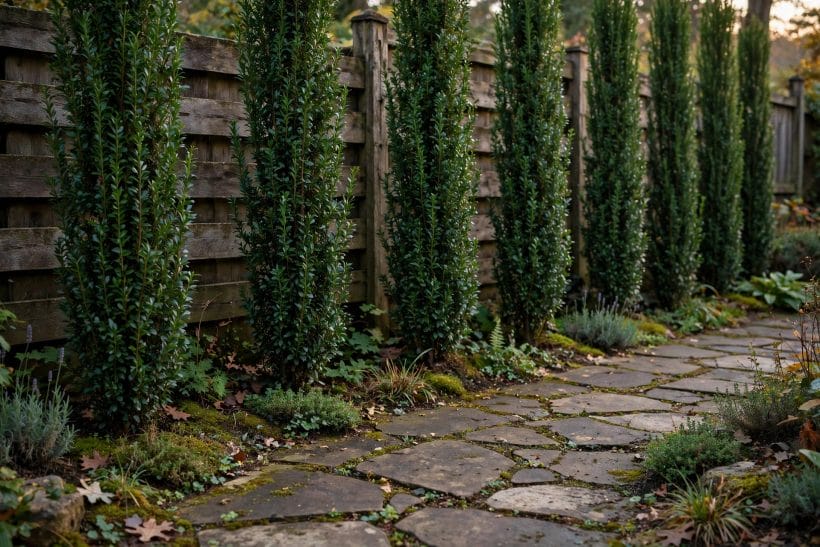
Winter care is mostly a matter of leaving the plant alone. It is evergreen, so it keeps its foliage, and a little snow on the column does it no harm. Heavy, wet snow can bend a tall, narrow plant, so brushing off a serious load after a storm is sensible, but everyday frost and light snow need no response. The plant’s winter value is that it keeps the garden’s structure visible when almost everything else has faded, and a row of dark green columns against a pale winter sky is one of the quiet pleasures of this cultivar.
Problems are few, and most are really site problems in disguise. A plant that thins on one side is usually short of light on that side. A plant that yellows or drops leaves may be short of water or sitting in ground that drains badly. Pests and diseases trouble it less than many shrubs, and the right response to anything unusual is to look closely, check the basics of light, water and drainage, and seek local advice if the trouble persists. Resist the urge to reach for a product first: a plant that is struggling because its spot is wrong will not be saved by anything poured on it, while a plant in a good spot usually recovers with time and ordinary care.
For a small house, the plant also plays well with the rest of the front garden. Its narrow footprint leaves room for low planting, a path or a rock feature at its base, and it pairs naturally with the kind of composed front garden described in tiny house landscaping ideas, where every plant has to earn a small space. A column that rises beside a porch, for instance, echoes the porch posts and gives the entrance a finished look, which is why it appears so often beside the doorways featured in tiny house porch ideas. The plant is a team player precisely because it takes so little ground.
It is also worth thinking about what the plant gives back to the garden beyond its shape. An evergreen column shelters small birds through winter and gives the front garden life when flowers are gone, and a garden that keeps its structure through the cold months feels cared for all year. That is one reason evergreen structure plants sit at the heart of wildlife-friendly garden thinking, where year-round cover matters as much as summer colour. The shrub does not need to flower showily to be useful to the life of the garden.
At the base, low planting finishes the picture. A mulch layer or a carpet of low groundcover keeps the soil moist and the foot of the column tidy, and stone or gravel at the base can suit a drier, more formal front garden. The rock-and-plant combinations in front yard rock landscaping show how a vertical evergreen and a low, stony base can balance each other, with the column giving height and the stones giving calm. Keep any base planting low and loose, so that it never climbs into the column or shades its lower leaves.
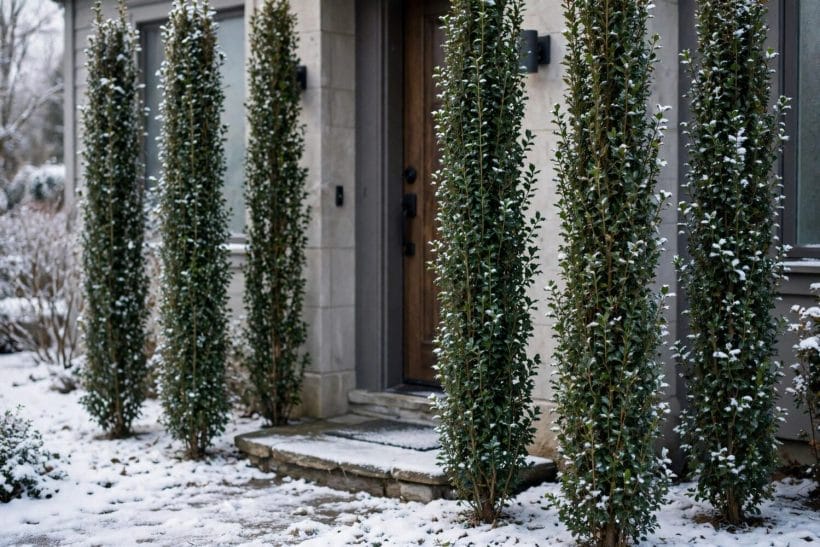
Finally, a word about expectations. Gardens reward gardeners who plant for the plant they may get, not only the plant they see on the day it goes in. A young Sky Pencil holly looks modest, and it is easy to plant it somewhere that suits the young plant and not the tall one. Give it sky, give it light, give it room to be narrow and tall, and it will grow into a feature that anchors the front of a small house for years. Crowd it under a low roof or against a wall that blocks its light, and it will remind you of that choice every time you look at it.
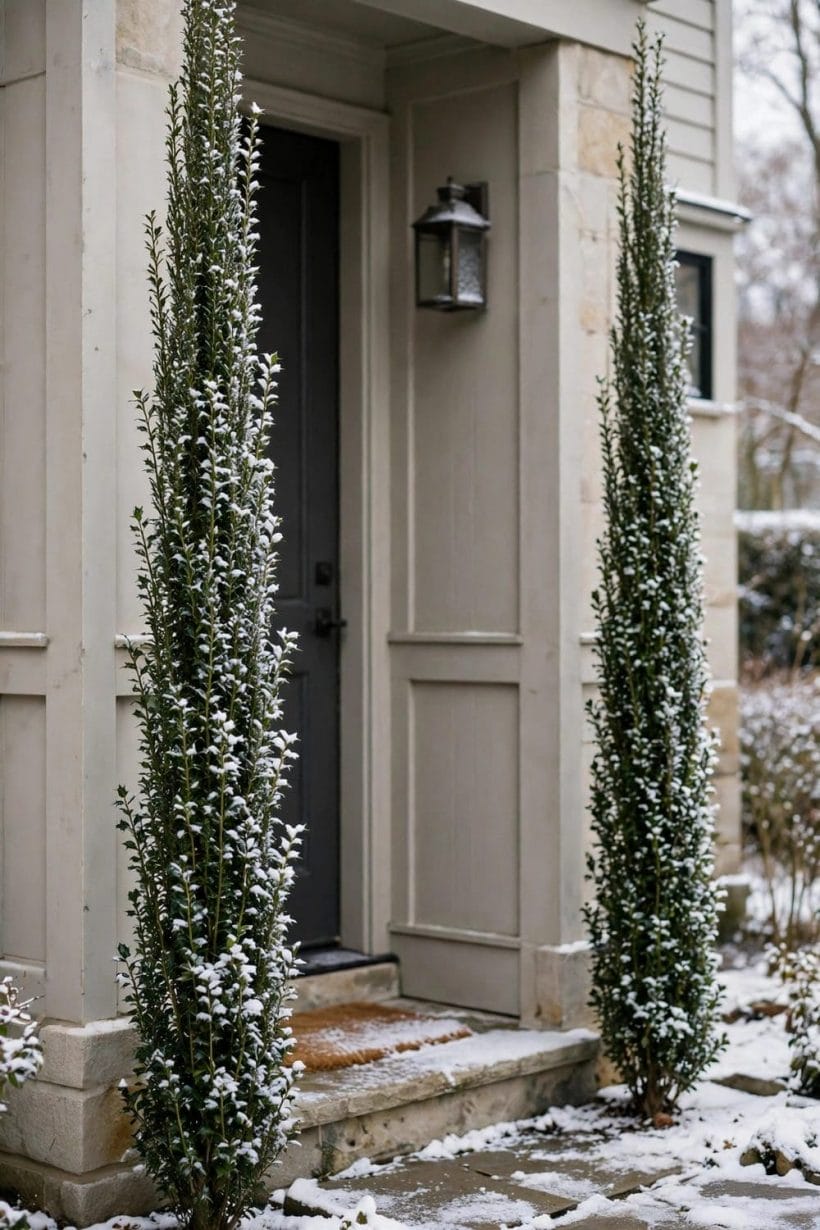
Final Considerations
So, will your Sky Pencil holly grow over eight feet? It may, given time, light, decent soil and room above it, and you should plant as though it will. That single decision, choosing a spot with open sky and good light, matters more than any feeding, trimming or fussing afterwards. The plant’s nature is to grow tall and stay narrow, and a garden that welcomes that nature gets a handsome, low-maintenance evergreen that frames a door, marks a corner or lines a path for years.
Before you plant, walk the spot once more and look up. Check the space above for eaves, wires and branches, check the light across the day, and check that the ground drains freely. If those three things are right, this is a plant you can plant with confidence, knowing that its height is a feature to enjoy rather than a problem to manage. If any of them is wrong, choose a different spot or a different plant, because no cultivar, however well behaved, outgrows a bad position. Gardening, at its best, is matching the plant to the place, and Sky Pencil holly repays that match with one of the cleanest vertical lines a small garden can own.




0 Comments