

A large wreath makes a house look welcoming from the street, but its size changes how it should be hung. A small wreath can sit almost anywhere, while a large one needs a fixing that suits its weight, a position where it hangs level, and a surface that will not be damaged by the fixing. Learning how to hang a large wreath on a house is mostly about taking those three things in order: choose the spot, match the fixing to the surface, and check the result before leaving it in place. This guide covers each step in general terms, so you can adapt it to your own door, wall, and wreath, whatever their style.

1. Choose the Right Spot on the House
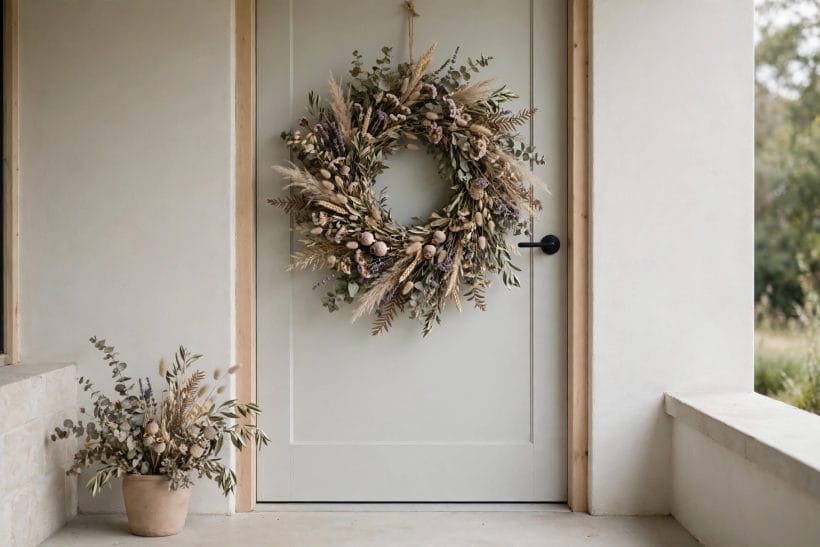
The front door is the natural home for a large wreath, because it is where visitors look first and where the wreath is seen at close range. A wreath on the door also moves with the door, so it is worth checking that it clears the frame, the handle, and any letterbox or knocker before it is fixed for good. If the door is glazed, the wreath should sit where it does not cover the whole pane, so light still comes through and callers can still be seen.
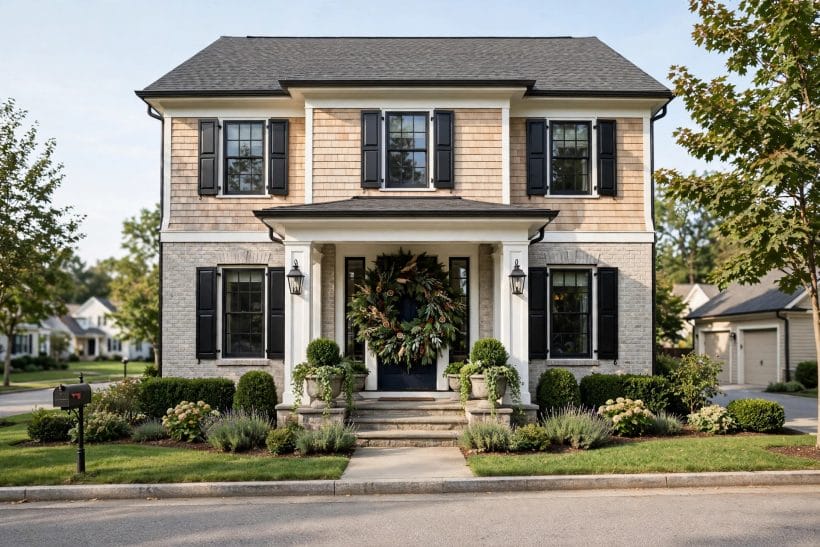
A wall beside the door is a good alternative, especially when the door itself is narrow, heavily glazed, or opened often. On a wall, the wreath becomes part of the entrance composition rather than the centre of it, and it can be hung higher or wider than a door would allow. A gable, a porch wall, or the wall beside a window can all work, provided the wreath is visible from the path and does not crowd lights, house numbers, or planting. The broader look of the front of the house matters here too, and the ideas in our exterior home ideas show how a single decoration sits within the whole face of a house.
Whatever spot you pick, stand back on the path and look at it as a visitor would. A wreath that looks centred from two steps away can look high, low, or off to one side from the street, and a large wreath exaggerates any unevenness. Check the view from both directions along the street, and check it again in the evening if the porch is lit, since shadows can change how the wreath reads. A few minutes spent on placement saves the bother of moving a heavy wreath later.
2. Judge the Size Against the Door and Wall
A large wreath should relate to the door or wall it hangs on. On a wide door or a broad stretch of wall, a generous wreath looks intentional and balanced. On a narrow door, the same wreath can overwhelm the entrance, hide the handle, or brush the frame every time the door moves. The test is simple: hold the wreath up in position and see how much door or wall shows around it on every side. A comfortable margin all round looks settled, while a wreath that touches the edges looks cramped.
Depth matters as much as width. Large wreaths are often deep, with foliage, berries, or bows standing well proud of the surface. That depth can catch on a door frame, a storm door, or a porch post if the wreath sits too close to an edge. Give it room to hang freely, and check that the door still opens and closes without the wreath dragging or snagging. If a second door or screen door is in use, test both doors together before fixing anything permanently.
Proportion also applies to the rest of the entrance. A very large wreath pairs well with plain surroundings: a simple door colour, uncluttered steps, and modest planting let the wreath carry the display. If the porch already holds lanterns, planters, and a door mat with a strong pattern, a slightly simpler wreath may sit better than the largest one available. The aim is a welcome that feels composed, not crowded.
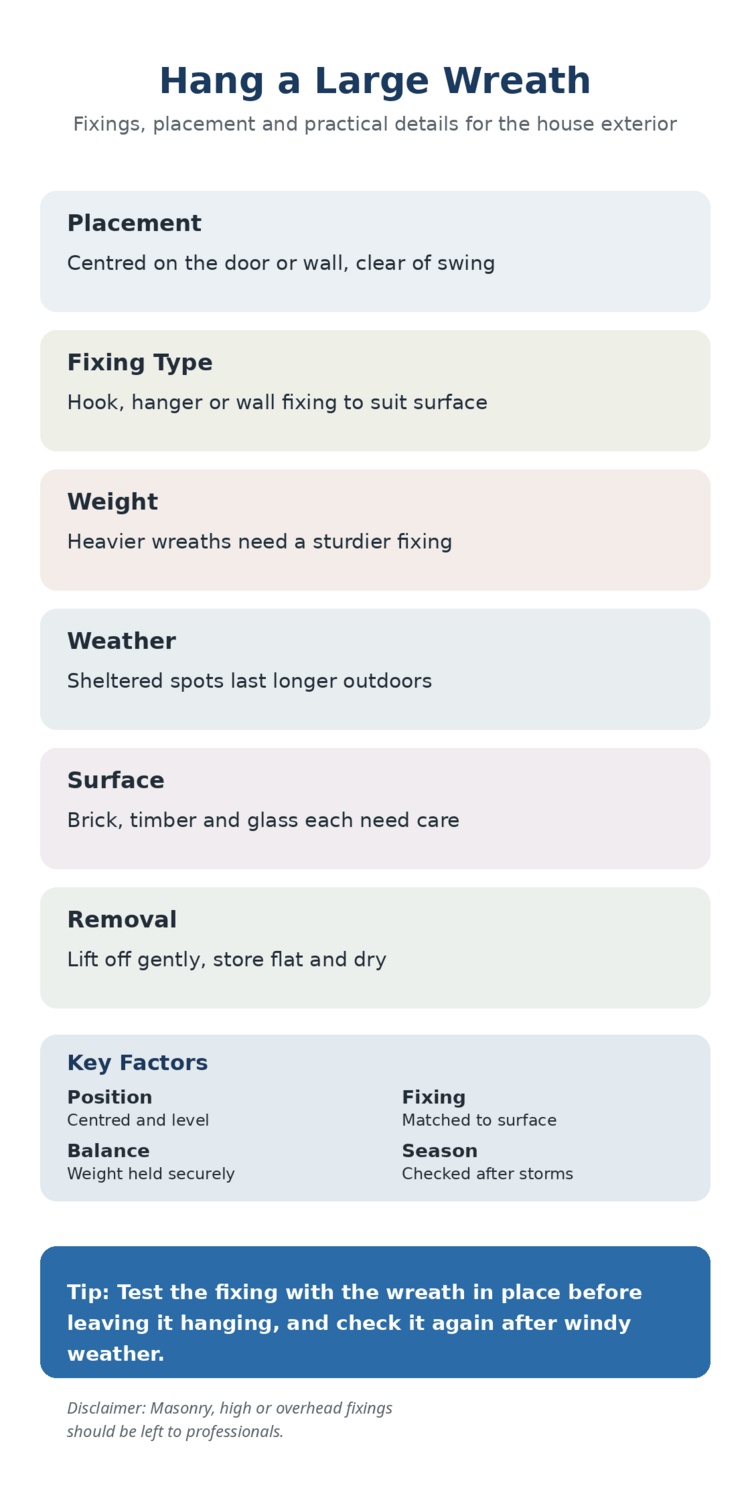
3. Over-Door Hangers for Doors That Open Freely
An over-door hanger is the easiest fixing for many front doors. It hooks over the top of the door and carries a hook on the outside face, so no hole is needed and nothing is fixed to the door itself. This suits rented homes and freshly painted doors, and it lets you move the wreath or take it down without leaving a mark. Choose a hanger whose hook sits at a height that centres the wreath, and check that the door still closes fully with the hanger in place.
The main limit of an over-door hanger is the door itself. A very thick door, a door with a tight frame, or a door that already sticks can be made worse by a hanger wedged over the top. Listen for scraping and watch for the door failing to latch, both signs that the hanger is too bulky for that door. A wreath that is heavy for its hanger can also pull the hook forward or tilt, so the wreath should hang steady and level when the door is moved gently. If it swings or creeps, a different fixing will suit it better.
Over-door hangers also need a door that opens in a way that suits them. A door that opens outwards onto a porch leaves the wreath exposed to wind and passers-by, while a door that opens inwards keeps the wreath sheltered against the frame. Either way, the wreath should not block the view through a spyhole or a glazed panel, and it should not catch on a door closer or a chain. Our front door ideas include doors of many styles, and picturing your own door among them helps in judging whether a hanger or a fixed hook is the better choice.
4. Hooks and Fixings for Walls and Brickwork
When a wreath hangs on a wall rather than a door, the fixing must suit the wall material. Timber walls and porch posts accept a sturdy hook or screw with little fuss, and the fixing can be removed and the small hole filled later. Rendered walls need more care, since a fixing driven into soft or crumbling render may not hold, and a large wreath will test it every time the wind moves. Brick walls are the firmest of the common surfaces, but they call for a fixing made for masonry, driven into the mortar or the brick as the maker directs.
Any work that involves drilling into masonry, fixing high on a wall, or hanging a wreath overhead is work for a professional. A large wreath hung above head height, over a path, or from a gable is a falling object if its fixing fails, and the risk is not worth saving a call-out. A professional can also judge whether the wall is sound enough to hold a fixing at all, which is not always obvious from the ground. For fixings within easy reach on sound timber or a door, a careful householder can manage, but the line is clear: structural, masonry, high, and overhead fixings belong to professionals.
Whatever fixing is used, it should be hidden by the wreath itself where possible, so the display looks clean. A hook that pokes out above or beside the wreath distracts from the foliage, and a wire or cord that shows against the wall breaks the shape. Try the wreath on the fixing and step back before finishing: the fixing should be invisible, the wreath should sit flat against the surface, and nothing should rattle or shift when the door nearby is closed.
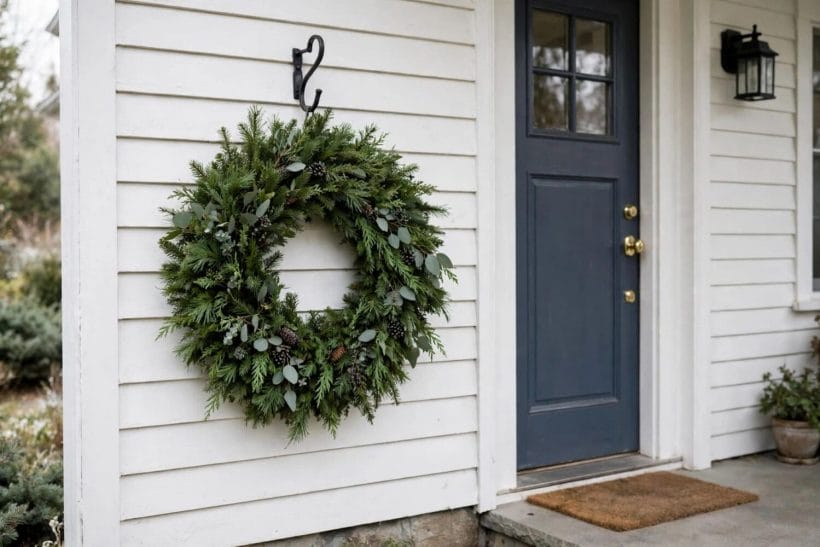
5. Hanging on Glass and Smooth Surfaces
Glass doors and smooth painted surfaces suit fixings that grip without drilling. A suction hook can hold a wreath on a glazed panel, and an adhesive hook can hold one on smooth paint or metal, provided the surface is clean, dry, and flat. Both kinds of fixing depend entirely on contact, so dust, condensation, or a textured finish will weaken them. Wipe the surface first, press the fixing on firmly, and leave it to settle before hanging the wreath, following the maker’s guidance for the fixing you have.
Weight is the deciding factor here. A large wreath, especially one with fresh foliage or added decorations, may be too heavy for a grip fixing that would hold a small one easily. If the fixing is rated by its maker for a lighter load than your wreath appears to need, do not gamble on it: a wreath that falls from a glass door can damage the wreath, the door, and anything below it. A loop of ribbon over the top of the door, or a fixed hook on the frame, is often a safer answer for a heavy wreath on a glazed door.
Adhesive fixings also deserve thought about removal. Some leave no trace on glass or gloss paint, while others can pull paint or leave a residue that needs cleaning. Test in an inconspicuous corner if you are unsure, and avoid adhesive on fresh paint or on a surface that is already flaking. When the season ends, peel or release the fixing gently rather than tearing it away, and clean the surface before the next display goes up.
6. Keeping a Large Wreath Level and Balanced
A large wreath shows any tilt at once, because the eye follows its round outline. Hang it from a single central point where possible, so it finds its own balance, and check it from straight on rather than from an angle. If the wreath keeps sliding to one side, the cause is usually uneven foliage or a bow that pulls one way. Turn the wreath slightly on its fixing, or shift the hanging loop, until it sits level. A small adjustment at the top makes a visible difference at the bottom of a large ring.
Some wreaths hang better from two points, especially when they are wide or carry a heavy bow at the base. Two short loops, spaced evenly, stop the wreath from rotating in the wind and keep its shape true. The loops should be the same length, or the wreath will still tilt, and they should be hidden behind the foliage. Ribbon, twine, and wire all work as loops, but each behaves differently outdoors: ribbon can stretch when damp, twine can fray, and wire holds its shape but can mark a painted surface. Choose the loop that suits your wreath and your weather, and check it through the season.
Balance is also about the door or wall behind the wreath. A wreath that hangs against a panelled door should sit over a flat section rather than straddling a raised moulding, or it will rock and sit unevenly. On a wall, avoid hanging over a vent, a light fitting, or an uneven patch of render. A flat, clear surface behind the wreath lets it hang true and shows its shape at its best.
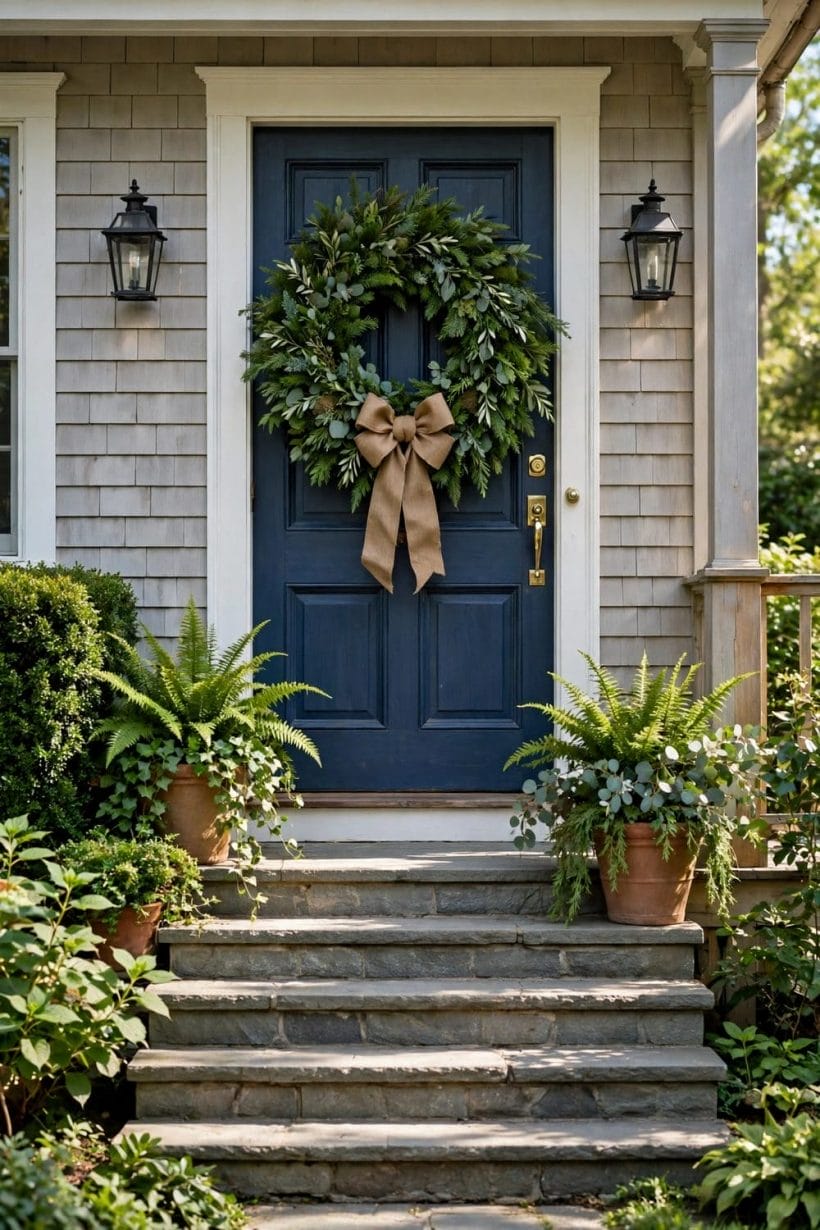
7. Weather, Wind and Sheltered Positions
Outdoor wreaths live in the weather, and a large wreath catches more wind than a small one. A porch roof, a recessed entrance, or a wall sheltered from the prevailing wind will protect a wreath far better than an exposed gable or an open gatepost. Before fixing a wreath in an exposed spot, watch how the wind moves around that corner of the house on a breezy day. If leaves and litter gather there, the wind is strong there too, and the wreath will need a firmer fixing or a more sheltered home.
Rain matters as well, though in different ways for different wreaths. Fresh foliage dries out in sun and wind, while damp can make a wreath heavier and encourage mould in dense greenery. Artificial wreaths shrug off rain but can fade in strong sun over a long season. A sheltered position slows all of these effects, and a wreath that is checked regularly will last longer than one that is hung and forgotten. After a storm, check the fixing, the loop, and the wreath itself before assuming all is well.
Seasonal timing plays into this too. A wreath hung early in a mild spell may face very different weather a few weeks later, so a fixing that held in calm conditions should not be assumed safe in a gale. If a forecast promises high winds, taking a large wreath down for a day is a small trouble compared with finding it in the garden or against a neighbour’s fence. The porch ideas in our front porch ideas show how much shelter a porch can offer, and how the entrance as a whole can be arranged to protect a display.
8. Living Wreaths and Fresh Greenery Outdoors
Fresh and living wreaths bring scent and texture that artificial ones cannot match, but they change as they hang. Fresh foliage loses moisture outdoors, especially in wind and sun, and a living wreath with rooted planting needs water to stay fresh. A sheltered, shaded spot suits both, and a position near a tap or a watering can makes regular care easy. If the wreath is within reach, a light misting or watering as its maker suggests will keep it looking well for longer.
Weight changes with fresh greenery as well. A freshly made wreath can be noticeably heavier than the same wreath after a few dry weeks, and a watered living wreath is heavier still. The fixing should suit the wreath at its heaviest, not at its lightest, and it should be checked as the wreath dries and lightens, since a loop that fitted snugly may slacken. Shedding is normal for fresh foliage, so a door mat or a porch floor that is easy to sweep is a practical companion to a fresh wreath.
At the end of its display, a fresh wreath should be composted or disposed of as garden waste where facilities allow, while a living wreath may be planted on or kept for another season if its planting is still healthy. Artificial wreaths, by contrast, simply need a clean and a dry store. Whichever kind you hang, knowing how it will change through the season helps you choose the right fixing and the right spot from the start.

9. Lighting and Decorations Around the Wreath
Lights and extra decorations can make a large wreath glow in the evening, but they add weight and complexity. Battery lights tucked into the foliage are simple and safe, while mains lights need a proper outdoor supply and should never be run through a door or window that traps the cable. Keep any cable clear of the door’s moving parts, and never let a cable bear the wreath’s weight. The wreath’s own fixing should carry the wreath, and lights should be an addition, not a support.
Added decorations such as bows, baubles, and dried fruit also change the balance of a wreath. A heavy bow at the base pulls the wreath forward, while decorations clustered on one side pull it sideways. Add decorations before hanging where possible, so the wreath can be balanced as a whole, and check the level again once everything is in place. If the wreath tilts after decorating, move a decoration or two rather than forcing the fixing to compensate.
Restraint often suits a large wreath best. Its size already makes a statement, so a few well-chosen additions usually read better than a crowded display. Porch lights, planters, and a door mat should complement the wreath rather than compete with it, and the wider porch composition shows how the parts of an entrance can work together. Step back and judge the whole entrance, not just the wreath, before calling the display finished.
10. Taking the Wreath Down and Storing It Well
When the display ends, take the wreath down gently rather than pulling it off its fixing. A wreath that is yanked free can shed foliage, snap stems, or damage the fixing and the surface behind it. Lift it clear, remove any lights or loose decorations separately, and brush off dust or debris before storing. Fresh wreaths can be composted, while artificial wreaths should be clean and dry before they are put away, or they may carry damp into storage.
Storage suits a wreath kept flat or hung in a dry place where nothing presses on it. A large wreath crushed under other decorations will lose its shape, and a wreath stored in a damp shed may grow mould over the year. A breathable cover keeps dust off without trapping moisture, and a hook on a garage or store-room wall keeps the wreath’s shape true. Label the store if you keep several wreaths, so next season’s choice is easy.
Before storing, look at the fixing as well. A hook that has rusted, a hanger that has bent, or an adhesive pad that has lost its grip should be replaced rather than reused in hope. The entrance itself deserves a last look too: wipe the door or wall where the wreath hung, touch up any mark the fixing left, and leave the entrance clean for whatever comes next. The welcome that an entrance gives does not end at the door, and our entryway ideas carry that welcome on into the hall beyond.
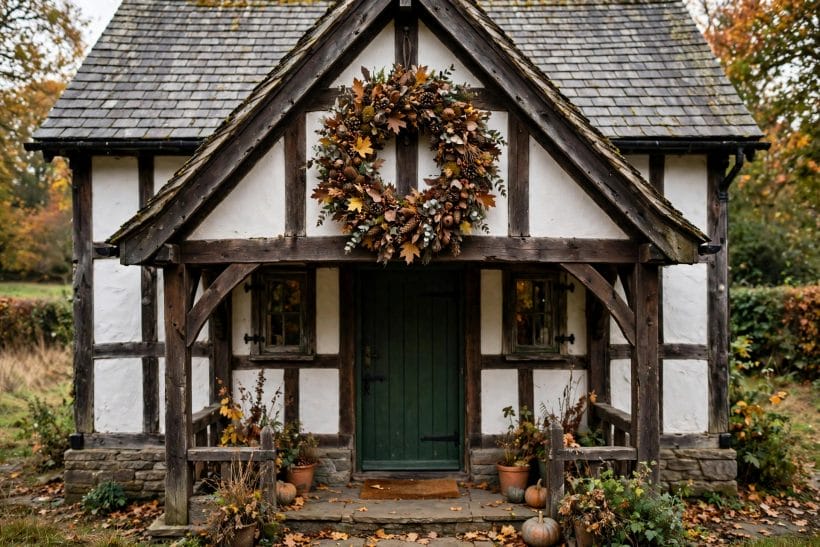
Final Considerations
Hanging a large wreath on a house comes down to a handful of careful choices: a spot where the wreath is seen well and hangs freely, a fixing matched to the surface and to the wreath’s weight, and a level hang that is checked through the season. Keep masonry, high, and overhead fixings professional, test any grip or adhesive fixing before trusting it with a heavy wreath, and shelter the display from the worst of the wind where you can. A wreath that is hung thoughtfully will look better, last longer, and come down without damage to the house.
The seasonal look need not stop at the front door. Carrying the same foliage, colour, or natural texture into the rooms beyond makes the whole house feel considered, from the hall to the bedrooms. Our tiny house bedroom ideas and tiny bedroom ideas show how greenery and warm seasonal colour can sit comfortably in smaller rooms, while our tiny house flooring ideas help in choosing floors that stand up to the extra footfall and fallen foliage that the season brings. Start with the wreath, then let the welcome spread gently through the house.

A last practical note: check the wreath after its first night outdoors, after the first rain, and after any strong wind. Fixings settle, loops stretch, and foliage shifts, and a quick check catches small problems before they become a fallen wreath. With that habit in place, a large wreath is a simple, generous way to mark a season and to welcome everyone who comes to the door.





0 Comments