
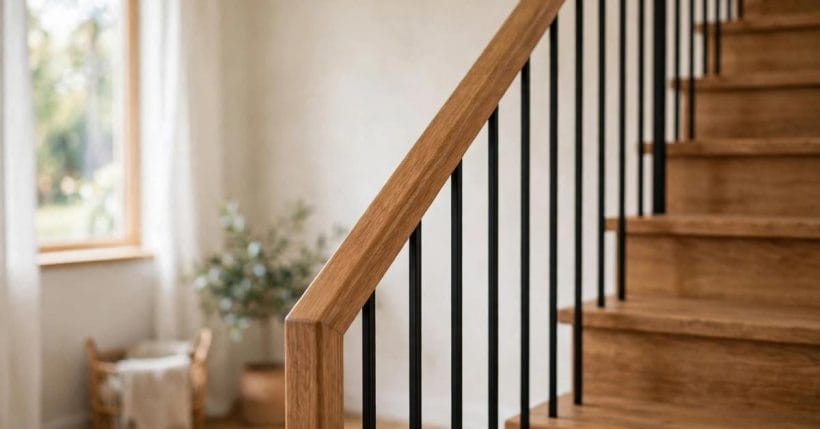
A staircase railing is the part of the staircase the hand knows best, and its material decides whether that meeting feels warm, cool, transparent or ornate. This survey gathers seventy-five ideas drawn entirely from railing materials, so each idea below is a different material, finish or pairing to consider, rather than a lesson in staircase design generally. For railing ideas in the wider sense, including profiles and arrangements, the companion survey of stair railing ideas remains the place to look, while this post stays with the materials themselves.
The survey moves from solid timbers through painted and weathered wood, iron and steel, glass, cable and rod, mixed pairings, fibre wrappings, and finally the colours and finishes that cut across every material. Along the way it notes how each material feels in the hand, how it behaves in daylight, how it ages, and how it sits beside the room around it, so the reader can judge materials side by side. Structural work, fixing and any change to a guard should always be left to a qualified professional, and the ideas here are offered as design inspiration, not as instructions for work.
1. Wood in Its Natural Colours
Natural wood is the warmest way to begin a railing survey, because every timber brings its own grain, tone and touch to the hand. The ideas below stay with wood left close to its natural colour, so the differences between timbers can be judged honestly. The wider staircase ideas survey gives the context for flights as a whole, while the sections here keep the focus on materials alone.
| Item | What it is |
|---|---|
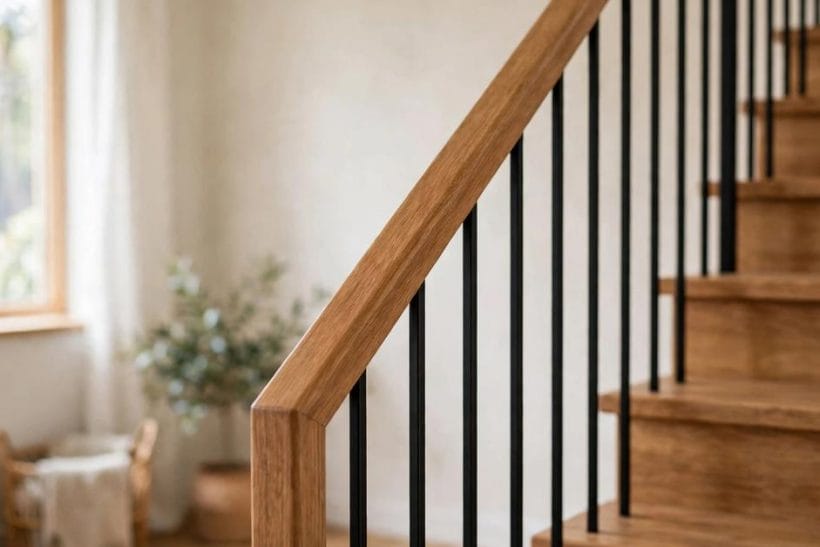
| Oak Handrails with a Clear Finish | Oak is the familiar workhorse of the wooden handrail, with a grain that stays calm under a clear finish and a surface that feels firm and reassuring in the hand. |
| Walnut Rails for a Darker Flight | Walnut brings a deep chocolate tone that gives a staircase a sense of occasion without any added ornament. |
| Ash Rails in a Pale Hall | Ash is paler and lighter in tone than oak, with a grain that reads as fine, open lines rather than bold figure. |
| Maple Rails with a Smooth Touch | Maple is prized for a surface that feels almost silky once finished, with a subtle grain that stays in the background. |
| Pine Rails in a Cottage Flight | Pine carries knots and a warm, golden tone that suit cottage halls and relaxed family rooms, where a little informality is welcome. |
| Reclaimed Timber Rails with Old Marks | Reclaimed timber brings nail holes, saw marks and a weathered tone that no new board can imitate, and each rail tells a little of the building it came from. |
| Teak Rails for a Warm Welcome | Teak is known for a rich, golden-brown tone and a slightly oily surface that feels smooth and substantial in the hand. |
| Beech Rails in a Quiet Hall | Beech offers a pale, rosy tone and a fine, speckled grain that stays unobtrusive in a quiet hall. |
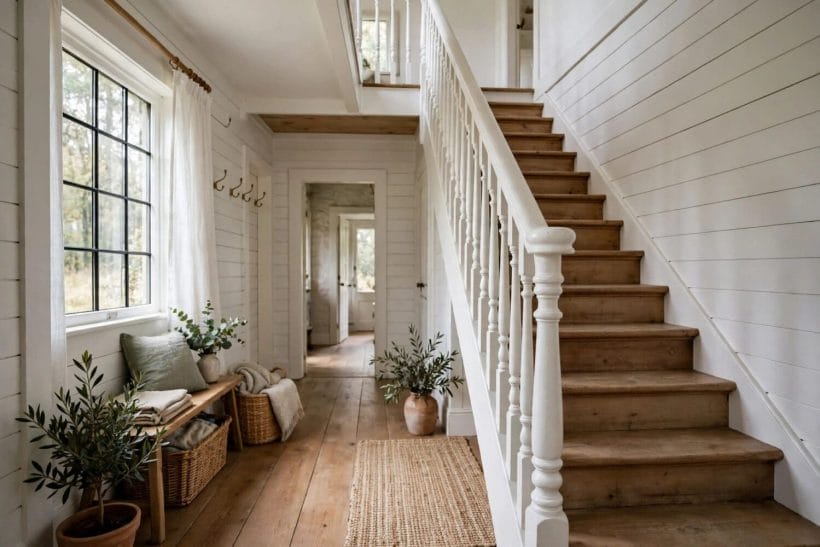
| White Painted Rails Against Pale Walls | A white painted rail disappears gently into a pale hall while still giving the hand a clear, smooth guide along the flight. |
| Soft Grey Painted Rails | Soft grey paint gives a wooden rail a contemporary calm that sits between white and dark wood, neither stark nor heavy. |
| Deep Green Painted Rails | Deep green paint brings a library or garden-room mood to a staircase, with a tone that feels both traditional and quietly bold. |
| Navy Painted Rails in a Hall | Navy paint gives a wooden rail a smart, tailored presence that suits entry halls and period rooms alike. |
| Black Stained Wood Rails | Black stain lets the wood grain show through a dark, dramatic finish, so the rail keeps a timber character while reading almost like iron from a distance. |
| Limewashed Wood Rails | Limewash softens wood to a pale, chalky tone that lets the grain show faintly through a veil of white. |
| Weathered Grey Wood Rails | Weathered grey gives wood the silvery tone of timber left to the seasons, with a matte surface that feels rustic and honest. |
| Contrasting Wood Tones on Rail and Balusters | Pairing a dark handrail with paler balusters, or the reverse, lets the two parts of a wooden railing speak separately instead of blending into one mass. |
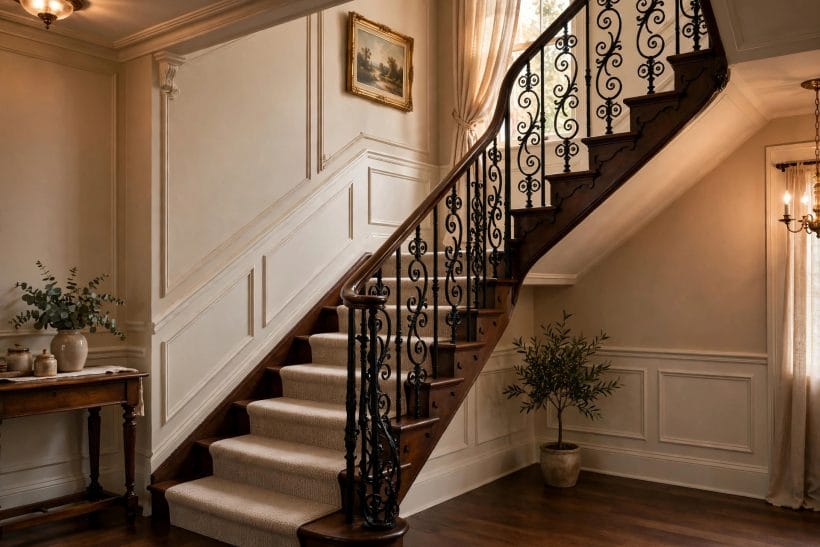
| Classic Scroll Iron Balusters | Scroll balusters curve into gentle spirals and leaves, giving a staircase a traditional elegance that suits period halls and grand entries. |
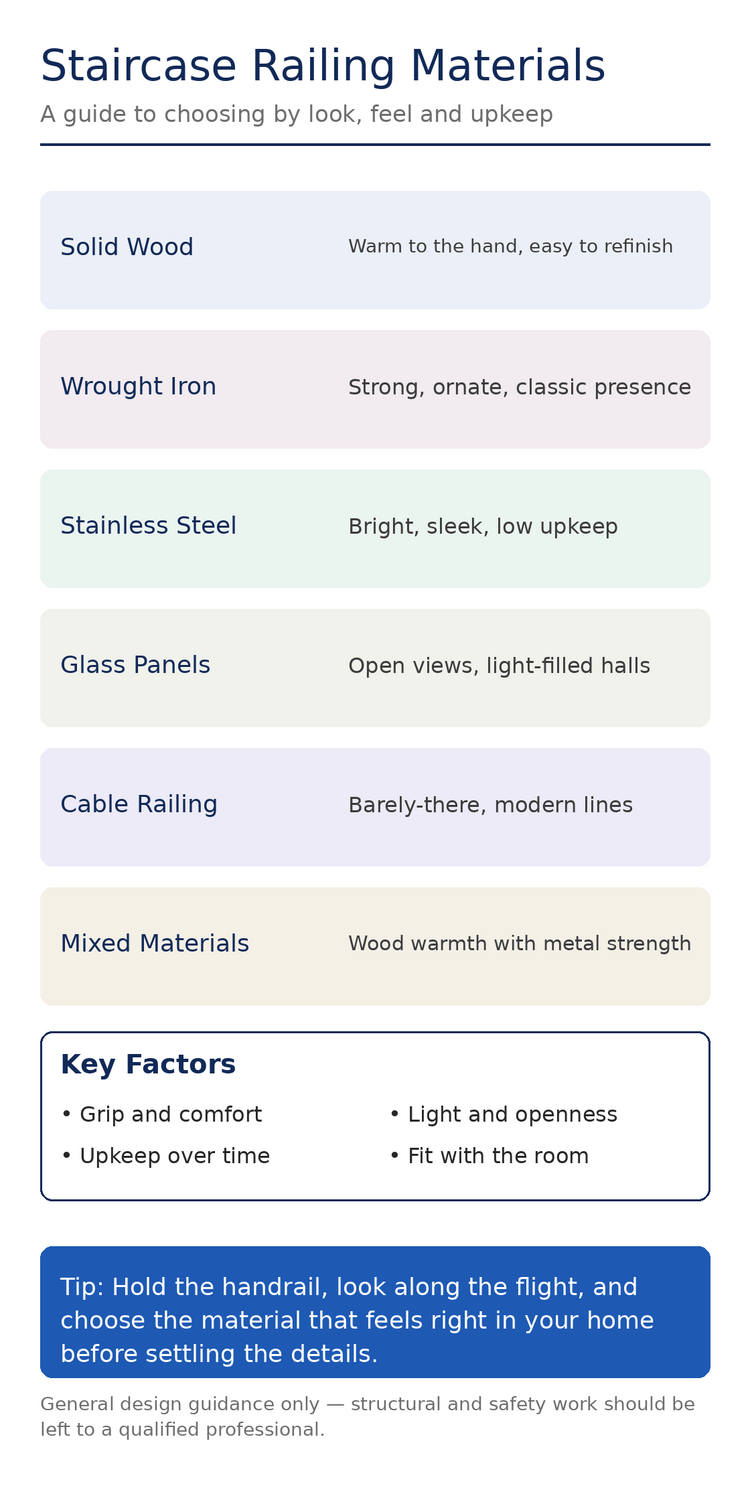
| Plain Iron Bars with a Wood Rail | Plain iron bars offer the quietest form of iron railing, with straight verticals that keep the eye moving up the flight without interruption. |
| Basket-Weave Iron Balusters | Basket-weave balusters twist and cross in a woven pattern that adds texture to a staircase without closing it in. |
| Twisted Iron Balusters | Twisted iron balusters turn along their length like a rope, giving a staircase a handcrafted rhythm that plain bars cannot offer. |
| Iron Rails in a Dark Finish | A dark finish on iron deepens the metal to near-black, which lets the railing read as a strong, quiet frame for the staircase. |
| Iron and Stone Pairings | Iron balusters beside stone treads or a stone wall bring together two hard, enduring materials, and the contrast between slim metal and solid stone gives a staircase a grounded, architectural feel. |
| Iron Balusters with a Brass Touch | A brass collar or finial on an iron baluster adds a small point of warmth that lifts the whole railing without changing its character. |
| Iron Panels with a Geometric Pattern | Geometric iron panels replace individual balusters with a repeating pattern of squares, diamonds or arches, giving a staircase a designed, almost textile quality. |
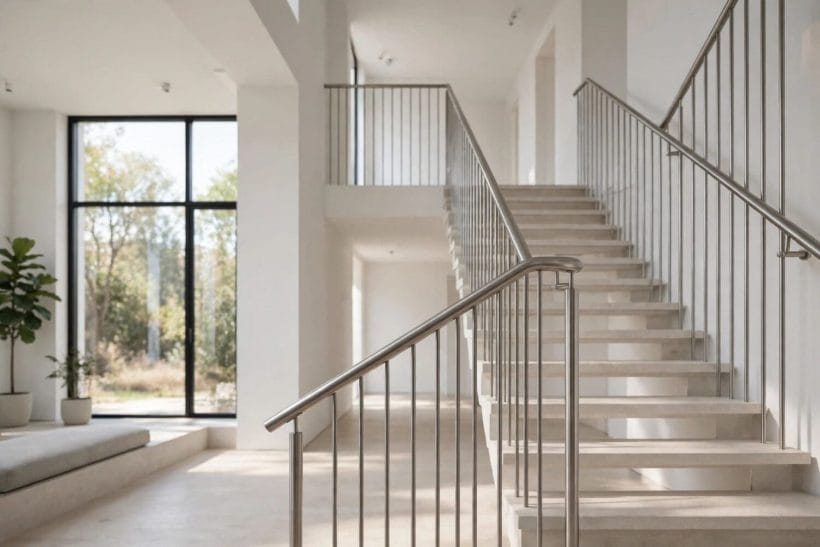
| Brushed Stainless Handrails | Brushed stainless steel has a soft, matte grain that diffuses light rather than reflecting it sharply, so the rail feels calm and modern in the hand. |
| Polished Stainless Rails | Polished stainless steel reflects its surroundings like a mirror, so the rail seems to borrow colour and light from the room around it. |
| Blackened Steel Flat Bars | Blackened steel flat bars give a staircase a strong horizontal or vertical rhythm, with broad, dark lines that read as modern and architectural. |
| Steel Tube Rails with a Slim Line | Steel tube rails offer a slender, continuous line that suits minimalist halls, where the railing should guide the hand without dominating the room. |
| Steel and Glass Pairings | Steel posts and handrails combined with glass panels give a staircase the clarity of glass with the reassuring structure of metal. |
| Powder-Coated Steel Rails | Powder coating gives steel a smooth, even colour coat in tones from white to deep grey, so the railing can match the room's palette while keeping steel's slim strength. |
| Steel Newels with a Square Line | Square steel newels give a staircase a crisp, architectural anchor at the foot and at each turn, with clean corners that suit contemporary rooms. |
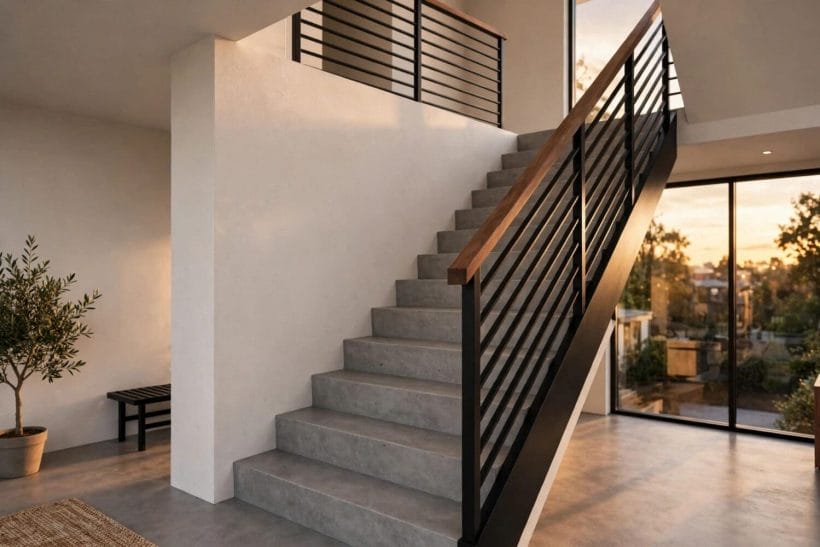
| Steel Rails Beside Large Windows | Steel rails beside large windows catch daylight along their length, so the railing seems to glow gently through the day and fade softly in the evening. |
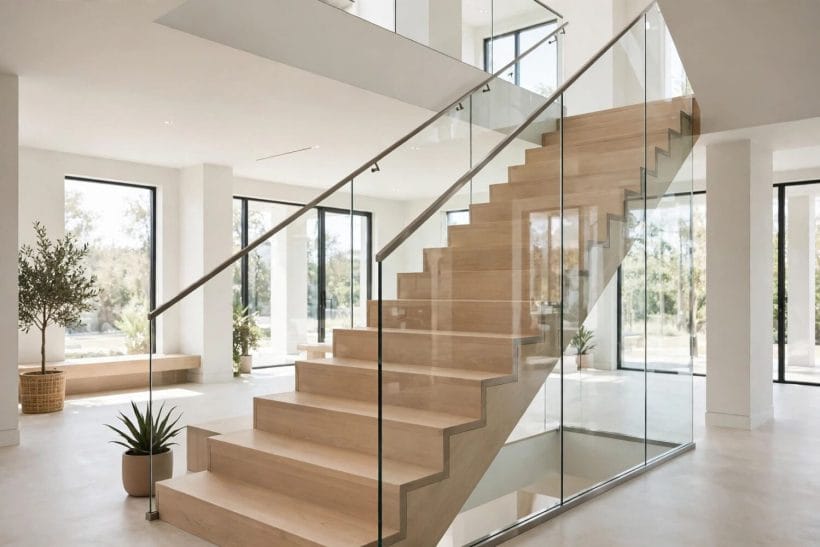
| Frameless Glass Guards | Frameless glass guards use thick panels held by discreet fittings, so the staircase appears guarded by light itself rather than by a visible barrier. |
| Glass Panels with a Wood Cap | A wood cap along the top of a glass guard gives the hand a warm, familiar surface while the glass below keeps the flight open. |
| Glass Panels with a Metal Cap | A metal cap on a glass guard adds a slim, precise line that suits contemporary halls, with steel or blackened metal giving the guard a finished edge. |
| Tinted Glass Panels | Tinted glass panels soften daylight as it passes through the guard, giving a staircase a gentle grey, bronze or green cast that changes with the time of day. |
| Frosted Glass Panels | Frosted glass panels diffuse light and obscure detail, so a staircase guard can glow softly while keeping the rooms on either side private. |
| Glass Balusters Between Wood Posts | Glass balusters set between wood posts offer a middle path, with the warmth and structure of wood framing the openness of glass. |
| Glass Panels on a Landing | Glass panels on a landing keep the upper floor feeling connected to the hall below, since the eye travels through the guard to the rooms beyond. |
| Glass Guards That Keep Light Moving | The greatest gift of a glass guard is the way it lets daylight travel through a staircase instead of stopping at it, so a hall that once felt divided can feel like one room. |
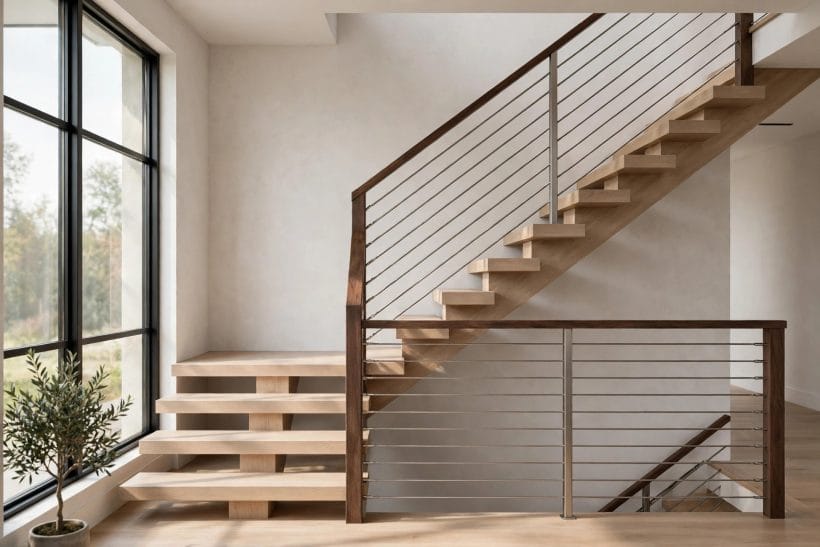
| Horizontal Cable Runs | Horizontal cable runs stretch slim steel cables along the flight, creating a series of fine lines that echo the slope of the staircase itself. |
| Vertical Rod Balusters | Vertical rod balusters replace cables with slim, rigid rods that stand like a fine comb along the flight, giving a staircase a disciplined, upright rhythm. |
| Cable with a Wood Handrail | Cable infill beneath a wood handrail combines the openness of cable with the warmth of timber, so the staircase feels both modern and welcoming. |
| Cable with a Metal Handrail | Cable infill beneath a metal handrail keeps the whole guard in one cool, precise language, with steel above and steel below. |
| Rod Panels with a Slim Frame | Rod panels set within a slim metal frame give a staircase a tidy, panelled rhythm, with each panel reading as a designed unit rather than a loose collection of lines. |
| Cable Runs on a Landing | Cable runs along a landing guard keep the upper floor open to the hall below, since the fine lines barely interrupt the view across the void. |
| Cable and Glass Combined Guards | Combining cable with glass panels lets a guard borrow the openness of both materials, with glass giving solidity at the base and cable keeping the upper portion light. |
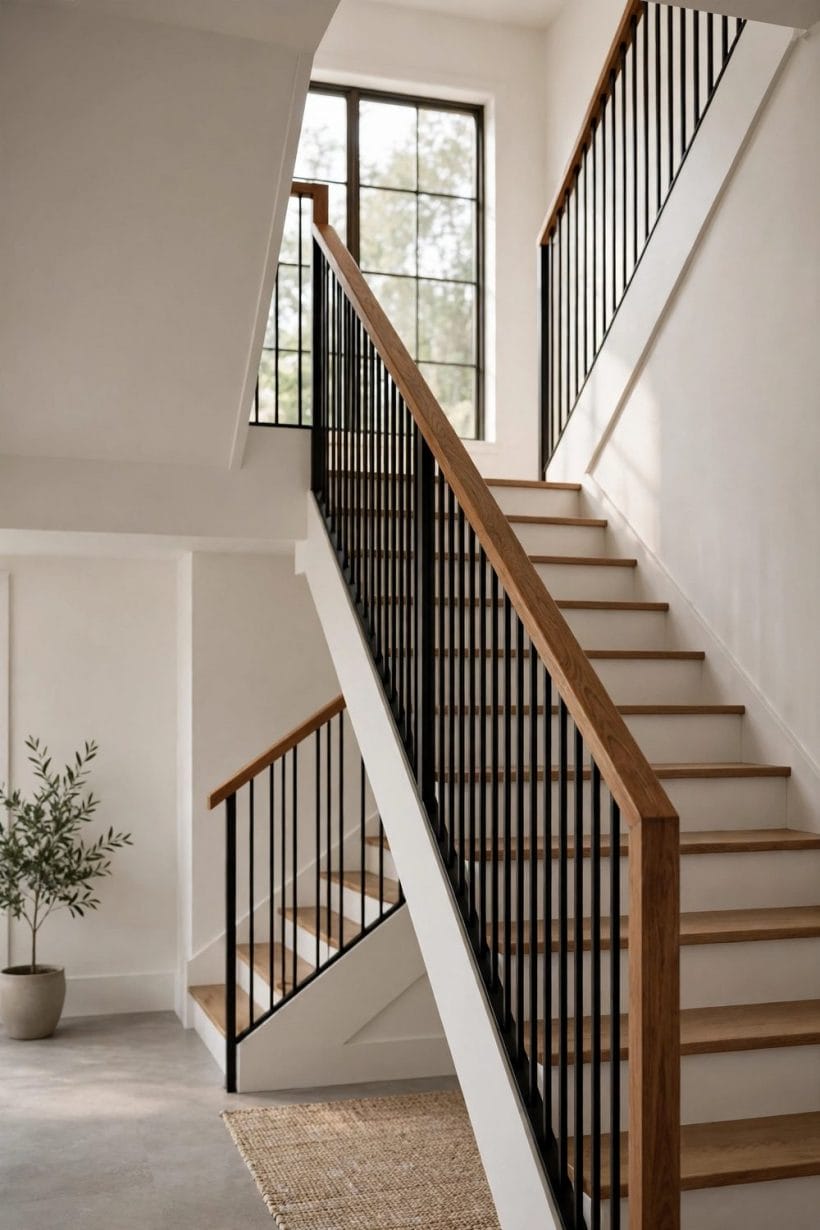
| Wood Rail with Iron Balusters | A wood handrail above iron balusters is the classic mixed-material staircase, with warmth above and strength below. |
| Wood Rail with Steel Balusters | A wood handrail above steel balusters brings a contemporary edge to a familiar form, with the cool precision of steel balancing the warmth of timber. |
| Steel Rail with Wood Infill Panels | A steel handrail above wood infill panels reverses the usual pairing, with metal guiding the hand and timber filling the guard below. |
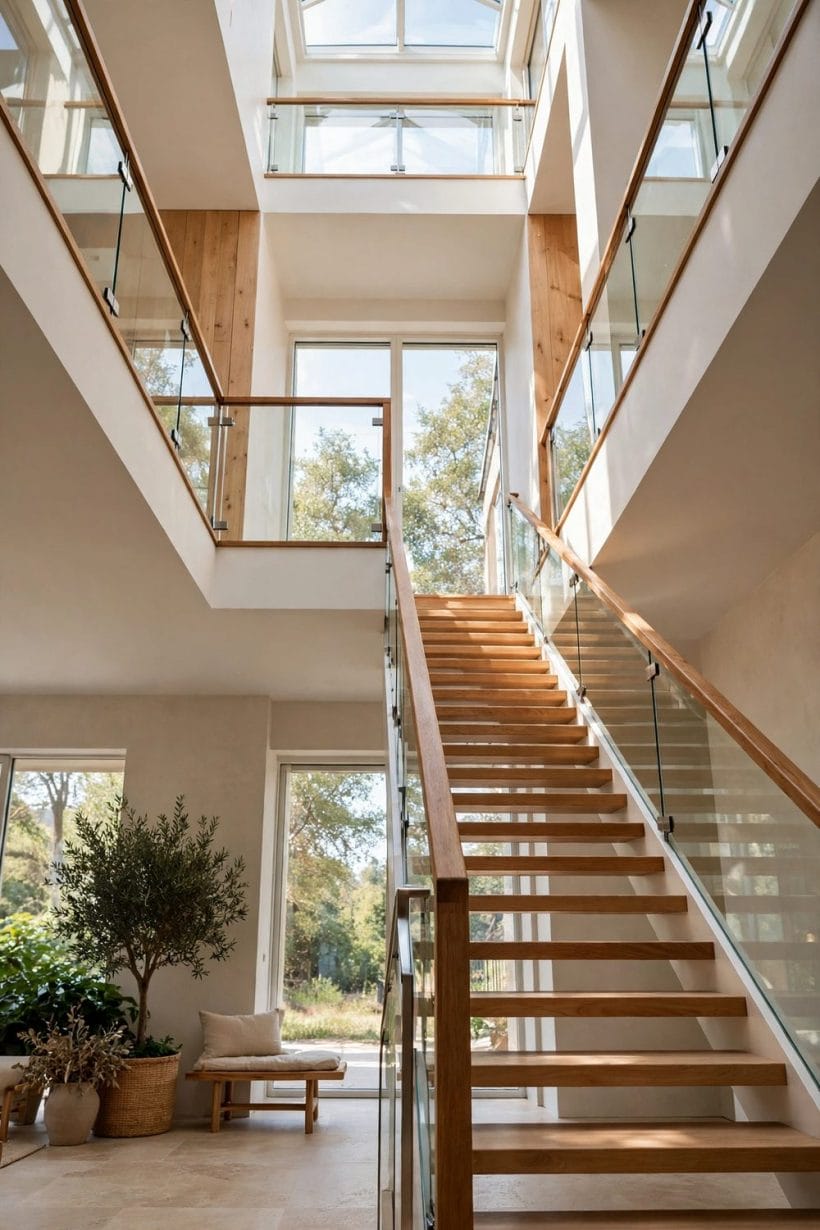
| Glass with a Wood Handrail | Glass panels beneath a wood handrail combine transparency with warmth, so the staircase stays open while the hand meets a familiar material. |
| Iron with a Stone Newel | Iron balusters meeting a stone newel bring together a slender guard and a solid anchor, with the stone giving the staircase a sense of permanence at its foot. |
| Wood Rail with Glass Infill Panels | A wood handrail above glass infill panels lets a traditional timber rail crown a thoroughly modern guard, with the glass keeping the flight open and light. |
| Steel Rail with Glass Infill Panels | A steel handrail above glass infill panels keeps the whole guard in a cool, contemporary language, with metal and glass sharing clarity and precision. |
| Mixed Metals on One Flight | Mixing two metals on one flight, such as blackened steel with brass details or brushed steel with bronze caps, adds depth to a railing without adding bulk. |
| Rope Handrails in a Coastal Hall | A rope handrail brings a nautical, coastal mood to a staircase, with a thick, twisted surface that feels substantial and slightly springy in the hand. |
| Leather-Wrapped Handrails | A leather-wrapped handrail offers a surface that is warm, slightly yielding and beautifully tactile, with a tone that deepens as it is handled over time. |
| Wrapped Cord Grips on a Wood Rail | Wrapped cord grips add texture to a wood handrail at the points where the hand naturally rests, such as at the foot of the flight or beside a landing. |
| Hemp Cord Details on a Landing Rail | Hemp cord details on a landing rail bring a rustic, handcrafted accent to the place where the staircase pauses and turns. |
| Waxed Cotton Wrapping on a Handrail | Waxed cotton wrapping gives a handrail a smooth, slightly water-resistant surface with a muted, matte tone that suits practical halls and utility staircases. |
| Leather Handrail with Brass Studs | A leather handrail finished with brass studs combines softness with a tailored, equestrian detail, with the studs catching light along the rail's length. |
| Fibre and Wood Pairings in a Warm Room | Fibre wrappings paired with wood rails and balusters keep a staircase firmly in the world of natural materials, with timber giving structure and fibre giving texture. |
| Matte Finishes Across Materials | Matte finishes absorb light rather than reflecting it, so a railing in a matte finish feels calm, soft and understated in any material. |
| Satin Finishes That Catch Soft Light | Satin finishes sit between matte and gloss, catching a gentle sheen that moves with the viewer without dazzling. |
| High-Gloss Finishes on Dark Rails | High-gloss finishes on dark rails create a mirror-like surface that reflects the room and gives a staircase a dramatic, polished presence. |
| Warm Metal Tones: Brass and Bronze | Brass and bronze bring a golden warmth to metal railings, with tones that range from bright brass to deep, aged bronze. |
| Cool Metal Tones: Nickel and Chrome | Nickel and chrome bring a cool, silvery clarity to metal railings, with tones that suit contemporary rooms and pale palettes. |
| Painted Metal Rails in Soft Colours | Painted metal rails in soft colours, such as sage, cream or pale grey, let a metal guard join the room's palette instead of standing apart as industrial hardware. |
| Patina Finishes That Age Gracefully | Patina finishes celebrate the way metal changes with time, with verdigris on copper, darkening on bronze and softening on brass giving each railing a living surface. |
1. Oak Handrails with a Clear Finish
Oak is the familiar workhorse of the wooden handrail, with a grain that stays calm under a clear finish and a surface that feels firm and reassuring in the hand. Left in its natural honey tone, it suits halls that already carry wooden floors or wooden doors, and it ages by deepening gently rather than changing character. A clear finish also lets the grain do the decorating, which keeps the flight looking quiet and settled.
2. Walnut Rails for a Darker Flight
Walnut brings a deep chocolate tone that gives a staircase a sense of occasion without any added ornament. Its grain runs in long, soft waves, and under a satin finish it holds a low glow that flatters dimmer halls and evening light. Walnut pairs well with pale walls, where the contrast lets the rail read as a single dark line rising through the room, and with brass or bronze details that pick up its warmth.
3. Ash Rails in a Pale Hall
Ash is paler and lighter in tone than oak, with a grain that reads as fine, open lines rather than bold figure. That lightness makes it a kind choice for small halls and for rooms where daylight is limited, since the rail does not darken the flight visually. Ash also takes a clear finish gracefully, keeping its creamy tone while the hand finds a smooth, even surface along the whole climb.
4. Maple Rails with a Smooth Touch
Maple is prized for a surface that feels almost silky once finished, with a subtle grain that stays in the background. Its pale, even colour suits contemporary rooms where the railing should feel refined rather than rustic, and it sits comfortably beside painted walls in soft neutrals. Maple rails reward a gentle cleaning routine, and their quiet appearance lets the shape of the staircase itself carry the design.
5. Pine Rails in a Cottage Flight
Pine carries knots and a warm, golden tone that suit cottage halls and relaxed family rooms, where a little informality is welcome. Its grain is lively and its surface softer than hardwood, which gives the rail a friendly, lived-in feel from the start. Pine looks at home beside painted panelling, woven baskets and simple wooden furniture, and it settles into a home the way a well-used kitchen table does.
6. Reclaimed Timber Rails with Old Marks
Reclaimed timber brings nail holes, saw marks and a weathered tone that no new board can imitate, and each rail tells a little of the building it came from. The surface is best left honest, with a finish that protects without hiding the marks, so the hand meets texture as well as timber. Reclaimed rails suit rooms that already mix old and new, and they give a new staircase an immediate sense of history.
7. Teak Rails for a Warm Welcome
Teak is known for a rich, golden-brown tone and a slightly oily surface that feels smooth and substantial in the hand. It suits entry halls where the staircase is the first thing a visitor meets, since its warmth reads as welcoming rather than grand. Teak also holds its colour well in rooms with strong daylight, and its even grain keeps the rail looking calm even where the flight turns or meets a landing.
8. Beech Rails in a Quiet Hall
Beech offers a pale, rosy tone and a fine, speckled grain that stays unobtrusive in a quiet hall. It is a modest timber, happiest where the room itself is simple, with plain walls and soft light, and it gives the hand a firm, even grip without drawing attention to itself. Beech rails suit homes that value calm over display, and they pair gracefully with both pale paint and natural linen tones.
2. Painted, Stained and Weathered Wood
Paint and stain let wood step away from its natural colour and join the room’s palette instead. The finishes below change how a wooden rail reads in daylight, how it marks with use, and how it sits against walls, floors and furniture. Wooden flights in full are surveyed under wooden staircase ideas, which this section complements without repeating.
9. White Painted Rails Against Pale Walls
A white painted rail disappears gently into a pale hall while still giving the hand a clear, smooth guide along the flight. The painted surface feels cool and clean, and it brightens a narrow staircase by reflecting daylight rather than absorbing it. White rails suit cottage and coastal rooms, and they pair easily with turned balusters, panelled walls and soft furnishings in cream and stone tones.
10. Soft Grey Painted Rails
Soft grey paint gives a wooden rail a contemporary calm that sits between white and dark wood, neither stark nor heavy. The tone flatters halls with grey floors or grey stone, and it keeps the staircase feeling light while still defining its line. Grey rails also forgive everyday marks better than pure white, which makes them a practical choice for busy family halls where the staircase sees constant use.
11. Deep Green Painted Rails
Deep green paint brings a library or garden-room mood to a staircase, with a tone that feels both traditional and quietly bold. Against cream walls and wooden treads, the green rail reads as a deliberate accent, and in evening light it deepens into something almost black. Green rails suit rooms with plants, botanical prints or dark wooden furniture, where the colour can echo the rest of the house.
12. Navy Painted Rails in a Hall
Navy paint gives a wooden rail a smart, tailored presence that suits entry halls and period rooms alike. The dark blue tone holds its own beside white panelling and brass details, and it keeps the staircase feeling grounded without the heaviness of black. Navy rails look especially well where the hall carries artwork or a patterned runner, since the colour anchors the composition without competing with it.
13. Black Stained Wood Rails
Black stain lets the wood grain show through a dark, dramatic finish, so the rail keeps a timber character while reading almost like iron from a distance. The effect suits modern rooms and monochrome halls, where a dark line rising through pale walls gives the staircase a strong silhouette. Black stained rails also pair well with metal balusters, since the dark tones meet without a visible seam between materials.
14. Limewashed Wood Rails
Limewash softens wood to a pale, chalky tone that lets the grain show faintly through a veil of white. The finish suits coastal and cottage halls, where it echoes whitewashed walls and sun-bleached timber, and it keeps a staircase feeling airy even in a narrow space. Limewashed rails ask for a gentle touch in cleaning, since the pale surface shows marks, but their lightness rewards the care.
15. Weathered Grey Wood Rails
Weathered grey gives wood the silvery tone of timber left to the seasons, with a matte surface that feels rustic and honest. The finish suits farmhouse halls and rooms with stone, linen and rough textures, where a polished rail would feel out of place. Weathered rails carry variation from board to board, so the staircase reads as something shaped by time rather than made in a single afternoon.
16. Contrasting Wood Tones on Rail and Balusters
Pairing a dark handrail with paler balusters, or the reverse, lets the two parts of a wooden railing speak separately instead of blending into one mass. The contrast defines the line of the rail while keeping the balusters light and open, which suits halls where the staircase should feel structured but not heavy. This pairing works best when the tones already appear elsewhere in the room, so the contrast feels considered rather than accidental.
3. Wrought Iron and Cast Details
Wrought iron has guarded staircases for generations, and its strength allows slender balusters and open patterns that wood alone cannot achieve. The ideas below stay with iron as the visible material, from plain bars to ornate scrolls, and note how each pattern changes the light and mood of the flight.
17. Classic Scroll Iron Balusters
Scroll balusters curve into gentle spirals and leaves, giving a staircase a traditional elegance that suits period halls and grand entries. The ironwork catches light along its curves, so the railing reads as decoration as well as guard, and the open pattern keeps the flight feeling airy despite the ornate detail. Scroll iron pairs naturally with a dark wood handrail, which warms the metal and gives the hand a comfortable grip.
18. Plain Iron Bars with a Wood Rail
Plain iron bars offer the quietest form of iron railing, with straight verticals that keep the eye moving up the flight without interruption. The simplicity suits modern and transitional rooms, where the railing should feel disciplined rather than decorative, and the slim bars let daylight pass through the staircase almost unhindered. A wood handrail above the bars softens the composition and gives the hand a warm surface to hold.
19. Basket-Weave Iron Balusters
Basket-weave balusters twist and cross in a woven pattern that adds texture to a staircase without closing it in. The woven iron catches light in shifting ways as the viewer moves, so the railing feels lively from every angle, and the pattern suits halls that already carry textured materials such as stone or woven runners. Basket balusters sit well between plain bars, where a single woven accent can break a long run gracefully.
20. Twisted Iron Balusters
Twisted iron balusters turn along their length like a rope, giving a staircase a handcrafted rhythm that plain bars cannot offer. The twist catches light along its ridges, so each baluster shows a subtle play of highlight and shadow, and the effect suits traditional rooms where craftsmanship is part of the appeal. Twisted balusters pair well with a substantial wood handrail, which balances their visual energy with a calm, continuous line.
21. Iron Rails in a Dark Finish
A dark finish on iron deepens the metal to near-black, which lets the railing read as a strong, quiet frame for the staircase. The dark tone suits rooms with pale walls and wooden floors, where the contrast gives the flight a clear silhouette, and it also hides the everyday marks that brighter finishes would show. Dark iron rails feel at home in both period and contemporary halls, since the colour itself carries no strong style message.
22. Iron and Stone Pairings
Iron balusters beside stone treads or a stone wall bring together two hard, enduring materials, and the contrast between slim metal and solid stone gives a staircase a grounded, architectural feel. The iron keeps the guard light and open while the stone carries the weight of the flight, so the composition feels balanced rather than heavy. This pairing suits entry halls and garden rooms, where stone already appears in floors or fireplaces.
23. Iron Balusters with a Brass Touch
A brass collar or finial on an iron baluster adds a small point of warmth that lifts the whole railing without changing its character. The golden tone catches lamplight and daylight alike, and it echoes brass details elsewhere in a hall, such as door handles or picture lights. Used sparingly, brass touches keep an iron railing feeling refined rather than ornate, and they suit rooms where a little polish is welcome.
24. Iron Panels with a Geometric Pattern
Geometric iron panels replace individual balusters with a repeating pattern of squares, diamonds or arches, giving a staircase a designed, almost textile quality. The pattern reads clearly from across the room and adds structure to a long flight, while the open spaces within the pattern keep light moving through. Geometric panels suit contemporary and transitional halls, where a bold, regular rhythm complements clean walls and simple furniture.
4. Steel: Brushed, Blackened and Polished
Steel brings a cooler, more precise character than iron, with finishes that range from soft brushed grey to mirror polish. The ideas below treat steel as the visible railing material, and note how each finish behaves in daylight, beside glass, and against wood and stone. Metal flights in full are surveyed under metal staircase ideas, which this section complements without repeating.
25. Brushed Stainless Handrails
Brushed stainless steel has a soft, matte grain that diffuses light rather than reflecting it sharply, so the rail feels calm and modern in the hand. The brushed surface also forgives fingerprints and light marks better than a polished finish, which suits family halls and busy entries. Brushed rails sit comfortably beside pale stone, glass and light wood, where their cool grey tone adds precision without coldness.
26. Polished Stainless Rails
Polished stainless steel reflects its surroundings like a mirror, so the rail seems to borrow colour and light from the room around it. The bright finish suits contemporary halls with large windows and pale surfaces, where reflections add sparkle to the staircase, and it pairs well with glass panels that share its clarity. Polished rails ask for regular wiping to keep their shine, but the brilliance they return makes the routine worthwhile.
27. Blackened Steel Flat Bars
Blackened steel flat bars give a staircase a strong horizontal or vertical rhythm, with broad, dark lines that read as modern and architectural. The flat profile catches light along its edge, so the railing shows a fine highlight against its dark face, and the bars keep the flight feeling open despite their width. Blackened steel suits rooms with concrete, dark wood or monochrome palettes, where its graphic quality feels intentional.
28. Steel Tube Rails with a Slim Line
Steel tube rails offer a slender, continuous line that suits minimalist halls, where the railing should guide the hand without dominating the room. The round profile feels comfortable in the grip, and the slim diameter keeps the staircase visually light, even where the flight is long. Steel tube rails pair gracefully with glass guards and pale treads, since all three materials share a clean, uncluttered character.
29. Steel and Glass Pairings
Steel posts and handrails combined with glass panels give a staircase the clarity of glass with the reassuring structure of metal. The steel frames the glass and gives the hand a firm guide, while the glass keeps views open and daylight flowing through the flight. This pairing suits double-height halls and modern rooms, where openness matters, and it lets the staircase feel present without blocking the room behind it.
30. Powder-Coated Steel Rails
Powder coating gives steel a smooth, even colour coat in tones from white to deep grey, so the railing can match the room’s palette while keeping steel’s slim strength. The coated surface feels soft to the touch and resists everyday marks, which suits family halls and rental homes where durability matters. Powder-coated rails also allow a staircase to carry a colour accent without leaving metal behind, since the colour becomes part of the rail itself.
31. Steel Newels with a Square Line
Square steel newels give a staircase a crisp, architectural anchor at the foot and at each turn, with clean corners that suit contemporary rooms. The square profile contrasts pleasantly with a round handrail, and the newel’s solidity reassures the hand at the point where the climb begins. Square newels pair well with flat-bar balusters and glass panels, since all three share a disciplined, geometric character.
32. Steel Rails Beside Large Windows
Steel rails beside large windows catch daylight along their length, so the railing seems to glow gently through the day and fade softly in the evening. The cool metal tone complements the brightness of a glazed wall, and the slim profile does not interrupt the view, which keeps the room feeling connected to the outdoors. This setting suits modern halls where the staircase stands near glass, and where light itself is part of the design.
5. Glass Panels and Guards
Glass is the most transparent railing material, and its appeal lies in what it does not do: it does not block light, views or the sense of space. The ideas below survey glass as a guard material, with the caps, tints and pairings that change how it behaves in a real hall.
33. Frameless Glass Guards
Frameless glass guards use thick panels held by discreet fittings, so the staircase appears guarded by light itself rather than by a visible barrier. The effect suits double-height halls and rooms with a view, where an uninterrupted sightline matters, and it lets the treads and the architecture carry the design. Frameless glass asks for regular cleaning to keep its clarity, since every mark shows, but the openness it returns is unmatched by any solid material.
34. Glass Panels with a Wood Cap
A wood cap along the top of a glass guard gives the hand a warm, familiar surface while the glass below keeps the flight open. The wood line also defines the guard visually, so visitors read the barrier clearly even where the glass itself is almost invisible. This pairing suits rooms that mix modern openness with natural warmth, and it lets a glass guard feel like part of a home rather than part of a showroom.
35. Glass Panels with a Metal Cap
A metal cap on a glass guard adds a slim, precise line that suits contemporary halls, with steel or blackened metal giving the guard a finished edge. The cap protects the glass edge and gives the hand a cool, firm guide, while the panel below keeps light moving through the flight. Metal-capped glass suits rooms with steel details elsewhere, since the cap can echo window frames, handles or light fittings.
36. Tinted Glass Panels
Tinted glass panels soften daylight as it passes through the guard, giving a staircase a gentle grey, bronze or green cast that changes with the time of day. The tint adds privacy to a flight that overlooks a living space, while still allowing light and shapes to show through, and it suits rooms where strong sunlight needs tempering. Tinted panels pair well with dark wood and stone, where their muted tone feels settled rather than stark.
37. Frosted Glass Panels
Frosted glass panels diffuse light and obscure detail, so a staircase guard can glow softly while keeping the rooms on either side private. The frosted surface suits halls beside bathrooms or bedrooms, where a clear view through the guard would feel exposed, and it gives the staircase a calm, lantern-like quality in evening light. Frosted panels also hide fingerprints and light marks better than clear glass, which eases everyday care.
38. Glass Balusters Between Wood Posts
Glass balusters set between wood posts offer a middle path, with the warmth and structure of wood framing the openness of glass. Each glass baluster acts like a small window in the railing, letting light through while the wood posts anchor the composition at intervals. This pairing suits transitional rooms that want openness without surrendering the familiar character of a wooden staircase, and it keeps the flight feeling crafted rather than industrial.
39. Glass Panels on a Landing
Glass panels on a landing keep the upper floor feeling connected to the hall below, since the eye travels through the guard to the rooms beyond. The landing becomes a viewing platform rather than a closed box, which suits double-height entries and open-plan homes where sightlines matter. A wood or metal cap along the landing guard gives the hand a guide, while the glass below preserves the sense of height and light.
40. Glass Guards That Keep Light Moving
The greatest gift of a glass guard is the way it lets daylight travel through a staircase instead of stopping at it, so a hall that once felt divided can feel like one room. Morning light from a landing window reaches the lower flight, and evening lamplight rises in return, which makes the staircase feel alive through the day. Glass guards suit any home where light is limited, since they refuse to add another shadow to the plan.
6. Cable and Rod Systems
Cable and rod systems guard a staircase with thin lines of metal under tension, so the barrier feels barely present while remaining a real guard. The ideas below survey the orientations, handrails and combinations that define this modern material family.
41. Horizontal Cable Runs
Horizontal cable runs stretch slim steel cables along the flight, creating a series of fine lines that echo the slope of the staircase itself. The horizontal rhythm suits contemporary rooms and decks that open to a view, since the eye follows the cables rather than stopping at them, and the open structure lets breezes and daylight pass freely. Horizontal cables pair well with wood handrails, which warm the composition and give the hand a comfortable guide.
42. Vertical Rod Balusters
Vertical rod balusters replace cables with slim, rigid rods that stand like a fine comb along the flight, giving a staircase a disciplined, upright rhythm. The vertical lines suit rooms where the railing should feel orderly and calm, and the rods keep the guard feeling light while reading as more solid than cable. Vertical rods pair gracefully with steel or wood handrails, and they suit halls where a tidy, tailored appearance matters.
43. Cable with a Wood Handrail
Cable infill beneath a wood handrail combines the openness of cable with the warmth of timber, so the staircase feels both modern and welcoming. The wood cap gives the hand a familiar surface and visually anchors the fine cables below, which keeps the composition from feeling too industrial. This pairing suits rooms that mix contemporary openness with natural materials, and it lets a cable guard settle into a home with wooden floors and furniture.
44. Cable with a Metal Handrail
Cable infill beneath a metal handrail keeps the whole guard in one cool, precise language, with steel above and steel below. The unified metalwork suits minimalist halls and modern rooms, where consistency matters, and the slim profile keeps the staircase feeling light and uncluttered. A metal handrail also echoes window frames and fittings elsewhere in the room, so the staircase feels part of a single design rather than an addition.
45. Rod Panels with a Slim Frame
Rod panels set within a slim metal frame give a staircase a tidy, panelled rhythm, with each panel reading as a designed unit rather than a loose collection of lines. The frame defines the guard clearly, which suits halls where the railing should feel intentional and finished, and the rods within keep light moving through. Framed rod panels pair well with square newels and flat handrails, since all three share a geometric discipline.
46. Cable Runs on a Landing
Cable runs along a landing guard keep the upper floor open to the hall below, since the fine lines barely interrupt the view across the void. The landing feels like a balcony rather than a barrier, which suits open-plan homes and double-height entries where connection matters. A sturdy handrail above the cables gives the hand a reassuring guide, while the cables below preserve the sense of height and air that makes a landing pleasant to stand on.
47. Cable and Glass Combined Guards
Combining cable with glass panels lets a guard borrow the openness of both materials, with glass giving solidity at the base and cable keeping the upper portion light. The combination suits staircases where a full glass guard would feel too stark and a full cable guard too open, and it allows the designer to tune transparency along the flight. Cable and glass together suit contemporary rooms that already mix materials, since the guard itself becomes part of that conversation.
7. Mixed-Material Pairings
Most memorable staircases pair two materials rather than relying on one, letting each cover the other’s weaknesses. The pairings below show how wood, metal and glass can share a single flight while keeping the composition calm and coherent.
48. Wood Rail with Iron Balusters
A wood handrail above iron balusters is the classic mixed-material staircase, with warmth above and strength below. The wood gives the hand a comfortable grip and visually softens the iron, while the iron keeps the guard slim and open, so the flight feels both traditional and light. This pairing suits almost any hall, from period rooms to transitional homes, since both materials carry a long history of working together.
49. Wood Rail with Steel Balusters
A wood handrail above steel balusters brings a contemporary edge to a familiar form, with the cool precision of steel balancing the warmth of timber. The steel balusters keep the guard feeling slim and modern, while the wood rail prevents the composition from feeling cold, and the pairing suits transitional rooms that want a modern update without abandoning wood. The contrast also lets each material read clearly, which gives the staircase a designed, intentional quality.
50. Steel Rail with Wood Infill Panels
A steel handrail above wood infill panels reverses the usual pairing, with metal guiding the hand and timber filling the guard below. The wood panels add warmth and privacy to the lower portion of the guard, while the steel rail keeps the top line crisp and modern, and the combination suits rooms where a fully open guard would feel too exposed. This pairing works well beside wooden floors, since the panels can echo the floor’s tone.
51. Glass with a Wood Handrail
Glass panels beneath a wood handrail combine transparency with warmth, so the staircase stays open while the hand meets a familiar material. The wood cap defines the guard and gives the composition a domestic scale, which keeps a glass guard from feeling commercial, and the glass below preserves views and daylight. This pairing suits family homes that want openness without surrendering the comfort of timber, and it ages gracefully as both materials settle.
52. Iron with a Stone Newel
Iron balusters meeting a stone newel bring together a slender guard and a solid anchor, with the stone giving the staircase a sense of permanence at its foot. The newel grounds the composition, while the iron keeps the flight light, and the pairing suits entry halls where stone already appears in floors or walls. A stone newel also offers a natural place for the hand to rest at the start of the climb, which makes the staircase feel welcoming.
53. Wood Rail with Glass Infill Panels
A wood handrail above glass infill panels lets a traditional timber rail crown a thoroughly modern guard, with the glass keeping the flight open and light. The wood warms the composition and gives the hand a comfortable grip, while the glass panels prevent the guard from closing in the staircase, and the pairing suits renovated period homes where old and new meet. The combination also lets daylight reach the lower flight, which brightens halls that once felt divided.
54. Steel Rail with Glass Infill Panels
A steel handrail above glass infill panels keeps the whole guard in a cool, contemporary language, with metal and glass sharing clarity and precision. The steel cap protects the glass edge and gives the hand a firm guide, while the panels below keep views open, and the pairing suits modern halls with large windows and pale surfaces. Steel and glass together suit rooms where light matters, since neither material adds shadow to the plan.
55. Mixed Metals on One Flight
Mixing two metals on one flight, such as blackened steel with brass details or brushed steel with bronze caps, adds depth to a railing without adding bulk. The secondary metal appears in small touches, such as collars, finials or a cap, so the composition stays disciplined while gaining a point of warmth or contrast. Mixed metals suit rooms that already carry more than one metal finish, since the railing can echo the door handles, lights and fittings around it.
8. Natural Fibre and Leather-Wrapped Rails
Fibre and leather are the softest railing materials, wrapping a firm core in a surface that feels warm, textured and kind to the hand. The ideas below treat these wrappings as genuine railing materials, with the settings where their softness earns its place.
56. Rope Handrails in a Coastal Hall
A rope handrail brings a nautical, coastal mood to a staircase, with a thick, twisted surface that feels substantial and slightly springy in the hand. The rope suits beach houses and coastal cottages, where it echoes sailing and seaside textures, and it pairs well with whitewashed wood and pale stone. Rope handrails are best kept to short flights and landings, where their informal character can be enjoyed without carrying the whole staircase.
57. Leather-Wrapped Handrails
A leather-wrapped handrail offers a surface that is warm, slightly yielding and beautifully tactile, with a tone that deepens as it is handled over time. The leather suits libraries, studies and refined halls, where its quiet luxury complements wood panelling and soft lamplight, and it gives the hand a grip that feels secure without being hard. Leather wrapping also softens the sound of a hand moving along the rail, which adds to the calm of the room.
58. Wrapped Cord Grips on a Wood Rail
Wrapped cord grips add texture to a wood handrail at the points where the hand naturally rests, such as at the foot of the flight or beside a landing. The cord gives a secure, slightly rough surface that contrasts pleasantly with smooth timber, and it suits rustic and coastal rooms where natural textures already appear. Cord grips can be renewed when they wear, which makes them a forgiving detail for a well-used staircase.
59. Hemp Cord Details on a Landing Rail
Hemp cord details on a landing rail bring a rustic, handcrafted accent to the place where the staircase pauses and turns. The natural fibre tone suits farmhouse and cottage halls, where it echoes woven baskets and linen, and the texture gives the hand a moment of interest at the landing. Hemp details are best used as accents rather than full-length wrappings, so the landing feels considered rather than improvised.
60. Waxed Cotton Wrapping on a Handrail
Waxed cotton wrapping gives a handrail a smooth, slightly water-resistant surface with a muted, matte tone that suits practical halls and utility staircases. The wrapping feels firm and dry in the hand, and its even colour lets it sit quietly beside painted wood or metal fittings. Waxed cotton suits rooms where a handrail should be durable and easy to wipe down, while still feeling softer than bare metal or hard timber.
61. Leather Handrail with Brass Studs
A leather handrail finished with brass studs combines softness with a tailored, equestrian detail, with the studs catching light along the rail’s length. The studs also mark the rhythm of the staircase, giving the eye a regular beat as it climbs, and they echo brass fittings elsewhere in a refined hall. This combination suits traditional rooms with dark wood and leather furniture, where the handrail can join a larger story of crafted materials.
62. Fibre and Wood Pairings in a Warm Room
Fibre wrappings paired with wood rails and balusters keep a staircase firmly in the world of natural materials, with timber giving structure and fibre giving texture. The pairing suits warm rooms with woven rugs, linen curtains and wooden furniture, where every surface invites touch, and it keeps the staircase feeling domestic rather than architectural. Fibre and wood together suit homes that value comfort over display, and where the handrail is meant to be held, not merely admired.
9. Colour and Finish Choices Across Materials
Colour and finish cut across every railing material, and the same tone can read differently on wood, iron and steel. The ideas below survey finishes as a material choice in their own right, noting how each finish behaves in daylight and beside the room’s other surfaces.
63. Matte Finishes Across Materials
Matte finishes absorb light rather than reflecting it, so a railing in a matte finish feels calm, soft and understated in any material. On wood, matte reads as natural and honest; on metal, it reads as modern and restrained; and on painted surfaces, it hides light marks that glossier finishes would show. Matte finishes suit rooms where the staircase should feel settled rather than sparkling, and they pair well with textured walls and soft furnishings.
64. Satin Finishes That Catch Soft Light
Satin finishes sit between matte and gloss, catching a gentle sheen that moves with the viewer without dazzling. On a handrail, satin feels smooth and refined, and it flatters both wood grain and metal surfaces by giving them a quiet glow. Satin suits halls with mixed lighting, since it responds to daylight and lamplight alike, and it keeps a staircase feeling polished without demanding constant attention to marks.
65. High-Gloss Finishes on Dark Rails
High-gloss finishes on dark rails create a mirror-like surface that reflects the room and gives a staircase a dramatic, polished presence. The gloss deepens dark wood and blackened metal alike, and it suits formal halls and evening rooms where lamplight can play across the surface. High-gloss rails ask for regular wiping to keep their shine, but in a room designed for occasions, the brilliance they return feels entirely appropriate.
66. Warm Metal Tones: Brass and Bronze
Brass and bronze bring a golden warmth to metal railings, with tones that range from bright brass to deep, aged bronze. These warm metals suit period halls and rooms with wooden floors, where their glow echoes firelight and lamplight, and they pair gracefully with dark wood handrails. Warm metal tones also age by developing a patina that many owners value, since the changing surface records the life of the house.
67. Cool Metal Tones: Nickel and Chrome
Nickel and chrome bring a cool, silvery clarity to metal railings, with tones that suit contemporary rooms and pale palettes. Nickel offers a softer, slightly warm silver, while chrome gives a brighter, more reflective finish, and both pair well with glass and pale stone. Cool metal tones suit halls where the staircase should feel crisp and clean, and they echo the fittings of modern kitchens and bathrooms nearby.
68. Painted Metal Rails in Soft Colours
Painted metal rails in soft colours, such as sage, cream or pale grey, let a metal guard join the room’s palette instead of standing apart as industrial hardware. The painted surface softens the metal’s character while keeping its slim strength, and it suits cottage and transitional rooms where colour matters more than material display. Painted metal also allows a staircase to be refreshed by repainting, which keeps the guard adaptable as the room changes.
69. Patina Finishes That Age Gracefully
Patina finishes celebrate the way metal changes with time, with verdigris on copper, darkening on bronze and softening on brass giving each railing a living surface. A patina finish suits rooms that value age and character over newness, and it pairs well with stone, old wood and textured walls that share its weathered quality. Patina rails ask the owner to accept change as part of the design, since the surface will continue to evolve with the seasons.
10. Practical Details That Make a Material Work
A beautiful railing material still has to work every day, in the hand, in the light and over years of use. The ideas below gather the practical considerations that belong to the material itself, so the choice made in a showroom still feels right at home.
70. Grip and Comfort Across Materials
Grip and comfort differ more between materials than many buyers expect, with wood feeling warm and firm, metal feeling cool and precise, and leather feeling soft and yielding. The hand meets the rail hundreds of times, so the material’s temperature, texture and shape matter as much as its appearance, and the best choice is the one the hand returns to willingly. Testing a material by holding a sample rail, rather than merely looking at it, reveals comfort that no photograph can show.
71. Light and Openness by Material
Light moves differently through each railing material, with glass passing it freely, cable and rod letting it filter through, and solid wood or iron shaping it into patterns of light and shadow. A dark, solid guard can divide a hall into separate pools of light, while an open guard lets the whole staircase share one daylight, and the difference matters most in narrow or north-facing halls. Choosing a material with light in mind keeps the staircase from becoming a shadow in its own home.
72. Upkeep and Cleaning by Material
Upkeep varies honestly between materials, with glass asking for frequent wiping, wood asking for occasional refinishing, and metal asking mainly for dusting and a gentle wipe. A material that suits a quiet household may burden a busy one, so the honest question is not which material looks best on the day it is fitted, but which one the household will still enjoy caring for years later. Matching upkeep to the household’s habits keeps the railing looking loved rather than neglected.
73. Wear and Ageing by Material
Every railing material ages, but each ages differently, with wood deepening in tone, iron developing a stable dark surface, brass gaining patina, and glass staying unchanged except for marks. Ageing need not be a flaw, since many materials grow more beautiful as they settle into a home, but the owner should choose the ageing they will enjoy rather than the one they will resent. A material whose ageing is welcomed will always look better than a material whose ageing is fought.
74. Matching a Railing Material to the Room
Matching a railing material to the room means looking beyond the staircase to the floors, walls, furniture and light that surround it, and choosing a material that already belongs in that company. A wood rail suits a room of timber and linen, a steel guard suits a room of glass and stone, and a glass guard suits a room where openness matters most, so the staircase feels like part of the house rather than an object placed within it. The room itself usually suggests the material, if it is listened to.
75. Asking a Professional Before Fixing a Material Choice
Before any railing material is fixed in place, a qualified stair professional should confirm that the chosen material, fittings and guard suit the staircase and the home, since structural and safety questions belong to professional judgement rather than guesswork. A professional can also advise on how each material behaves at turns, landings and fixings, where appearance gives way to engineering, and their guidance protects both the beauty and the safety of the finished flight. This final check asks little patience and returns lasting peace of mind.
Final Considerations
Choosing between different types of stair railings becomes easier once the material is judged in the hand, in the room’s own light, and beside the floors and furniture it must live with. A material that looks striking in isolation can feel cold, heavy or demanding once it is part of a daily climb, while a quieter material often proves the most satisfying over years of use. Let the room, the light and the hand all have a say, and the right material usually announces itself without argument.
Where a staircase takes a grander form, such as the paired flights surveyed under double staircase ideas, the material choice matters even more, since the railing runs for a longer distance and meets the eye from more angles. Tiny homes bring their own discipline to the question, and the guides to tiny house staircase interiors and under-stair storage show how a railing material must share a small footprint with everything else the staircase is asked to do. In every case, the material should serve the home first and the photograph second.
Above all, treat this survey as a starting point for conversation with a qualified stair professional, who can confirm that a chosen material, its fittings and its guard suit the particular staircase and home. Materials carry beauty, but they also carry responsibility, and a professional’s judgement is what turns a pleasing idea into a staircase that can be trusted every day. Choose slowly, hold the samples, look at them in morning and evening light, and let the staircase earn its material.

0 Comments