
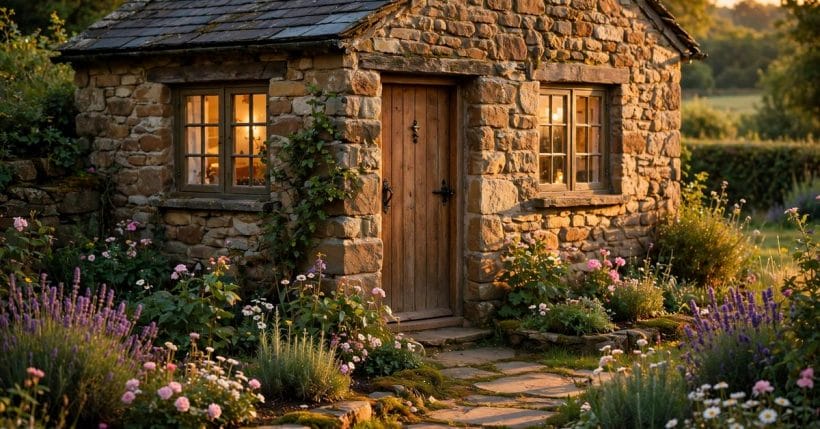
A small stone house has a presence that few other small homes can match. The walls themselves do much of the work: rough, varied and full of texture, they give even a modest cottage a sense of permanence and warmth. This gallery gathers ideas for small houses built in stone, from cottage exteriors and garden settings to living rooms, kitchens, bedrooms and the practical details that keep a stone home comfortable. Use it as inspiration for your own home, and treat anything structural as a job for a qualified professional.
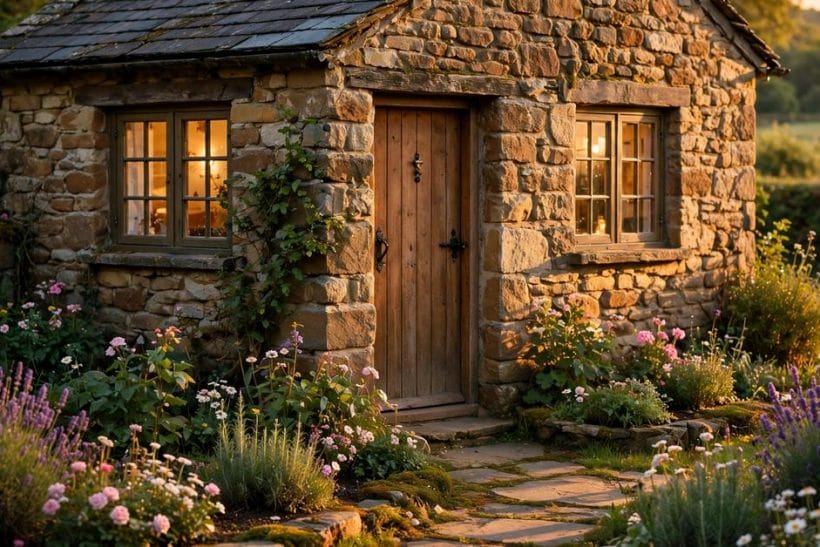
Stone suits small homes particularly well. Where a larger house can rely on scale for impact, a small stone house relies on material, and stone rewards that attention. Its colour shifts through the day, its surface catches light and shadow, and it sits naturally beside gardens, lanes and open countryside. The ideas below stay with that small stone form throughout: compact houses where stone is the defining material, inside and out.
1. Why Small Stone Houses Endure
There is a reason stone cottages photograph so well and age so gracefully. Stone reads as honest and grounded. It does not need bold decoration to look finished, and it pairs easily with timber, linen, plaster and planting. A small stone house can feel both rustic and refined, depending on how the stone is laid, pointed and dressed, and on the colours chosen to sit beside it.
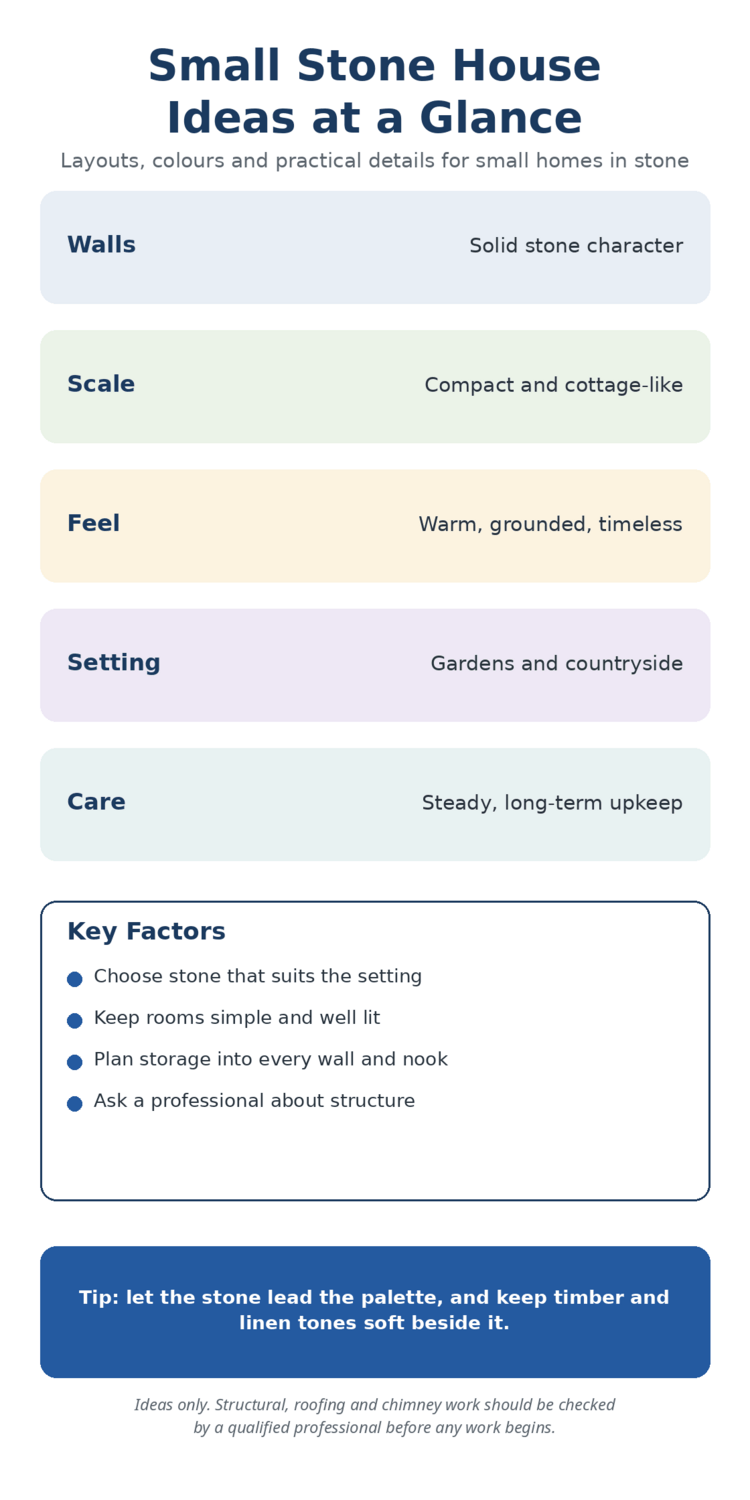
The table in the infographic below sums up the qualities that run through this gallery. Walls carry the character of the house. The scale stays compact and cottage-like. The feeling is warm, grounded and timeless. The setting is usually a garden or countryside. And the care a stone house asks for is steady, long-term upkeep rather than constant reinvention.
That timeless quality is worth understanding before you borrow ideas. Stone houses look settled from the start, which means small changes matter more than grand gestures. A new door colour, a different planting scheme or a lighter interior wall can shift the whole mood of a small stone home. Start with the stone you have, and let the rest of the house answer to it.
2. Exterior Shapes and Rooflines
Small stone houses come in a handful of pleasing shapes, and each one changes how the house meets its setting. A simple rectangular cottage with a pitched roof is the most familiar form, and it is familiar for good reason: it sheds weather well, it is easy to read from the lane, and it leaves the stone itself as the main decoration. A slightly taller gabled form gives a little more presence without losing the cottage scale, while a low, spreading form sits quietly into a garden.
Roof materials matter as much as roof shape. Slate sits beautifully against grey and warm stone, giving a crisp, dark line above the walls. Clay tiles bring warmth, especially beside honey-coloured stone. A roof that is too fussy or too bright can fight with the stone, so the calmest combinations usually win. Gutters, fascias and door canopies in dark timber or painted finishes keep the eye on the masonry.
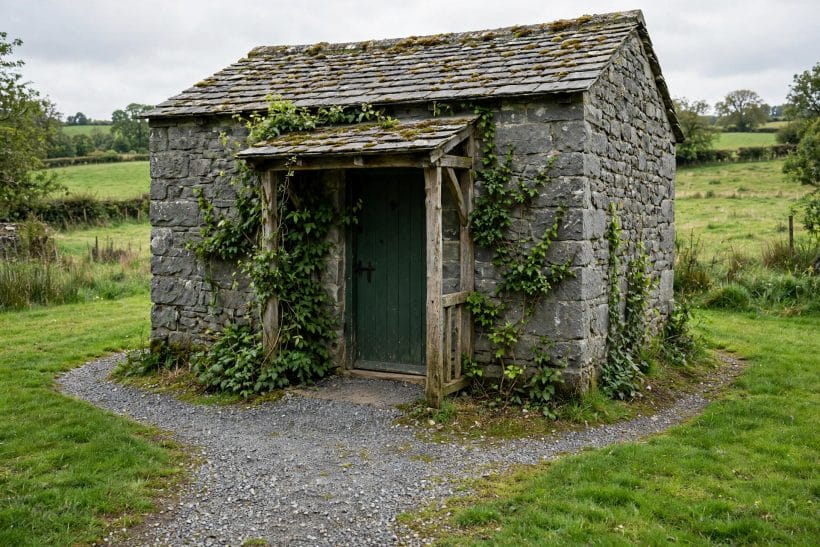
Porches deserve care in a small stone house. A simple timber porch, like the one in the photograph above, shelters the door without hiding the stonework. Climbing plants soften the junction between wall and roof, but they need watching: growth that covers gutters or forces its way into pointing should be trimmed back. For more exterior inspiration, see these tiny house exterior ideas, which show how small homes of many kinds handle porches, paths and planting.
3. Gardens That Frame Stone Walls
A stone house and its garden belong together. Stone paths, low stone edging and planting that spills softly against the walls all extend the character of the house into the outdoors. Lavender, roses, herbs and cottage perennials suit stone cottages well, because their informal shapes contrast gently with the firm lines of masonry. Gravel paths keep the approach feeling relaxed, while a paved terrace gives a firm place to sit.
Keep planting in scale with a small house. A single well-placed tree, a hedge that frames rather than hides the front, and beds that follow the shape of the house will do more than an ambitious scheme that swallows the walls. Leave breathing room around doors and windows so the stonework stays visible, and keep soil and mulch away from direct contact with walls where damp could gather.
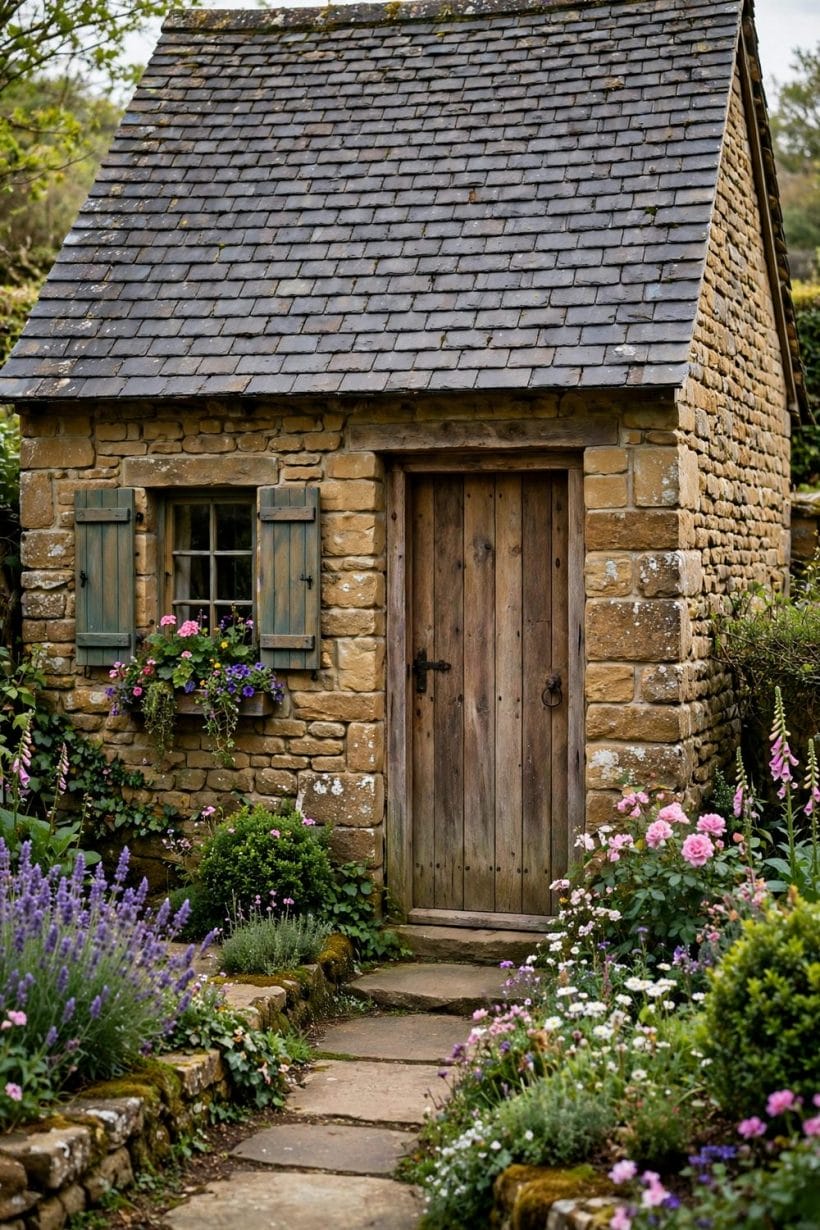
Colour in the garden can echo the stone or contrast with it. Soft pinks, purples and whites sit gently against grey stone, while deeper greens give honey stone a richer backdrop. Pots by the door are an easy way to try a colour before committing to a larger bed. For planting that works in containers as well as beds, these container garden ideas offer practical starting points that suit a small cottage garden.
4. Living Rooms with Stone and Fire
Inside a small stone house, the living room is often where the stone shows itself most fully. An exposed stone wall behind a fireplace or along one side of the room gives instant character, and it asks for little else: soft seating, warm lamplight and natural timber are usually enough. Heavy decoration can fight with the texture of the wall, so lighter furnishings tend to work best, letting the stone carry the visual weight.
Seating in a small stone living room should follow the room rather than fill it. A comfortable sofa, a chair angled toward the fire, and a rug that warms the floor will make the room feel generous without crowding it. Keep walkways clear and let the fireplace be the natural focus. Throws and cushions in linen, wool and muted tones soften the hardness of stone without hiding it.
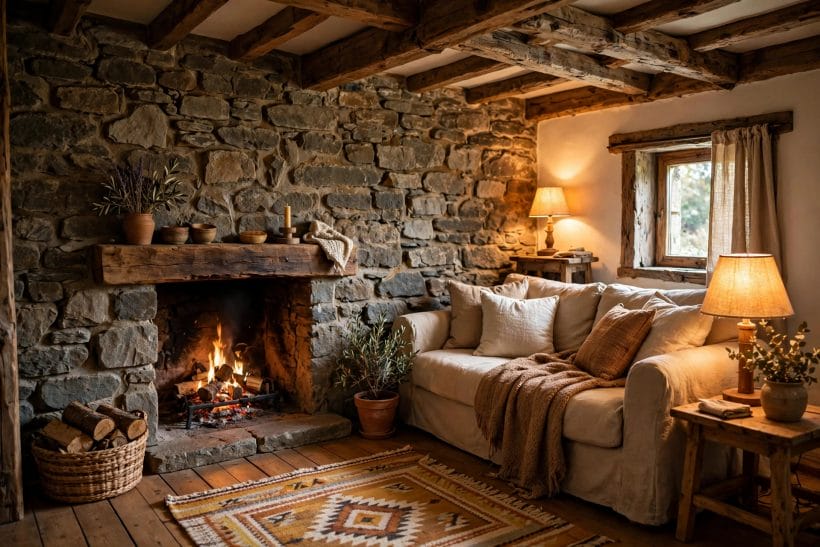
Light matters enormously beside stone. Stone absorbs light, so a living room with exposed walls benefits from lamps at different heights, pale ceilings and mirrors or light-coloured furnishings that bounce daylight around. If you are considering any work on a fireplace, flue or chimney, ask a qualified professional first: fire and chimney work is not a place for guesswork, and a professional can check safety and ventilation properly.
5. Kitchens That Suit Stone
A kitchen in a small stone house works best when it respects the wall it stands against. Wooden cabinets, open shelves and a farmhouse sink all sit naturally beside stone, and their warm, plain surfaces keep the room feeling calm. Pottery, wooden boards and simple crockery on open shelves add life without competing with the masonry, and they keep everyday items within easy reach in a compact room.
Storage is the quiet challenge of a small stone kitchen. Deep drawers, shelves fitted into nooks, and hooks on the wall can all help, but the stone itself sets limits: fixing into masonry needs the right fixings and care, and chasing channels into stone walls is work for a professional. Plan storage around the room you have, and favour freestanding pieces where the walls are best left untouched.
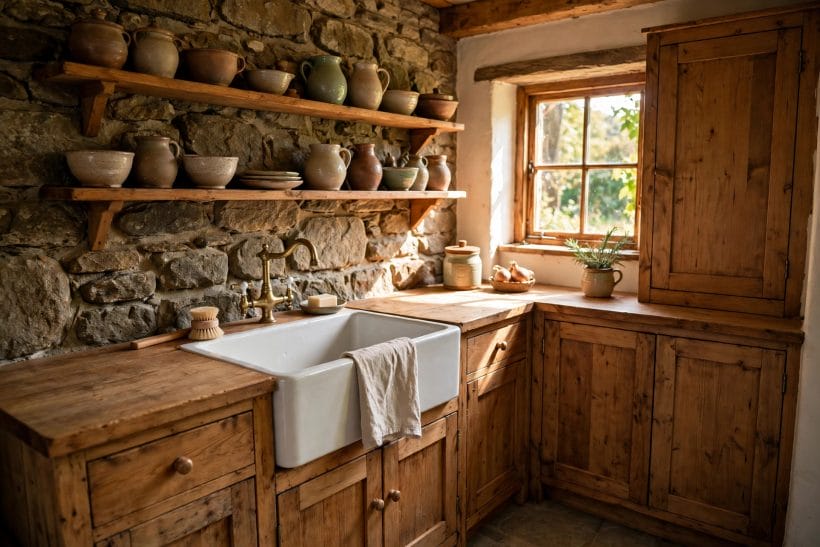
Worktops in timber or pale stone keep the palette restful, while a tiled splashback or a simple painted wall can lift the room without clashing. Keep the busiest patterns away from the stone wall itself, so the eye has somewhere calm to rest. For broader kitchen planning, these kitchen ideas cover layouts and storage that can be adapted to a small stone room.
6. Stone Types, Colour and Finish
Not all stone looks alike, and the type of stone shapes the whole character of a small house. Rough-cut grey stone gives a rugged, countryside feel. Dressed blocks laid in even courses look more formal and tidy. Warm honey stone glows in sunlight and suits softer, golden planting. Whitewashed stone, as seen in the bedroom later in this gallery, brightens interiors and gives a coastal, cottage calm.
Pointing, the mortar between stones, changes the look as much as the stone itself. Neat, flush pointing gives a tidy finish, while slightly recessed pointing lets each stone stand out and deepens the shadows across the wall. Repointing or repairing stonework should be done with care and, where the wall is structural, with professional advice, so the mortar suits the stone and the wall can breathe as it should.
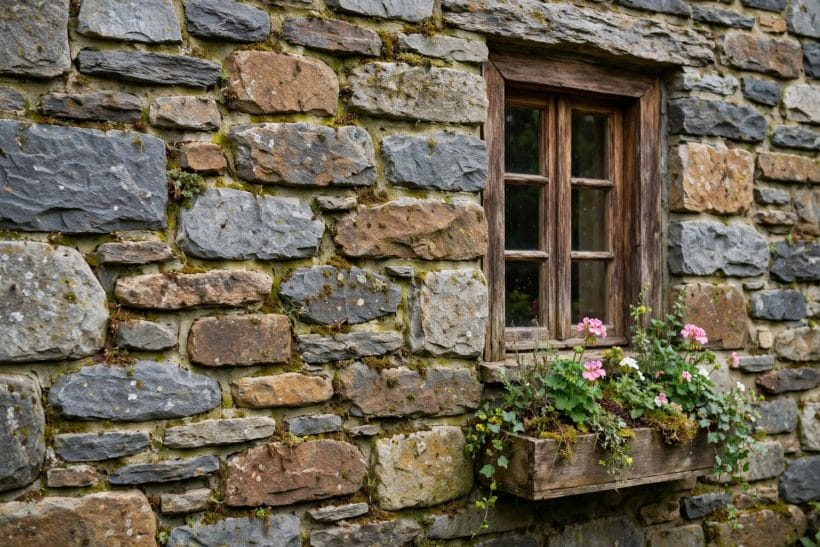
Colour pairings follow the stone. Grey stone welcomes soft whites, sage greens and muted blues. Honey stone pairs with cream, warm timber and terracotta touches. Whitewashed stone takes almost any gentle colour, from pale grey to dusty pink. Try colours in small doses first, on a door, a bench or a set of pots, and live with them for a while before painting a larger surface.
7. Outdoor Rooms and Terraces
A small stone house gains a whole extra room when its outdoors is treated with the same care as its indoors. A stone terrace, like the one in the photograph below, extends the living space in warmer months and gives the garden a firm, usable heart. A wooden bench, pots of herbs and climbing roses against the wall make the terrace feel furnished without needing much furniture at all.
Terrace materials should sit quietly beside the house walls. Stone flags that echo the wall, gravel that drains well, and timber that weathers gently all work. Keep the terrace level and well drained, and leave a gap between planting and walls so air can move. Shade matters too: a small tree, a pergola or a simple awning can make a sunny terrace comfortable through the afternoon.
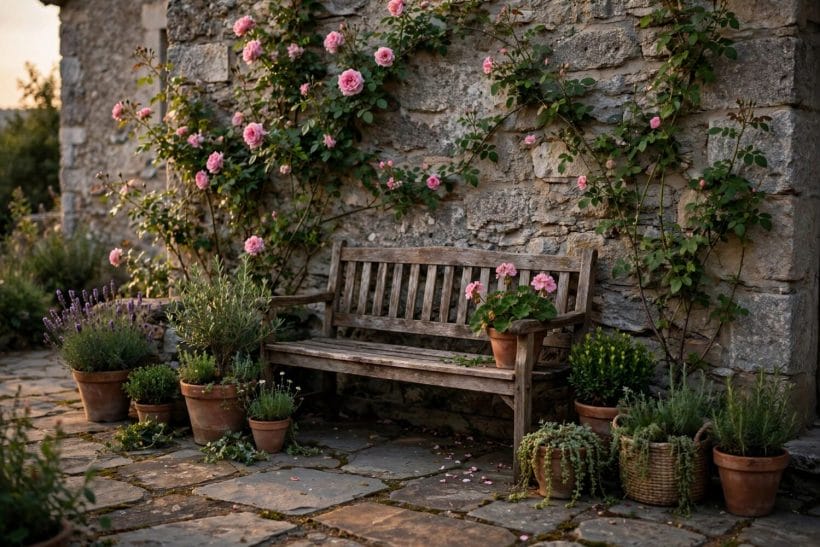
Rock and stone in the wider garden can carry the theme beyond the terrace. Low stone edging, a rockery corner or a stone seat all tie the garden back to the house. These rock landscaping ideas show how stone can shape beds, paths and boundaries without overwhelming a small plot. As with any structural garden wall, taller or load-bearing work belongs with a professional.
8. Fireplaces and the Heart of the House
In many small stone houses, the fireplace is the heart of the home. A stone fireplace breast, a timber mantel and a living flame gather the room around them, and they suit the scale of a cottage perfectly. The fireplace in the photograph below shows how little else is needed: stone, timber, warm light and a comfortable chair nearby.
Styling a stone fireplace is mostly a matter of restraint. A few objects on the mantel, a basket of logs beside the hearth, and a mirror or picture above will finish the scene. Avoid covering the stonework with large boards or heavy surrounds that hide the very material that makes the fireplace special. Let the stone speak, and keep the rest simple.
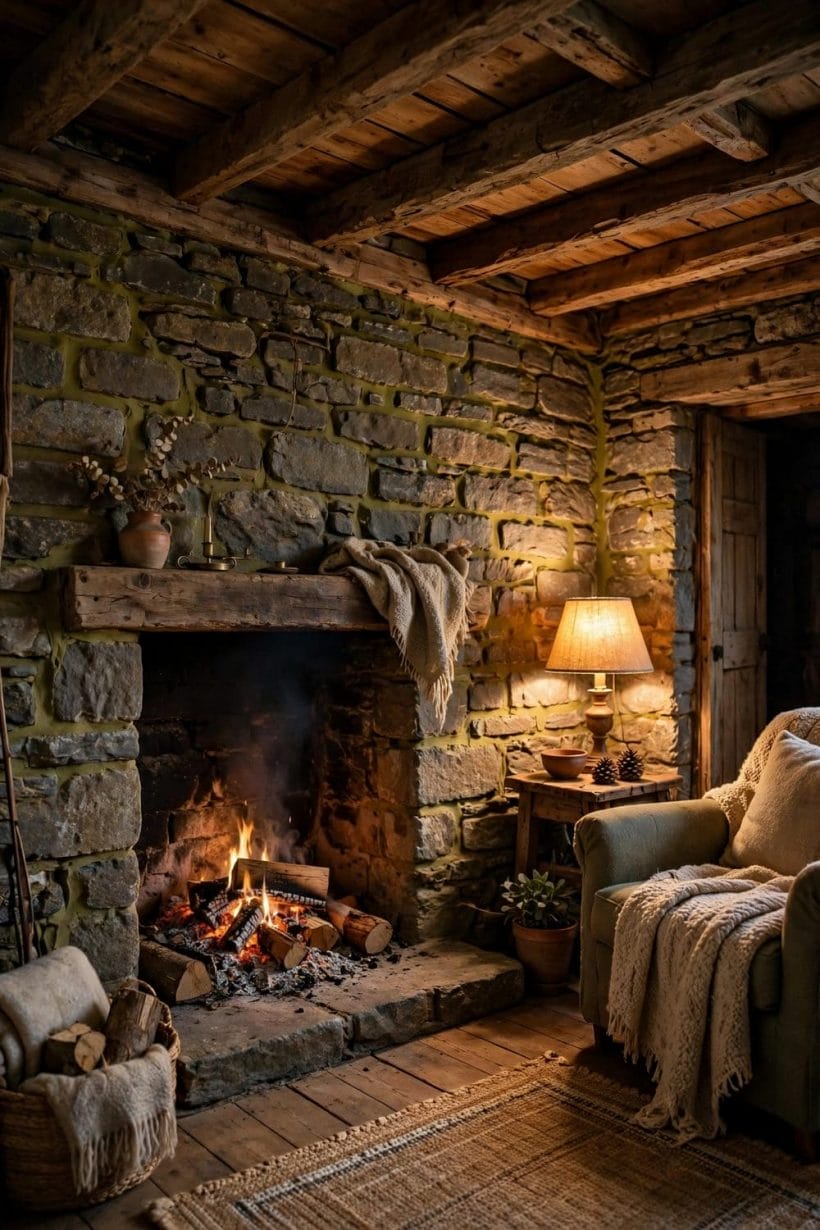
Safety comes before styling with any fireplace. Chimneys need sweeping, flues need checking, and any change to a firebox, surround or chimney should be assessed by a qualified professional. Ventilation matters in a small, well-sealed house, and a professional can advise on air supply and safe clearances. With those checks in place, a stone fireplace can be enjoyed with confidence for years.
9. Bedrooms and Quiet Corners
Bedrooms in small stone houses are often the calmest rooms in the home. Whitewashed or pale stone walls reflect daylight, linen bedding softens the masonry, and simple wooden furniture keeps the room restful. The bedroom in the photograph below shows the formula at its best: pale stone, plain timber, soft bedding and a single window of morning light.
Small bedrooms benefit from the same discipline as the rest of a stone cottage. Keep furniture low and simple, use the walls for hooks and shelves rather than bulky wardrobes where possible, and choose bedding and curtains in tones that sit gently against the stone. A small bedside table, a chair and a basket are often all the room needs to feel complete.
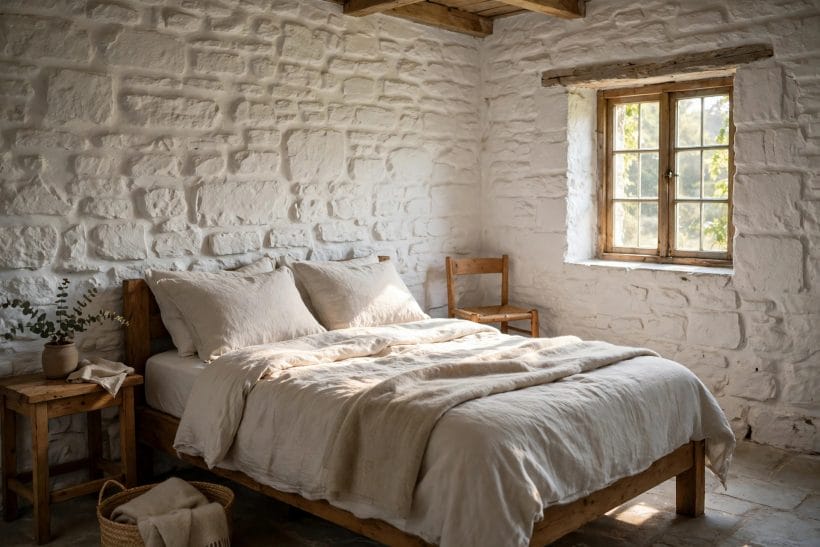
Quiet corners matter in a small house, and a bedroom window seat, a reading chair or a tiny dressing nook can all give the home more places to pause. The same thinking applies to small bathrooms and washrooms, where compact layouts need care: these tiny house bathroom layouts and tiny bathroom ideas show how small rooms can stay practical without feeling cramped.
10. Keeping Stone Looking Its Best
Stone is forgiving, but it still rewards regular attention. Gentle cleaning, prompt attention to damp patches, and trimming plants away from walls and gutters will keep a small stone house looking cared for. Avoid harsh cleaning methods on old stonework, and never paint over stone without understanding what the coating will do to moisture movement in the wall.
Watch the junctions where stone meets other materials: around windows, doors, rooflines and ground level. These are the places where weather finds its way in, and early attention to pointing, seals and drainage prevents larger problems. If you notice cracking, bulging, persistent damp or loose masonry, ask a qualified professional to look before attempting any repair yourself, since the cause may be structural.
Inside, stone walls benefit from air and light. Keep furniture slightly away from external stone walls where condensation could gather, and ventilate rooms well, especially kitchens and bathrooms. With steady, gentle care, a small stone house keeps its character for decades, growing more settled and more beautiful with time.
Final Considerations
A small stone house is, above all, a home shaped by its material. The ideas in this gallery share one thread: let the stone lead, and keep everything beside it simple, soft and well made. Exteriors stay calm and cottage-like, gardens frame rather than hide the walls, and interiors use timber, linen and warm light to soften the masonry without covering it.
Before borrowing any idea that touches structure, roofing, chimneys, wiring or plumbing, get professional advice for your own house. Stone houses vary enormously in age and construction, and what suits one cottage may not suit another. A professional who can see your walls, your roof and your ground conditions will give advice no gallery can.
If you love small homes with distinctive character, these converted water tower homes show another way a compact, unusual structure can become a comfortable home. Start with the stone, keep the palette gentle, and let a small stone house grow into itself.

0 Comments