
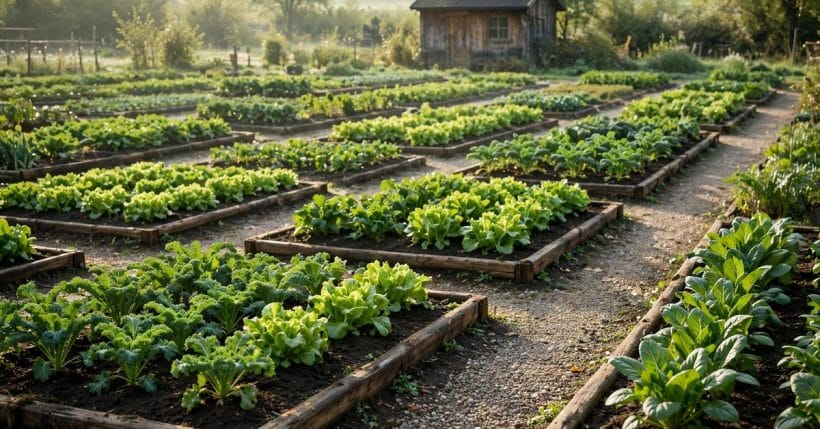
A vegetable garden landscape is a working garden first and a pretty view second. The beds, the paths and the planting all serve the growing, and the beauty comes from that order: straight rows where they suit the plot, generous paths that stay comfortable in wet weather, and planting arranged so every row can be reached without stepping on the soil. These vegetable garden ideas keep the focus on that practical landscape, from the first sketch of the layout to the quiet jobs of each season.
This guide covers the vegetable-growing landscape only. For the wider garden around it, the general backyard landscaping guide linked here sets the scene, and the ideas below stay inside the vegetable plot itself: backyard landscaping ideas. What follows is general guidance only, offered in the spirit of trying things, watching what suits your own soil and weather, and adjusting as you learn.
1. Plan the Layout First
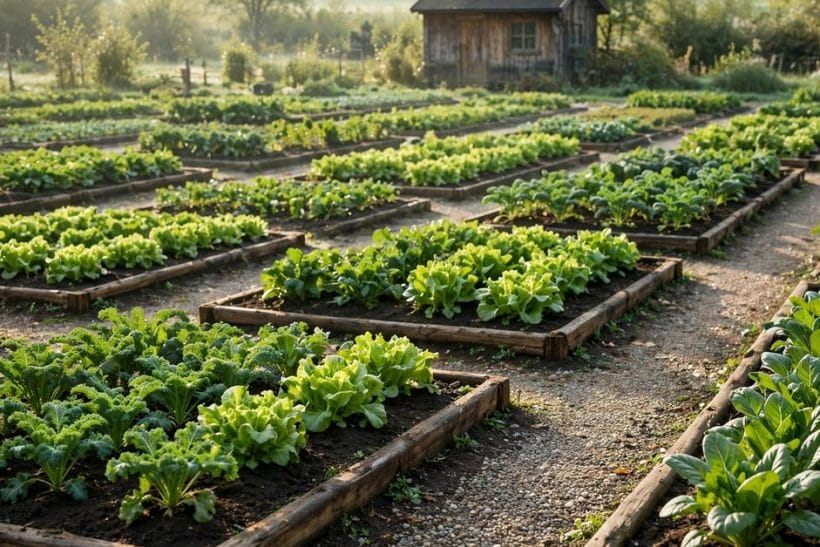
A good layout is decided before anything is planted. Walk the plot at different times of day, notice where the light falls and where water tends to sit after rain, and sketch the beds and paths on paper before lifting a spade. A plan made calmly like this saves rework later, and it keeps the garden feeling settled rather than improvised.
1. Start with a Simple Sketch
Draw the plot roughly to shape, marking fences, trees, sheds and any slope, then try out bed shapes on paper before committing them to the ground. A sketch makes it easy to compare a few arrangements side by side, and it often shows that a simpler pattern suits the space better than a complicated one.
2. Follow the Light Across the Day
Notice which parts of the plot catch morning light and which stay shaded by fences or trees, then place the beds that need the most light in the brightest ground. Shadier corners can still be useful for paths, a seat or a compost area, so no part of the plot needs to be wasted.
3. Keep the Main Path Generous
A main path that feels comfortable to walk with a barrow in hand makes the whole garden easier to enjoy and to work. It also sets the spine of the design, with smaller paths branching from it, so the layout reads clearly from the gate to the far end.
4. Zone the Plot by Job
Group the garden into loose zones for growing, for paths and access, and for storage and compost, rather than mixing everything together. Zoning keeps tools and materials near where they are used, and it stops the growing beds from being disturbed by through traffic.
5. Leave Room to Turn
Allow turning space at the ends of paths and beside gates, especially where a barrow or a large pot must be moved. A garden that is easy to move around in gets visited more often, and the plants benefit from that regular attention.
6. Plan for Wet Weather
Think about how the paths will feel after heavy rain, and favour surfaces and falls that shed water rather than holding it. A garden that stays usable in wet weather is a garden that keeps being tended, which matters more than any single planting choice.
7. Keep Views Open from the House
If the vegetable plot can be seen from a window or a seating area, arrange the beds so the view is pleasing as well as practical. Straight rows, tidy edges and a clear path all read well from a distance, and they make the working garden part of the home landscape.
8. Let the Plan Grow Slowly
A layout does not need to be finished in one season. Build the main paths and a few beds first, live with them for a while, and add the rest as you learn how you use the space. Gardens shaped gradually often settle better than those built all at once.
2. Shape Beds That Are Easy to Work
The bed is the unit of the vegetable garden, and its shape decides how pleasant the work feels. Beds that can be reached from a path on at least one side, with soil that is never walked on, stay workable season after season. Container growing has its own place too, and the container garden guide linked here shows how pots and tubs can join the landscape: container garden ideas.
9. Choose Raised Timber Beds
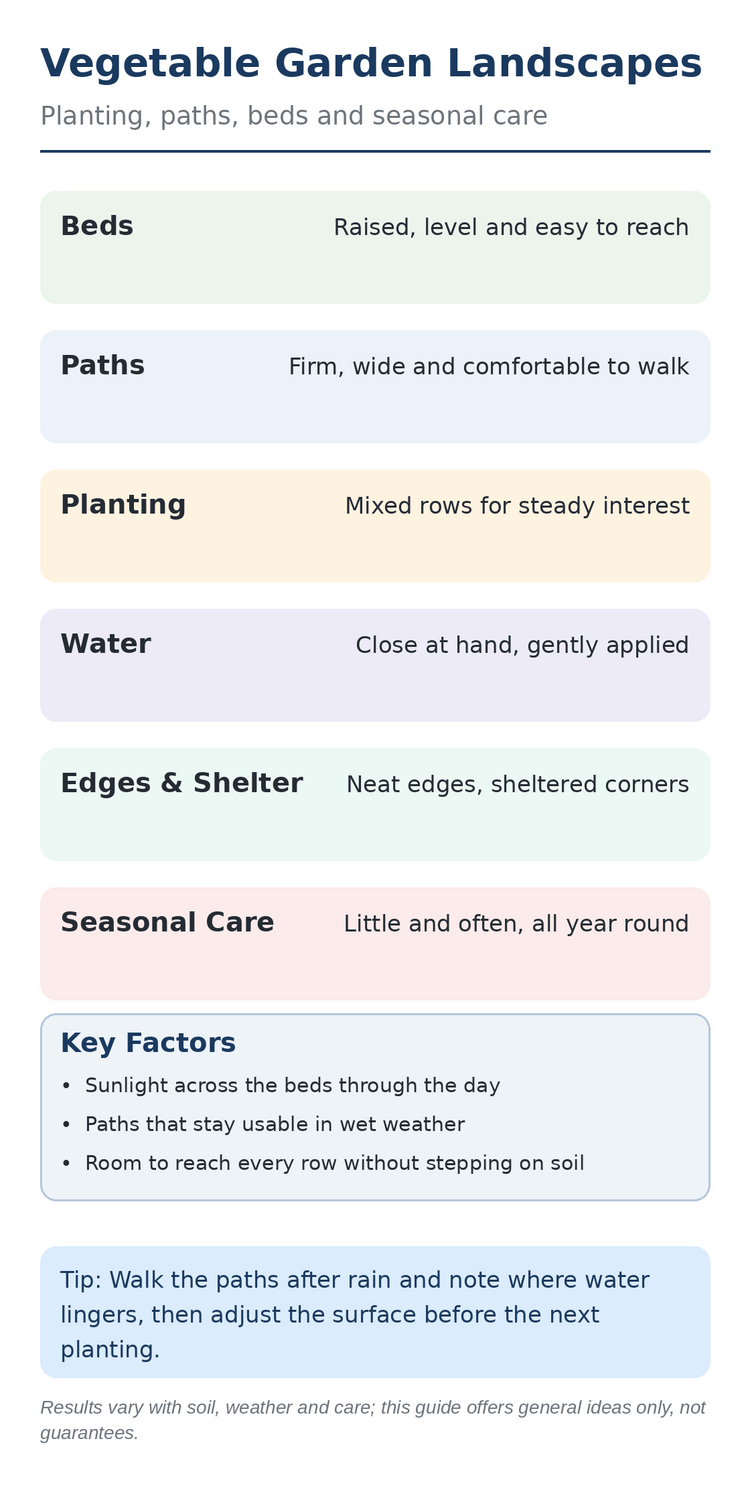
Low timber edges raise the growing surface, define the bed clearly and keep the soil from spreading onto the paths. Timber weathers gently into the garden, and a raised edge also gives a comfortable place to kneel or to perch while working.
10. Keep Beds Narrow Enough to Reach
A bed that can be reached from the path without stretching keeps every row within easy care. If a bed is wide, a stepping board or a central path can bring the middle within reach, so no plant is left untended at the back.
11. Run Beds Along the Contour
On sloping ground, beds that follow the level line of the slope sit more comfortably and hold their soil better than beds running straight downhill. The resulting gentle curves can look graceful too, softening a slope into a series of level terraces.
12. Try a Keyhole Bed
A keyhole bed wraps around a central standing space, so the gardener stands inside the curve and reaches all sides without walking on the soil. The shape suits a corner or a small plot, and it turns an awkward space into a productive feature.
13. Build Beds in Mixed Lengths
Beds do not all need to be the same length. Short beds suit crops that are picked often, while longer beds suit rows that are left to grow, and mixing lengths lets the layout fit fences, trees and paths without forcing a rigid grid.
14. Edge Beds with Living Herbs
A low edging of herbs around a bed softens the timber or stone edge and keeps something useful close to hand. The edging also marks the bed clearly, so paths stay paths and beds stay beds even when the planting is lush.
15. Raise Beds for Damp Ground
Where the ground stays wet, a raised bed lifts the growing surface above the damp and gives the soil a chance to drain. This simple change can make a difficult corner workable, and it suits plots where the natural ground holds water.
16. Keep One Bed for Experiments
Set aside a small bed for trying new crops or new arrangements, separate from the main growing. A trial bed keeps experiments contained, and whatever is learned there can be carried into the main beds the following season.
3. Lay Paths That Stay Usable
Paths are the most used part of a vegetable garden landscape, and they deserve as much thought as the beds. A path that stays firm underfoot, drains after rain and is wide enough for a barrow will be used happily in every season. Stone and rock surfaces suit many plots, and the rock landscaping guide linked here offers a wider look at stone in the garden: rock landscaping ideas.
17. Lay a Firm Gravel Path
A gravel path with a firm base is comfortable to walk, drains freely and suits the informal character of a vegetable garden. Raking it level now and then keeps it tidy, and fresh gravel every few seasons renews the surface without rebuilding the path.
18. Set Stepping Stones with Care
Flat stones set level with the ground give a natural path that blends into the planting, especially where the route curves between beds. Set each stone firmly so it does not rock, and leave gaps of soil or low planting between them for a soft finish.
19. Use Bark on Quiet Routes
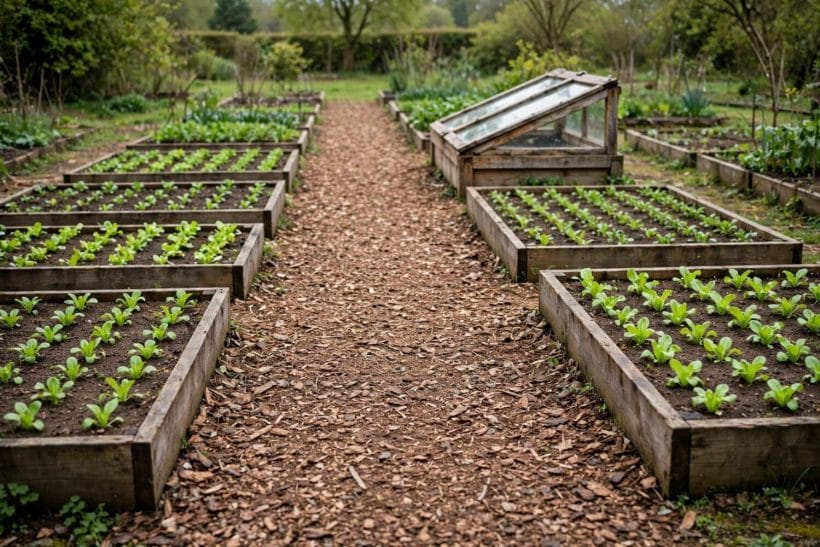
Bark mulch makes a soft, quiet path for routes that are walked less often, such as the way to the compost area. It breaks down over time and can be topped up easily, and it suits woodland edges and shaded corners of the plot.
20. Edge Paths to Hold the Surface
A low edge of timber, stone or brick keeps gravel or bark from wandering into the beds and keeps soil from creeping onto the path. Edging also gives the path a finished line, which makes the whole garden read as cared for.
21. Make the Main Route Step-Free
A main route without steps is easier for barrows, and it suits everyone who uses the garden. Where a slope must be crossed, a gentle ramp of firm surface serves better than a flight of steps beside the beds.
22. Widen Paths at Junctions
Where two paths meet, a slightly wider patch of surface gives room to turn, to set down a basket, or to pause and look at the beds. These small widenings make the garden feel generous without taking much ground from the planting.
23. Let Grass Paths Breathe
A mown grass path between beds feels soft and green, and it suits larger plots where there is room to mow. Keep the grass short enough to walk comfortably, and accept that it will wear in the busiest stretches, which can be re-sown in time.
24. Light the Path Subtly
A few low lights along the main path extend the garden into the evening and make the route easy to follow after dusk. Keep the lighting gentle and warm, so the garden keeps its calm character rather than feeling lit like a street.
4. Plant in Rows and Groups
Planting is where the landscape comes alive, and the arrangement of crops shapes how the garden looks through the year. Rows give order, groups give fullness, and a mix of the two keeps the plot interesting as crops come and go. Herbs belong in this picture too, and the herb garden layouts guide linked here shows how herbs can be arranged alongside vegetables: herb garden layouts.
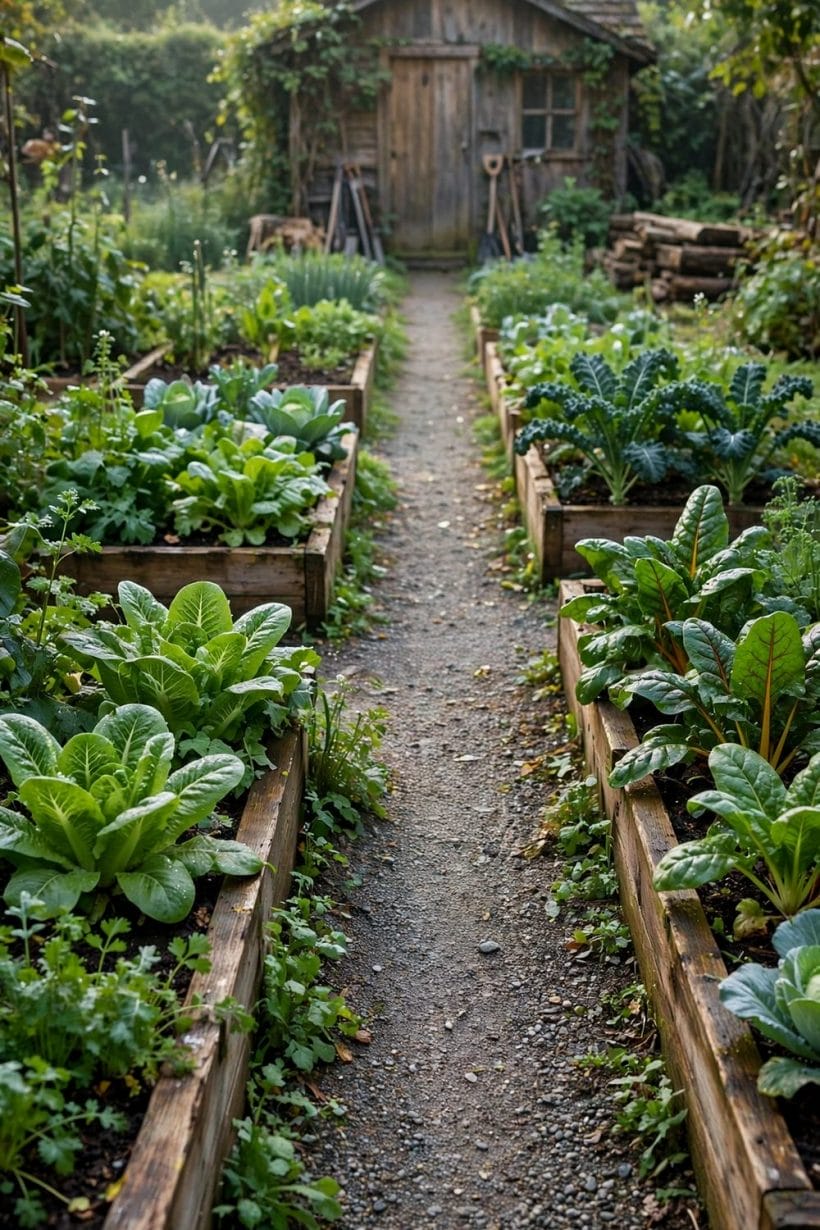
25. Plant Rows for Easy Picking
Straight rows make picking simple, since each crop can be found and reached without disturbing its neighbours. Rows also make the garden look orderly from the path, and they suit crops that are harvested a little at a time over weeks.
26. Group Crops by Height
Place taller crops where they will not shade shorter ones, usually to the shadier side of the bed or at the back of the plot. Height order keeps every plant in reasonable light, and it gives the beds a pleasing stepped profile when viewed from the path.
27. Mix Colours Through the Beds
Different leaf colours and textures, from deep green to pale lettuce to purple leaves, make the beds look rich even before anything is harvested. Colour mixing is a gentle kind of decoration that costs nothing and changes with the seasons.
28. Interplant for Full Beds
Planting a quick crop between slower rows fills the bed while the main crop grows, so the soil is rarely bare. This approach suits small plots especially, where every patch of ground earns its keep through the season.
29. Leave Picking Gaps in Rows
A small gap in a long row gives a place to stand or kneel while picking, without treading on neighbouring plants. These gaps are easy to plan when sowing, and they make harvesting far more comfortable than reaching across a crowded bed.
30. Repeat Shapes for Rhythm
Repeating a bed shape or a planting pattern across the plot gives the garden a calm rhythm, even when the crops themselves differ. Rhythm is what makes a working garden feel designed rather than accidental, and it is achieved by repetition, not by ornament.
31. Plant a Row for the Eye
One row of something beautiful, whether flowers among the vegetables or a crop grown for its foliage, lifts the whole bed. Such a row reminds the gardener that the vegetable garden is also a place to enjoy, not only a place to work.
32. Succession Plant for Continuity
Sowing a little at a time, rather than everything at once, spreads the harvest and keeps the beds changing through the season. Continuity of planting also means continuity of interest, as new rows appear while older ones are picked.
5. Grow Upwards Where Space Is Tight
Vertical growing turns fences, walls and frames into productive ground, and it suits small plots and courtyard gardens especially well. Climbing crops need support that is sturdy and easy to reach, and the supports themselves can become handsome features of the landscape.
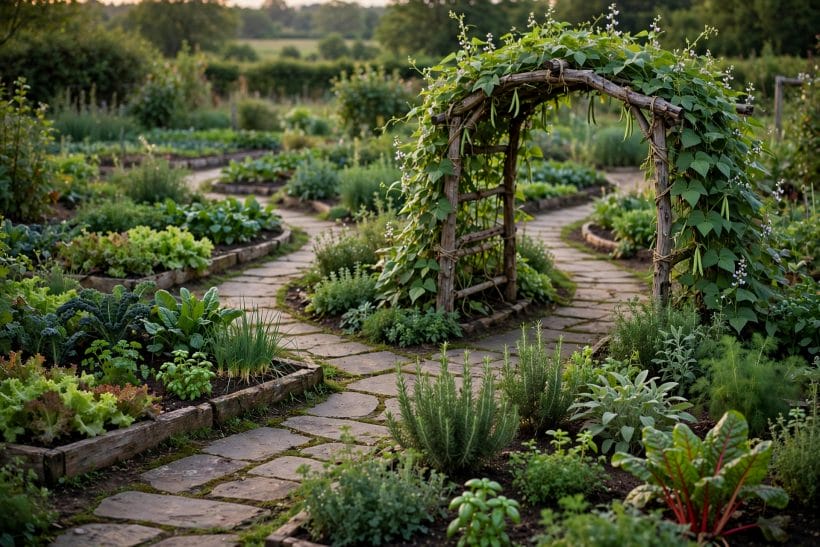
33. Train Beans up a Rustic Arch
A simple arch of poles or branches over a path gives climbing beans a structure to climb and gives the gardener a green doorway to walk through. The arch also marks a threshold in the garden, dividing one part of the plot from another.
34. Fix a Trellis to a Sunny Fence
A trellis on a sunny fence turns a boundary into growing space, and it suits crops that climb lightly and can be tied in as they grow. Keep the trellis a little proud of the fence so air moves behind the foliage.
35. Build a Sturdy Wigwam
A wigwam of tall canes tied at the top is a quick, inexpensive support that suits a bed corner or a large pot. Its cone shape is attractive in itself, and it gives climbing plants a generous frame to cover through the season.
36. String Lines for Tall Crops
Vertical strings from an overhead wire or frame give tall crops a clean line to follow, and they keep the bed tidy because each plant has its own support. Strings are easily replaced each season, so the system stays fresh.
37. Grow on a Wall with Care
A sunny wall can support espaliered or tied-in crops, but the wall itself must be sound and the fixings secure. Ask a professional about fixings on any wall that carries weight, and keep the planting clear of gutters and roofs.
38. Use a Freestanding Frame
A freestanding timber frame, set where it will not shade the beds behind it, gives climbing crops a home in the open garden. Frames can be moved between seasons, so the layout is never fixed by a permanent structure.
39. Hang Planters at Hand Height
Planters hung on a fence or frame at a comfortable height bring small crops within easy reach and suit gardeners who prefer not to bend. Keep them watered thoughtfully, since containers dry more quickly than beds in warm weather.
6. Water, Feed and Mulch Gently
Water and feeding are quiet jobs, done little and often, and the landscape should make them easy. A tap or butt near the beds, a hose that reaches without dragging across planting, and a place to store mulch all help. A garden shed near the plot is part of this picture, and the garden shed guide linked here covers sheds in the wider garden: garden shed ideas.
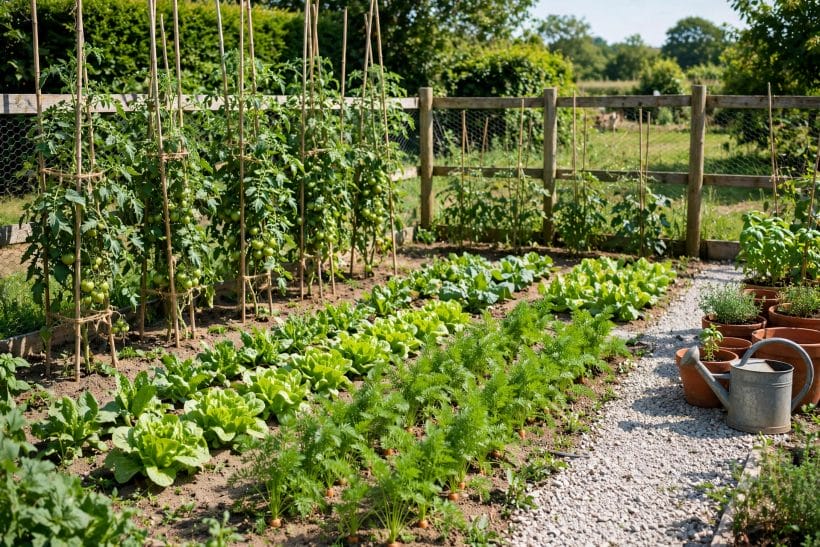
40. Site a Water Butt Near the Beds
A water butt close to the beds shortens every watering trip and makes rainwater easy to use. Place it on a firm, level base near a downpipe or a roof edge, and keep the lid fitted so the water stays clean and safe.
41. Run a Hose Without Crossing Beds
A hose route that follows the paths, rather than cutting across beds, keeps the planting undisturbed and the hose itself in better condition. A simple hose guide or reel at the path edge helps the hose follow the route every time.
42. Water in the Cool of the Day
Watering when the day is cool, in the morning or evening, gives the water time to soak in before the heat of the day. This gentle habit suits most crops and keeps the gardener comfortable too, since the work is done in the pleasant hours.
43. Mulch to Keep Soil Covered
A layer of mulch over bare soil helps it stay moist and suppresses weeds, while also giving the beds a tidy, finished look. Organic mulches break down over time and can be topped up, so the bed surface is renewed rather than replaced.
44. Feed Lightly and Generally
Feeding is best approached lightly and in general terms, following the guidance on any product used and never mixing preparations at home. If in doubt, a smaller amount applied thoughtfully is a safer starting point than a heavy application.
45. Keep a Compost Corner Tidy
A neat compost area, screened by planting or a simple fence, turns garden waste into something useful without becoming an eyesore. Keep the area accessible from the paths, since it will be visited often through the season.
46. Save Leaves for Leaf Mould
Fallen leaves gathered into a simple pen break down slowly into a soft, dark material that suits mulching and soil improvement. A leaf pen tucked in a shady corner costs little and turns an autumn job into a resource.
7. Edge, Shelter and Enclose
Edges and shelter shape how the vegetable garden feels. A tidy edge says the garden is cared for, a sheltered corner makes working pleasant in wind, and a simple enclosure keeps the plot feeling like a room of its own.
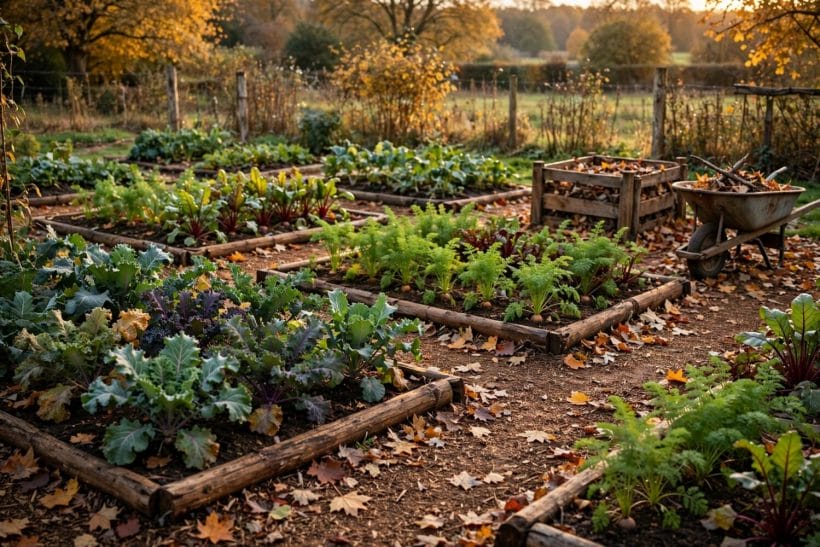
47. Edge Beds with Stone
A low stone edge gives a bed a permanent, natural line that weathers beautifully and needs little attention. Stones of mixed sizes suit an informal garden, while dressed stone suits a more formal arrangement of beds.
48. Edge with Timber Boards
Timber boards make a clean, warm edge that is easy to fit and easy to replace when a board eventually weathers. The boards also give a low seat for working, which is a small comfort that gets used every day.
49. Plant a Low Hedge as a Windbreak
A low hedge on the windy side of the plot softens the wind without casting deep shade, and it gives the garden a green boundary that changes with the seasons. Choose hedging that suits the soil and the space available, and trim it lightly.
50. Shelter a Seating Corner
A small seat tucked into a sheltered corner of the vegetable garden gives the gardener a place to rest and to look at the beds. A seat also invites visitors to linger, which makes the working garden a social place as well.
51. Fence Simply and Honestly
A plain fence of timber or wire, well made and well kept, suits a vegetable garden better than an ornate boundary. The fence should keep its purpose clear, marking the plot and protecting it, without competing with the planting.
52. Screen the Compost Area
A simple screen of trellis and planting around the compost area keeps it tidy from the main paths while still allowing air to move. Screening is a kindness to the eye, and it makes the working parts of the garden feel considered.
53. Frame the Entrance
A simple gate or arch at the entrance marks the passage from the rest of the garden into the vegetable plot. An entrance feature gives the garden a sense of arrival, and it can carry climbing plants that soften the frame.
8. Make Room for Tools and Harvest
Tools and harvest need their own places, or they end up scattered across the paths. A small store, a potting bench and a place to wash and sort the harvest all make the garden work more smoothly. The outside of the home sets the tone for these spaces, and the exterior ideas guide linked here shows how the house and garden can sit together: tiny house exterior ideas.
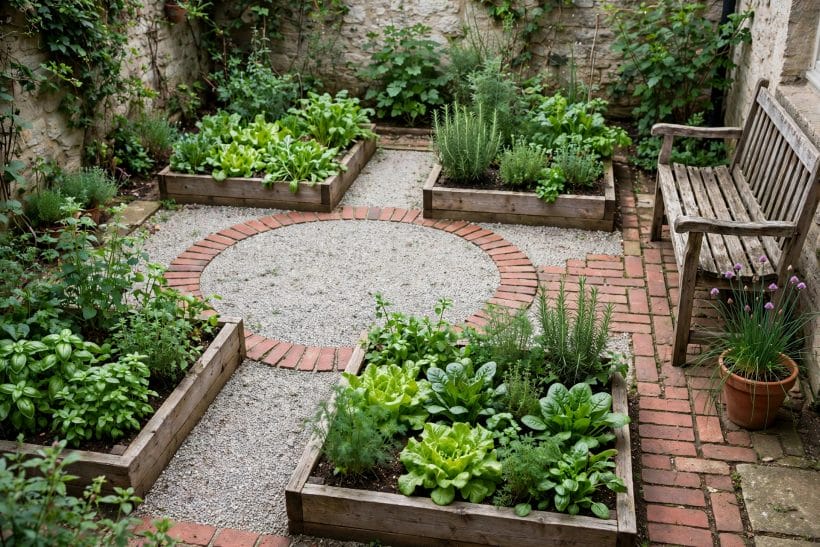
54. Keep Tools in a Small Store
A compact tool store near the beds keeps spades, forks and hand tools dry and close to where they are used. A store that is easy to open and tidy encourages tools to be put away, which keeps the paths clear and the tools in good condition.
55. Set Up a Potting Bench
A bench at a comfortable height, sheltered from rain, makes sowing and potting far more pleasant than working on the ground. A bench near the beds also keeps trays and pots together, so small jobs can be started without hunting for equipment.
56. Add a Harvest Basket Station
A basket or crate kept by the main path gives every picking a destination, and it stops harvests from being balanced on bed edges or path corners. Baskets can be hung or stacked, so the station takes little room.
57. Wash Harvests at a Simple Sink
A small outdoor sink or a washing tub near the beds makes it easy to clean vegetables before they go indoors. Keep the washing area on a firm surface with drainage that suits the garden, and keep it tidy after use.
58. Store Pots and Trays Neatly
A rack or shelf for pots and trays keeps them stacked and dry, and it stops them from drifting around the garden. Neat storage also makes it easy to see what is available before starting a sowing session.
59. Keep a Barrow Parked Ready
A barrow kept in a dry spot by the main path, ready to load, saves time on every working visit. A barrow that lives in the garden, rather than in a distant shed, gets used for small jobs as well as large ones.
60. Make Space for Drying Herbs
A small airy spot, under cover but open to moving air, suits drying herbs and seed heads. A drying space near the potting bench keeps the harvest close to the working area, and it adds a pleasant scent to that corner.
9. Care Through the Seasons
Seasonal care is the rhythm of the vegetable garden landscape. Each season brings its own jobs, and a garden that is tended a little in every season stays ahead of weeds, weather and wear. The work is rarely dramatic, but it is what keeps the landscape looking cared for all year.
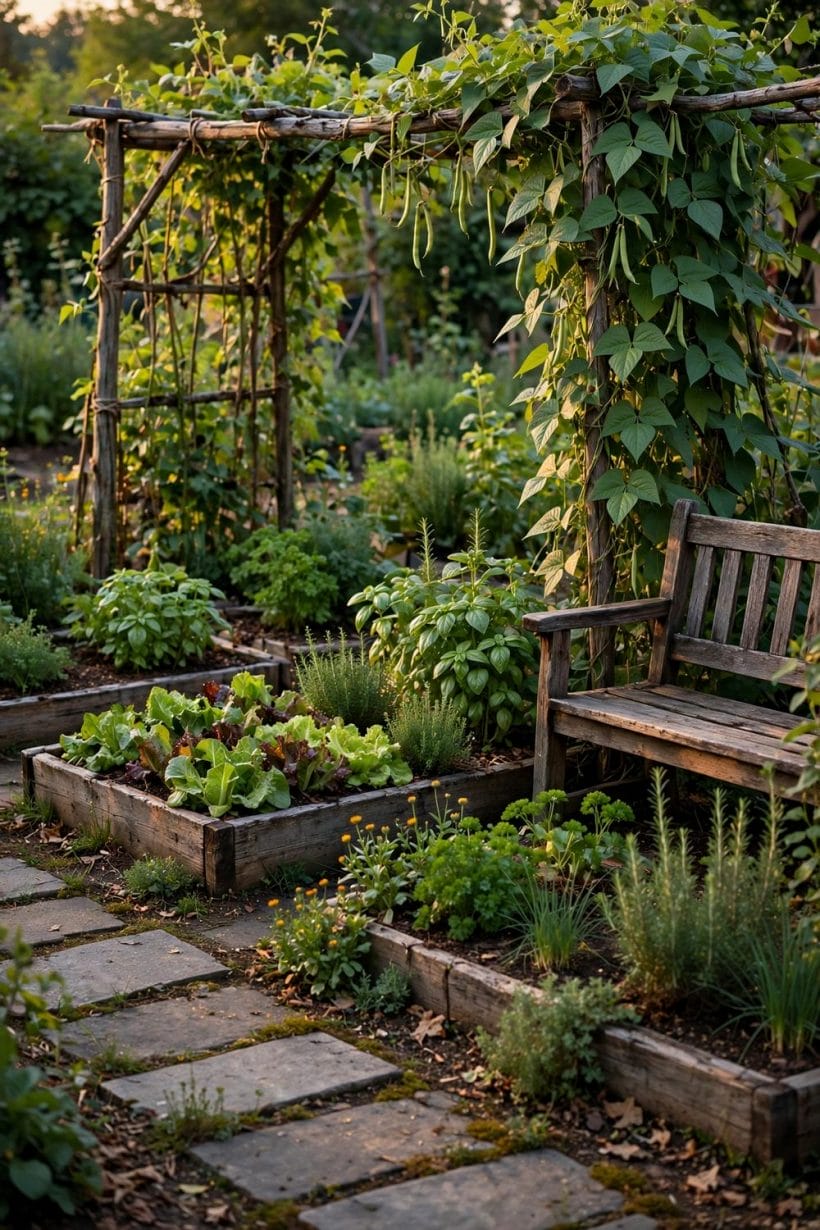
61. Tidy Beds in Early Spring
Early spring is the time to clear winter debris, repair edges and paths, and prepare the beds for sowing. A spring tidy sets the tone for the growing season, and it is easier to do before the planting grows tall.
62. Sow in Succession Through Spring
Sowing a little at a time through spring spreads the work and the harvest, and it keeps the beds filling gradually rather than all at once. Succession sowing also gives the gardener a reason to visit the beds often.
63. Shade Tender Crops in Summer
In hot weather, a little shade cloth or a taller neighbouring crop can protect tender plants from the strongest sun. Shade should be light and temporary, so the plants still receive enough light to grow well.
64. Water Thoughtfully in Dry Spells
During dry spells, water deeply and less often rather than lightly every day, so the moisture reaches the roots. Mulch helps the soil hold that moisture, and a watering routine settled early in a dry spell is easier to keep.
65. Harvest Regularly in High Summer
Regular picking in high summer keeps many crops producing and stops the beds from becoming overgrown. A daily walk with a basket becomes a pleasant routine, and the garden rewards it with a steady supply.
66. Clear Spent Crops in Autumn
As crops finish in autumn, clear them promptly and add the debris to the compost area, leaving the bed ready for a cover or for winter rest. Clearing spent crops also tidies the garden for the quieter months.
67. Protect Beds Through Winter
In winter, a cover of mulch or a simple cloche can protect the soil and any hardy crops from the worst weather. Winter protection is gentle work, but it leaves the beds in better condition for spring.
68. Walk the Garden in Every Season
A regular walk around the garden in every season, even when little is growing, keeps the gardener aware of repairs needed and changes wanted. These walks are also simply enjoyable, and they keep the garden in mind all year.
10. Small Plots and Courtyard Corners
A vegetable garden landscape does not need a large plot. Courtyards, balconies and small corners can all grow vegetables, and the landscape ideas scale down gracefully. Porches and entrances often frame these small gardens, and the porch ideas guide linked here shows how an entrance can welcome a small growing space: tiny house porch ideas.
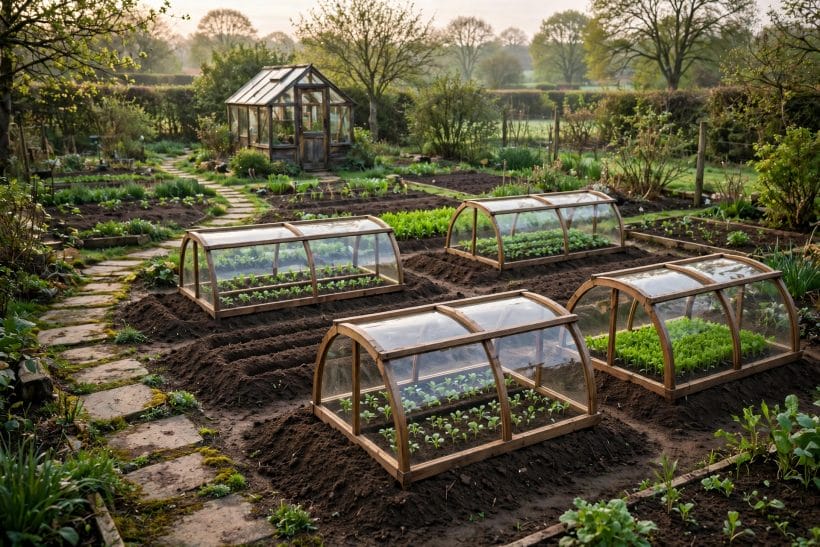
69. Grow in a Courtyard Grid
A grid of square beds in a courtyard makes the most of a small, enclosed space, with paths of gravel or brick between them. The grid reads clearly from above and from the door, and it gives each bed its own character.
70. Use a Sunny Wall for Pots
A sunny wall with pots at its base turns a blank boundary into a productive strip, especially for herbs and salad crops. Pots can be moved to follow the sun through the seasons, so the arrangement stays flexible.
71. Plant a Balcony Rail Row
A row of troughs along a balcony rail grows salad leaves and herbs within easy reach of the kitchen. Keep the troughs secure and the watering careful, since a balcony garden shares its space with the home.
72. Turn a Side Passage into a Garden
A narrow side passage with light can hold a slim bed or a row of pots, turning a forgotten strip into a useful growing space. Slim beds suit herbs and leafy crops, and a path alongside keeps everything reachable.
73. Make a Portable Bed
A bed on legs or in a large container can be moved to the best light or the most sheltered spot as the seasons change. Portable beds suit rented homes and trial gardens, where permanence is not yet wanted.
74. Grow Up a Courtyard Trellis
In a courtyard, a trellis on one wall gives climbing crops a home without taking ground from the beds. The trellis also softens the wall and gives the small garden a green backdrop.
75. Keep a Kitchen Door Herb Strip
A narrow strip of herbs beside the kitchen door puts flavour within a few steps of cooking, and it makes the entrance smell wonderful in warm weather. A door strip is small, but it is used every day.
Final Considerations
A vegetable garden landscape grows best when it is planned simply, built to be walked and worked in, and tended a little in every season. The beds, paths and planting in these vegetable garden ideas all serve the same end: a garden that is pleasant to be in, easy to care for, and productive in its own quiet way. Start with the layout, add the beds and paths that suit your plot, and let the planting teach you what works best in your own soil and weather.
Whatever the size of your plot, the same principles hold: keep the soil unstepped, the paths firm, the beds reachable and the work enjoyable. A garden shaped with those principles in mind will reward the gardener with seasons of pleasant work and honest harvests, and it will look like a cared-for landscape in every month of the year.



0 Comments