
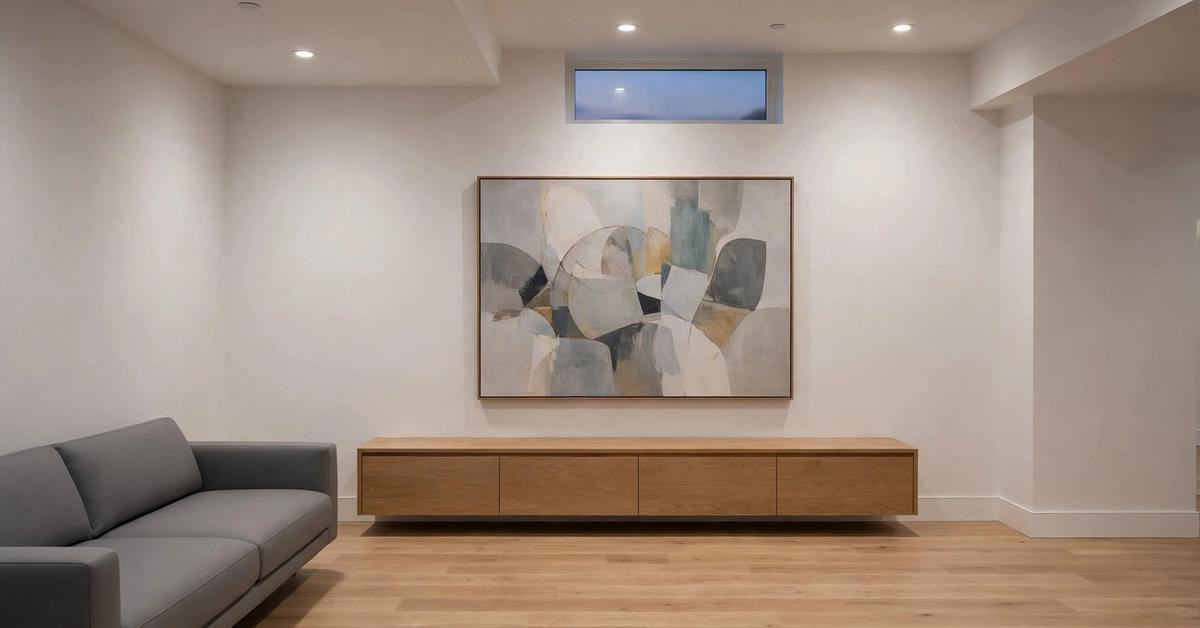
A modern basement does not try to hide that it is below ground. It works with the low light, the flat ceilings and the solid walls, and turns them into the calmest room in the house: clean lines, quiet colours, furniture that sits low, and light that is layered rather than left to a single harsh fitting. Every idea below is modern in style, from the layout to the last handle, so the finished floor reads as one deliberate room rather than a collection of leftover spaces.
This guide covers the modern treatment only. For the general basement groundwork — how to think about damp, how to zone a floor by its light, and which kinds of flooring forgive moisture — start with the general basement guide, which owns that groundwork and is linked here so the two guides never repeat each other: 75 Basement Ideas: Layouts, Lighting, Flooring and Moisture-Smart Finishes. What follows assumes that groundwork is understood, and spends its energy on the modern look: what stays, what goes, and how each choice keeps the style consistent.
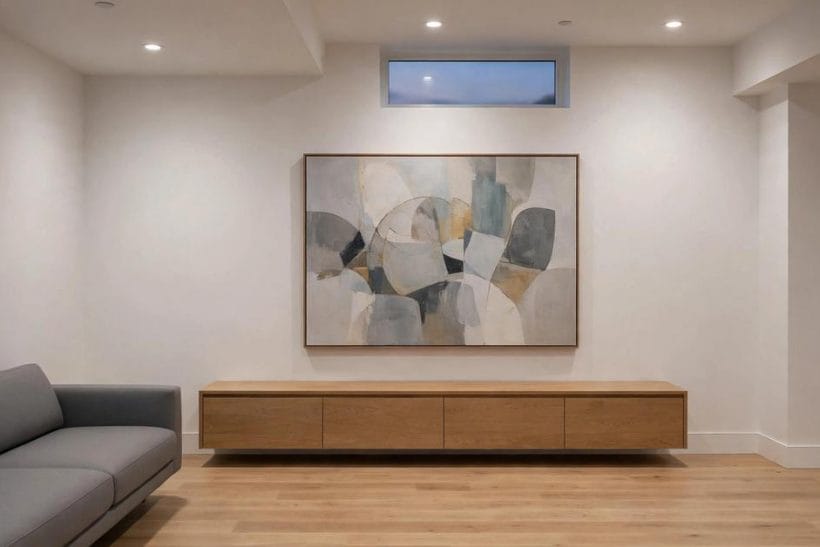
1. Open the Floor with Modern Layouts
Modern layouts start by removing visual noise. Walls come down only where a professional confirms they can, furniture is kept low and few in number, and the floor is allowed to read as one continuous space. The modern basement rewards restraint: fewer pieces, straighter lines, and a clear path through the room.
| Item | What it is |
|---|---|
| Keep One Open Living Floor | Let the main basement floor stay open, with seating, media and reading sharing one modern space rather than being boxed into small rooms. |
| Let the Stair Land in Daylight | Place the stair landing where the brightest modern light falls, so the descent feels welcoming rather than enclosed. |
| Run One Floor Finish Through the Floor | Carrying one modern floor finish across the whole basement unifies rooms that would otherwise feel disconnected. |
| Frame Views with Slim Openings | Use wide, simply trimmed openings between zones instead of doors wherever privacy allows, so the modern floor stays visually connected. |
| Put the Longest Wall to Work | Give the longest basement wall a single modern job — a low media bench, a run of handleless storage, or one long piece of art — rather than scattering small items along it. |
| Keep Ceilings Flat and Quiet | A modern basement ceiling stays flat, pale and free of fussy detail, with services hidden wherever a professional can arrange it. |
| Let Furniture Float from Walls | Pull modern seating slightly away from the walls so the room breathes around each piece. |
| End the Room with a Calm Focal Point | Finish the longest view in the basement with one calm modern focal point — a low bench, a large canvas, or a simple fireplace surround in a contemporary finish. |
| Anchor Seating on a Single Rug | Ground the modern seating zone with one large, flat-weave rug in a quiet tone, and keep every seat touching its edge. |
| Tuck Reading into a Window Corner | Give the brightest corner of the basement to reading, with a low chair, a slim floor lamp and a small shelf within reach. |
| Keep Work Apart with a Slim Screen | Separate a work zone with a slim modern screen or a black-framed glass panel rather than a solid wall, so light still travels. |
| Let the Media Zone Sit Low | Keep the media zone's furniture low and long, with the screen mounted flat on a plain wall and cables hidden. |
| Zone with Light, Not Walls | Use a change in lighting — a row of recessed fittings over seating, a softer wash over reading — to mark each zone instead of building partitions. |
| Give Guests a Zone That Closes | Plan the guest zone so it can close with a single sliding panel in a plain modern finish, giving privacy without a permanent wall. |
| Keep Play Visible but Contained | Contain play in one modern zone with a low built-in bench and closed storage, so toys and games have a home but never spread across the floor. |
| Leave One Stretch of Empty Floor | Deliberately leave one stretch of the modern basement empty — no furniture, no rug, no art. |
| Wash Walls with Recessed Light | Set recessed fittings close enough to the walls that light washes down them, turning plain modern surfaces into gentle reflectors. |
| Add a Warm Cove Glow | Run a concealed cove of warm light along one ceiling edge so the modern ceiling appears to float. |
| Keep Task Light Slim and Black | Choose task lamps in slim black metal with simple silhouettes, and keep them to the places where reading or work actually happens. |
| Light Art with a Single Picture Light | Give the room's one large artwork a single slim picture light, so the modern focal point earns its attention honestly. |
| Dim Every Layer Separately | Put each lighting layer on its own dimmer so the modern basement can shift from bright daytime use to a soft evening mood. |
| Brighten Window Wells with Pale Surrounds | Paint window wells and their surrounds in the room's palest modern tone so every bit of daylight bounces further into the floor. |
| Use One Statement Pendant Only | If a pendant is wanted, use exactly one, in a simple modern form over a table or island, and keep the rest of the ceiling plain. |
| Let Mirrors Double the Light | Place one large, simply framed mirror opposite the brightest wall or window so it doubles the modern room's light. |
| Favour Pale, Smooth Surfaces | Pale, smooth flooring reflects the modern basement's limited light and keeps the room feeling open. |
| Keep One Finish at Every Threshold | Run the same modern floor finish through doorways and between zones without strips or changes of material. |
| Choose Forgiving Modern Finishes | Pick modern floor finishes that tolerate below-grade moisture rather than fighting it, and let the general basement guide's flooring discussion govern the choice. |
| Use Large-Format Tiles in Wet Zones | In bathroom and laundry zones, large-format tiles in a quiet modern tone reduce grout lines and keep the look calm. |
| Warm the Floor with Flat-Weave Rugs | Warm modern floors with flat-weave rugs in plain tones rather than thick patterned carpets. |
| Let Concrete Read as a Finish | Where the slab is sound, a polished concrete floor in a pale tone is honestly modern: no disguise, no imitation, just a smooth surface that suits the style. |
| Keep Skirting Slim and Painted | Use slim skirting painted the wall colour so the modern floor meets the wall without a heavy line. |
| Protect the Floor at the Stair Foot | Give the stair foot a durable modern finish that matches the rest of the floor, since it takes the most wear. |
| Paint Walls One Pale Tone | Paint the modern basement's walls in a single pale tone, including trims and awkward corners, so the room reads as one calm volume. |
| Hide Pipes Behind Flat Panels | Conceal pipes and services behind flat modern panels that sit flush with the wall, with access kept discreet but reachable. |
| Use Flat Trim Everywhere | Replace ornate trim with flat, minimal profiles around doors, windows and openings, painted the wall colour. |
| Let One Wall Carry Texture | Allow exactly one wall a subtle modern texture — a fine plaster, a pale timber lining, or a smooth concrete effect — while the rest stay flat. |
| Box In Beams as Clean Bulkheads | Turn exposed beams into clean, flat bulkheads painted the ceiling colour, so they read as deliberate modern geometry rather than obstacles. |
| Keep Ceiling Height Visually Intact | Protect the modern basement's sense of height by keeping ceilings flat, fittings recessed, and nothing hanging lower than it must. |
| Frame Windows with Minimal Casings | Give basement windows slim, flat casings in the wall colour, and leave sills deep and plain so they can hold a plant or a book. |
| End Walls with a Simple Return | Finish partition ends with a simple square return rather than a decorative cap or post. |
| Run Handleless Storage Full Height | Take handleless storage to the ceiling in one clean run, with push-to-open fronts and no visible hardware. |
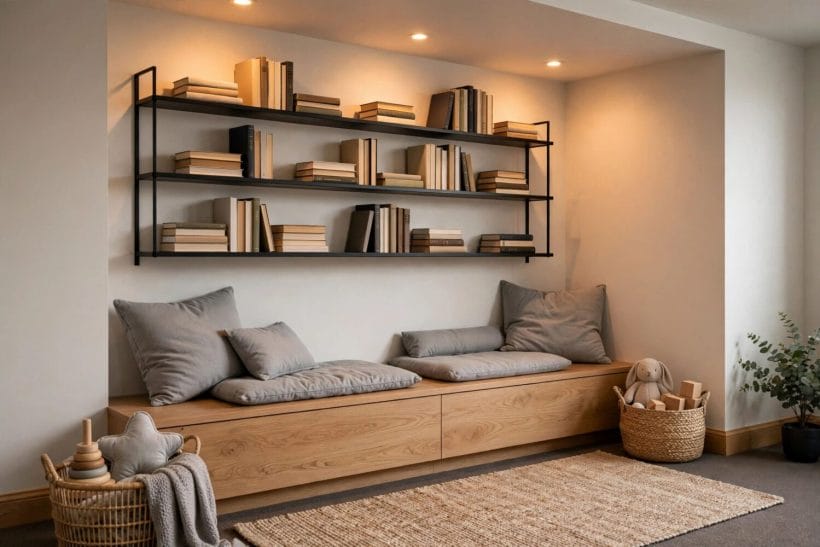
| Build a Low Bench with Hidden Drawers | Fit a low built-in bench along one wall with drawers hidden beneath its seat, giving the modern room both seating and storage in a single quiet piece. |
| Hide the Television Behind a Panel | Conceal the television behind a sliding modern panel when it is not in use, so the media wall returns to a plain plane. |
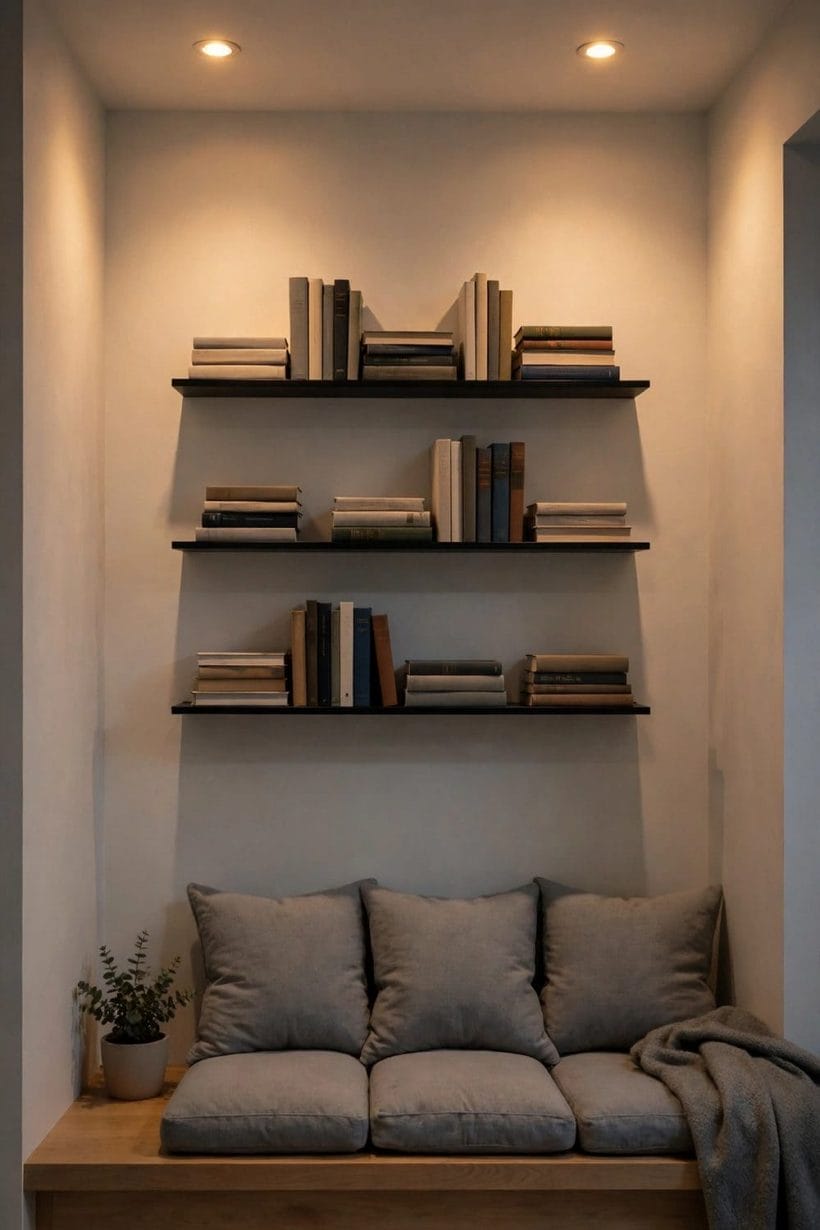
| Use Slim Black Shelving Sparingly | Choose slim black open shelving for a few chosen objects only, and keep the rest of storage closed. |
| Store Games Behind Flush Doors | Keep games, consoles and media behind flush doors in the wall colour, so the modern room never advertises its equipment. |
| Give Every Zone One Closed Cupboard | Assign each zone a single closed cupboard for its daily items, so nothing migrates to open surfaces. |
| Keep the Utility Corner Behind a Wall | Screen the utility corner with a full-height modern panel wall, keeping meters and equipment accessible but unseen. |
| Let the Stair Hide Storage Underneath | Use the space beneath the stair for closed modern drawers or a flush-fronted cupboard, sized to the stair's own geometry. |
| Mount the Screen Flat and Centred | Mount the screen flat on a plain modern wall, centred on the seating, with no surround or frame competing with it. |
| Choose a Low, Long Media Bench | Set a low, long media bench beneath the screen in a dark modern finish, with closed fronts hiding every device. |
| Keep Seating Low and Deep | Pick low, deep modern seating in a plain fabric, arranged to face the screen without blocking walkways. |
| Soften the Corner with Cove Light | Soften the media corner with a warm cove glow behind or above the seating, so the room never falls fully dark between viewings. |
| Add One Rug, No Pattern | Lay one plain rug under the modern lounge seating, in a tone drawn from the room's palette, with no pattern to compete with the screen. |
| Hide Speakers in the Architecture | Place speakers where the architecture hides them — behind panels, inside the bench, or flush with the wall — so sound arrives without equipment on display. |
| Keep Side Tables Slim and Few | Allow one or two slim modern side tables in the lounge, in black metal or pale timber, and nothing more. |
| Let the Lounge Double as a Reading Room | Arrange the modern lounge so it works equally well with the screen off: a reading lamp, a shelf within reach, and seating that faces both screen and window. |
| Keep the Run Handleless and White | Specify handleless fronts in a plain modern white for the kitchenette, so the run reads as a quiet wall rather than a kitchen. |
| Use One Continuous Worktop | Run one continuous worktop along the kitchenette without breaks or changes of material, in a pale modern tone. |
| Hide Appliances Behind Fronts | Hide small appliances behind the kitchenette's fronts, leaving only the sink and a single tap visible. |
| Choose a Slim Black Tap | Fit a slim black tap as the kitchenette's single dark accent, echoing the room's other black details. |
| Separate the Bar with Glass | Separate a bar zone with a black-framed glass panel rather than a wall, so the modern floor stays open while the bar gains its own identity. |
| Keep Bar Shelving to One Row | Limit bar shelving to a single modern row of plain glassware and a few bottles, with the rest stored closed. |
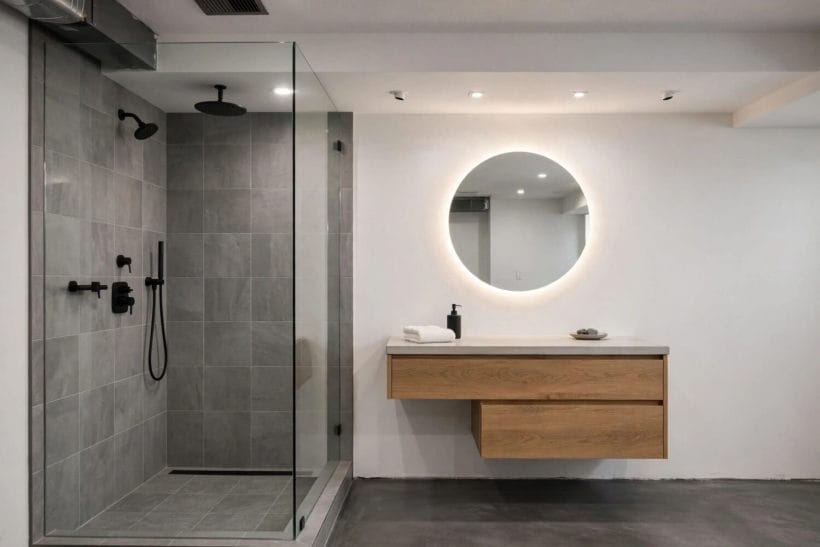
| Float the Vanity Off the Floor | Choose a floating vanity in pale timber for the modern basement bathroom, so the floor runs visibly beneath it and the room feels larger. |
| Use Large Grey Tiles in the Shower | Tile the shower in large-format grey tiles with minimal grout, keeping the modern wet zone as calm as the dry rooms. |
| Backlight a Round Mirror | Hang a round mirror with a soft backlight above the vanity, giving the modern bathroom its evening glow without extra fittings. |
| Keep Fittings Matt Black Throughout | Specify matt black fittings throughout the modern bathroom — tap, shower and handles alike — so the room has one consistent accent. |
| Hide Laundry Behind Full-Height Doors | Conceal laundry machines behind full-height modern doors in the wall colour, so the laundry zone vanishes when it is not in use. |
| Give the Laundry Zone a Folding Shelf | Fit a single plain folding shelf above the hidden machines, in the room's pale timber tone, so the modern laundry zone works well without looking like a workroom. |
| Repeat One Timber Tone Everywhere | Carry a single timber tone — light oak, for instance — through floors, benches, shelves and vanities, so the modern basement's warmth comes from one source. |
| Repeat One Metal Finish Everywhere | Use one metal finish for every visible fitting in the modern basement, from taps to shelf brackets to light trims. |
| Keep Art Large and Few | Hang few pieces of art, each large and abstract, in slim dark frames, and leave generous plain wall around them. |
| Choose Plants with Architectural Leaves | Pick plants with bold, architectural leaves in plain pots, and place them where they punctuate a corner rather than fill it. |
| Keep Textiles Plain and Soft | Dress the modern basement in plain, soft textiles — flat cushions, simple throws, unpatterned rugs — in tones drawn from the room itself. |
| Check the Whole Floor in One Palette | Step back and check the finished basement as one palette: walls, floors, timber, metal and fabric should read as a single modern family. |
| Leave the Room Ready to Change | Finish the modern basement so it can change: plain walls accept new art, open floors accept new furniture, and hidden storage accepts new uses. |
1. Keep One Open Living Floor
Let the main basement floor stay open, with seating, media and reading sharing one modern space rather than being boxed into small rooms. Low furniture and a single pale floor finish keep the eye moving, and the room feels larger because nothing interrupts it. A professional should check any wall removal before it is planned.
2. Let the Stair Land in Daylight
Place the stair landing where the brightest modern light falls, so the descent feels welcoming rather than enclosed. A pale wall, a slim handrail and a single piece of art at the turn give the landing a modern identity without clutter. Keep the stair itself plain and well lit.
3. Run One Floor Finish Through the Floor
Carrying one modern floor finish across the whole basement unifies rooms that would otherwise feel disconnected. Pale, smooth surfaces suit the modern look best, and a single finish removes the visual stops that chop a low room into pieces. Choose a finish that suits below-grade conditions.
4. Frame Views with Slim Openings
Use wide, simply trimmed openings between zones instead of doors wherever privacy allows, so the modern floor stays visually connected. Flat trim, painted the wall colour, keeps the opening quiet and lets the rooms beyond become part of the composition.
5. Put the Longest Wall to Work
Give the longest basement wall a single modern job — a low media bench, a run of handleless storage, or one long piece of art — rather than scattering small items along it. A long, calm wall anchors the room and makes the modern style read instantly.
6. Keep Ceilings Flat and Quiet
A modern basement ceiling stays flat, pale and free of fussy detail, with services hidden wherever a professional can arrange it. Recessed fittings disappear into the plane, and the room gains height visually because nothing hangs down to interrupt it.
7. Let Furniture Float from Walls
Pull modern seating slightly away from the walls so the room breathes around each piece. Floating furniture reads as intentional and contemporary, and the shadow gap behind a sofa or bench adds depth to a room that has little natural light to spare.
8. End the Room with a Calm Focal Point
Finish the longest view in the basement with one calm modern focal point — a low bench, a large canvas, or a simple fireplace surround in a contemporary finish. One focal point is enough; the modern look depends on the eye landing somewhere restful, not everywhere at once.
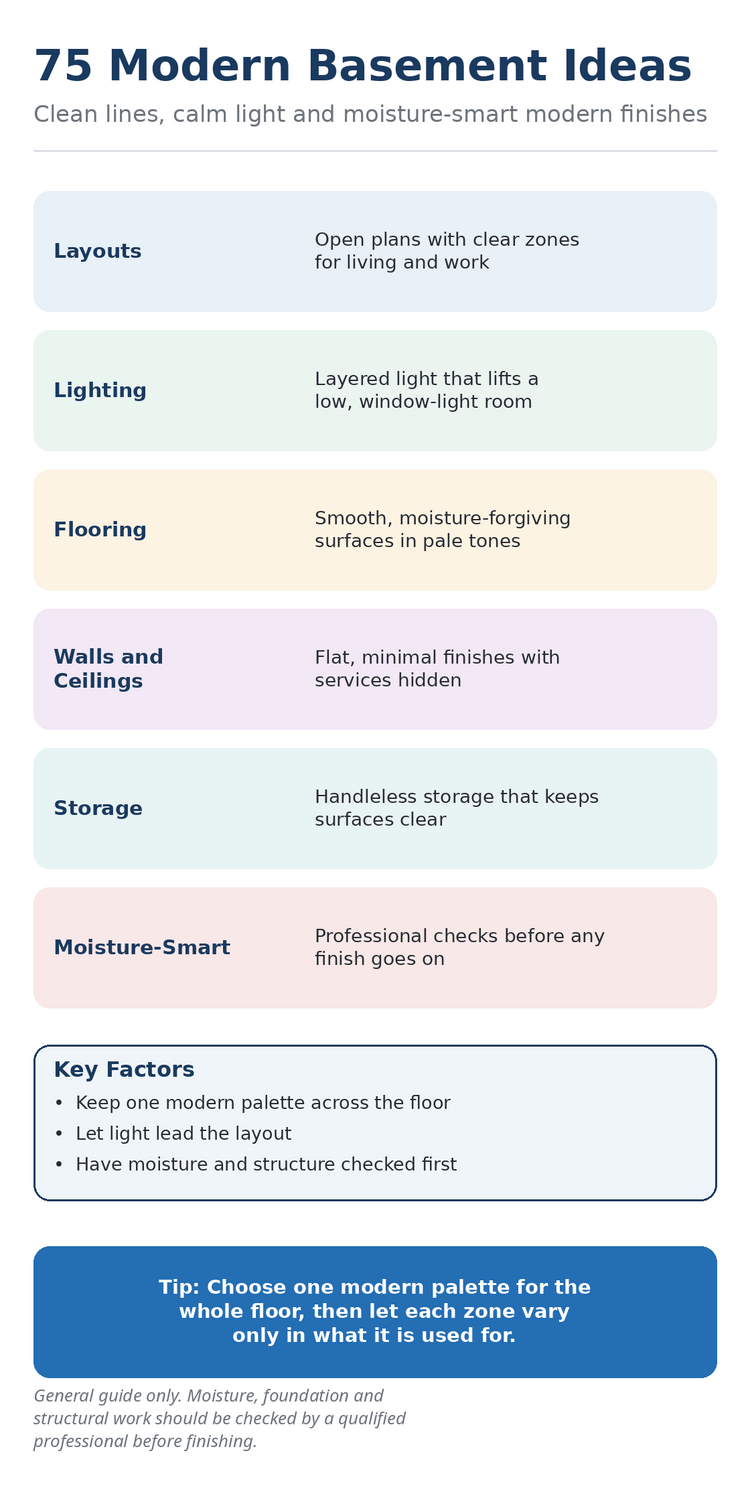
2. Zone the Floor for Modern Living
Modern zoning is done with furniture, rugs and light rather than walls. Each zone keeps the same palette and the same clean detailing, so the floor feels unified even as it serves many purposes. The modern interior ideas in modern tiny house interiors show the same discipline at a smaller scale: few pieces, straight lines, and nothing that does not earn its place.
9. Anchor Seating on a Single Rug
Ground the modern seating zone with one large, flat-weave rug in a quiet tone, and keep every seat touching its edge. The rug draws the zone’s boundary without a wall, and its plain texture keeps the modern look calm underfoot.
10. Tuck Reading into a Window Corner
Give the brightest corner of the basement to reading, with a low chair, a slim floor lamp and a small shelf within reach. The modern reading corner needs little furniture — comfort comes from light and quiet, not from extra pieces.
11. Keep Work Apart with a Slim Screen
Separate a work zone with a slim modern screen or a black-framed glass panel rather than a solid wall, so light still travels. The screen marks the boundary clearly while keeping the floor open, which is exactly how modern zoning should behave.
12. Let the Media Zone Sit Low
Keep the media zone’s furniture low and long, with the screen mounted flat on a plain wall and cables hidden. Low furniture preserves the room’s sense of height, and the modern media wall stays a quiet plane rather than a tower of equipment.
13. Zone with Light, Not Walls
Use a change in lighting — a row of recessed fittings over seating, a softer wash over reading — to mark each zone instead of building partitions. Light zoning keeps the modern floor open while making each area feel distinct after dark.
14. Give Guests a Zone That Closes
Plan the guest zone so it can close with a single sliding panel in a plain modern finish, giving privacy without a permanent wall. When open, the guest area rejoins the floor; when closed, it reads as a calm, simple room of its own.
15. Keep Play Visible but Contained
Contain play in one modern zone with a low built-in bench and closed storage, so toys and games have a home but never spread across the floor. Closed fronts keep the zone looking modern even when it is in daily use.
16. Leave One Stretch of Empty Floor
Deliberately leave one stretch of the modern basement empty — no furniture, no rug, no art. Empty floor is a modern luxury: it gives the room somewhere to breathe and makes everything else in it look considered.
3. Layer Light the Modern Way
Modern basement lighting is layered: a soft general wash, focused task light where it is needed, and a warm accent that makes plain walls glow. No single fitting does all the work, and no fitting draws attention to itself. Rooms with a walk-out wall have a head start on daylight, and the walk-out basement guide treats that brighter variant in full; here the emphasis is on making layered electric light feel just as calm.
17. Wash Walls with Recessed Light
Set recessed fittings close enough to the walls that light washes down them, turning plain modern surfaces into gentle reflectors. Washed walls make a basement feel taller and brighter without any visible fixture competing with the room.
18. Add a Warm Cove Glow
Run a concealed cove of warm light along one ceiling edge so the modern ceiling appears to float. The glow softens the room’s hardest lines and gives evening use a calm, contemporary mood that overhead fittings alone cannot create.
19. Keep Task Light Slim and Black
Choose task lamps in slim black metal with simple silhouettes, and keep them to the places where reading or work actually happens. One good modern task lamp beats several decorative ones, and black fittings punctuate a pale room elegantly.
20. Light Art with a Single Picture Light
Give the room’s one large artwork a single slim picture light, so the modern focal point earns its attention honestly. A lit canvas on a plain wall becomes the room’s evening centrepiece without any extra decoration.
21. Dim Every Layer Separately
Put each lighting layer on its own dimmer so the modern basement can shift from bright daytime use to a soft evening mood. Separate control is what makes layered light feel designed rather than accidental. Electrical work should be planned by a qualified professional.
22. Brighten Window Wells with Pale Surrounds
Paint window wells and their surrounds in the room’s palest modern tone so every bit of daylight bounces further into the floor. Pale surrounds cost nothing visually and repay the effort every bright day.
23. Use One Statement Pendant Only
If a pendant is wanted, use exactly one, in a simple modern form over a table or island, and keep the rest of the ceiling plain. A single pendant reads as deliberate; a row of them in a low basement quickly feels busy.
24. Let Mirrors Double the Light
Place one large, simply framed mirror opposite the brightest wall or window so it doubles the modern room’s light. A plain mirror in a slim frame extends the space visually without adding pattern or colour.
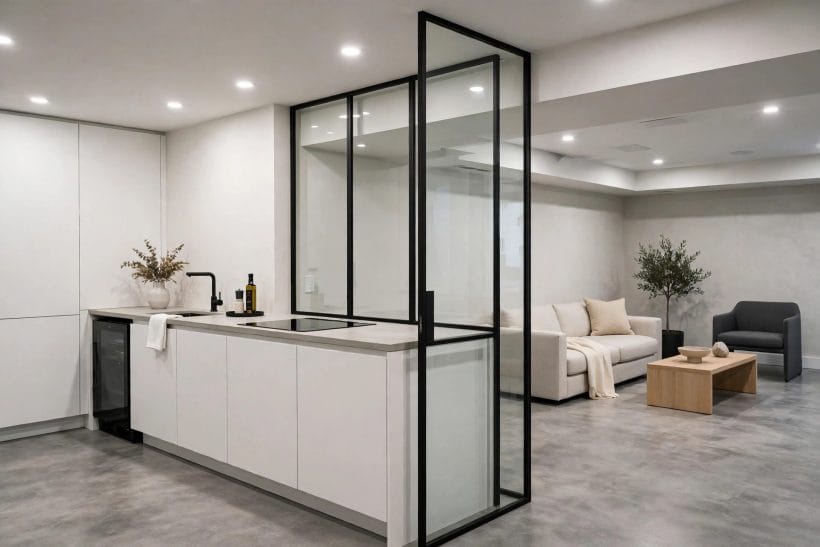
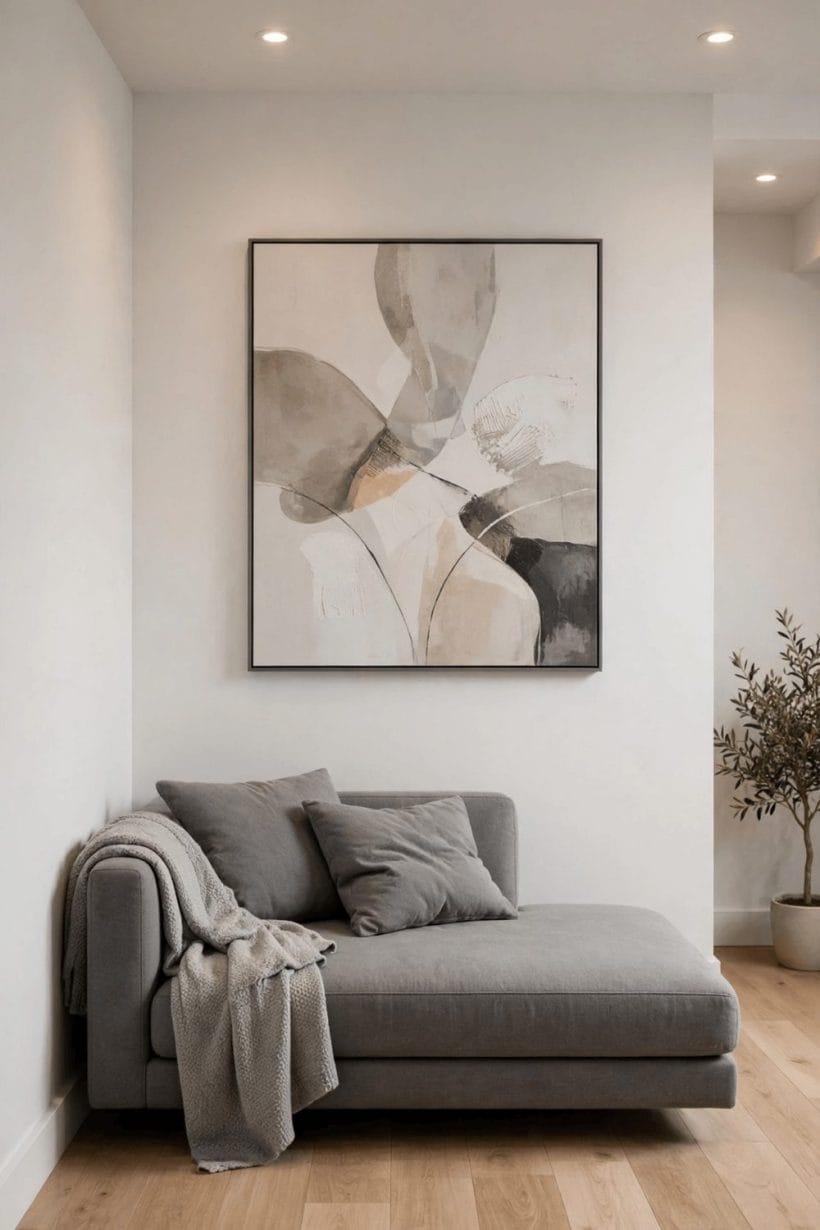
4. Choose Flooring That Suits a Modern Basement
Modern basement flooring is smooth, pale and forgiving of below-grade conditions. The finish should look contemporary first and behave sensibly second — never the other way round — and it should run quietly under every zone without changing character at thresholds.
25. Favour Pale, Smooth Surfaces
Pale, smooth flooring reflects the modern basement’s limited light and keeps the room feeling open. A light surface also shows the room’s clean lines honestly, which is the whole point of the modern treatment.
26. Keep One Finish at Every Threshold
Run the same modern floor finish through doorways and between zones without strips or changes of material. Continuous flooring is one of the strongest modern signals in a basement, and it removes the visual clutter of competing surfaces.
27. Choose Forgiving Modern Finishes
Pick modern floor finishes that tolerate below-grade moisture rather than fighting it, and let the general basement guide’s flooring discussion govern the choice. The modern finish sits on top of that sensible decision, never instead of it.
28. Use Large-Format Tiles in Wet Zones
In bathroom and laundry zones, large-format tiles in a quiet modern tone reduce grout lines and keep the look calm. Fewer joints mean fewer visual interruptions, and the modern wet zone stays as serene as the rest of the floor.
29. Warm the Floor with Flat-Weave Rugs
Warm modern floors with flat-weave rugs in plain tones rather than thick patterned carpets. Flat rugs keep the contemporary profile low and clean, and they can be lifted and cleaned easily if the basement ever gets damp.
30. Let Concrete Read as a Finish
Where the slab is sound, a polished concrete floor in a pale tone is honestly modern: no disguise, no imitation, just a smooth surface that suits the style. A professional should confirm the slab’s condition before it is finished this way.
31. Keep Skirting Slim and Painted
Use slim skirting painted the wall colour so the modern floor meets the wall without a heavy line. Minimal skirting is a small detail that quietly reinforces the contemporary look across the whole basement.
32. Protect the Floor at the Stair Foot
Give the stair foot a durable modern finish that matches the rest of the floor, since it takes the most wear. A matching, hard-wearing surface keeps the entrance to the basement looking as considered as the rooms beyond it.
5. Keep Walls and Ceilings Clean and Minimal
Modern basement walls and ceilings are planes, not features: flat, pale, and free of applied decoration. Their job is to disappear so furniture, light and art can carry the room. The same restraint shapes tiny house interiors at their best, where plain walls make small rooms feel calm rather than cramped.
33. Paint Walls One Pale Tone
Paint the modern basement’s walls in a single pale tone, including trims and awkward corners, so the room reads as one calm volume. One colour removes the patchwork effect that makes low rooms feel smaller.
34. Hide Pipes Behind Flat Panels
Conceal pipes and services behind flat modern panels that sit flush with the wall, with access kept discreet but reachable. The modern basement never lets a pipe run become a feature; it simply removes it from view. Structural and plumbing changes need a qualified professional.
35. Use Flat Trim Everywhere
Replace ornate trim with flat, minimal profiles around doors, windows and openings, painted the wall colour. Flat trim is the quiet signature of the modern basement, and it costs no more than fussy trim to install.
36. Let One Wall Carry Texture
Allow exactly one wall a subtle modern texture — a fine plaster, a pale timber lining, or a smooth concrete effect — while the rest stay flat. One textured wall adds depth without breaking the room’s calm.
37. Box In Beams as Clean Bulkheads
Turn exposed beams into clean, flat bulkheads painted the ceiling colour, so they read as deliberate modern geometry rather than obstacles. A well-made bulkhead can even carry recessed light along its edge.
38. Keep Ceiling Height Visually Intact
Protect the modern basement’s sense of height by keeping ceilings flat, fittings recessed, and nothing hanging lower than it must. Every centimetre of visual height matters in a low room, and the modern style guards it jealously.
39. Frame Windows with Minimal Casings
Give basement windows slim, flat casings in the wall colour, and leave sills deep and plain so they can hold a plant or a book. Minimal casings let the window itself, and the light it brings, do the talking.
40. End Walls with a Simple Return
Finish partition ends with a simple square return rather than a decorative cap or post. The modern basement’s details are square, plain and honest, and a clean return is the smallest expression of that discipline.
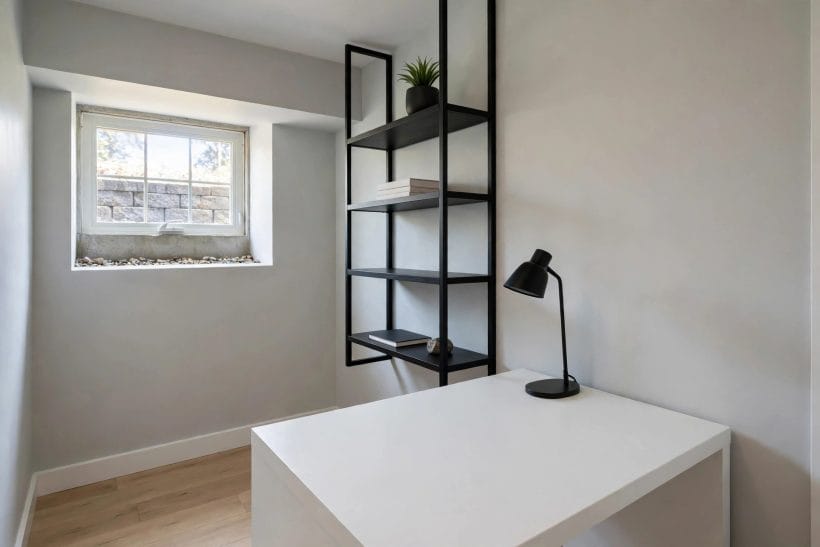
6. Hide Storage Behind Modern Fronts
Modern basement storage disappears: handleless fronts, flush panels, and furniture that hides its contents. The room looks calm because everything has a closed home. Modern house plans treat storage the same way at full scale, building it into the architecture rather than adding it afterwards.
41. Run Handleless Storage Full Height
Take handleless storage to the ceiling in one clean run, with push-to-open fronts and no visible hardware. Full-height storage makes the modern basement feel taller and keeps everyday clutter completely out of sight.
42. Build a Low Bench with Hidden Drawers
Fit a low built-in bench along one wall with drawers hidden beneath its seat, giving the modern room both seating and storage in a single quiet piece. The bench’s plain top doubles as display space when it is not sat on.
43. Hide the Television Behind a Panel
Conceal the television behind a sliding modern panel when it is not in use, so the media wall returns to a plain plane. A hidden screen is the modern basement’s best trick for keeping a room calm.
44. Use Slim Black Shelving Sparingly
Choose slim black open shelving for a few chosen objects only, and keep the rest of storage closed. Open shelves work in a modern basement when they hold little; crowded shelves undo the style instantly.
45. Store Games Behind Flush Doors
Keep games, consoles and media behind flush doors in the wall colour, so the modern room never advertises its equipment. Flush doors are invisible storage, and invisible storage is modern storage.
46. Give Every Zone One Closed Cupboard
Assign each zone a single closed cupboard for its daily items, so nothing migrates to open surfaces. The modern basement stays tidy not through effort but through a cupboard placed exactly where it is needed.
47. Keep the Utility Corner Behind a Wall
Screen the utility corner with a full-height modern panel wall, keeping meters and equipment accessible but unseen. A panel wall turns the least attractive corner of the basement into the plainest one.
48. Let the Stair Hide Storage Underneath
Use the space beneath the stair for closed modern drawers or a flush-fronted cupboard, sized to the stair’s own geometry. Under-stair storage is free space, and the modern basement never wastes it.
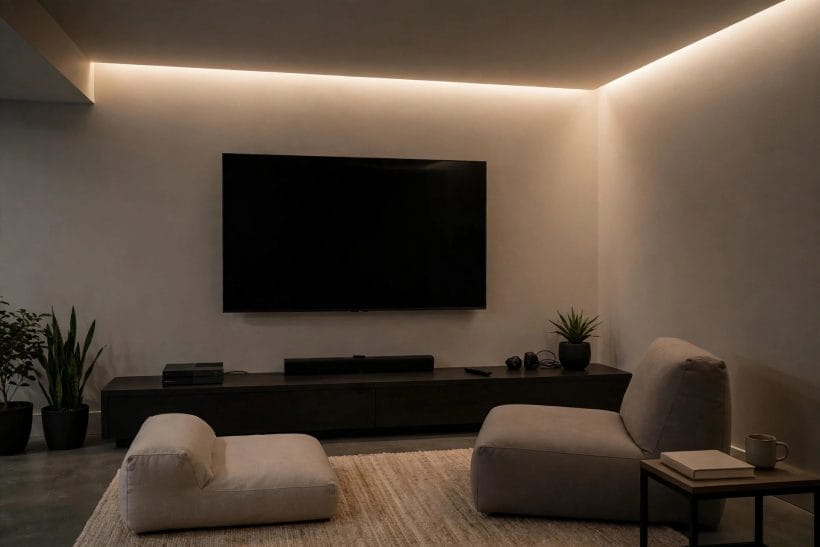
7. Build a Modern Media and Lounge Corner
The modern media corner is a lounge first and a cinema second: comfortable low seating, soft layered light, and equipment that stays out of sight. It should feel like a calm living room that happens to have a screen, not a theatre that happens to have seats.
49. Mount the Screen Flat and Centred
Mount the screen flat on a plain modern wall, centred on the seating, with no surround or frame competing with it. A flat screen on a flat wall is the modern media corner’s defining image.
50. Choose a Low, Long Media Bench
Set a low, long media bench beneath the screen in a dark modern finish, with closed fronts hiding every device. The bench’s length anchors the wall, and its lowness keeps the room’s proportions calm.
51. Keep Seating Low and Deep
Pick low, deep modern seating in a plain fabric, arranged to face the screen without blocking walkways. Low seating suits the basement’s scale and makes the room feel generous rather than crowded.
52. Soften the Corner with Cove Light
Soften the media corner with a warm cove glow behind or above the seating, so the room never falls fully dark between viewings. Cove light is the modern basement’s kindest light, and the media corner deserves it most.
53. Add One Rug, No Pattern
Lay one plain rug under the modern lounge seating, in a tone drawn from the room’s palette, with no pattern to compete with the screen. A plain rug keeps the corner restful when the screen is off.
54. Hide Speakers in the Architecture
Place speakers where the architecture hides them — behind panels, inside the bench, or flush with the wall — so sound arrives without equipment on display. Hidden speakers are the modern media corner’s quiet luxury. Electrical work should be planned by a qualified professional.
55. Keep Side Tables Slim and Few
Allow one or two slim modern side tables in the lounge, in black metal or pale timber, and nothing more. A modern lounge needs surfaces for a drink and a book, not a collection of small furniture.
56. Let the Lounge Double as a Reading Room
Arrange the modern lounge so it works equally well with the screen off: a reading lamp, a shelf within reach, and seating that faces both screen and window. A room that serves two moods earns its floor space twice.
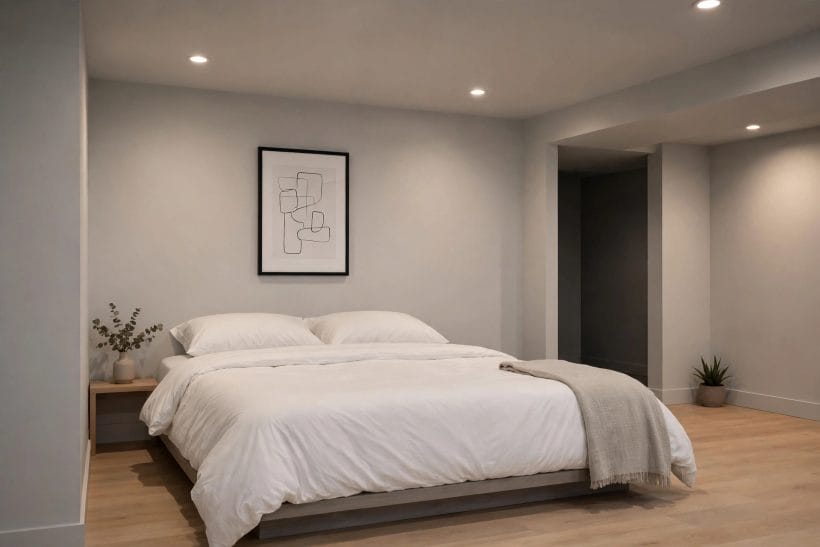
8. Add a Sleek Kitchenette or Bar
A modern basement kitchenette is a single clean run: handleless fronts, one worktop, and nothing on display that does not need to be. It serves drinks and simple food without turning the basement into a second kitchen.
57. Keep the Run Handleless and White
Specify handleless fronts in a plain modern white for the kitchenette, so the run reads as a quiet wall rather than a kitchen. White fronts reflect light, which a basement always welcomes.
58. Use One Continuous Worktop
Run one continuous worktop along the kitchenette without breaks or changes of material, in a pale modern tone. A single surface keeps the run calm and makes the small space feel larger.
59. Hide Appliances Behind Fronts
Hide small appliances behind the kitchenette’s fronts, leaving only the sink and a single tap visible. The modern kitchenette shows its function only when it is being used.
60. Choose a Slim Black Tap
Fit a slim black tap as the kitchenette’s single dark accent, echoing the room’s other black details. One dark accent is enough; the modern look depends on restraint, not repetition.
61. Separate the Bar with Glass
Separate a bar zone with a black-framed glass panel rather than a wall, so the modern floor stays open while the bar gains its own identity. Glass keeps light moving and the bar visible but distinct.
62. Keep Bar Shelving to One Row
Limit bar shelving to a single modern row of plain glassware and a few bottles, with the rest stored closed. One restrained row reads as a bar; a wall of bottles reads as a shop.
9. Give Bathrooms and Laundry a Contemporary Finish
Modern basement bathrooms and laundry zones follow the same rules as the rest of the floor: flat surfaces, plain colours, hidden storage, and fittings in a single restrained finish. Small rooms benefit most from modern discipline, since every extra detail shows. The planning habit behind them — zones drawn before finishes chosen — is the same one that shapes good tiny house floor plans, where a small footprint leaves no room for afterthoughts.
63. Float the Vanity Off the Floor
Choose a floating vanity in pale timber for the modern basement bathroom, so the floor runs visibly beneath it and the room feels larger. A floating vanity is the modern bathroom’s clearest signal.
64. Use Large Grey Tiles in the Shower
Tile the shower in large-format grey tiles with minimal grout, keeping the modern wet zone as calm as the dry rooms. Large tiles reduce visual noise exactly where a small room needs it most. Waterproofing and plumbing work should be handled by qualified professionals.
65. Backlight a Round Mirror
Hang a round mirror with a soft backlight above the vanity, giving the modern bathroom its evening glow without extra fittings. A lit round mirror is both task light and decoration, and it needs nothing else beside it.
66. Keep Fittings Matt Black Throughout
Specify matt black fittings throughout the modern bathroom — tap, shower and handles alike — so the room has one consistent accent. Mixed finishes are the fastest way to undo a modern bathroom.
67. Hide Laundry Behind Full-Height Doors
Conceal laundry machines behind full-height modern doors in the wall colour, so the laundry zone vanishes when it is not in use. Hidden laundry keeps the basement’s calm intact on wash day.
68. Give the Laundry Zone a Folding Shelf
Fit a single plain folding shelf above the hidden machines, in the room’s pale timber tone, so the modern laundry zone works well without looking like a workroom. One shelf is enough; the zone should stay minimal.
10. Finish with Modern Details That Hold Together
The final modern details are the smallest ones, and they matter most because they repeat everywhere: one metal finish, one timber tone, one way of trimming an opening. Consistency across these details is what turns seventy-five separate ideas into one modern basement.
69. Repeat One Timber Tone Everywhere
Carry a single timber tone — light oak, for instance — through floors, benches, shelves and vanities, so the modern basement’s warmth comes from one source. Mixed timbers fragment a room that should feel whole.
70. Repeat One Metal Finish Everywhere
Use one metal finish for every visible fitting in the modern basement, from taps to shelf brackets to light trims. A single finish is invisible in the best way: it never asks to be noticed.
71. Keep Art Large and Few
Hang few pieces of art, each large and abstract, in slim dark frames, and leave generous plain wall around them. Large, few and abstract is the modern basement’s art rule, and it never fails.
72. Choose Plants with Architectural Leaves
Pick plants with bold, architectural leaves in plain pots, and place them where they punctuate a corner rather than fill it. A single strong plant suits the modern basement better than a collection of small ones.
73. Keep Textiles Plain and Soft
Dress the modern basement in plain, soft textiles — flat cushions, simple throws, unpatterned rugs — in tones drawn from the room itself. Plain textiles let the architecture, not the fabric, carry the style.
74. Check the Whole Floor in One Palette
Step back and check the finished basement as one palette: walls, floors, timber, metal and fabric should read as a single modern family. If one zone jars, it is usually a stray colour or finish, and correcting it restores the whole floor.
75. Leave the Room Ready to Change
Finish the modern basement so it can change: plain walls accept new art, open floors accept new furniture, and hidden storage accepts new uses. A modern room is never finished in the sense of being fixed; it is finished in the sense of being ready.
Final Considerations
A modern basement succeeds when every choice points the same way: clean lines, calm colours, light in layers, and storage that disappears. Before finishing begins, have moisture, foundation and structural matters checked by qualified professionals, and let the general basement guide carry the groundwork this guide deliberately does not repeat. Small basements follow the same modern rules, and the small basement guide shows how the style adapts when space is tight. Start with the palette, let light lead the layout, and keep every zone in the same modern family — the result is a basement that feels less like a lower floor and more like the calmest room in the house.


0 Comments