
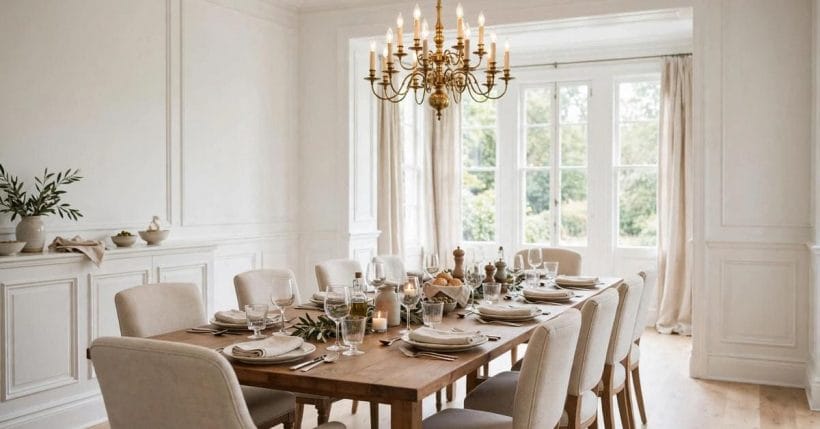
Wainscoting gives a dining room a finished, tailored feel before a single plate reaches the table. The panelled lower wall adds rhythm, texture and a sense of order, and it frames the table as the centre of the room. In a wainscoting dining room, the walls do quiet work in the background, softening hard surfaces and giving artwork, mirrors and lighting something considered to sit against.
The appeal lies in the range. A wainscoting dining room can feel formal or relaxed, grand or cottage-like, dark and moody or pale and bright, depending on the panel shape, the colour and the way the rest of the room is dressed. The ideas below cover panel styles, colours, layouts and practical details, so the look can be matched to the room rather than copied from somewhere else. For related room planning, see these tiny dining room ideas alongside the wainscoting choices here.
Throughout, the focus stays on looks and choices, not on fitting work. Any change to a wall, including fixing panels, moving fittings or touching wiring and pipework, belongs with a qualified professional, who can judge the wall and the services behind it. With that boundary clear, the design decisions become the enjoyable part: panel, colour, height, finish and the furniture that sits in front of it all.
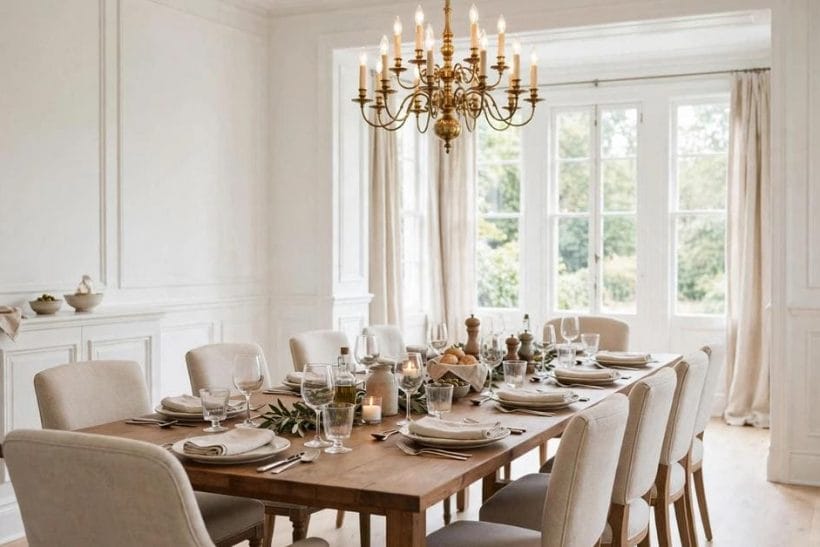
1. Classic Raised Panels
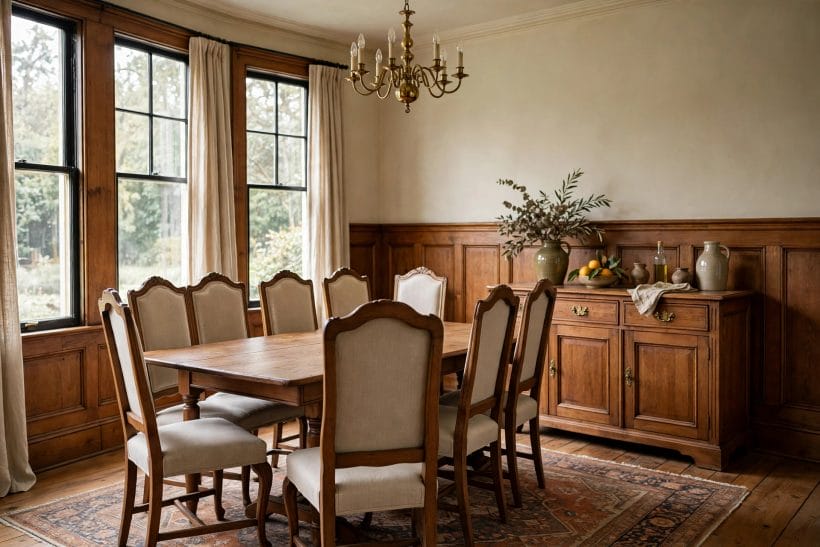
Raised panels are the traditional face of wainscoting, with a bevelled centre that catches light and casts a soft shadow. In a wainscoting dining room, that depth reads as quiet formality, and it suits rooms where the table, chairs and sideboard already carry a traditional shape.
| Item | What it is |
|---|---|
| Crisp White Raised Panels | White raised panels against a soft wall colour give a dining room a clean, timeless frame. |
| Raised Panels on Every Wall | Running raised panels around the whole room creates a sense of enclosure that suits long, shared meals. |
| A Single Raised-Panel Feature Wall | One panelled wall behind the sideboard or the head of the table gives the room a clear focal point. |
| Raised Panels with a Picture Rail | A picture rail above raised panels gives artwork a natural home and ties the upper and lower wall together. |
| Raised Panels Paired with a Wooden Sideboard | A wooden sideboard against raised panels repeats the warmth of timber through the room. |
| Raised Panels in a Soft Cream Finish | Cream panels soften the contrast between wall and woodwork and suit rooms with warm daylight. |
| Raised Panels with Upholstered Chairs | Soft upholstered chairs against raised panels balance hard woodwork with comfort. |
| Raised Panels Under a Chandelier | A chandelier above the table draws the eye upward, while raised panels anchor the lower wall. |
| White Beadboard for a Cottage Feel | White beadboard instantly suggests a cottage dining room, especially beside a wooden table and simple chairs. |
| Beadboard in a Breakfast Nook | A beadboard-lined nook turns a corner of a room into a place made for lingering over breakfast. |
| Beadboard with a Window Seat | Beadboard wrapping a window seat creates a dining corner that feels built into the house. |
| Painted Beadboard in Sage Green | Sage green beadboard gives a dining room a gentle, garden-like calm. |
| Beadboard Behind Open Shelving | Beadboard behind open shelves gives displayed plates and bowls a textured backdrop. |
| Beadboard with a Round Table | A round table against beadboard softens the straight lines of the panels. |
| Beadboard in a Sunlit Corner | Sunlight across beadboard brings out the groove shadows and gives the wall a lively surface. |
| Beadboard with Woven Textures | Woven placemats, baskets and rush-seated chairs echo the linear rhythm of beadboard. |
| Simple Board and Batten in White | White board and batten gives a dining room crisp geometry without heavy ornament. |
| Board and Batten on a Feature Wall | A single board-and-batten wall behind the table creates structure without panelled every surface. |
| Board and Batten in Pale Grey | Pale grey board and batten adds quiet depth to a dining room without darkening it. |
| Board and Batten with a Bench Seat | A bench against board and batten makes a dining room feel informal and sociable. |
| Tall Board and Batten Panels | Taller board-and-batten panels give a dining room a sense of height and presence. |
| Board and Batten with Dark Wood Furniture | Dark wood furniture against pale board and batten creates a pleasing contrast of tone. |
| Board and Batten in a Narrow Dining Room | In a narrow dining room, board and batten adds interest without taking floor space. |
| Board and Batten with Botanical Prints | Botanical prints above board and batten echo the natural mood of a dining room. |
| Soft White for a Timeless Room | Soft white wainscoting suits almost any dining room and never fights with the furniture. |
| Warm Cream for Evening Meals | Cream wainscoting glows under lamplight and candlelight, making evening meals feel warm. |
| Sage Green for a Garden Mood | Sage green wainscoting brings a quiet, natural feeling to the dining room. |
| Dusty Blue for a Calm Scheme | Dusty blue wainscoting gives a dining room a cool, composed character. |
| Charcoal Grey for Quiet Drama | Charcoal grey wainscoting adds drama without the intensity of black. |
| Two-Tone Panels and Upper Walls | Painting panels and upper walls in two tones of one colour family creates a subtle, layered room. |
| Matching Panels to the Table Wood | Matching panel colour loosely to the table wood creates harmony between wall and furniture. |
| Deep Navy Panels for Formal Evenings | Deep navy panels give a dining room a formal, evening character. |
| Forest Green Panels with Brass Details | Forest green panels with brass lighting create a warm, club-like dining room. |
| Dark Panels with a Large Mirror | A large mirror above dark panels reflects light and doubles the sense of space. |
| Dark Panels with Pale Linen | Pale linen chairs and tablecloths lighten a dark-panelled dining room beautifully. |
| Dark Panels in a Candlelit Room | Candlelight across dark panels creates shifting shadows that make the wall feel alive. |
| Dark Panels with a Wooden Sideboard | A wooden sideboard against dark panels adds warmth and a practical serving surface. |
| Dark Panels Paired with Artwork | Artwork above dark panels gains impact, since the strong wall colour frames each piece. |
| Dark Panels with a Rug Under the Table | A rug under the table softens a dark-panelled dining room underfoot and adds a layer of pattern. |
| Pale Panels with Sheer Curtains | Pale panels beside sheer curtains make a dining room feel bright and soft. |
| White Panels with a Glass Table | A glass table against white panels keeps sightlines open and the room feeling spacious. |
| Pale Panels with a Large Window | A large window above pale panels floods the dining room with daylight. |
| White Panels with Greenery | Plants against white panels add life and colour without clutter. |
| Pale Panels with a Light Rug | A light rug under the table continues the airy feeling of pale panels across the floor. |
| Pale Panels in a Room with High Windows | High windows above pale panels draw daylight deep into the room. |
| White Panels with Cane Chairs | Cane chairs against white panels create a breezy, relaxed dining room. |
| Rustic Wood Panels Left Natural | Natural wood panels celebrate grain, knots and variation rather than hiding them. |
| Farmhouse Panels with a Long Table | A long farmhouse table against panelled walls suits gatherings where seats fill along both sides. |
| Farmhouse Panels with a Bench | A bench beside farmhouse panels keeps the dining room relaxed and practical. |
| White Farmhouse Panels with Black Windows | White farmhouse panels beside dark window frames gain a crisp, graphic edge. |
| Farmhouse Panels with Open Shelving | Open shelving above farmhouse panels displays everyday plates and bowls within reach. |
| Farmhouse Panels with a Stone Fireplace | A stone fireplace beside panelled walls adds a natural focal point to a farmhouse dining room. |
| Rustic Panels with Woven Baskets | Woven baskets against rustic panels add texture and useful storage. |
| Farmhouse Panels with a Sliding Door | A sliding door beside panelled walls saves swing space and adds farmhouse character. |
| Flat Panels for a Clean Look | Flat panels give a modern dining room order without ornament. |
| Flat Panels in Soft White | Soft white flat panels keep a modern dining room bright and minimal. |
| Flat Panels with a Pendant Light | A pendant above the table gives a flat-panelled room a clear centre. |
| Flat Panels with a Timber Table | A timber table against flat panels adds natural warmth to a minimal room. |
| Flat Panels with Black Accents | Black chair frames or a dark pendant against pale flat panels give a modern dining room definition. |
| Flat Panels Around a Corner | Running flat panels around a corner gives a modern dining room a wrapped, architectural feel. |
| Flat Panels with a Sideboard Wall | A sideboard wall of flat panels creates a composed backdrop for serving and display. |
| Pale Panels in a Tiny Dining Room | Pale panels in a tiny dining room add detail without visual weight. |
| Panels in a Hallway Dining Nook | A hallway nook panelled on one wall becomes a dining spot rather than a pass-through. |
| Panels Behind a Round Pedestal Table | A round pedestal table against panelled walls suits a small room, since the single central leg frees legroom. |
| Panels with a Fold-Down Table | A fold-down table against panelled walls gives a small home a dining place that disappears when not needed. |
| Panels in a Bay Window Nook | Panels wrapping a bay window nook create a bright dining corner with a view. |
| Panels with a Slim Console Table | A slim console against panelled walls serves as a serving surface in a small dining room. |
| Panels with a Wall Mirror in a Small Room | A wall mirror above panels doubles light and view in a small dining room. |
| Artwork Hung Above the Chair Rail | Artwork hung in the plain wall above the panels respects the panel rhythm below. |
| Mirrors That Reflect the Table | A mirror above the panels reflects the table setting and doubles the candlelight. |
| Lighting That Grazes the Panels | Wall lights that graze the panels bring out their texture after dark. |
| Table Linen That Echoes the Panels | Table linen in tones drawn from the panels ties the table to the wall. |
| Centrepieces That Stay Low | Low centrepieces keep sightlines open across the table and let the panelled walls stay visible. |
| Seasonal Dressing Without Clutter | Seasonal dressing against panels works best when a few items change, not everything. |
| Chairs That Contrast the Panels | Chairs in a contrasting tone to the panels define the table area clearly. |
1. Crisp White Raised Panels
White raised panels against a soft wall colour give a dining room a clean, timeless frame. The white keeps the room bright, while the raised centres add just enough detail to hold attention without competing with the table setting. Linen chairs and a wooden table sit easily against this calm backdrop, and the room feels dressed even on an ordinary evening.
2. Raised Panels on Every Wall
Running raised panels around the whole room creates a sense of enclosure that suits long, shared meals. The repeated rhythm makes the room feel considered from every seat, and the eye travels evenly rather than landing on one feature. A plain upper wall keeps the effect balanced, so the panelling feels generous rather than heavy.
3. A Single Raised-Panel Feature Wall
One panelled wall behind the sideboard or the head of the table gives the room a clear focal point. The remaining walls stay plain, which keeps the room light and lets the feature wall carry the detail. This approach suits rooms where a full panelled scheme might feel too formal for everyday use.
4. Raised Panels with a Picture Rail
A picture rail above raised panels gives artwork a natural home and ties the upper and lower wall together. Frames hung in a level line echo the order of the panels below, and the room gains a gallery feel without clutter. Keeping frames similar in tone helps the wall read as one composed scheme.
5. Raised Panels Paired with a Wooden Sideboard
A wooden sideboard against raised panels repeats the warmth of timber through the room. The sideboard adds storage and a serving surface, while the panels behind it give the piece a finished backdrop. Matching the wood tones loosely, rather than exactly, keeps the pairing relaxed.
6. Raised Panels in a Soft Cream Finish
Cream panels soften the contrast between wall and woodwork and suit rooms with warm daylight. The gentle tone flatters wooden furniture and candlelight alike, and the room feels welcoming rather than stark. Cream also forgives the small marks of daily life better than a brilliant white.
7. Raised Panels with Upholstered Chairs
Soft upholstered chairs against raised panels balance hard woodwork with comfort. The fabric adds texture at table level, while the panels give structure behind it. Choosing chair fabric in a muted tone lets the panelling stay the star of the wall.
8. Raised Panels Under a Chandelier
A chandelier above the table draws the eye upward, while raised panels anchor the lower wall. The pairing gives the room a traditional dining-room hierarchy: light above, order below, table at the centre. Keeping the chandelier simple in shape prevents the room from feeling over-dressed.
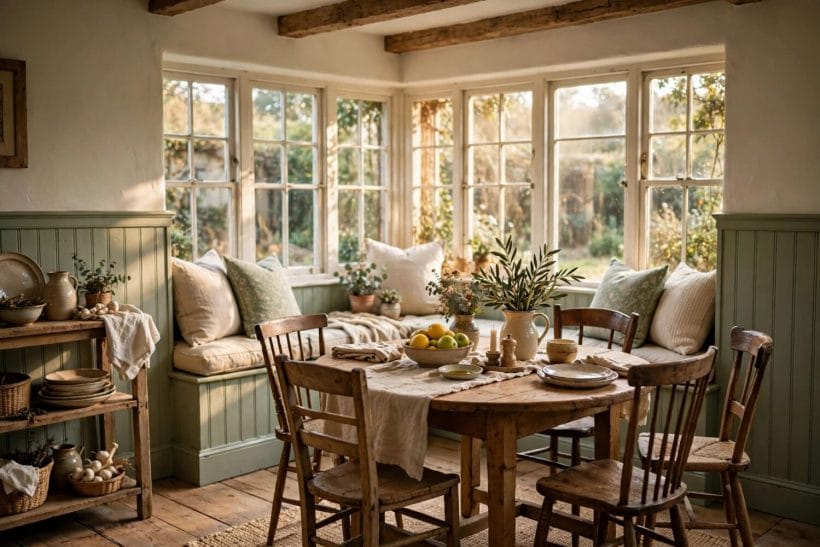
2. Beadboard Charm
Beadboard brings narrow vertical grooves that feel informal, fresh and a little coastal, and a wainscoting dining room dressed in beadboard feels relaxed from the first glance. It suits cottage dining rooms, breakfast corners and rooms where a relaxed mood matters more than formality, and it pairs happily with painted furniture and natural textures.
9. White Beadboard for a Cottage Feel
White beadboard instantly suggests a cottage dining room, especially beside a wooden table and simple chairs. The vertical lines lift the eye and make the wall feel taller, while the white keeps a small room bright. A vase of flowers and woven placemats complete the easy, lived-in mood.
10. Beadboard in a Breakfast Nook
A beadboard-lined nook turns a corner of a room into a place made for lingering over breakfast. The grooved panels add texture at close range, where diners sit near the wall, and a built-in bench or window seat makes the corner feel intentional. Soft cushions keep the nook comfortable for long sits.
11. Beadboard with a Window Seat
Beadboard wrapping a window seat creates a dining corner that feels built into the house. Daylight falls across the grooves and changes through the day, so the corner never looks flat. The seat itself adds informal places to sit, which suits households where meals often stretch into conversation.
12. Painted Beadboard in Sage Green
Sage green beadboard gives a dining room a gentle, garden-like calm. The muted green sits well with wooden tables, linen and plants, and it feels restful rather than showy. Paired with cream upper walls, the room stays light while gaining a clear colour identity.
13. Beadboard Behind Open Shelving
Beadboard behind open shelves gives displayed plates and bowls a textured backdrop. The grooves add interest without competing with the items on show, and the shelves gain a finished look. Keeping shelf items simple in colour lets the beadboard pattern stay visible.
14. Beadboard with a Round Table
A round table against beadboard softens the straight lines of the panels. The curve of the table contrasts pleasantly with the vertical grooves, and the arrangement suits rooms where conversation matters, since every seat faces the centre. A single pendant above the table completes the grouping.
15. Beadboard in a Sunlit Corner
Sunlight across beadboard brings out the groove shadows and gives the wall a lively surface. A corner with generous windows makes the most of this effect, and the room feels bright even when the panels carry colour. Sheer curtains soften the light without hiding the panel detail.
16. Beadboard with Woven Textures
Woven placemats, baskets and rush-seated chairs echo the linear rhythm of beadboard. The shared texture language makes the room feel cohesive, and natural materials keep the mood warm. This pairing suits dining rooms that lean rustic rather than polished.
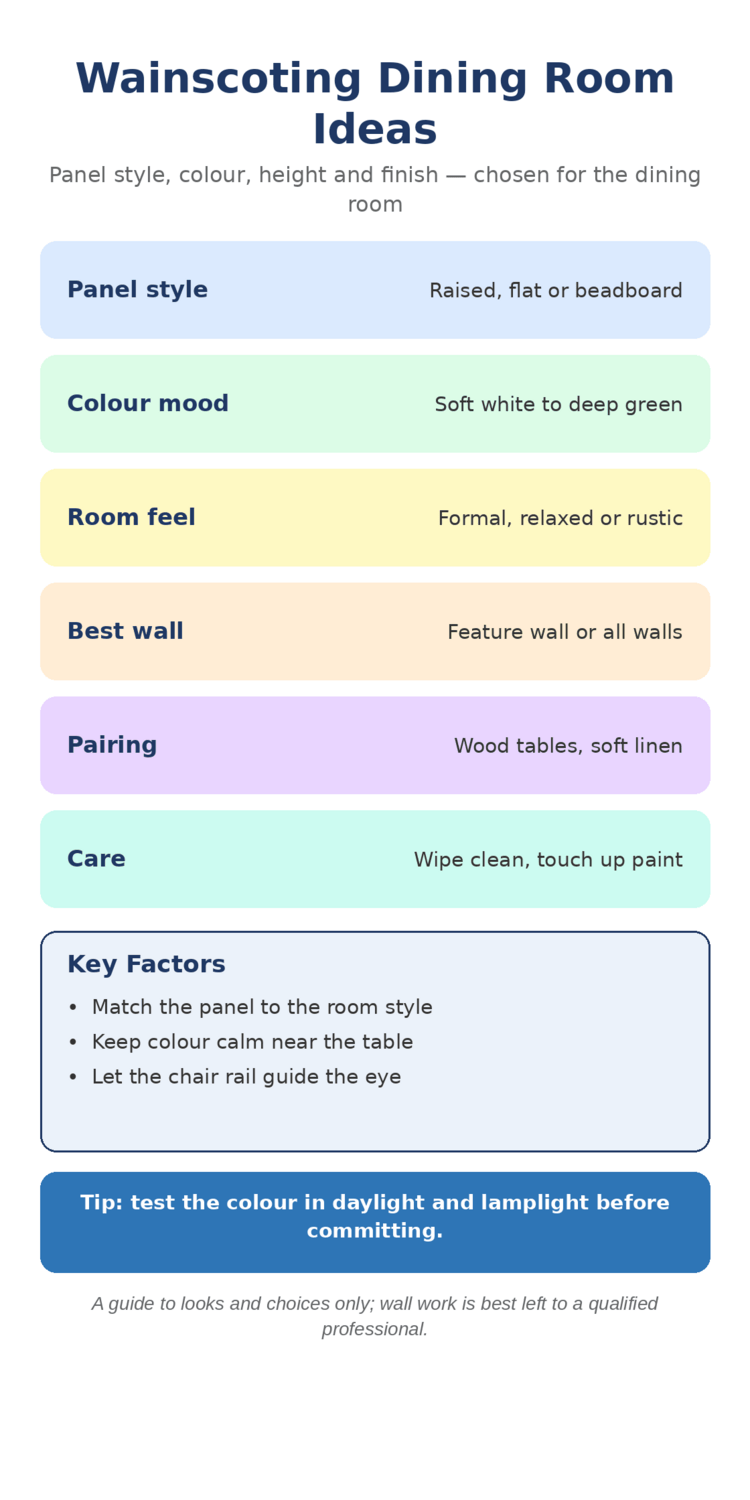
3. Board and Batten
Board and batten uses flat boards with applied battens to form a grid of rectangles on the wall of a wainscoting dining room. The look is clean and architectural, and it suits both traditional and contemporary dining rooms, depending on the colour and the spacing of the grid.
17. Simple Board and Batten in White
White board and batten gives a dining room crisp geometry without heavy ornament. The rectangles frame the wall in an orderly way, and the white finish keeps the room fresh. This scheme works well in rooms that open to a living area, since the clean lines sit calmly beside other furniture. For ideas on rooms that flow together, see these small living room ideas next to the panel choices here.
18. Board and Batten on a Feature Wall
A single board-and-batten wall behind the table creates structure without panelled every surface. The grid gives the eye a pattern to enjoy, while plain side walls keep the room airy. This restrained use suits dining rooms that share space with a kitchen or a sitting area.
19. Board and Batten in Pale Grey
Pale grey board and batten adds quiet depth to a dining room without darkening it. The grey reads as a soft shadow against white upper walls, and it pairs well with oak tables and cane chairs. A round mirror above the panelling reflects light and keeps the wall from feeling flat.
20. Board and Batten with a Bench Seat
A bench against board and batten makes a dining room feel informal and sociable. The bench slides under the table when not needed, and the panelled wall behind it gives the seating a finished backdrop. Cushions in a plain fabric keep the bench comfortable and the look uncluttered.
21. Tall Board and Batten Panels
Taller board-and-batten panels give a dining room a sense of height and presence. The extended rectangles draw the eye upward and suit rooms with generous ceilings, where a low dado might feel lost. Keeping the upper wall plain lets the tall panels carry the room.
22. Board and Batten with Dark Wood Furniture
Dark wood furniture against pale board and batten creates a pleasing contrast of tone. The light wall keeps the room from feeling heavy, while the dark table grounds the space. Brass or warm metal details on lighting add a gentle glow between the two tones.
23. Board and Batten in a Narrow Dining Room
In a narrow dining room, board and batten adds interest without taking floor space. The flat panels sit close to the wall, so the room keeps its width, while the grid pattern stops the long walls from feeling bare. A slim table and a mirror help the narrow room feel balanced.
24. Board and Batten with Botanical Prints
Botanical prints above board and batten echo the natural mood of a dining room. The framed prints sit in the plain upper wall, while the grid below gives them structure. Keeping the prints in similar frames helps the wall feel curated rather than crowded.
4. Colour Choices
Colour transforms a wainscoting dining room more than any other single decision. The same panel in white, green, navy or grey can feel entirely different, so the colour should be chosen with the table, the light and the mood of the room in mind.
25. Soft White for a Timeless Room
Soft white wainscoting suits almost any dining room and never fights with the furniture. The gentle white flatters wood, fabric and glass, and it keeps the room bright through the seasons. For rooms where the table setting changes often, white provides a calm constant.
26. Warm Cream for Evening Meals
Cream wainscoting glows under lamplight and candlelight, making evening meals feel warm. The tone softens the contrast with wooden furniture and suits rooms used mainly after dark. Cream also pairs well with brass lighting and deep wood tones.
27. Sage Green for a Garden Mood
Sage green wainscoting brings a quiet, natural feeling to the dining room. The muted green works with plants, wooden tables and linen, and it feels restful during long meals. Pale upper walls keep the green from closing the room in.
28. Dusty Blue for a Calm Scheme
Dusty blue wainscoting gives a dining room a cool, composed character. The soft blue suits coastal and classic rooms alike, and it pairs gracefully with white table linen and silver-toned details. Keeping the upper wall pale preserves the airy balance.
29. Charcoal Grey for Quiet Drama
Charcoal grey wainscoting adds drama without the intensity of black. The deep grey grounds the room and makes a wooden table stand out, while pale upper walls and a mirror keep the space from feeling dark. This scheme suits rooms with good daylight.
30. Two-Tone Panels and Upper Walls
Painting panels and upper walls in two tones of one colour family creates a subtle, layered room. The lower tone anchors the space, while the lighter upper tone lifts it. This approach adds depth without introducing a contrasting colour that might date quickly.
31. Matching Panels to the Table Wood
Matching panel colour loosely to the table wood creates harmony between wall and furniture. A warm wood table beside warm-toned panels feels cohesive, while a pale table beside white panels feels fresh. Exact matching matters less than a shared warmth or coolness of tone.
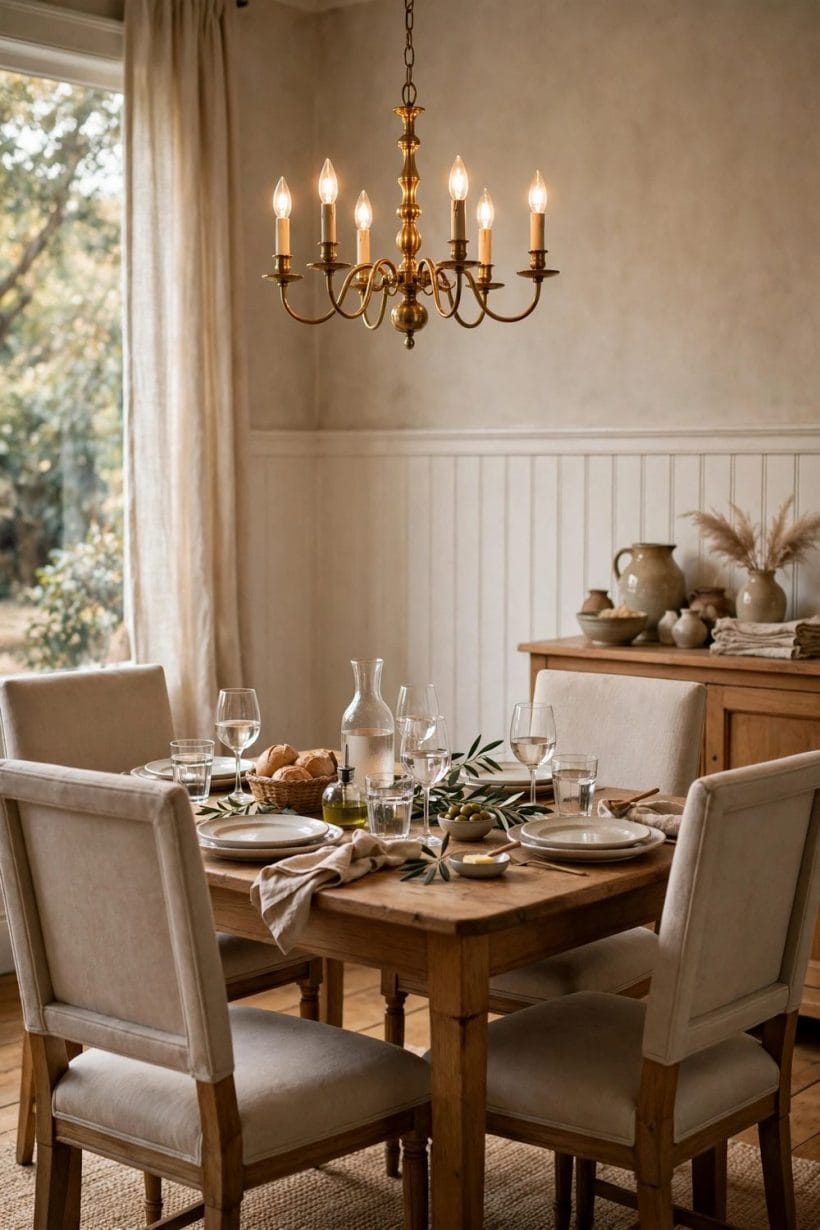
5. Dark and Moody Walls
Dark wainscoting turns a wainscoting dining room into an evening room, where candlelight and lamplight do the talking. Deep colours need daylight or generous lighting to stay welcoming, but when the balance is right, the result feels intimate and special.
32. Deep Navy Panels for Formal Evenings
Deep navy panels give a dining room a formal, evening character. The rich colour suits polished tables, tall candles and framed artwork, and the room feels made for celebration. Pale upper walls and warm lighting keep the navy from feeling cold.
33. Forest Green Panels with Brass Details
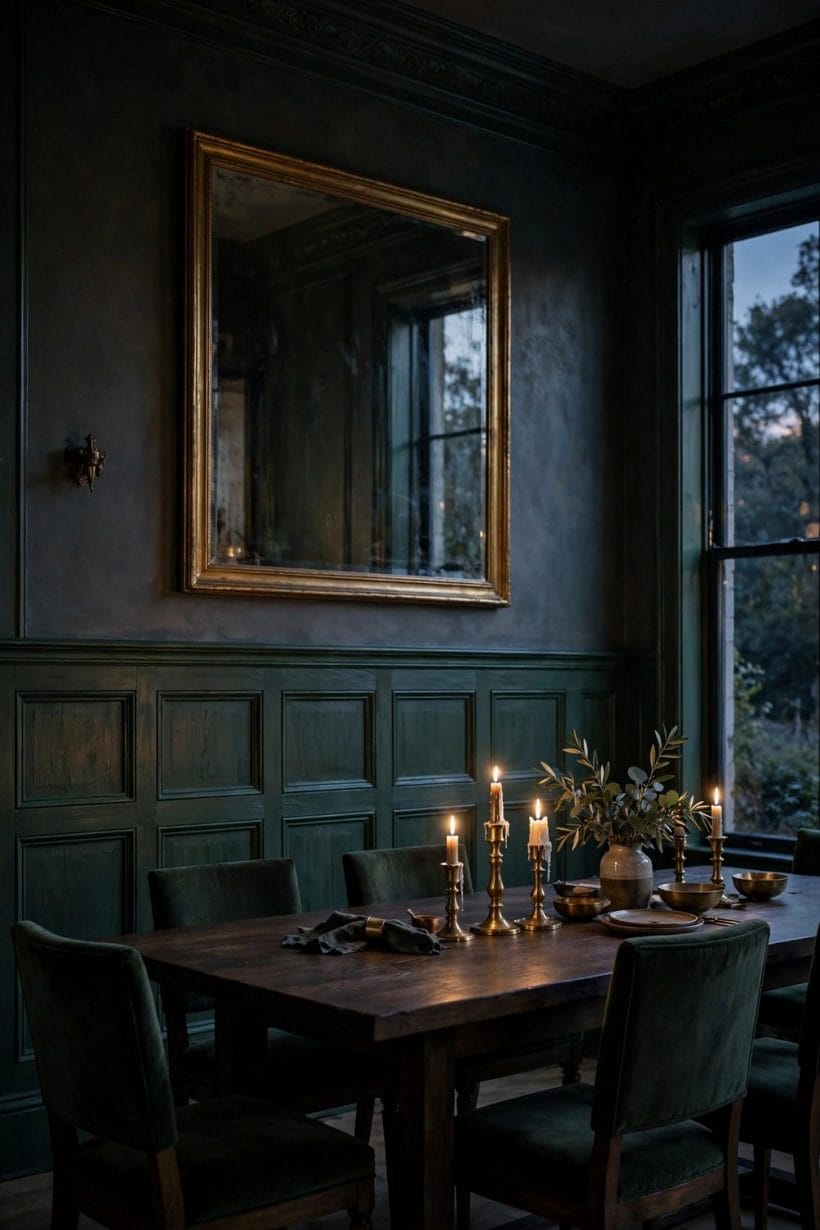
Forest green panels with brass lighting create a warm, club-like dining room. The green depth flatters wood and candlelight, while brass adds points of glow. Keeping chair fabric muted lets the wall colour and the metal details carry the room.
34. Dark Panels with a Large Mirror
A large mirror above dark panels reflects light and doubles the sense of space. The mirror also gives the room a focal point that balances the strong wall colour. A simple frame keeps attention on the reflection rather than on the frame itself.
35. Dark Panels with Pale Linen
Pale linen chairs and tablecloths lighten a dark-panelled dining room beautifully. The contrast keeps the room from feeling heavy, and the soft fabric adds comfort at the table. This pairing suits rooms used for both everyday meals and special occasions.
36. Dark Panels in a Candlelit Room
Candlelight across dark panels creates shifting shadows that make the wall feel alive. The flickering light softens the strong colour and gives the room a celebratory mood. Keeping other lighting low lets the candles set the tone for the evening.
37. Dark Panels with a Wooden Sideboard
A wooden sideboard against dark panels adds warmth and a practical serving surface. The wood tone breaks up the dark wall and gives the room a natural anchor. Displaying simple ceramics on the sideboard keeps the arrangement calm.
38. Dark Panels Paired with Artwork
Artwork above dark panels gains impact, since the strong wall colour frames each piece. Landscape and portrait prints alike stand out against deep tones, especially in warm frames. Hanging pieces at eye level from the table keeps the display comfortable to view.
39. Dark Panels with a Rug Under the Table
A rug under the table softens a dark-panelled dining room underfoot and adds a layer of pattern. The rug defines the dining area within a larger room and brings warmth to the floor. Choosing a muted pattern keeps the rug in harmony with the strong walls.
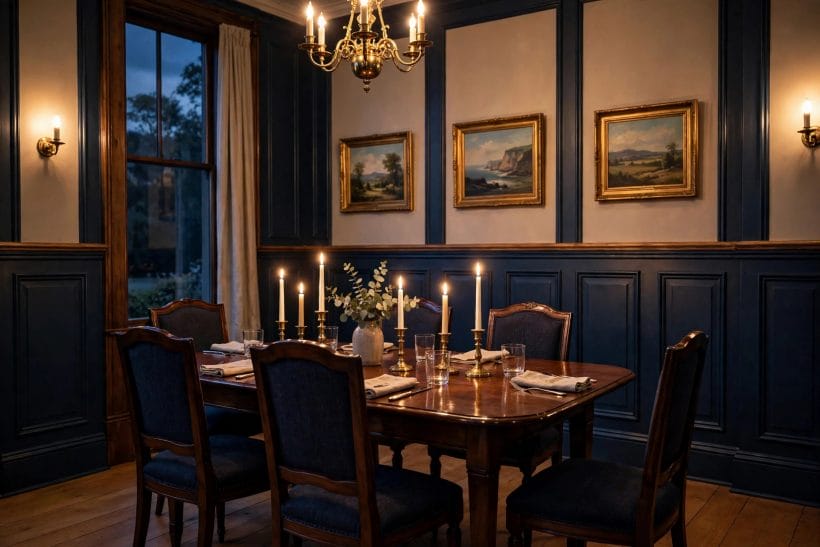
6. Light and Airy Rooms
Light wainscoting keeps a wainscoting dining room feeling open, which matters in small rooms and in rooms with limited daylight. Pale panels, pale upper walls and reflective details work together to bounce light around the space.
40. Pale Panels with Sheer Curtains
Pale panels beside sheer curtains make a dining room feel bright and soft. Daylight filters through the fabric and falls gently on the panelled wall, and the room avoids harsh contrasts. This scheme suits rooms where breakfast light matters most.
41. White Panels with a Glass Table
A glass table against white panels keeps sightlines open and the room feeling spacious. The transparency of the table lets the panel detail show through, and the room gains a modern lightness. Simple chairs keep the arrangement from feeling busy.
42. Pale Panels with a Large Window
A large window above pale panels floods the dining room with daylight. The panels add texture at the lower wall, while the window provides the view and the brightness. Keeping window dressings simple lets both features shine.
43. White Panels with Greenery
Plants against white panels add life and colour without clutter. The green leaves contrast gently with the pale woodwork, and the room feels fresh. A tall plant in a corner and a small arrangement on the table give two levels of greenery.
44. Pale Panels with a Light Rug
A light rug under the table continues the airy feeling of pale panels across the floor. The soft tone underfoot keeps the room cohesive, and the rug adds comfort for chairs that move often. A low pattern hides everyday marks while staying pale.
45. Pale Panels in a Room with High Windows
High windows above pale panels draw daylight deep into the room. The panels ground the lower wall, while the windows keep the upper wall bright. This combination suits rooms where privacy matters, since high windows admit light without a street-level view.
46. White Panels with Cane Chairs
Cane chairs against white panels create a breezy, relaxed dining room. The woven texture adds warmth to the pale scheme, and the light chairs keep the room feeling open. A wooden table ties the cane and the panels together naturally.
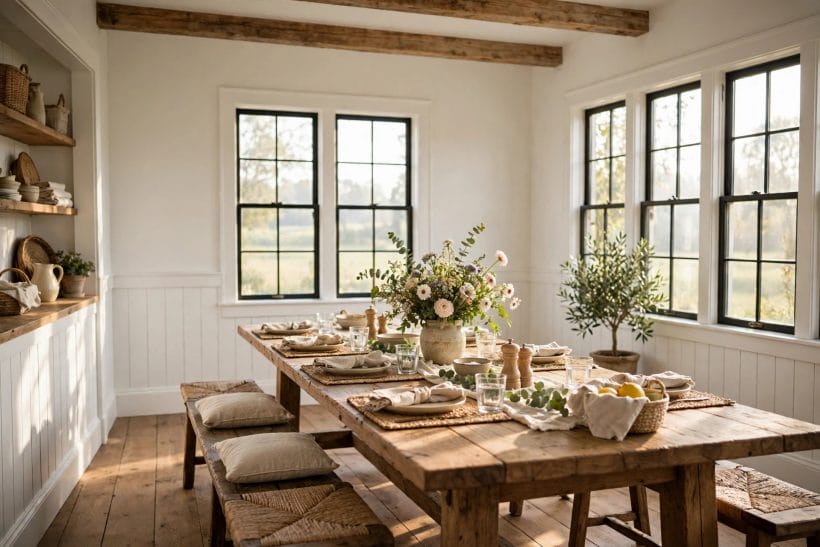
7. Farmhouse and Rustic
Farmhouse wainscoting dining rooms use panelling to add warmth and a handmade feeling. Natural wood, simple lines and honest textures matter more than polish, and the panels often sit beside beams, baskets and well-used tables.
47. Rustic Wood Panels Left Natural
Natural wood panels celebrate grain, knots and variation rather than hiding them. The unpainted surface gives the dining room a warm, cabin-like character, and it pairs naturally with a worn wooden table. Keeping the upper wall plain lets the wood carry the room.
48. Farmhouse Panels with a Long Table
A long farmhouse table against panelled walls suits gatherings where seats fill along both sides. The length of the table echoes the horizontal line of the chair rail, and the room feels made for shared meals. Benches on one side add informal flexibility.
49. Farmhouse Panels with a Bench
A bench beside farmhouse panels keeps the dining room relaxed and practical. The bench tucks away when not needed and welcomes extra guests without formality. Cushions in plain, washable fabric keep the bench comfortable and easy to live with.
50. White Farmhouse Panels with Black Windows
White farmhouse panels beside dark window frames gain a crisp, graphic edge. The contrast frames the view and gives the room a contemporary farmhouse feel. A long wooden table softens the contrast with natural warmth.
51. Farmhouse Panels with Open Shelving
Open shelving above farmhouse panels displays everyday plates and bowls within reach. The shelves add practical storage, while the panels below give the wall a finished look. Keeping shelf items in a limited palette prevents visual clutter.
52. Farmhouse Panels with a Stone Fireplace
A stone fireplace beside panelled walls adds a natural focal point to a farmhouse dining room. The rough stone contrasts with the smooth panels, and the combination feels rooted and warm. Seating arranged to enjoy both features makes the room sociable.
53. Rustic Panels with Woven Baskets
Woven baskets against rustic panels add texture and useful storage. The baskets hold linens, magazines or kindling, and their natural weave echoes the wood of the panels. This pairing suits dining rooms that value practicality as much as looks.
54. Farmhouse Panels with a Sliding Door
A sliding door beside panelled walls saves swing space and adds farmhouse character. The door gives the dining room a flexible opening to a neighbouring space, while the panels keep the wall feeling finished. A simple door design keeps the room calm.
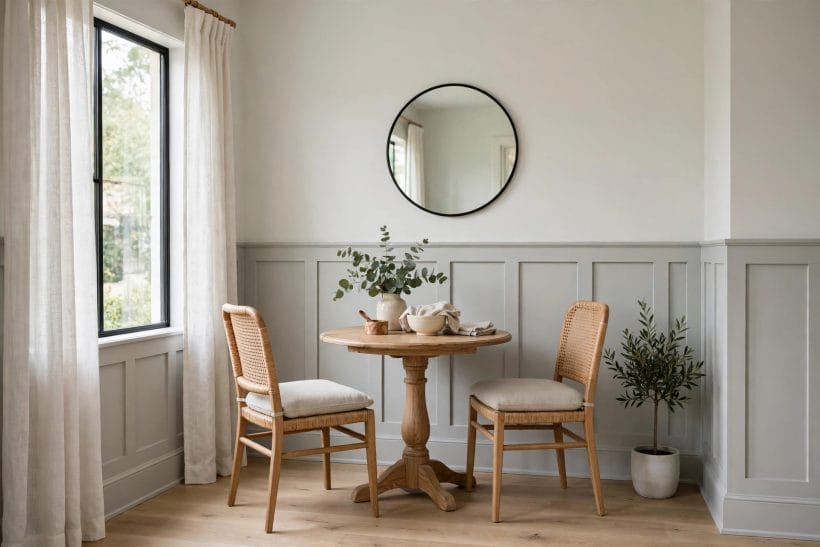
8. Modern and Minimal
A modern wainscoting dining room strips the panel back to flat planes and clean lines. The effect is architectural rather than decorative, and it suits dining rooms where furniture is simple and the wall provides quiet structure.
55. Flat Panels for a Clean Look
Flat panels give a modern dining room order without ornament. The flush surface reads as architecture, and the room feels calm and uncluttered. A simple oak table and plain chairs let the wall geometry speak quietly. For a kitchen that opens to such a room, see these kitchen ideas that share the same clean language.
56. Flat Panels in Soft White
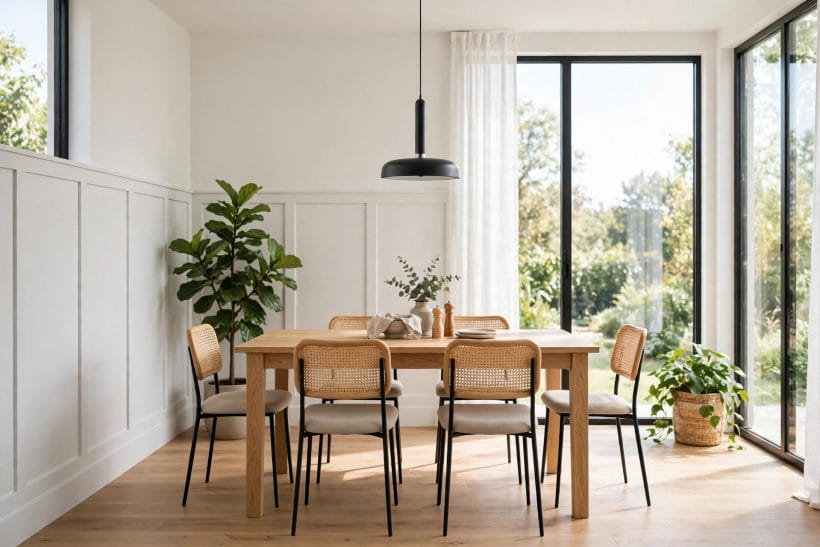
Soft white flat panels keep a modern dining room bright and minimal. The pale finish reflects daylight, while the panel joints add just enough rhythm to stop the wall feeling blank. Plants and a single pendant add life without clutter.
57. Flat Panels with a Pendant Light
A pendant above the table gives a flat-panelled room a clear centre. The hanging light draws the eye to the table, while the panels provide a calm backdrop. Choosing a simple pendant shape keeps the modern mood intact.
58. Flat Panels with a Timber Table
A timber table against flat panels adds natural warmth to a minimal room. The wood grain softens the geometric wall, and the pairing feels balanced rather than stark. Keeping table settings simple preserves the calm.
59. Flat Panels with Black Accents
Black chair frames or a dark pendant against pale flat panels give a modern dining room definition. The dark accents outline the furniture against the light wall, and the contrast feels intentional. Limiting black to a few pieces keeps the room light.
60. Flat Panels Around a Corner
Running flat panels around a corner gives a modern dining room a wrapped, architectural feel. The continuous panels make the corner feel designed rather than leftover, and the room gains a sense of completeness. A corner plant softens the geometry.
61. Flat Panels with a Sideboard Wall
A sideboard wall of flat panels creates a composed backdrop for serving and display. The panels give the sideboard a finished setting, while the sideboard adds function to the wall. Simple ceramics on the sideboard keep the display serene.
9. Small Dining Rooms and Nooks
Small wainscoting dining rooms benefit most from panelling, since the panels add character without using floor space. Pale colours, mirrors and slim furniture keep a compact room feeling generous, while the panels stop the walls from feeling bare.
62. Pale Panels in a Tiny Dining Room
Pale panels in a tiny dining room add detail without visual weight. The light finish keeps the walls bright, and the panel rhythm gives the small room a sense of intention. A small table and slim chairs complete the scheme without crowding. For more compact-room planning, see these interior design ideas beside the panel choices here.
63. Panels in a Hallway Dining Nook
A hallway nook panelled on one wall becomes a dining spot rather than a pass-through. The panels define the eating area, and a small table with two chairs fits neatly against the wall. A mirror above the panels reflects light along the hallway.
64. Panels Behind a Round Pedestal Table
A round pedestal table against panelled walls suits a small room, since the single central leg frees legroom. The curve of the table softens the straight panel lines, and two chairs keep the arrangement intimate. A small pendant above the table marks the spot.
65. Panels with a Fold-Down Table
A fold-down table against panelled walls gives a small home a dining place that disappears when not needed. The panels provide a finished backdrop for the folded table, and the room regains floor space between meals. This arrangement suits studios and compact flats.
66. Panels in a Bay Window Nook
Panels wrapping a bay window nook create a bright dining corner with a view. Daylight from three sides keeps the nook cheerful, while the panels add texture at seating level. A built-in bench maximises seating in the curved space.
67. Panels with a Slim Console Table
A slim console against panelled walls serves as a serving surface in a small dining room. The narrow piece holds dishes and glasses without blocking movement, and the panels behind it give the console a purpose. Keeping the console top clear preserves the sense of space.
68. Panels with a Wall Mirror in a Small Room
A wall mirror above panels doubles light and view in a small dining room. The reflection makes the room feel larger, while the panels below keep the wall grounded. Hanging the mirror to reflect a window gives the best effect.
10. Styling Around the Panels
Once the panels are chosen, styling decides how the wainscoting dining room feels day to day. Table settings, lighting, artwork and textiles all sit against the panelled wall, so each choice should respect the panels rather than fight them.
69. Artwork Hung Above the Chair Rail
Artwork hung in the plain wall above the panels respects the panel rhythm below. The chair rail acts as a natural baseline, and frames aligned at a consistent height look composed. Choosing art in tones that echo the room keeps the wall harmonious.
70. Mirrors That Reflect the Table
A mirror above the panels reflects the table setting and doubles the candlelight. The reflection adds sparkle to the room, especially in the evening, and the mirror itself becomes a decorative feature. A plain frame keeps the focus on the reflection.
71. Lighting That Grazes the Panels
Wall lights that graze the panels bring out their texture after dark. The raking light creates soft shadows in grooves and bevels, giving the wall depth that daylight alone cannot show. Keeping light warm in tone suits dining rooms best.
72. Table Linen That Echoes the Panels
Table linen in tones drawn from the panels ties the table to the wall. A cloth or runner in a matching muted colour makes the setting feel considered, while napkins in a contrasting soft tone add gentle variety. Natural fabrics suit panelled rooms well.
73. Centrepieces That Stay Low
Low centrepieces keep sightlines open across the table and let the panelled walls stay visible. Flowers, candles or fruit arranged low add beauty without blocking conversation. This restraint matters most in rooms where the panels are the main decoration.
74. Seasonal Dressing Without Clutter
Seasonal dressing against panels works best when a few items change, not everything. A different runner, a seasonal arrangement or new candle colours refresh the room, while the panels provide continuity through the year. Restraint keeps the room calm.
75. Chairs That Contrast the Panels
Chairs in a contrasting tone to the panels define the table area clearly. Dark chairs against pale panels, or pale chairs against dark panels, both create a pleasing tension. Keeping chair shapes simple lets the contrast feel deliberate rather than busy.
Final Considerations
Choosing wainscoting for a dining room comes down to a few calm decisions: a panel shape that suits the room, a colour that flatters the light, and styling that lets the table stay the centre. The seventy-five ideas above show how the same basic element can feel formal, rustic, modern or cottage-like, depending on those choices. Starting from the room itself, rather than from a single image, gives the most lasting result.
Practical checks deserve the same calm attention. Wall condition, existing fittings and the services behind a wall all affect what is sensible, and a qualified professional should judge those matters before any panel is fixed. Paint and colour, by contrast, can be tested freely: sample shades viewed in daylight and lamplight reveal far more than a small swatch viewed in a shop. For colour inspiration, see these tiny house interior paint colors alongside the panel colours here.
Finally, remember that a dining room is used, not just viewed. Panels that wipe clean, chairs that move easily and a table that suits everyday meals as well as celebrations will serve the household better than a scheme chosen for looks alone. With panels, colour and furniture working together, a wainscoting dining room becomes a room that invites people to sit down, linger and return. For broader room inspiration, see these tiny house interiors as a closing reference.

0 Comments