

A sofa is the seat a living room is built around. It carries reading, resting, conversation, film nights and long evenings with guests, and it stays in place for years while the rest of the room changes around it. Choosing one deserves a slower look than a glance at colour and shape in a showroom, because the qualities that matter most — the frame, the support under the cushions, the fabric and the fit — are easy to miss when the room around the sofa is dressed for display.
This guide works through the checks in the order they matter: the room the sofa must serve, the frame that holds it together, the suspension and cushions that decide comfort, the fabric that must live with the household, the fit through doors and into the room, and the care the sofa will need over time. Read it as a checklist to carry into a showroom or to hold against a listing, and judge every sofa against the room it will actually live in. For the wider room around the seat, living room ideas show how layouts, seating and lighting are arranged together.
Related Guide: Buying a Leather Sofa: What To Check Before You Buy

1. Start With the Room, Not the Sofa
Before looking at any sofa, look at the room. Note where people walk, where the light falls through the day, where the television or fireplace sits, and which wall can honestly carry a large piece of furniture without blocking a path or a door. A sofa that looks calm in a generous showroom can crowd a smaller room, while a neat compact shape can look lost against a long empty wall. The room sets the shape, the scale and the colour family, and the sofa should answer the room rather than fight it.
Think about how the seat will be used through an ordinary week. A room built for conversation needs seats that face each other, while a room built for rest needs depth and softness and a place to stretch out. Count the seats the household genuinely needs on a busy evening, and notice whether guests, children or pets will share the sofa or whether it will mostly serve quiet evenings. The answers shape whether a straight run, a corner shape or a compact form suits the room, and they keep the search grounded in daily life rather than in a display.
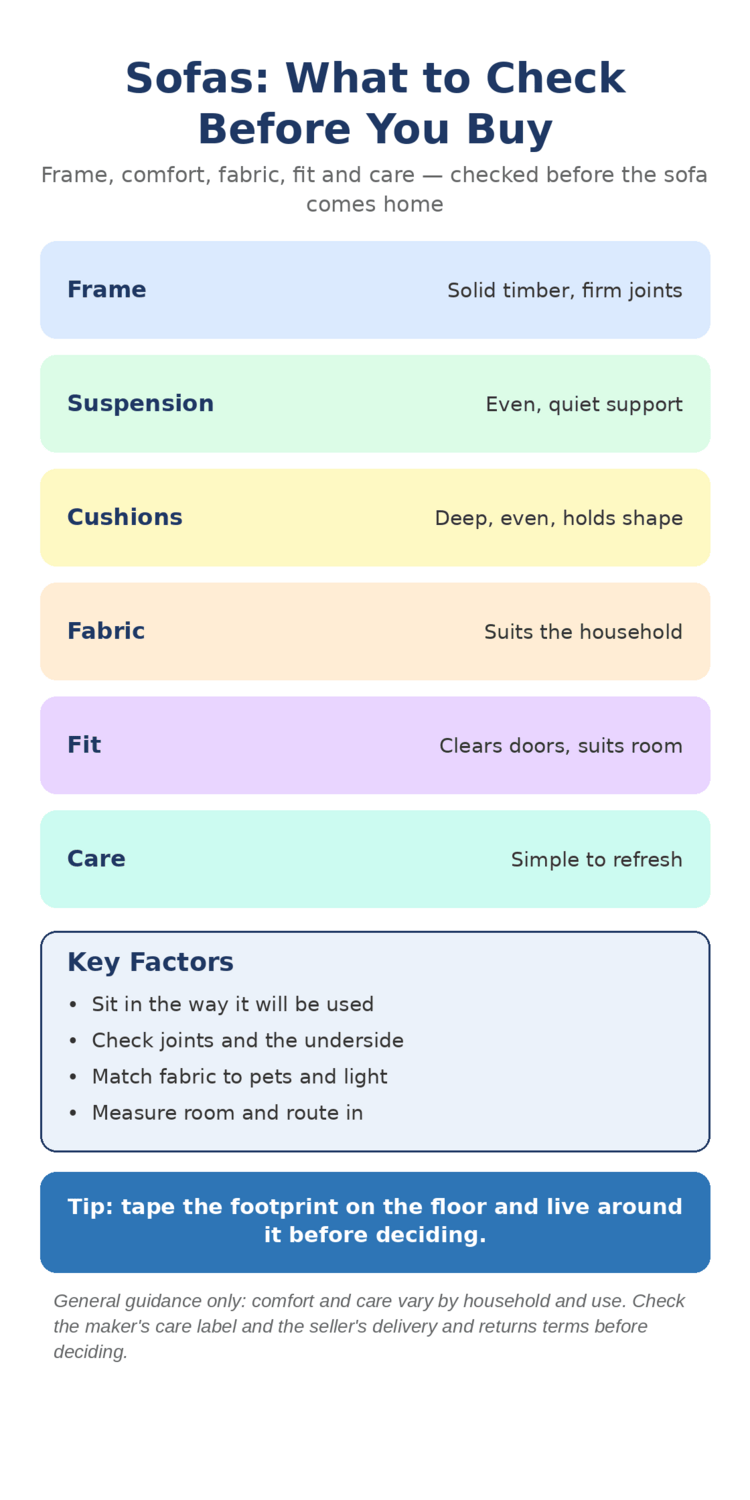
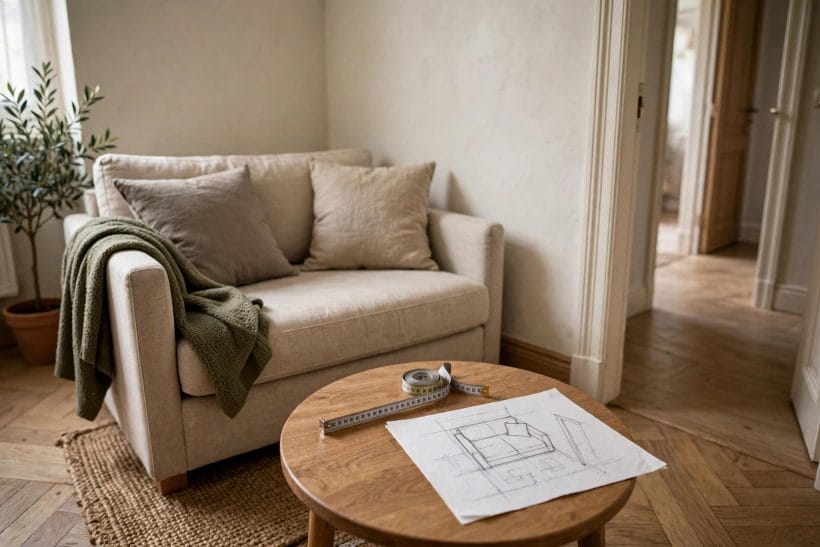
Sketch the room on paper, marking doors, radiators, shelves and windows, and mark the walking paths that must stay clear. Tape the footprint of the shape under consideration on the floor and live around it for a while, opening doors, pulling out chairs and walking the usual routes. The tape test reveals crowding that a glance misses, and it asks for nothing beyond a little time. The summary below gathers the checks in this guide at a glance.
2. The Frame Holds Everything Together
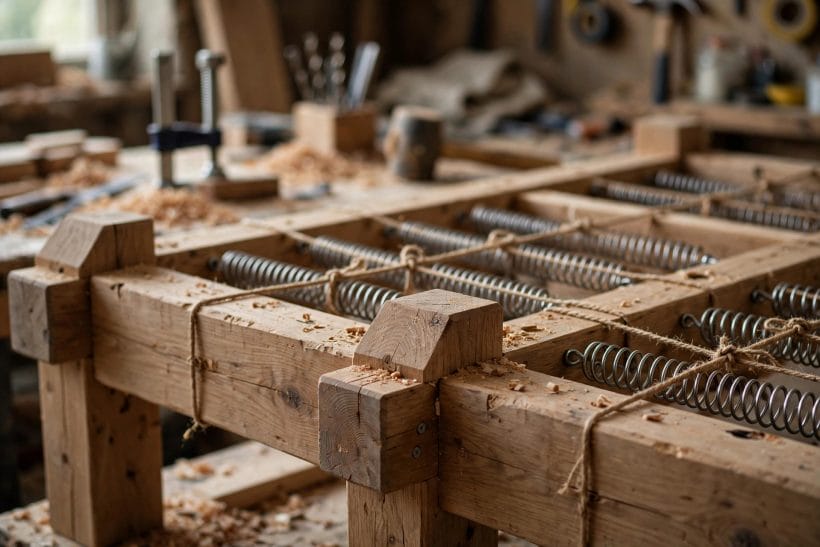
The frame is the skeleton of the sofa, and everything else hangs on it. A sound frame feels solid and quiet: it does not twist, creak or flex when a corner is lifted gently or when weight shifts from one end to the other. Ask what the frame is made from and how the joints are held, and look for corner reinforcement and careful joinery rather than staples alone doing the work. Timber frames with joined corners have a long record of steady service, while lighter frames can suit a rarely used seat but may tire sooner under daily use.
Turn the sofa over in the mind, or in the showroom where the underside can be seen, and look at the base. The underside should be tidy, taut and free of sagging cloth or loose fixings, and the legs should sit level and firm, with fixings that can be tightened rather than glued joints that cannot be reached. Lift a front corner a little and watch whether the opposite leg rises with it, which shows a frame holding together as a single structure. A frame that twists or racks under a gentle lift is telling the truth about its build, and the truth is worth hearing before the sofa comes home.
For a fuller account of judging construction where it cannot hide, the furniture buying guide works through frames, joints, drawers and the underside in the order designers check them. Keep the frame check first in every viewing, because cushions can be restuffed and covers can be changed, while a tired frame is the fault that ends the life of a sofa.
3. Suspension and the Sit Test
Under the cushions sits the suspension, the system that carries weight and decides whether the seat feels even or hollow. Springs, webbing and firm platforms each have their place, and the honest test is the sit itself: the seat should support weight evenly from edge to edge, without a dip in the middle or a hard ridge at the front. Sit in the middle, then at each end, and notice whether the support feels the same in every place or whether one spot sinks away from the rest.
Sit the way the sofa will actually be used. Sit upright for reading, lean back for resting, and stretch out if that is how evenings go, and stay seated long enough for first impressions to fade. A seat that feels inviting for a moment can grow tiring over an evening, while a firmer seat can soften into comfort once the body settles. Listen as well as feel: creaks and groans under shifting weight can point to joints or suspension under strain, and a quiet seat usually signals a frame and suspension working together.
Bring the household into the test where possible, since a seat that suits one person may not suit another, and a sofa shared by people of different heights and habits needs a middle ground everyone can live with. Check the seat height and depth against the people who will use it most, and notice whether feet reach the floor comfortably and whether the back supports the lower back without pushing the sitter forward. Comfort is personal, and the sit test is the only check that cannot be done from a photograph.
4. Cushions: Depth, Fill and Shape
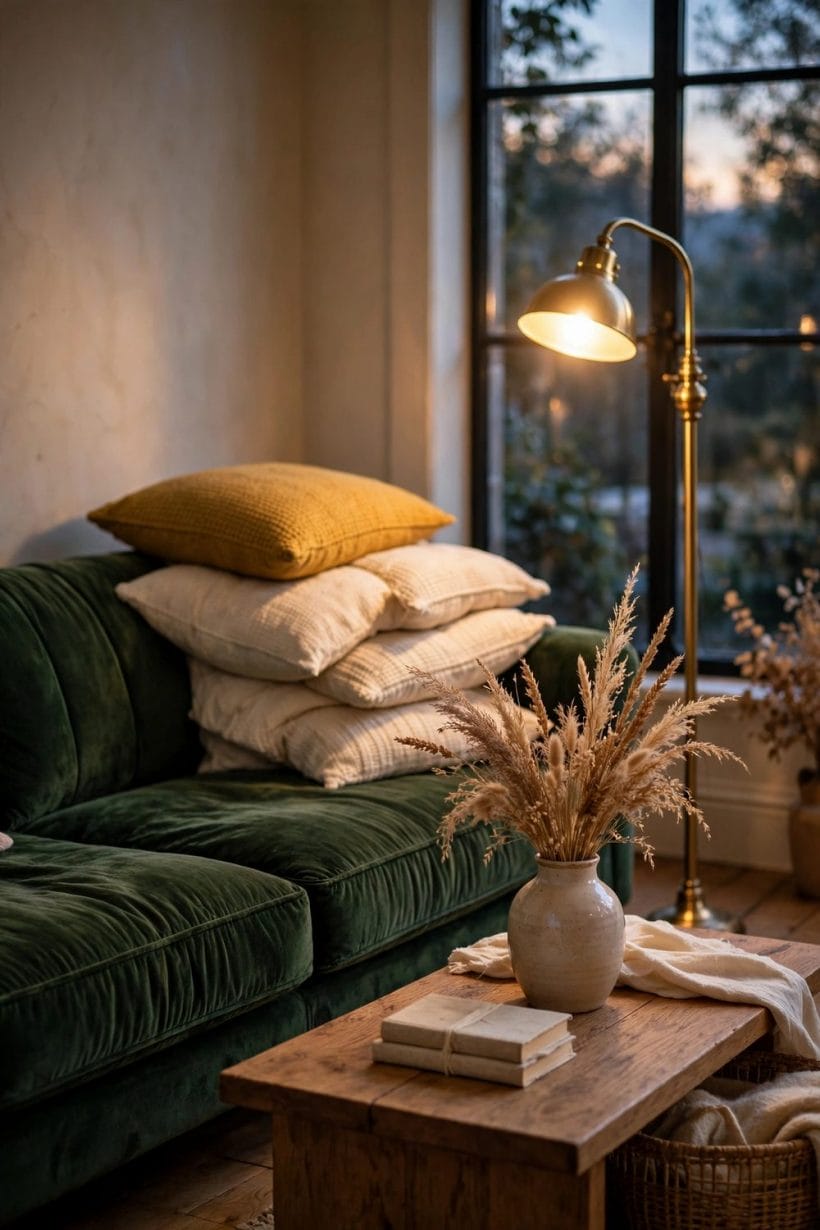
Cushions decide how a sofa feels after the first month, not just on the first sit. Look at the fill and the shape together: a cushion that holds its form, springs back after pressure and keeps an even surface will age more gracefully than one that wrinkles, hollows or slides forward. Press the cushion firmly and watch how it recovers, and check whether the fill sits evenly to the edges or gathers in the centre. Loose fibres, feathers and foam each behave differently, and the right choice depends on how much plumping and turning the household will happily do.
Depth matters as much as fill. A deep seat invites lounging but can leave shorter sitters without back support, while a shallower seat suits upright sitting and conversation. Sit back fully and notice where the knees fall and whether the lower back meets the back cushions without a gap. Back cushions deserve the same attention as seat cushions: they should support the shoulders and the lower back, stay in place during use, and keep their shape after being leaned against through an evening.
Ask whether cushion covers can be removed, turned or refilled, since a sofa whose cushions can be maintained will look cared for far longer than one whose cushions are sealed away. Check zips, seams and the fit of the cover, and notice whether the cushion sits squarely in its place or twists and gaps at the corners. A cushion that is easy to turn, plump and refresh is a cushion that will keep its looks, and that small practical detail matters more over time than the softness of the first sit.
5. Fabric: Colour, Texture and Light
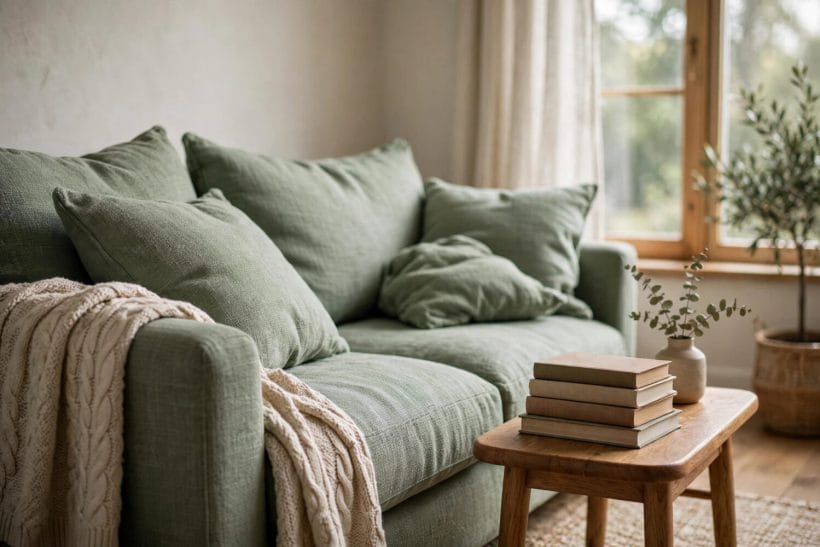
Fabric is the surface the household touches every day, so it should be chosen for the life the sofa will lead rather than for the light of the showroom. Woven cloth, velvet, leather and smooth synthetics each wear differently, and each asks for different care. A household with pets, children or frequent guests needs a surface that resists snagging, hides everyday marks and can be cleaned without fuss, while a quieter household can enjoy a more delicate texture. Ask how the fabric cleans, whether it can be spot-cleaned or fully washed, and how it handles sunlight, since strong light through a window can fade colour over time.
Colour should be judged in the room, not under showroom lights. Carry a swatch home and look at it through the day, in morning light, in evening lamplight and beside the rug, curtains and wall colour it will live with. A shade that looks calm in a large bright space can darken a smaller room, while a warm tone can pull a cool room together. Texture matters beside colour: a nubby weave adds warmth and hides wear, a smooth surface looks tailored and shows marks sooner, and a pile fabric changes shade as light moves across it. Swatches on the sofa seat, seen in the room itself, tell the truth that a catalogue image cannot.
Light deserves its own check, since the window that brightens a room also sets the light the fabric must live under. Sheer curtains, blinds and the direction of the windows all change how colour reads and how fast it fades, and the guide to windows and what to check before buying explains glazing, light and view in plain terms. For dressing the windows around the sofa, curtains with blinds ideas show pairings that soften light without shutting it out. Judge fabric, light and window dressing together, and the sofa colour will hold up in the room rather than only in the shop.
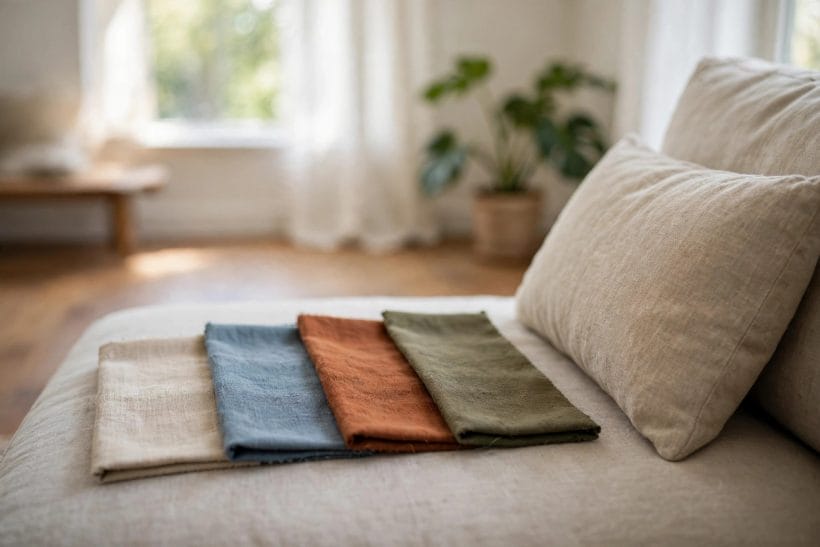
6. Fit: Room, Doors and the Route In
A sofa that cannot reach its room is no sofa at all, so measure the room and the route in before falling for any shape. Measure the wall the sofa will sit against, the space around it for walking, and the height of windowsills, radiators and shelves that the back or arms must clear. Then measure every doorway, hallway turn, stairwell and lift door on the route from the street to the room, and compare those passages with the sofa in its delivered form, noting whether legs, arms or back sections can be removed for the journey.
Rooms with generous ceiling height or tall windows can carry a taller back and a larger presence, while lower rooms suit a lower profile that keeps sightlines open. For the balance of height, light and scale in taller rooms, sunroom cathedral ceiling ideas show how high ceilings shape a room. Tape the footprint on the floor, as the opening section suggests, and walk the room with the tape in place, checking that doors swing freely, drawers open and chairs pull out without collision. The tape test also shows whether a corner shape blocks a path or whether a straight run leaves a dead corner behind it.
Think about the sofa in parts where it arrives in sections, since a corner shape or a long run may travel as separate pieces that join in the room. Ask how sections connect, whether the joins stay tight in use and whether the shape can be rearranged if the room changes. A sofa that fits the route, the wall and the walking paths will settle into the room without fuss, while one that only just squeezes through a door will announce the struggle every time it needs to move for cleaning or redecoration.
7. The Household the Sofa Serves
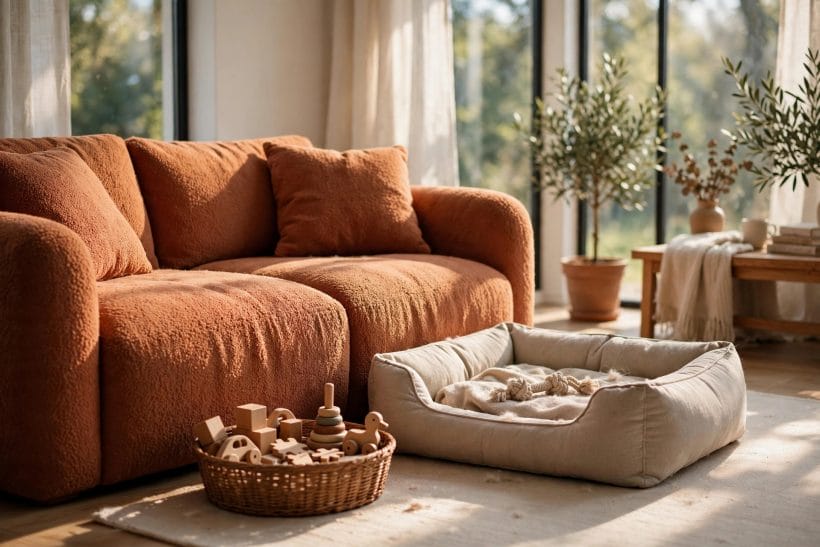
Every household asks different things of a sofa, and the honest choice matches the seat to the people and animals who will use it. A home with dogs or cats needs fabric that resists claws and hair, cushions that can be shaken out and a frame that tolerates jumping and scrambling. A home with small children needs surfaces that wipe clean, corners that forgive bumps and covers that can be refreshed after spills. A home where the sofa hosts guests needs seats that suit strangers of different heights, while a home of readers needs depth, a good reading light nearby and arms at a comfortable height for a book.
Notice the habits that will shape wear. Meals eaten on the sofa, naps taken on the sofa, work done from the sofa and pets sleeping on the sofa each leave their mark, and a fabric and fill chosen for those habits will age with grace rather than complaint. Darker textures and tighter weaves hide everyday life more kindly, while pale smooth surfaces ask for more vigilance and more cleaning. Neither choice is wrong, but the choice should be made with eyes open, matching the surface to the life rather than hoping life will bend around the surface.
Talk through the household honestly before choosing, including who cleans, who plumps cushions and who notices marks first. A sofa that everyone agrees on will be cared for by everyone, while a sofa chosen for looks alone can become a source of friction when the first spill or scratch appears. The household is the real test of a sofa, and a seat that serves the household will be loved far longer than a seat that only photographs well.
8. Dressing the Sofa: Cushions and Throws
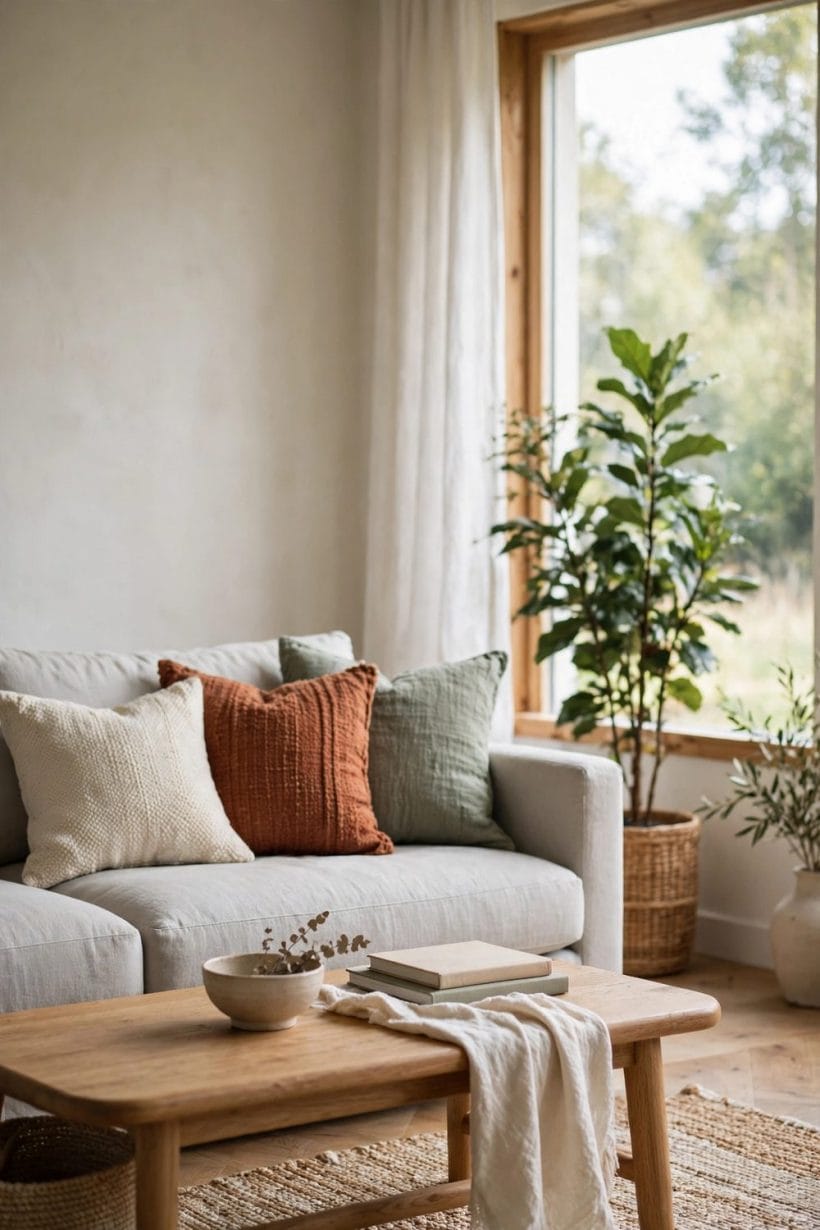
Scatter cushions and throws do more than decorate: they change how a sofa feels, how it supports the back and how the room reads. A cushion placed at the lower back can rescue a deep seat for a shorter sitter, while a cushion at each end softens a long straight run and gives every seat a resting place for the arms. Throws add warmth on cold evenings and protect the arms and seat from daily wear, and both can be changed with the seasons to refresh the room without touching the sofa itself.
Keep the dressing in proportion to the sofa. A small sofa drowns under a crowd of cushions, while a long sofa looks bare with a single cushion at each end. Mix sizes rather than matching everything, and let texture do the work: a knitted throw against smooth linen, a velvet cushion against woven cloth, and a plain cushion beside a patterned one. Colour can echo the rug, the curtains or a picture on the wall, tying the sofa into the room, but the echo should stay gentle, since the sofa itself is the largest block of colour in the room and the dressing should support it rather than compete with it.
Choose dressing that can be washed and rotated, since cushions and throws take the wear that would otherwise fall on the sofa. A washable throw over the most-used seat keeps the fabric beneath fresh, and rotating cushions evens out fading and wear. Dressing is the easiest part of sofa care, and a sofa that is dressed with washable, well-chosen layers will look intentional and cared for through years of daily use.
9. Delivery, Returns and the Paperwork
The paperwork is part of the sofa, and it deserves the same careful reading as the frame. Before agreeing, read the delivery terms: how the sofa arrives, whether it is carried into the room or left at the door, whether packaging is taken away, and what happens if the sofa cannot fit through a doorway on the day. Read the returns terms with equal care, noting the window for returns, the condition the sofa must be in, and who arranges collection. Terms that sound generous in a headline can carry conditions in the detail, and the detail is where surprises live.
Ask what care the maker recommends and what help is offered if a fault appears: whether cushions can be refilled, whether covers can be replaced, whether legs and fixings can be tightened or swapped, and how long spare parts remain available. Keep the care label, the receipt and the terms together, since a sofa kept for years will outlive the memory of what was promised at purchase. Photograph the sofa on arrival, including the frame, the cushions and any marks, so that any later conversation about condition starts from a clear record rather than from memory.
When buying from a listing rather than a showroom, read the listing like an inspector, checking the description against the photographs and asking about anything the photographs do not show, such as the underside, the joints and the backs of cushions. The buying furniture online guide works through measuring, materials, delivery and returns for orders placed from a screen. A listing that answers plain questions plainly is a good sign, while vague answers about construction or condition deserve a second look before any commitment.
10. Living With the Sofa Day to Day
Once the sofa is home, small habits keep it looking cared for. Turn and plump cushions regularly so that wear spreads evenly, vacuum the fabric and the crevices where dust gathers, and keep the sofa out of the strongest direct sunlight where possible, moving it a little or softening the light if fading appears. Wipe spills promptly with the method the care label recommends, and test any cleaning method on a hidden patch first, since a remedy that suits one fabric can mark another.
Give the sofa room to breathe: pull it a little away from the wall so air moves behind it, keep radiators from baking one end, and avoid dragging it across the floor when cleaning beneath it, since dragging strains joints and legs. Tighten leg fixings when they loosen, and treat small repairs promptly, since a loose leg or a sagging cushion left alone can strain the frame around it. These habits take little time, and they repay the effort by keeping the frame sound and the fabric fresh.
Over time the room around the sofa will change — pictures move, rugs change, curtains are replaced — and the sofa should be able to change with it. New cushions, a different throw or a shifted position can refresh the room without replacing the seat, and a well-chosen sofa earns that flexibility by staying neutral enough in colour and calm enough in shape to sit happily beside new companions. For the house as a whole, cottage exterior ideas show how the outside of a home sets the tone the rooms inside answer to. A sofa chosen for the room, the household and the long term will sit at the centre of that changing room with quiet confidence.
Final Considerations
Choosing a sofa well comes down to a handful of honest checks: a frame that holds together, suspension that supports evenly, cushions that keep their shape, fabric that suits the household and the light, a fit that clears doors and suits the room, and care that the household will actually do. None of these checks needs expertise, only time, attention and a willingness to sit, measure and ask plain questions before deciding.
Take the checks in order, and let the room lead. Tape the footprint, sit for longer than a moment, carry swatches home, measure the route in, and read the delivery and returns terms before agreeing. A sofa chosen this way may not be the one that dazzles in the showroom, but it will be the one that still feels right after years of evenings, guests, pets and quiet mornings — and that staying power is the real measure of a sofa well chosen.



0 Comments