
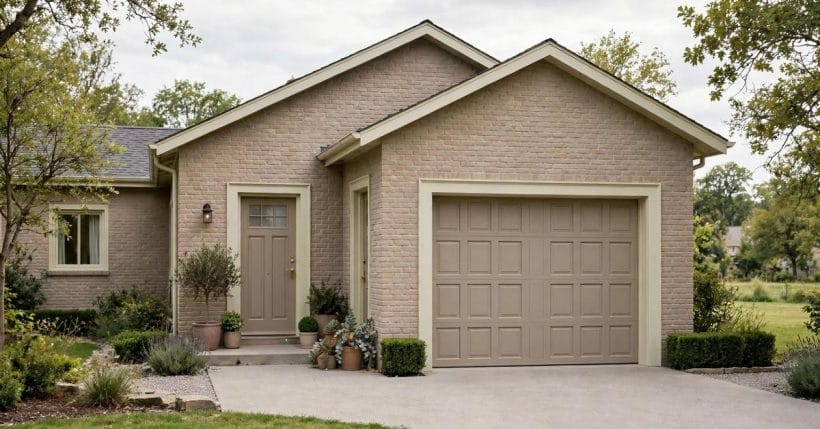
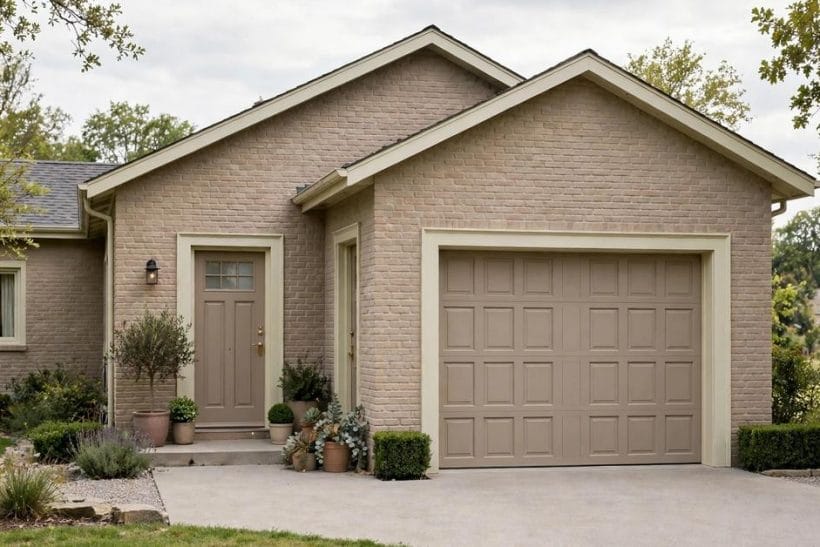
A garage joined to the house is the hardest-working threshold in the home, where cars, coats, tools and daily arrivals all pass through one shared wall.
This guide gathers seventy-five ideas for an attached garage, from entries and doors to colour, storage, workshops and quiet comfort, so you can pick the ideas that fit your house and leave the rest.
1. Entries That Join House and Garage
An entry between house and garage sets the tone for every arrival. The best entries feel like part of the house, not an afterthought, with shelter from rain, a place to pause, and a clear path that never forces a squeeze past parked cars or stored boxes.
| Feature | Detail |
|---|---|
| Entry | House door, mudroom or covered link |
| Shared wall | Storage, services and quiet rooms placed with care |
| Doors | Style and colour borrowed from the house |
| Light and air | High windows, vents and pale walls |
| Storage | Cabinets, hooks and overhead racks |
| Daily arrivals | Bench, trays, cubbies and key hooks |
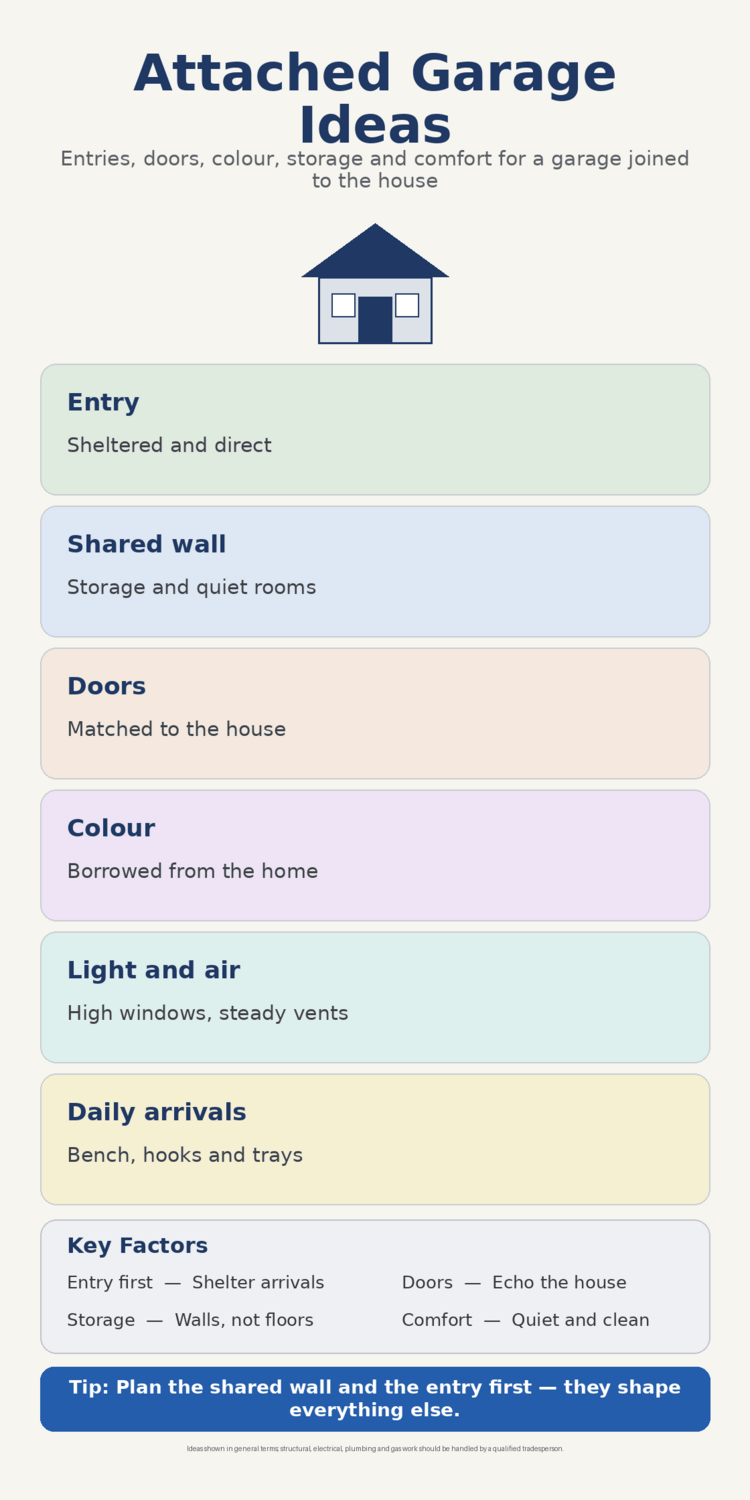
Storage planning belongs with the entry, not after it, and these storage ideas for small homes show how wall and overhead storage can carry a household without crowding the route indoors.
1. A Direct Door Into the Hall
A door that opens straight into a hall gives the shortest, driest route from car to kitchen. Keep the landing clear of shoes and parcels so the route stays easy in the dark, and choose a door that closes quietly and seals well against draughts and garage smells.
2. A Mudroom Passage Between the Two
A short mudroom passage turns the junction into useful space. Coats, bags and shoes live in the passage instead of the kitchen, and the garage door stays shut against noise and dust. A bench and a few hooks are enough to make the passage work hard every day.
3. A Covered Link for Rainy Days
Where the garage sits a little apart from the house, a covered link keeps the walk dry. A simple roof on posts, matched to the house in colour and material, shelters the path without turning it into a tunnel. Keep the link open at the sides so daylight still reaches the walk.
4. A Side Entry for Everyday Arrivals
A side entry suits households that arrive on foot or by bicycle as often as by car. A path from the side gate to a small porch keeps muddy boots out of the main rooms, and a light over the door makes evening arrivals feel safe and welcoming.
5. A Wide Threshold for Easy Carrying
A level, generous threshold makes carrying shopping, children and luggage far easier. Avoid steps and lips at the entry where possible, keep the landing free of clutter, and make sure the door swings clear of parked cars and storage so nobody has to shuffle sideways.
6. A Small Porch Over the Garage Door
A porch roof over the pedestrian door gives shelter while keys are found and bags are gathered. Match its pitch and finish to the house roof so it reads as part of the home, and add a wall light that switches on as you approach the door.
7. A Pet Door in the Entry Sequence
A pet entry near the garage door keeps muddy paws out of the living rooms. A washable mat, a towel hook and a lead hook by the door make the routine quick, and a small gate can keep pets in the entry zone until paws are wiped.
8. A Parcel Shelf by the Door
A shelf or small cupboard just inside the garage door gives deliveries a home that is not the kitchen table. Parcels stay dry and out of the way, and the house stays tidy when nobody is home to carry them straight inside.
2. Shared-Wall Layouts
The wall shared with the house is the feature that makes this garage different from a freestanding one. Treat it as a working wall, with storage, services and quiet rooms placed thoughtfully on either side, and the whole house feels better connected.
The shared wall works best when the house side is planned too, and these tiny house building design ideas show how careful layout keeps small homes feeling generous and well ordered.
9. A Storage Spine on the Shared Wall
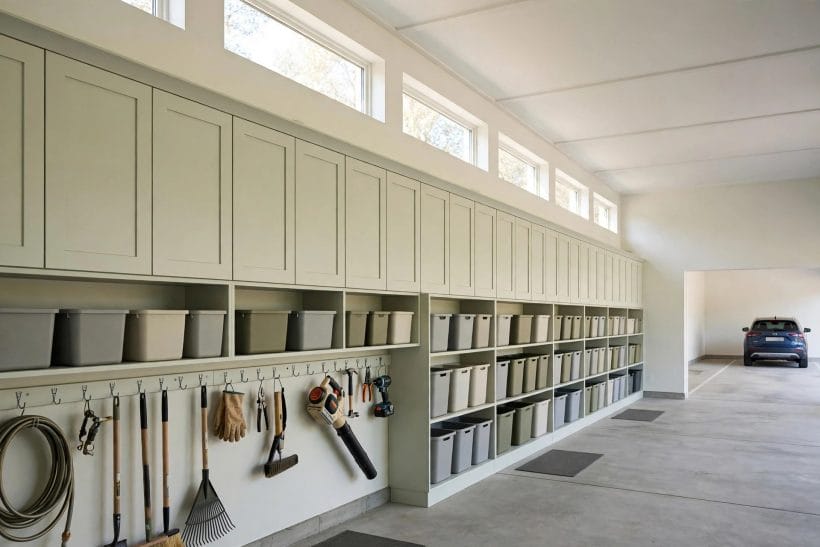
Run cabinets and shelving along the shared wall so the garage gains order without stealing floor space. Keep heavy items low, everyday items at hand height, and the top run for seasonal things that are only fetched a few times a year.
10. A Utility Wall for Household Services
Grouping laundry and utility needs near the shared wall shortens pipe and cable runs and keeps noisy machines out of the living rooms. Any plumbing or electrical work belongs to a qualified tradesperson, and machines should sit where vibration will not travel into bedrooms.
11. A Kitchen-Adjacent Parking Bay
Parking nearest the shared wall puts shopping closest to the kitchen door. Reserve that bay for the car that carries the groceries, keep the path to the door clear, and let the farther side of the garage hold tools and seasonal storage instead.
12. A Quiet Room on the House Side
Place a bedroom or study away from the shared wall where possible, with a hall, bathroom or cupboard acting as a buffer. The buffer softens engine noise and door sounds, and the garage feels like a neighbour rather than a roommate.
13. A Hallway Link Instead of a Direct Door
A short hallway link gives the garage its own arrival sequence. The hall can hold a cupboard and a mirror, and the extra door in the sequence helps contain smells, dust and noise before they reach the living rooms.
14. A Stair Link to Upper Rooms
Where the garage sits beneath or beside upper rooms, a stair link can connect levels without crossing the main hall. Keep the stair well lit and the handrail secure, and keep the stair foot clear so nobody trips over stored items.
15. A Buffer Cupboard in the Shared Wall
A deep cupboard built into the shared wall swallows coats, cleaning kit and sports gear. The cupboard also adds a layer between house and garage, and its doors can be matched to the hall joinery so the house side still looks calm.
16. A Work Zone Kept Away from Bedrooms
Keep sawing, drilling and other noisy hobbies at the far end of the garage, away from the shared wall. Distance is the simplest sound softener, and a closed inner door plus a tidy bench keep the hobby corner from spreading into the house.
3. Doors That Match the House
A garage door covers a large patch of the front of the house, so its style matters more than any other single choice. When the door echoes the front door and the windows, the garage stops shouting and starts belonging.
17. Panels That Echo the Front Door
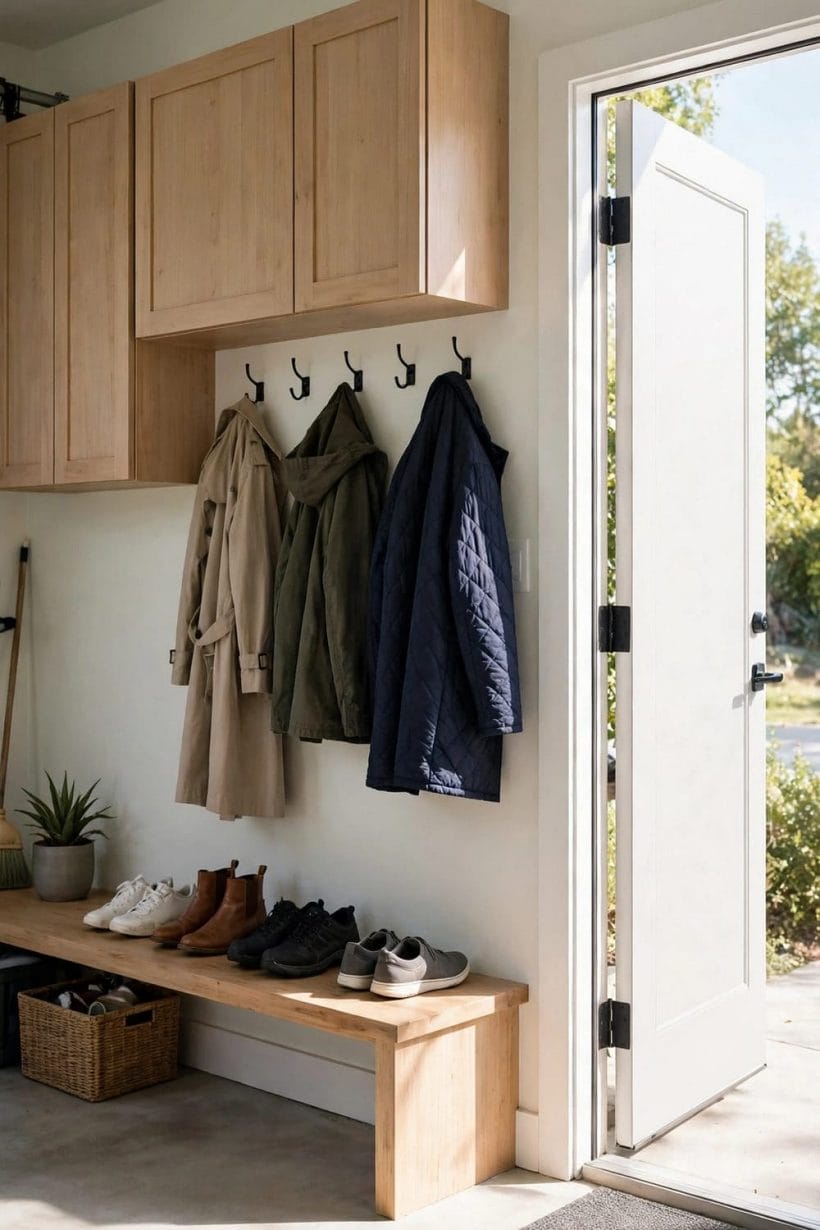
Match the garage door panels to the front door in rhythm and proportion. If the front door has raised panels, a garage door with a similar panel pattern ties the two together, and the front of the house reads as one design instead of two competing ones.
18. A Row of Windows Across the Top
A glazed row near the top of the door brings daylight into the garage without giving a view of its contents. Frosted or textured glass keeps privacy while softening the solid slab of the door, and the row lines up neatly with the house windows.
19. Side Windows Beside the Door
Narrow windows beside the garage door, matched to the house window frames, break up a wide blank wall. They also throw useful daylight onto the parking bay, so the garage feels less like a cave when the main door is shut.
20. A Colour-Matched Door Finish
Paint or finish the garage door in a colour drawn from the house itself, such as the trim, the roof or the front door. A matched door recedes politely, while a clashing door pulls every eye to the garage instead of the home.
21. A Timber-Look Door for Warmth
A timber-look finish warms a plain brick or rendered front, and suits traditional and cottage-style houses especially well. Keep the tone close to other timber on the house, such as the front door or porch posts, so the warmth feels deliberate.
22. A Glazed Top Section for Light
A top section with glazing lifts a solid door and lights the back of the garage. Choose glazing that matches the house windows in tone, and keep the frames slim so the door still reads as a door rather than a wall of glass.
23. A Carriage Style for Traditional Homes
A carriage-style door, with hinges and handles suggested in its design, suits older houses and village streets. Keep the detailing restrained so it reads as a quiet nod to tradition rather than a stage set, and let the house itself stay the star.
4. Colour and Exterior Finish
Colour is what makes a joined garage look like part of the house rather than an addition. Borrow every colour from the house itself, keep contrasts gentle, and let planting soften the edges where brick meets garden.
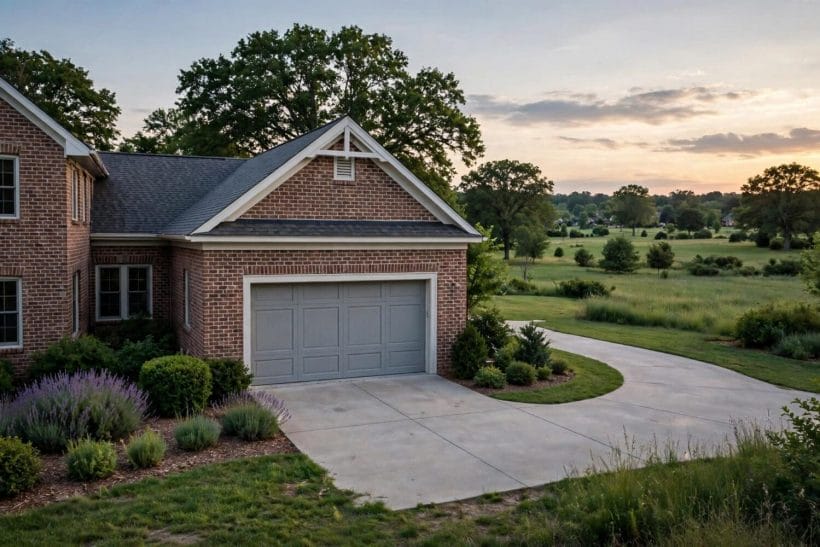
Colour choices travel across the whole front of a house, and these tiny house exterior ideas show how matched finishes keep a home looking calm and considered from the street.
24. Body Colour Borrowed from the House
Carry the main house colour onto the garage walls so the two read as one building. Even a small shift in tone can make the garage look separate, so sample the colour in daylight on both walls before committing to it.
25. Trim Matched to the House Trim
Match gutters, fascias and door frames to the house trim colour. Shared trim is a quiet signal that the garage was planned with the house, and it needs no extra effort beyond choosing the same finish twice.
26. Brick That Blends, Not Matches Exactly
Where the house is brick, a blending brick tone works better than a forced exact match. New brick beside old brick always differs slightly, so choose a tone that sits comfortably alongside the house rather than fighting it.
27. Render in a Soft Neutral Tone
A soft neutral render calms a large garage wall and lets the roof and planting do the talking. Warm white, soft grey and pale sage all sit quietly beside most house colours, and a matte finish avoids glare in strong sun.
28. A Roofline That Echoes the House
Echo the house roof in pitch and covering where the structure allows, so the garage roofline feels like a continuation rather than an interruption. A matching ridge and eaves line tie the two roofs together from the street.
29. A Gable Detail for Character
A small gable detail, such as a vent or a timber accent, gives a plain garage front a focal point. Keep the detail modest and in keeping with the house, so it adds character without turning the garage into the main feature.
30. Two Tones Kept Gentle
If two tones are used, keep the contrast gentle, with the darker tone low and the lighter tone high, or the door tone picked up in the trim. Gentle contrast adds depth, while harsh contrast chops the front of the house in half.
31. Planting to Soften the Edges
Climbers on a trellis, shrubs beside the walls and pots by the door soften the hard edges of a garage. Choose plants that may suit your local conditions and aspect, and keep growth clear of doors, vents and roof edges so nothing blocks movement or air.
5. Light and Ventilation
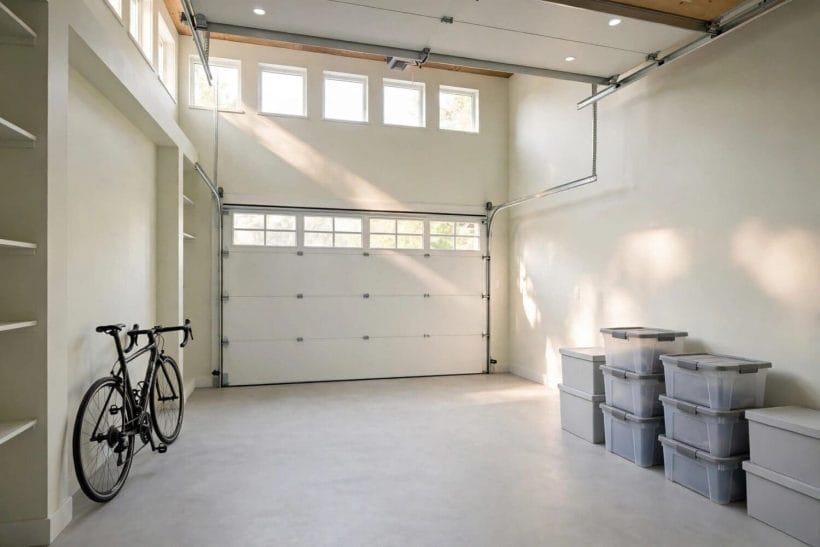
A joined garage needs daylight and fresh air more than a freestanding one, because it shares air and sound with the house. Good light makes the space pleasant to use, and steady ventilation keeps it fresh without opening the main door.
32. High Windows for Daylight and Privacy
Windows set high in the wall bring daylight deep into the garage while keeping the interior private. High glass also leaves the lower wall free for benches and storage, so light and usefulness share the same wall happily.
33. Glazed Panels in the Door
Glazing in the upper part of the garage door lights the parking bay whenever the door is closed. Frosted glass keeps contents hidden, and the light makes evening arrivals less gloomy and morning departures easier.
34. A Roof Window for the Middle of the Space
A roof window over the middle of the garage throws daylight where wall windows cannot reach. Roof work and weatherproofing belong to a qualified tradesperson, and the window should sit where it will not clash with storage racks above.
35. Cross-Breeze Vents on Opposite Walls
Vents on opposite walls let air drift through the garage instead of sitting still. Keep vents clear of stored boxes and covered against driving rain, and the garage will smell fresher and dry out faster after wet arrivals.
36. Pale Walls to Bounce the Light
Pale interior walls bounce daylight around the garage and make a modest space feel larger. A washable pale finish also shows dust and marks early, which is a gentle prompt to sweep before grime builds up.
37. Motion Lights for Night Arrivals
Motion lights over the pedestrian door and the drive switch on as you arrive, so nobody fumbles for keys in the dark. Electrical work belongs to a qualified tradesperson, and lights aimed downward avoid dazzling neighbours.
38. Warm Dusk Lighting for the Front
Soft warm lighting at dusk makes the garage front feel like part of the home rather than a blank wall. A pair of wall lights flanking the door, on a timer or dusk sensor, gives the front of the house a welcoming glow each evening.
6. Storage Along the Shared Wall
Storage is the quiet superpower of a joined garage. Because the shared wall is long and strong, it can carry cabinets, racks and hooks that keep the floor clear and the house free of overflow.
39. Wall Cabinets Above the Work Line
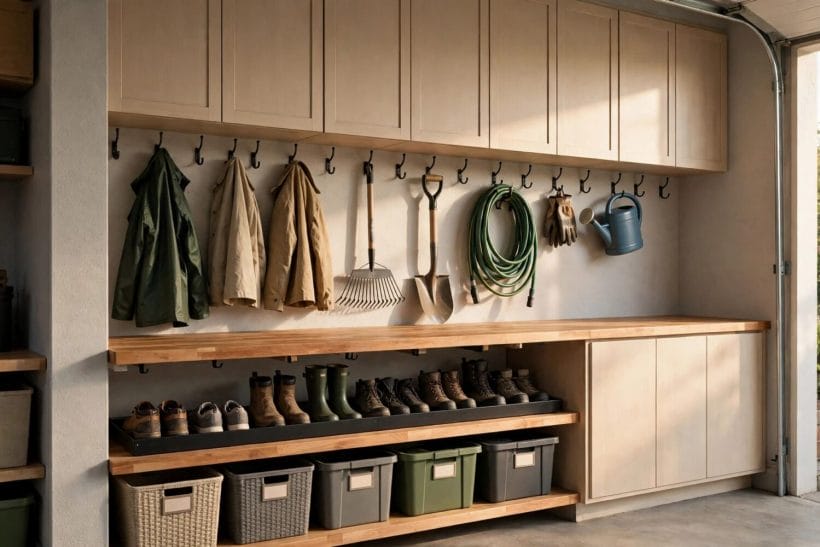
Wall cabinets above bench height hold paints, cleaning kit and household spares out of reach of small hands and car doors. Keep the heaviest tins low, label the doors, and leave a clear strip of wall for hanging tools.
40. Hooks for Coats and Garden Gear
A row of sturdy hooks near the house door takes coats, aprons and garden gear that would otherwise pile on kitchen chairs. Hooks at two heights serve adults and children, and a drip tray below catches wet-weather drips.
41. Overhead Racks for Seasonal Kit
Overhead racks hold camping gear, festive decorations and other seasonal kit that is only needed a few times a year. Fixings into structure belong to a qualified tradesperson, and racks should sit clear of the door mechanism and any moving parts.
42. A Seasonal Rotation Shelf
Keep one shelf as the rotation shelf, where the current season’s kit lives and last season’s kit waits to be stored away. The rotation habit stops the garage filling slowly with things nobody uses, and keeps the best shelf for the present moment.
43. Sports Gear in One Bay Zone
Give sports gear one zone, with balls in a net, bats and rackets on hooks, and boots on a tray. One zone means one place to tidy, and children learn quickly where their gear belongs when every item has a visible home.
44. A Tool Wall with Outlines
A tool wall with painted outlines shows at a glance which tool is missing and which tool belongs where. Outlines also stop tools migrating into kitchen drawers, and the wall doubles as a handsome backdrop for the workbench.
45. Labelled Bins for Small Parts
Labelled bins tame screws, fixings, batteries and other small parts that otherwise colonise every flat surface. Clear labels beat memory, and a bin that is easy to reach is a bin that actually gets used.
46. An Overflow Shed for Bulky Kit
When the garage still overflows, a small garden shed takes the bulkiest, least-used kit. These garden shed ideas show how a shed can absorb overflow gracefully, leaving the joined garage for cars and daily life.
7. Workshop and Hobby Corners
A corner of a joined garage makes a fine workshop or hobby room, because power, shelter and the house are all close at hand. Keep the corner contained, so sawdust and hobby clutter never colonise the parking bays.
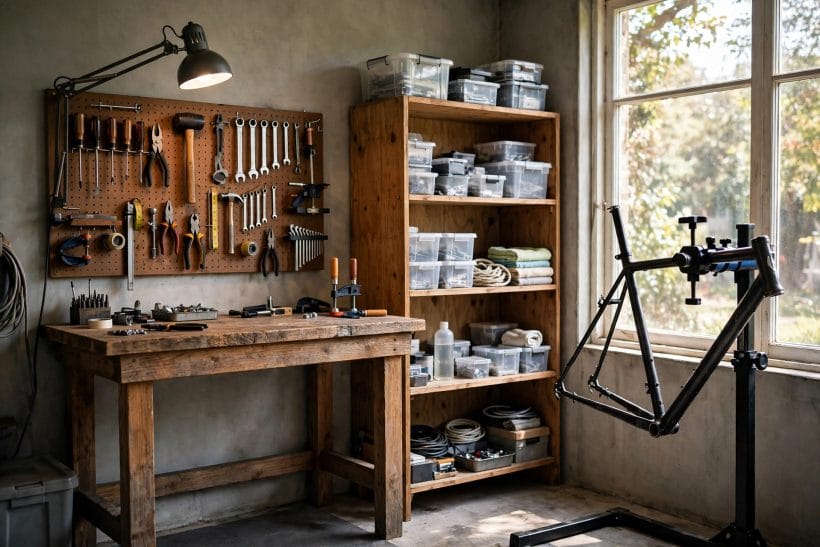
47. A Bench Corner with Good Light
A bench tucked into a bright corner, under a window or a good lamp, is where most garage projects actually happen. Keep the bench depth generous enough for real work, and leave the wall above it free for tools and task lighting.
48. A Craft Corner with Washable Surfaces
A craft corner with washable surfaces and wipe-clean storage survives paint, glue and dye without drama. A sink nearby helps, with plumbing work left to a qualified tradesperson, and a drying line or rack keeps wet work off the bench.
49. A Potting Bench by the Garden Door
A potting bench near the garden side of the garage keeps soil out of the house. Pots, trays and compost live on the bench, muddy hands stay outside the kitchen, and seedlings harden off in shelter before moving to the beds.
50. A Music Corner with Soft Furnishing
A music corner with a rug, a chair and soft wall panels sounds better and feels warmer than a bare concrete corner. Soft furnishings also soften the echo that makes a bare garage tiring to spend time in.
51. A Reading Nook in a Quiet Corner
A reading nook with a comfortable chair and a lamp turns a spare corner into a retreat. Keep the nook away from the door swing and the car exhaust path, and add a small shelf so books and a warm drink are always within reach.
52. A Bike Repair Stand by the Wall
A bike repair stand clamped to a bench or a wall bracket makes punctures and adjustments far easier than working on the floor. Keep the stand near the door so bikes roll in and out without crossing the workshop bench.
53. A Lounge Corner for Long Evenings
A lounge corner with seating and a rug gives the garage a social side for long evenings and hobby nights. These small living room ideas show how compact seating and soft light make even a modest corner feel inviting.
8. Mudroom and Daily Arrivals
Daily life arrives through the garage more often than through the front door, so the arrival zone deserves the same care as an entrance hall. A bench, hooks and trays turn a chaotic threshold into a calm one.
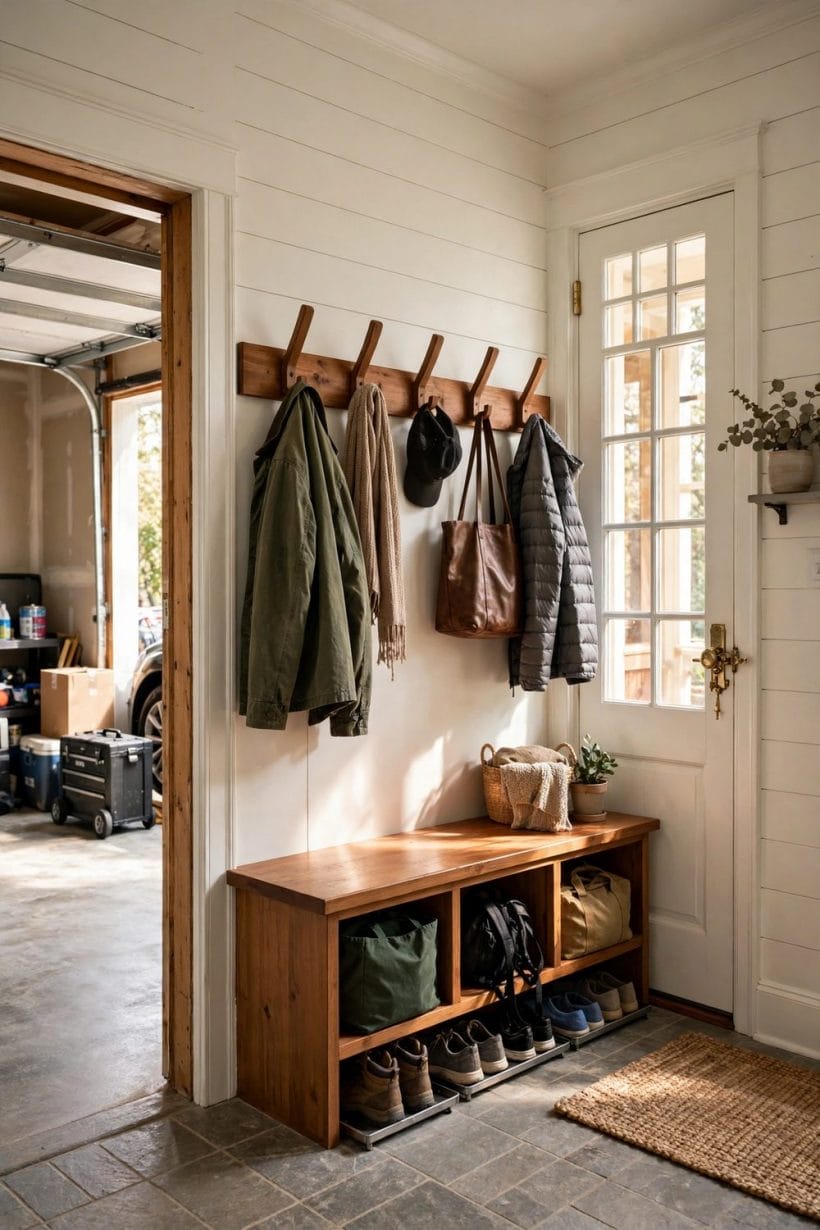
54. A Bench for Changing Shoes
A bench by the house door gives everyone a place to sit and change shoes. Shoes stay in the garage, floors inside stay clean, and the bench doubles as a perch for bags while coats come off.
55. Shoe Trays That Contain Mud
Shoe trays under the bench catch mud, rain and grit before they travel indoors. Trays with a lip contain drips, and a quick rinse now and then keeps the trays themselves pleasant to use.
56. A Cubby Each for School Bags
A cubby or hook each for school and work bags ends the morning hunt. Bags live in the same place every day, homework and laptops stop migrating to the kitchen table, and departures get faster.
57. A Dog Wash Corner by the Door
A dog wash corner with a shower head and a drain keeps muddy walks out of the bathroom. Plumbing and drainage work belongs to a qualified tradesperson, and a towel rail and a treat jar nearby make the routine quick and kind.
58. A Parcel Shelf That Is Not the Floor
A parcel shelf at waist height keeps deliveries off the floor and away from car wheels. Parcels stay dry, visible and easy to collect, and the floor stays clear for feet and tyres.
59. Key Hooks in a Fixed Spot
Key hooks in one fixed spot by the door end lost-key mornings. One hook per driver, plus a spare hook for visitors, keeps the system simple enough that everyone actually uses it.
60. A Charging Shelf for Devices
A charging shelf with a few sockets keeps phones, torches and tool batteries topped up without cables trailing across the floor. Electrical work belongs to a qualified tradesperson, and the shelf should sit away from wet boots and coats.
61. A Coat Cupboard for the Whole Household
A tall coat cupboard by the house door swallows winter coats, rain gear and hats for the whole household. Doors that close hide the clutter, and the hall inside stays a hall instead of a coat mountain.
9. Drive, Apron and Approach
The approach to a joined garage shapes the whole front of the house. A tidy apron, clear edging and gentle lighting make arrivals easy and the street view calm.
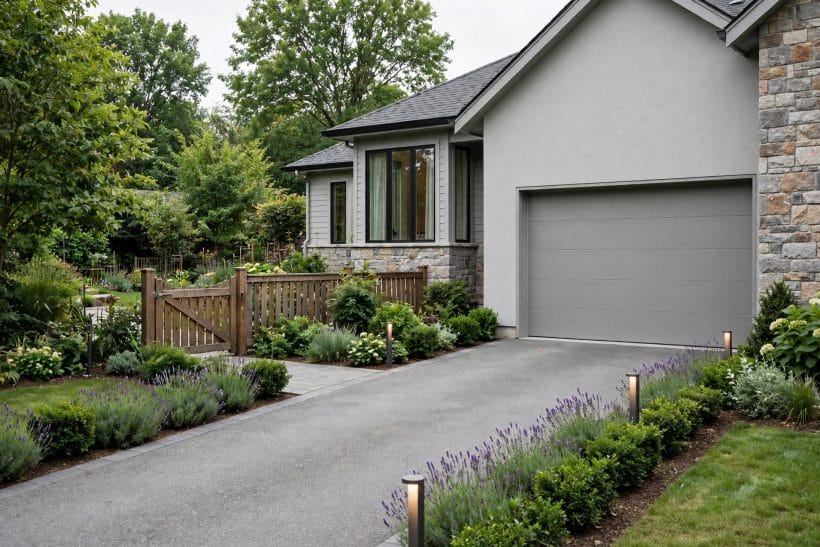
62. An Apron Material That Suits the House
Choose an apron material that sits comfortably with the house, such as a tone drawn from the walls or the roof. A settled, even surface drains well and stays easy to sweep, and its edges should be neat where it meets the lawn or path.
63. Edging Plants Along the Drive
Low edging plants along the drive soften hard surfaces and guide the eye toward the door. Choose plants that may suit your local conditions and sunlight, and keep them trimmed clear of the drive so they never snag mirrors or scratch paint.
64. Lighting Along the Drive Edge
Low lights along the drive edge mark the route on dark evenings without flooding the neighbours. Solar or wired lights both work, with electrical work left to a qualified tradesperson, and the glow should lead gently to the door.
65. A Turning Space That Feels Easy
A turning space that lets cars leave facing forward makes every departure calmer, especially on a busy street. Keep the turning area clear of bins and stored kit so it stays usable on the days it matters most.
66. A Visitor Bay with Clear Manners
A visitor bay marked by planting or paving, rather than signs, tells guests where to park without making the front feel like a car park. Guests feel welcome, residents keep their usual bays, and nobody blocks the garage door.
67. A Bin Store That Hides the Bins
A bin store beside the garage, screened with timber or planting, hides bins from the street while keeping them close for collection day. Keep the store ventilated and easy to hose down, and the front of the house stays presentable.
68. A Side Gate for Garden Access
A side gate from the drive into the garden saves long walks around the house with tools and barrows. These metal shed ideas pair well with a tidy side access, giving bulky garden kit a weatherproof home near the gate.
10. Quiet, Clean and Comfortable
Comfort is what turns a joined garage from a cold store into a room the household genuinely uses. Seal the draughts, soften the noise, keep the floor clean, and the garage earns its place beside the house.
69. Draught Sealing Around the Doors
Draught sealing around the pedestrian door and the main door keeps warm air in and dust out. Seals also soften the slam of closing doors, and the house side of the shared wall stays warmer through cold months.
70. Noise Softening on the Shared Wall
Soft finishes on the shared wall, such as shelving, cupboards and wall panels, break up sound travelling into the house. Distance and closed doors do the rest, and the garage can stay busy without the house feeling busy too.
71. Dust Control with Closed Storage
Closed cupboards and lidded bins keep dust off stored things far better than open shelves. Less dust means less cleaning, and items come out of storage ready to use instead of needing a wash first.
72. A Floor Finish That Cleans Easily
A smooth, washable floor finish makes sweeping and mopping quick work. Spills wipe up, tyre marks sweep away, and the garage keeps looking cared for with a short weekly tidy rather than a heavy seasonal clean.
73. Gentle Warmth for Winter Use
Gentle warmth makes a joined garage usable through winter for hobbies, laundry and morning departures. Heating work belongs to a qualified tradesperson, and warmth should be aimed at the corners people actually use rather than the whole empty space.
74. Smell Management with Ventilation
Steady ventilation, plus closed bins for refuse and rags, keeps garage smells from drifting into the house. Keep the house door closed when engines run, and store strong-smelling materials in sealed containers away from the shared wall.
75. A Weekly Tidy Habit for the Whole Space
A short weekly tidy, with everything returned to its hook, shelf or cupboard, keeps the garage from sliding back into chaos. These backyard landscaping ideas show the same habit outdoors, where a tidy edge and a clear path keep the whole plot feeling cared for.
Final Considerations
An attached garage works best when it is treated as part of the house, not as an afterthought beside it. Entries that shelter arrivals, doors that match the home, storage that keeps the floor clear, and quiet comfort through every season all add up to a space that serves the household daily.
Start with the shared wall and the entry, since those two shape everything else, then add colour, light and storage in the order your household will feel them most. Structural, electrical, plumbing and gas work always belongs to a qualified tradesperson, and the ideas here stay on the side of planning and arrangement. Pick a handful, put each one in its proper place, and the garage will feel like it always belonged to the house.



0 Comments