
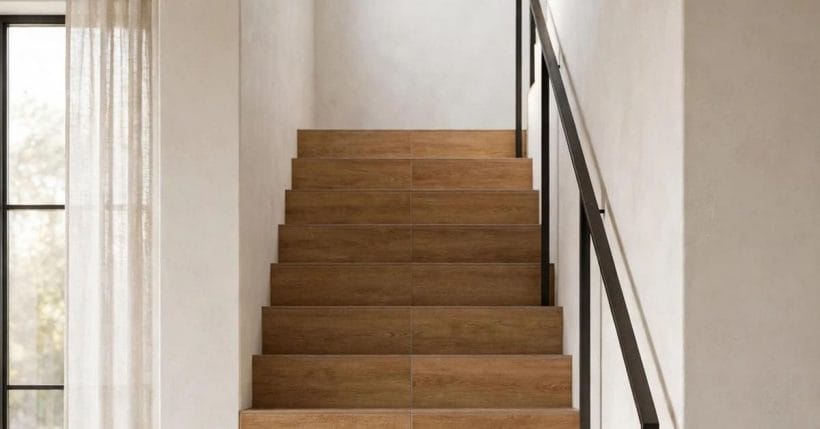
A staircase asks more of its surface than almost any other part of a home. It is walked on every day, often in socks or bare feet, carrying everything from laundry baskets to sleeping children, and it sits in plain sight from the hall and the rooms around it. That combination of hard daily use and high visibility is exactly why wood tile on stairs keeps coming up in conversation: it promises the warmth of timber underfoot with the wipe-clean practicality of tile.
This guide looks at wood-look tile on stairs as a material choice, plainly and in full. It covers what the tile is, how its surface feels underfoot, which tones and tread-and-riser combinations suit different rooms, how it behaves in small homes, and what to ask a stair professional before any work begins. Stair work is structural work, so every fitting, fixing and safety question in this guide is framed for a qualified professional, not as a do-it-yourself job.
1. What Wood-Look Tile on Stairs Actually Is
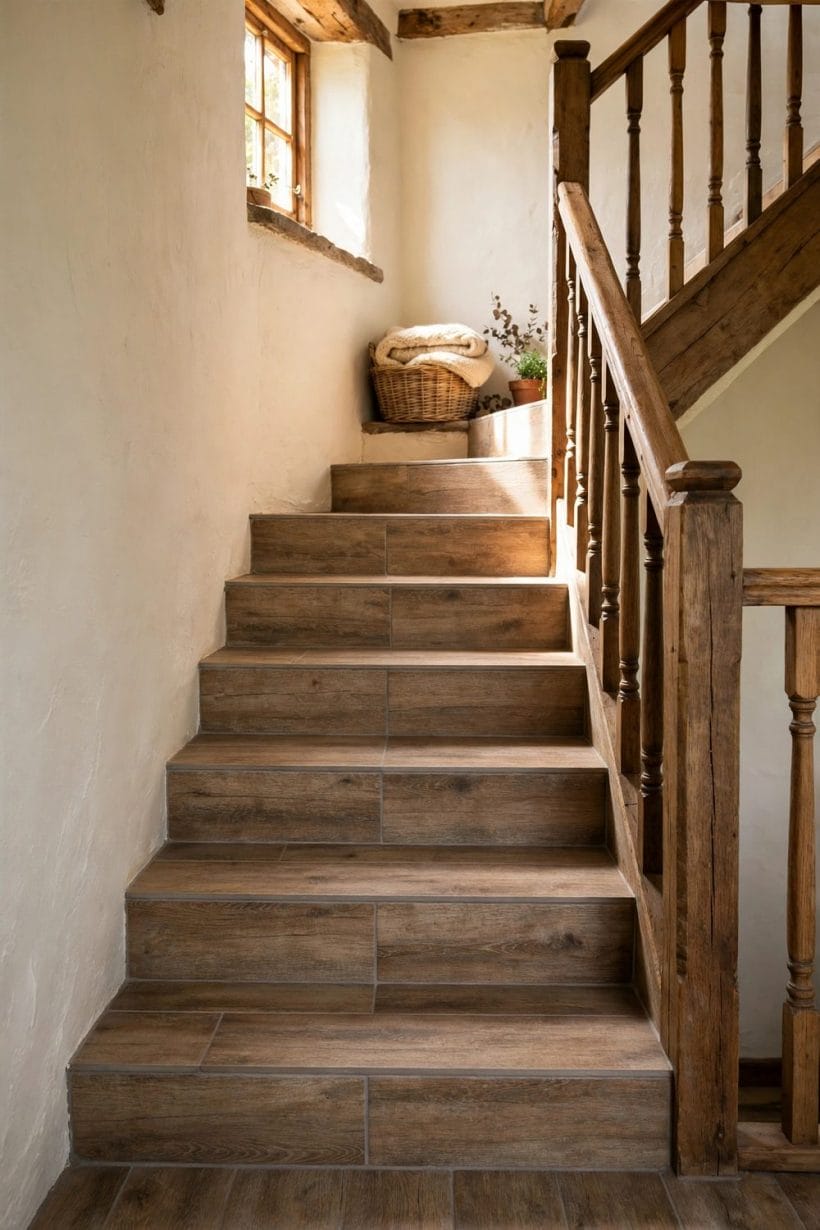
Wood-look tile is a hard tile whose printed surface imitates timber: grain lines, knots, plank joints and colour variation are all part of the glaze pattern rather than the material itself. On a staircase, that tile is cut and fitted to the horizontal tread you step on and, usually, to the vertical riser beneath it, so the whole flight reads as one continuous timber-like surface. The appeal is easy to understand. Real timber stairs can scratch, dent and wear unevenly on the busiest steps, while tile shrugs off spills, muddy shoes and pet claws and keeps its colour over time.
But a staircase is not a floor, and that distinction matters more than the wood effect itself. A floor spreads weight and wear across a wide area, while a stair concentrates every footfall onto a narrow tread edge, step after step. The nosing, the front edge of each tread, takes the brunt of that traffic, and it is also the edge your eye catches first when you look at a flight. A good stair installation therefore treats the nosing, the grout lines and the way each tile meets the next as carefully as the tile pattern itself, and a stair professional will look at the flight as a single engineered surface rather than a set of separate tiles.
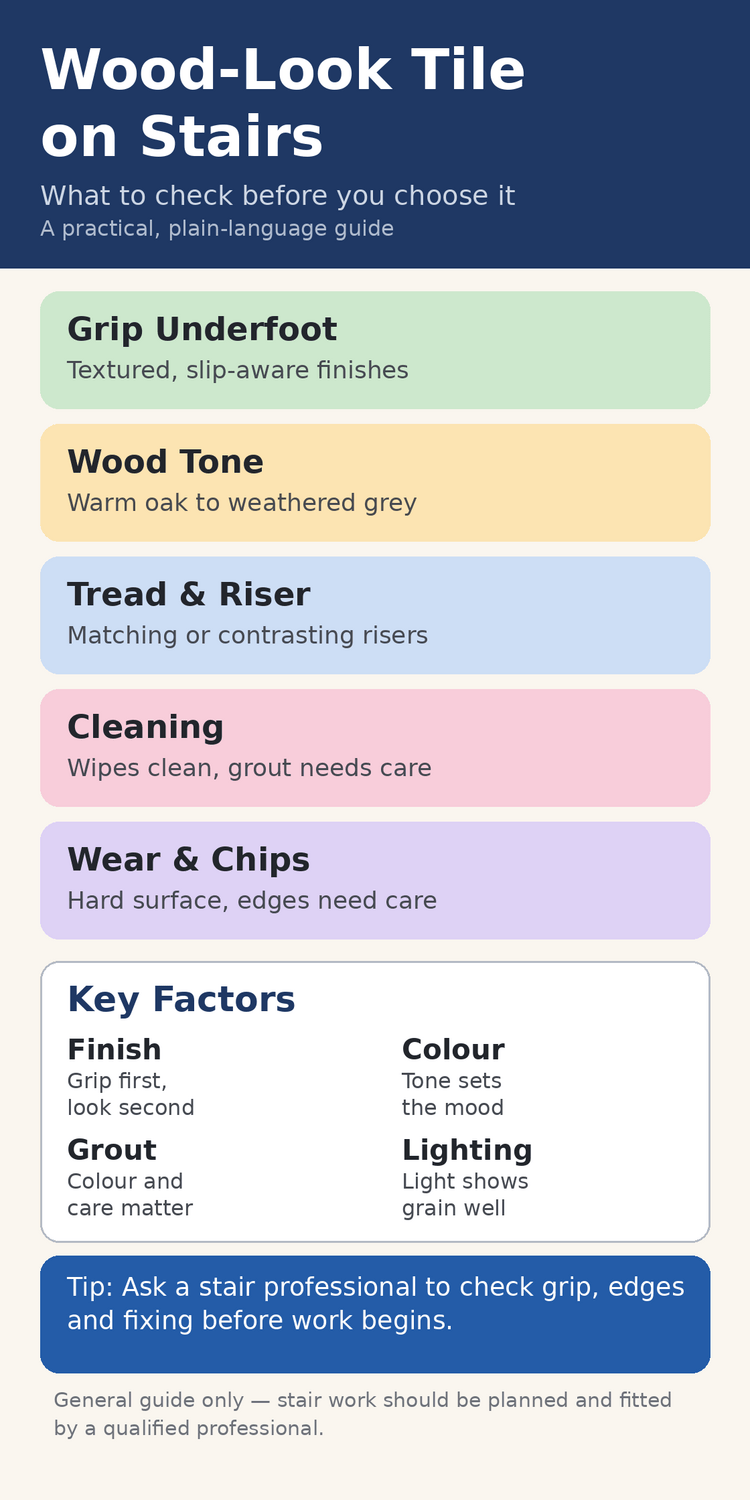
The table below sets out the material at a glance, so you can compare the main questions before reading the detail.
| Question | Wood-look tile on stairs, in brief |
|---|---|
| What it looks like | Printed timber grain in warm, pale or weathered tones |
| What it feels like | Hard, cool and smooth, unless a textured finish is chosen |
| Where it suits best | Busy halls, family homes and hard-wearing staircases |
| What needs most care | Grip underfoot, tread edges and grout lines |
| Who should fit it | A qualified stair professional, always |
One more distinction is worth making at the start. Wood-look tile on stairs is a material decision, not a staircase shape. Whether a flight is straight, turning or split is a question of form and structure, and it belongs in a different conversation from the one this guide is having. Here, the flight underneath is taken as given, and everything that follows is about the tile that covers it: its surface, its tone, its edges and its care. If you are still choosing the shape of your staircase, settle that question with your professional first, and then come back to the material with a clear brief.
That framing also explains why this guide keeps returning to professional advice. Tiles on stairs must stay fixed, level and grippy under daily use, and a loose or uneven step is a genuine hazard rather than a cosmetic flaw. A professional will assess the existing flight, the condition of the structure beneath, and the right fixing approach for your home, and that assessment is part of the job, not an optional extra. The rest of this guide helps you have that conversation well informed, with the right questions ready.
2. Reading the Tile Surface: Grain, Tone and Texture
Stand close to a wood-look tile and the first thing you notice is how convincing the print has become. Modern glazes carry long grain lines, subtle colour shifts along each plank and even the soft figuring around a knot, so that from a normal standing distance the surface reads as timber. Up close, the giveaway is repetition: the same grain pattern may recur across several tiles, and the surface stays perfectly flat and cool where real timber would show tiny undulations and warmth. Neither quality is a flaw in itself, but knowing which you are looking at helps you judge samples honestly.
When you compare samples, look at them the way you will live with them: on a step, in your own light, at the angle you will actually see them. Hold a sample flat like a tread and look at it from above, then prop it upright like a riser and look at it from across the room. A pattern that looks rich in a showroom can look busy or flat at home, and a pale tone that seems washed out under bright lights can glow softly in a hallway that gets only borrowed daylight. Take samples home wherever you can, and live with them on the bottom step for a few days before deciding.
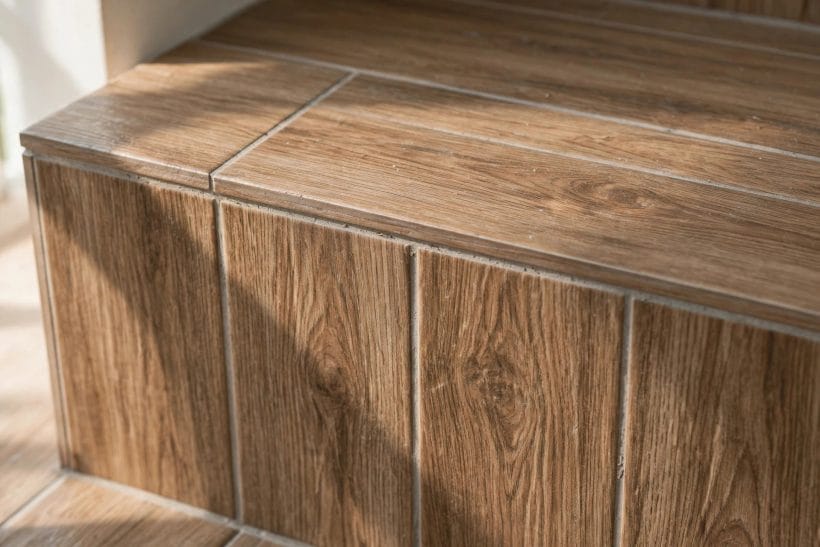
Texture is the second thing to read, and on stairs it matters more than pattern. Some wood-look tiles are almost glassy smooth, which suits a wall or a low-traffic floor but can feel uncertain underfoot on a stair, especially in socks or with wet shoes. Others carry a gentle relief that echoes sawn timber, giving the foot something to hold onto without looking rough. Run your hand and, carefully, your foot across a sample, and ask your supplier and your stair professional which finishes are intended for stair treads rather than floors generally. The answer to that question should shape your shortlist more than any photograph.
Finally, look at how the pattern runs. Long planks laid along the tread give a calm, continuous read, while shorter pieces or staggered joints can add rhythm but also add grout lines across the walking surface. On a narrow flight, a busy joint pattern can make the stairs feel restless, while on a wide flight the same pattern can look generous and deliberate. There is no single right answer, only the pattern that suits your flight, your light and your eye, and a professional can show you how each option will land on your own steps. If you already know the look from elsewhere in the home, the wood-look tile bathroom ideas guide shows the same material in a very different setting, which can help you judge whether its tone suits your house as a whole.
3. Grip, Edges and Everyday Footing
If there is one section of this guide to read twice, it is this one, because grip is where a stair covering either earns its place or fails it. A staircase is used in a hurry, in the dark, with arms full and feet half awake, and the surface has to cope with all of that without demanding attention. Wood-look tile is a hard, smooth material by nature, so grip cannot be assumed from the wood effect alone: it has to come from the finish you choose, the condition of the surface, and the way the treads are detailed by your professional.
Start by asking about finishes made for stair use, and about how grip behaves when the surface is dusty, damp or wet. A finish that feels secure in dry showroom conditions can feel very different after a rainy walk home, and a household with children, older relatives or pets has less margin for that difference than a quiet adult-only home. Your stair professional should be able to talk through the options in plain terms, including any additional grip detailing at the tread edge, and to be honest about where a particular tile is and is not a good fit for your household.
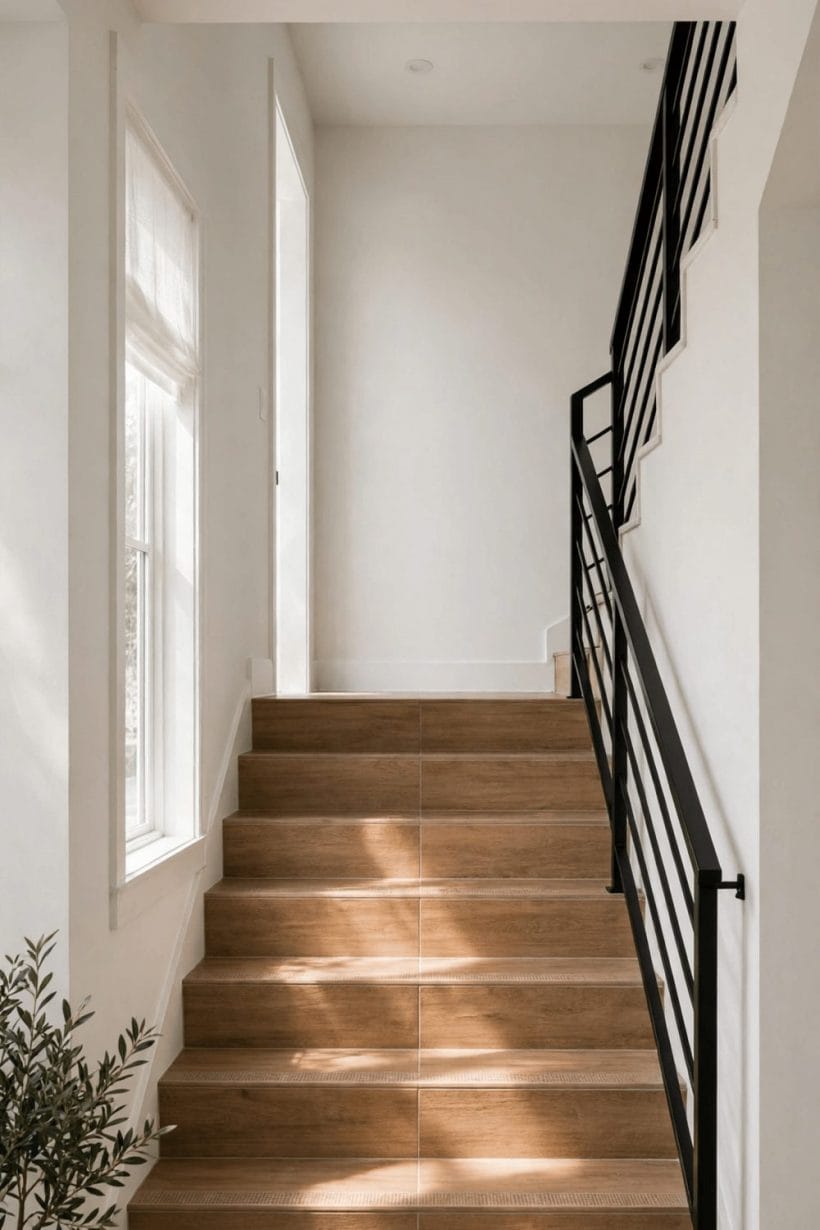
The tread edge deserves its own question. A rounded or specially finished nosing softens the step visually and protects the tile edge from chipping, while a sharp square edge can look crisp but takes knocks directly on its most vulnerable corner. Over years of use, that edge is also where wear shows first, so the detailing chosen at installation shapes how the staircase ages. Ask your professional to show you the nosing detail they intend to use, and to explain how it will be fixed and how it can be maintained or replaced if it ever needs attention.
Two everyday habits complete the footing picture. Keep treads free of clutter, loose rugs and trailing cables, since anything that changes where a foot lands changes the safety of the whole flight, and clean up spills promptly rather than leaving a damp step for the next person. A runner can add grip and softness to a tiled flight, and it can look beautiful against a wood tone, but it must be fitted securely and kept in good repair; a loose runner on a hard tile is worse than no runner at all. If you want one, discuss it with your professional as part of the same job, not as an afterthought.
4. Tread and Riser Combinations That Work
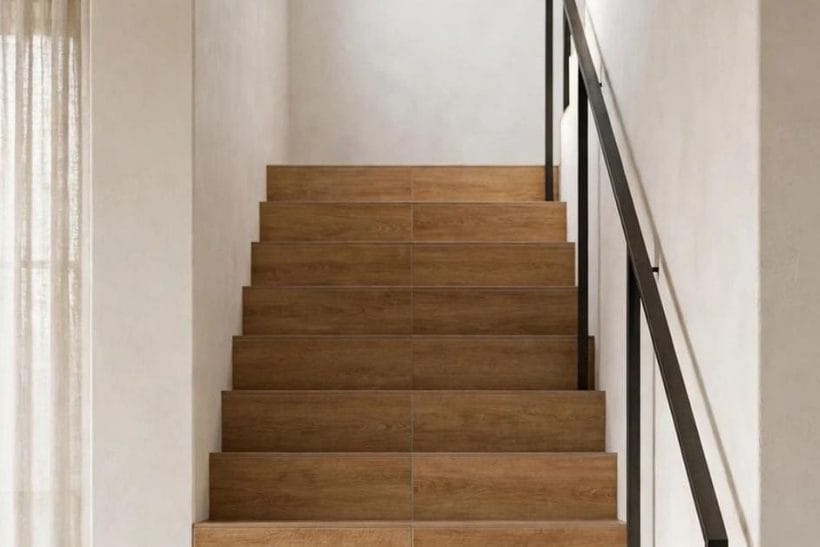
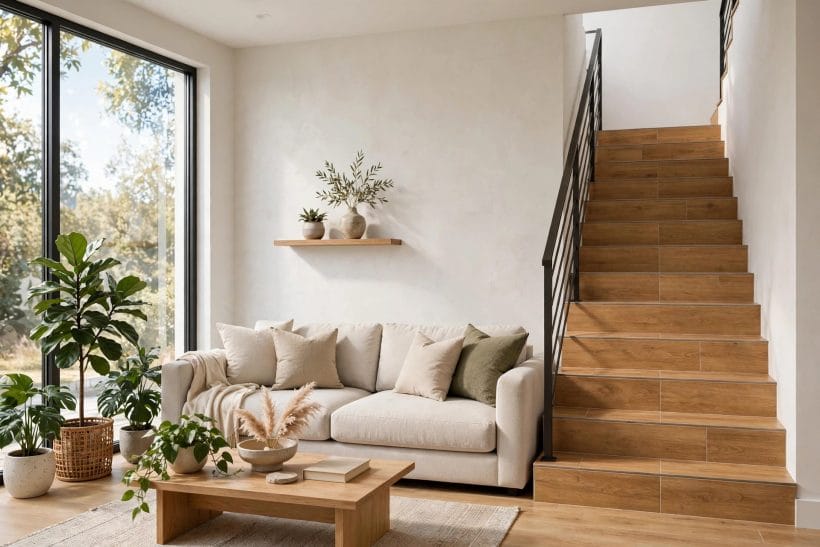
Once grip is settled, the most visible decision is how tread and riser relate to each other. The simplest approach carries the same wood-look tile across both, so the flight reads as a single carved timber staircase, with the grain flowing from tread to riser without interruption. This is a calm, unified look that suits modern halls and small spaces, where visual quiet matters more than decoration, and it has the practical advantage that every surface cleans the same way.
The alternative pairs a wood-look tread with a contrasting riser, and this is where a staircase can gain real character. A pale riser against a dark tread makes each step read clearly, which many people find reassuring underfoot, and it can lift a dark hallway by bouncing light from step to step. A painted riser in a soft neutral can tie the staircase to the walls around it, while a patterned or tiled riser turns the flight into a feature in its own right. The tile stair risers guide explores riser ideas in their own right, and it is worth reading alongside this section if the riser is where your imagination has caught fire.
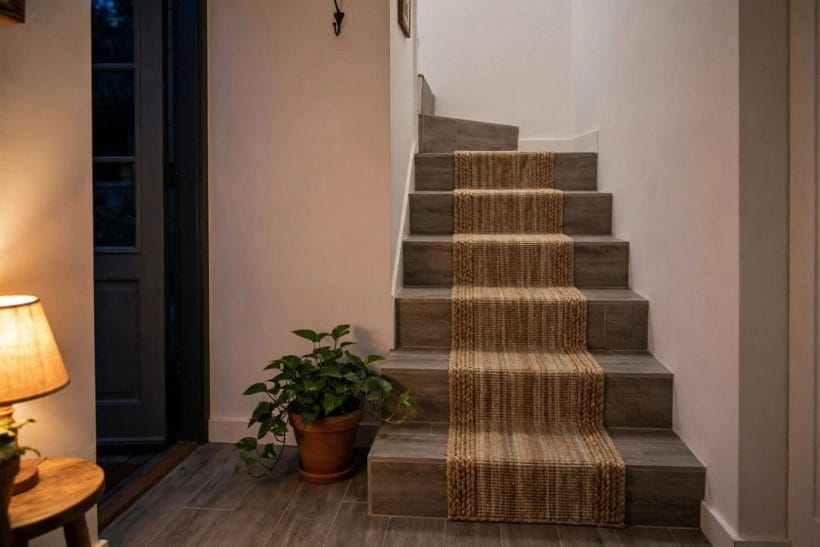
Whichever combination you choose, consistency matters more than cleverness. A flight where the riser colour changes halfway up, or where one tread sits slightly proud of its neighbours, will draw the eye to the inconsistency every time you climb it. That is another reason the installation belongs to a professional: cutting tile to fit each step, keeping grout lines even and making every tread sit level is exacting work, and small errors compound across a whole flight. When you view a finished staircase, look along the flight from top and bottom, not just at individual steps, and judge whether the whole reads as one piece.
Also think about the junction where the staircase meets the rooms at either end. A wood-look tile that continues onto the landing or the hallway floor makes the whole route feel connected, while a change of material at the top or bottom step creates a threshold that can either frame the staircase beautifully or interrupt it awkwardly. Neither is wrong, but the decision should be deliberate, made with your professional and with samples of both surfaces side by side, so the junction looks designed rather than accidental.
5. Colour Tones: Warm Oak, Pale Ash and Weathered Grey
Wood-look tile comes in a wide family of tones, and the tone you choose will do more to set the mood of your hall than any other single decision. Warm oak tones bring immediate comfort: they glow under lamplight, sit happily against cream walls and natural wood furniture, and make a hallway feel welcoming from the front door. They are the easiest tones to live with in a family home, and they forgive dust and everyday marks better than very pale or very dark surfaces.
Pale ash and bleached tones work the other way, opening up a narrow or dark staircase by reflecting whatever light reaches it. In a small home, where the staircase often sits in the middle of the plan with no window of its own, that lightness can make the difference between a flight that feels like a corridor and one that feels like part of the room. The trade-off is honesty about cleaning: pale grout and pale tile show dirt sooner, so a pale staircase asks for a little more regular attention, and that bargain should be made with open eyes.
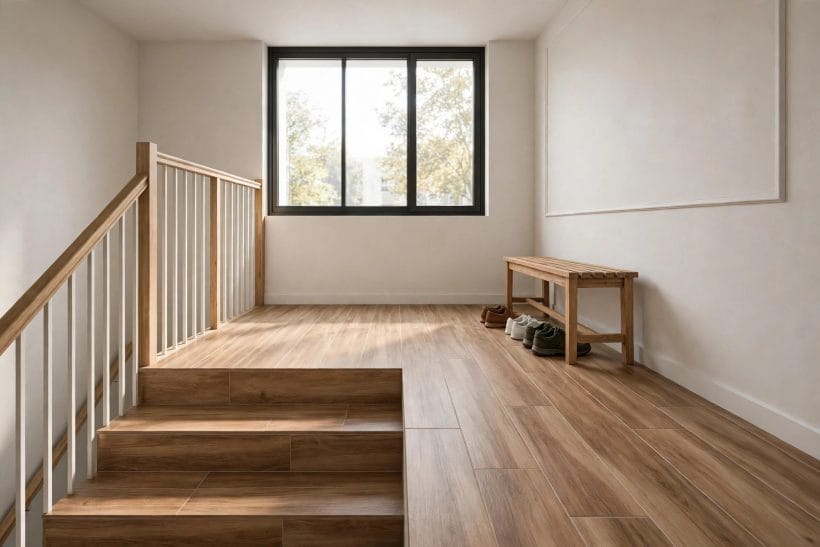
Weathered grey and driftwood tones sit between those poles, bringing a cooler, more contemporary calm that suits grey walls, stone details and modern furniture. They pair well with both black metal handrails and pale timber, and they hide the dust of daily life gracefully. Their risk is coldness: in a north-facing hall with little natural light, a grey staircase can feel flat unless the walls, lighting and furnishings around it bring warmth back in. As always, samples in your own light are the only reliable test.
Whatever tone you lean towards, judge it against the surfaces it will live beside. A warm oak stair next to a cool grey floor can jar, while the same oak next to warm plaster and oak furniture feels inevitable. Lay your tile sample against your flooring, your wall colour and your handrail material at the same time, and step back to look at the group rather than the tile alone. The staircase is a junction between rooms, and its tone should mediate between them, not compete with either side. The tiny-house flooring ideas guide is a useful companion here, since it looks at how floor surfaces relate to one another across a small home.
6. Small Stairs and Tiny-House Staircases
Small homes put staircases under particular pressure, because the flight often serves several jobs at once: route upstairs, storage wall, room divider and visual centrepiece, all in a footprint that a larger house would give to a hallway alone. Wood-look tile can be a good fit here, since its hard surface copes with the concentrated traffic of a compact flight and its wood effect keeps the staircase feeling like furniture rather than infrastructure. But small flights also expose every flaw, so the case for professional fitting is, if anything, stronger than in a larger home.
In a compact flight, tone and joint pattern need extra restraint. A busy grain or a strongly staggered joint can make a narrow staircase feel restless, while a calm tone with quiet joints lets the flight recede and the room breathe. Pale and mid tones usually help a small staircase feel less bulky, and carrying the same tile onto a landing or into the room beyond can blur the boundary between stair and floor, making both feel larger. That continuity is one of the most useful tricks in a small home, and it costs nothing beyond a deliberate choice at the planning stage.
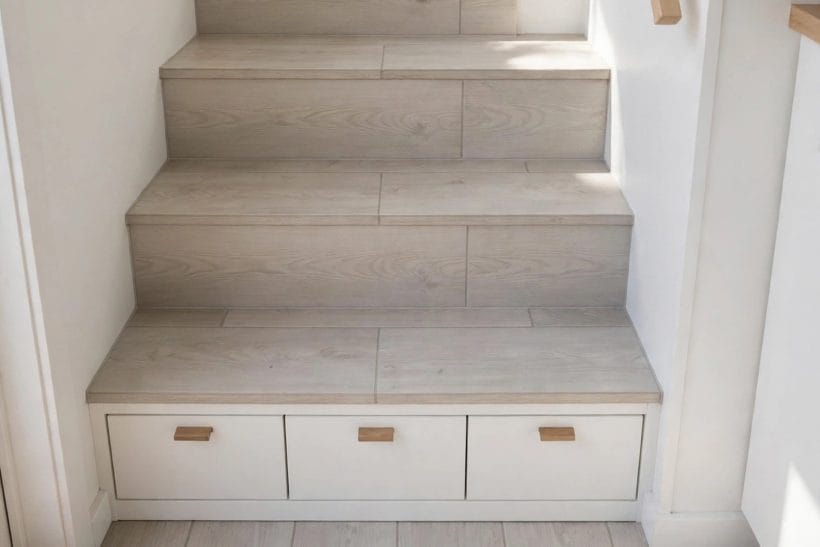
Storage is the other small-home question, and it interacts with the tile choice in a practical way. Drawers or cupboards built beneath the lower steps are a gift in a tiny house, but they mean the tiled surfaces around them must be fitted with unusual precision, since a drawer front that meets a tiled riser has no room for a careless joint. If you are planning under-stair storage, raise it with your stair professional at the very first conversation, not after the tile is chosen, so the tile layout and the storage layout are planned as one piece. The under-stair storage guide looks at those storage options in detail.
Finally, think about sound. A hard tile staircase in a small, open-plan home will carry footsteps further than a carpeted flight, and in a tiny house that sound travels into every room. Soft furnishings, a fitted runner and rugs at the top and bottom of the flight all help, as does simply choosing a slightly textured finish that breaks up the sharpness of each step. None of this is a reason to avoid tile, but it is a reason to plan the staircase as part of the whole acoustic character of the home, with your professional aware of how open the plan is.
7. Light, Walls and the Stair as a Room Feature
A staircase is rarely lit well by accident, and wood-look tile rewards good lighting more than most surfaces. Daylight raking across the treads picks out the grain and gives each step definition, while warm evening light deepens the tone and makes the flight feel inviting rather than merely functional. If your staircase has a window, notice where its light falls at different times of day before choosing a tone, since a tile that glows at noon can look dull at dusk, and vice versa.
Where daylight is scarce, wall lights and stair lighting change the character of the flight entirely. Low lights along the wall wash each tread in turn, making the steps easy to read in the dark and turning the staircase into a gentle feature after sunset. That lighting also does quiet safety work, since a well-lit tread edge is a tread edge the foot can find without thinking. Electrical work of any kind belongs to a qualified professional, and stair lighting should be planned with the tile and the handrail as one design, so cables, fittings and tile edges are resolved together rather than retrofitted around each other.
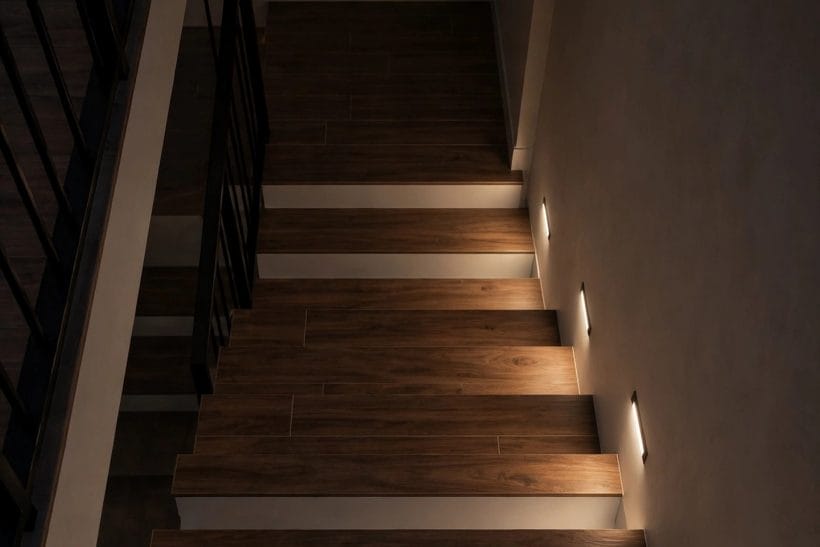
Wall colour frames all of this. Pale walls keep a dark tile staircase from feeling heavy, and they bounce light back onto the treads, while a deep wall colour can make a pale tile flight glow like a sculpture against it. The handrail and balustrade sit between wall and tile, and their material, whether dark metal, pale timber or painted, will either bridge the two tones or deliberately contrast with them. Look at wall, rail and tile together in samples, not separately, and remember that the staircase is seen in motion, from changing angles, so the combination should work from the bottom, the top and the landing alike.
One last visual point: a tiled staircase photographs and presents beautifully, which is part of its appeal, but the lived experience is about touch and sound as much as looks. Walk a tiled staircase in a showroom or a friend’s home if you can, in the shoes you actually wear at home, and notice how it feels underfoot, how loud it is and how confident each step feels. The tiny-house staircase interiors guide looks at how staircases sit within small-home interiors generally, and it pairs well with the material questions covered here.
8. Cleaning, Grout and Long-Term Care
Day to day, wood-look tile on stairs is refreshingly undemanding. A soft brush or vacuum keeps dust out of the grain pattern, and a damp mop with a mild household cleaner deals with spills and muddy footprints without any special treatment. Unlike real timber, the surface will not soak up a spilled drink or stain from a dropped bag of groceries, and unlike carpet it will not hold dust, pet hair or odours in its fibres. For a busy family staircase, that easy cleaning is often the deciding factor.
Grout is the part that asks for attention. The lines between tiles collect dust and can darken over time, especially on the treads where feet land, and pale grout will show that change sooner than a mid-tone grout. Regular gentle cleaning keeps grout looking even, and choosing a grout colour that sits close to the tile tone, rather than starkly against it, makes the natural ageing of the lines far less noticeable. If grout ever cracks, crumbles or comes loose, treat that as a job for your stair professional: a damaged grout line on a staircase is not just cosmetic, since it can signal movement or wear in the fixing beneath.
Chips and edge wear are the other long-term question. Tile is hard, which is a virtue underfoot, but hardness also means that a heavy object dropped on a tread edge can chip the glaze rather than denting softly as timber would. Most such chips are small and, on a patterned wood grain, surprisingly easy to live with, but a chipped nosing should be assessed by a professional, since the edge is a safety detail as well as a visual one. Keeping a few spare tiles from the original batch is a wise precaution: tile patterns change over time, and an exact match years later cannot be assumed.
Seasonal habits round out the care routine. In wet weather, a mat at the foot of the stairs catches much of the grit that would otherwise be carried up step by step, and wiping the treads after a muddy day keeps both tile and grout in good condition. Avoid dragging heavy furniture up a tiled flight without protection, since a single careless scrape can mark a tread edge permanently. None of this care is onerous, and that is the point: a tiled staircase earns its keep by asking little of you, provided the small things are done regularly.
9. Where Wood-Look Tile Fits, and Where It Does Not
Wood-look tile on stairs fits best where hard wear, easy cleaning and a timber appearance all matter at once. A family hallway with children and pets, a rental or holiday home where the staircase must survive many different feet, a busy entrance stair that carries outdoor shoes all day, and a modern interior where the timber look is wanted without the upkeep of real wood are all natural homes for this material. In each case, the tile solves a real problem rather than merely looking the part.
It fits less well where softness and quiet matter most. A staircase beside a bedroom, where late-night footsteps would disturb sleepers, may be better served by a softer covering, and a home where someone is unsteady on their feet may benefit from a surface chosen primarily for grip and forgiveness rather than appearance. Very steep or winding flights also deserve extra caution, since every step on such a flight is used with more care than on a gentle straight run, and the surface should support that care rather than complicate it. These are not verdicts against tile, only reminders that the right material follows the household, not the photograph.
Budget thinking should stay general here, since tile, fixing and professional labour vary too widely to summarise honestly in a guide like this. What can be said is that the cost of a tiled staircase is the cost of the whole job, tile plus preparation plus professional fitting, and that comparing tile prices alone will mislead you. A cheaper tile that needs more preparation, or a bargain fitting that fails early, costs more in the end than a well-planned job done once. Ask your professional for a complete picture of the work involved before comparing any single element.
One question to settle early is whether the existing staircase can take tile at all. Older flights, flights with uneven or damaged treads, and flights whose structure has moved over time may need preparation or repair before any tile is considered, and in some cases a professional may advise a different covering altogether. That advice is valuable, not disappointing: a staircase that is honestly assessed and properly prepared will serve you for years, while tile laid over an unsuitable flight will cause trouble that no surface can hide. The tiny-house stairs guide covers staircases in small homes generally, and it is a helpful starting point if your flight itself is part of the question.
10. Planning Checklist: Questions for Your Stair Professional
With the material understood, the most useful thing this guide can give you is a checklist for the professional conversation. Start with the surface itself: which finishes are intended for stair treads, how does grip behave when the surface is damp, and what nosing detail will be used on every step? Then move to the structure: is the existing flight sound and level enough for tile, what preparation will it need, and how will the tile meet the floors at the top and bottom of the flight?
Next, settle the visual questions together: which tone suits your light and your neighbouring surfaces, will tread and riser match or contrast, and how will the grout colour and joint pattern read across the whole flight rather than on a single sample? Ask to see the layout drawn or marked out on your own steps if possible, since a pattern that looks fine on one tile can surprise you when it repeats across a flight. If the staircase itself is a more complex shape, that form question comes first in the conversation, and the double staircase guide looks at one such form in its own right.
Finally, cover care and the long term: how should the treads and grout be cleaned, what should you do if a tile chips or grout loosens, and can spare tiles be kept from the same batch for future repairs? Ask about the sequence of the work, how long the staircase will be out of use, and what access arrangements you will need while the work is under way. A professional who answers these questions plainly, without rushing you, is a professional you can trust with a staircase, and the time spent on this conversation is the cheapest part of the whole job.
Keep a short written note of the answers, with the tile name, the finish, the grout colour and the nosing detail recorded together. Years from now, when a repair or a matching question arises, that note will save you from guessing, and it turns a good installation into a documented one. The staircase is one of the most used surfaces in your home; it deserves that small piece of record-keeping.
Final Considerations
Wood-look tile on stairs earns its popularity honestly. It brings the warmth and familiarity of timber to the hardest-working surface in the home, while asking little in return beyond regular sweeping, prompt cleaning of spills and occasional attention to its grout lines. Chosen with grip first and appearance second, fitted by a qualified professional, and matched thoughtfully to the light and surfaces around it, it can give a hallway a calm, generous character that lasts for years.
The cautions in this guide are not warnings against the material, but the conditions that let it succeed. Treat the staircase as a safety-critical surface, not a decorating surface; let a professional assess the flight, the fixing and the edges; and judge every sample in your own home, in your own light, on a real step. Do those three things, and the question that opened this guide, whether wood-look tile belongs on your stairs, will answer itself from evidence rather than from a photograph.
If you take one thought away, let it be this: a staircase is walked on in the dark, in a hurry and with arms full, and the best stair covering is the one you never have to think about while doing so. Wood-look tile, well chosen and well fitted, is exactly that kind of surface, quiet underfoot, warm to the eye and ready for the daily life that will pass over it.

0 Comments