

Searching for the best online furniture stores usually starts with a storefront — the least reliable part of the decision. A polished homepage says nothing about whether measurements are complete, materials honestly described, or delivery and returns terms written plainly. This guide answers the stores question differently: ten checks for judging any online seller, without trusting a ranking or a photograph.
Run the checks in order, and save every listing and terms page you rely on.

1. Start from the Piece and the Room, Not the Storefront
Before you compare sellers at all, write down what you actually need. Name the piece, the room it will live in, the job it must do, and the limits it must respect: the wall it stands against, the walkways that must stay clear, the doors it must pass through, and the other furniture it must live alongside. A seller cannot help you choose well until you know these things yourself, and a storefront that tempts you toward a piece that fails your room is doing you no favour, however attractive its presentation. This is the same discipline behind any careful ordering routine, and our companion guide to ordering furniture online sets out the piece-level checks that pair with the store-level checks here.
| Check | What to look for | Why it matters |
|---|---|---|
| Room need | A written brief: piece, room, job, limits | Stops the storefront choosing for you |
| Seller information | Identity and contact details stated plainly | You know who you are dealing with |
| Listing completeness | Measurements, materials, construction all described | Fewer surprises on arrival |
| Terms in writing | Delivery, returns and damage process explained | Disputes rest on text, not memory |
| Order record | Saved listing, terms and confirmation | What arrives can be checked against what was promised |
With that brief in hand, you can judge every seller against the same standard. A seller that answers your brief clearly, with measurements and materials stated in full, earns attention; a seller whose listings leave your basic questions unanswered does not, whatever its homepage promises. Small homes make this discipline even more important, because every centimetre of floor and every doorway matters twice over in a compact plan. Keep the brief short enough to carry with you as you browse, and refuse to let a striking photograph talk you out of it.
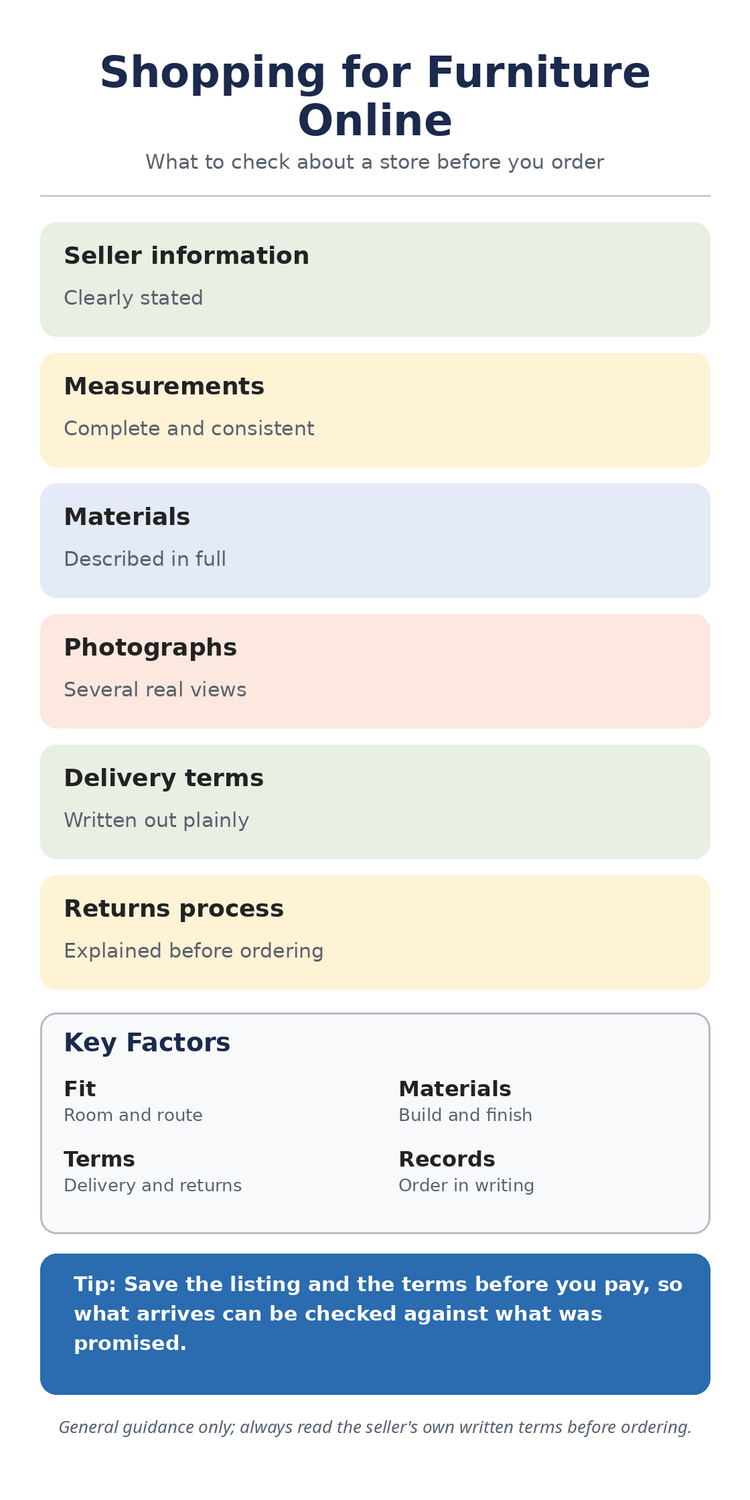
2. Check What the Seller Actually Tells You About Itself
A trustworthy seller is easy to identify. Look for a business name, a physical or postal address, and a way to contact a real person or team, stated on the site itself rather than hidden behind a form with no details. This is not about prestige or size: a small workshop and a large warehouse operation can both be perfectly clear about who they are. What matters is whether the seller stands behind its listings in an identifiable way, so that questions, problems, and delivery arrangements have somewhere concrete to go. Our guide to furniture seller checks covers the warranties, returns, and delivery questions that belong in this same conversation.
Be cautious where the basics are missing or vague. If you cannot tell who sells the piece, where the seller is based, or how to reach them before you pay, treat that as a gap in the listing, not as a detail you can sort out later. The same caution applies to listings that borrow authority they do not explain: badges, seals, and impressive-sounding claims mean little unless the page says what they stand for and who awarded them. Read the seller’s own pages rather than relying on a marketplace profile summary, and note anything that contradicts itself between pages. A seller whose story changes from one page to the next has told you something useful, even if it is not what it intended.
3. Compare Listings for the Same Kind of Piece, Not Storefronts
The fairest comparison is between listings, not between homepages. Pick one kind of piece — a dining table, a bookshelf, an armchair — and line up several listings for that same kind of piece side by side. Compare what each listing actually states: its measurements, its materials, its construction, its finish, its assembly requirements, and its delivery and returns terms. The differences that emerge are real information, and they tell you far more than any storefront ranking ever could. A listing that states all of these plainly is doing the work a buyer needs; a listing that states only some of them is asking you to fill in the rest with hope.
This comparison also protects you from the most common online trap: judging pieces by their photographs. Photographs are styled, lit, and cropped, and the same piece can look generous in one room and cramped in another. When you compare listings on their stated facts, the photographs fall back into their proper place as illustrations of a piece you already understand. If you are planning a room from scratch, our interior design ideas collection is a useful place to think through layout and proportion before you start comparing sellers, because a clear plan makes weak listings obvious at a glance.

4. Judge Whether the Measurements Add Up
Measurements are where online furniture buying most often goes wrong, and they are also where a good seller is easiest to recognise. A complete listing states the piece’s overall width, depth, and height, and it states them consistently wherever the piece is described. It also tells you what happens at the edges of the piece: whether legs come off, whether sections separate, whether a backrest or leaf changes the footprint, and what the piece measures in its packaged form if it arrives boxed. Our furniture buying checks guide explains how frames, joints, cushions, and fit belong together in this same measurement conversation.
Test every listing against your own room and your own route in. Measure the wall, the floor area, and the clearances you want to keep, then measure the narrowest doorway, hallway turn, and stair landing on the way in. Compare those figures with the listing’s figures, and treat any mismatch as a stop sign, not a detail to negotiate with later. Where a listing gives only one or two dimensions, or where its dimensions disagree between the description and a specification table, ask the seller to clarify in writing before you order. A seller that answers promptly and precisely has passed a meaningful test; a seller that answers vaguely has failed one.
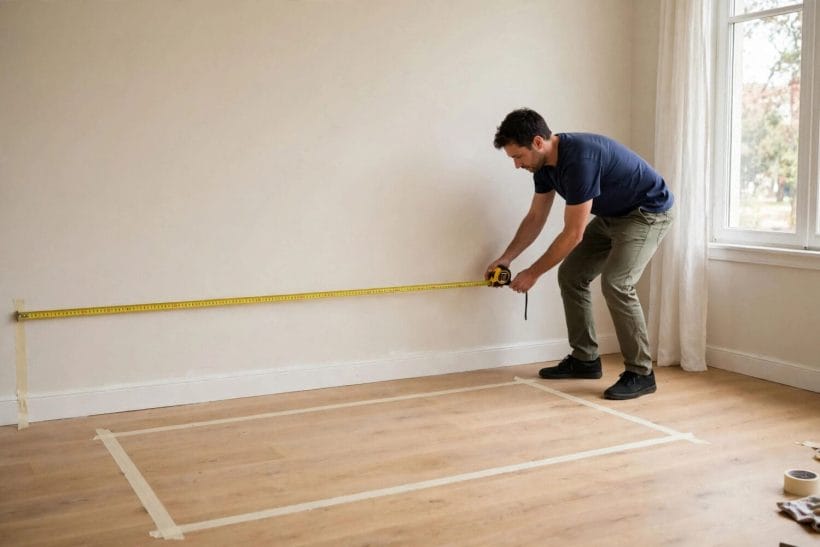
5. Read Material and Construction Descriptions Closely
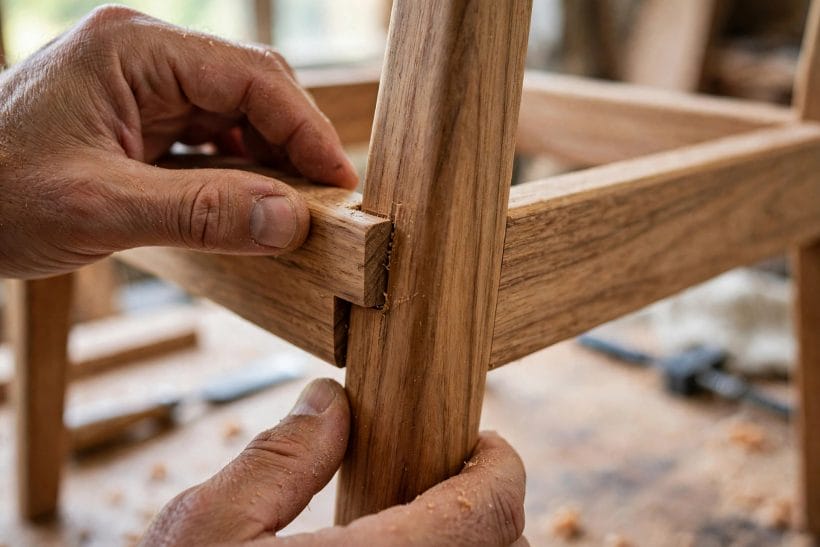
Materials language is where vague listings hide. Look for descriptions that name the material of each part of the piece, not just the visible surfaces: the frame, the seat support, the filling, the covering, and the finish. A listing that says a table is solid timber throughout is making a different claim from one that says a table has a timber-look top, and a listing that names the timber, the joint method, and the finish is giving you something you can compare and verify. Where a description uses a general word where a specific one would do — a covering described only as fabric, a frame described only as wood — treat the generality as missing information and weigh the listing accordingly.
Construction matters as much as material, and the same rule applies. Look for how the piece is put together: how its frame is joined, how its drawers run, how its doors hang, and whether moving parts are described in a way that lets you picture their behaviour over time. Our furniture quality checks guide walks through frames, joints, cushions, and fit in detail, and it is worth reading alongside this section. None of this requires technical expertise; it requires only the habit of asking, for each part of the piece, what it is made of and how it is held together, and of preferring listings that answer both questions plainly.

6. Treat Photographs as a Starting Point, Not Proof
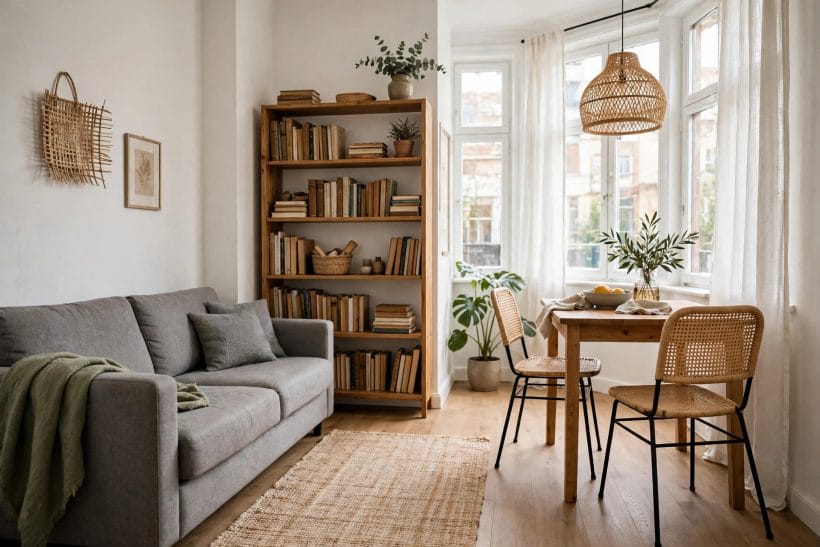
Good listings carry several photographs of the same piece: front, side, back, detail, and in a room setting. Each view answers a different question. The front view shows proportion, the side view shows depth, the back view shows what the piece looks like from behind a sofa or against a window, and detail views show joints, edges, and finishes at close range. A listing with a single styled photograph is asking you to judge a three-dimensional object from one angle, and that is not enough for a piece you cannot touch. Where a listing offers a room-setting photograph, ask yourself what the photograph is not showing: the scale of the room, the size of the neighbouring furniture, and the distance of the camera all shape the impression.
Colour deserves the same scepticism. Screens differ, lighting differs, and a finish photographed under studio light can look different in a north-facing room. If colour matters — and for a large piece it usually does — look for listings that describe the finish in words as well as pictures, and consider ordering a sample or swatch where the seller offers one. Our guide to buying furniture online covers measuring, materials, delivery, and returns as one connected routine, and its advice on comparing a finish in your own light applies directly here. When a listing’s photographs and its written description disagree, believe the description’s specifics and ask about the gap before you order.
7. Ask What Delivery Really Includes, in Writing
Delivery is a physical plan, not a slogan, and the questions that matter are practical ones. Will the piece arrive boxed or assembled? Which rooms can it reach, and what happens at stairs, narrow doors, or upper floors? Is packaging removed, and if so, by whom? What happens if the piece does not fit through a doorway on the day? A good listing answers these questions in its own words, in the delivery section of the listing or in the seller’s written delivery terms, before you are asked to pay. Vague delivery language — a promise that delivery is easy, or that a piece arrives ready for its room — is not an answer to any of these questions.
Read the delivery terms as a sequence of events and check each step against your home. Note the route the piece must travel, the people and equipment each step requires, and the point at which responsibility passes from the carrier to you. If any step depends on something your home cannot provide — a wide entrance, a lift of a certain size, a clear parking space — raise it with the seller before ordering, in writing, and keep the reply with your order record. Delivery problems are rarely mysterious after the fact; they are usually visible in advance to a buyer who reads the terms as a plan and compares them with the building the piece must enter.

8. Read the Returns and Damage Process Before You Pay
Returns terms are the safety net of online furniture buying, and they must be read before the order, not after the delivery. Look for a written process that answers the practical questions: how a return is started, who arranges collection, what condition the piece must be in, how long each step takes, and what happens to any delivery arrangement already made. A process described in plain steps is something you can follow under stress; a process described in general reassurance is not. Pay particular attention to the damage process, because damage is discovered on arrival, when you are least prepared to negotiate. The listing or terms should say what to do if a piece arrives marked, chipped, or incomplete, what evidence to keep, and how quickly you must report it.
Where the terms are silent on a question that matters to you, treat the silence as a question to ask, not as an assumption to make in your favour. Ask in writing, keep the reply, and let the quality of the reply inform your decision. A seller that explains its process clearly before taking your money is showing you how it will behave after taking it, and that is among the most reliable signals any store check can give you. The same discipline applies in reverse: a seller whose returns process cannot be found, or whose explanation changes between pages, is telling you to look elsewhere, whatever its prices or photographs suggest.
9. Check Payment, Records and Order Details Carefully
Before you pay, read the order itself as carefully as you read the listing. Check that the piece, the finish, the size variant, and the quantity match what you chose, and that any assembly or delivery option you selected is the one shown. Small mismatches at this stage — a finish variant one step from the one you wanted, a size option left at a default — are cheap to fix now and expensive to fix after delivery. Take a copy of the order confirmation, and keep it with the saved listing and the saved terms pages, so that the whole agreement exists in one place you control.
Payment security belongs in the same check. Use the seller’s ordinary checkout rather than an unusual payment route suggested outside it, and keep the payment confirmation with your order record. If anything about the checkout feels off — a page that does not match the seller you have been dealing with, a request for details the purchase does not require — stop and verify through the seller’s stated contact details before continuing. A careful buyer is not a suspicious buyer; a careful buyer is one who treats the order record as part of the purchase, because on the day a question arises, the record is what both sides will actually be discussing.
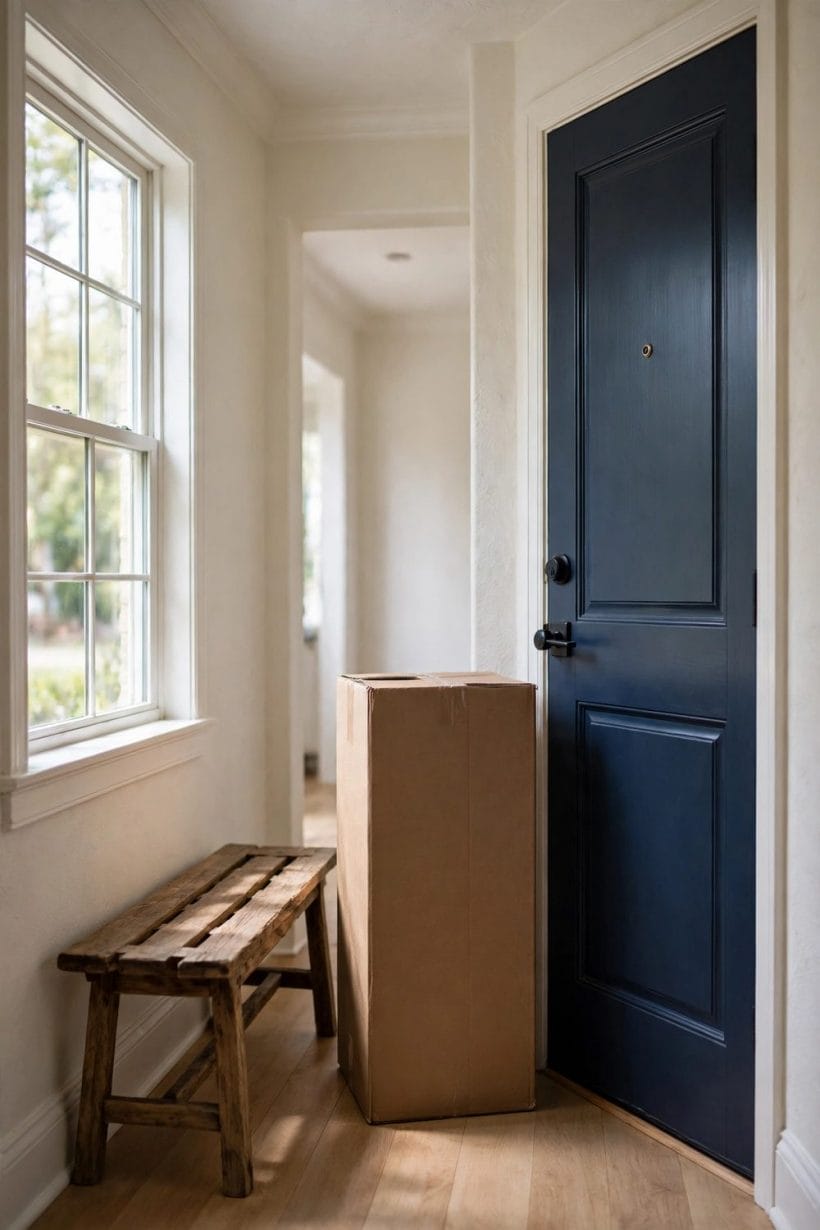
10. Plan the Arrival: Inspection, Assembly and Small-Space Fit
Plan the arrival before the piece leaves the warehouse. Clear the route in, protect the floors along it, and decide where packaging will go once it is opened. On arrival, inspect the piece in daylight before signing anything that says you accept it, and compare what you see with the saved listing: the finish, the dimensions, the moving parts, and the completeness of any fixings or parts. Note any damage or discrepancy at once, photograph it, and follow the damage process you read before ordering, within whatever reporting window the terms state. This is not distrust; it is the ordinary care that makes a good purchase verifiable.
Assembly deserves the same advance thought. Read what the listing says about assembly before you order: whether tools are included, whether instructions are provided, and whether any step needs two people or a particular skill. In a small home, assembly order matters too, because a half-assembled piece can block the very room it is meant to furnish. Our tiny house designs collection shows how compact rooms are planned around pieces that earn their footprint, and that same test applies here: a piece that fits its room, passes its route, and survives inspection has earned its place, whatever store it came from.
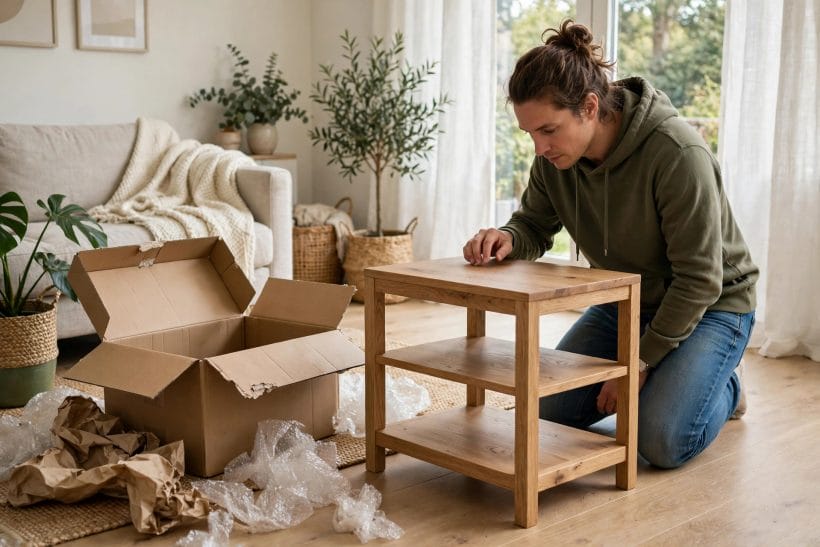
Final Considerations
The stores question has no single right answer, because the right seller for one buyer is the one whose listings, measurements, materials, and written terms answer that buyer’s questions most completely. Judge sellers by their listings rather than their storefronts, compare like with like, read delivery and returns terms as practical plans, and keep a written record of everything you relied on. Do that, and the store you choose will be the one that earned the order on evidence, not on presentation. Keep your room brief beside you, run the ten checks in order, and let the seller that passes them most plainly be the one you buy from.




0 Comments