
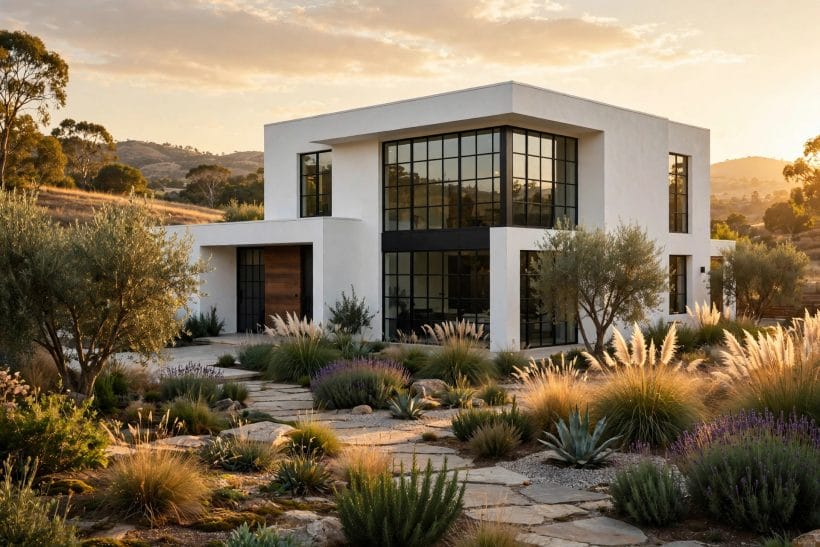
A black window does something no pale frame can quite manage: it draws a clear line around the view. Where a white frame tends to melt into a pale wall, a black frame holds its shape, turning each opening into a picture with a dark border. That simple contrast is the whole appeal. It works on a modern house with flat white walls, on a traditional farmhouse with a wide porch, and in a small cottage dressed with climbing roses, because the effect does not depend on the style of the house. It depends on the relationship between the frame and everything around it, and that relationship can be tuned room by room, wall by wall, until the windows feel like part of the design rather than holes cut into it.
This survey looks at black windows in general terms: the frames, the contrast they create, the rooms they suit, and the way they handle light. It covers grid patterns and plain panes, tall living-room windows and wide bedroom openings, kitchens, cottages and lofts, and it finishes with the practical side of living with dark frames, including upkeep and fitting. Fitting is professional work throughout this guide. Measuring, ordering, sealing and installing windows affects weatherproofing, security and the structure of the wall around the opening, so it belongs with qualified installers, and no part of this guide should be read as instructions for fitting windows yourself.
| Item | What it is |
|---|---|
| Black Windows in Living Rooms | Living rooms are where black windows earn their keep most visibly, because these are the rooms where people sit and look out. |
| Arched and Statement Window Shapes | Most windows are rectangles, and most black windows are rectangles too, but the frame colour comes into its own when the shape itself is unusual. |
| Black Windows in Kitchens | Kitchens suit black windows particularly well, because kitchens already mix hard surfaces, warm timber and pale walls, and a dark frame ties those elements together. |
| Black Windows on Traditional Homes | Black windows are often pictured on modern houses, but they have a long history on traditional ones too, and the farmhouse in the photograph shows why. |
| Black Windows in Bedrooms | Bedrooms ask something different of a window than living rooms do. |
| Black Windows on Cottages and Small Homes | Small homes are where black windows can surprise people, because the instinct is to keep everything pale to make a small space feel larger. |
| Black Windows in Lofts and Large Openings | At the other end of the scale, black windows come into their own in lofts and large open rooms, where the openings themselves are the architecture. |
1. Why Black Frames Stand Out
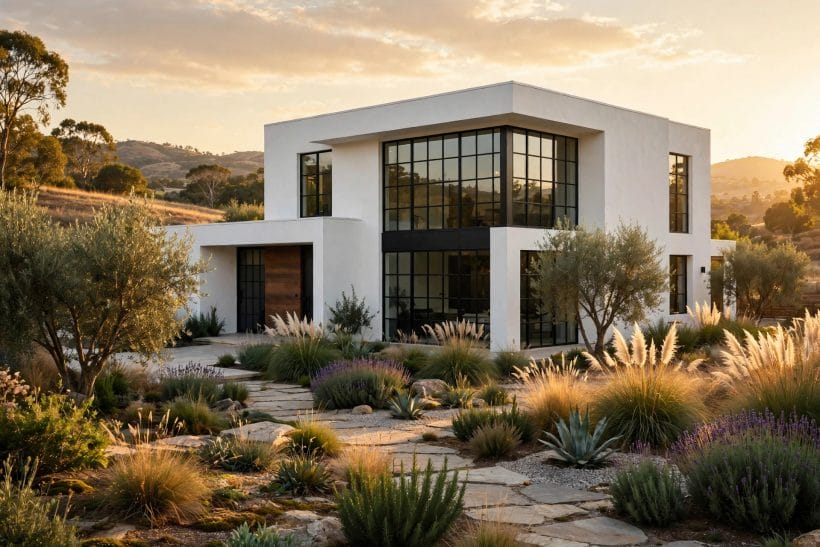
The first thing to understand about a black window is that its strength is contrast. A dark frame against a pale wall reads crisply from the street and from across a room, giving the outside of a house a sense of order and intention. On a white or pale-rendered wall, each window becomes a distinct shape rather than a patch of glass, and a row of matching windows starts to look like a deliberate pattern. That is why black frames suit houses where the walls are light: the lighter the wall, the harder the frame works, and the more the rhythm of the windows contributes to the face the house shows the world.
The same contrast works indoors, though more quietly. Against pale plaster, a black frame outlines the view beyond the glass, whether that view is a garden, a street or open countryside. In a bright room the frame almost disappears into shadow at a glance, and what you notice is the shape of the opening and the light coming through it. In a darker room, the frame steps forward and becomes part of the furniture of the room, echoing dark handles, dark light fittings or dark furniture. Either way, the frame is doing design work that a pale frame would leave undone, which is why a change of frame colour alone can make a familiar room feel newly considered.
Contrast also needs a counterweight, or a room can start to feel severe. Warm wood is the most forgiving partner for black frames: timber floors, a wooden table, woven baskets or a linen sofa all soften the hard edge of the frame without competing with it. Plants do the same job in a different way, their green breaking up the geometry of grids and panes. The trick is not to match the black everywhere, which can turn a room monochrome, but to let it appear in a few considered places and let warmer, softer materials carry the rest. Done that way, black windows read as confident rather than cold.
2. Black Windows in Living Rooms
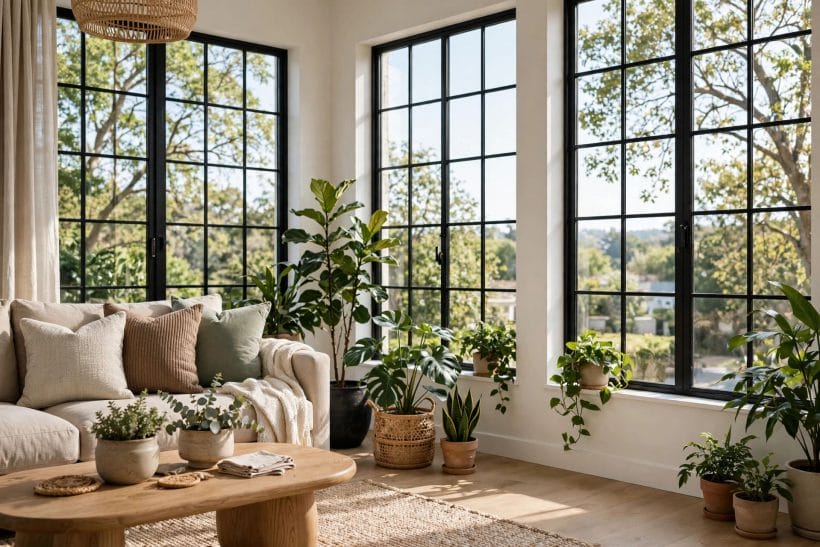
Living rooms are where black windows earn their keep most visibly, because these are the rooms where people sit and look out. Tall grid windows on two walls of a corner room, as in the photograph here, flood the space with daylight while giving the eye a strong pattern to rest on. The dark grid divides the view into panels, almost like a series of framed pictures, and the plants gathered on the sills and floor pick up the green outside and bring it into the room. A pale sofa and a wooden coffee table keep the palette calm, so the windows provide the drama and the furniture provides the comfort.
For smaller living spaces the same idea scales down rather than disappearing. A single well-placed black window can anchor a compact room, giving it a focal point that does not take up any floor space at all. Small living room ideas show how much a room can gain from one strong feature handled simply, and a dark frame is exactly that kind of feature: it asks nothing of the layout and gives back structure. In a small room, keep the surrounding walls pale and the curtains, if you use them at all, light and simple, so the frame and the view stay the stars.
The living room is also the place to think about how black windows relate to the rest of the interior. Tiny house interiors demonstrate the same discipline at an even smaller scale, where every dark accent has to justify itself, and the lesson transfers directly: repeat the black sparingly, in a frame, a handle or a light fitting, rather than scattering it everywhere. A room where the window frames, the door handles and one or two small details share the same dark tone feels pulled together. A room where every surface competes for attention feels restless, however good each piece looks on its own.
3. Arched and Statement Window Shapes
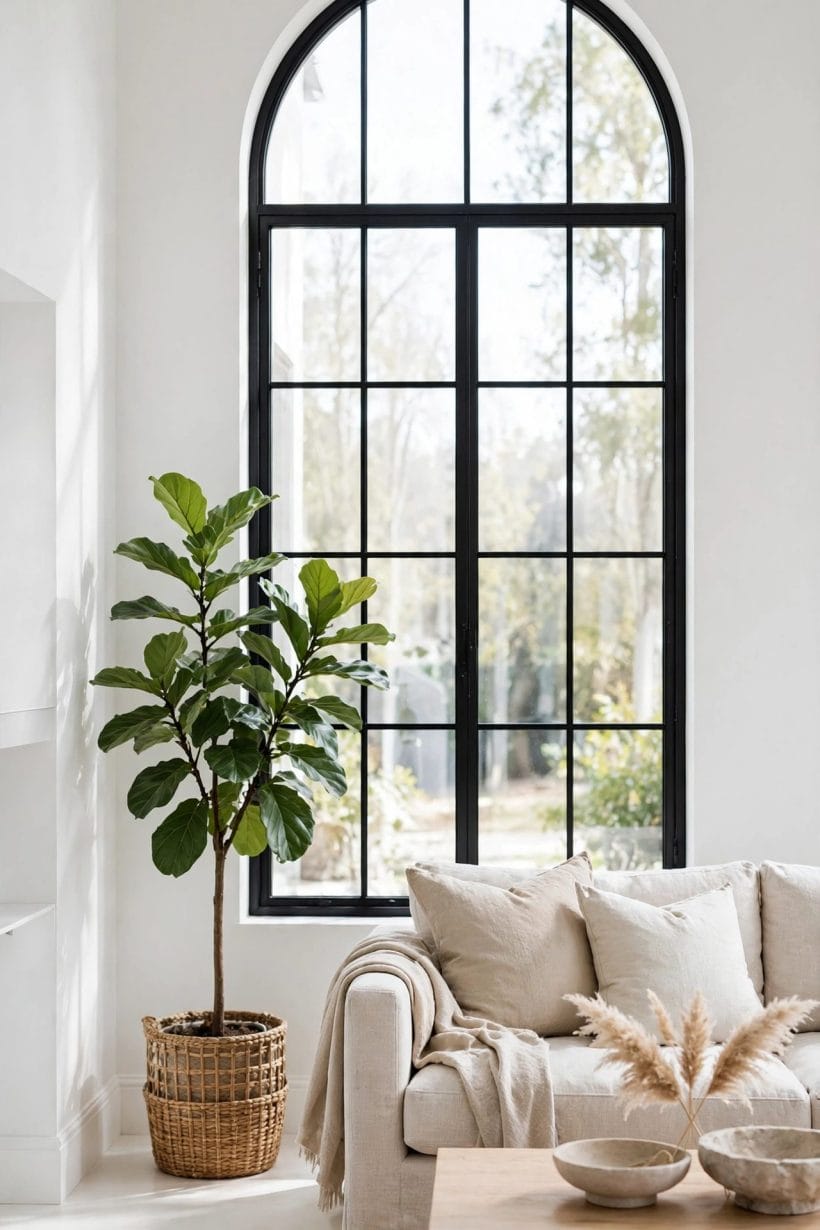
Most windows are rectangles, and most black windows are rectangles too, but the frame colour comes into its own when the shape itself is unusual. An arched window, like the tall arched grid in the photograph here, is already a statement, and a black frame makes the arch impossible to miss. The curve at the top softens the geometry, while the dark grid keeps the whole opening crisp against a white wall. It is a combination that suits rooms with high ceilings and plain walls, where the window can carry the decoration almost on its own.
Statement shapes work best when they are given room to breathe. A single arched window on an otherwise plain wall reads as a deliberate feature, while the same window crowded by heavy curtains, tall furniture or busy wallpaper loses its clarity. If the shape is the star, keep the surroundings quiet: pale walls, simple furniture, and nothing hung on the wall immediately beside the arch that would fight it for attention. The plant beside the window in the photograph is a good model, because it adds life and height without hiding the frame or breaking the line of the arch.
There is also a practical side to unusual shapes worth weighing before falling in love with one. Arched and oversized windows are harder to dress than standard rectangles, so think early about whether you want curtains, blinds or shutters, and whether they can follow the shape without awkward gaps. Privacy matters too, since a tall, unobstructed window that looks wonderful in daylight can feel exposed after dark. None of this rules a statement window out, but it does argue for planning the dressing and the lighting at the same time as the window itself, rather than treating them as afterthoughts.
4. Glass, Light and the View
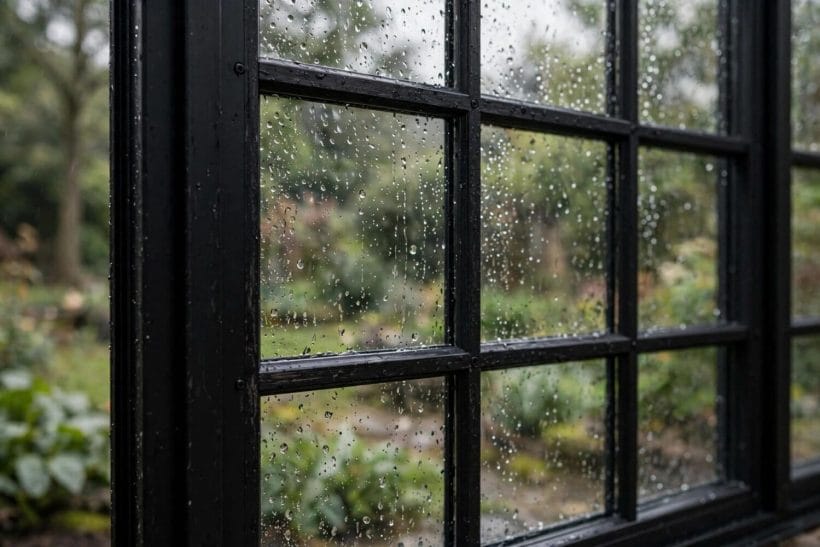
Strip away the frame for a moment and a window is glass, and glass decides how a room feels through the day. Large panes, like the close-up shown here with rain beading on the glass, give an almost uninterrupted view and let in the most light, while divided panes break the same opening into a grid that feels more traditional and more detailed. Neither is better in the abstract. Large panes suit rooms where the view itself is the decoration, such as a room facing trees or open land, while grids suit rooms where the window is part of a patterned interior, or where a plain sheet of glass would feel too bare against the wall.
Black frames change how glass reads, because the dark border makes the glass itself more noticeable. Reflections, raindrops and the changing sky all show up more clearly against a dark edge than against a pale one, which is part of the charm and part of the upkeep bargain. A window that frames the weather beautifully also shows dust, rain marks and fingerprints a little more readily than a pale frame would, and that is worth knowing before choosing dark frames throughout a house. It is not a reason to avoid them, but it is a reason to be honest about how often you are willing to wipe them down.
Light direction matters as much as glass size. A black-framed window facing the morning sun throws a strong grid of light and shadow across the floor, which can be beautiful and can also be glare, depending on where you sit. A window facing away from direct sun gives softer, steadier light all day. Before settling on dark frames for a particular room, it helps to notice where the sun falls in that room through the day and where people actually sit, read or work. A frame colour cannot change the sun, but choosing the right glass and the right dressing for the direction the window faces can make the same light feel generous instead of harsh.
5. Black Windows in Kitchens
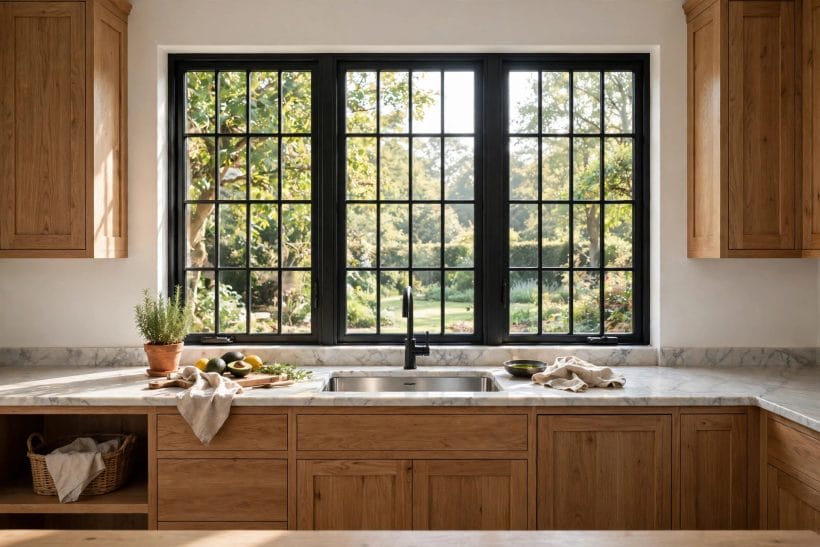
Kitchens suit black windows particularly well, because kitchens already mix hard surfaces, warm timber and pale walls, and a dark frame ties those elements together. The kitchen in the photograph shows the recipe clearly: a run of grid windows above the sink, warm wood cabinets on either side, a pale marble worktop, and daylight pouring across the whole arrangement. The black frames echo the dark tap and pick up the shadows in the room, so the windows feel like part of the kitchen rather than something added to it. It is a calm, orderly look, and it survives daily kitchen life better than a fussier treatment would.
The practical argument for black frames in a kitchen is about focus. A kitchen window usually sits above a sink or a worktop, which means it is looked through many times a day in short glances rather than long gazes. A dark grid gives those glances a pleasing structure without demanding attention, and it frames the garden or street beyond as a backdrop to work rather than a distraction from it. Small kitchen ideas make the same point in miniature: in a hardworking room, one strong, simple feature beats several competing ones, and a dark window frame is one of the simplest strong features available.
There are a couple of kitchen-specific things to keep in mind. Cooking steam and splashes reach windows near hobs and sinks, so the finish on the frame needs to stand up to regular wiping, and the glass will need cleaning more often than glass in a quieter room. Ventilation matters too, since a kitchen window is often the nearest source of fresh air while cooking. Check how the window opens, whether it can be left ajar securely, and whether its handle is easy to reach above a sink or worktop. These are small questions, but in a room used as hard as a kitchen, small questions decide whether a beautiful window stays beautiful.
6. Black Windows on Traditional Homes
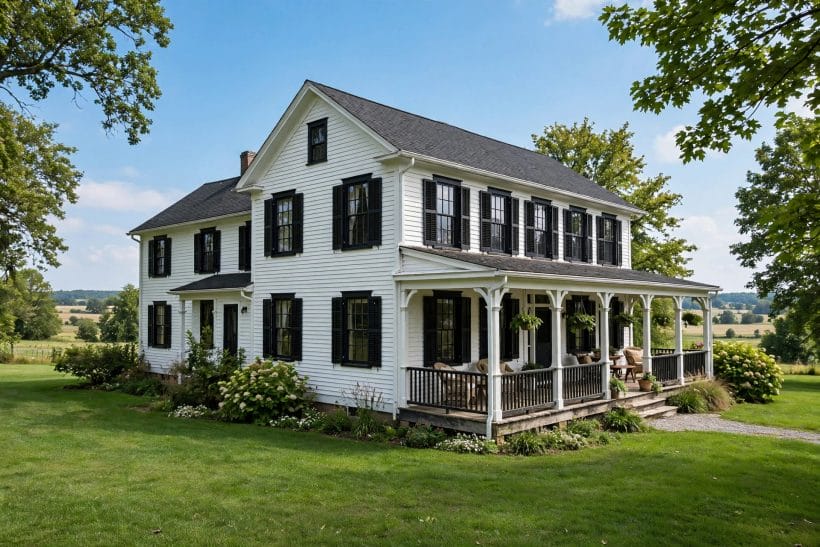
Black windows are often pictured on modern houses, but they have a long history on traditional ones too, and the farmhouse in the photograph shows why. White weatherboard, a covered porch, and a regular rhythm of dark windows with shutters give the house a crisp, cared-for face. The black does not fight the traditional style; it sharpens it, picking out the shape of each opening and giving the long facade a sense of order. Shutters in the same dark tone extend the effect, turning each window into a composed unit rather than a lone rectangle.
On a traditional house, the trick is to respect the existing rhythm. Older houses usually have windows of a consistent size and spacing, and keeping that rhythm while changing the frame colour preserves the character of the facade. Mixing frame colours across a single elevation, or introducing a very different window shape on one side of the house, breaks the pattern the house was built around. Tiny house exterior ideas illustrate the same principle at a smaller scale, where porches, paths and planting are arranged to support the face of the house rather than compete with it, and a traditional facade rewards exactly that kind of restraint.
Traditional homes also raise a question modern houses rarely do: what the neighbours and the street expect. In a row of similar houses, a sudden change of window colour stands out far more than it would on a lone modern house, and in some areas there are local rules about the appearance of fronts. That is not an argument against black frames, which suit a great many traditional streets, but it is an argument for looking at the street as a whole before deciding. A colour that harmonises with the neighbouring houses and the materials of the street will settle in quickly, while one chosen in isolation can take years to feel at home.
7. Black Windows in Bedrooms
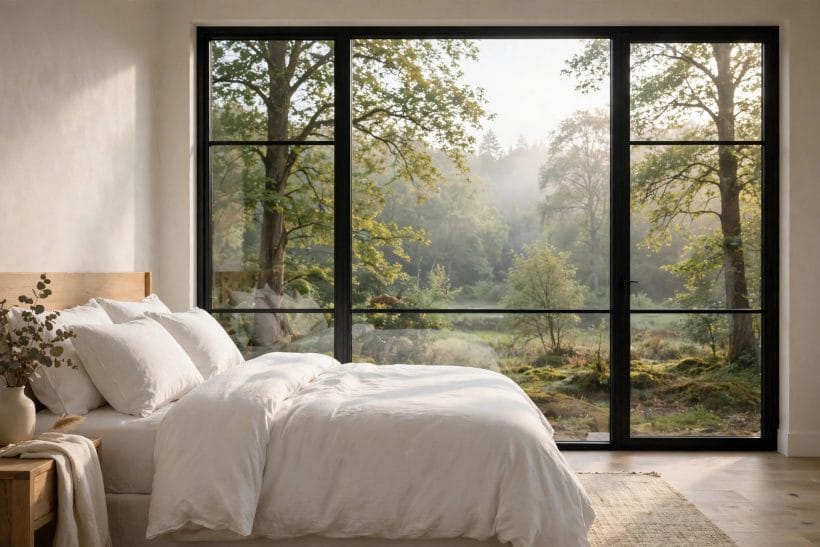
Bedrooms ask something different of a window than living rooms do. The light should be gentle in the morning, the room should feel calm at night, and privacy matters more than a dramatic view. A wide black-framed opening, like the bedroom window wall in the photograph, can meet all three needs at once when it is handled well. In daylight it frames woodland and sky like a landscape picture, and the pale bedding and timber floor keep the room soft around it. At night, with the curtains drawn, the dark frame recedes and the room becomes a quiet, enclosed space again.
The bedroom is also where the dressing of a black window matters most. A dark frame with no dressing looks wonderful in a photograph and can feel exposed in real life, especially in a room used for sleeping and dressing. Linen curtains in a pale tone, a simple blind, or shutters that match the calm of the room all work, and the choice is worth making before the window goes in rather than after. Tiny house bedroom ideas show how a small sleeping space can still carry a strong window when the dressing is kept simple and the bedding stays pale, and the same balance works in a larger bedroom too.
One more bedroom consideration is the view at different hours. A window that faces the sunrise will wake the room early, which some people love and others do not, while a window facing a garden or trees gives a green, restful outlook all day. Black frames make both effects stronger, because the dark border heightens whatever lies beyond the glass. If you are choosing dark frames for a bedroom, spend a little time noticing what the window will actually frame at waking time, at midday and in the evening, and let that, rather than the frame alone, guide where the bed goes.
8. Black Windows on Cottages and Small Homes
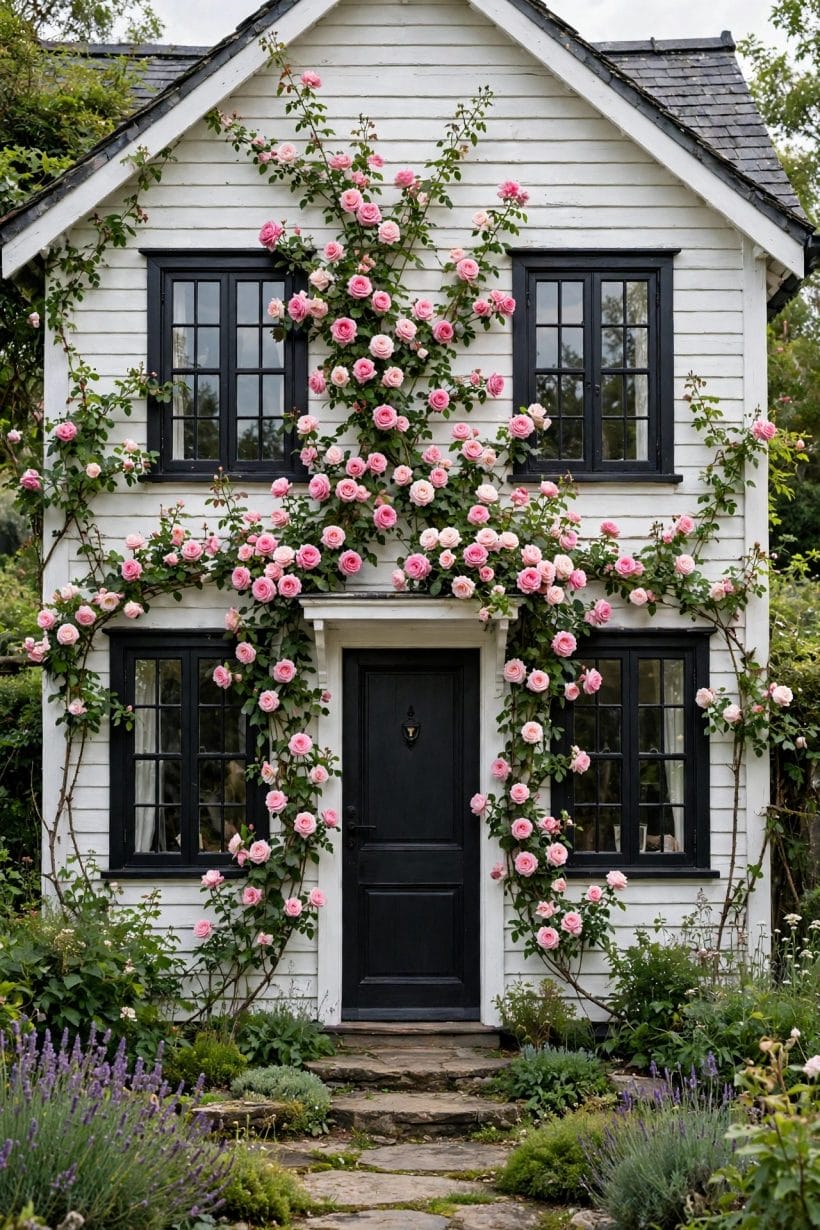
Small homes are where black windows can surprise people, because the instinct is to keep everything pale to make a small space feel larger. The cottage in the photograph shows the opposite approach working beautifully: white boards, a dark door, dark-framed windows, and climbing roses softening the whole front. The black does not shrink the cottage. It gives its small facade a structure, so the eye reads the windows and the door as a composed arrangement instead of a scatter of openings. On a small house, that sense of composition matters more, not less, because there is less facade to absorb a muddle.
For a small home, the number of dark accents deserves care. A cottage front with dark windows and a dark door, as here, feels complete, while adding dark gutters, dark fences and dark garden furniture on top could tip the same front into heaviness. The roses do important work in this picture, breaking the geometry with colour and softness, and a small garden can do the same with planting, a pale path or a light-coloured bench. Tiny house floor plans repay the same kind of thinking indoors, where a strong feature in one place allows everything else to stay simple, and the discipline of one or two dark accents carries a small home further than a whole palette of them.
Small homes also benefit from the way black frames define the boundary between inside and out. In a compact cottage, the window is often the main source of daylight and the main connection to the garden, so a frame that makes the opening feel intentional, rather than incidental, lifts the whole interior. Keep the glass as clear as the room allows, avoid heavy dressings that would block light in a small space, and let the frame do its quiet work of holding the view. A small home with well-framed windows feels larger than the same home with windows that were never really considered.
9. Black Windows in Lofts and Large Openings
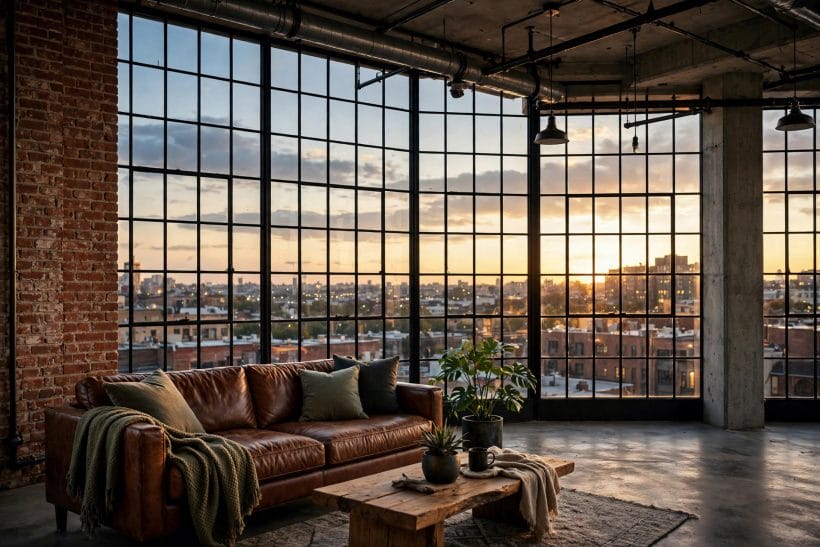
At the other end of the scale, black windows come into their own in lofts and large open rooms, where the openings themselves are the architecture. The industrial loft in the photograph shows floor-to-ceiling grid windows wrapping a corner, with brick, concrete, leather and timber arranged around them and a city sunset beyond the glass. Here the black grid is not an accent at all. It is the structure of the room, dividing a huge sheet of glass into a pattern the eye can follow, and giving a vast, open space a sense of scale and rhythm that plain glass would not provide.
Large openings raise questions that small windows do not. A wall of glass loses and gains heat differently from a solid wall, and it changes how a room sounds and how private it feels, especially after dark when the interior is lit and the glass turns reflective. These are matters for the professionals designing and fitting the windows, and they deserve discussion before the openings are decided, not after the glass is in. The payoff for getting them right is a room that feels connected to the world outside without feeling exposed to it, and a grid that turns an expanse of glass into something with character.
The loft also shows how black frames gather a mixed interior together. Brick, concrete, leather, timber and plants could easily feel like separate ideas in one room, but the repeated black grid gives them a common thread, echoed by dark light fittings and dark metalwork. Tiny house living room ideas use the same trick at the opposite scale, where a repeated dark accent stops a small, mixed room from feeling scattered. Whether the room is vast or compact, a repeated frame colour is one of the simplest ways to make varied materials feel like one room.
10. Living With Black Frames: Upkeep and Professional Fitting
Living with black windows is mostly a matter of honest expectations. Dark frames show dust, pollen and rain marks more readily than pale ones, so they reward a regular, gentle wipe with a soft cloth and plain water, and they punish neglect a little more visibly. The glass needs the same attention, since smears and marks show up against a dark border. None of this is onerous, but it is real, and it is worth weighing if the windows in question are tall, hard to reach, or numerous. A house full of dark frames that nobody enjoys cleaning will gradually look less crisp than the day they went in.
The finish of the frame matters for upkeep too, in general terms. Some dark finishes are smooth and wipe clean easily, while others have a texture that holds dust, and some are more vulnerable to fading in strong sun or to marking from garden tools and children’s games near the glass. Ask the supplier how the finish is meant to be cared for, what cleaning products to avoid, and how it is expected to age, and keep that guidance with the house paperwork. A frame chosen with its maintenance in mind will look better for longer than a frame chosen on appearance alone, however striking it looks on the day it is fitted.
Fitting itself is the part of this guide where the professional-only rule matters most. Installing a window means opening up a wall, supporting what sits above the opening, sealing against weather, and leaving the window secure, level and properly drained. Get any of that wrong and the result can be draughts, damp, sticking sashes or a weakened wall, none of which shows up immediately. Qualified installers carry the knowledge, the tools and the guarantees for this work, and they should also advise on ventilation, safety glass where it is needed, and any local rules that apply to the property. If a window needs repair, adjustment or replacement, the same rule applies: have a professional look at it rather than improvising a fix, because a window is part of the fabric of the house, not a piece of furniture.
Final Considerations
Black windows are not a trend to adopt or avoid on principle. They are a design tool, and like any tool they work beautifully when matched to the house, the room and the light, and less well when applied without thought. The pattern running through this survey is consistent: dark frames sharpen pale walls, give grids and arches a clear outline, frame views like pictures, and gather mixed materials into a coherent room. They ask in return for a little more cleaning, a little more thought about dressing and privacy, and professional fitting from start to finish.
If you are considering black windows for your own home, start with the rooms you live in most and the walls that are palest, and picture the frame against the view beyond the glass at different hours of the day. Keep the surrounding palette warm and simple, let wood and plants soften the contrast, and discuss glass, ventilation and fitting with a qualified installer before anything is ordered. Chosen that way, a black window is not a bold gesture for its own sake. It is a quiet piece of structure that makes the house, inside and out, feel more deliberately composed.




0 Comments