
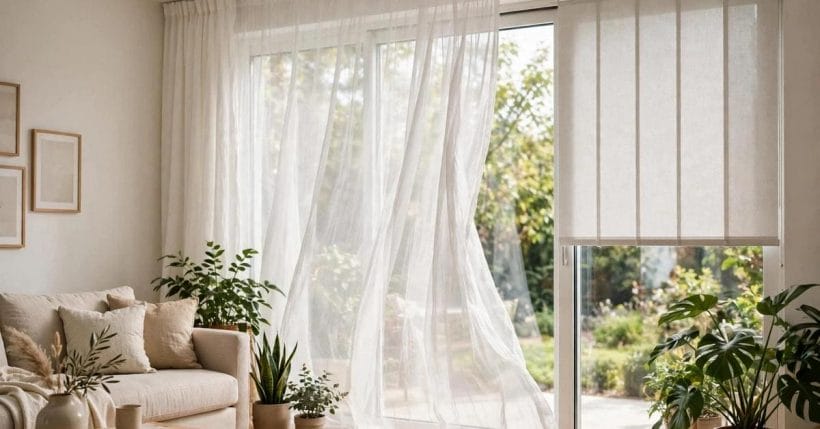
A sliding door is a different kind of opening from a window. It is wide, it moves, and it is used many times a day, so the covering over it has to do more than look pleasant from the sofa. It has to let daylight in when the room wants it, soften glare when the sun is strong, give privacy in the evening, and still leave the moving panel free to glide. When those jobs are held in balance, the door feels like part of the room rather than an obstacle in front of it. That balance is the whole subject of sliding door treatments, and it is worth planning before any fabric or blind is chosen.
The sections below work through the forms that suit a sliding door best: sheers, vertical blinds, panel tracks, layered drapes and roller shades, followed by colour, room layouts and the practical details that keep the door easy to use. Each form is described on its own terms, because a treatment that suits a quiet bedroom door may not suit a busy living-room door that opens to the garden all day. Nothing here asks the reader to fit anything themselves. Fitting a treatment over a sliding door, with its tracks, fixings and moving parts, belongs with a qualified professional, and the rest is about choosing a form, a fabric and a colour that suit the room.
Start by watching how the door is used. Notice which panel moves and which stays fixed, where people walk through, where the light falls at different times of day, and what the view beyond the glass is worth keeping. A door that frames a garden is a different brief from a door that faces a neighbour, and a door used from morning to night is a different brief from one opened only in the evening. Those observations, not any single product, are what make the choice feel right once it is in place.
| Item | What it is |
|---|---|
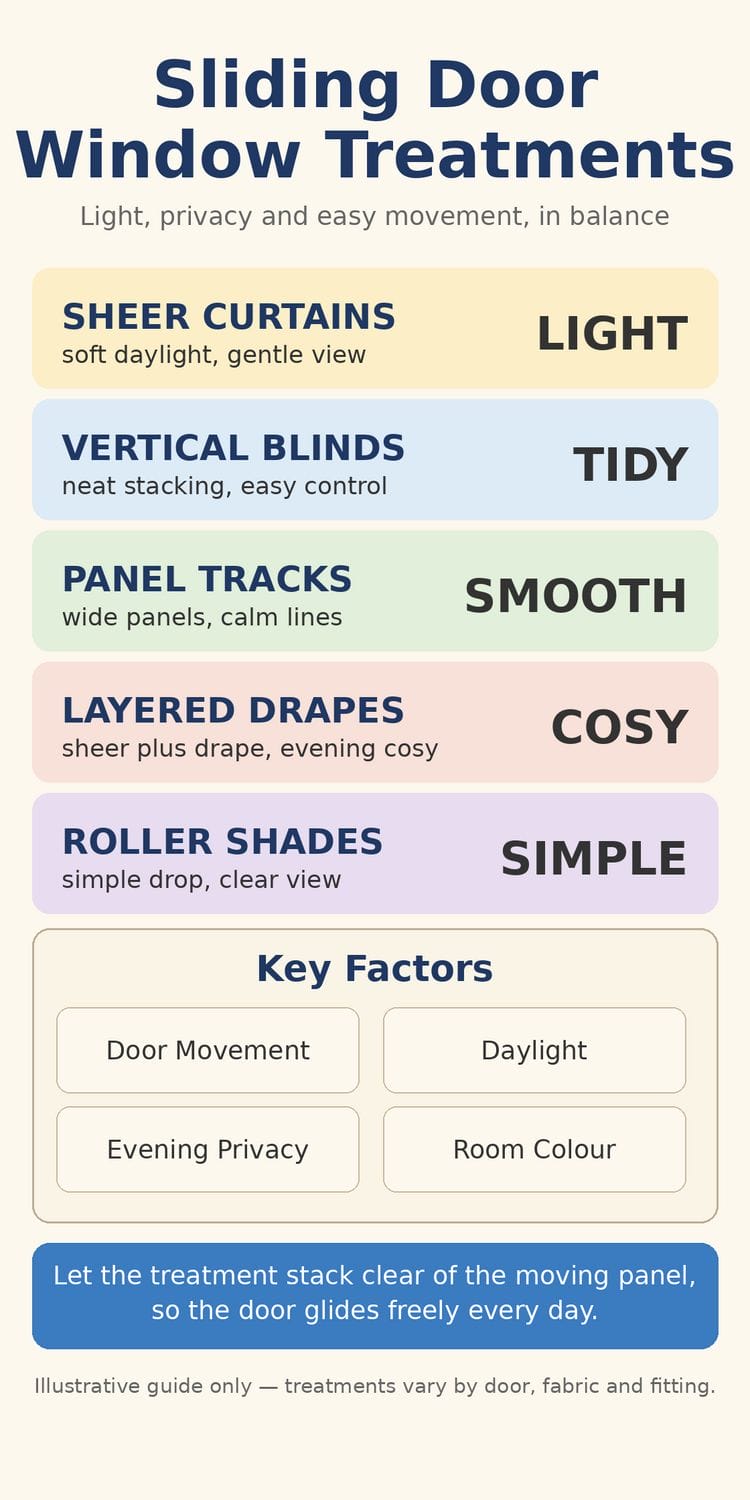
| Sheers for Soft Daylight | Sheer curtains are the gentlest way to dress a sliding door. |
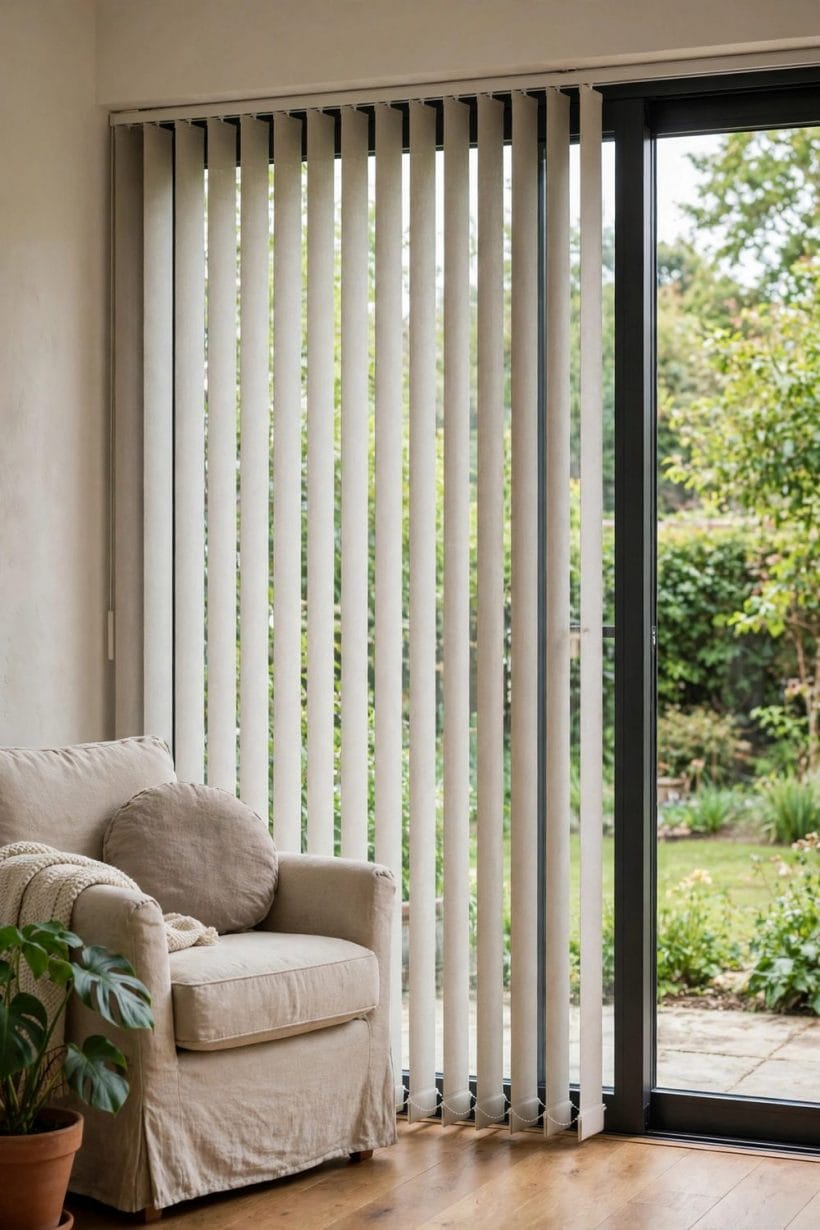
| Vertical Blinds for Neat Control | Vertical blinds are the most door-shaped treatment of all, because their upright slats echo the tall, narrow proportions of a sliding door. |
| Panel Tracks for Wide Glass | Panel tracks suit the widest sliding doors, where a single curtain would look lost and a blind would look busy. |
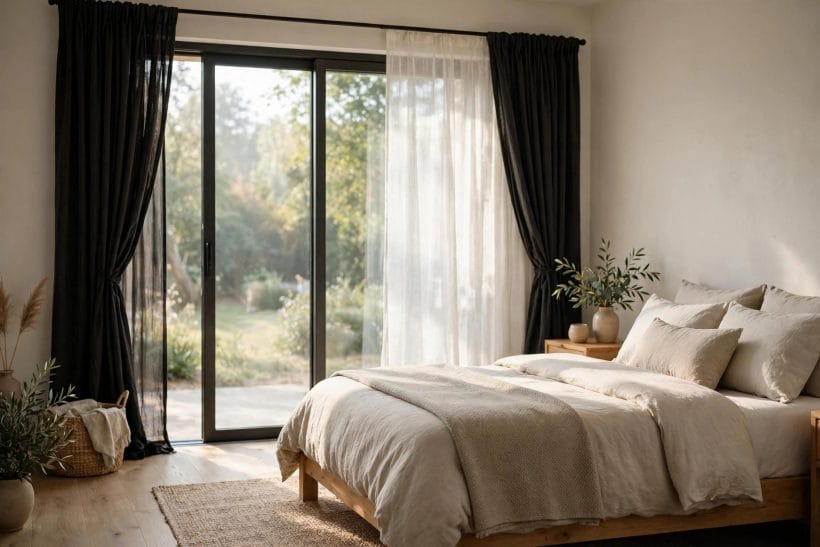
| Layered Drapes for Evenings | Layering is how a sliding door serves both day and night. |
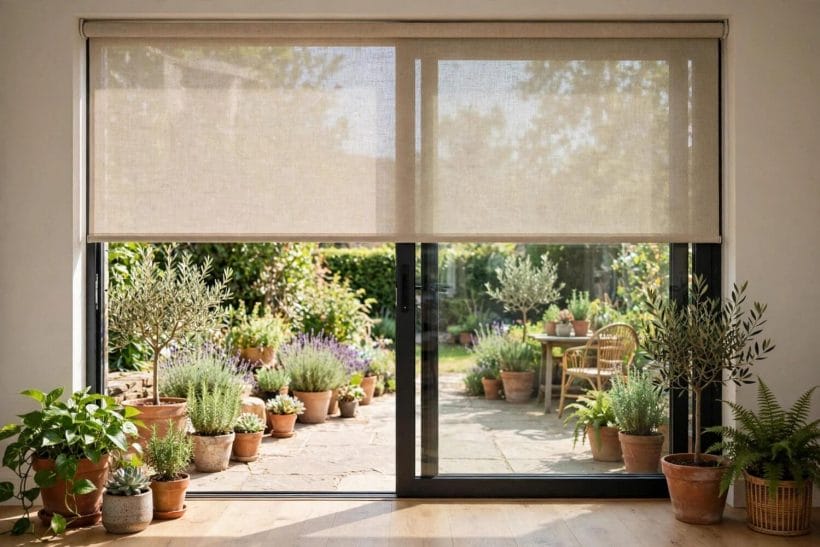
| Roller Shades for a Simple Drop | A roller shade is the simplest treatment for a sliding door, and simplicity has its own appeal. |
1. Let the Door Lead the Layout
The first decision is not about fabric at all. It is about where the treatment sits when it is open. A sliding door needs a clear stack: a place to one side, or both sides, where the curtain or blind gathers without blocking the moving panel or the walkway through it. When the stack is planned first, the room keeps its easy flow, and the treatment looks intentional even when it is fully drawn back. When the stack is an afterthought, the treatment can crowd the doorway and make a wide opening feel narrow.
Look at the wall space beside the door, the ceiling line above it, and the furniture nearest to it. A treatment that stacks neatly to one side suits a door with generous wall space on that side, while a pair of curtains drawn to both sides can frame a wide door and keep the centre clear. Either way, the aim is the same: the door opens fully, the handle stays reachable, and nobody has to push fabric aside to step through. A professional fitter will confirm what the wall and the track can carry, and that conversation is best had before a form is settled on.
The living room is where this matters most, because the sliding door there is often the room’s largest source of daylight and its main route outside. Useful living room ideas can help at this stage, judged against the door in front of you rather than copied from another room. Notice how the door relates to the seating: a treatment that frames the view can make the seating feel connected to the garden, while one that closes the room off can make the same seating feel enclosed. The layout, in other words, is the design.
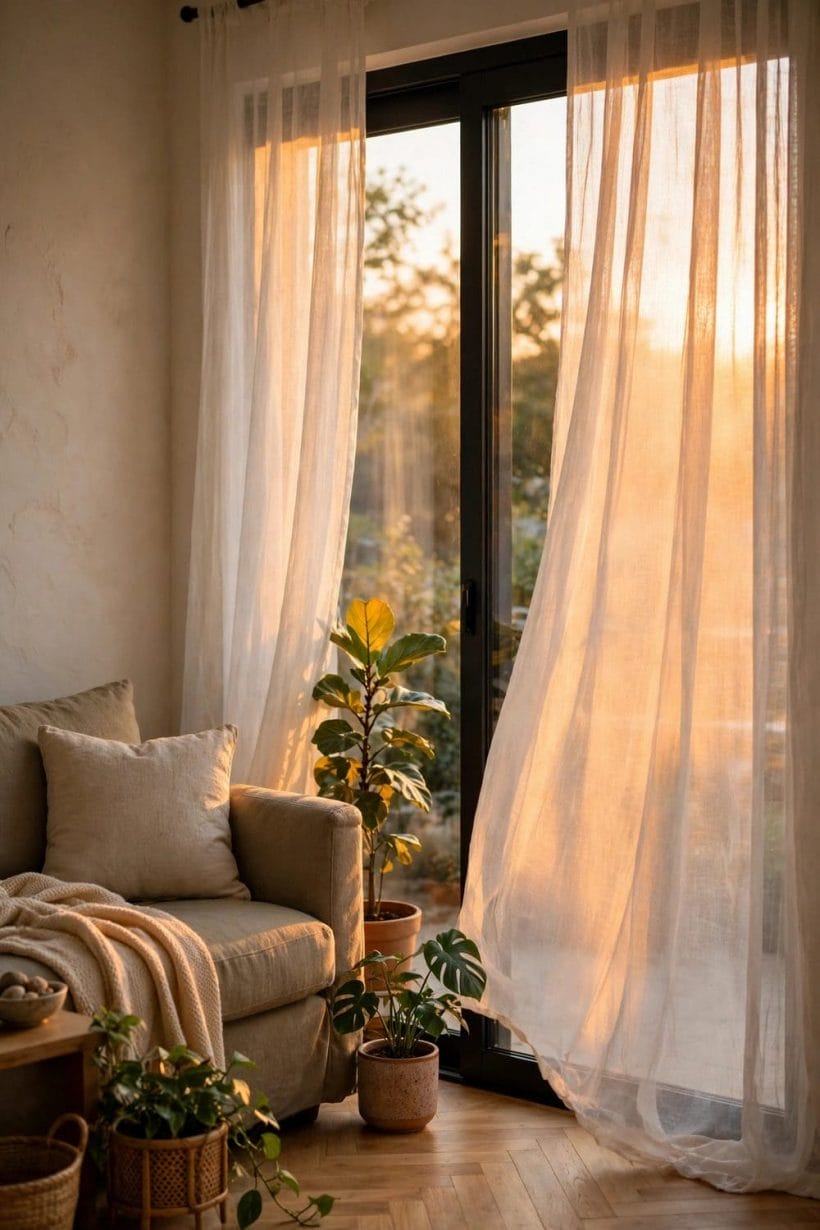
2. Sheers for Soft Daylight
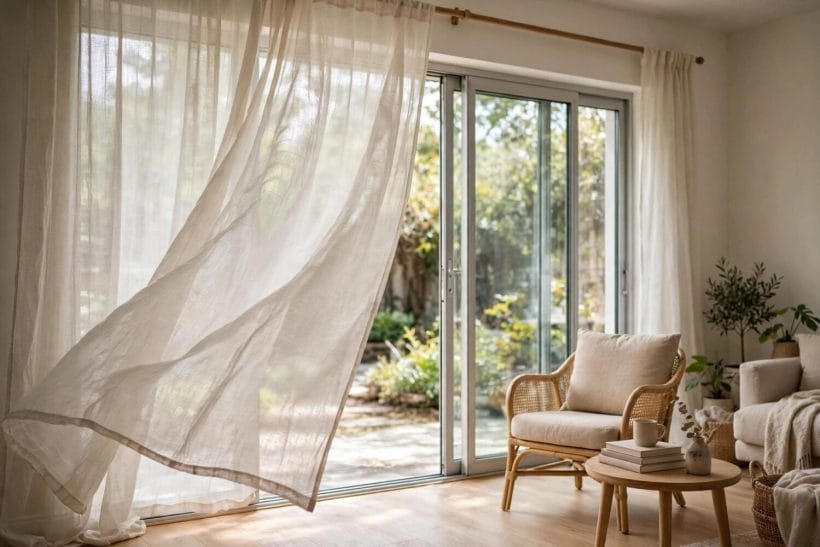
Sheer curtains are the gentlest way to dress a sliding door. They soften bright daylight, take the edge off glare, and keep a sense of the garden beyond the glass while giving the room a light layer of privacy during the day. In a room that lives on daylight, that softness is a real quality: the room stays bright, the view stays present, and the hard edge of the glass is replaced by fabric that moves slightly with the air.
Sheers work best where daytime privacy is light rather than total, and where the room does not need to be closed off at night by the sheer alone. They can be the whole treatment on a sheltered door, or the first layer under a heavier drape that closes in the evening. Colour matters here more than pattern: white and pale neutrals keep the light feeling clean, while a warm off-white can take the chill out of a north-facing room. Keep the fabric plain and the heading simple, so the eye rests on the light rather than on the curtain itself.
3. Vertical Blinds for Neat Control
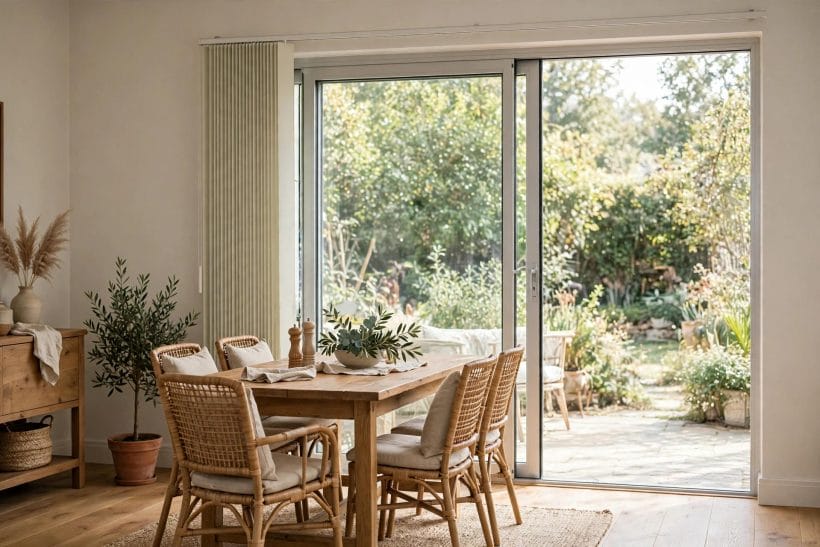
Vertical blinds are the most door-shaped treatment of all, because their upright slats echo the tall, narrow proportions of a sliding door. They stack to one side in a slim bundle, they can be tilted to tune the light without being drawn, and they can be drawn fully across when evening privacy is wanted. For a door that is used constantly, that combination of a slim stack and adjustable light is hard to beat, and it keeps the doorway feeling orderly rather than dressed up.
The look of vertical blinds depends on the slat material and colour. Fabric slats in a soft neutral sit quietly against the wall and let the garden do the talking, while a crisper finish gives a tidier, more architectural feel. Either way, the slats should hang straight and move smoothly along their track, and the stack should clear the moving panel completely. That smooth movement is a fitting matter, and it is worth having a professional confirm it, since a blind that catches on the door handle or the track will be a daily irritation rather than a pleasure.
4. Panel Tracks for Wide Glass
Panel tracks suit the widest sliding doors, where a single curtain would look lost and a blind would look busy. Wide, flat panels of fabric glide along a track and stack behind one another, so the treatment reads as a calm, architectural plane rather than a gathered curtain. When the panels are drawn, they cover the glass in clean vertical bands; when they are stacked, they leave most of the glass clear and the doorway fully usable.
Because the panels are wide, the fabric choice shows. A plain linen-look fabric keeps the effect calm, while a subtle texture gives the panels depth without pattern competing with the view. Panels also suit rooms where the door is a design feature in itself: a dining area opening to a terrace, for example, where the treatment should frame the occasion rather than fuss over it. As with every form in this guide, the track and its fixings are a professional fitting job, and the panels should be planned so that the stack never blocks the panel that moves.
5. Layered Drapes for Evenings
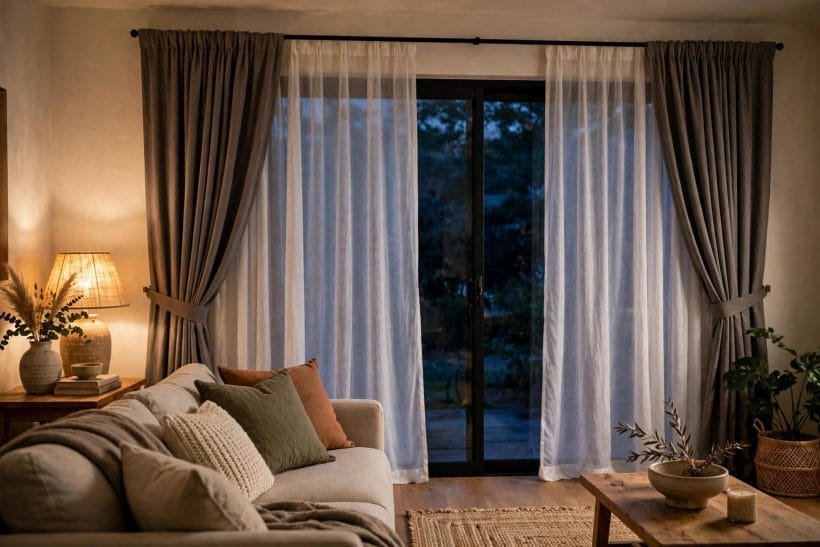
Layering is how a sliding door serves both day and night. A sheer layer handles the daylight hours, and a heavier drape closes over it in the evening for privacy and a cosier feel. The two layers work together rather than competing: the sheer keeps the room bright when it is drawn, and the drape gives the room weight and warmth when the light outside has gone. In a living room used into the evening, that double life is often what makes the door feel finished.
Layering needs room to breathe. Two layers need a wider stack than one, so the wall space beside the door matters even more, and the drape should be full enough to fall in soft folds rather than hanging flat. Colour can do quiet work here: keep the sheer pale so daylight stays clean, and let the drape carry the room’s deeper colour, picked up from cushions, rugs or artwork. The result is a door that changes character with the hour, bright and open by day, enclosed and restful by night.
6. Roller Shades for a Simple Drop
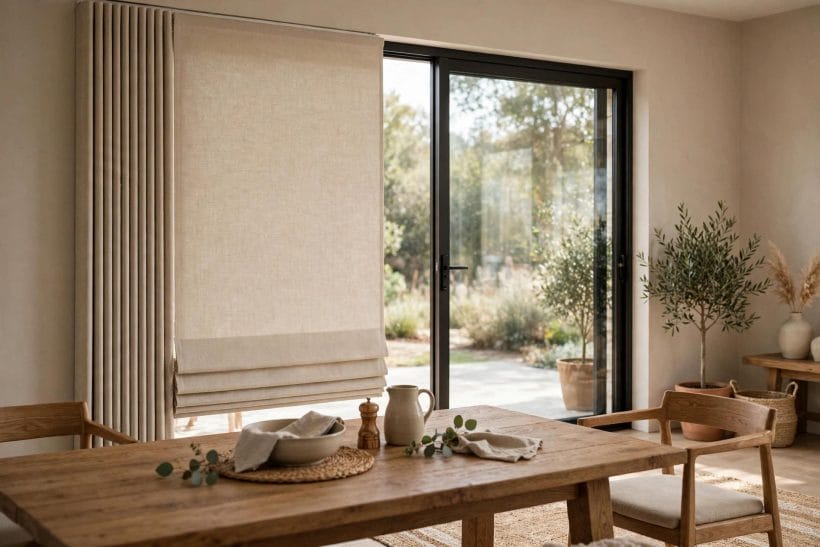
A roller shade is the simplest treatment for a sliding door, and simplicity has its own appeal. A single drop of fabric lowers to soften light and give privacy, and rises to leave the glass completely clear. On a door that opens to a patio or garden, that clear rise matters: nothing gathers at the sides, nothing softens the view, and the door reads as a clean opening when the shade is up.
Roller shades suit rooms where the treatment should be felt rather than seen. A light-filtering fabric keeps the room bright while taking the edge off direct sun, and a plain colour lets the garden beyond the glass carry the interest. The practical point to settle is the drop itself: the shade should lower evenly and stop where it is wanted, and it should never foul the moving panel or its handle. A professional fitter will set the brackets and the drop so the shade works smoothly from the first day.
7. Colours That Sit With the Room
Colour is where a sliding door treatment either joins the room or fights it. Because the treatment covers a large area of glass, its colour has a bigger effect than a cushion or a picture frame, so it pays to choose from the room’s existing palette rather than from a swatch held up in isolation. White and pale neutrals are the safest route: they keep daylight clean, they sit quietly against most wall colours, and they let the view beyond the glass stay the focus.
Deeper colours have their place, especially in a room that wants warmth or drama in the evening. A soft grey, a warm taupe or a muted green can ground a large expanse of glass and tie the door to the room’s furniture. The test is simple: hold the fabric against the wall colour, the floor and the largest piece of furniture, and see whether the three sit together without one shouting. Useful interior paint colours can guide that comparison, since the wall colour beside the door is the treatment’s nearest neighbour. Avoid a treatment colour that matches nothing else in the room, however attractive it looks on its own.
8. Living Rooms, Bedrooms and Garden Rooms
Different rooms ask different things of the same door. A living-room door is used all day and needs a treatment that moves easily and keeps the garden in view, so sheers, vertical blinds or panel tracks often suit it best. A bedroom door, by contrast, is judged in the morning and at night: it needs a treatment that lets in soft morning light and closes the room off properly after dark, so a layered drape or a heavier fabric earns its place there. Useful bedroom ideas can help weigh that day-and-night balance against the rest of the room.
A garden room or a room that opens to a porch sits between the two. The door there is a threshold as much as a window, and the treatment should respect that coming and going: a slim stack, a clear walkway, and a fabric that does not snag on the handle or the threshold. Useful porch ideas can help here, since the space beyond the door shapes how the treatment is used as much as the room inside does. In every room, the question is the same: what does this door have to do, at the hours this room is actually used?
9. Keep the Moving Panel Clear
The single most practical point in this whole guide is also the easiest to overlook: the treatment must never get in the way of the door itself. Curtains that bunch over the handle, blinds that catch on the track, and panels that stack across the moving panel all turn a good-looking treatment into a daily annoyance, and they can wear the fabric and strain the fittings over time. Planning the stack, the track and the handle clearance before anything is fitted prevents all of it.
This is also where professional fitting earns its keep. A qualified fitter will check the wall and ceiling fixings, set the track level, confirm the stack clears the moving panel, and test the door through its full travel with the treatment in place. The reader’s job is to notice and to ask: does the door glide freely with the treatment drawn, half-drawn and stacked? Does the handle stay reachable? Does the fabric clear the threshold? If the answer to any of those is no, the fitting needs adjusting before it is accepted, however good the fabric looks.
10. Care, Light and the View Beyond
A sliding door treatment lives in sunlight, dust and daily handling, so care is part of the choice rather than an afterthought. Sheers and light fabrics can usually be freshened at home following the maker’s guidance, while heavier drapes and blinds may need professional cleaning. Either way, a treatment that can be kept clean without a struggle will look better for longer, and that is worth weighing alongside colour and form when the choice is made.
Light is the other long-term consideration. A treatment that is only ever fully open or fully closed misses the pleasure of a sliding door, which is the ability to tune the room through the day: sheer by morning, tilted or half-drawn at midday, closed in the evening. And the view beyond the glass deserves a say too. A garden that has been planted and tended is part of the room when the door is dressed lightly, so the planting outside and the treatment inside should be thought of together. Useful backyard landscaping ideas and exterior ideas can help that joint thinking, since what is seen through the glass is half the treatment’s effect.
Final Considerations
Choosing among sliding door treatments comes down to three quiet questions. How is the door used, hour by hour? How much daylight and evening privacy does the room need? And where will the treatment stack when the door is open? Answer those, and the form usually chooses itself: sheers for soft light, vertical blinds for neat control, panel tracks for wide glass, layered drapes for evenings, or a roller shade for simplicity. Colour then follows the room, and fitting follows a professional, so the door keeps gliding freely for years.
It helps to live with the decision before it is made final. Look at the door at different times of day, notice where the sun falls and where privacy matters, and imagine the treatment drawn, half-drawn and stacked. A treatment that suits all three states, in all three lights, is the right one, whatever its form. More home design ideas can round out that thinking, but the door itself remains the best brief: wide, moving, used every day, and deserving of a covering that works as well as it looks.


0 Comments