
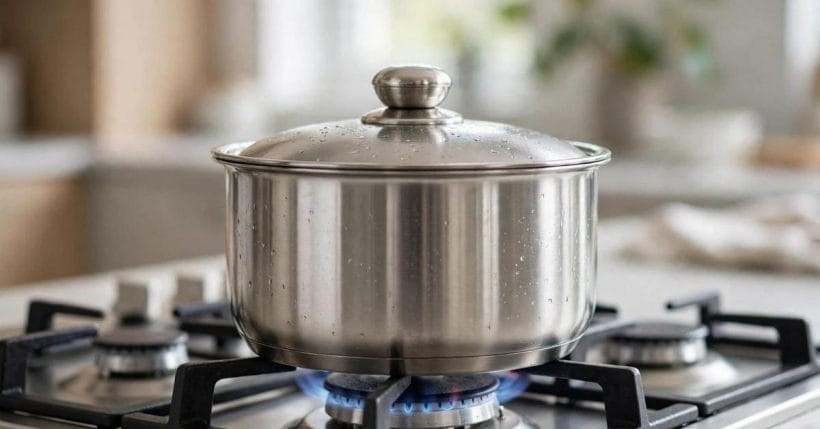
Anyone who has stood in a kitchen with a favourite pot in hand has asked a version of the same question: can this piece of cookware go on a gas stove, and how would you know? It is a sensible question, because a gas hob works differently from other kinds of heat. An open flame meets the base of the pan directly, heat rises around the sides, and handles, lids and coatings all sit close to that flame. The answer is never the same for every piece, and this guide does not pretend otherwise.
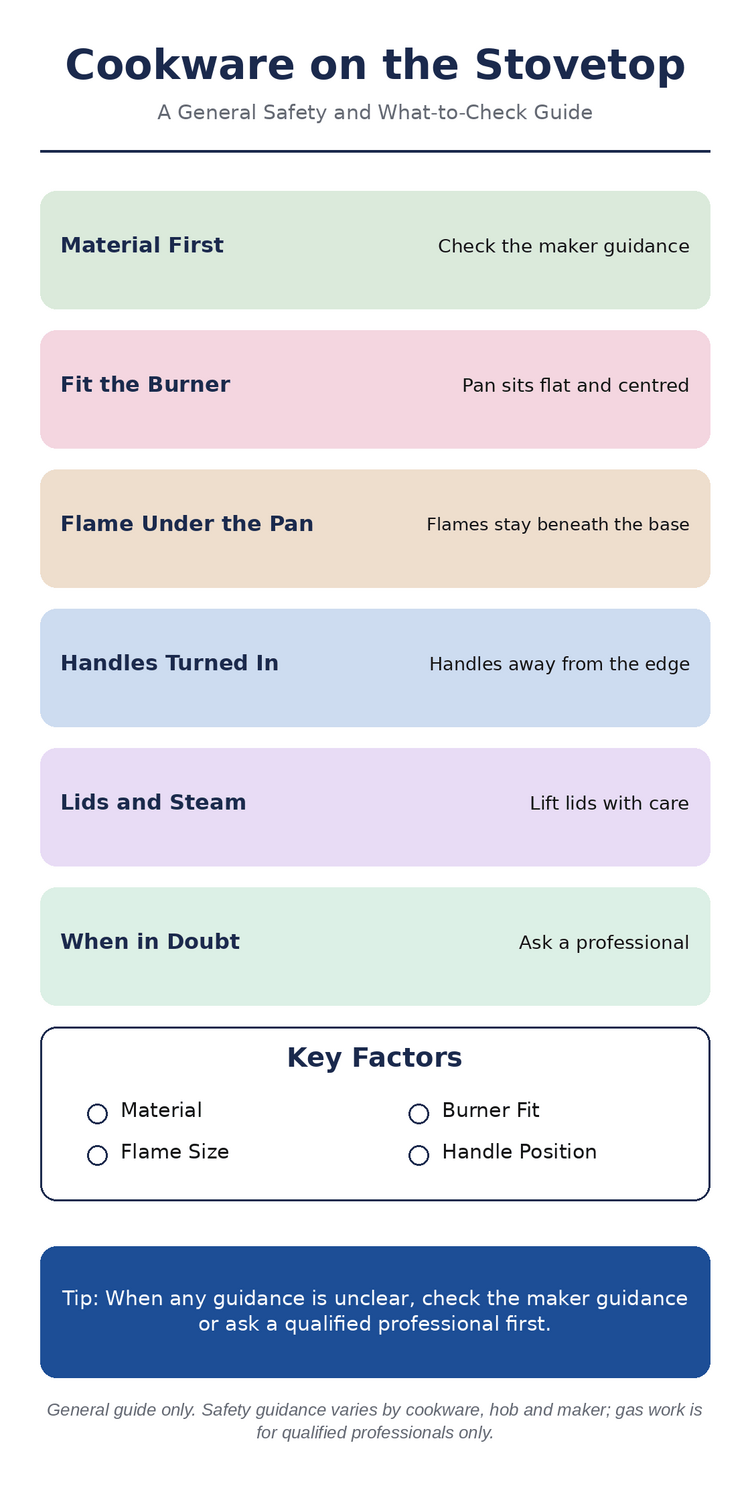
What follows is a general safety and what-to-check guide. It names no maker, ranks no product, and offers no verdict on any single piece of cookware. Instead, it walks through the checks that apply to cookware in general terms: the maker guidance that comes with a piece, the material it is made from, how it sits on a burner, where the flame reaches, and the warning signs that mean a piece should be checked before it is used again. If any check in this guide conflicts with the guidance that came with your own cookware, the guidance that came with your cookware wins. Gas installation, repair and adjustment work belongs to a qualified professional throughout, and nothing here is a substitute for that professional advice.
1. Start With the Maker Guidance, Not the Shop Shelf
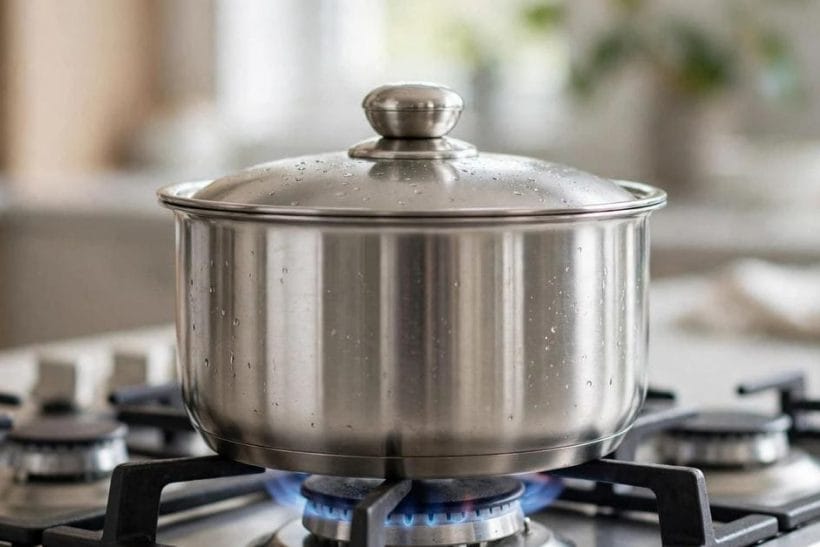
The single most useful habit in this whole guide is also the simplest: read what the maker says about the piece you own. Cookware is made in many materials and many forms, and makers test their own pieces for the kinds of heat they are meant to meet. The leaflet, the manual, or the markings on the base of a piece will usually say, in general terms, which heat sources it is made for and which it is not. That guidance is specific to that piece in a way no general article can ever be, and it is the first thing to check before a new pan meets a flame.
It helps to keep that guidance somewhere you can find it again. A leaflet tucked into a drawer, a photograph of the markings on the base, or a note of where the manual lives online can save a guessing game months later, when a piece has been washed many times and the original packaging is long gone. If the guidance is missing, faded, or unclear, do not fill the gap with a guess. Ask the maker, or ask a qualified professional, and leave the piece off the hob until you have an answer you trust.
There is a second reason to start here. General guides, including this one, can describe how materials behave in broad terms, but they cannot know how a particular piece was made, joined, coated or finished. Two pans that look alike on a shelf can carry different guidance, and the difference may be invisible from the outside. Treating the maker guidance as the final word is not caution for its own sake; it is the only check that is actually about the pan in your hand. For more ideas on planning the room around the hob, see these kitchen ideas.
2. Know Your Cookware Materials in General Terms
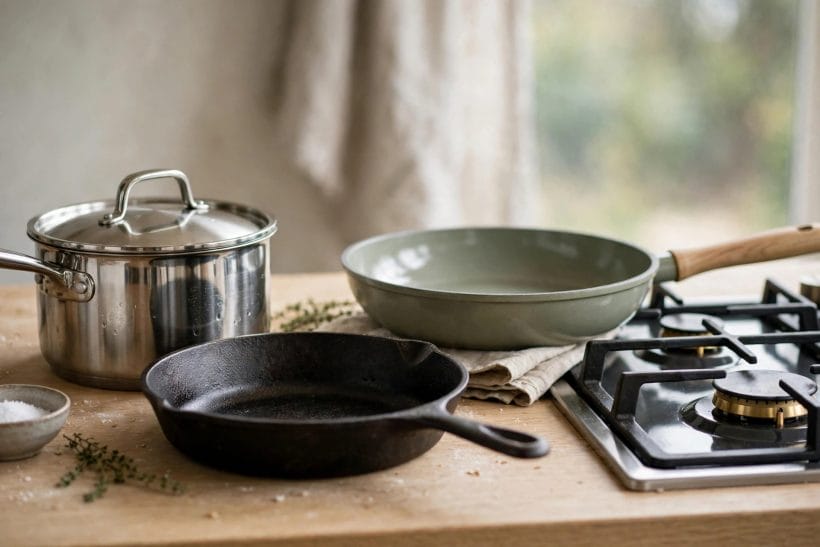
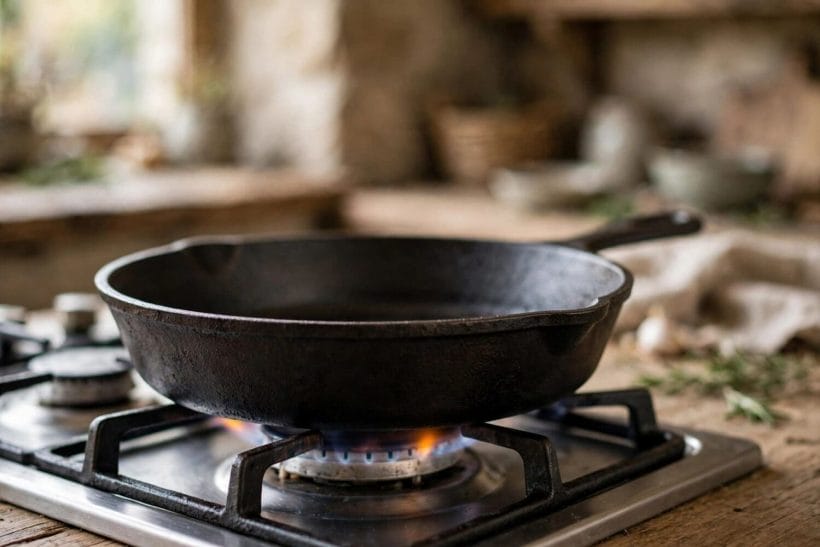
Cookware materials behave differently over an open flame, and a rough sense of those differences helps you ask better questions about any piece. Metal pans in general terms conduct heat well and are made to meet direct heat, which is why they are a common sight on gas hobs. Cast iron in general terms is heavy, holds heat for a long time, and needs a steady hand and a burner that can support its weight. Coated pans in general terms rely on a surface layer that must be kept away from overheating and from flames that climb the sides. Each of these broad behaviours is a starting point for a question, not a verdict on any pan you own.
Glass and ceramic pieces call for a different kind of attention, and they get a fuller section of their own later in this guide. In general terms, they respond to heat more slowly and dislike sudden change, which matters when a flame is involved. A piece that is made for gentle, even oven heat is not automatically made for the direct, uneven heat of a burner, and the maker guidance is the only reliable way to tell one from the other. If a piece has no guidance you can find, treat that as a reason to pause rather than a reason to try it and see.
It is also worth remembering that a pan is more than its body. Handles, knobs, lids and joins are made from their own materials, and each of them meets heat in its own way. A metal body with a handle that softens in heat, or a lid with a knob that cannot take direct flame, changes what the whole piece can safely do. When you check a piece, check all of it, not just the part that holds the food.
3. Match the Pan to the Burner
A pan that sits well on its burner is a quieter, steadier thing to cook with. In general terms, the base should sit flat on the grate, without rocking, and the pan should rest centred over the burner rather than hanging off one side. A pan that wobbles will not heat evenly, and a pan that tips easily is a spill waiting for a nudge. Before a pan is used, set it on the cold grate, give it a gentle press on each side, and see whether it sits still. If it rocks, that pan and that burner are not a good match, whatever the pan is made from.
Size matters here in a plain, practical way. A very small pan on a very large burner leaves flame reaching past the base, where it can heat handles and waste heat into the room. A very large pan on a very small burner may sit unevenly and heat only in the middle. Neither mismatch is a reason to force the pairing; it is a reason to choose a different burner, or a different pan, for that job. The right match is the one where the base covers the burner sensibly and the flame stays underneath the pan.
Weight matters too, especially in a small kitchen where a hob may be compact and a grate may be light. A heavy piece needs a grate that supports it without flexing, and it needs a cook who can lift it safely when it is full and hot. If a pan feels awkward to lift when it is empty, it will feel worse when it is full, and that is a practical safety check in its own right.
4. Keep the Flame Under the Pan
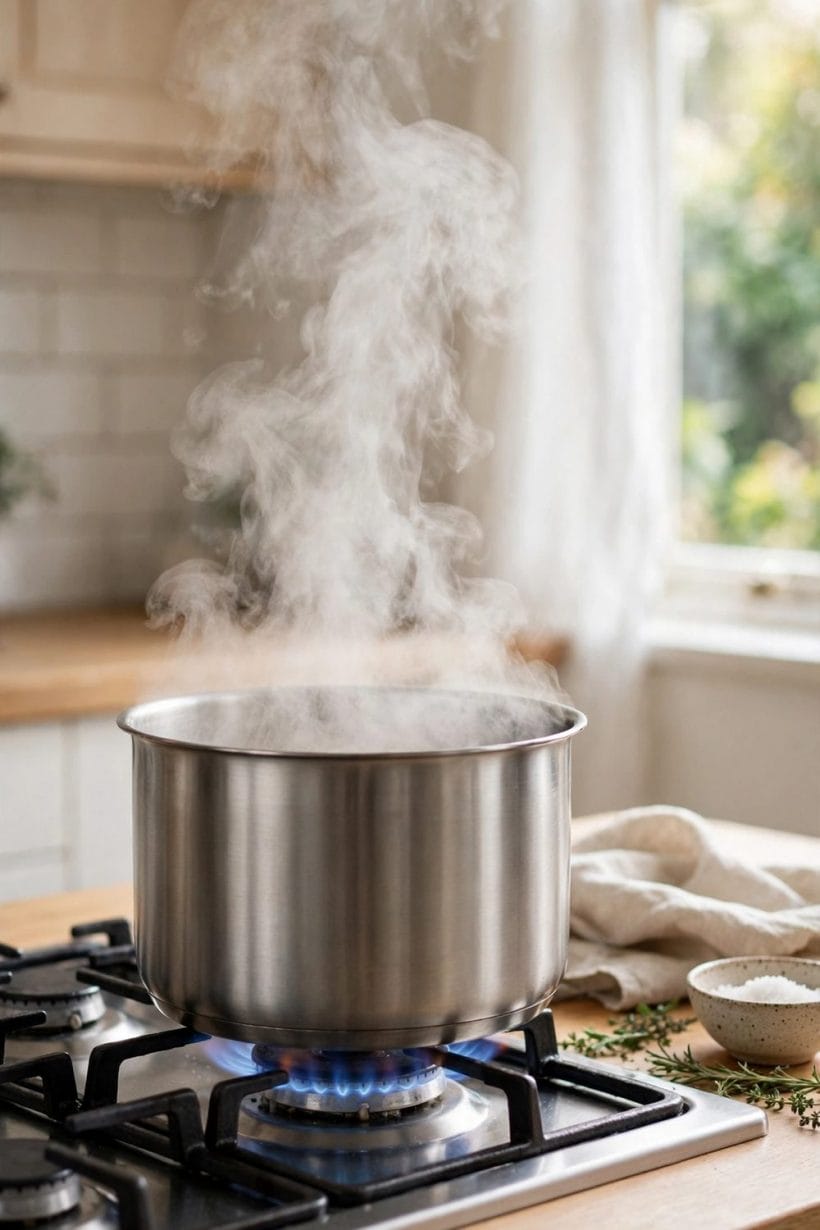
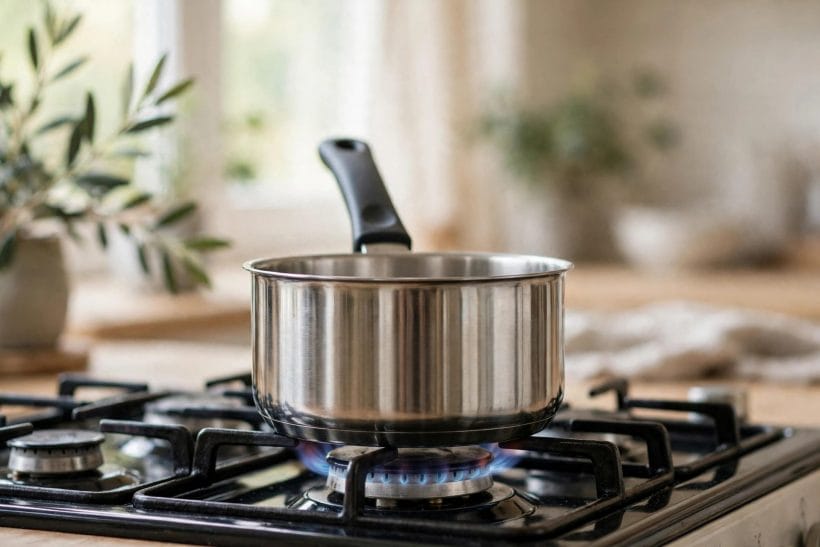
On a gas hob, the flame itself is the thing to watch. In general terms, the flame should stay beneath the base of the pan, heating the bottom rather than climbing the sides. When flames lick up around the sides of a pan, they heat handles, coatings and anything else that was never meant to sit in direct flame, and they waste heat that should have gone into the food. A flame that stays under the pan is doing its job; a flame that wraps around the pan is a sign to turn the heat down or to choose a better-matched burner.
This is a check to make with the pan in place and the flame lit, because the pairing of pan and burner is what decides where the flame goes. Look from the side, at eye level with the hob, and see where the flame actually reaches. If it reaches past the edge of the base, adjust before cooking begins rather than hoping it will settle once food is in the pan. It is a small habit, and it takes only a moment, but it is the habit that keeps handles cool and coatings out of direct flame.
Flame size is not a measure of cooking speed in the way people sometimes assume. A fierce flame under a small pan does not cook food faster in any useful sense; it heats the wrong parts of the pan and scorches what sits nearest the heat. A steady, well-matched flame, sized to the pan beneath it, is the safer and the more useful choice, and it is the flame to aim for every time.
5. Handles, Lids and Knobs Need Their Own Check
Handles are easy to forget until they are too hot to hold, and by then the moment has already gone wrong. In general terms, a handle that sits over or beside a flame will pick up heat, and a handle that stays clear of the flame will stay cooler for longer. Turning a handle inward, away from the edge of the hob and away from neighbouring burners, is a simple habit that keeps it out of the way of passing sleeves, elbows and other pans. It also keeps a hot handle from sticking out over a walkway where someone might brush against it without looking.
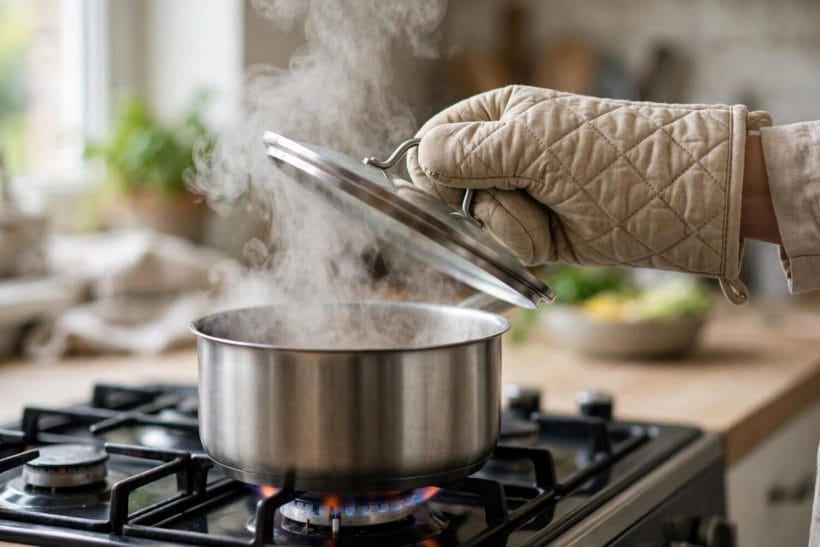
Lids deserve the same attention. A lid traps steam, and steam is hot enough to scald in a moment. Lifting a lid toward yourself, or lifting it without a dry cloth or mitt, invites that steam straight onto skin. The safer habit is a slow one: lift the far edge first, tilt the lid away from you, and let the steam escape where it cannot reach your hand or face. If a lid has a knob that heats up, treat that knob as part of the hot pan, not as a cool handle.
Knobs, joins and rivets are worth a look now and then. A knob that has loosened, a handle that has started to move on its fixings, or a join that no longer feels firm is a piece telling you it needs attention before it is used again. A loose handle on a full, hot pan is a genuine hazard, and no meal is worth carrying a pan you do not trust. Check the fixings when the pan is cold, and set aside any piece that no longer feels solid.
6. Glass and Ceramic Pieces Deserve Extra Caution
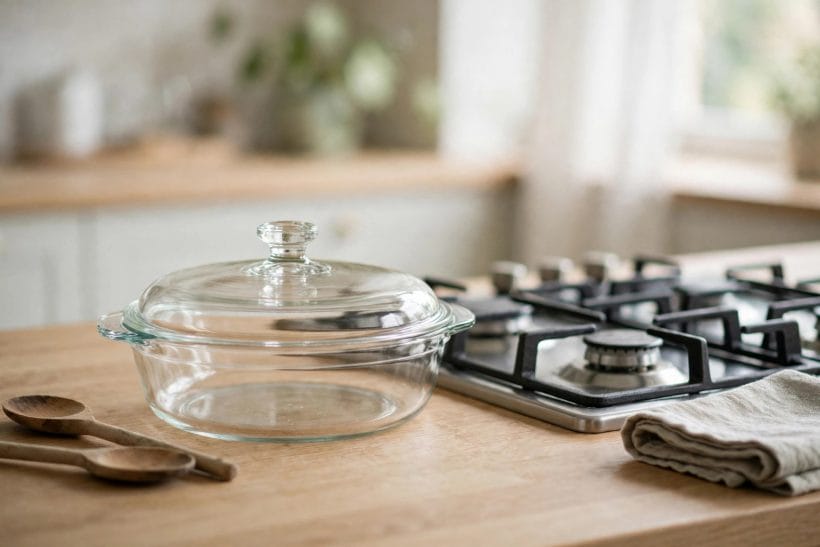
Glass and ceramic cookware asks for more care than metal on a gas hob, and the reason is the way these materials meet heat. In general terms, they warm slowly and dislike sudden change: a cold piece meeting a fierce flame, or a hot piece meeting a cold surface, can be stressed in ways that are hard to see from the outside. A chip, a crack, or a hairline flaw that looks harmless can change how a piece behaves under heat, and a piece that has been knocked or dropped should be looked at closely before it is used again.
The maker guidance matters most of all for these pieces. Some glass and ceramic pieces are made for oven use only, some are made for gentle stovetop use under particular conditions, and some are not made for direct flame at all. Those distinctions cannot be guessed from the look of a piece, and a general guide cannot make them for you. If the guidance for a glass or ceramic piece does not clearly cover gas hob use, the safe course is to keep it off the hob and use it in the way its maker describes.
There are also everyday habits that protect these pieces. Let a piece come to room temperature before it meets heat, avoid plunging a hot piece into cold water, and set a hot piece down on a dry, heat-safe surface rather than a cold, wet one. None of these habits replaces the maker guidance, but together they reduce the sudden changes that stress glass and ceramic most. And if a piece ever shows a new chip or crack, retire it from stovetop use and check the guidance before deciding anything else.
7. Watch the Everyday Warning Signs
Most cookware does not fail without warning; it gives small signs first, and noticing them is part of safe cooking. A base that no longer sits flat, a pan that has started to wobble on a grate it once sat well on, a coating that has blistered or flaked, or a handle that has begun to loosen are all signs that a piece has changed. Any one of them is a reason to pause, look closely, and check the maker guidance before the piece goes back on the hob.
Discolouration tells a story too, though it is a story that needs care in the reading. A darkened base may simply show long use, but scorch marks up the side of a pan suggest flames have been reaching where they should not, and that points back to burner match and flame size rather than to the pan alone. When a warning sign appears, ask what changed: a new burner, a new hob, a pan moved to a different ring, or a piece that has simply had a long life. The answer usually points to the fix.
The rule that ties these signs together is simple: a piece you doubt is a piece you do not use until the doubt is settled. That may mean checking the guidance, asking the maker, or asking a qualified professional. It may mean retiring a piece that has served well for years. Either way, the cost of pausing is small beside the cost of carrying a hot, full pan you no longer trust.
8. Small Kitchens Need a Different Routine
A compact kitchen changes the whole picture, because the hob is closer to everything else: the wall, the worktop edge, the neighbouring burner, and the person cooking. Handles have less room to turn inward, pans sit closer together, and a flame that climbs a pan side is nearer to whatever sits beside it. None of this makes a small kitchen unsafe, but it does mean the checks in this guide matter more, not less, when space is tight. A routine that works in a large kitchen may need tightening in a small one.
Planning helps here. Choosing which pan goes on which burner before cooking begins, keeping handles turned inward as a matter of habit, and leaving one burner free when pans are large all reduce the crowding that causes knocks and spills. Storage matters too: pans stacked carelessly chip coatings and loosen handles, while pans stored where they can be lifted out without dragging protect both the pans and the cook. These tiny house storage ideas show how small kitchens keep everyday tools within reach without crowding the cooking space.
The room beyond the kitchen matters as well. A hob that opens straight onto a living space, a walkway that passes close behind the cook, or a door that swings near the hob all shape how safely a kitchen can be used. Thinking about the hob as part of the whole home, rather than as a single appliance, is what turns a set of checks into a routine. For that wider view, these tiny house interiors and small living room ideas show how compact homes keep cooking, living and moving apart, and these tiny house floor plans show how the kitchen sits within the whole layout.
9. Cleaning and Storage That Protect the Piece
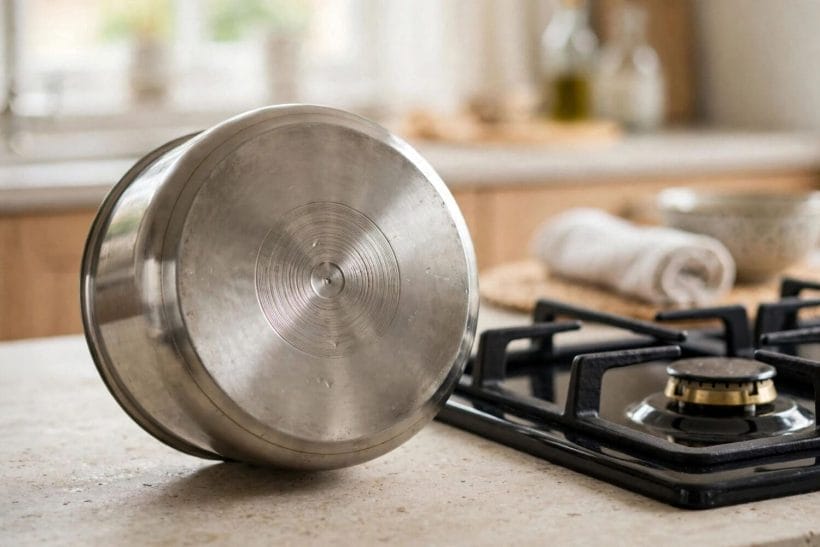
How a pan is cleaned and stored shapes how safely it cooks next time. In general terms, letting a hot pan cool before it is washed protects both the pan and the person washing it, and it avoids the sudden temperature change that stresses some materials most. A pan that is plunged into cold water while still very hot can warp, and a warped base is a pan that will never sit flat again. Patience at the sink is a safety habit, not just a cleaning preference.
Storage deserves the same patience. Pans nested tightly together scratch coatings, chip rims, and press handles against surfaces that wear them over time. A cloth or liner between stacked pieces, a hook for a heavy piece, or a shelf where a pan can be lifted out cleanly all protect the piece for its next use. If a coating has already flaked or a rim has already chipped, no storage trick will restore it; that piece needs the maker guidance checked before it cooks again.
Keeping the maker guidance with the piece, or at least with the kitchen, closes the loop. A pan whose guidance is lost is a pan whose limits are guessed, and guessing is exactly what this guide tries to replace. A small folder, a photograph, or a note kept near the cookware turns every future check into a quick one, and it means the next person who cooks in that kitchen inherits answers rather than questions.
10. Questions to Ask Before You Cook With a New Pan
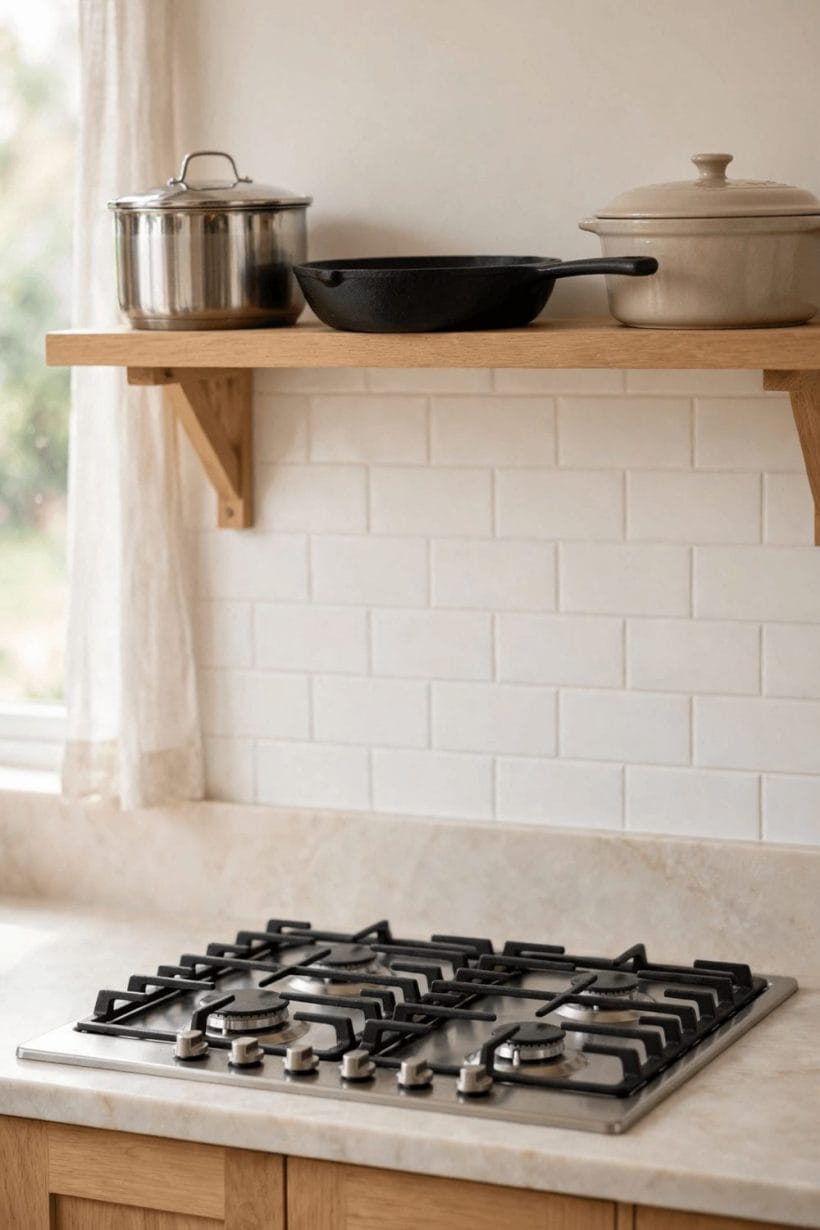
Before a new pan meets a flame for the first time, a short set of questions will catch most problems early. What does the maker guidance say about gas hob use for this exact piece? Does the base sit flat and centred on the burner you plan to use, without rocking? Does the flame stay beneath the base when the pan is in place? Do the handles stay clear of the flame and turn inward, away from the edge? Are the lid, knob and fixings firm, and do you know how hot each of them will get? If any answer is unclear, that question is the work to do before cooking begins, not after.
Two more questions complete the set. Has the piece been checked for chips, cracks, warping or loose fixings since it was last used? And if anything about the hob itself seems wrong — a burner that will not light cleanly, a flame that looks uneven, or a smell that should not be there — is a qualified professional the next call, rather than a do-it-yourself fix? Gas work is professional-only work, and a hob that behaves oddly is a professional’s job, not a cooking problem to work around.
These questions are deliberately plain, and that is their strength. They do not ask you to judge a maker, compare products, or remember technical detail. They ask you to look at the pan in your hand, the burner beneath it, and the guidance that came with it, and to act on what you see. A pan that passes all of them is a pan you can cook with calmly. A pan that fails even one of them is a pan to set aside until the question behind it is answered.
Final Considerations
Cookware on a gas stove is a question with a careful answer, not a quick one. The checks in this guide — maker guidance first, material understood in general terms, pan matched to burner, flame kept under the pan, handles and lids checked, glass and ceramic treated with extra caution, warning signs noticed, small-kitchen routines tightened, cleaning and storage done with patience, and plain questions asked before a new pan is used — together form a routine that works for any piece, from any maker, without ever needing a verdict on a single product.
Two rules sit above all the rest. The maker guidance for the piece you own is the final word, and where it is missing or unclear, the piece stays off the hob until an answer is found. And gas work — installation, repair, adjustment, and anything that smells or behaves oddly — belongs to a qualified professional, always. If you are planning a kitchen from scratch, this building a tiny house checklist is a useful place to put the hob, the ventilation and the professional checks into the wider plan.
Start with the pan you already own. Find its guidance, set it on its burner cold, check the fit, the flame and the handles, and cook with the calm that comes from knowing each check has been made. That calm is the whole point of the guide: not a faster meal, but a safer kitchen, one checked pan at a time.



0 Comments