

Asking about goodwill vs salvation army usually means asking a simpler question underneath: where should I shop secondhand, and where should my donations go? The names in the question are familiar ones, and that familiarity is part of why the question gets asked so often. But a name on a shopfront tells you very little about what you will find inside on any given day. Stock turns over, donations arrive in waves, and one shop may suit your errand while another suits a different one entirely. This guide does not rank the two names in the question, and it does not declare a winner, because no honest guide could. What it does instead is lay out how to shop secondhand and donate well in general terms, so that whichever shop you walk into, you can judge it by what you see, what you need, and what condition the goods are in.
The first thing to understand is that secondhand shopping rewards a different habit from ordinary shopping. In an ordinary shop you go looking for a particular item and expect to find it in your size, your colour, and your quantity. In a charity shop the stock is whatever people have donated, so the visit works the other way round: you go with a clear idea of what you need, and you let the shelves tell you what is available. That is why patience matters more than loyalty to any single name. A shop that has nothing for you this week may have exactly what you need next week, and a shop you have never visited may hold the piece your regular shop does not. Judge the visit, not the sign above the door.
Donating works the same way, in reverse. A good donation is not simply something you no longer want. It is something clean, complete, and usable by a stranger, packed in a way that keeps it that way until it reaches the shelf. Shops differ in what they can use, how much space they have, and what condition they can accept, and those things change with the season and with the stock already on the floor. So the practical advice in this guide stays general on purpose: check the notice at the shop you visit, ask the staff what they can use, and sort honestly at home before you carry anything through the door. That habit serves every donation well, whichever shop receives it.
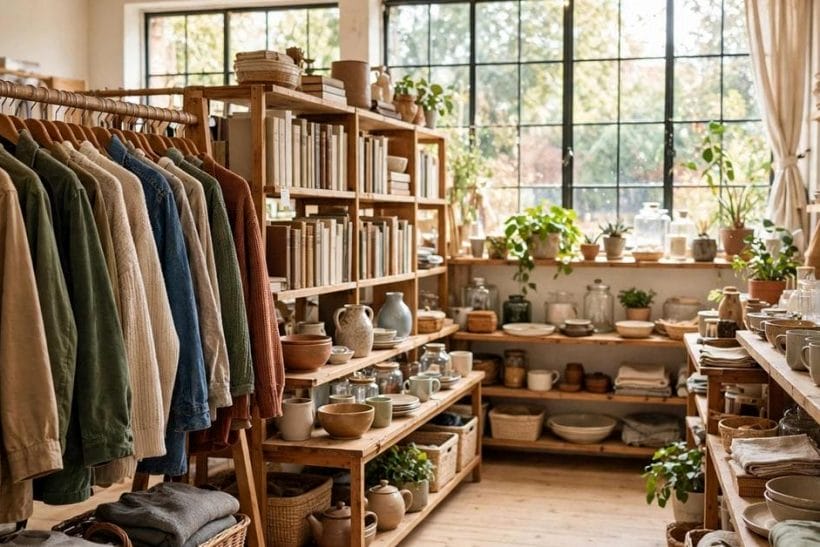
| Item | What it is |
|---|---|
| Start With What You Actually Need | Secondhand shopping goes wrong most often before you leave the house, when the errand is vague. |
| Visit More Than One Shop Before You Decide | If the question behind this guide is which shop to choose, the honest answer is to let more than one shop make its case. |
| Check Condition the Way a Second Owner Would | Condition is the heart of secondhand shopping, and it deserves a slow, deliberate check rather than a quick glance. |
| Furniture: Joints, Drawers and Weight Tell the Story | Furniture is where secondhand shopping repays care most richly, and where a hasty choice costs most. |
| Clothes: Seams, Fabric and Fit Before Anything Else | Clothing is the most plentiful secondhand stock and the easiest to judge badly, because a garment can look wonderful on a rail and disappointing on a body. |
| Books, Kitchenware and Homeware: Small Checks That Matter | Books reward a quick but complete check. |
| Sorting a Donation at Home, Room by Room | Donating well starts at home, well before anything is packed, with a slow sort room by room. |
| Packing and Presenting a Donation Well | How a donation is packed matters almost as much as what is in it, because a careless bag can undo a careful sort. |
| When an Item Is Better Kept, Repaired or Passed On Elsewhere | Not everything deserves to become a donation, and recognising that is part of donating well rather than a failure of generosity. |
| Fitting Secondhand Finds Into a Small Home | Secondhand finds shine brightest in a small home, where every piece must justify its space, and where a well-chosen used piece can transform a room without transforming the budget. |
1. Start With What You Actually Need
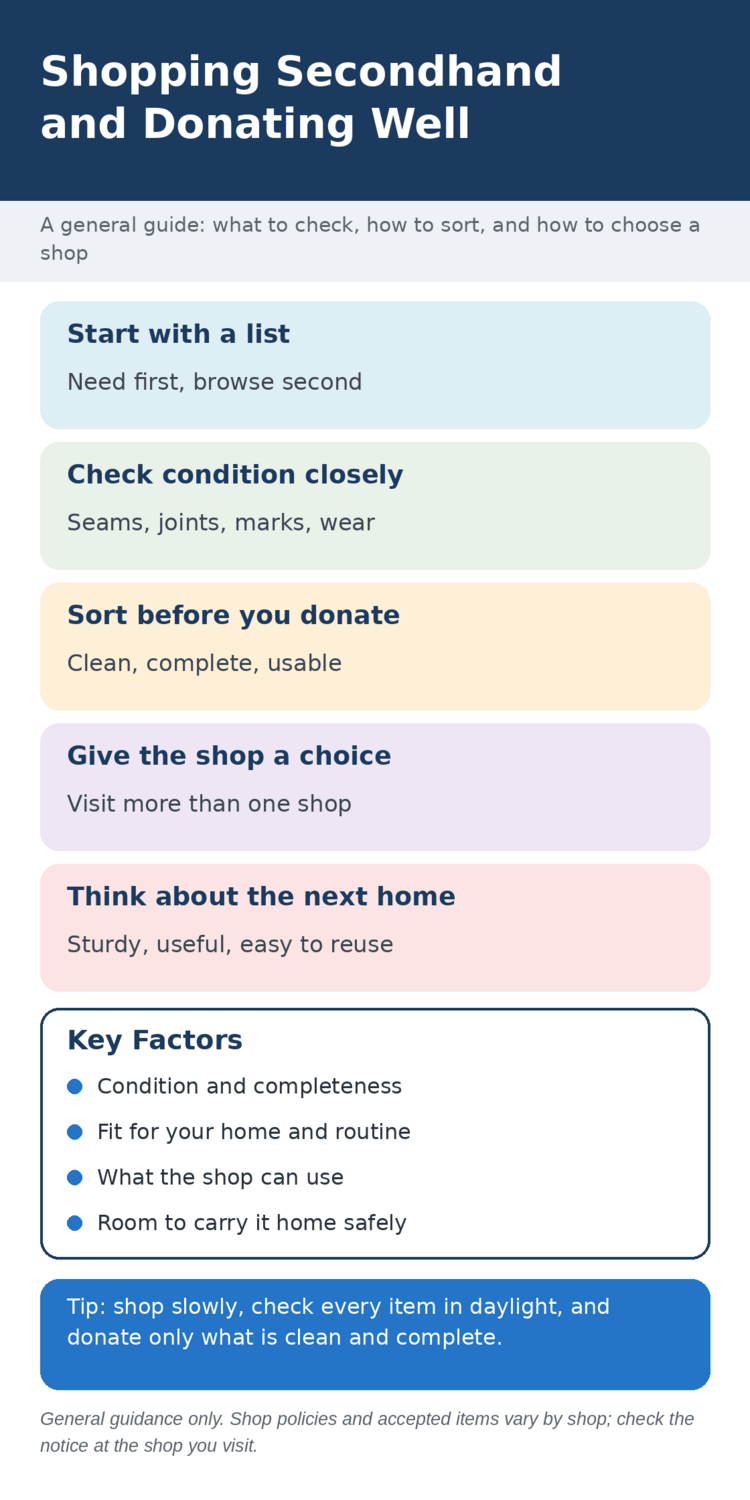
Secondhand shopping goes wrong most often before you leave the house, when the errand is vague. A visit without a purpose turns into a pile of interesting things that do not fit your home, your wardrobe, or your routine, and the bargain feeling fades as soon as the pile reaches your doorstep. Before you go, write down what you are actually looking for, in plain terms: the kind of item, the size it must be, the colour range you can live with, and the job it has to do. A list does not spoil the pleasure of browsing. It gives browsing a shape, so that the unexpected find is a bonus rather than the whole point of the trip.
A list also protects you from the most common secondhand trap, which is buying something because it is unusual rather than because it is useful. An unusual lamp, an odd chair, or a striking coat can feel like a discovery in the shop and a puzzle at home, where it matches nothing and serves no purpose. Hold every candidate against the list and against the room it will live in. If it does not answer a need you named before you arrived, put it back. The shop will still be there, and the discipline of walking away empty-handed is part of what makes the successful visits feel so good.
It helps to think in terms of gaps rather than categories. A gap is a missing thing with a job attached: a chair for the reading corner, a set of plates for everyday meals, a warm coat for the walk to work. When you name the gap, you can judge each candidate by whether it fills it, and you can stop looking once it is filled. For ideas about how rooms come together in a modest footprint, tiny house interiors show how much a single well-chosen piece can do when the space around it is kept simple. The same discipline applies at any size: one right piece beats several almost-right ones.
2. Visit More Than One Shop Before You Decide
If the question behind this guide is which shop to choose, the honest answer is to let more than one shop make its case. Visit a few shops when you can, and compare what you actually find: the range of stock, the condition it is in, how clearly it is arranged, and whether the staff can answer a plain question about an item. Those are things you can observe for yourself, and they tell you far more than a name or a reputation. A shop with tidy shelves, clearly grouped stock, and items that look cared for is a shop that will reward repeat visits, whatever name it carries.
Different shops also tend to suit different errands, and that is normal rather than a sign that one is better than another. One shop may have a strong clothing section and a thin furniture corner, while another has the reverse. One may be easy to reach on foot with a bag to donate, while another is better reached when you have transport for a larger piece. Let the errand choose the shop: the donation you are carrying, the item you are seeking, and the time you have available are all better guides than habit. Over time you will build a small mental map of which shops suit which errands, and that map is worth more than any general ranking.
There is also a simple fairness point in visiting more than one shop. Secondhand stock depends entirely on what local people donate, so the range in any shop reflects its neighbourhood and its donors rather than any quality judgement. A shop that looks thin one week may be full the next, after a wave of donations. If you judge a shop on a single visit, you are really judging a single week of donations. Give each shop a fair sample of visits before you settle into a routine, and keep the routine loose enough that a new shop can still surprise you.
3. Check Condition the Way a Second Owner Would
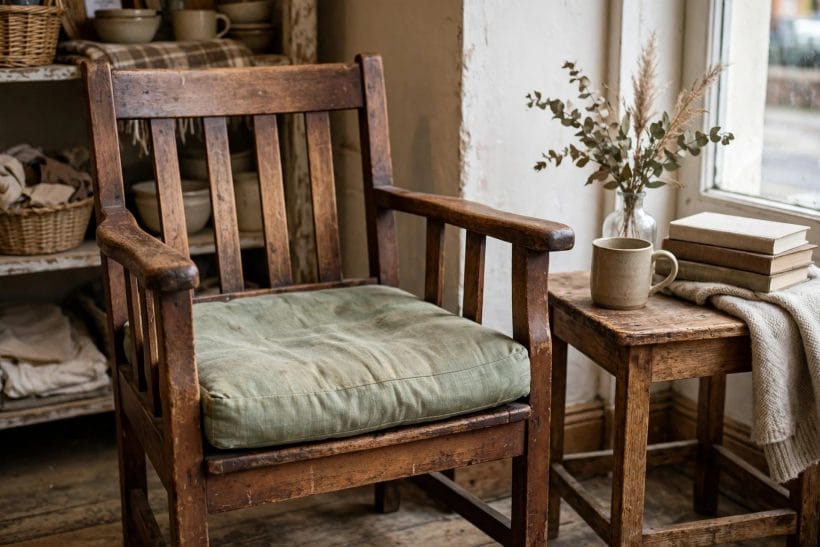
Condition is the heart of secondhand shopping, and it deserves a slow, deliberate check rather than a quick glance. Pick the item up, turn it over, open it, sit on it if it is a chair, and look at it in daylight where possible. Shop lighting can be kind to flaws, and a mark that is invisible under a ceiling light may be obvious by a window or at home. Run your hand along edges and seams, look underneath and behind, and check the parts that do the work: hinges, handles, zips, buttons, clasps, and feet. A beautiful item with a failing hinge is a repair project, not a bargain, unless you wanted a repair project.
Smell matters too, and it is worth mentioning plainly because it is easy to overlook in the excitement of a find. Soft furnishings, coats, and bags can carry smells that washing or airing may not remove, and a smell that seems faint in a large shop can seem strong in a small room. Hold the item close, take a moment, and be honest with yourself about whether you would live with it. The same honesty applies to stains, fading, and wear: ask whether the flaw will bother you every day, or whether it is the kind of honest wear that belongs to a used thing and will soon stop registering. There is no shame in putting back an item whose flaw would nag at you.
Finally, check completeness. A set with a missing piece, a game without its instructions, a lamp without its shade, or a chair missing a foot may still be worth having, but only if you know what is missing and have a plan for it. Count the pieces, look for the small parts, and imagine the item in use rather than on display. Completeness is also a kindness to the next owner if you later pass the item on again. An item that arrives complete and leaves complete has had a longer useful life, and that is the quiet purpose of the whole secondhand habit.
4. Furniture: Joints, Drawers and Weight Tell the Story
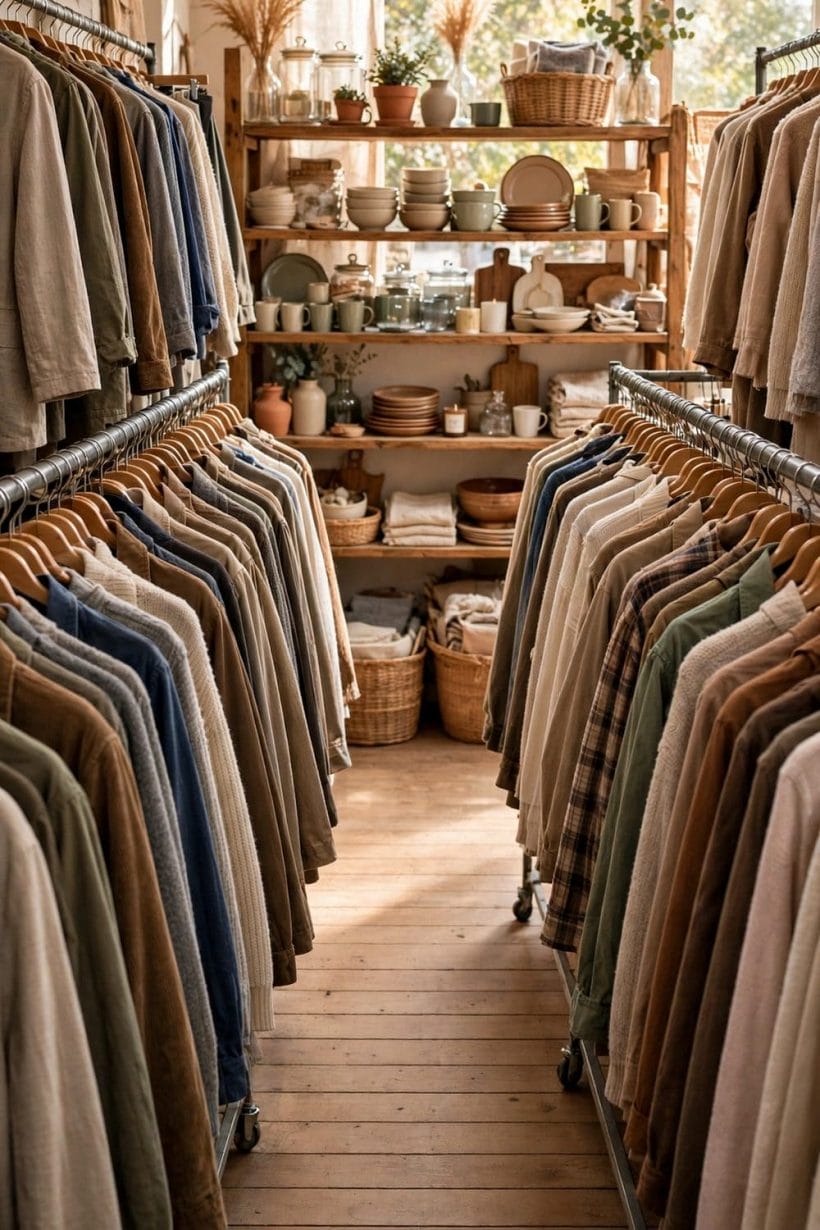
Furniture is where secondhand shopping repays care most richly, and where a hasty choice costs most. Start with the joints, because they carry the whole piece. Rock a chair gently, press a table from opposite corners, and open and close every drawer and door. A solid piece moves as one thing, with no racking, no wobble that grows as you press, and no joint that opens visibly under gentle pressure. Drawers should slide without sticking or dropping at full extension, and doors should close without lifting or forcing. If a piece fails these simple tests, it is telling you about its future, and it is worth listening.
Weight is a useful, rough guide rather than a rule, and it should be read alongside the joint test rather than instead of it. A piece that feels reassuringly solid for its size has usually been built from substantial material, while a piece that feels unexpectedly light may be built to a lower standard or may have lost material to damage. Look underneath and inside for the signs that matter: water marks, repairs, replaced parts, and the general tidiness of the construction. The underside of a well-made piece is usually as considered as the top, even if it is plainer, while a piece that is rough underneath may have been made quickly or repaired carelessly.
Measure before you fall in love, and measure the route as well as the room. A chair that fits the corner but not the doorway, the stair, or the lift is a problem you will discover at the worst moment. Carry the measurements of the space and the route with you, and check them against the piece in the shop rather than trusting your eye. For the discipline of fitting furniture into a compact home, tiny house floor plans are a useful study, because in a small house every piece must earn its footprint. The same question applies at any size: does this piece fit the room, fit the route in, and fit the life lived around it?
5. Clothes: Seams, Fabric and Fit Before Anything Else
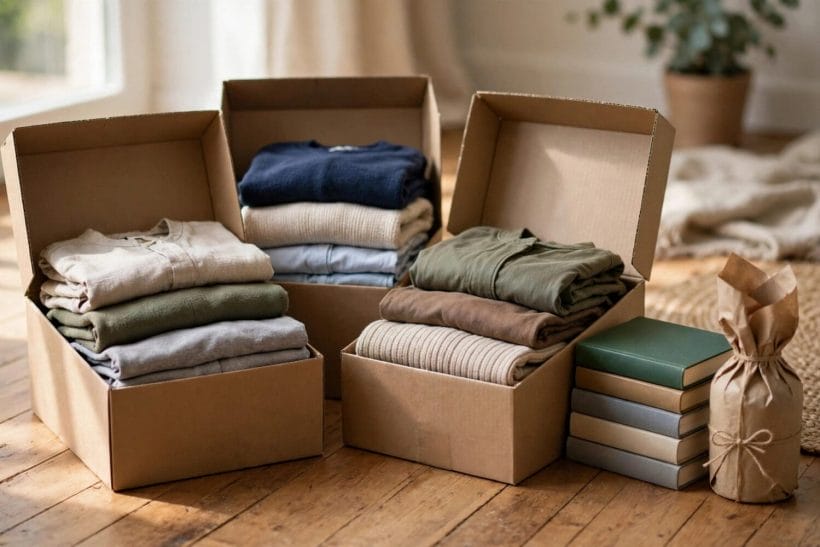
Clothing is the most plentiful secondhand stock and the easiest to judge badly, because a garment can look wonderful on a rail and disappointing on a body. Start with the seams, which are the garment’s structure: look along the stitching for gaps, puckering, or repairs, and give the seams a gentle pull to see whether they hold. Check the places that take strain, such as underarms, pockets, waistbands, and the tops of side seams, and check the fastenings one by one. A missing button is a small matter if you can replace it, but a failing zip or a torn pocket lining changes the garment from ready to wear into a project.
Fabric tells the next part of the story. Hold it up to the light and look for thinning, fading, or uneven wear, especially at elbows, knees, cuffs, and collars. Feel whether the fabric still has body or whether it has gone limp with washing, and check whether the colour is even across the garment rather than faded in patches. Natural fibres and sturdy weaves often age more gracefully than delicate ones, but the real test is the garment in front of you, not the label inside it. If the fabric feels tired, it will feel tired every time you wear it, whatever the brand or the original quality.
Fit comes before fashion, and it deserves a proper try where the shop allows it. Secondhand sizes vary widely, because garments come from many makers and many eras, and the size on the label is a poor guide to the garment on your body. Try the garment on, move in it, sit in it, and look at it from behind as well as from the front. A garment that fits well in a secondhand shop has already passed the hardest test there is, because it has survived someone else’s wardrobe and still holds its shape. A garment that nearly fits is a garment you will nearly wear, which is to say, a garment you will not wear.

6. Books, Kitchenware and Homeware: Small Checks That Matter
Books reward a quick but complete check. Open the book, look at the binding, and see whether the pages are secure rather than loose or detached. A cracked spine may still be readable, but a binding that sheds pages will not survive many more readings. Check for damp marks, which often show as waviness or staining near the edges, and for writing or underlining that would distract you. A book that is clean, complete, and firmly bound is a book that can be read, lent, and passed on again, which is exactly what a secondhand book is for.
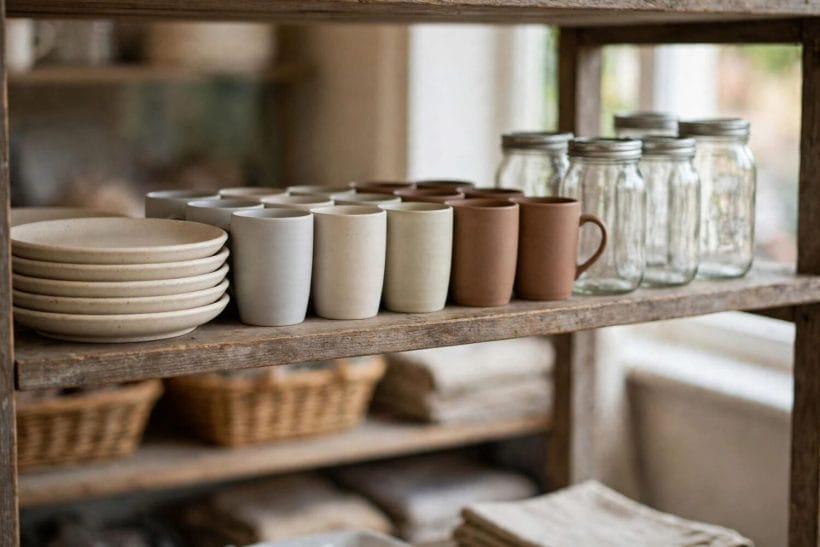
Kitchenware needs a check for chips, cracks, and completeness, because these are the flaws that affect daily use. Run a finger along rims and edges, look inside jugs and bowls, and check that lids fit the pots they belong to. A chipped rim may be harmless on a display piece but unwelcome on a plate you eat from every day, so judge each flaw by the job the item will do. Sets deserve a count: a set that is missing its most useful piece is a set you will keep meaning to complete. Small living room ideas show the same discipline applied to display, where a few well-chosen pieces that work together matter more than a large collection that does not.
Homeware in general, from lamps to baskets to picture frames, should be checked for safety as well as appearance. A lamp should be checked for frayed wiring, loose fittings, and a shade that sits securely, and any electrical item should be examined with care before use. If anything about an electrical item looks doubtful, leave it, because no bargain is worth an unsafe item in your home. For everything else, the test is simple: does it work, is it complete, and will it survive ordinary use? An item that passes those three questions has earned its place, however modest it looks on the shelf.
7. Sorting a Donation at Home, Room by Room
Donating well starts at home, well before anything is packed, with a slow sort room by room. Go through each room with fresh eyes and ask of each candidate item whether it is clean, complete, and usable by a stranger. That stranger test is the whole discipline in one sentence: if you would be glad to find this item on a shop shelf, in this condition, it is a donation. If you would pass it by, or if you are donating it because you cannot think what else to do with it, it is probably not a donation at all. Honesty at this stage saves the shop sorting work and saves a useless item from a journey that helps nobody.
Sorting room by room also stops the common mistake of donating in a rush, when a clear-out produces bags of mixed goods that have not really been looked at. A rushed bag often contains a few good items buried among broken, incomplete, or worn-out ones, and the good items suffer for the company they keep. Take the time to look at each thing, fold the clothes, pair the shoes, match the lids to their containers, and set aside anything that is damaged beyond ordinary use. The result is a smaller donation that is genuinely useful, which is a better outcome than a larger donation that mostly is not.
It helps to keep a donation box in a convenient spot and add to it gradually, rather than treating donation as a single dramatic event. When you notice an item you no longer use, and it passes the stranger test, it can go straight into the box, clean and complete. Over time the box fills with things that are ready to go, and the errand becomes a simple matter of carrying it to the shop. For the habit of keeping a home in order so that this kind of sorting becomes easy, tiny house storage ideas are a useful model, because in a small home everything must have a place, and the donation box is simply the place for things on their way out.
8. Packing and Presenting a Donation Well
How a donation is packed matters almost as much as what is in it, because a careless bag can undo a careful sort. Pack clothes folded rather than crumpled, keep fragile items apart from heavy ones, and use a bag or box that will survive the journey without splitting. A donation that arrives clean, dry, and intact can go to the shelf with little handling, while a donation that arrives damp, tangled, or broken must be sorted, cleaned, or set aside, which costs the shop time it could spend serving customers. Presentation is not fussiness. It is the final step of the donation itself.
Grouping helps the shop as much as it helps you. Keep similar things together where you can, so that clothes, books, and homeware are not tangled into a single heap, and keep pairs and sets together rather than letting them drift apart across bags. If an item needs a brief explanation, such as a set that is complete but packed in parts, a short note attached to it can save confusion. The aim is a donation that can be understood at a glance: what it is, whether it is complete, and what condition it is in. A shop can do far more with a donation like that than with a larger one that must be puzzled out.
Timing and transport deserve a thought too. Choose a journey you can manage comfortably, with the donation packed so that it will not be damaged on the way, and consider the shop’s space when you arrive. A large donation delivered when the shop is already full of stock may be harder to receive than the same donation on a quieter day, and a short, polite question about what the shop can use will always be welcome. The guidance here stays general because shops differ, and the notice at the shop you visit is the authority for that shop. Asking first is not an inconvenience. It is part of donating well.
9. When an Item Is Better Kept, Repaired or Passed On Elsewhere
Not everything deserves to become a donation, and recognising that is part of donating well rather than a failure of generosity. An item that is broken beyond ordinary use, missing essential parts, or worn to the point where it cannot serve a stranger is not helped by a journey to a shop. It will be sorted out there, at someone else’s expense of time, and it will end up where it would have ended up if you had dealt with it at home. Keeping that item out of the donation bag is a kindness to the shop, and it keeps the donation that does go in genuinely useful.
Repair is worth considering before donation for items you still value but no longer use in their present state. A chair with a loose joint, a coat with a missing button, or a lamp with a worn shade may need only a small repair to become useful again, either for you or for someone else. If you have the skill and the inclination, a repair can extend an item’s life far more effectively than passing on a flawed version of it. If you do not, the honest question is whether the item is worth repairing by someone else, or whether its useful life has genuinely ended. Answering that question plainly is better than donating the dilemma to a shop.
Passing an item on elsewhere is sometimes the better route, and it deserves a place in this guide. A specialised item, such as a musical instrument, a piece of sports equipment, or a craft tool, may serve far better in the hands of someone who practises that pursuit than on a general shop shelf. Friends, family, local groups, and specialist outlets can all be good homes for such items, and a direct pass to a known person has the advantage that you know the item will be used. The point is not to avoid donating. It is to match each item to the route where it will actually be used, which is the purpose donation serves in the first place.
10. Fitting Secondhand Finds Into a Small Home
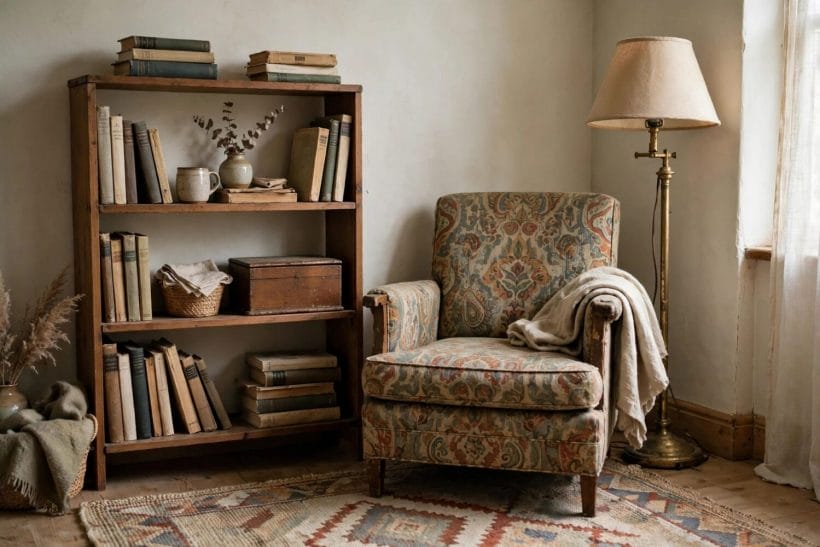
Secondhand finds shine brightest in a small home, where every piece must justify its space, and where a well-chosen used piece can transform a room without transforming the budget. The discipline is the same as for any small space: measure first, choose pieces that do more than one job where possible, and leave room around each piece so that the room can breathe. A secondhand bookcase that fits the wall exactly, a chair that tucks into a corner, or a set of plates that stacks neatly into existing storage will feel like they were made for the house, even though they began life somewhere else entirely.
Storage is the quiet partner of secondhand shopping in a small home, because finds need a place to live that does not create clutter. Before you buy, know where the item will go, and what will leave to make room for it if the space is already full. A home that gains a piece with every visit and loses none will soon feel crowded, however good the individual pieces are. The habit of one in, one out, applied gently rather than rigidly, keeps a small home feeling generous. Tiny house exterior ideas show the same thinking applied outside, where porches, paths, and outdoor storage shape how a small home is used day by day.
Finally, give a new find a settling-in period before you judge it. Live with a chair for a while, eat from the plates, read under the lamp, and see whether the piece earns its place in daily life or merely looked good in the shop. A find that earns its place becomes part of the home, and its secondhand origin stops mattering entirely. A find that does not can be passed on again, clean and complete, to its next owner, which is not a failure but the secondhand habit working exactly as it should. And when you are planning a larger change to a small home, a checklist keeps the whole project honest: building a tiny house checklist covers the sequence of decisions in miniature, and the same discipline scales to any room you are furnishing with secondhand pieces.
Final Considerations
If you arrived here searching for goodwill vs salvation army, you now have something more useful than a ranking, and more honest too: a way of judging any charity shop by what you can see and check for yourself. Start with a list, visit more than one shop, check condition the way a second owner would, and sort and pack donations so that they arrive clean, complete, and usable. Those habits serve you in every shop, under either name in the question and under any other name besides, because they rest on the item in your hands rather than the sign above the door.
That is the right way round. A ranking would flatter one shop and mislead you about the next visit, when the stock will have changed entirely. A habit of checking, sorting, and choosing by the item itself grows more reliable with every visit, and it makes both sides of the secondhand habit better: the shopping more satisfying, and the donating more useful. Go with a list, look slowly, donate honestly, and let the shops you visit earn your custom one good find at a time.




0 Comments