
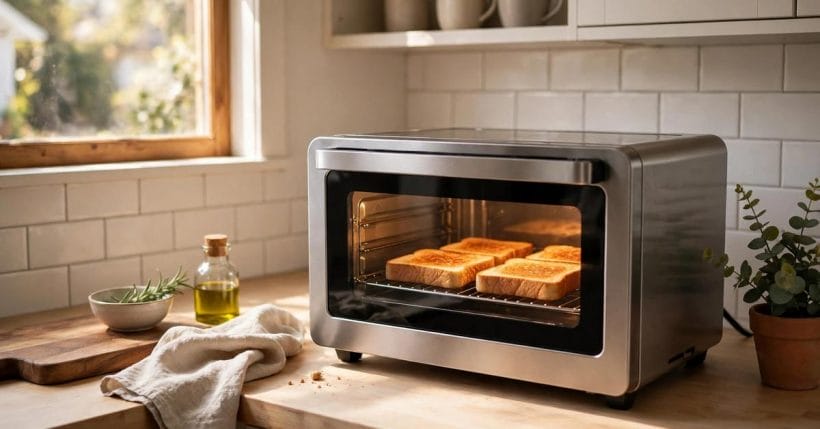
A countertop oven earns its place the same way any small kitchen tool does: by being used often, without fuss, and without taking over the room. Toast that browns evenly, controls that make sense at breakfast time, and a shape that fits the counter you actually have matter far more than a long list of extra modes.
This guide walks through what to check before you choose a countertop convection oven, from size and toasting to controls, cleaning and everyday use, so you can judge any model on its own merits.
1. Countertop Convection Oven at a Glance
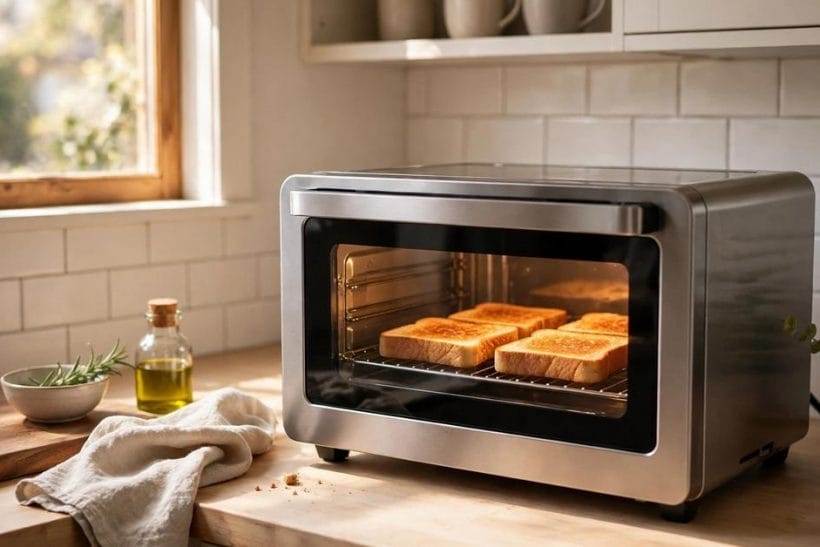
A countertop convection oven is a compact oven that sits on a worktop and uses a fan to move heated air around the food inside. That moving air is the whole point of the design: instead of heat sitting still around a dish, it circulates, which helps the outside of food brown more evenly and helps dishes cook in a steadier way. For a household weighing up the best countertop oven for its own kitchen, the fan is worth understanding first, because it changes how the oven behaves compared with a plain toaster or a small static oven.
| Aspect | What to check |
|---|---|
| Size and fit | Footprint, height and door clearance on your own counter |
| Toasting | Even browning across the rack, in general terms |
| Controls | Clear settings you can read and repeat easily |
| Inside layout | Rack positions and trays that suit your usual dishes |
| Cleaning | Accessible tray, rack and interior surfaces |
| Everyday use | How well it fits breakfast, snacks and simple meals |
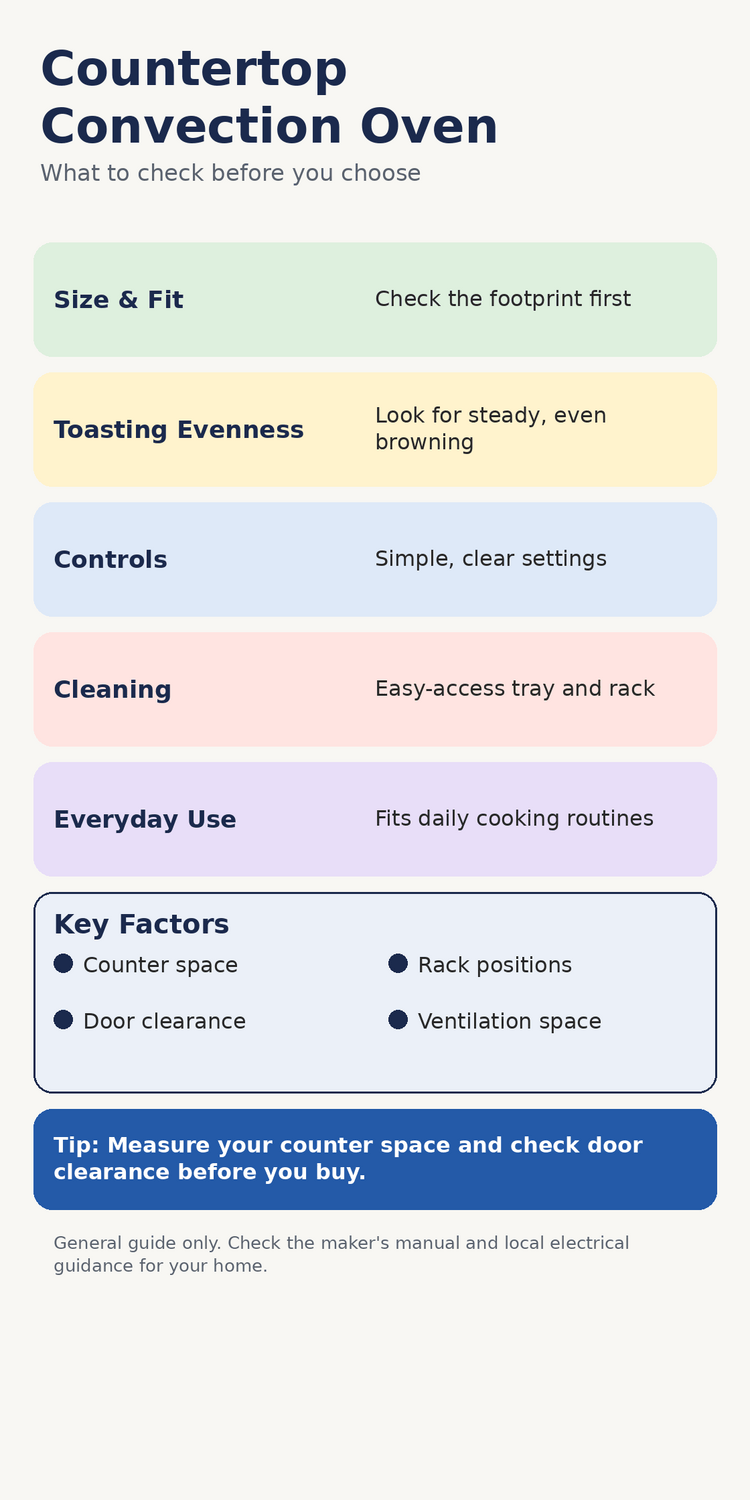
None of these checks needs a laboratory test. Each one can be judged by looking at the oven, reading its manual, and thinking honestly about the meals you cook most. A model that suits a large family kitchen may be entirely wrong for a compact home, and a simple model that you use every day will serve you better than a complicated one that stays switched off.
The rest of this guide takes each check in turn. Keep your own counter, your usual dishes and your daily routine in mind as you read, and let those three things do most of the deciding.
2. Size, Footprint and Counter Space
Start with a tape measure, not a catalogue picture. Measure the clear stretch of counter where the oven would live, including the depth from the wall to the front edge, and note anything above it, such as wall cabinets or a shelf. An oven that looks neat in a photograph can still crowd a small kitchen if its door needs room to swing down or its top sits too close to a cabinet above.
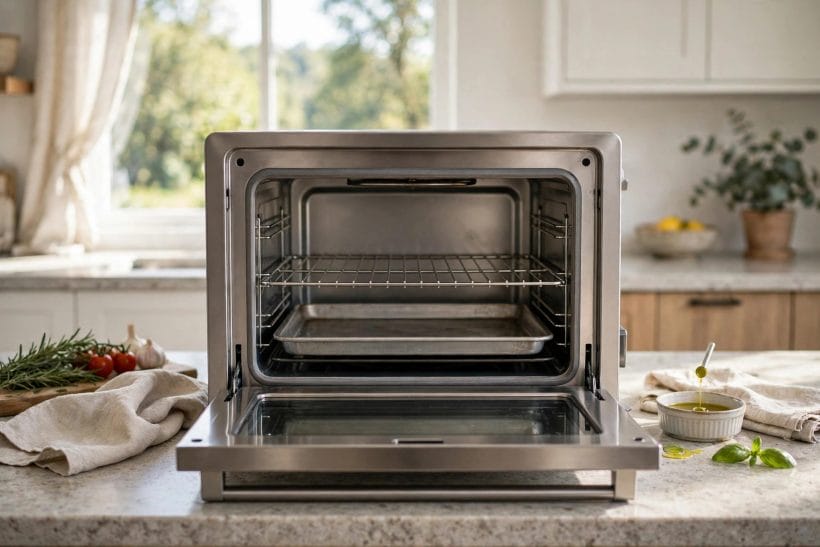
Height matters as much as width. A taller oven may hold a larger dish, but it also needs more clearance above it, and it can be harder to reach into in a kitchen with low cabinets. A wider oven may suit a baking tray better, while a narrower one may be the only honest fit on a short run of counter. Think in terms of the space you have, not the space you wish you had.
Also consider what sits beside the oven. A toaster, a kettle or a chopping board that must move every time the oven door opens will soon become an annoyance. Leave a little working room on at least one side for setting down a hot tray, and check that the oven door, when open, does not block a drawer or a walkway. In a small kitchen, these small clearances decide whether an appliance feels helpful or in the way.
3. Toasting Evenness in General Terms
The sheet question behind this guide asks about an oven that toasts well, and toasting is a fair test of any countertop oven, because it shows up uneven heat at once. A slice that browns darkly at one edge and stays pale at the other tells you more about the oven than any description can. Evenness, in general terms, means that slices placed across the rack come out looking broadly alike, without one corner doing all the work.
Several ordinary things affect that result. Where the heating parts sit, how the fan moves air, how close the bread sits to the heat, and whether the rack is level all play a part. So does the bread itself: thicker slices, denser loaves and bread straight from a cold store will brown differently from thin, room-temperature slices. Judge toasting by comparing slices from the same loaf, toasted on the same setting, rather than by comparing one morning’s toast with another’s.
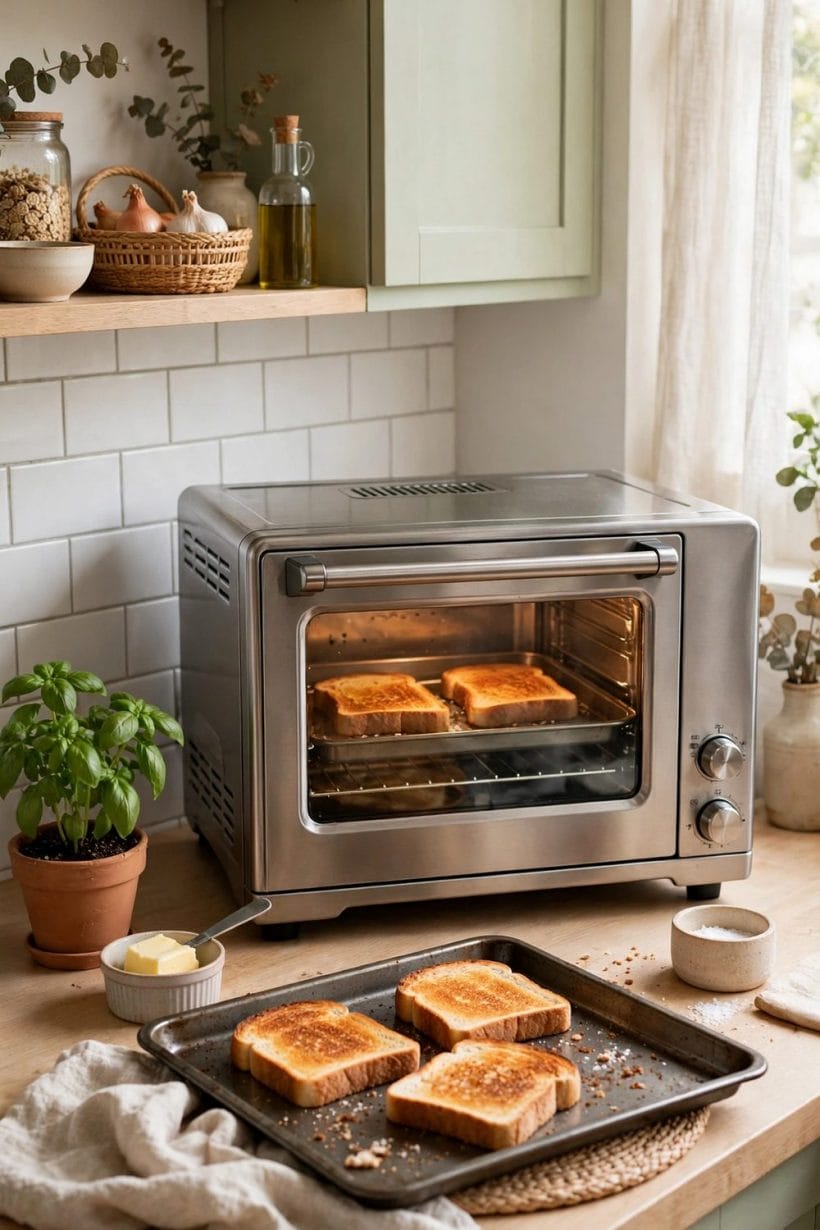
It also helps to turn the tray or swap slices around partway through, if the manual allows it, because that evens out any warm or cool spots inside the cavity. A single trial is rarely enough to judge an oven fairly. Give it a few ordinary breakfasts, with the same bread and the same setting, and watch whether the pattern of browning stays consistent. Consistency, rather than one perfect round, is the useful sign.
4. How Convection Air Moves Heat
Convection, in plain language, means the oven’s fan keeps the heated air moving. In a still oven, hot air tends to gather in layers, warmer near the top and cooler near the bottom, so one part of a dish can cook faster than another. Moving air breaks up those layers and carries heat to the food more steadily from all sides, which is why convection ovens are often described as cooking more evenly.
That steadiness matters most for dishes with a surface to brown, such as roast vegetables, pastries and toast, and for trays that hold several pieces at once. It does not turn a small oven into a large one, and it does not remove the need to watch food near the end of cooking. Smaller cavities heat up and cool down more quickly than large ones, so food can go from golden to overdone in a short window, and the last few minutes deserve your attention.
Fan noise is another ordinary part of the picture. Some fans hum quietly, while others are easy to hear across a small room. If the oven will run during conversation or while someone works nearby, the sound is worth noticing. A fan that you barely register will be easier to live with than one that makes you avoid using the oven at quiet times of day.
5. Controls You Will Actually Use
The best controls are the ones you can use without thinking twice. A clear dial or a simple set of buttons, with markings you can read in normal kitchen light, will serve daily cooking better than a crowded panel full of modes you never touch. Before anything else, check that you can set the heat level, choose a cooking mode and set a timer without hunting through a manual each time.
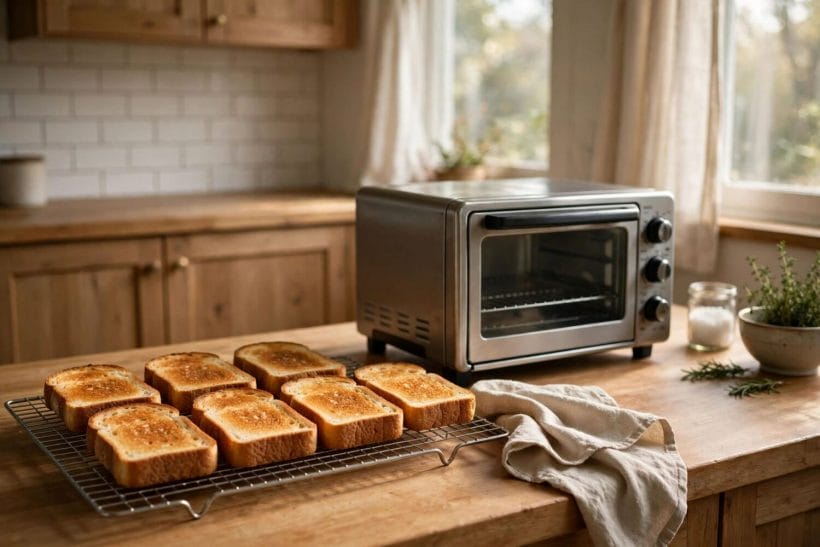
Think about the hands that will use the oven. Larger, well-spaced controls suit busy mornings and anyone whose eyesight or grip is less than perfect. A timer that is easy to hear, and a light or window that lets you see food without opening the door, both help you catch food at the right moment. If the markings are small, faint or crowded, that is a daily frustration, not a minor detail.
Preset modes can be helpful, but only if they match food you actually cook. A mode for toast, one for baking and one for roasting may cover most of a household’s needs, while a long list of special settings may simply go unused. Simpler is not a compromise here. An oven with a few honest, repeatable settings is easier to learn, easier to teach others in the house, and easier to use well every day.
6. Racks, Trays and Inside Layout
Open the door and look at the space as a cook, not as a shopper. How many rack positions are there, and can you move the rack up or down to suit a tall dish or a flat tray of toast? A rack that only sits in one place limits what the oven can hold, while two or three positions give you room to adjust for different foods. Check that the rack slides in and out smoothly and feels steady when loaded.
Trays matter just as much. A solid tray catches drips and suits roasting, while a wire rack lets air move under food and helps it crisp. Some ovens come with both, and that combination covers most everyday cooking. Look at the size of the trays in relation to your usual dishes: a tray that is too small for your baking dish, or a cavity that cannot hold the dish at all, will limit the oven no matter how well it cooks.
Door behaviour deserves a moment too. A door that opens smoothly, stays where you leave it and gives you a clear view inside makes loading and checking food easier and safer. A door that drops heavily or needs a firm push to close will wear on you over time. These are small mechanical details, but they shape every single use.
7. Cleaning Without a Fight
An oven that is hard to clean will be used less, however well it cooks. Crumbs, drips and splashes are part of ordinary cooking, so look for a crumb tray that slides out easily and a rack that lifts out without a struggle. Smooth interior surfaces wipe down more readily than rough or heavily textured ones, and a door window that can be reached for cleaning keeps the view clear.
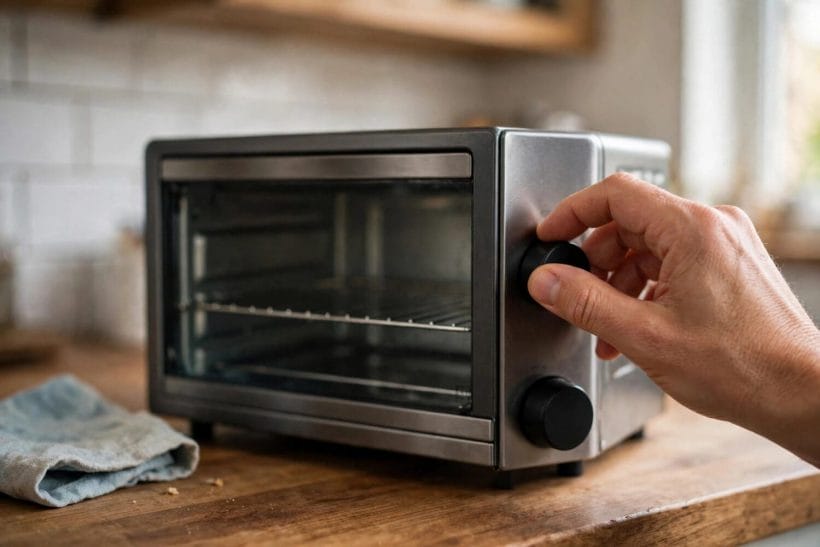
Cleaning is also a habit, not just a design feature. Emptying the crumb tray regularly, wiping spills while they are fresh and letting the oven cool before cleaning all keep the job small. Built-up grease, left for weeks, becomes harder to shift and can start to smell when the oven heats up again. A short wipe after roasting or baking is usually enough to keep the cavity pleasant.
Avoid harsh tools and abrasive pads unless the manual clearly allows them, since scratched surfaces are harder to keep clean afterwards. If a part is removable, wash it as the manual directs and let it dry fully before it goes back in. If anything about the interior is damaged, or a heating part looks worn, stop using the oven and seek professional advice rather than trying to repair it yourself.
8. Everyday Cooking Beyond Toast
Toast may be the morning test, but a countertop oven earns its counter space across the whole day. It suits reheating leftovers, crisping snacks, roasting a tray of vegetables, baking small batches of biscuits and warming bread for a meal. Its smaller cavity heats up faster than a full-size oven, which makes it a sensible choice for one or two people, or for a single dish alongside a larger meal.
That speed is a genuine advantage in a small household. Heating a large oven for a single tray of food wastes time and energy, while a countertop oven brings a small meal to the table with less waiting. It also keeps the main oven free when a larger meal is underway, which helps at busy times such as family gatherings or holiday cooking.
There are limits worth respecting. A countertop oven will not hold a large roast or several trays at once, and crowding the cavity blocks the moving air that makes convection work well. Cook in batches when a dish needs room, leave space around food for air to circulate, and judge portions by the tray you have rather than the meal you wish the oven could hold. Used within its size, it is a flexible everyday tool.
9. Placement, Ventilation and Electrical Safety
Placement is a safety matter as well as a convenience. A countertop oven gives off heat while it runs, so it needs clear space around it for air to move, and it should not sit against curtains, paper, wooden boards or anything else that could scorch. Keep the back and sides clear as the manual directs, and never cover the oven or block its vents while it is running.
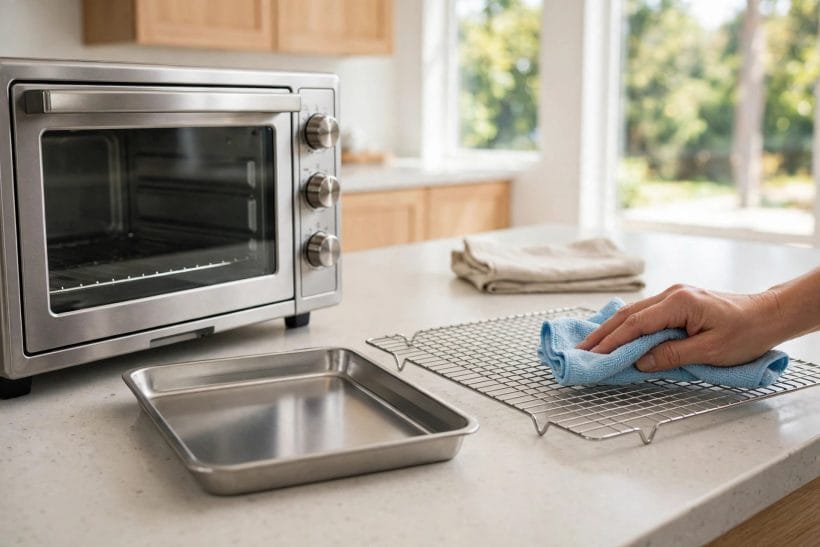
Electrical work belongs to professionals only. If an outlet is damaged, a plug feels loose, a cord is frayed, or the circuit trips when the oven runs, stop using the oven and have a qualified electrician look at the supply. Never open the oven casing, never attempt to repair heating parts or wiring yourself, and never use an oven with a damaged cord or plug. These are not jobs for a confident home cook; they are jobs for someone trained and equipped for them.
Everyday habits complete the picture. Place the oven where its cord does not dangle over a counter edge or cross a sink, keep it away from water, and switch it off and unplug it when it is not in use if that is your household routine. Let the oven cool before moving it or cleaning inside, and keep children and pets clear of the hot door and the space in front of it while it runs.
10. Small Kitchens and Tiny Homes
In a small kitchen or a tiny home, every appliance must justify the counter it occupies. A countertop convection oven can do that, because it replaces several single-purpose tools: it toasts, reheats, roasts and bakes in one box. If it takes the place of a separate toaster and a small grill, it may actually free space rather than consume it.
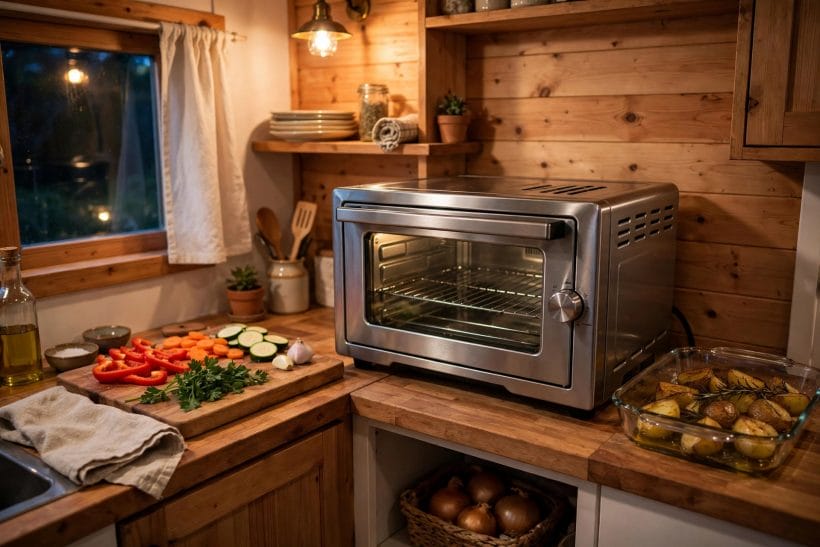
Storage matters when counter space is scarce. If the oven must be put away between uses, check its weight and whether it has a handle or a shape that is easy to lift safely. An oven that is awkward to move will either stay out permanently or end up unused in a cupboard. Either outcome wastes the space it was meant to save, so be honest about how you will really store it.
For more ideas on making a compact kitchen work harder, see tiny kitchen ideas and small kitchen ideas, and for the wider home around that kitchen, tiny house designs and tiny house floor plans show how small rooms can be planned as a whole. A countertop oven fits best when the kitchen around it has been planned with the same care.
Final Considerations
Choosing a countertop convection oven comes down to a short, practical list. Measure your counter and your door clearance, look for steady and even toasting across the rack, choose controls you can read and repeat without effort, and check that the racks, trays and crumb tray are easy to reach and clean. Add clear space for ventilation and a sound electrical supply, checked by a professional if anything seems wrong, and you have covered the checks that matter most.
Do not let a long feature list decide for you. The oven you will love is the one that fits your counter, suits your usual dishes and gets used without fuss, morning after morning. Judge it on size, evenness, controls, cleaning and everyday use, and let your own kitchen, rather than any claim about a single model, make the final call. For further small-home reading, see tiny bedroom ideas, small living room ideas and tiny living room ideas.
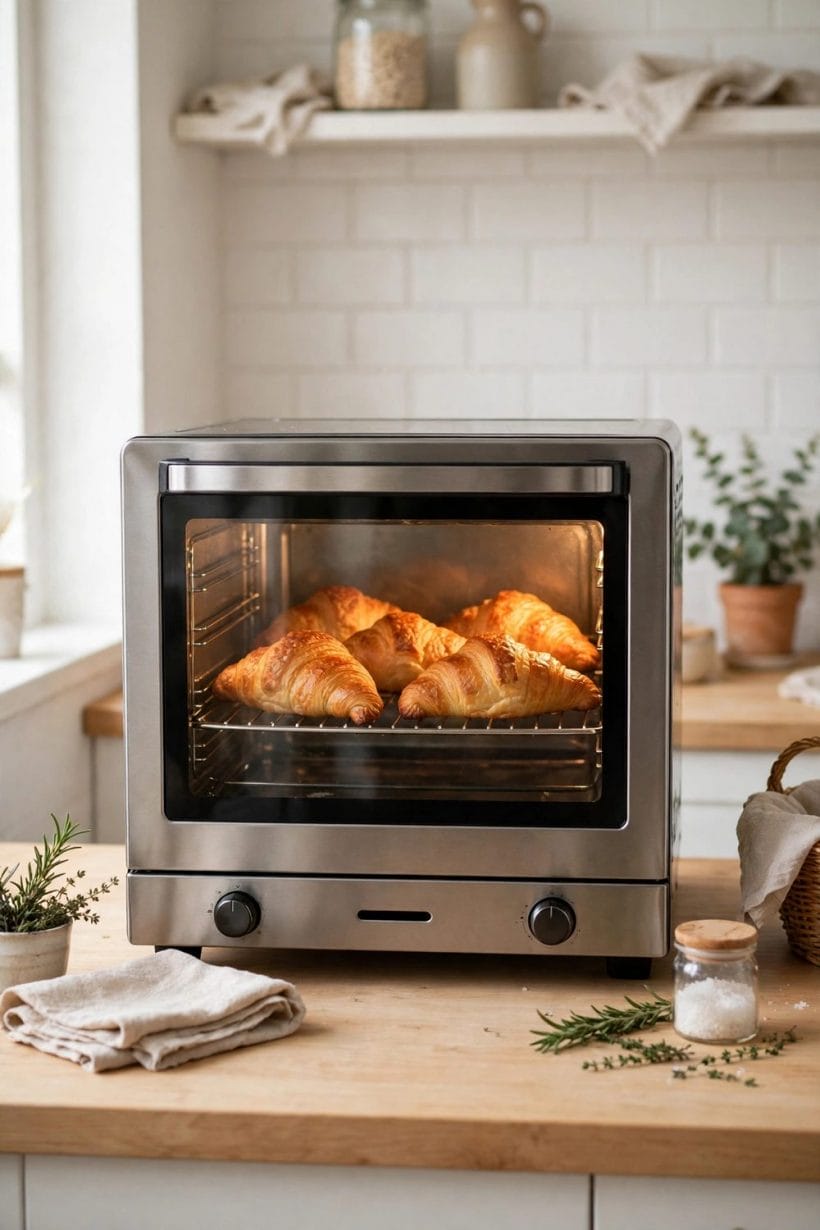
Start with the measurements, test the toasting over several ordinary breakfasts, and keep the manual close for the first few weeks. A careful choice made this way will serve a small kitchen quietly and well for a long time.




0 Comments