
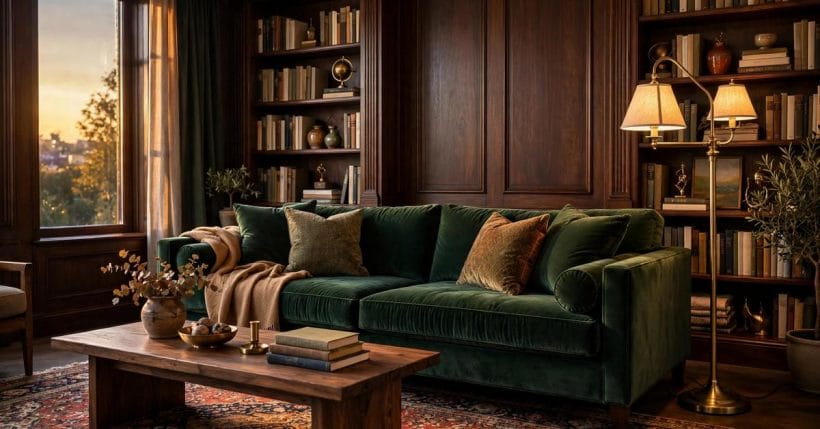
A den earns its place in a home by being the room where the day slows down. It is smaller and quieter than the main gathering space, and it usually sits a little apart from the busiest routes through the house. That separation is the whole point. A den can hold a long read, a quiet conversation, a board game, homework, or simply an hour with nothing much happening at all, and it does each of those jobs better when the room is planned around comfort rather than display.
Many homes already have a room that could become a den, even if it currently carries another label. A spare bedroom that rarely hosts guests, a little-used sitting room, or a tucked-away corner room with a door that closes can all take on the role. The change rarely needs a rebuild. What it needs is a clear sense of how the room will be used, seating that invites a long stay, storage that keeps clutter out of sight, and light that works as well in the evening as it does in the afternoon. The best den ideas begin with that quiet purpose and let every choice that follows serve it.
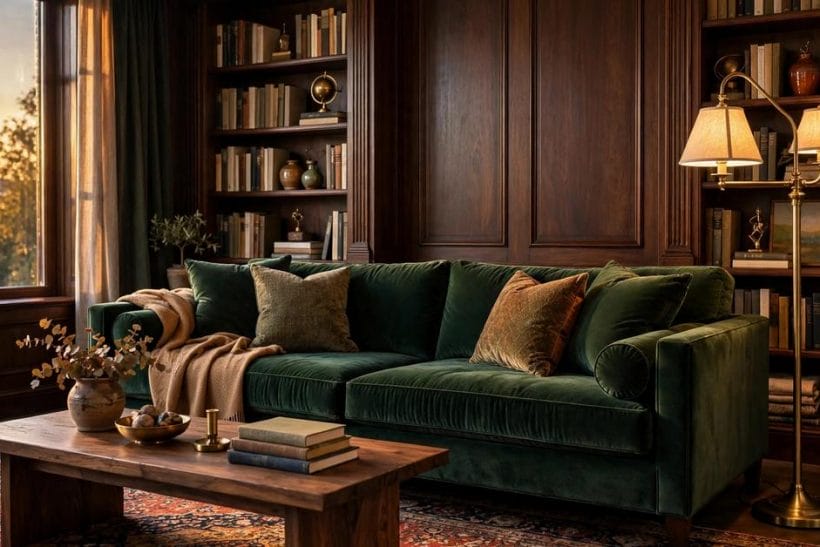
1. Start With the Room’s Job: Reading, Rest and Quiet Work
Before choosing furniture, it helps to name what the den is for. A room meant mainly for reading asks for different things than a room meant for family games or for evening television. Reading calls for a chair with good back support, a light placed close at hand, and shelves within reach. A games room calls for a table with room to spread out and chairs that can be pulled in and pushed back with ease. A room that must do a little of everything calls for flexible pieces that can shift roles without a full rearrangement.
Writing the room’s jobs down, even briefly, keeps later decisions honest. If quiet work matters, the desk corner deserves the calmest wall, away from the door and the noisiest part of the house. If rest matters most, the deepest seat and the softest layers take priority over display pieces. A den that tries to be a second formal sitting room often ends up used by no one, while a den with a clear, modest purpose gets used every day. Let the room be a little informal. That ease is what draws people in.
Think about who will use the room and when. A den shared by the whole household needs seating for more than one person and storage that everyone can reach. A den used mainly by one reader or one worker can be arranged more personally, with a single favourite chair and shelves arranged to one person’s taste. Either way, leave room to move. A cosy room still needs clear paths to the door, the window, and the seat, or comfort turns into crowding.
2. A Deep Seat You Can Sink Into
Seating is the heart of a den, and depth matters more here than in a room built for short visits. A chair or sofa with a generous seat depth lets a reader tuck their feet up, lets a parent sit beside a child with a book, and lets an evening stretch out without anyone perching on the edge. Pair the main seat with a footrest or a low ottoman, so legs can rest and the seat can serve for both reading and resting.
Consider how the seat faces the room. Turning it toward a window gives a reader daylight and a view to rest their eyes on. Turning it toward a fireplace or a low bookcase gives the room a natural centre without the need for a screen. In a den shared by several people, two chairs angled toward each other invite conversation better than a long row of seats all facing one wall. The arrangement should feel like a gathering, even when only one person is in the room.
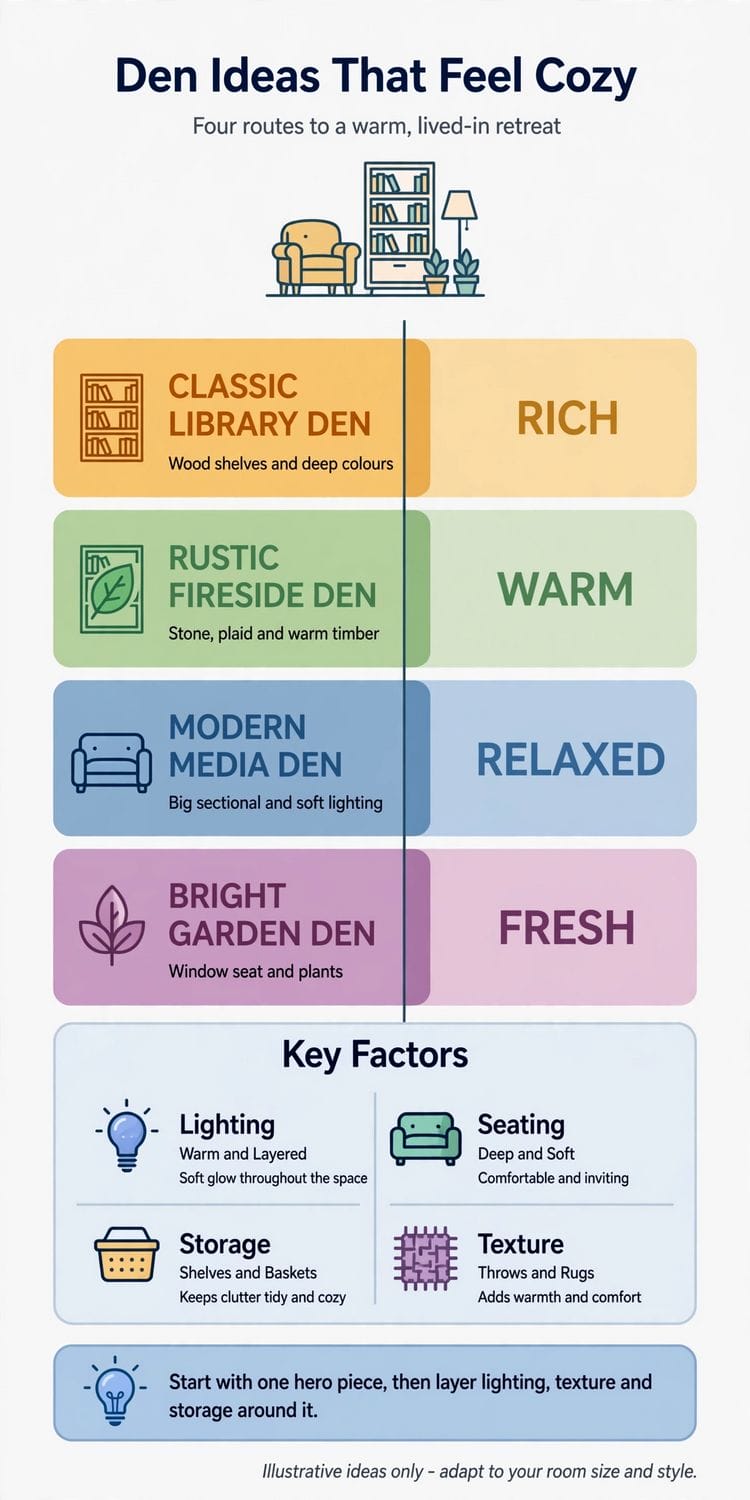
Comfort also comes from what sits beside the seat. A small table within arm’s reach holds a book, a cup, and a pair of glasses, so no one has to get up mid-chapter. A floor lamp behind or beside the chair puts light over a shoulder rather than in the eyes. These small companions to the main seat are what turn a chair in a room into a place someone returns to.
3. Shelves That Hold Books, Games and Keepsakes
A den without shelves can feel bare, while a den with shelves that suit its contents feels settled and personal. Books are the most natural residents, and they look best when shelved by the way they are actually used rather than by a strict system no one maintains. Frequently reached books belong at hand height. Larger volumes and reference books suit lower shelves, where their weight sits safely. A few open shelves left partly empty give the room breathing space and a place for new arrivals.
Games, puzzles, and craft supplies also belong in a den, and they last longer when they have a home that is easy to open and easy to tidy. Closed cupboards or baskets on lower shelves hide boxes and pieces while keeping them within reach for an evening’s play. Labelling is less important than consistency: when everyone in the household knows where the games live, the room tidies itself more often.
Keepsakes deserve a lighter touch. A small number of objects with real meaning, given room on a shelf rather than crowded together, will be noticed and enjoyed far more than a shelf filled edge to edge. Rotate pieces through the seasons if the collection is large, so the room changes gently without becoming a display cabinet. For broader inspiration on fitting shelves into a small room, see interior design ideas, which suit a den’s quiet centre well.
4. Layered Lighting for Day and Evening
A den is used across the day, so its lighting needs more than a single ceiling fitting. Daylight should be welcomed first. Sheer or light-filtering window coverings soften bright sun while keeping the room bright, and a chair placed near a window makes the most of the afternoon. In the evening, the room should be able to shift to a lower, warmer glow that suits reading and rest.
Three kinds of light, used together, give that flexibility. General light from the ceiling or a central fitting lifts the whole room. Task light from a floor lamp or a table lamp serves the reader and the worker directly. A smaller accent light, such as a lamp on a shelf or a low glow near a favourite corner, adds warmth and depth after dark. Each kind of light should be switchable on its own, so the room can be bright for a game and dim for a quiet evening without rewiring anything.

Shades and bulbs shape the mood as much as the fittings themselves. Warm-toned light generally suits a den better than harsh white light, and fabric shades soften glare. Keep cords tucked away and lamps stable, especially where children or pets pass through. Good lighting is rarely noticed on its own, but a den with the wrong light feels restless, and a den with the right light feels like evening has arrived early.
5. A Small Desk Corner for Writing and Study
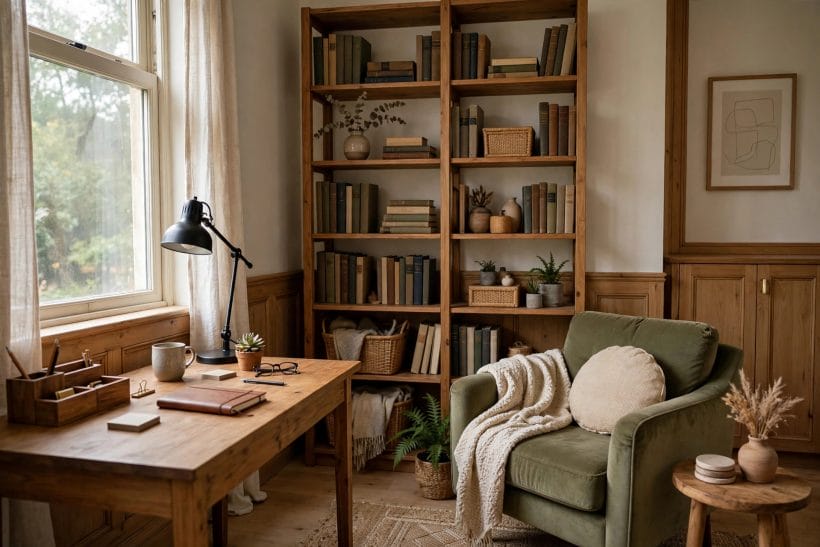
Many dens also carry a quiet working role, and a small desk corner serves it without turning the room into an office. The corner needs only a desk surface with room for writing or a laptop, a chair that supports a straight back, and a shelf or drawer for papers and pens. Placing the desk against a side wall, rather than in the centre of the room, keeps the working area contained and leaves the comfortable seating as the room’s focus.
Natural light helps a desk corner, but glare on a screen or page does not. A position beside a window, rather than directly facing it, usually gives the best balance. A small lamp on the desk extends the corner’s usefulness into the evening, and a pinboard or a single shelf above the desk holds notes and reminders without letting papers spread across the room.
The desk corner should also be easy to leave. When work ends, papers can be closed into a drawer and the chair pushed in, and the room returns to being a place of rest. That boundary matters. A den that cannot shake off the workday will not be restful, while a den with a tidy, closable corner can hold both roles and keep them friendly.
6. Warm Layers: Rugs, Throws and Soft Texture
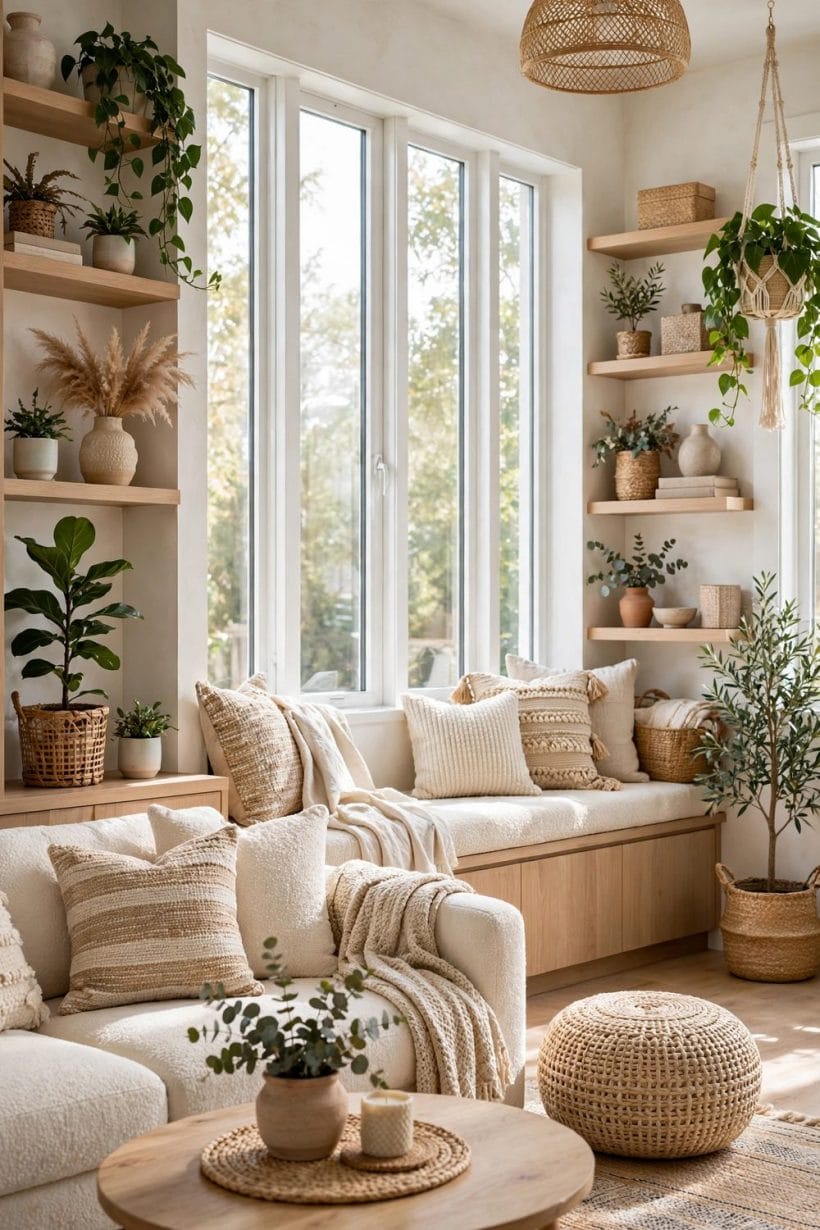
Texture is what makes a den feel cosy rather than simply furnished. A rug under the main seating area grounds the room, warms bare floors, and softens sound, which matters in a room meant for quiet. Choose a rug large enough to sit under the front legs of the seating, so the arrangement reads as one group rather than scattered pieces. A rug that is too small can make even a well-chosen room feel unsettled.
Throws and cushions add a second layer of warmth, and they are best chosen for use rather than for show. A throw that is actually soft and washable will be reached for on cold evenings, while a delicate one will stay folded. Cushions in a mix of sizes support backs, elbows, and heads during a long read, and their covers can change with the seasons to refresh the room without new furniture.
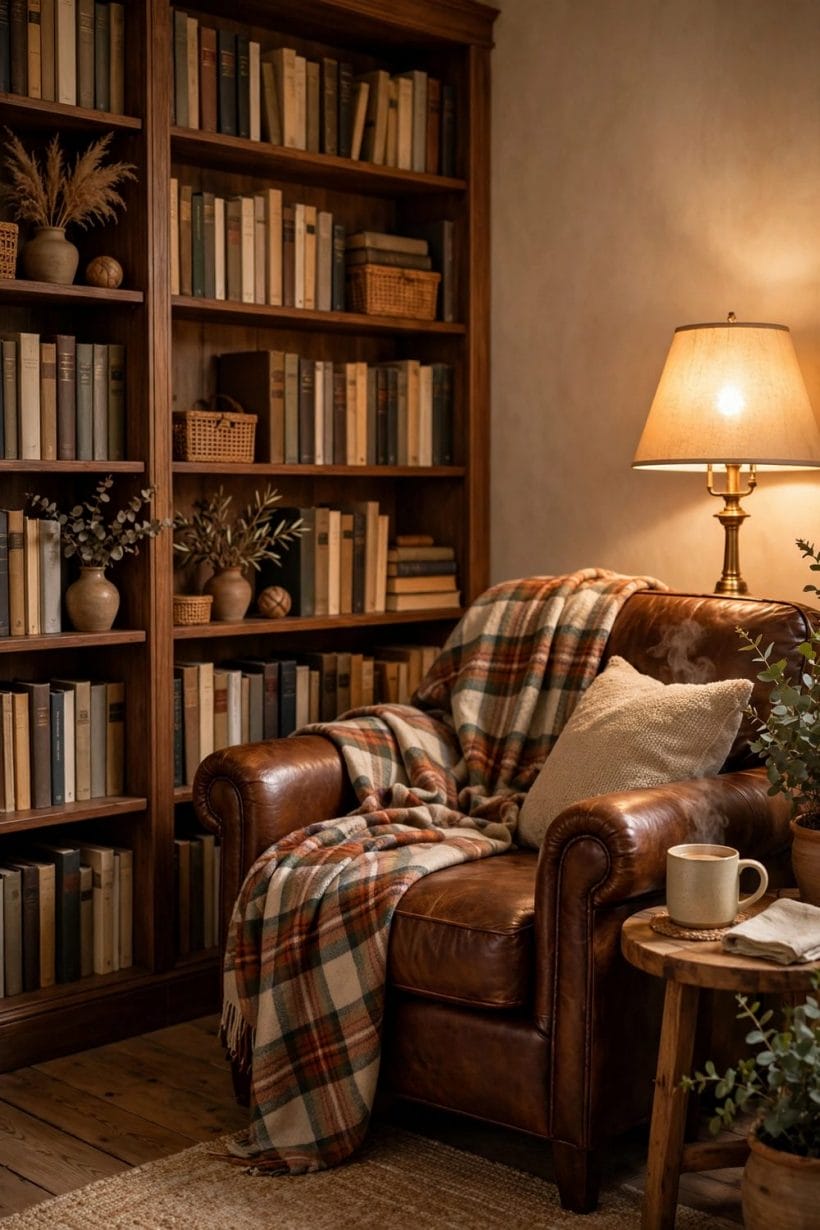
Curtains and wall hangings add a further soft layer. Heavier curtains help a den feel enclosed and quiet, and they frame the window as part of the room rather than as a gap in the wall. Fabric wall pieces, woven baskets, and wooden details all add warmth without shine or glare. The aim is a room that feels soft to the eye and to the touch, a place where the senses settle.
7. A Warm Focal Point for the Room
Every comfortable room benefits from a place for the eye to rest, and a den is no exception. In many homes that focal point is a fireplace, whether working or simply architectural, and the seating can gather loosely around it. Where there is no fireplace, a low bookcase, a large framed print, or a window with a view can serve the same purpose. The point is not grandeur but orientation: the room feels arranged rather than accidental.
Built-in storage around a focal point can be especially useful in a den, since it combines display, storage, and structure in one wall. Shelves flanking a fireplace hold books where readers sit, and closed cupboards below hide games and media. If built-ins are not an option, a freestanding bookcase or a console placed with care can frame the focal wall just as well. For related ideas on arranging a single strong feature wall, see modern tiny house interior ideas, which show how one wall can carry both beauty and order.
Keep the focal point calm. A single strong feature, given room to breathe, settles a den far better than several competing features. If the room also holds a screen, place it so it does not dominate when it is off, perhaps within a cupboard or on a wall that is not the first thing seen from the door. A den’s focal point should invite lingering, not demand attention.
8. Sound, Privacy and a Door That Closes
Quiet is a den’s most valuable quality, and it deserves deliberate protection. A door that closes, even a simple interior door, changes a room completely, shutting out household noise and signalling that the room is a retreat. Where a door cannot be added, a heavy curtain across the opening or a bookcase placed as a partial divider can soften both sound and sightlines.
Soft surfaces throughout the room help as well. Rugs, curtains, upholstered seating, and books on shelves all absorb sound, while bare floors and empty walls let it echo. A den with generous soft layers will feel quieter even when the house around it is busy, and conversation inside the room will stay comfortably low.
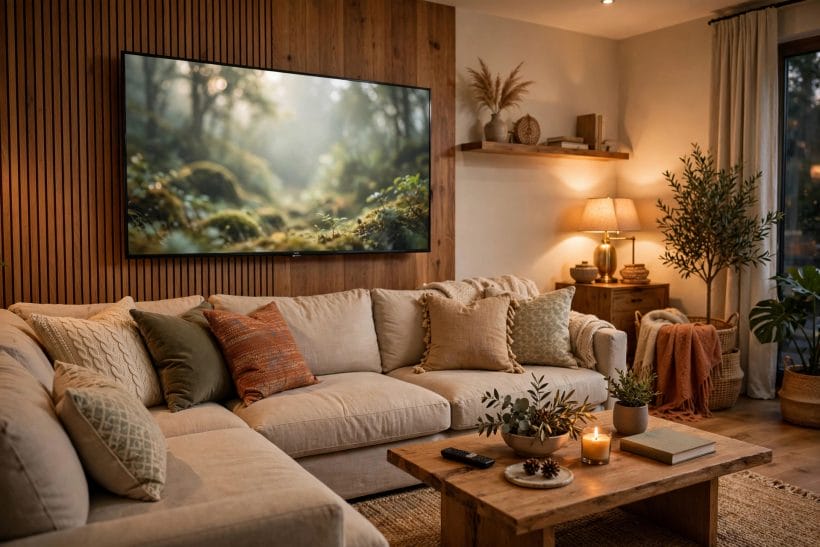
Privacy also shapes how the room is used. A den where someone can read, study, or talk without feeling watched will be used more often and more happily. Window coverings that can be closed in the evening, a layout that does not put the main seat directly in view of a hallway, and a simple agreement that a closed den door means quiet all support the room’s purpose. Comfort grows where privacy is respected.
9. Storage That Keeps the Room Calm
A den collects things quickly: books, games, papers, devices, chargers, and the odds and ends of daily life. Without a plan for storage, the room’s calm disappears under its own contents. The remedy is storage matched to what actually lives in the room, placed where the things are used, and closed where possible so the eye rests on the room rather than on its supplies.
Closed storage suits the busiest categories. Cupboards and drawers hide chargers, papers, and game boxes, while open shelves suit books and a few chosen objects. Baskets offer a middle way: they hide contents while staying light and movable, and they suit throws, craft supplies, and children’s items. Whatever the form, storage should be reachable without a step stool or a deep crouch, or it will not be used.
Regular small tidies keep a den welcoming. Returning books to their shelves, closing drawers, and clearing the main table at the end of the day takes only a few minutes and preserves the room’s restful character. A den that is easy to tidy stays a den. A den that is hard to tidy slowly becomes a store room, and its quiet purpose slips away.
10. Personal Touches That Make It Yours
The final layer of a den is personal, and it is the layer that turns a well-arranged room into a favourite one. Family photographs, a child’s drawing, a travel keepsake, or a handmade object all carry stories that no catalogue room can match. Displayed sparingly, they give the room warmth and identity. Displayed in crowds, they compete with each other and with the room itself.
Colour can be personal too. A den suits deeper, warmer tones than the bright, open rooms of a house, and a single painted wall or a set of richly coloured curtains can shift the mood without repainting the whole room. Keep the palette restrained, with one or two main colours and softer neutrals around them, so the room feels rich rather than busy. If you enjoy smaller, cosier rooms generally, small living room ideas offer related lessons in making a compact space feel generous.
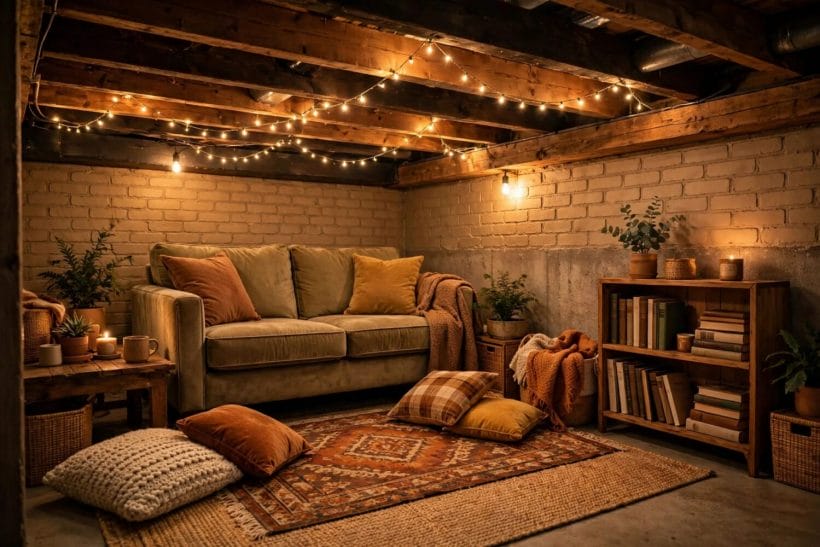
Finally, let the room evolve. A den that is lived in will change as interests change: new books arrive, a hobby takes up a corner, a child’s games give way to an adult’s reading. Leave a shelf empty, keep one corner flexible, and resist filling every wall at once. A den that can grow with its household will stay loved far longer than a room finished in a single weekend and never touched again.
Final Considerations
A good den asks for little and gives a great deal: a door that closes, a seat worth sinking into, shelves within reach, light that suits both day and evening, and storage that keeps the calm. None of these choices needs to be grand or costly in spirit. Each one simply serves the room’s quiet purpose, and together they make a room that the household reaches for every day.
Begin with the room’s job, then add seating, shelves, and light in that order, and let personal touches arrive last. If a choice does not make the room more comfortable, quieter, or easier to keep calm, it probably belongs elsewhere in the house. That simple test keeps a den honest, and it is why the best den ideas feel less like decoration and more like care for the people who will use the room. For a broader look at rooms built for gathering, farmhouse living room ideas complement a den’s quieter role, while tiny living room ideas show how small rooms can still feel complete. Home office ideas can also inspire the den’s desk corner, and tiny house colour palettes offer guidance for households choosing a cosier set of tones for a small room.




0 Comments