

A washer that looks clean on the outside can still carry a faint mustiness that shows up on towels and bedding, and that is where a built-in cleaning programme earns its place. A washer self-clean cycle is a programme that washes the machine itself rather than a load of laundry, flushing the drum, the dispenser and the hidden corners where damp and residue tend to settle. It does not repair a fault, and it does not replace ordinary care, but it gives the inside of the machine a fresh start, and it helps explain why a washer that is used every week still benefits from attention now and then.
This post explains the idea in plain terms: what the programme does, the signs that suggest a clean may help, the simple checks to make beforehand, and the moments when a professional should take over. Machines differ, so the manual that came with your own machine is the final word on its cleaning setting, on any cleaner it approves, and on anything you are unsure about. Anything involving the water supply, the drain, or the electrical connection belongs with a qualified professional, and nothing here asks you to open panels, change parts, or repair a fault yourself.

1. What a Cleaning Cycle Actually Does
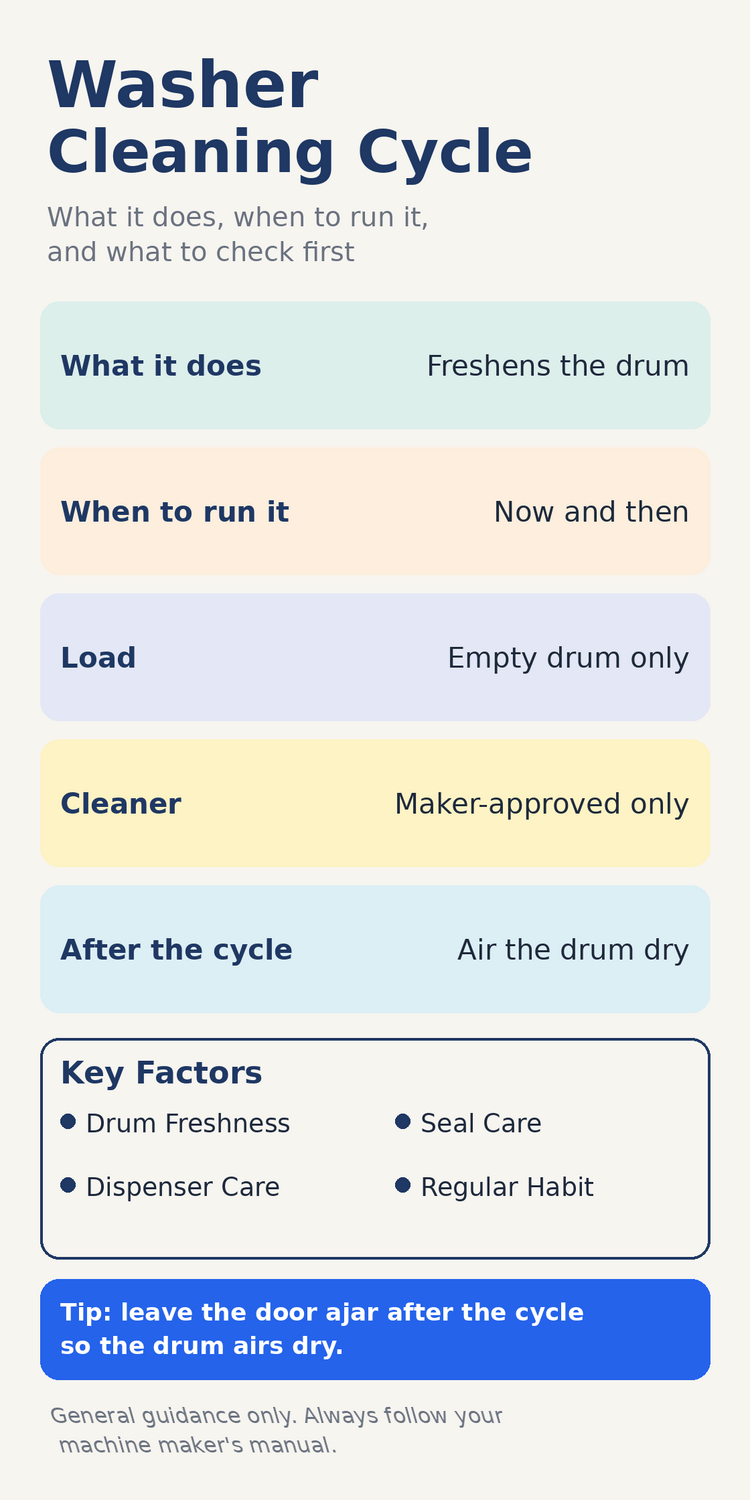
During an ordinary wash, detergent, softener, lint and body soil pass through the drum and the dispenser, and small amounts stay behind. Over time that residue can cling to the drum surface, gather around the door seal, and sit in the dispenser drawer, especially in a machine that is often closed straight after a wash. A cleaning programme runs the machine empty, using water and movement to loosen that build-up and carry it away down the drain. The result is usually a fresher-smelling drum and a cleaner surface for the next load, rather than any change you can see from the outside.
It helps to think of the programme as maintenance for the machine rather than as a deeper wash for clothes. It cannot fix a leak, quiet a worn bearing, or clear a blocked drain, and it will not rescue a load that already smells musty. What it can do is keep the parts that touch every load in better condition between services, which matters most in a small home where the washer may sit close to living space. Readers planning a compact utility corner may find small-home building design ideas useful for thinking about where a machine sits and how air moves around it.
The cleaning setting is also a useful reminder that a washer is a damp appliance. Warmth and moisture are part of every wash, and a closed door after the final spin traps both inside. A cleaning programme interrupts that pattern by flushing the interior and giving it a chance to dry, which is why many people run one when the drum starts to smell less fresh than it should. The habit is simple, it asks little attention, and it fits naturally alongside wiping the seal and leaving the door ajar, both covered later in this post.
2. Signs Your Washer May Need a Clean
The most common sign is smell. If towels come out of a freshly run wash carrying a damp, stale note that was not there before, or if the drum itself smells musty when you open the door, residue inside the machine may be part of the story. The smell alone does not prove anything, since damp laundry left sitting in the drum can smell the same way, but a stale drum that persists across several washes is a reasonable prompt to consider a cleaning programme and to look at the seal and dispenser at the same time.
Visible clues can help too. A dark line or a slimy feeling around the folds of the door seal, a grey film inside the dispenser drawer, or a drum that looks dull rather than bright after a wash are all worth noticing. None of these signs means the machine is broken, and none of them calls for strong measures. They simply suggest that residue has had time to settle and that a gentle clean, followed by better airing, may restore freshness. If the marks look like damage, or if the seal feels torn or loose, leave that judgement to a professional rather than pulling at the seal yourself.
Timing can also be a clue. A machine that has been used heavily for a long stretch, or one that has stood unused with its door shut, may benefit from a clean before it returns to regular use. The same applies after a period when loads were repeatedly left damp in the drum. None of this needs a calendar rule, and no fixed schedule suits every household. The honest guide is your own senses: freshness, appearance, and whether the machine still feels pleasant to open and use.
3. Before You Start: Simple Checks
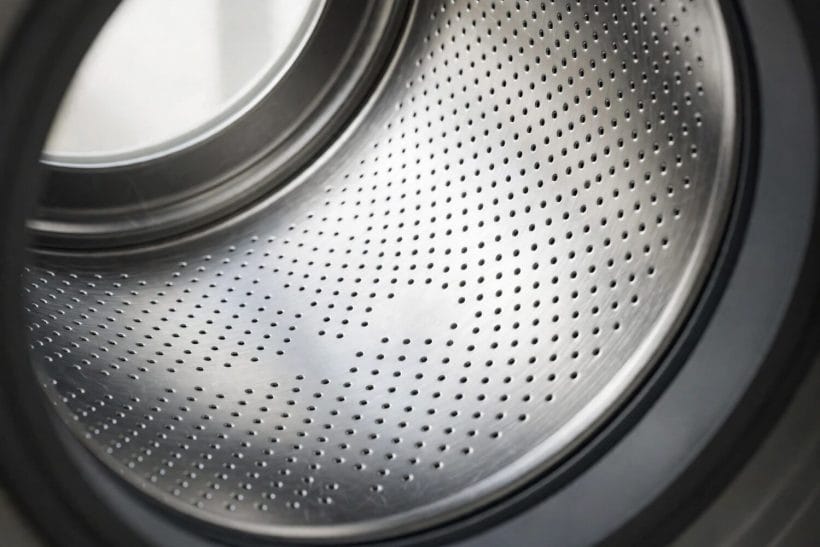
A cleaning programme is designed to run with an empty drum, so the first check is the simplest one: make sure no clothing, cloth, or stray item is left inside. Check pockets in anything you have just removed, glance around the drum, and look inside the folds of the door seal for anything that may have slipped out of a load. Running the programme with a load inside would waste the clean and could leave the laundry smelling of a cleaner that was never meant for clothes, so the empty-drum check is worth doing deliberately rather than from memory.
Next, take a quick look at the dispenser drawer and the door seal. If the drawer carries visible residue, follow the manual on whether it can be removed for rinsing and how it should be refitted, and if the manual says nothing, leave it in place and let the programme do its work. The seal needs only a glance at this stage, not a scrub, since the point of the check is to notice anything unusual, such as damage or an object caught in the fold, before the machine fills and starts to move. Anything that looks damaged is a reason to pause and seek advice, not a reason to force the drawer or pull at the seal.
Finally, make sure the machine is ready in the ordinary way: the door closes properly, the area around the machine is clear, and you have time to let the programme finish without interruption. Keep any cleaner you plan to use within reach, but only a product the maker approves for your machine, and keep it out of reach of children and pets while you work. Supplies kept tidily near the machine make this easier, and small-home storage ideas can help with keeping cleaning products, cloths, and spare towels organised in a compact laundry corner.

4. How a Typical Cleaning Cycle Runs
During a washer self-clean cycle, the machine fills, moves water around the empty drum, and drains, repeating that pattern in the way its own programme was designed to do. There is no load to protect, so the programme can use a fuller fill and a more thorough rinse than an ordinary wash, and it can reach the dispenser and the outer parts of the drum that a normal load may never touch. The exact pattern varies from one machine to another, which is why the manual matters more than any general description, but the shape of it is the same everywhere: water in, movement, and water out, with nothing inside but the drum itself.
Because the programme is a cleaning operation rather than a wash, the usual laundry decisions do not apply. There is no fabric to sort, no load size to judge, and no need to add ordinary detergent, which would only add residue to a programme meant to remove it. If the manual calls for a cleaner, use only the kind it approves, and follow its guidance on where that cleaner should go, whether that is the drum or the dispenser. Never mix cleaning products, and never pour an unapproved substance into the machine in the hope of a stronger result, since the wrong product can damage seals and hoses and can leave residues that later reach your laundry.
Once the programme starts, the kindest thing you can do is leave it alone. Let it run to the end, wait for the door to release in the normal way, and only then open the machine and look inside. Opening the door mid-programme achieves nothing and can spill water, while stopping the programme early leaves the interior half-flushed and still damp. When it finishes, the drum should smell fresher and feel clean to the touch, and leaving the door ajar afterwards lets the last of the moisture escape rather than settling back into the seal.
5. The Drum, the Seal and the Dispenser
Three parts of the machine do most of the work of staying fresh, and each one asks for a slightly different kind of attention. The drum itself is the simplest, since a cleaning programme reaches it directly and its smooth surface gives residue little to hold on to. After the programme, a quick look inside tells you whether the drum looks bright and smells fresh, and that look is usually enough. If the drum still smells stale after a cleaning programme, the cause may sit elsewhere, such as the seal or the drain, and that is a matter for advice rather than for repeating the programme again and again.
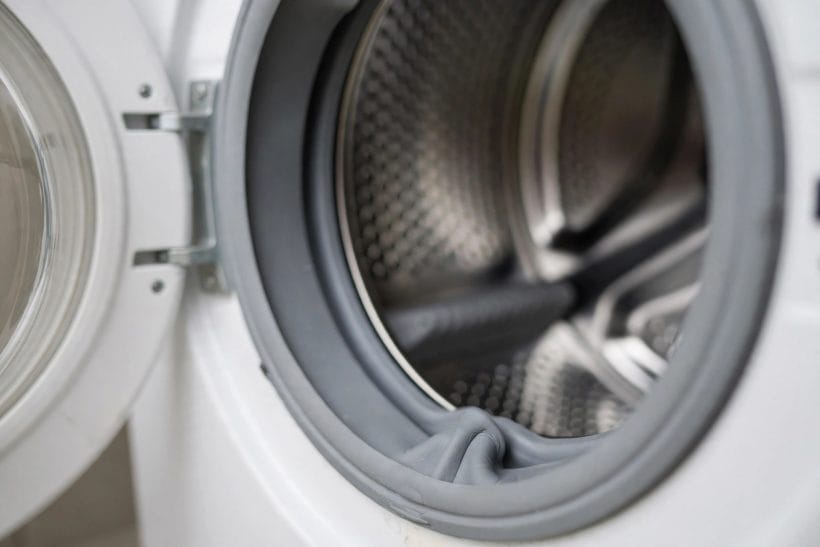
The door seal deserves the most regular attention of the three, because its folds stay damp long after the drum has dried. A gentle wipe of the accessible surfaces with a soft, damp cloth, done as part of ordinary tidying, removes surface moisture and lint without disturbing the seal itself. Never pull the seal open, fold it back forcefully, or try to clean behind it with a tool, since the seal is what keeps water inside the machine during a wash. Damp rooms make this care more important, and readers dealing with moisture in compact wet rooms may find tiny bathroom ideas helpful for thinking about ventilation and surfaces that dry well.
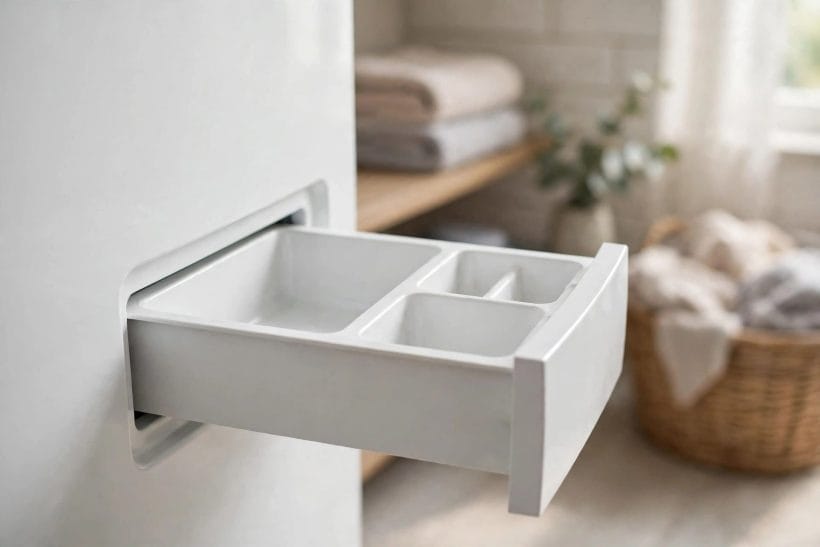
The dispenser drawer is the quietest culprit, since residue builds up out of sight and then feeds a stale smell back into every wash. If the manual allows the drawer to be removed, rinsing it and letting it dry fully before refitting is a straightforward habit, and if the manual does not mention removal, a cleaning programme is the safer route. Either way, the drawer should be left slightly open when the machine is not in use where the design allows it, so that damp does not sit inside it between washes. A dispenser that sticks, cracks, or refuses to sit properly is a parts matter, and a professional should judge it.

6. Odours, Residue and What They Can Mean
Odour in a washer usually comes from the same combination: moisture that lingers, residue that feeds it, and a closed door that keeps both in place. A drum that is shut straight after every wash, a seal that never fully dries, and a dispenser that carries old detergent film can each add their share, and the smell that results is often described as musty or stale rather than sharp. Understanding that combination helps, because it points to habits that help, such as airing the drum and wiping the seal, rather than to any single dramatic fix.
Residue itself comes from ordinary washing. Detergent that is not fully flushed, softener that coats surfaces, and lint from loads all leave traces, and those traces build up fastest when loads are heavy and the machine is closed between washes. Using more product than the manual suggests does not wash clothes cleaner, and it can add to the film inside the machine, so following the guidance for your machine and your water type is a quieter form of care than any extra product. If you are unsure how much product your machine expects, the manual and the product guidance together are the right place to look, not guesswork.
It is worth knowing what a cleaning programme cannot explain. A sharp electrical smell, a burning note, or a smell that arrives with a leak or a trip of the household supply is not a freshness problem, and it should never be treated as one. Stop using the machine, keep the area safe, and call a qualified professional. The same applies to a smell that persists after a cleaning programme and a round of gentle care, since a drain or internal fault may be involved. Freshness habits are for freshness problems, and anything that feels like a fault should be treated as a fault.

7. Keeping the Machine Fresh Between Cleans
The habits that keep a washer fresh between cleaning programmes are small, and they work well when they become part of putting laundry away rather than a separate chore. Leaving the door ajar after a wash lets the drum and the seal dry, and wiping the accessible part of the seal with a soft cloth takes a moment while the load is being hung or folded. Taking damp laundry out promptly rather than leaving it sitting in the drum helps too, since a load left in a closed machine will smell stale no matter how clean the drum was to begin with.
Ventilation around the machine matters as much as ventilation inside it. A washer tucked into a tight cupboard with no air movement will stay damp longer than one with room to breathe, and the room itself will feel fresher if moist air has somewhere to go. That does not mean rebuilding the laundry corner, and it does not mean altering vents or ducting yourself. It means noticing whether the corner feels clammy, whether towels stored nearby feel damp, and whether a small change, such as leaving a cupboard door open after washing, helps the space dry. In homes where laundry shares space with cooking, tiny kitchen ideas can offer useful thinking on keeping a compact utility zone tidy and well aired.
The dispenser deserves a place in the same routine. A quick glance at the drawer now and then, and a rinse where the manual allows it, stops film from building up unnoticed, and leaving the drawer slightly open where the design allows it keeps it dry between washes. None of these habits needs special products or strong measures, and none of them should involve dismantling anything. Gentle, regular attention is the whole method, and a cleaning programme now and then is the deeper version of the same idea rather than a substitute for it.

8. Small Homes and Shared Laundry Spaces
In a small home, the washer often lives close to where people sleep, eat, or relax, which makes freshness and quiet running feel more important than they might in a larger house. A machine that smells stale will be noticed sooner, and a cleaning programme that runs while the household is out or settled for the evening may suit the rhythm of the home better than one run in the middle of a busy day. Planning the laundry corner with air, light, and a place for supplies in mind helps the machine stay pleasant to live with, and that planning starts with the room rather than with the machine itself.
Shared laundry spaces ask for a little extra consideration. Where a machine serves several households, wiping the seal, removing lint, and leaving the door ajar after use are courtesies as much as care habits, since the next person inherits whatever the last wash left behind. Follow any building or household rules for shared machines, and never add a cleaner to a shared machine unless the arrangement clearly allows it, since other users may have sensitivities or their own routines. If a shared machine smells stale or behaves oddly, raise it with whoever looks after the building rather than attempting a fix yourself.
Storage also plays a part in a small laundry corner. Cleaning products, cloths, and spare towels kept in one tidy place are easier to find and easier to keep out of reach of children, and a corner that is easy to wipe down is a corner that stays fresher. Thinking about the whole corner, rather than the machine alone, is what turns a cleaning programme from an occasional rescue into part of a calm household rhythm, and tiny house interior design ideas can help with shaping small utility spaces that stay pleasant to use.
9. When to Call a Professional
Some washer problems sit clearly outside freshness and gentle care, and recognising them early protects both the machine and the home. Water on the floor, a leak from a hose or connection, a machine that trips the household supply, or any sign of damage to a cable or plug are all reasons to stop using the machine and call a qualified professional. Do not mop around a live electrical appliance, do not touch a damaged cable, and do not attempt to tighten, replace, or reroute a hose or connection yourself, since water and electricity together leave no room for guesswork.
Other signs also call for professional judgement rather than another cleaning programme. A machine that shakes violently, makes a grinding or knocking sound it never made before, refuses to drain, or shows a fault message that returns after the manual’s basic guidance has been followed may have a mechanical or drainage fault that only inspection can identify. Repeating a cleaning programme in the hope that it clears a fault wastes time and can mask a problem that is getting worse, so the right response is to stop, note what happened in plain terms, and pass that description to the technician.
Choosing who to call matters too. A qualified appliance technician, or the maker’s own service route where one exists, is the right starting point, and a clear description of what you noticed helps them judge urgency. Mention when the problem started, what the machine was doing at the time, and whether water or an electrical symptom is involved, and follow any safety guidance they give before their visit. A professional visit may feel like a larger step than a cleaning programme, but for faults it is the only step that addresses the cause rather than the smell.
10. Questions to Ask When a Cleaning Feature Matters to You
For anyone choosing a machine, or simply learning the one they already own, a handful of questions can clarify what the cleaning feature actually offers. Ask whether the machine has a dedicated cleaning setting at all, since not every machine does, and a machine without one can still be kept fresh with the gentle habits described earlier. Ask what cleaner, if any, the maker approves for that setting, and where that cleaner should be placed, since the answer differs between machines and guessing can damage seals. Ask how the dispenser and seal are meant to be cared for, and whether any part is designed to be removed for rinsing, so that ordinary care follows the design rather than fighting it.
It is also worth asking about the practical side of living with the machine. Ask how the cleaning programme fits into ordinary use, whether it needs an empty drum, and what to do with the door and dispenser afterwards, so that the habit feels manageable rather than mysterious. Ask about service and support in general terms, such as who to contact if a fault appears, and keep that information with the manual rather than relying on memory. None of these questions needs a technical background, and none of them requires accepting a claim about quality or performance at face value.
Finally, think about the laundry corner as a whole when a cleaning feature matters to you. A machine that is easy to reach, easy to air, and easy to wipe around will be easier to keep fresh than one squeezed into a dark corner, however capable its programme may be. That broader view, covering light, air, storage, and access, is often more useful than any single feature, and modern tiny house interior ideas can help with picturing a utility corner that stays pleasant in everyday use. The cleaning setting is one part of that picture, and it works well when the corner around it supports it.
Final Considerations
A washer cleaning programme is a modest idea that does a modest job well: it flushes the drum, the dispenser, and the seal with water and movement, and it leaves the machine fresher for the next load. It does not repair faults, it does not replace gentle habits, and it does not need strong products or dramatic measures to work. The habits around it, leaving the door ajar, wiping the seal, taking laundry out promptly, and glancing at the dispenser now and then, matter just as much as the programme itself, and together they keep a machine pleasant to open and use.
If you remember one thing, let it be the manual. Your own machine’s guidance on its cleaning setting, on any cleaner it approves, and on the care of its seal and dispenser outweighs any general post, including this one, and anything involving water supply, drainage, or electricity belongs with a qualified professional. Run the programme when freshness suggests it, keep the gentle habits going between cleans, and call for help promptly when something feels like a fault rather than a freshness problem. A fresh machine is a quieter part of household life, and that quiet is worth the small attention it asks for.




0 Comments