
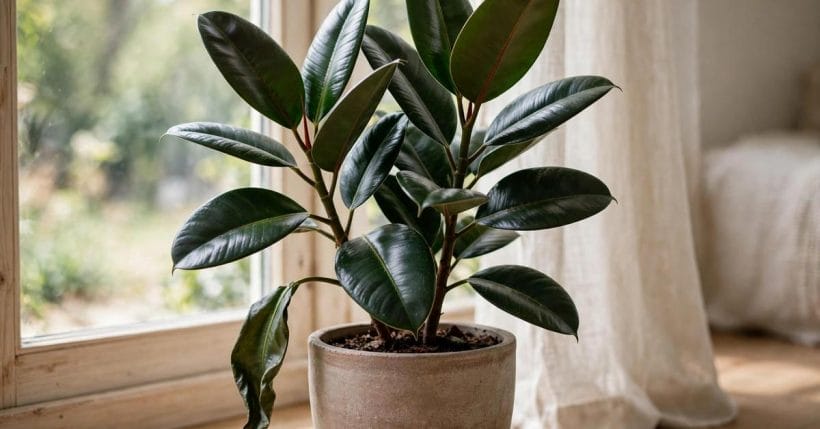
A rubber plant that suddenly looks limp can be worrying, especially when the plant looked full and upright only a short while before. Drooping leaves are the plant’s way of showing that something in its surroundings is not quite suiting it at the moment, and the cause is often simpler than it first appears. When you notice rubber plant leaves drooping, the most helpful response is a slow one: look closely, check the basics one at a time, and resist the urge to fix everything at once.
This guide walks through the gentle checks that tend to matter most, from soil and light to pots, temperature and routine. Nothing here promises a quick recovery, and no single change suits every plant or every home. The aim is to help you notice what has changed, rule out the obvious causes, and settle into a steadier routine that gives your plant a fair chance to respond.
1. Start With a Calm Look at the Whole Plant
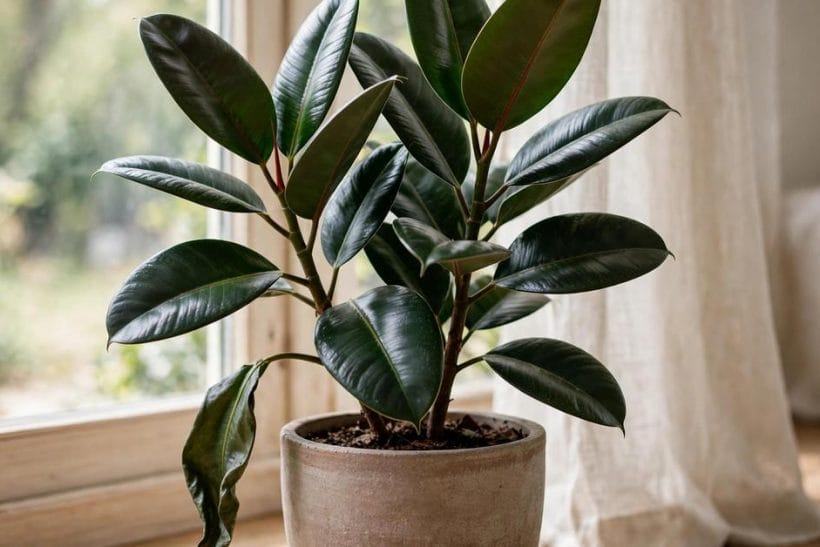
Before you touch the soil or move the pot, spend a few quiet moments simply looking at the plant as a whole. Notice whether the droop affects every leaf or only a few, whether the lowest leaves are affected first, and whether the stems still feel firm or have gone soft. These small observations matter because they point in different directions: a plant that is limp all over is telling a different story from one that has dropped only its oldest leaves.
Also notice what else has changed around the plant lately. Has it been moved to a new corner, has the heating come on, has a curtain been drawn more often, or has watering become more frequent or less frequent? Plants respond slowly, so a change made a while ago can still be showing its effect now. If you keep houseplants of more than one kind, you may find it helpful to compare notes with a guide to wilting in an aloe plant, since limp leaves raise similar questions across different species, even though the answers are not identical.
Write down what you see, even briefly. A short note about which leaves droop, how the soil feels, and where the plant stands will make the later checks far more useful, because you will be comparing like with like rather than relying on memory alone.
2. Check the Soil Before You Water Again
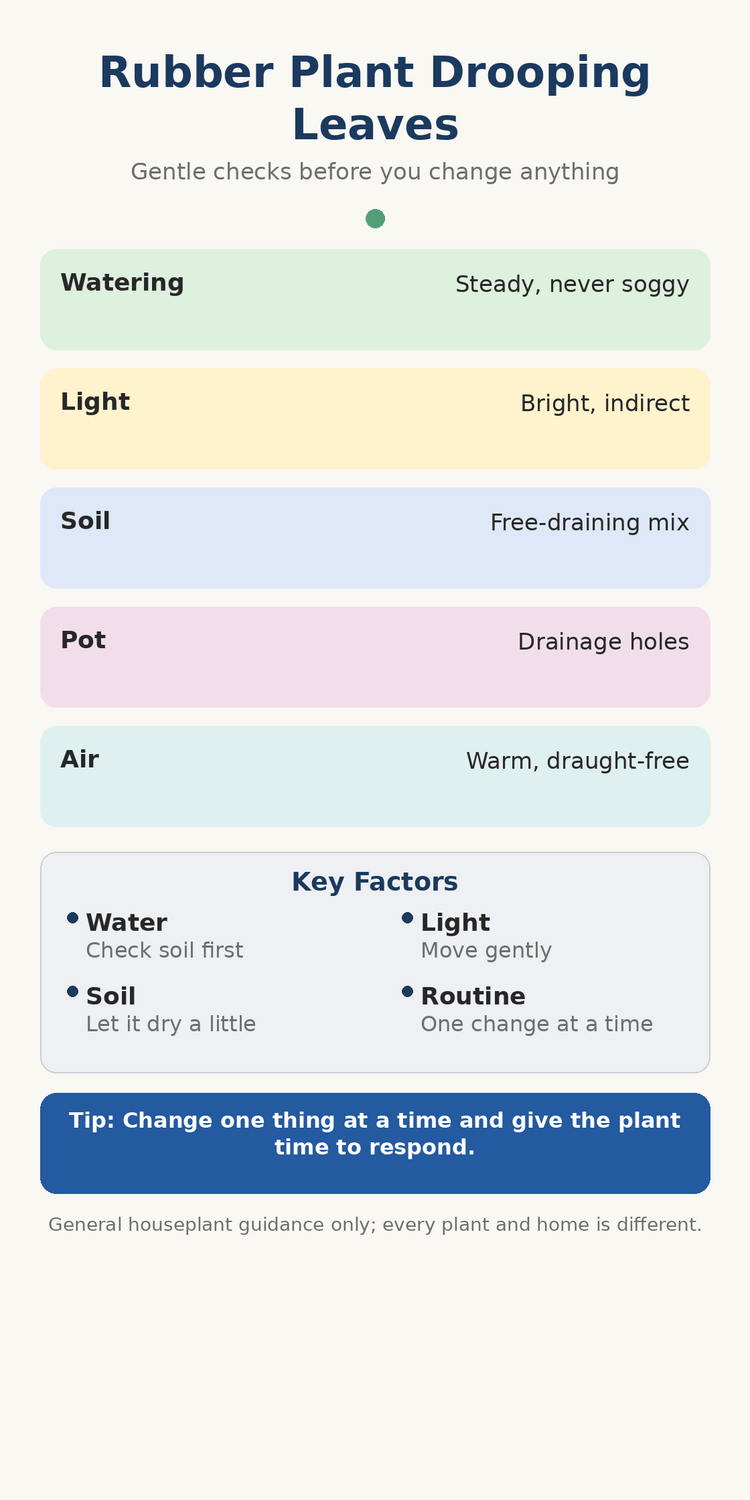
The most common first question is whether the plant needs water, yet watering on guesswork can make things worse in either direction. Push a finger gently into the top of the soil and notice how it feels: dry and crumbly, pleasantly damp, or wet and heavy. Soil that stays wet for a long stretch can starve roots of air, while soil that has dried out completely can shrink away from the pot and let water run straight past the roots.
If the soil feels wet, hold off on watering and let it dry down a little before you water again. If it feels very dry, water slowly and evenly, giving the soil time to absorb rather than flooding the surface all at once. In both cases, one careful watering followed by patient observation tells you more than repeated watering ever will.
Also check how the pot itself handles water. A pot without a way for excess water to escape can leave the roots sitting in dampness long after watering has finished, and that lingering dampness is a frequent companion of drooping leaves. Containers of all kinds raise the same question, which is why drainage matters just as much in a guide to a wooden crate used as a planter box as it does in a nursery pot indoors.
3. Look at Light Without Moving the Plant Yet
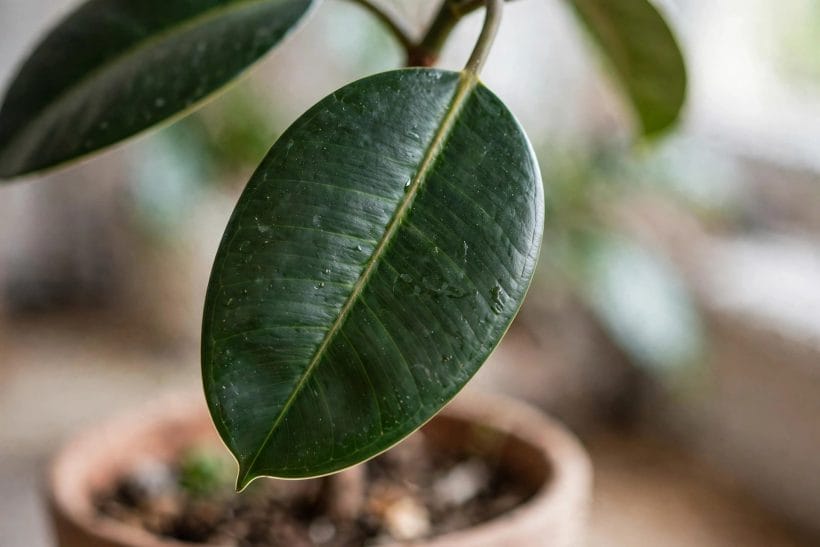
Rubber plants generally enjoy bright light, but they tend to prefer it indirect rather than harsh and direct for long stretches. A plant standing in a dim corner may stretch weakly and drop leaves, while one pressed against sun-baked glass may scorch and wilt. The trick is to judge the light where the plant actually stands, not where you wish it stood.
Hold your hand near the leaves in the middle of the day and notice whether the light feels strong and hot or soft and even. Look at the shadows the plant casts: sharp, hard shadows suggest strong direct sun, while soft, gentle shadows suggest the kind of bright, indirect light that suits most indoor plants. If the plant has recently been moved from a bright spot to a darker one, or the reverse, that move alone may explain the droop.
Windows facing different directions give very different light through the day, and a plant that thrives in one window may struggle in another. Reading about plants suited to a west-facing window can help you judge how much afternoon sun your own window really delivers, and whether your rubber plant is getting more glare than it can comfortably handle.
4. Consider the Pot and Its Drainage
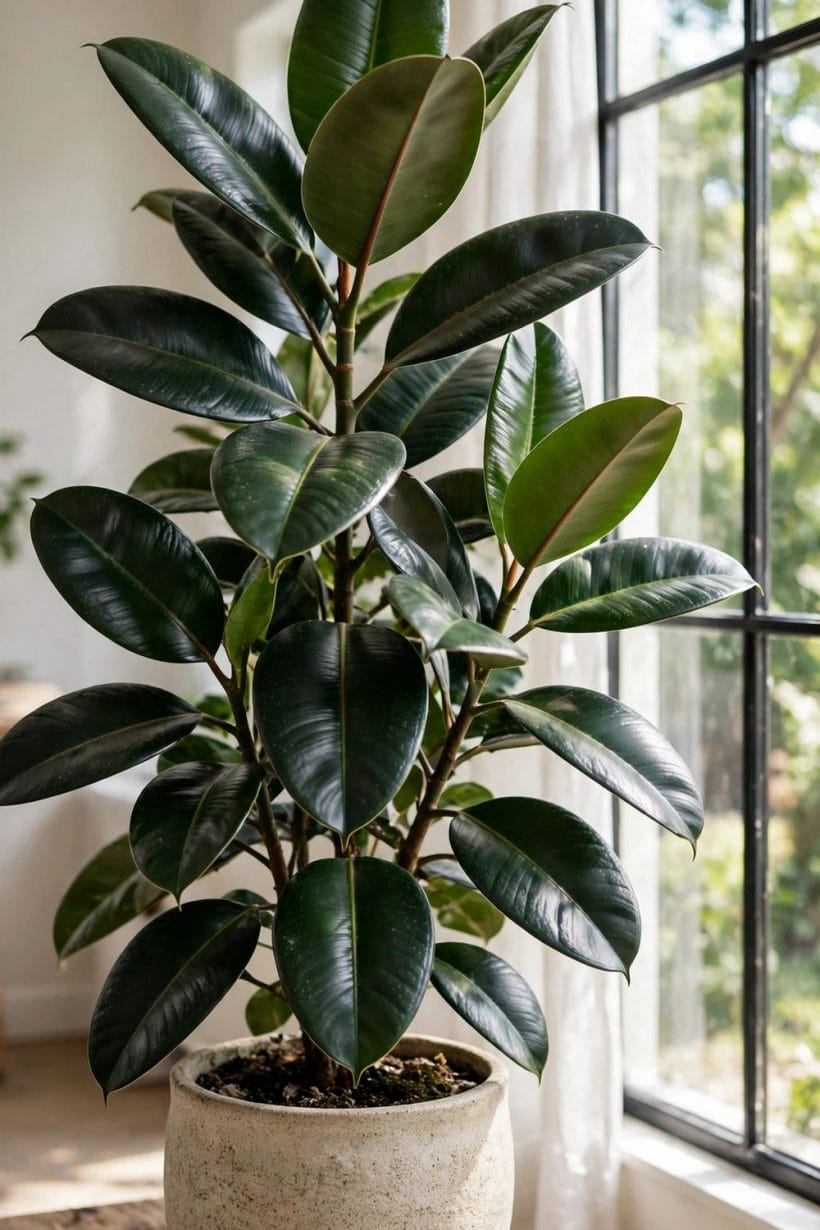
A plant that has grown considerably since it was last potted may be cramped, with roots filling most of the pot and little soil left to hold moisture evenly. On the other hand, a plant sitting in a pot far larger than its root system can stay wet for too long after each watering, because the extra soil holds water the roots cannot reach. Neither extreme suits a rubber plant for long.
Lift the pot gently and feel its weight before and after watering, so you learn what a freshly watered pot feels like compared with a dry one. Check underneath for drainage holes and for any tray that stays full of standing water. Emptying a saucer after watering is a small habit that prevents roots from sitting in water between waterings.
Repotting is sometimes the right step, but it is also a disturbance, and a drooping plant is already under strain. Unless the plant is clearly root-bound or the pot has no drainage at all, it is usually wiser to steady the watering and light first, and to consider repotting only once the plant has had time to settle.
5. Think About Temperature and Draughts
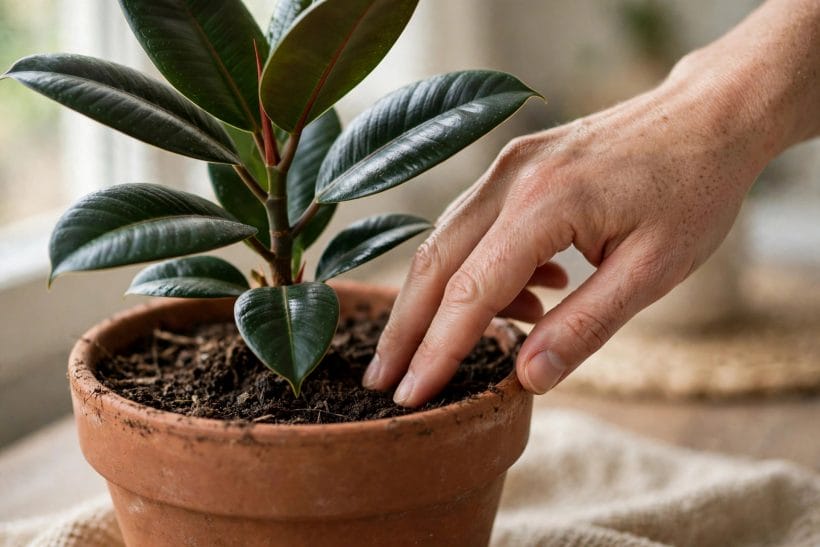
Rubber plants come from warm climates, and they tend to dislike sudden cold and sharp draughts. A plant standing beside a door that opens often, next to a draughty window, or close to a radiator that blasts hot air can droop even when its soil and light seem fine. The leaves may feel limp rather than dry, and the change may follow a cold snap or the start of the heating season.
Walk around the plant’s spot at different times of day and notice the air movement and temperature there. A hallway draught you barely notice can be significant for a plant that stands in it all day, and a spot that feels warm in the evening may be chilly overnight. Moving the plant a short distance away from the draught, rather than across the room, is often enough to test whether position is part of the problem.
Different plants tolerate different conditions, and plants from dry, sunny regions cope with heat and dry air in ways a rubber plant may not. A look at plants from desert and southwestern regions is a useful reminder that tolerance varies widely, and that a spot one plant loves can be entirely wrong for another.
6. Review Your Watering Routine Honestly
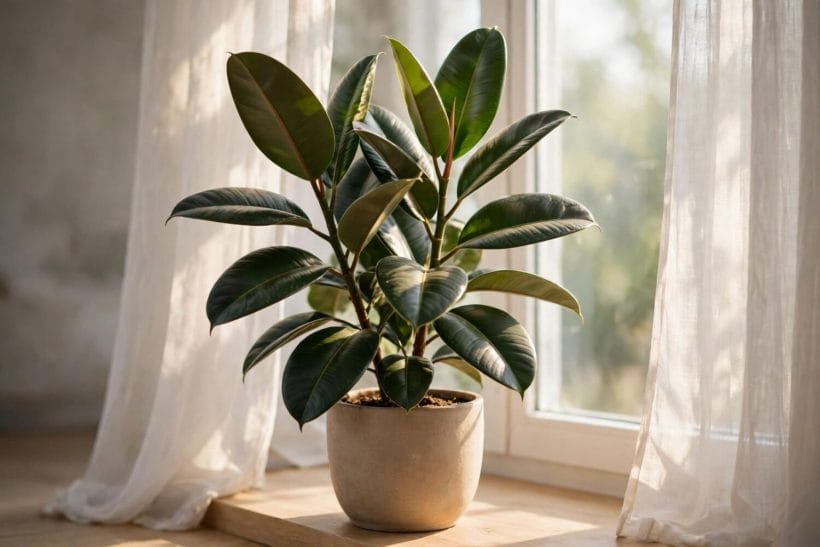
Most watering trouble comes not from a single mistake but from a routine that no longer fits the season or the plant’s size. A plant watered on a fixed schedule through the year may get too much when growth slows in the darker months, and too little when warm weather and bright light increase its needs. The calendar is a poor guide; the soil is a far better one.
Think back over recent weeks rather than recent days. Has watering become more generous because the plant looked thirsty, or less frequent because life got busy? Have you been watering little and often, which wets only the surface, or deeply and rarely, which suits many potted plants better? Honest answers here often reveal the pattern behind the droop more clearly than any single check.
Growing plants indoors brings the same questions whatever the species, since pots dry out differently from garden beds and indoor air changes with the seasons. Advice written for growing purslane indoors touches on similar ground: small pots, changing light, and the need to check the soil rather than watering by habit alone.
7. Look for Pests and Dust on the Leaves
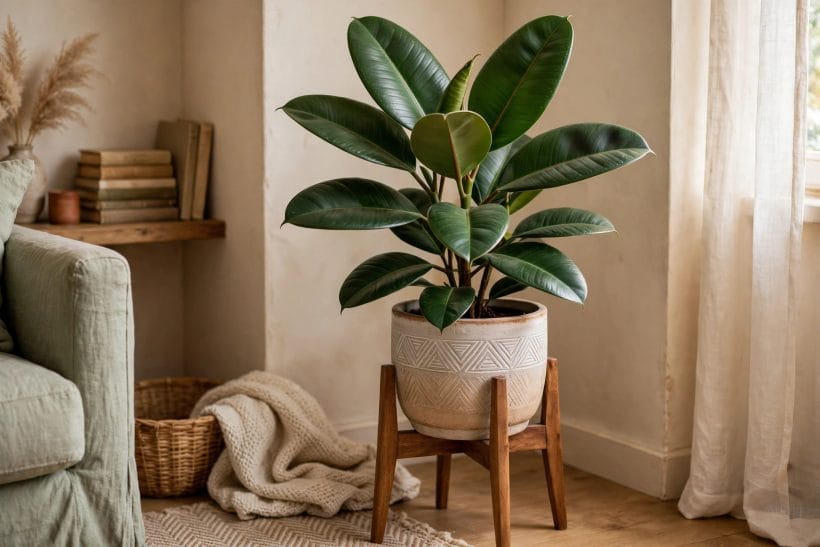
Pests are not the most common cause of drooping leaves, but they are worth a careful look, because an early catch is far easier to deal with than a settled infestation. Turn a few leaves gently and inspect the undersides, the joints where leaves meet the stem, and any sticky residue on the leaves or nearby surfaces. Tiny insects, fine webbing, or clusters along the stems are all worth noting.
Dust matters too, and it is easily overlooked. A thick layer of dust on broad rubber plant leaves blocks light and dulls the plant’s ability to use what light it gets. Wiping the leaves gently with a soft, damp cloth, supporting each leaf from beneath as you go, restores their shine and lets you inspect them at the same time. Take care not to bend or tear the leaves, and avoid any cleaning product unless you are confident it is safe for houseplants.
If you do find pests, resist the urge to reach for a strong remedy straight away. Start by removing what you can see gently, keeping the plant away from its neighbours for a while, and watching whether the problem spreads. A plant already drooping does not need the extra stress of a harsh treatment on top of everything else.
8. Give Recent Changes Time to Settle
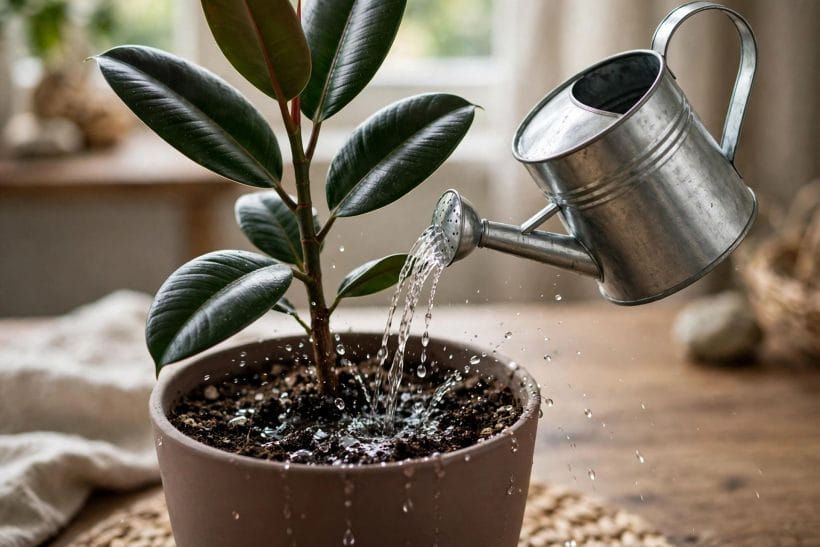
Plants do not adjust overnight. A rubber plant that was moved, repotted, or given a new watering routine may droop for a while simply because it is adjusting, even when the new conditions are ultimately better for it. This adjustment period can be frustrating, because it looks like decline, yet it is often just the plant settling in.
During this time, the kindest approach is steadiness. Keep the plant in one place, water only when the soil suggests it needs it, and avoid piling on further changes in the hope of a quick improvement. Each new change resets the adjustment period, so a plant that is changed every few days never gets the chance to settle at all.
Patience is not the same as neglect. Watching closely, noting small changes, and responding to what the soil and leaves actually show is active care. A leaf that firms up slightly, a new leaf that unfurls cleanly, or soil that dries at a steadier pace are all quiet signs that the plant is finding its footing again.
9. Prune Only What Is Clearly Spent
When leaves droop, it is tempting to cut them away in the hope of tidying the plant, but removing leaves also removes the plant’s ability to gather light. Leaves that are merely drooping may still recover, and cutting them off too soon can weaken a plant that is already struggling. It is better to wait and see which leaves firm up and which ones clearly do not.
A leaf that has gone fully yellow, brown, or papery, and that feels dry and lifeless, is unlikely to recover, and removing it gently can help you see the plant’s true shape. Use clean, sharp scissors or a knife, cut near the stem without tearing, and take only what is clearly spent. If you are unsure about a leaf, leave it for a few more days and look again.
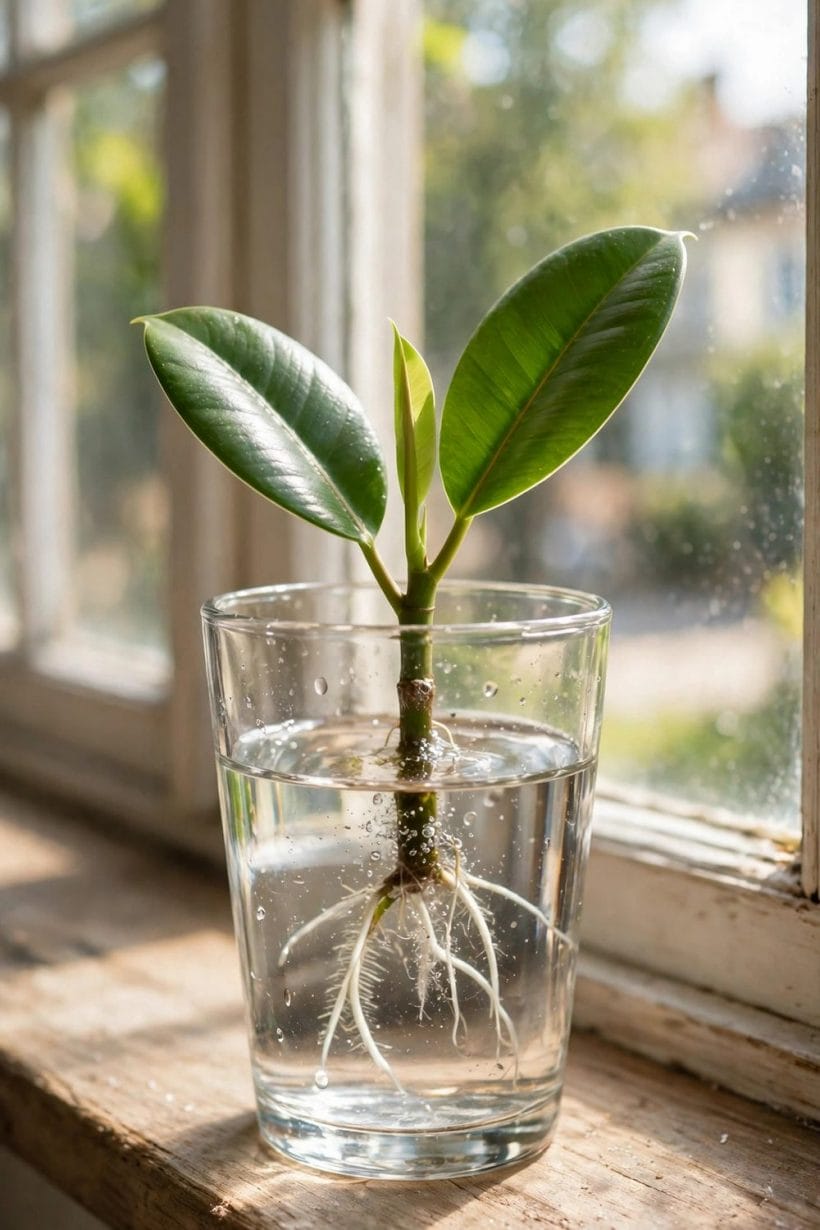
Any healthy-looking cuttings you remove can be kept simply as an experiment, but do not expect every cutting to grow, and do not let the experiment distract from the main plant. The priority remains the parent plant’s light, water, and routine, since that is where recovery, if it comes, will begin.
10. Settle Into a Steady Routine
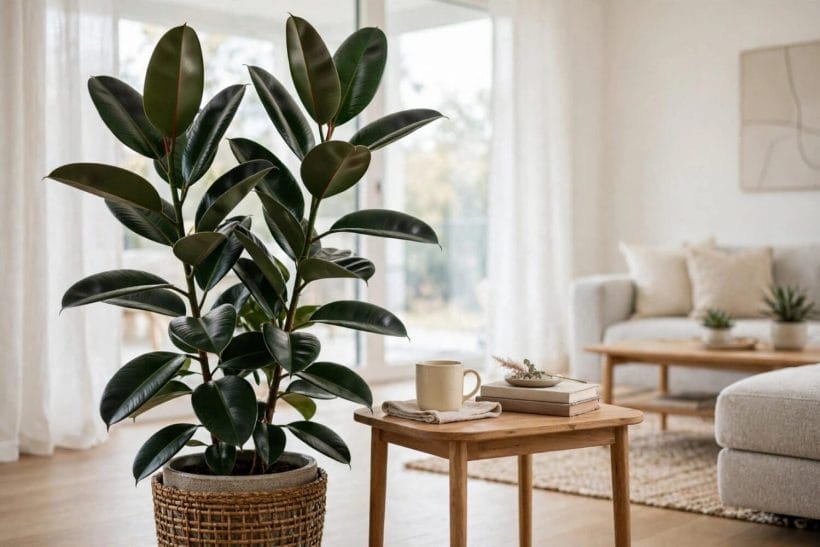
Once the checks above have pointed to a likely cause, the next step is the least dramatic and the most important: a steady routine. Water when the soil tells you to, keep the plant in its bright, indirect spot, empty the saucer after watering, and wipe the leaves when dust builds up. Routine does not mean rigidity; it means responding to the plant’s actual needs rather than to worry or habit.
Seasonal change deserves a place in that routine. Light levels fall and rise through the year, indoor heating comes and goes, and a watering pattern that suited the plant in summer may be too generous in winter. Checking the soil before each watering automatically adjusts for these shifts, without any need for a complicated schedule.
A rubber plant also has to live with the rest of the room, and its place in the home matters as much as its pot. Ideas for tiny house interior design often show plants as part of the living space rather than as an afterthought, and that is a helpful way to think: a plant given a proper place, with light and air and room to grow, is far easier to care for than one squeezed into whatever corner is left.
Final Considerations
Drooping leaves are unsettling, but they are also informative. They ask you to slow down, look closely, and check the basics before reaching for a dramatic fix. When you notice rubber plant leaves drooping, work through soil, light, pot, temperature, and routine one at a time, give each change time to show its effect, and keep notes so you can see what actually helped.
Not every drooping plant recovers fully, and some leaves will not firm up again whatever you do. That is not necessarily a failure of care; plants shed leaves, adjust slowly, and sometimes decline for reasons that are hard to pin down at home. If the plant keeps worsening despite steady, gentle care, or if you notice anything you do not recognise, advice from an experienced local grower or nursery can be worth seeking.
Above all, keep the approach gentle. A rubber plant that is given steady light, careful watering, and time is in the best position to respond, and your patience is part of its care. Watch, adjust one thing at a time, and let the plant show you, in its own slow way, whether the new routine suits it.




0 Comments