
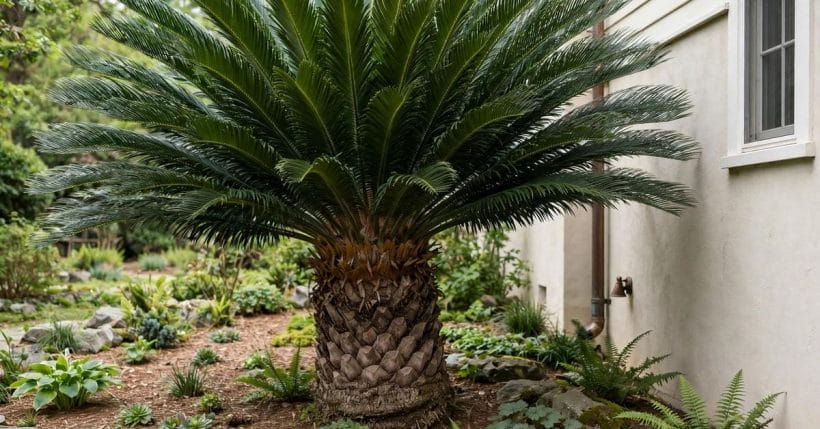
A large sago palm can anchor a whole garden. Its stiff, feathered crown spreads wide, its trunk grows thick and slow, and over many seasons it becomes the plant everything else seems arranged around. So when that palm ends up in the wrong place — too close to a path, crowded by a building, or shaded out by growth around it — the question feels urgent: can such a big, established plant really be moved, or is it rooted where it stands for good?
The honest answer is that large specimens are sometimes moved, but the work is heavy, the risks are real, and no outcome can be promised in advance. Anyone searching for how to transplant a sago palm should start from that caution rather than from a simple set of steps. A small plant in a pot is one kind of job. A mature palm in the ground is quite another, and the difference shapes every decision that follows, from timing and tools to who should do the lifting.
This guide explains, in general terms, what size changes about a move, what a good new spot looks like, what professionals protect during the work, and how to judge whether moving is even the right call. It also covers settling-in and aftercare in broad terms, and the warning signs that mean professional help is needed. Where the palm sits in relation to the house matters too, and interior design ideas for a small home can help you picture how garden and rooms work together before any ground is broken.
1. Can a Large Sago Palm Be Moved at All?
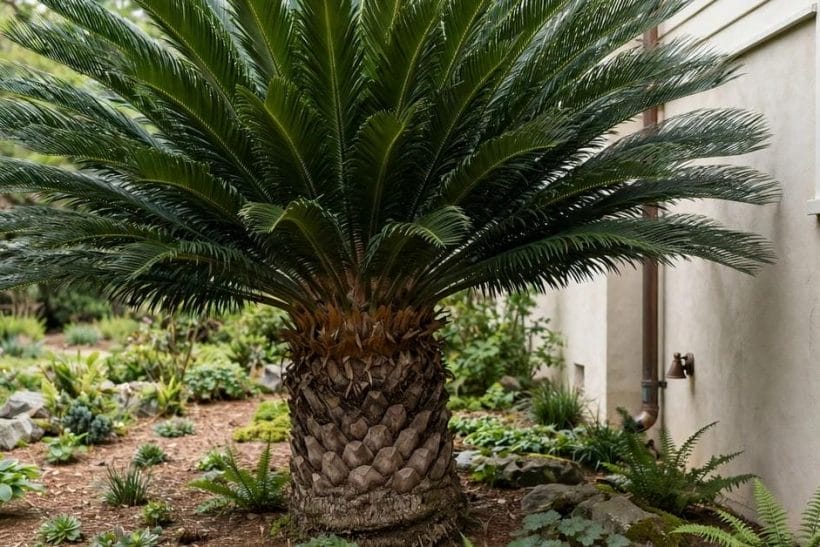
In broad terms, yes, a large sago palm can sometimes be moved — but that short answer hides a great deal. Sago palms are slow growers with a distinctive form: a stout trunk topped by a crown of rigid fronds, and a root system that spreads outward rather than plunging straight down in the way some people imagine. That structure matters, because a move succeeds or fails largely on how much of the root system can be kept intact and how quickly the palm can settle in its new spot.
Size is the dividing line. A young palm that can be lifted by hand, with its root ball held together, faces a very different level of risk from a mature specimen whose trunk is thick, whose crown is broad and heavy, and whose root ball may need machinery to lift at all. The larger the palm, the more soil and root must travel with it, the more the crown must be protected from snapping or tearing, and the longer the plant may take to recover its vigour.
Health before the move matters as much as size. A palm that is already struggling — with yellowing fronds, a soft trunk, or thin new growth — is a poorer candidate for moving than a vigorous one, and moving a stressed plant can deepen its troubles rather than solve them. A professional assessment before anything is decided can help separate a palm that stands a fair chance from one that would be better left where it is, or given care in place instead.
There is also the question of what “moved” means in practice. Sometimes the honest answer is a short shift within the same garden, where the palm stays in familiar soil and light. Sometimes it means a longer journey to a different garden altogether, with more handling, more time out of the ground, and more chances for roots to dry or break. The longer and rougher the journey, the more cautious the judgement should be.
2. What Size Changes About the Job
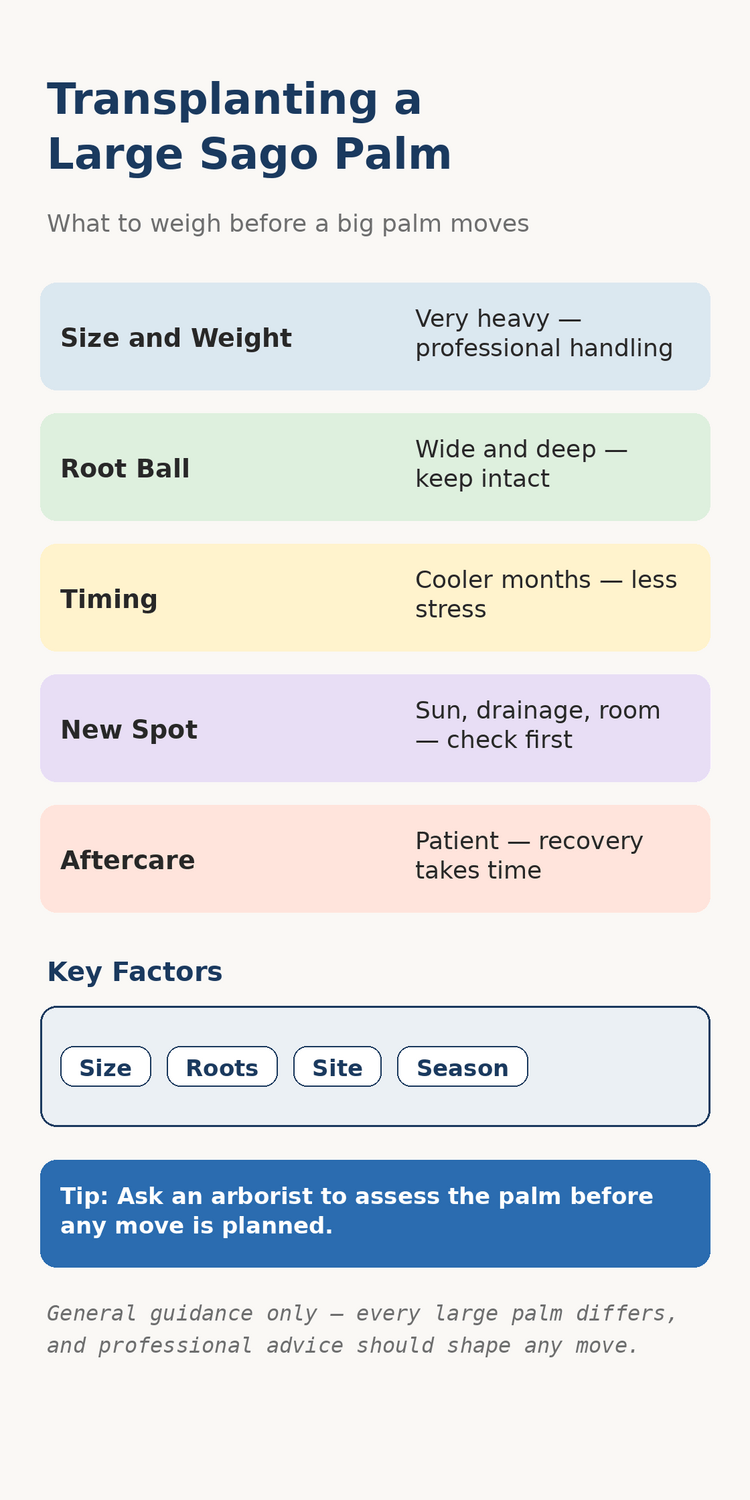
With a large sago palm, almost everything about the job scales up — and not gently. Weight is the first change. A mature trunk, a broad crown, and a root ball holding a large volume of soil together add up to a load that no small team can safely manhandle, and that changes the planning from the start. Access matters: gates, paths, slopes, overhead wires, and soft ground can all limit what equipment can reach the palm, and a route that looks fine on foot may be impossible for the machinery a heavy lift needs.
The crown is the second change. Sago fronds are stiff and brittle rather than flexible, so they can snap or tear if they are bent, dragged, or allowed to swing freely during a lift. Professionals often tie or wrap the crown for a move, but that is a judgement call about the individual palm, not a routine to copy at home. Fronds that break during handling are lost for a long time, because new growth from a sago palm is slow, and a crown thinned by breakage can leave the plant looking sparse for seasons.
The root ball is the third change. For a large palm, the ball of soil and roots that must travel with the plant is wide, and keeping it whole is central to the whole effort. If the ball crumbles, fine roots are torn and the palm loses much of its ability to take up water just when it needs that ability most. Keeping the ball wrapped, supported, and moist — without waterlogging it — is skilled work, and it is one more reason the job belongs to people who have done it before.
Finally, size changes the stakes. A small plant that fails to settle is a disappointment. A large palm that fails after a costly, disruptive move is a much larger loss, in money, effort, and garden character. That is why the decision stage deserves as much care as the move itself, and why a frank professional opinion, even when it advises against moving, is worth having. Palms suited to warm, well-drained settings share ground with the plants in plants that live in the desert southwest, which is a useful reminder that site and climate shape every planting decision.
3. Timing: Choosing a Kinder Moment
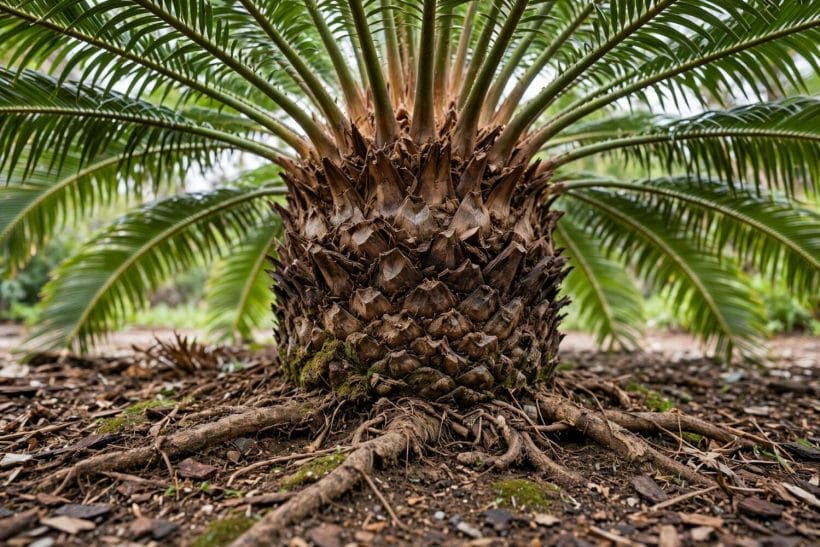
Timing cannot guarantee success, but it can tilt the odds. As a general rule, moving a palm in the cooler months, when growth is slower and the plant loses less water through its fronds, is often kinder than moving it in the heat of summer, when a disturbed root system struggles to keep up with demand. Local climate matters enormously here, though: what counts as cool, mild, or harsh varies by region, and a season that suits one garden may be unkind in another. Local professional advice, grounded in the climate where the palm actually grows, should guide the choice.
Weather on the day matters too. A move planned for a calm, overcast stretch is generally less stressful for the plant than one carried out in strong sun, drying wind, or extreme heat, all of which pull moisture from fronds faster than damaged roots can replace it. Rain can help or hinder: gentle damp weather may keep roots from drying, but waterlogged ground can make a heavy root ball harder to handle and a new planting hole slower to drain. There is no perfect forecast, only a better or worse window, and patience about waiting for one is part of good judgement.
It also helps to think about what else is happening in the garden. A move that coincides with building work, heavy foot traffic, or other disturbance around the new spot adds stress the palm does not need. Giving the plant a quiet period after replanting — with stable conditions and no further upheaval nearby — is one of the few things a gardener can genuinely control, and it is worth planning for before the move rather than hoping for it afterwards.
One more timing point is often overlooked: the palm itself has a rhythm. A palm pushing a flush of soft new fronds is more vulnerable to handling damage than one in a quieter phase, and a palm that has just endured drought, cold, or pest trouble may need a season of recovery before any move is considered. Waiting for a stronger, calmer moment is rarely wasted time.
4. The New Spot: Light, Drainage and Room
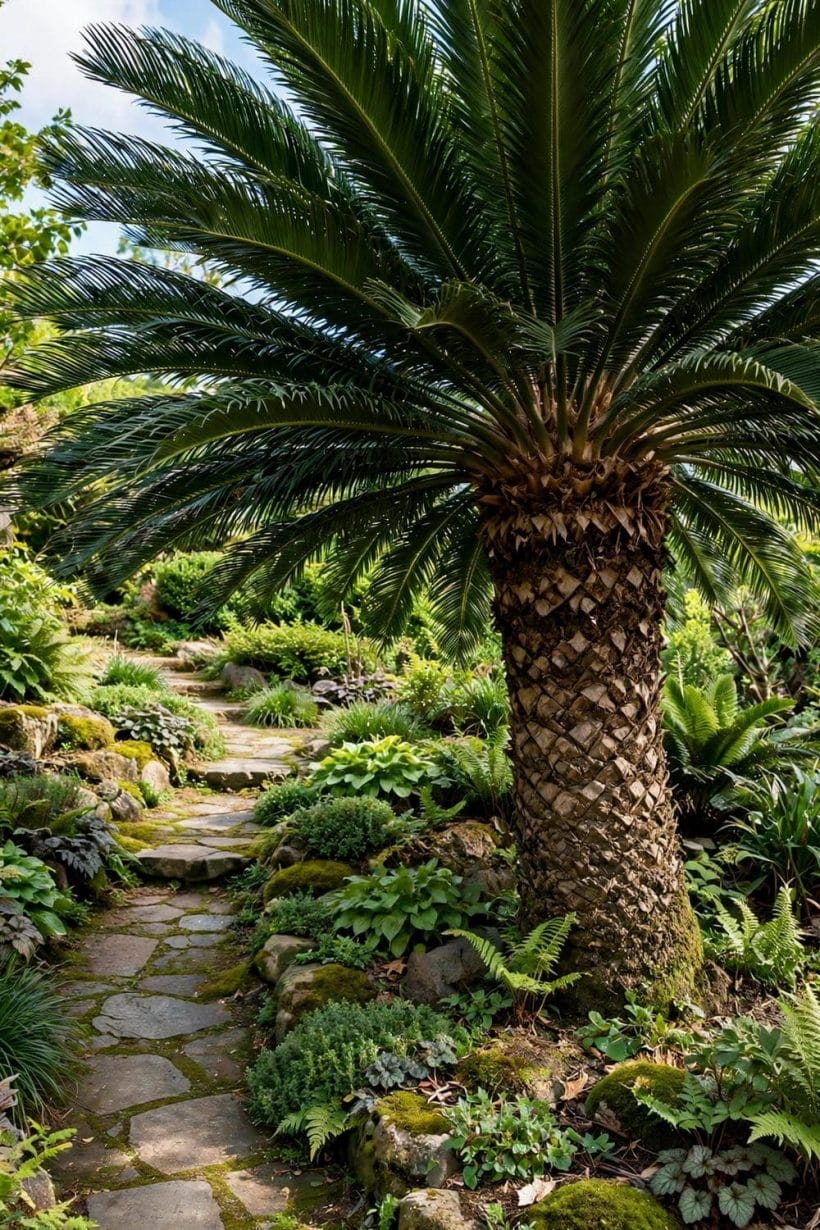
A move is only as good as the destination, so the new spot deserves scrutiny before the old one is disturbed. Sago palms generally favour bright light, and a spot that is dark or deeply shaded for much of the day may leave the palm thin and slow, even if it survives the move. At the same time, a newly moved palm can scorch if it is suddenly exposed to far fiercer sun than it knew before, so a change in light should be weighed, not just welcomed. The aim is a spot that suits the palm as it will grow, not only as it looks on moving day.
Drainage is just as important, and harder to judge at a glance. Sago palms dislike sitting in water, and a low hollow that collects rain, or heavy soil that stays soggy after watering, can rot roots over time. A gardener can learn a great deal by watching how a spot behaves after rain: whether water lingers, whether the surface stays soft underfoot, and whether nearby plants look waterlogged. If the spot holds water, it is a poor destination no matter how sunny or spacious it seems, and professional advice on improving drainage should come before planting, not after.
Room to grow is the third test, and the one most often failed. A large palm needs space for its crown to spread without brushing walls, roofs, paths, or neighbouring trees, and space below ground where its roots will not clash with drains, foundations, or other plantings. It is tempting to judge by the palm as it stands today, but the crown will widen and the trunk will thicken, so the spot should suit the palm years ahead, not merely this season. A little extra room at planting time saves difficult choices later.
It is worth remembering how different this is from container growing. Young specimens and small plants can live happily in pots for a time, and the care of a plant in a container — with its confined roots and frequent watering needs — is a different craft from planting in open ground. Reading about using a wooden crate as a planter box shows how much container planting depends on drainage and liners, and that contrast is a useful reminder: a large palm in the ground needs open, well-drained soil and room, not confinement.
5. Roots, Trunk and Fronds: What Needs Protection
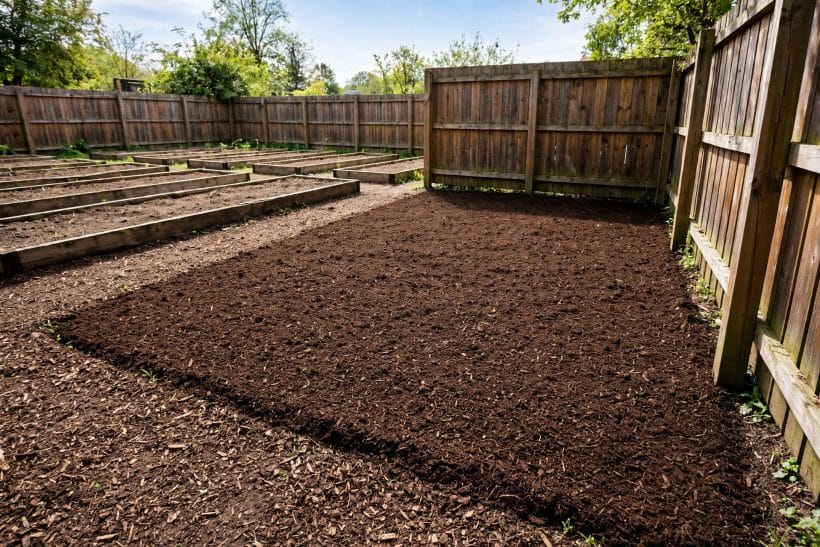
Three parts of the palm need protection above all others, and each is vulnerable in a different way. The roots come first. Fine roots do most of the work of taking up water, and they are easily torn when soil crumbles or dries. That is why the root ball is handled as a single mass whenever possible, kept wrapped and supported, and kept moist but not sodden. A ball that arrives whole gives the palm a far better start than one that has been shaken apart, however carefully the rest of the job was done.
The trunk comes second. It may look tough — and it is, compared with a soft-stemmed plant — but it can still be bruised, scraped, or cracked by straps, machinery, or dragging. Damage to the trunk is slow to heal on a slow-growing plant, and wounds can become entry points for decay. Padding, careful lifting points, and a refusal to drag the plant are all part of professional handling, and they are difficult to improvise without the right equipment and experience.
The fronds come third. As noted earlier, sago fronds are rigid and break rather than bend, and a broken frond does not repair itself. During a move, the crown needs support so that fronds do not snap under their own weight or catch on obstacles. Some fronds may be trimmed by a professional as part of preparation, but trimming is a judgement about balance — removing too much leaf reduces the plant’s ability to feed itself just when it needs energy to regrow roots — and it should not be done casually or in bulk by an untrained hand.
After a move, the fronds are also the gardener’s best early signal. Drooping, yellowing, or browning fronds can mean many things, and not every change spells disaster, but persistent decline should never be ignored. The gentle checks described for a rubber plant with drooping leaves illustrate the same habit that serves a sago palm well: observe patiently, change one thing at a time, and seek advice before reaching for a drastic remedy.
6. The Move Itself: Why Heavy Work Stays Professional
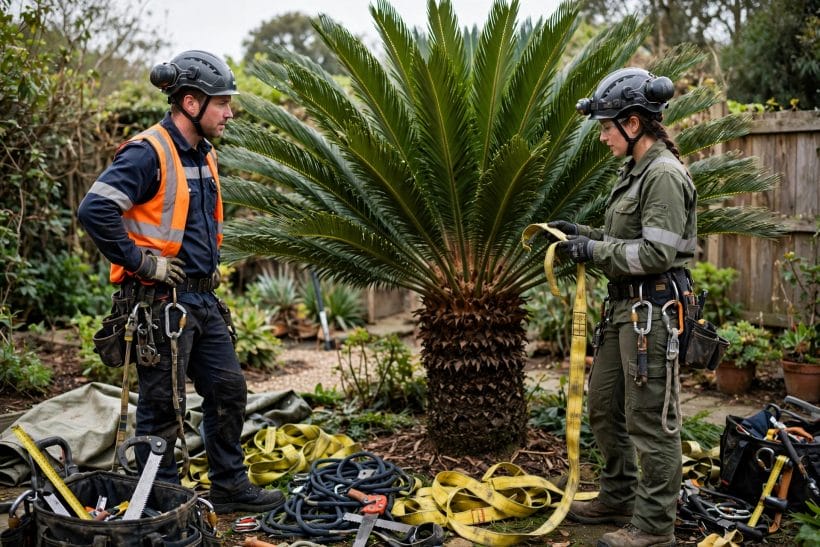
This guide deliberately gives no step-by-step instructions for lifting a large sago palm, because that work should not be attempted as a home project. The reasons are practical, not snobbish. A mature palm is heavy enough to injure people and damage property if a lift goes wrong, and the equipment needed — for digging, wrapping, lifting, transporting, and setting down a wide root ball — is specialised. A team that moves large plants regularly will also know how to read the palm, the soil, and the access route, and when to stop rather than force a lift that is not working.
What a homeowner can usefully do is choose the team well and prepare the ground for them. That means getting more than one professional opinion where possible, asking how the team has handled palms of similar size, and being wary of anyone who promises a certain result. It means clearing access, agreeing where machinery may travel, and protecting nearby plants, paths, and surfaces before work begins. It also means agreeing in advance what happens if the palm cannot be lifted safely on the day — a plan for pausing is a sign of a careful team, not a reluctant one.
On the day, the broad shape of professional work is careful rather than dramatic: the root ball is dug and wrapped, the crown is supported, the lift is slow and level, transport is as short and smooth as the route allows, and the palm is set down at the right depth in a prepared hole, with soil firmed gently around it. Each of those phrases hides a great deal of skill, and the skill is exactly what is being paid for. Watching the work is fine; directing it without experience is not.
There is also a legal and neighbourly side to heavy garden work. Underground services, boundary lines, shared drains, and local rules can all bear on a large move, and a professional team will usually know what to check before digging. A homeowner who digs blind risks far more than the palm, so confirming what lies below ground and who owns what is part of responsible preparation, not red tape for its own sake.
7. Settling In: The First Weeks After Replanting
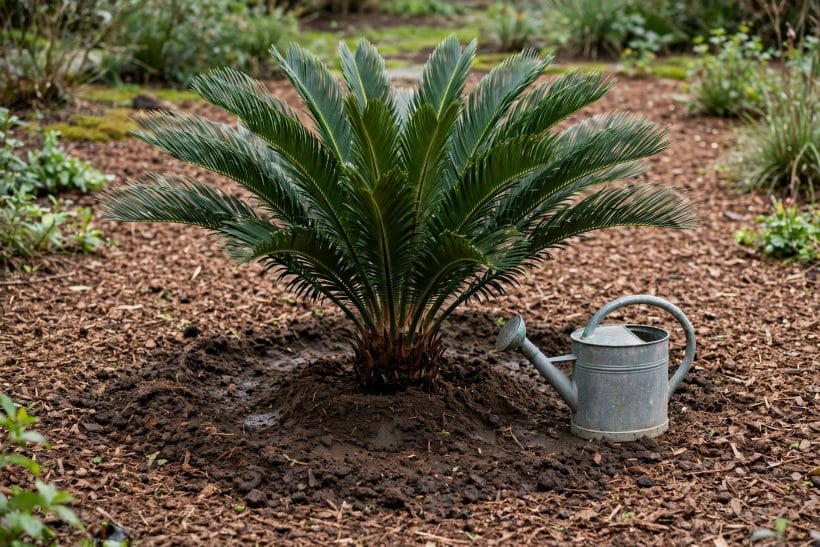
The first weeks after replanting are a quiet test of everything that came before. The palm’s roots are damaged and reduced, so its ability to take up water is limited, while its crown still loses moisture to sun and wind. The balance to strike is steady, even moisture in the root zone without waterlogging: soil that is damp to the touch but never soggy, and a mulch layer that helps hold that moisture while keeping weeds down. Mulch should sit around the palm, not piled against the trunk, where trapped damp can cause rot.
Watering in this period is a matter of observation rather than routine. Soil, weather, and drainage all change how often water is needed, so checking the soil before watering matters more than following a fixed schedule. A newly moved palm in free-draining soil on a breezy, sunny site may need water more often than the same palm in heavier soil in shade — and the only reliable guide is the soil itself, felt with a hand, over days and weeks. When in doubt, a professional who did the move can advise on what to watch for in that particular garden.
Support is another early question. A large palm may need staking or bracing until its roots re-anchor it, but staking done badly can rub the trunk or hold the palm so rigidly that it never develops its own strength. If support is used, it should be checked regularly, kept from cutting into the trunk, and removed when the palm stands firmly on its own. A palm that still rocks in wind after a long period is telling its gardener something, and that message deserves professional attention rather than tighter straps.
Above all, the first weeks call for patience and a light touch. This is not the moment for major pruning, feeding experiments, or further disturbance around the roots. The palm has one job — regrowing the fine roots that will sustain it — and everything the gardener does should make that job easier: steady water, stable soil, a clear space around the base, and no sudden changes. Stressed plants in general show their trouble slowly, and the careful, unhurried approach described for an aloe plant that is wilting — observe, water thoughtfully, change little — applies just as well to a palm finding its feet again.
8. Aftercare Through the First Season
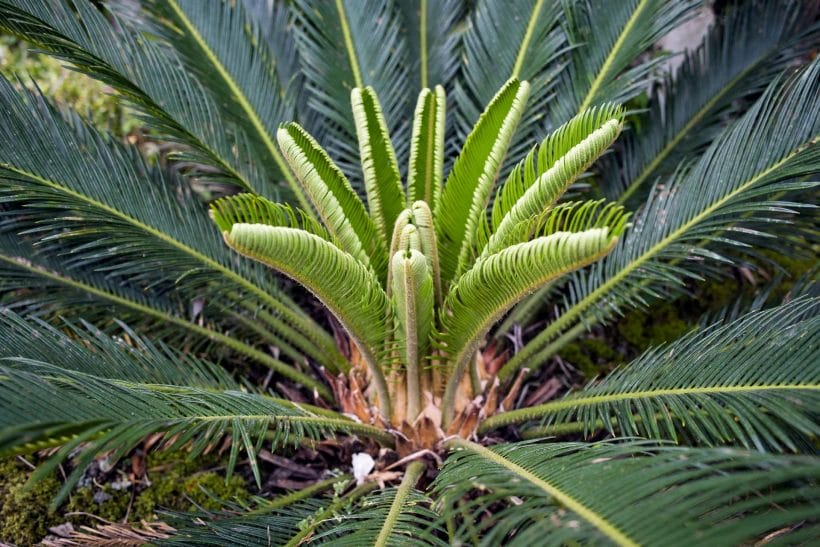
After the first weeks, aftercare becomes a longer, quieter discipline. A moved sago palm may look unchanged for a long time, and that stillness can be misleading. Sago palms grow slowly at the best of times, and a moved one may spend a whole season quietly rebuilding roots before it shows any fresh crown growth. Judging the move by how quickly new fronds appear is therefore a poor test; steadiness — fronds holding their colour, the crown keeping its shape, the trunk staying firm — is a better sign than speed.
Watering should taper gradually as the palm re-establishes, but only in step with what the soil and weather suggest. Cutting water too soon, in the belief that the palm “should” be settled by now, can set back a plant that is still rooting. Equally, continuing heavy watering long after the roots have recovered can waterlog soil that the palm would rather have drain freely. The gardener’s task is to follow the plant and the season, not a calendar, and to keep notes on what was done, so patterns can be seen over months rather than guessed at week by week.
Feeding deserves special caution. It is tempting to reach for a tonic or feed in the hope of speeding recovery, but a stressed palm with damaged roots cannot always use what it is given, and ill-judged feeding can do more harm than good. No recipe is offered here, deliberately: feeding, if it is needed at all, should follow professional advice for the individual palm and soil, and only once the plant shows signs of active growth again. The same restraint applies to any treatment marketed as a transplant aid — claims are easy to make and hard to prove, and a recovering palm is a poor subject for experiments.
Other care in the first season should stay gentle. Keep the area around the base clear of competing weeds, but avoid digging near the roots. Protect the palm from accidental knocks by mowers, strimmers, and foot traffic, which can wound the trunk or compact the soil. And watch the crown through the seasons: a flush of new fronds, when it comes, is a welcome sign, but it should not be forced or hurried. Slow, steady recovery is the normal story for this plant, and a gardener who expects it will worry less and intervene less.
9. Warning Signs and When to Call for Help
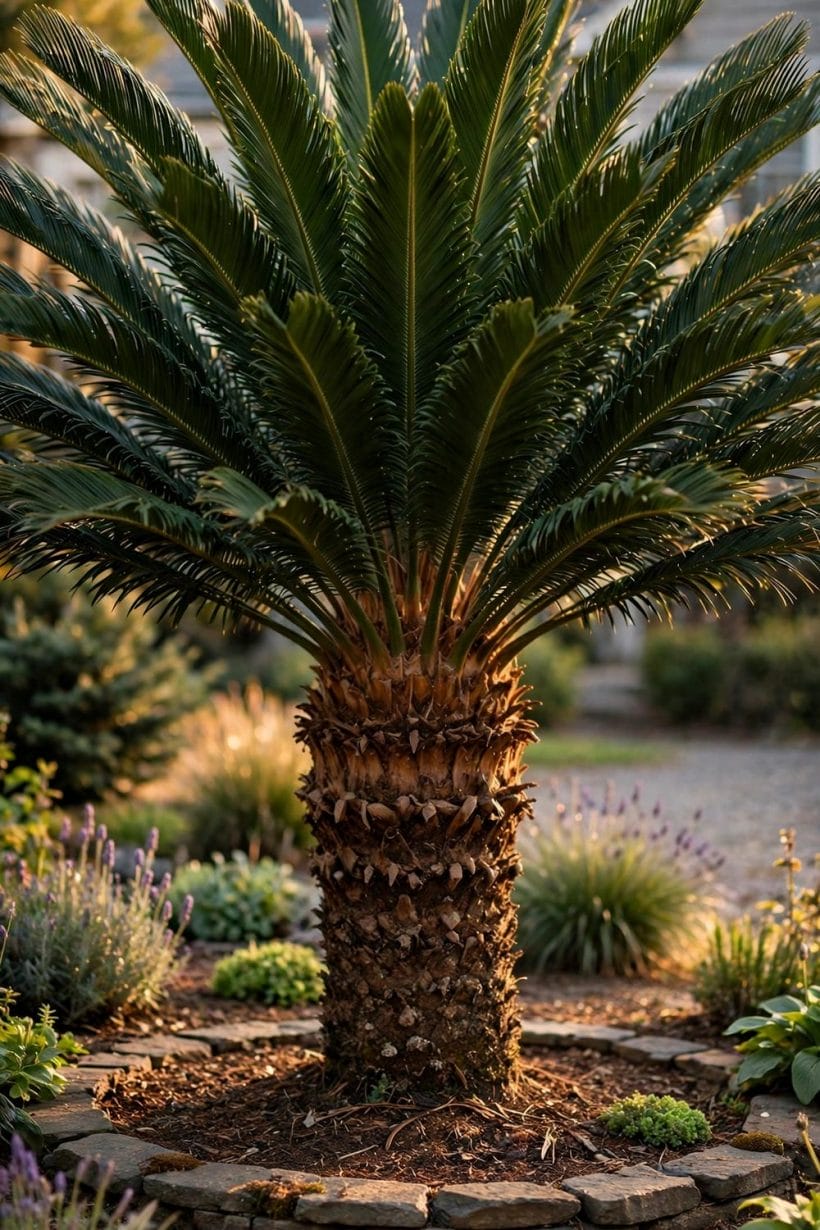
Some change after a move is normal, and some is not, and telling the two apart is where experience counts. A few older fronds yellowing and fading in the months after replanting may simply reflect the shock of the move, as the palm sheds what it can no longer support while it rebuilds roots. But widespread yellowing, rapid browning across the crown, a soft or sunken trunk, or a crown that collapses inward are different matters, and they should prompt a prompt professional call rather than a wait-and-see approach.
Other signs are quieter but still worth noting. A palm that leans further over time, or that still moves easily in the soil long after replanting, may not be anchoring well. Soil that stays wet around the base, or that smells sour when disturbed, can point to drainage trouble. New growth that emerges pale, stunted, or distorted may suggest the palm is still struggling, though only a professional who can examine the plant in person can judge what is happening. Photographs taken over weeks can help that professional enormously, because change that is hard to see day by day becomes clear across a series of images.
Pests and disease are a separate concern, and a weakened palm can be more vulnerable to both. Unusual marks on fronds, sticky residue, or insects clustering on the crown should be noted and, where possible, identified by someone qualified before any treatment is attempted. Home remedies and broad treatments applied in guesswork can harm a recovering plant, and some problems that look like pests are in fact stress responses that need no treatment at all. Identification first, treatment second, and professional guidance throughout is the safe order.
The general rule is simple: when a sign is spreading, worsening, or hard to explain, ask for help early. A professional visit that finds nothing serious is money well spent, while a problem left to deepen through a season can become far harder to reverse. Keeping the name of the team that moved the palm, and notes on what was done, makes that call easier and the advice better, because the professional starts from the palm’s history rather than from scratch.

10. Alternatives When Moving Is Not the Right Call
Sometimes the wisest outcome of weighing a move is deciding against it, and that decision deserves respect rather than disappointment. If the palm is frail, the access is impossible, the new spot is poor, or the risks plainly outweigh the benefits, leaving the palm where it is and improving its care in place may serve both plant and garden better. Pruning nearby growth to give it light, improving drainage around its roots, or reshaping the garden around it can solve the original problem without the trauma of a move at all.
Another alternative is to change the garden rather than the palm. A path can sometimes be rerouted, a bed reshaped, or a planting scheme adjusted so that the palm’s position becomes an asset instead of an obstacle. A large sago palm, well framed by lower planting, can be a striking centrepiece, and designers often treat a mature specimen as a gift to work with rather than a problem to remove. That reframing costs little, risks nothing for the plant, and often produces a better garden than a forced move would have done.
Where a palm truly cannot stay — because of building work, safety, or a genuine clash with services — a professional may advise on other options, including whether a younger specimen in a better spot could carry the garden’s character forward while the old palm is cared for in place for as long as possible. Such decisions are individual, and they should be made with the palm’s health and the household’s plans in view together, not under pressure from a building schedule alone.
For gardeners who simply want a new planting project, a smaller-scale start is often the happier path. A young plant in a container, or a small indoor growing project, gives the pleasure of tending something new without the weight, cost, and risk of moving a mature palm. Guidance on growing purslane indoors is a reminder of how much can be learned — and enjoyed — from a modest plant grown well, and that lesson scales: start small, learn the plant, and let ambition grow with experience.
Final Considerations
Transplanting a large sago palm is possible in the right hands and the right circumstances, but it is never routine, never risk-free, and never something to rush. The questions that matter most come before any digging: Is the palm healthy enough? Is the new spot genuinely better — brighter, better drained, and roomier for years ahead? Is the timing kind? And is the team experienced with plants of this size? If any answer is doubtful, waiting, improving the current spot, or choosing an alternative may be the better act of care.
For readers who arrived here asking how to transplant a sago palm, the most useful takeaway is not a method but a posture: treat the palm as a long-lived, slow-growing plant that rewards patience and punishes haste. Get a professional assessment, listen honestly to advice against moving when it is given, and judge success over seasons rather than weeks. A palm that settles slowly but steadily has done well, and a gardener who gave it the time and space to do so has done well too.
Finally, keep records. Note when the palm was moved, who moved it, what the soil and site were like, and how the crown looked across the seasons that followed. Those notes turn a single move into knowledge — for the next decision about this palm, for the next plant in the garden, and for any professional called in later. Gardens reward that kind of attention, and a large sago palm, given time, repays it with decades of quiet presence.



0 Comments