
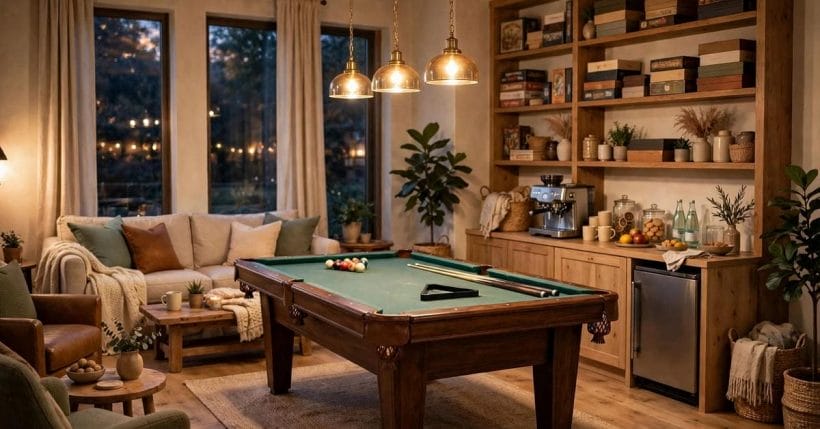
The best game rooms are not the ones with the most kit. They are the ones where one good game, a few comfortable seats and a little warm light come together so easily that people drift in without being asked. This guide plans that kind of room, step by step, from the first decision to the finishing touches.
A great gaming room is built around how your household actually plays, not around a catalogue of everything you could own. Start there, and every later choice gets simpler.
1. Start With the Game You Play Most
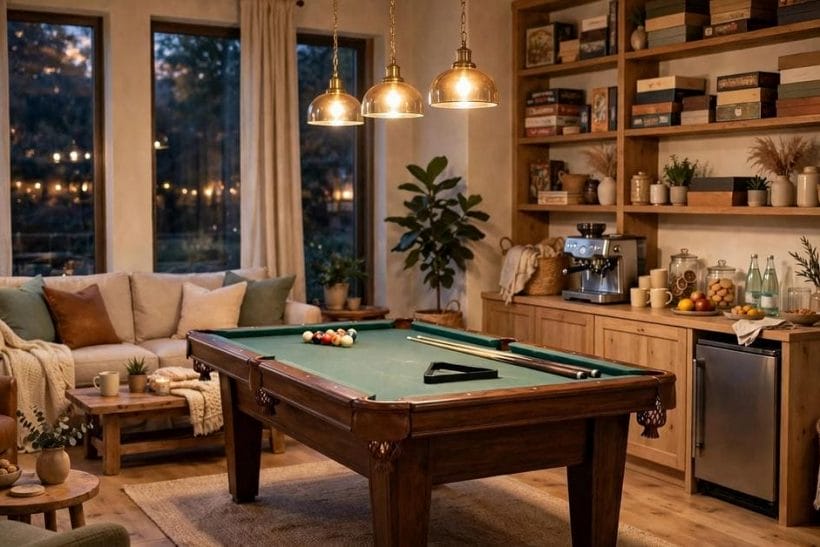
Every room needs a hero. For some households it is a pool table that anchors the whole space. For others it is a board game table that hosts long evenings, a console corner that gathers friends on weekends, or a card table that has seen decades of hands. Name yours before you buy anything, because the hero game decides the shape of the gaming room: where the table sits, where people stand or sit, and what else can honestly fit around it.
Once the hero is named, everything else becomes supporting cast. Secondary games are welcome, but they should earn their floor space. A dartboard on a quiet wall, a shelf of card games, or a single arcade cabinet can all belong, provided they do not crowd the main event. Rooms that try to host every game at once end up hosting none of them well, with furniture shuffled aside and players apologising for the squeeze.
Think about who plays, too. A room for two regular players needs something quite different from a room that hosts whole families or groups of friends. Count the chairs you genuinely need on a busy night, then add one spare for the guest who always turns up. If children play here, plan for their games and their reach as well, with sturdier storage and pieces that can be packed away without a grown-up rescue mission.
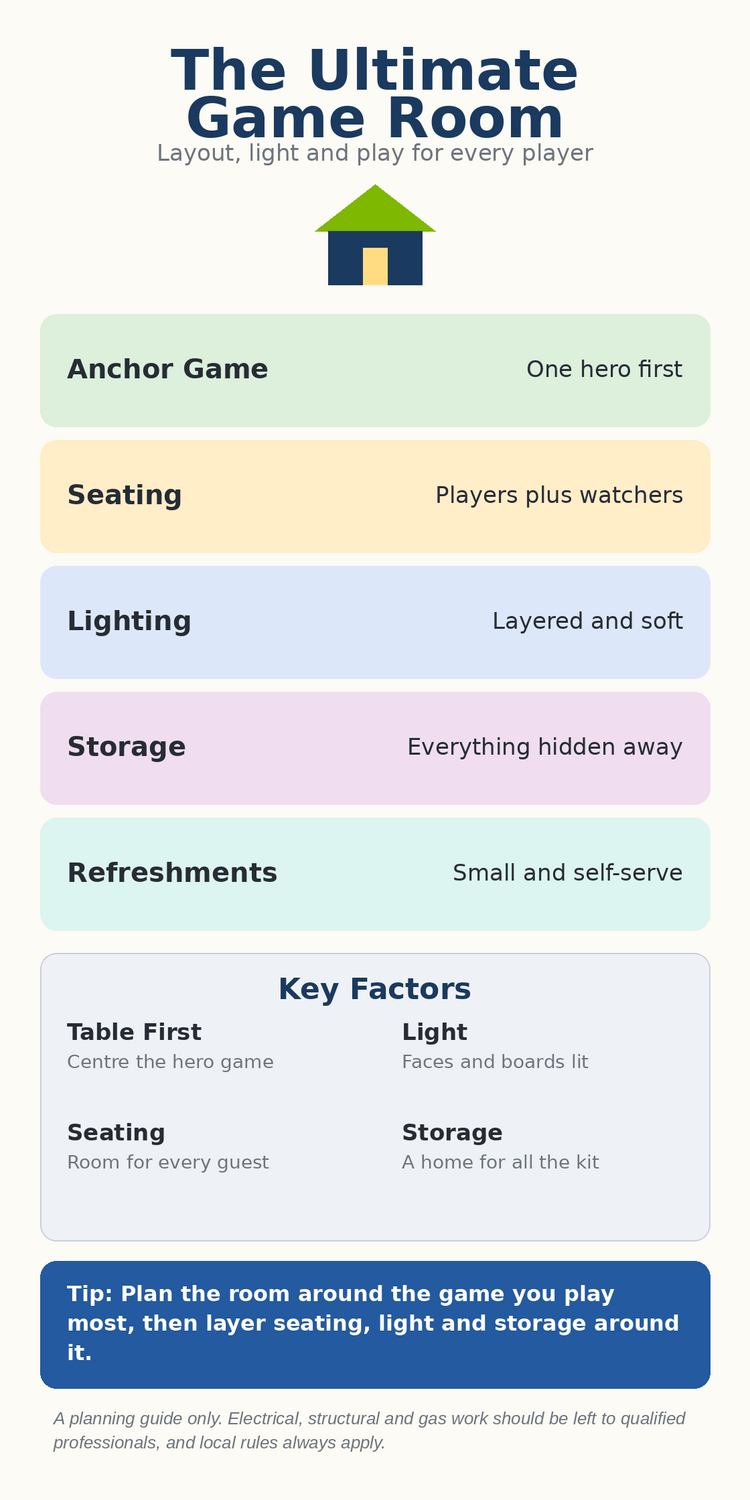
The table below sums up the plan at a glance, and the guide that follows works through each part in turn. A related read on tiny house home theatre design shows how a screen zone can sit comfortably inside a small room, which is useful if your hero game involves a television.
| Part of the room | What to decide first |
|---|---|
| Anchor game | The one game the room is built around |
| Seating | Chairs for players, plus room for watchers |
| Lighting | Soft layers that flatter faces and boards alike |
| Storage | A home for every box, cue and controller |
| Refreshments | A small corner that serves without taking over |
2. Plan the Layout Before Anything Arrives
Measure the room in your head before you measure it with a tape, by walking it as a player would. Enter as a guest, cross to the seat you would take, and imagine reaching for a drink or fetching a new game. The paths you walk are the paths your layout must keep clear. A table pushed against a wall might look tidy, but if players cannot walk all the way around it, the game will feel cramped from the first round.
Give each activity its own patch of floor, even in a modest room. The main table claims the centre or the longest clear wall. Seating gathers beside it, close enough for conversation but clear of elbows and cues. A quiet corner holds the card table or the reading chair. Storage hugs the walls, where it never blocks a shot, a serve or a doorway. When zones are clear, several things can happen at once without anyone feeling in the way.
Doorways and windows deserve respect in the plan. A door that swings into the middle of a game will interrupt every match, and a window behind a screen throws glare across the picture. Arrange the hero game so that doors open into clear space and screens face away from bright glass. Curtains or blinds can tame a sunny window, and a rug can quietly mark the boundary of the play zone so furniture stops drifting into it.
Small rooms can host wonderful game nights, provided the plan is honest about scale. A folding table, stackable chairs and wall-mounted storage can turn a modest space into a proper games room, then fold away again. Ideas for small living room ideas translate well here, because the same discipline applies: every piece earns its place, and nothing blocks the way people actually move.
3. Seating for Players, Watchers and the Corner Crowd
Players need chairs they can sit in for hours without thinking about them. Look for steady, comfortable seats at a height that suits the table, with enough elbow room that neighbours never jostle each other. Armchairs suit long card sessions, while upright chairs suit fast board games where people lean in, gesture and reach across the table. Try the combination before committing, because a beautiful chair that nobody wants to sit in is just decoration.
Watchers matter as much as players. Every great game night has its corner crowd: friends waiting for the next round, family members half-watching while they chat, and children perched on arms of chairs. A sofa along one wall, a bench by the window, or a couple of soft chairs angled toward the table gives watchers a real place instead of a doorway to hover in. When watchers are comfortable, they stay, and the room feels alive even between games.
Flexibility is the secret ingredient. Lightweight chairs that stack or fold let the room change shape between a quiet evening for two and a full house on a weekend. A bench can serve as extra seating during a party and as a display ledge on ordinary days. Keep one or two spare seats tucked where they are easy to reach, so a surprise guest never means a hunt through the house.
Seating also sets the mood. Deep, soft chairs and warm throws invite long, lazy evenings, while upright chairs and a bare table invite brisk, competitive play. Mix the two deliberately: comfortable lounging seats for the watchers, purposeful chairs for the players, and the room will suit both moods at once. For more on arranging comfortable small spaces, see these tiny living room ideas, which show how seating zones can share a modest floor without crowding each other.
4. Light for Faces, Boards and Screens
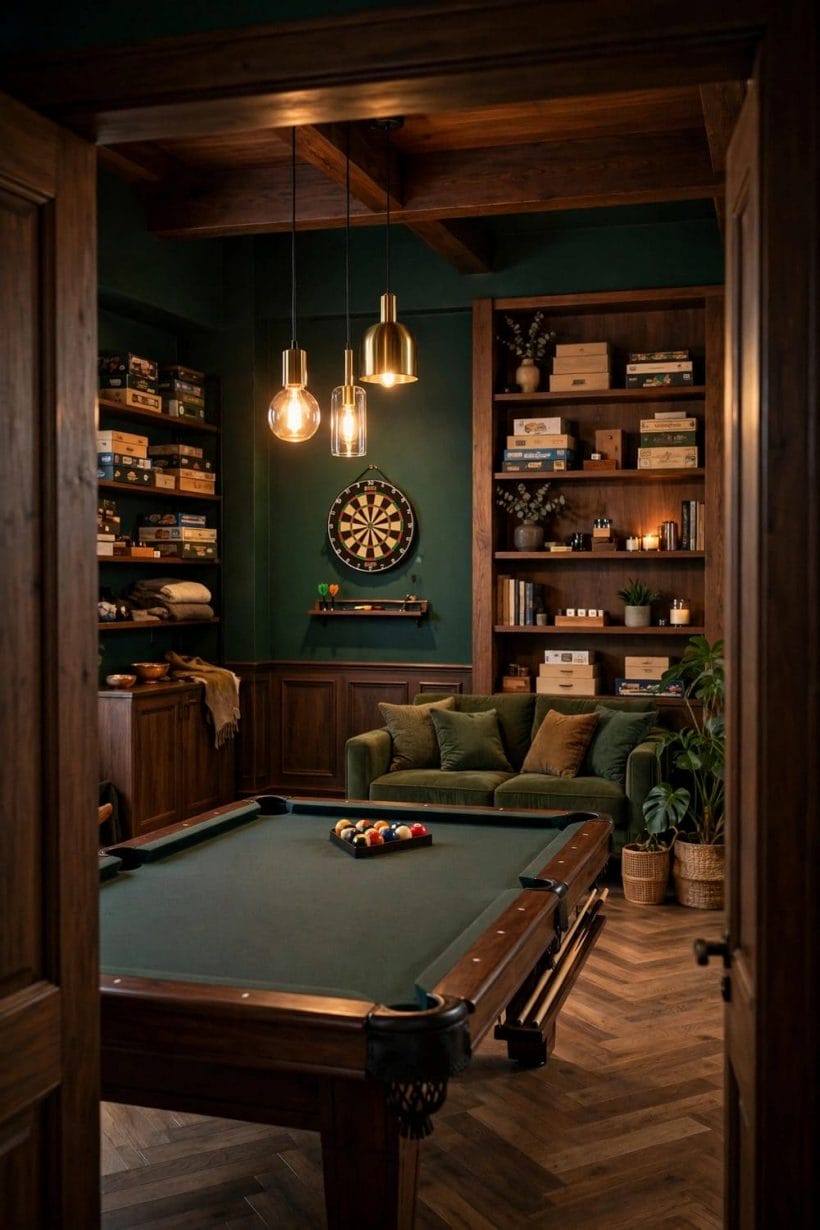
Light decides whether a game room feels welcoming or tiring. A single harsh ceiling light flattens faces, glares off screens and makes a long evening feel like an interrogation. Layered light works far better: a warm overhead source for general brightness, a focused light over each table, and a soft lamp or two for the seating corners. Each layer can be switched separately, so the room can shift from bright and lively to low and relaxed as the evening goes on.
Over the main table, light should fall evenly across the whole playing surface, so cards, boards and balls are all easy to see without leaning or squinting. Pendant lights suit a pool table, while a shaded lamp suits a card table, but the principle is the same: light the game, not the players’ eyes. Shades, dimmers and warm-toned bulbs all help, and any new fixed lighting or wiring is work for a qualified electrician rather than a weekend experiment.
Screens need the opposite treatment. A television or arcade cabinet glows on its own, so the light around it should be gentle and indirect, with no bright source shining straight onto the glass. A lamp behind the seating, a strip of soft light along a shelf, or curtains drawn across a bright window all keep the picture clear. If the room has a window that catches the evening sun, plan the screen wall so it never faces straight into it.
Finally, remember the small lights that make a room feel finished. A lamp on a shelf, a soft glow inside a display cabinet, or a candle-style light on the refreshment corner all add warmth without adding glare. Keep the overall palette warm and low in the evening, and the room will invite people to stay for one more game long after the main lights could have sent them home.

5. Screens and Consoles Without the Cable Tangle
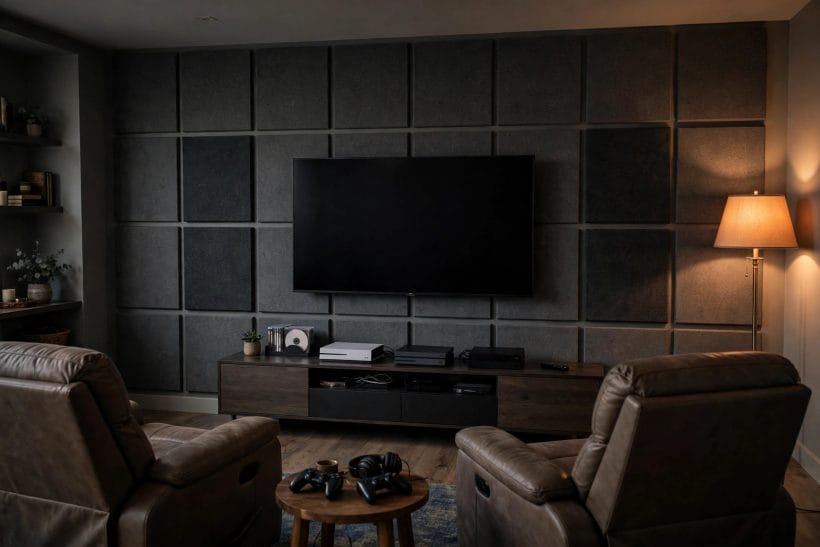
A console corner can be the happiest part of a game room or its messiest, and the difference is almost entirely planning. Start with the screen wall: a sturdy unit or wall mount that holds the television at a comfortable viewing height, with seating placed at a natural distance for relaxed watching. Two recliners, a small sofa, or a row of beanbags can all work, provided everyone can see the whole screen without craning.
Cables deserve a plan of their own. Route them behind furniture, through trunking, or inside the media unit, so no wire trails across the floor where it can trip a player or snag a chair leg. Label the ends if several consoles share one screen, and leave a little slack behind the unit so a console can be pulled out for cleaning without unplugging everything else. Any new sockets or fixed wiring belong to a qualified electrician, and the room should never rely on a chain of extension leads.
Sound matters more than most people expect. A modest sound system or a good soundbar fills the room without shaking the rest of the house, and soft furnishings such as rugs, curtains and upholstered chairs keep echoes down. If the room shares a wall with a bedroom or a neighbour, a rug and some wall panels go a long way toward keeping late-night sessions friendly. Keep volumes sociable, and the console corner stays a pleasure rather than a dispute.
Controllers, headsets and discs need a home within arm’s reach of the seating, or they will colonise every flat surface in the room. A drawer, a basket, or a small shelf beside the sofa keeps them tidy and findable. For inspiration on fitting a screen zone into a compact home, look at this guide to home theatre design for a tiny house, which covers viewing distance, seating and light in rooms where every inch counts.
6. Active Games and the Space to Play Them
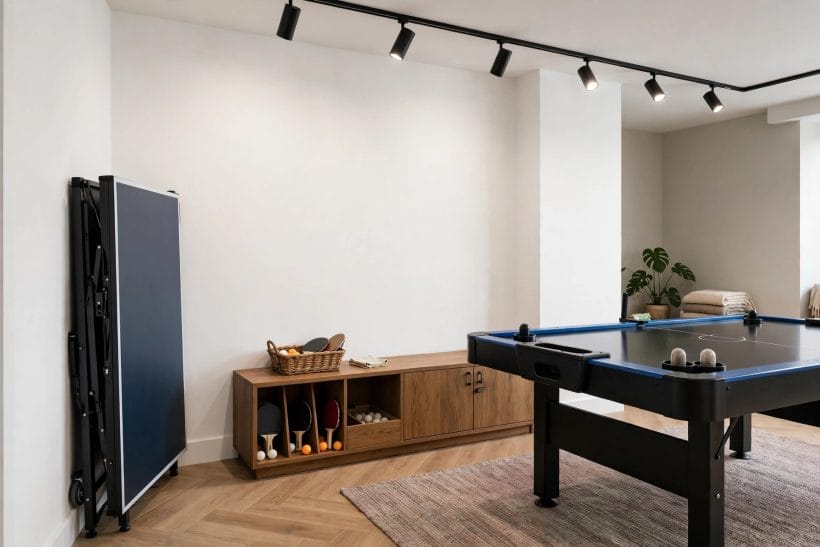
Some games need room to move. Table tennis, air hockey, darts and dance games all ask for clear floor around the equipment, space to step back, and a little forgiveness for an enthusiastic follow-through. Plan these games with the same honesty as the main table: stand where a player would stand, swing an imaginary shot, and check that nothing precious, sharp or breakable sits within reach.
Floors take a beating in an active corner, so choose a surface that forgives. A hard-wearing floor with a rug that can be rolled aside suits table tennis, while a smooth, level surface suits air hockey. Keep the area free of clutter, with balls, paddles and darts stored on a wall rack or in a cupboard beside the game rather than scattered across the floor. A clear floor is a safer floor, and it also makes the room far quicker to tidy.
Darts deserve special care. The board needs a clear wall, a safe backdrop, and a throwing line that nobody has to cross mid-game. Keep the dart corner away from doorways and walkways, and make sure children understand that darts are watched, supervised play rather than toys to be picked up at will. The same thinking applies to any game with flying pieces: the fun depends on everyone knowing where to stand and where not to wander.
Active games are wonderful for households with children, because they burn energy and build coordination while everyone is together. If young players use the room, plan storage they can manage themselves, with light equipment at their height and heavier pieces kept out of reach. Guidance on living in a tiny house with kids is helpful here, since it covers shared family spaces where play, safety and tidiness all have to coexist.
7. Quiet Corners for Cards, Chess and Conversation
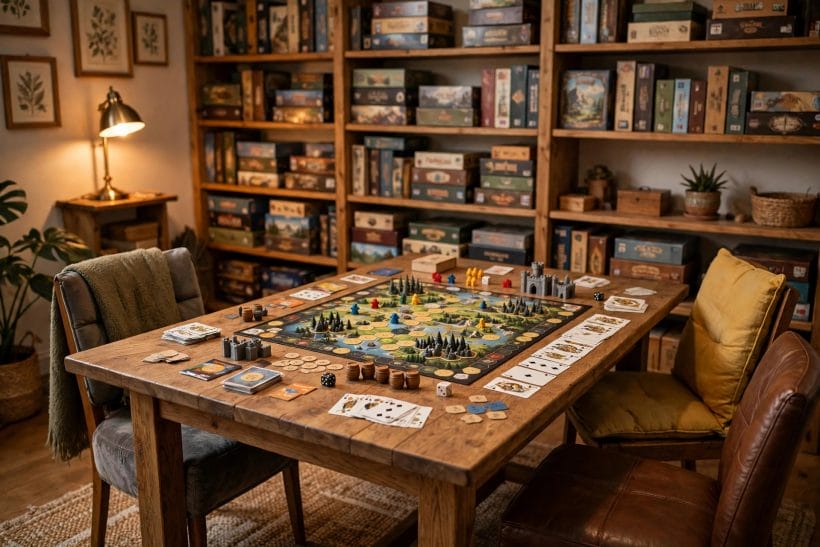
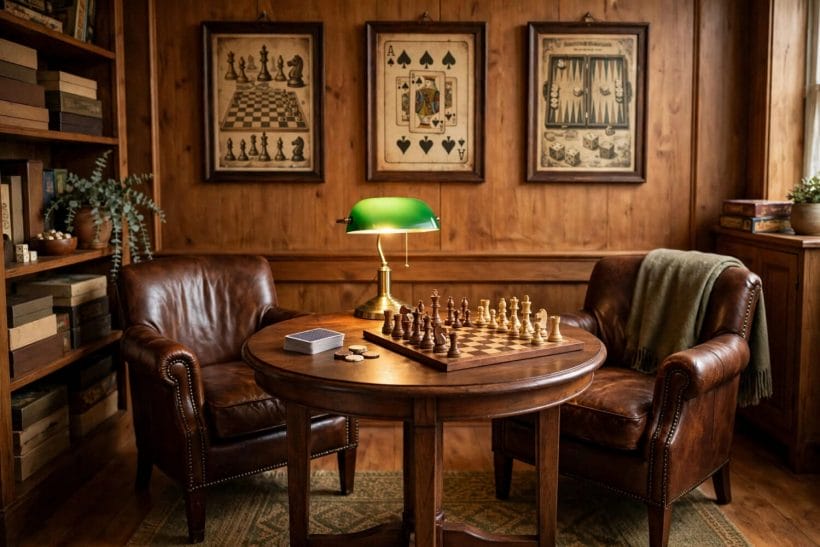
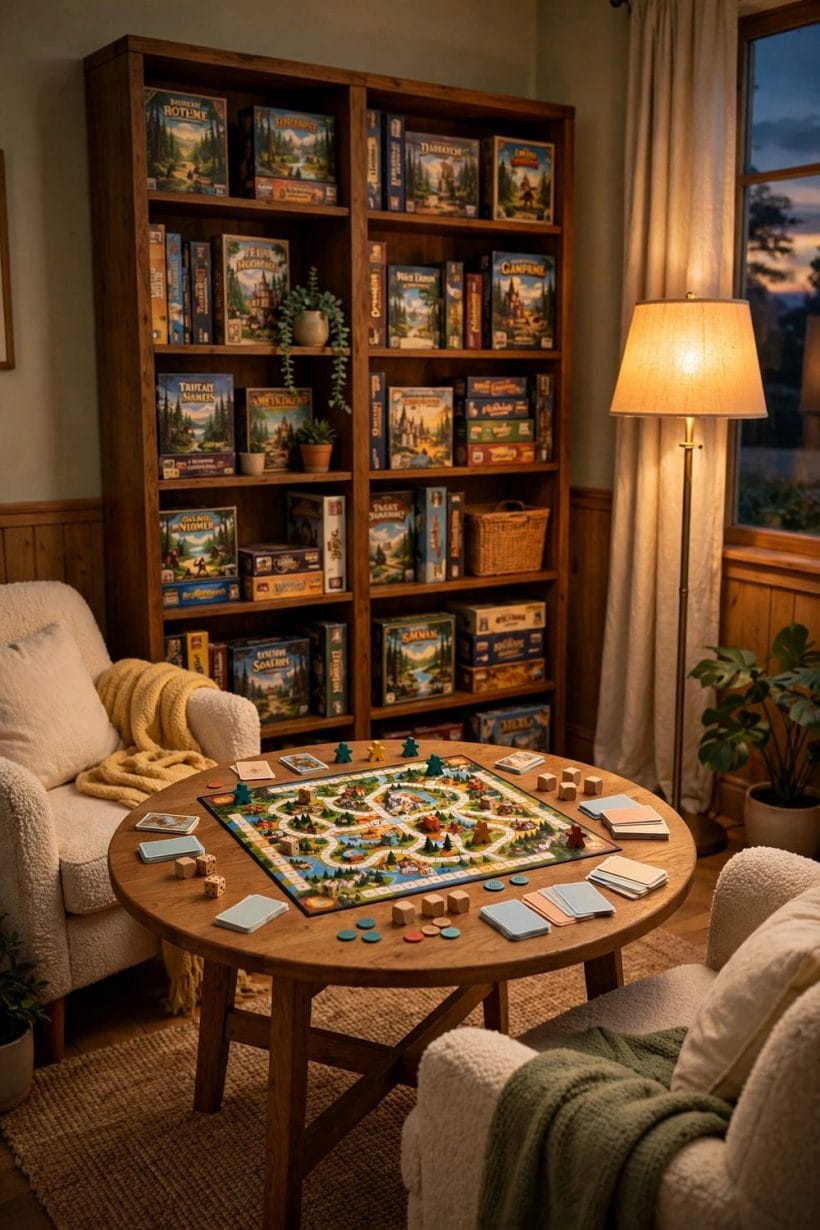
Not every game shouts. Cards, chess, dominoes and word games thrive in a quieter corner, where two or four players can concentrate without the buzz of the main table. A round table suits these games beautifully, because everyone faces each other and the centre of the action stays within easy reach. Two comfortable chairs, a small lamp with a warm shade, and a shelf for the game boxes nearby are all the furniture this corner truly needs.
Conversation is part of the game here, so the corner should feel intimate without feeling isolated. Place it where players can hear the rest of the room as a pleasant murmur rather than a competing noise, perhaps angled toward the main table but set slightly apart. A rug under the table marks the corner as its own place, and a side table for drinks keeps cups off the board and the cards safe from spills.
Chess and card players appreciate good light more than anyone, because the whole game lives in small details: the pattern of a hand, the position of a piece, the flicker of an opponent’s expression. A focused lamp, angled down onto the table and shielded from the players’ eyes, makes long sessions comfortable and fair. Keep the light warm and steady, and avoid placing the table where a bright window sits directly behind one player.
This corner also doubles as the room’s reading and puzzle spot on quiet days. A chess set left out on the table, a puzzle half-finished on a side board, or a deck of cards waiting for the evening all signal that the room is used and loved, not preserved behind glass. The best game rooms feel slightly lived-in, with evidence of yesterday’s game still visible when today’s players arrive.
8. A Room the Whole Household Actually Uses
A game room that only suits one person will slowly empty. The rooms that stay busy are the ones where everyone in the household can find something to enjoy, whether that is a serious match, a casual puzzle, or simply a comfortable chair and a good view of the fun. Ask each member of the household what they would play, then make sure at least one corner answers them.
Shared rooms need gentle rules more than strict ones. Agree where food and drink may go, which games stay set up and which get packed away, and who tidies what at the end of the night. Written rules feel heavy-handed, but a few understood habits keep the peace: cups on coasters, pieces back in their boxes, and the room left ready for the next player. Children who help choose the rules are far more likely to keep them.
Think about the room across the whole week, not just game night. On a weekday evening it might host homework, reading or a quiet board game for two. At the weekend it might host a tournament. A room that adapts to both rhythms earns its floor space all week long, and the furniture should adapt with it: tables that clear quickly, chairs that move easily, and storage that swallows the changeover in minutes.
Styling helps the room feel like part of the home rather than a separate den. Warm colours, framed pictures, plants and soft textiles make the space inviting to people who never play a game at all, which matters because those are often the watchers who make a game night feel like an occasion. For styling ideas that suit compact homes, see this guide on how to decorate a tiny living room, whose lessons on colour and comfort transfer directly to a games room.
9. Refreshments and Storage That Tidy Themselves Away
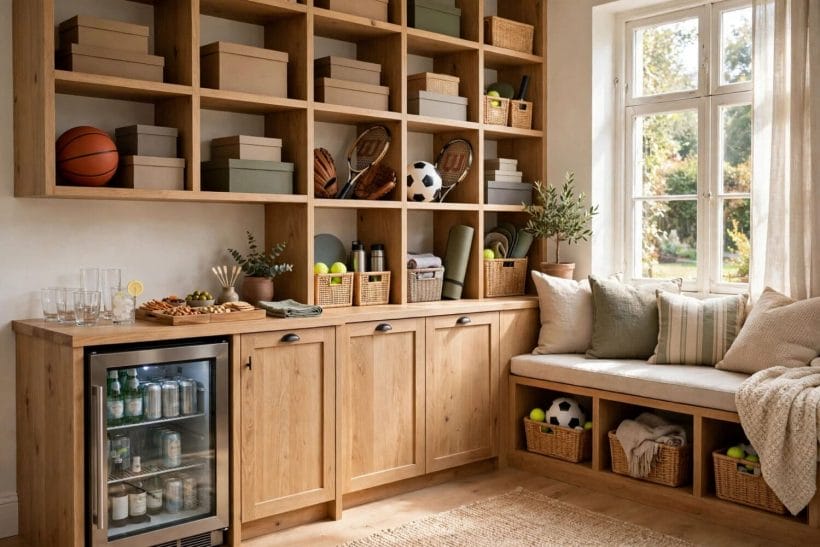
Every long game night needs refreshments, and every game room needs storage, so plan both together. A small counter with a mini fridge, a few glasses and a snack tray keeps players fed without anyone leaving the room or returning with a tray of trouble. Keep the counter compact and away from the main table, so a spilled drink never threatens a board or a deck of cards.
Storage is where good rooms are won. Board games, cues, paddles, controllers, decks and dice all need homes that are easy to reach during play and easy to close when the night ends. Open cubbies suit frequently played games, while closed cupboards suit the rest, keeping dust and visual clutter down. Label the shelves if the collection is large, and keep the heaviest boxes low, where they can be lifted safely.
A tidy room is a room people return to. When every game has a place, packing away takes minutes rather than an evening, and setting up the next game is a pleasure instead of a hunt. Build a short reset habit into the end of each session: pieces boxed, chairs pushed in, cups collected, and the table clear for tomorrow. The room will thank you by always being ready.
One corner can also quietly double as a work nook on days when nobody is playing, with a small desk surface and a chair borrowed from the card table. This kind of flexibility suits compact homes, and these home office ideas show how a work corner can share a room without taking it over, provided the games still have the final say when evening comes.
10. Colour, Texture and Finishing Touches
Colour sets the mood before a single game begins. Deep greens and warm woods give a classic club feeling, while brighter colours and pale wood feel playful and modern. Choose one dominant colour for the larger surfaces, a second colour for upholstery and textiles, and a single accent for small details such as cushions, frames and lamp shades. Restraint here keeps the room feeling designed rather than decorated by accident.
Texture does the quiet work of making the room comfortable. A soft rug under the main table warms the floor and marks the play zone. Curtains soften windows and help with sound. Cushions and throws invite people to settle in, while wooden shelves and leather chairs add a grounded, grown-up feel. Mix textures deliberately, but keep the overall palette calm so the games themselves provide the colour and excitement.
Walls deserve a little personality without becoming a museum. A few framed pictures, a display shelf for a treasured game or trophy, and perhaps a chalkboard for scores or tournament brackets all add character. Avoid covering every wall, because the room still needs visual rest, and a cluttered wall competes with the game for attention. Leave one wall relatively plain, and the room will feel larger and calmer.
Finally, add the touches that make the room unmistakably yours: a favourite poster, a family trophy, a plant that survives neglect, or a blanket that has warmed a hundred game nights. These details cost little and mean a great deal, because they turn a well-planned room into a place with memories. A game room should look loved, not staged, and the finishing touches are where that feeling comes from.
Final Considerations
Before you buy, revisit the plan with fresh eyes. Walk the room once more as a player, a watcher and a guest arriving with a drink in hand. Check that doors open freely, that every seat has a view of the game it serves, and that storage sits close to where its contents are used. Small adjustments now save far more trouble than rearrangements later, when heavy tables and full shelves are already in place.
Build the room in stages if the budget or the calendar demands it. The hero game and its seating come first, then lighting, then storage, with decoration last. A room that grows gradually around real game nights will suit its players better than a room furnished all at once from a single shopping trip, because each stage can respond to what actually happened at the table.
Leave structural, electrical and gas work to qualified professionals throughout, and check local rules before any fixed installation. The fun of a game room comes from playing in it, not from risky work behind the walls, and a professionally finished room is a room the whole household can enjoy with confidence. With the hero game chosen, the layout planned, and the light, seating and storage all working together, the hardest remaining task is simply deciding who plays first.


0 Comments