

The front porch is where a house introduces itself — before the door opens, before a word is said, the welcome has already been given or withheld.
These 75 front porch ideas take the street side only: the view from the kerb first, the route to the door second, and the door, seating, light and planting that make the arrival.
1. Front Porch Ideas at a Glance
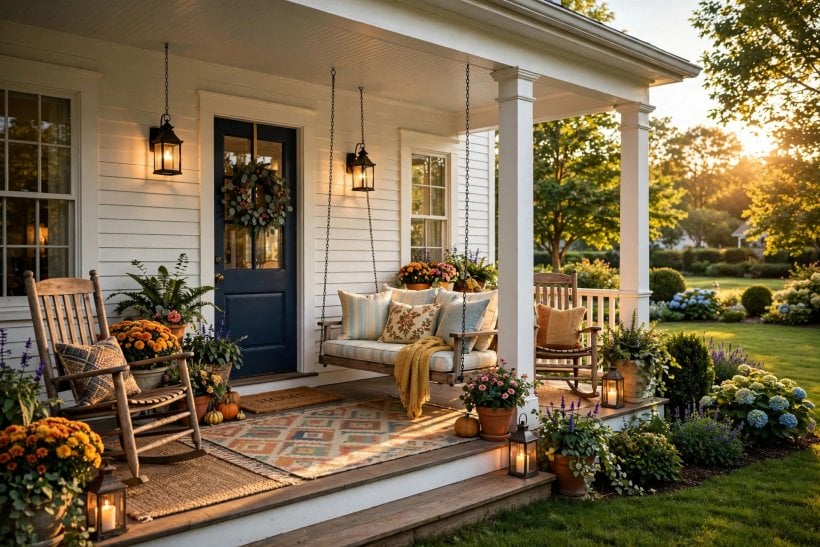
The central entity is the front porch: the house’s threshold and public face, whose attributes are the composition from the street, the arrival route of path and steps, the door and its colour, seating for watching the world, lighting for a safe and warm arrival, and planting that frames the greeting. This post owns the cluster’s front-of-house, kerb-appeal angle: the broad overview lives in the pillar guide to porch ideas, and the screened-in porch gets its own post. Here, everything serves the welcome a guest receives before the doorbell rings.
| What makes a front porch welcoming? | A composed picture from the kerb: a clear focal point at the door, a tidy lit route to it, seating that suggests lingering, and planting that frames the greeting. |
| Which single change helps most? | The door and its court: a confident colour, matched hardware, a working lantern, a legible number and a swept step. No other square metre of the house repays attention faster. |
| How much seating does a front porch need? | Two seats and a small table cover most of the porch’s life; depth decides the rest. A shallow porch takes a bench or slim chairs — comfort is welcome, not quantity. |
| Can a small stoop count as a front porch? | Yes — a stoop composed with the same care (colour, light, one pot, one seat if it fits) gives a small house a complete welcome. The ceremony scales; the care is the constant. |
| What is the biggest mistake? | Treating the porch as storage with a view: bins and clutter parked on the house’s handshake, the door fading unpainted behind them. The welcome cannot compete with the warehouse. |
At a glance: compose the view from the kerb, make the route to the door clear and lit, dress the door like the portrait it is, and plant the frame.
2. The View From the Street: Composing the Welcome
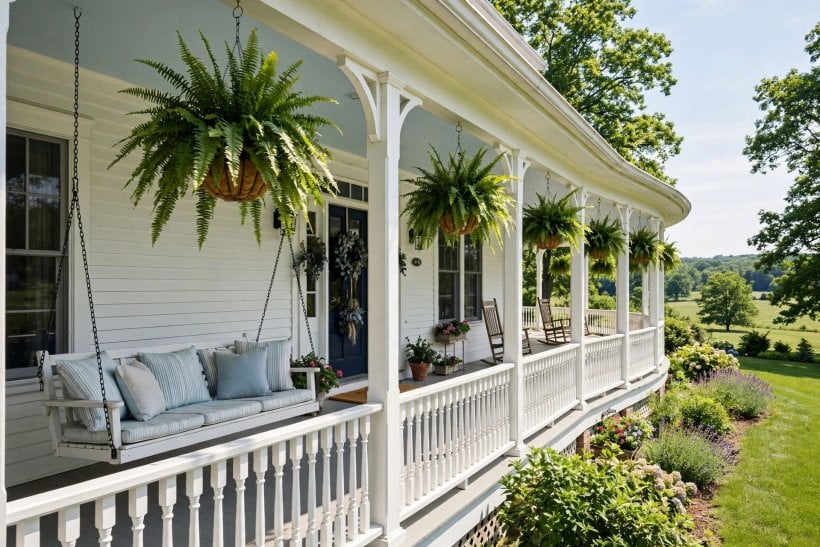
Guests compose their impression in the seconds between gate and doorbell, from exactly where these new home exterior design ideas for tiny houses begin — the street. Design the porch for that audience and distance first, and the details will know their jobs.
1. Judge the Porch From the Kerb, Where Guests Judge It
Stand across the street with a guest’s eyes: what draws the look, what reads as clutter, whether the door is findable at a glance. Every decision in this section is made from that spot.
2. Compose the Porch With the House’s Face
The porch and facade are one picture, not two projects. Roof line, materials and colour continue the house’s story, so the porch reads as the face’s foreground, not an attached stranger.
3. Give the Porch a Clear Focal Point
One element should win: usually the door, framed by its lantern, number and pots. Five competing features make a committee, not a welcome. Choose the winner and demote the rest.
4. Balance the Porch Against the Door
Seating, planting and posts arrange themselves around the door — heavier elements low and wide, its court kept clear. Balance keeps the eye travelling to the greeting.
5. Keep the Porch’s Lines Loyal to the House
Posts, rails and trim that echo the house’s own lines make the porch look born, not built. Borrow the facade’s profiles and proportions before inventing new ones, and the whole front settles.
6. Let the Roof Shelter the Welcome
A porch roof that genuinely shelters — deep enough for a dry greeting in rain — is both the picture’s crown and the guest’s first comfort. Shallow decorative roofs fool nobody in November.
7. Frame the Porch With Planting, Not Clutter
The porch’s foreground should be green and kept: beds, hedges, pots. Bins and ladders parked in the frame tell guests the welcome is an afterthought. Store the evidence elsewhere.
8. Keep One Colour Story From Gate to Door
Gate, path edging, pots, door: one colour story travelling the whole arrival makes the route feel composed. The door takes the strongest note; everything before it is the same song, quieter.
9. Let the Porch Belong to Its Street
Streets have manners — hedge heights, fence styles, porch traditions. A porch composed within its street’s family looks confident and generous; the whole row’s kerb appeal rises with yours.
10. Photograph the Arrival and Edit
Photograph the front from the kerb and edit from the print: the eye forgives in person what the camera catches. Move or repaint whatever it argues with.
11. Spend the First Seconds Well
Guests decide how a house feels before the door opens. A clear focal point, a tidy route and a lit door spend those seconds on welcome.
3. Steps, Path and Arrival: The Route to the Door
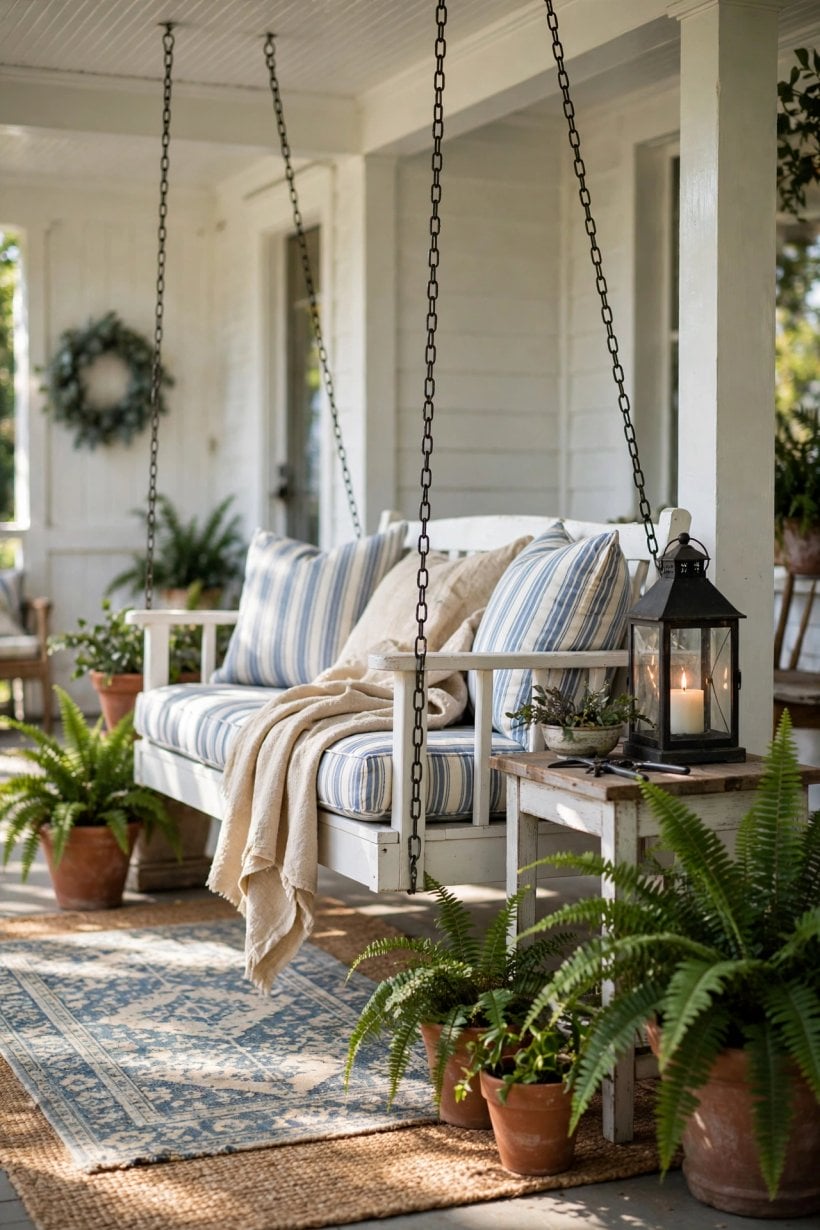
The arrival is a small journey with one destination, and its quality is measured in dry feet, sure steps and the feeling of being expected.
12. Make Steps Wide Enough for Two and a Parcel
Steps are climbed side by side, carrying things, in rain and dark. Generous width and a steady tread make the climb part of the welcome, not its obstacle course.
13. Fit a Handrail That Helps Without Shouting
A rail at the steps serves grandparents, children and anyone on an icy morning. Choose it in the door’s metal or the house’s trim and it helps gracefully instead of announcing itself.
14. Let the Path Lead, Not Wander
The path’s job is choreography: gate to door in one readable line, wide enough for two, the door visible from the start. A wandering path makes guests feel lost on a ten-metre journey.
15. Edge the Path and Keep It Swept
A defined edge makes the route look intended; a swept surface makes it feel cared for. Between them, the path does half the welcome’s talking.
16. Light the Steps for the Evening Arrival
Every change of level on the route deserves its own small light. Guests remember the house whose steps they could see; hosts are remembered, too, for the ones they could not.
17. Choose a Doormat That Works and Welcomes
The mat is the guest’s last step of the journey and the house’s first line of defence against mud. Size it to the door, keep it handsome, and replace it before it becomes the welcome’s apology.
18. Leave Room at the Door to Pause and Greet
A landing deep enough to stand, set down bags and find keys without backing down the steps is the arrival’s punctuation — where space allows, the porch’s most-used square metre.
19. Keep the Arrival Route Dry Underfoot
Puddling paths and dripping edges undo hospitality at shoe level. Falls that drain, gutters that behave and a roof covering the door’s swing keep the welcome dry.
20. Place Numbers and a Bell Guests Can Find
The number belongs where the eye lands — lit, legible from the path — and the bell where the hand expects it. A guest hunting for both arrives less welcomed.
21. Keep a Ledge for Bags and Parcels
A bench, a broad rail or a small table near the door takes parcels and shopping while keys are found — a tiny kindness every delivery notices.
22. Let the Gate Be the Welcome’s First Sentence
The gate is where the arrival starts: opening smoothly, latching kindly, painted with the house. A guest’s hands meet the gate before anything else — let it introduce the household well.
4. The Door and Its Colour: The Porch’s Focal Point
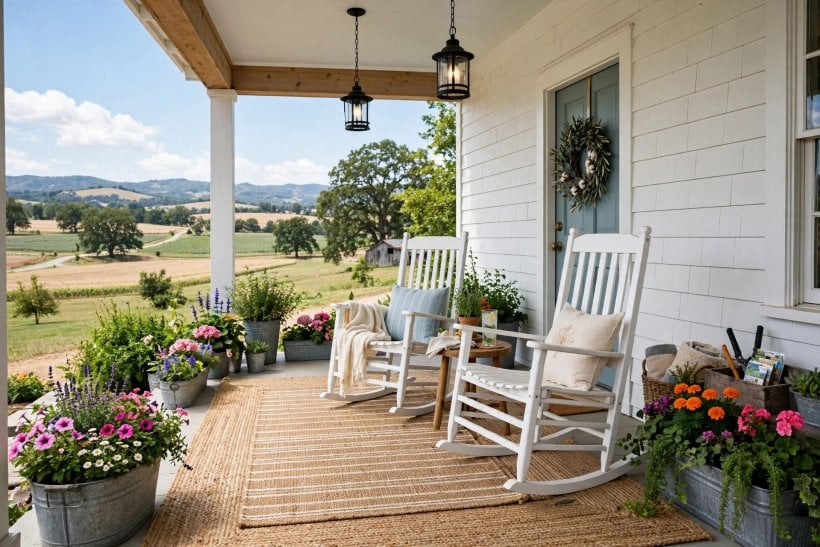
The door is the portrait the whole porch exists to frame. Particular as these dutch doors for tiny houses or classic as a panelled slab, it must be chosen, coloured and kept like the focal point it is.
23. Treat the Door as the Porch’s Portrait
Everything on the porch arranges itself around the door; dress it accordingly. Paint sound, hardware bright, glass clean — every season of the year.
24. Choose the Colour the House Has Been Waiting For
Deep green, oxblood, ink, a brave yellow: the right door colour is the one the facade’s palette has been quietly requesting. Test it on the door itself, at kerb distance, in the street’s own light.
25. Match the Door’s Hardware as One Set
Handle, knocker, letterbox, bell and number in one metal and one manner read as a considered set. Hardware collected piecemeal in competing finishes makes the portrait wear odd jewellery.
26. Dress the Door With the Season
A wreath, a garland, a pair of pots refreshed: small seasonal dressing tells the street the house is lived in and looked after. Keep it to one gesture at a time, and change it with the year.
27. Let Sidelights and Fanlights Glow at the Greeting
Glass beside and above the door turns the hall’s light into part of the welcome at dusk. Keep the glass clean and the hall calm, and the door gains a halo.
28. Keep the Doorstep Polished and Proud
The step takes every arrival’s weight and weather. Sound, level and clean — with its edge perhaps painted or tiled as the porch’s one pattern — it carries the greeting without complaint.
29. Stand a Boot Brush Where Real Weather Arrives
In muddy country, a boot scraper and brush at the door are hospitality in iron: guests clean their shoes without embarrassment. Fit them as part of the set, not as an afterthought.
30. Let Screen and Storm Doors Serve Quietly
Where climate asks for a screen or storm door, choose one that frames the door behind it rather than hiding it: full-view glass, the house’s colour, hardware that matches the court.
31. Paint the Porch Ceiling a Soft Sky Tone
The old habit of painting porch ceilings a pale sky tone survives because it works: the ceiling lifts, stays bright, the porch feels taller.
32. Repeat the Door’s Colour Once More Outside
The gate, a bench, the planters: one repetition of the door’s colour ties the arrival into a story. The eye travels it happily from street to threshold and arrives already pleased.
33. Let the Door Close Like a Full Stop
A door that closes true — no sticking, no rattle, hinges oiled, draught sealed — ends every arrival and departure with competence. The welcome’s last impression should sound like a full stop.
5. Seating at the Front: Watching the Street
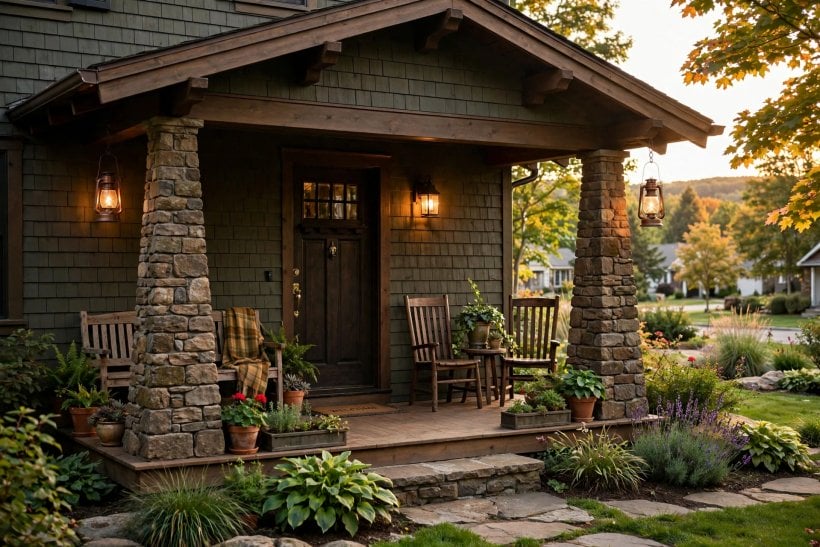
Front-porch seating is social furniture: it faces the street, greets the neighbours and declares that this house participates in its road. The rustic end of its range sits happily among these log projects for outdoor furniture and garden planters.
34. Set Two Chairs Toward the Street’s Theatre
Two chairs angled toward the street are the front porch’s classic set: conversation for the sitters, a living picture for passers-by — the neighbourhood’s smallest theatre.
35. Hang a Porch Swing Facing the World
The swing is the front porch’s beloved cliché because it earns it: gentle motion, room for two or three, and a view of the street’s evening. Hang it from structure, never from hope.
36. Keep Rockers for the Long Evenings
Rocking chairs slow a porch down to the right tempo for summer evenings and long talks. A pair of rockers in the house’s trim colour is the front porch’s most persuasive advertisement.
37. Size Seating to the Porch’s Real Depth
Measure the depth honestly: chairs need footprint plus legs plus a walking line past. Slim profiles and benches serve shallow porches better than armchairs performing a squeeze.
38. Add a Small Table for the Cup and the Book
Between the seats, one small table holds the morning coffee, the evening glass and the book in progress. Without it, every porch sitting involves the floor — and the floor always wins an argument.
39. Choose Cushions That Live Outside Honestly
Cushions should be specified for the weather they will actually meet, in the door’s colours. Faded, mildewed cushions undo the welcome faster than bare timber.
40. Keep Seating Clear of the Arrival Route
Guests should never have to edge past the furniture to reach the door. Arrange the seats to the porch’s sides and ends, leaving the route from steps to door as clear as a runway.
41. Face Seats Toward Neighbours, Not Walls
Front-porch seats that face the street get used; seats facing the house wall become storage. The porch’s sociability is a direction before it is anything else — point the chairs at the world.
42. Keep One Seat in Sun and One in Shade
A porch used across the day needs a seat for the morning’s sun and one for the afternoon’s shade. Where the porch is small, one movable chair serves both shifts.
43. Use Foldaway Seats on Narrow Porches
Folding chairs and a wall-hung table give a narrow porch a full social life that packs away for the weekly shop’s arrival. Narrow is a dimension, not a destiny.
44. Keep the Porch Seat an Invitation
An empty, ready seat invites neighbours to stop and the household to sit. The seat kept clear is the welcome kept open.
6. Light for Arrival: Lanterns, Numbers and Glow
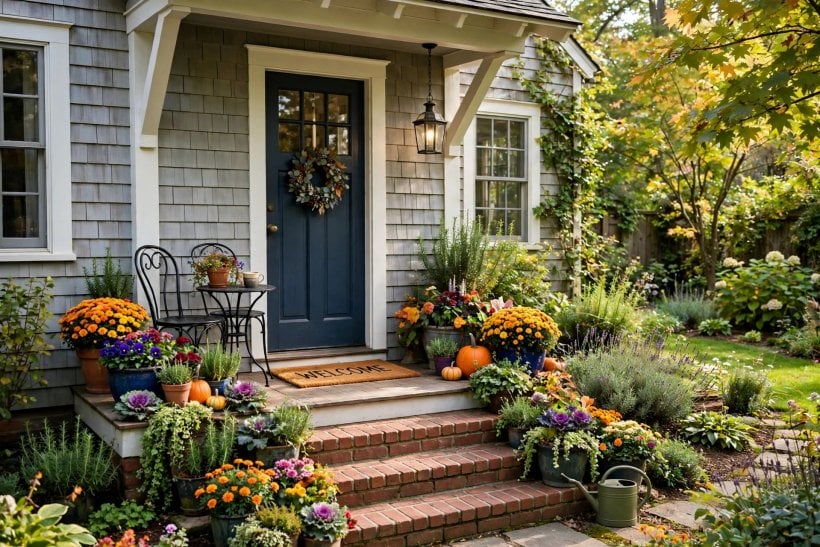
Porch light has two shifts: the working shift, which gets guests safely to the door, and the glowing shift, which makes the house look loved after dark. The placement logic follows these exterior lighting ideas for security — aimed low, never blinding, always warm.
45. Hang a Lantern Beside the Door, Warm and Bright
The door lantern is the welcome’s lamp: bright enough for keys and faces, warm enough to flatter both. One good lantern beats a floodlight every evening of the year.
46. Light the House Number After Dark
A number nobody can read at night is a daytime ornament only. A small light — or a lantern placed to catch it — makes the house findable for guests and deliveries alike.
47. Keep Path Lights Low and Aimed at Feet
Path lighting belongs low, washing the surface guests walk on, never shining up into their eyes. A lit route reads as care; a row of small suns reads as an airport.
48. Give a Roofed Porch Its Own Soft Ceiling Light
Under the porch roof, a pendant or flush lantern gives the sitting porch its evening room-feeling. On a dimmer it serves both the arrival’s brightness and the evening’s glow.
49. Use Candles and Lanterns for Porch Evenings
Real flame in storm lanterns is the porch’s oldest evening light: moving, warm and kind to faces. Keep a designed place for them — a tray, a shelf — and the ritual stays easy.
50. Match the Light’s Metal to the Door’s Hardware
Lantern, number and handle in one metal family make the door’s court read as a set. It is the same tailoring rule as the interior’s, applied where the street can admire it.
51. Use Sensors for Arrival, Switches for Sitting
Arrivals want a sensor that lights the route unasked; evenings want a switch under the household’s control. Give each shift its own control.
52. Keep Bulbs Warm on the House’s Face
Cold, blue light on a house front reads as institutional at any quality. Warm bulbs flatter brick, timber and faces alike — the street’s evening portrait should be painted in warm light.
53. Light One Tree or Shrub for Depth
One uplighted tree or shrub gives the front garden depth after dark and the house a backdrop. A single lit plant is composition; a lit garden is a showroom. Choose one.
54. Use String Lights Sparingly and Seasonally
A single strand along the rail can charm a summer evening; permanent festooning dilutes it. Treat string lights as seasonal dressing, put up and taken down with intent.
55. Leave Some Darkness by Design
The composed front leaves pools of darkness between its lights, so the glows have something to glow against. A front lit edge-to-edge has no evening picture at all — just exposure.
7. Pots, Planting and Green at the Door
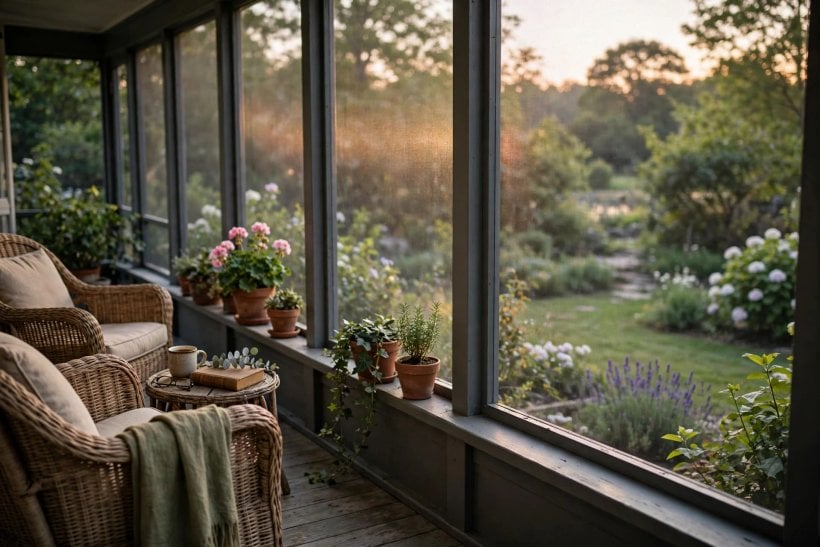
Planting is the porch’s soft furnishing, and its first rule is to look alive: the upkeep honesty in this guide to protecting outdoor log crafts with sealants and stains applies to planters too — plants fail publicly when their care is skipped.
56. Flank the Door With a Pair of Pots
Matched pots either side of the door are the welcome’s parentheses: symmetry, scale and green in one gesture. Size them to the door, not to the garden centre’s smallest offer.
57. Prefer One Great Pot to Five Small Ones
Small pots scatter; one great pot composes. A single generous planter, well planted, gives the porch a piece of furniture-grade green that five apologetic tubs cannot assemble between them.
58. Plant for the Porch’s Aspect, Not the Catalogue
Sun-baked and north-shaded porches are different countries. Choose plants for the light the porch actually receives and they will thrive publicly instead of declining in the house’s most-watched spot.
59. Build Evergreen Structure, Then Seasonal Colour
An evergreen backbone — box, bay, a small conifer — keeps the porch dressed in January; seasonal colour around it dresses June. Structure first, costume second.
60. Give the Porch Post a Climber
A rose, jasmine or honeysuckle trained up the porch post marries the house to its garden in the oldest way. Keep it tied, pruned and clear of the roof, and it will flower over the welcome for years.
61. Hang Baskets at Eye Level, and Keep Them Watered
Hanging baskets put flowers where arriving eyes are. They are also the thirstiest planting on the house — a basket that cannot be watered faithfully should not be hung.
62. Plant Herbs by the Door for Scent
Rosemary, lavender and mint at hand height by the door reward every arrival with scent as coats brush past. The welcome gains a sense the photographs cannot show and guests always remember.
63. Set Window Boxes on the Porch Windows
Boxes under the porch’s windows carry the planting across the facade and tie the garden to the glass. Planted with the door pots’ palette, they make the whole front read as one garden.
64. Make Watering Easy or the Display Dies
A tap within hose reach, pots grouped on the watering walk, a can living by the door: porch planting survives on systems, not intentions.
65. Let Front Garden and Porch Planting Agree
The porch pots and the front beds are one garden read at two distances. Shared plants, colours and materials make the arrival feel planted rather than decorated.
8. Front Porches on Small Homes and Cottages
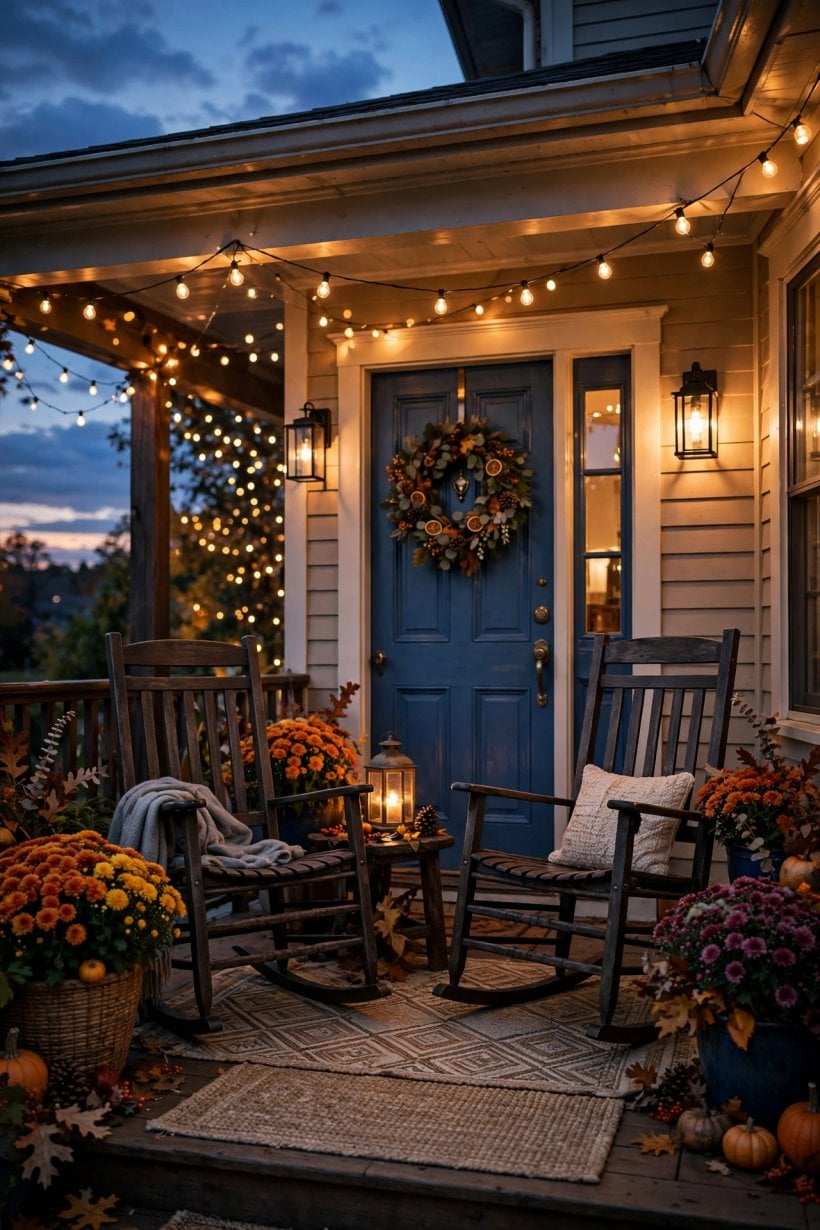
The small home’s porch may be a roofed landing, a stoop or a lean-to over the door — and it can still give a complete welcome, because the welcome was never about square metres.
66. Compose Even a Stoop
A stoop takes the whole ceremony in miniature: painted door, lantern, number, one pot, a swept step. Composed with intent, two square metres out-welcome porches ten times their size.
67. Give the Tiny Porch Its One Chair
Where a single chair fits, the porch gains its sitter, its invitation and its picture. Choose that chair as carefully as the door — at this scale it is half the furniture and all of the promise.
68. Let Colour Do the Work Space Cannot
On a small porch, the door’s colour, a painted floor and one pot of flowers do the composing furniture does elsewhere. Colour is the small porch’s square footage.
69. Fit a Slim Console for the Small Porch’s Bits
A narrow console or shelf against the wall holds the candle, the post and the plant without eating the route. Shallow furniture is the small porch’s enabling technology.
70. Use Hooks and a Rail Instead of Furniture
Wall hooks for the coat and bag, a rail to lean and set a cup on: the narrow porch’s furniture can live on its walls. The floor stays a route, and the welcome stays complete.
71. Let the Small Porch Glow Like a Lantern
At dusk a small porch with a warm lantern and a lit number glows like a lantern hung on the house — the cottage picture entire streets are loved for. Evening is the small porch’s grand hour.
72. Borrow the Garden for the Porch’s Depth
A small porch opening onto a planted front garden borrows all its depth from the green. Compose porch and garden as one room with a roof over only part of it.
73. Keep Small Porches Ruthlessly Tidy
On a small porch, clutter cannot be forgiven. Shoes, post and projects live inside; the porch keeps only its ceremony.
74. Paint the Small Porch’s Floor as Its Pattern
A painted or stencilled floor gives a small porch the pattern that larger ones get from rugs and furniture. Choose a design in the house’s colours and the stoop becomes a decorated room.
75. The Welcome Is the Size of Its Care
The survey’s last idea is its first: a front porch welcomes by care, not by area. Colour kept, light working, planting alive, route swept — at any size, that is the whole of the art.
9. Checks and Mistakes: Before the Paint Dries
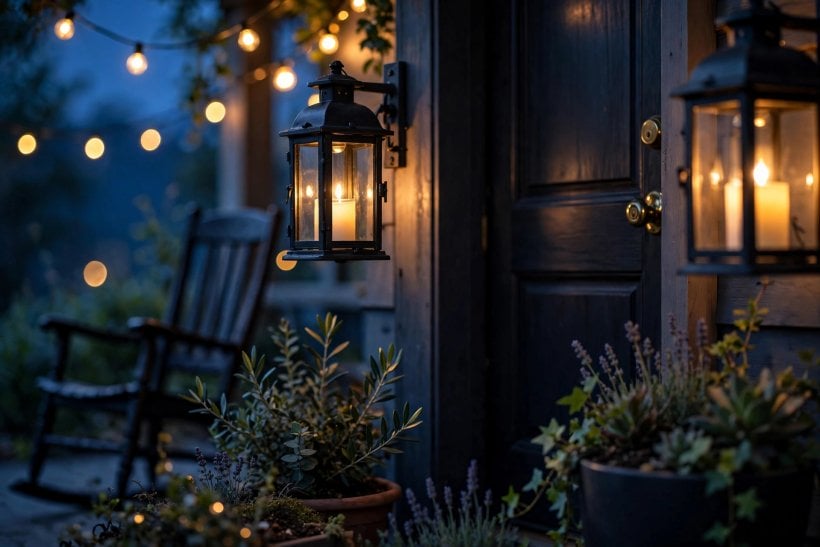
The front porch’s expensive mistakes are welcome errors: a door colour chosen indoors that turns stranger on the facade; seating so deep the arrival route disappears; steps left unlit because they are familiar to the household; planting specified for the catalogue’s climate, not the porch’s aspect; and the porch quietly becoming an outdoor cupboard. Every one is visible from the kerb, where the guests are standing.
Run the checks in order: the kerb photograph studied; the door composed as one picture — colour, hardware, lantern, number; the route walked with bags in both hands, after dark; seating measured against the real depth and kept off the route; and planting chosen for the porch’s own light, its watering planned. A front porch is the house’s handshake; the checks are its grip.
10. Costs and Pulling It Together
Front-porch money divides into three bands. The structure band — roof repairs, steps, rails and path — takes the largest share and is effectively permanent, so it earns sound work. The door band — the door, its paint, hardware and lighting — is mid-priced and carries the whole welcome, so cut it last of the visible work. The dressing band — pots, plants, cushions and mats — is the cheapest and most changeable, growing season by season.
Pull the front porch together in this guide’s order: the picture from the kerb, the route, the door, the seats, the light, the green. Resist the garden centre’s invitation to start with the dressing. Build the welcome in its order, and guests start liking the house before the door opens.
Final Considerations
A front porch is a promise the house makes to everyone who approaches it — and keeps, or breaks, in about ten seconds. The picture from the kerb, the lit route, the dressed door: the promise is made of small things done in the right order.
Compose the view, clear the route, paint the door like a portrait, light the arrival warmly, and keep the planting alive. Do that, and the ideas become the welcome your guests describe to others.

0 Comments