
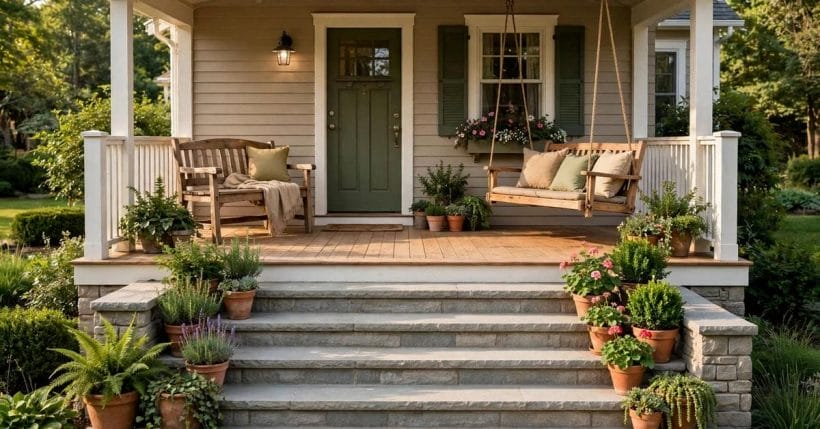
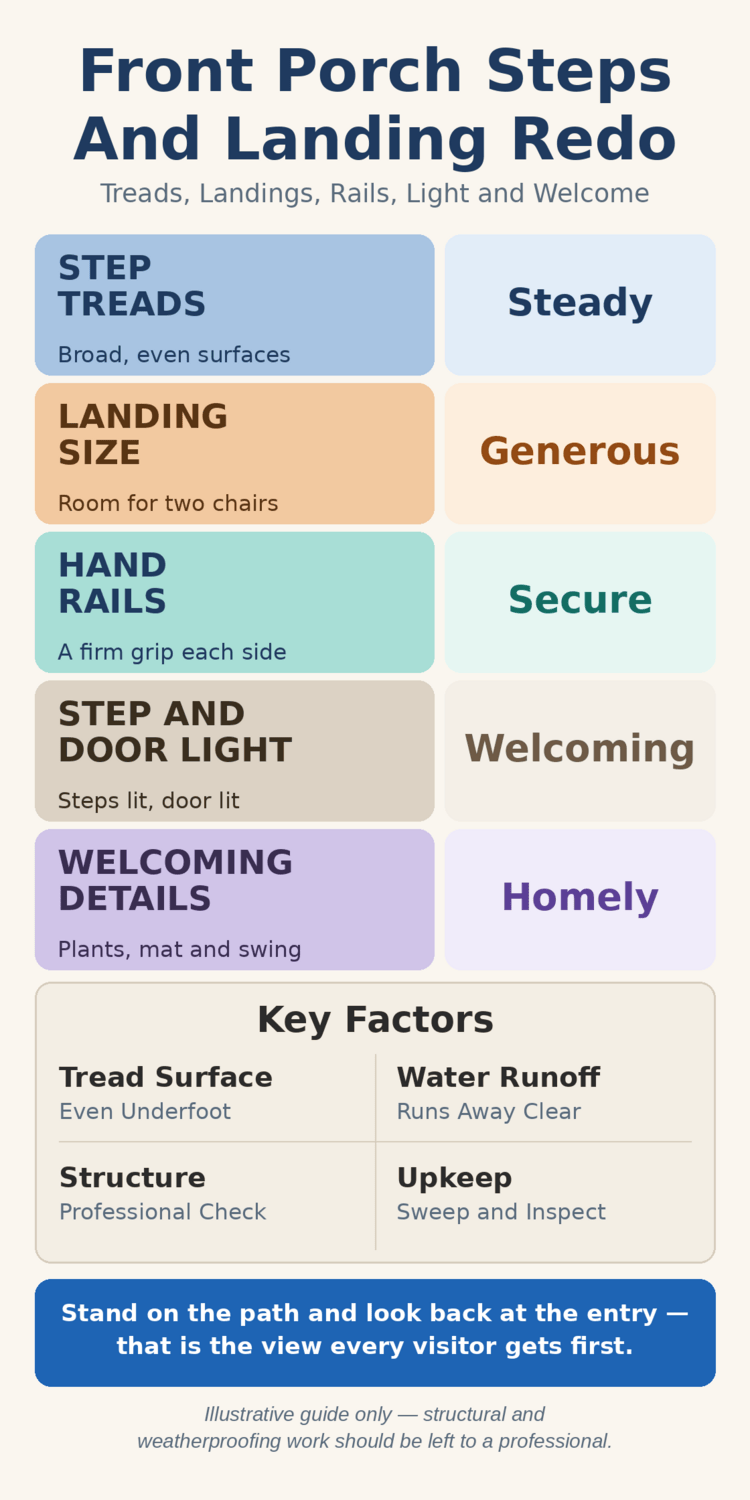
The steps and the landing are the part of a home that every visitor meets first, and a redo there changes the whole feeling of an arrival. When the treads are even, the landing is generous and the details beside the door are cared for, the entry reads as welcoming before anyone knocks. These front porch steps ideas are all about that small, hard-working zone: the flight up to the door, the flat place at the top where people pause, and the furniture, planting and light that make both feel finished rather than merely functional.
A redo does not have to mean rebuilding everything at once, and it should not mean rethinking the whole porch. The focus here stays narrow on purpose: the steps themselves, the landing they lead to, and the welcoming details that sit on or beside them. Think about how the entry is used on an ordinary day, with shopping bags, visitors, muddy shoes and evening arrivals, and let those everyday moments set the priorities. A flight that feels steady underfoot and a landing with room to stand, turn and greet someone will serve a home far better than a grand gesture that gets in the way.
Before choosing anything, walk the route as a visitor would, from the garden path to the door and back again. Notice where feet naturally land, where hands reach for support, where light falls after dark, and where a chair or a pot would help rather than hinder. As with tiny house porch ideas elsewhere, the best entries are the ones that work in daily use, not only in photographs, and the sections below take each element of a steps-and-landing redo in turn.
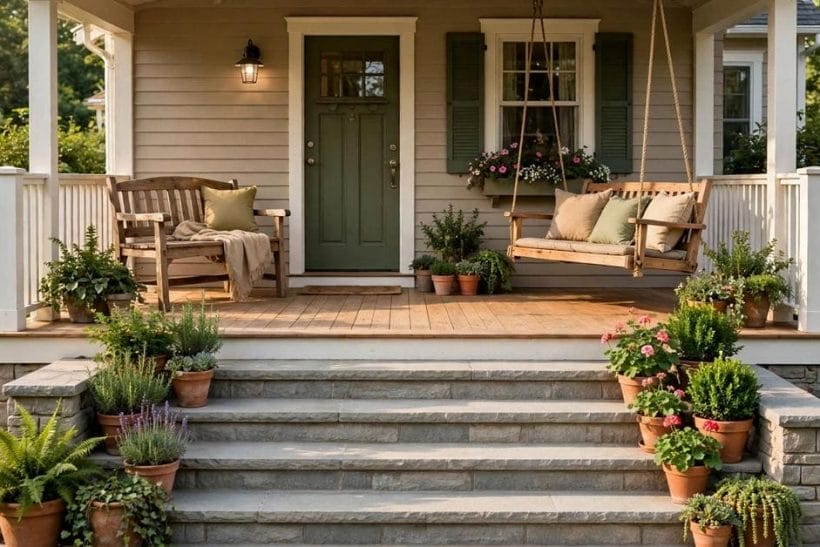
1. Start With the Steps Themselves
Every redo begins with an honest look at the steps as they are. Are the treads even from one step to the next, or does one tread catch the foot? Do the edges look crisp, or are they chipped and worn where feet land most? Is the surface comfortable and sure underfoot in wet weather, or does it feel slick when rain has fallen? These are questions of condition and comfort, and they matter more than any decorative choice, because no amount of planting or paint can rescue a flight that feels uncertain to climb.
When the structure or the weathering underneath is in question, that is work for a professional, not a weekend experiment. Structural repairs, changes to the flight itself and anything that affects how water is kept out of the home belong with someone qualified to assess them properly. A good redo separates the two kinds of work clearly: the visible refresh of surfaces, edges and details, which can be planned around the home, and the structural and weatherproofing work underneath, which should be specified and carried out by a professional before anything decorative goes on top.
2. Give the Landing Room to Breathe
The landing is the pause at the top of the flight, and a redo should treat it as a room in its own right, however small it may be. It needs room for the door to open comfortably, room for a person to stand while greeting a visitor, and room to set something down without blocking the way back down the steps. When a landing is cramped, everything placed on it becomes an obstacle, so the first job of a redo is often subtraction: clearing what has drifted there and seeing the true shape of the space.
Once the landing is clear, its size sets what it can honestly hold. A generous landing may suit a bench or a pair of chairs with a small table between them, while a narrow landing may suit nothing more than a mat, a lantern and a pot or two at the edges. The test is simple and should be applied to every idea that follows: can two people pass each other here without stepping aside onto the flight, and can the door open fully without pushing anyone toward the edge? If the answer is no, the landing is asking for less furniture, not more.
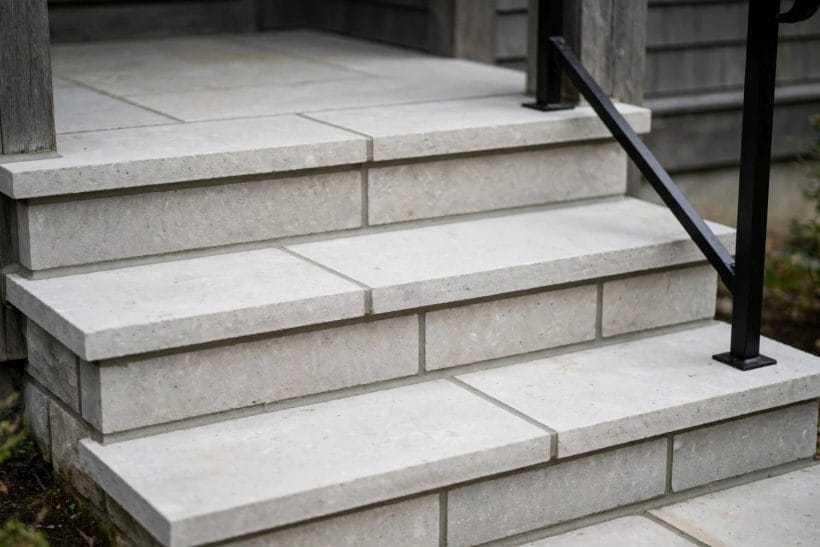
3. Choose Tread Materials That Suit the House
Tread materials set the character of the whole entry, so they should sit comfortably with the house they serve. Stone treads bring a solid, settled feeling and suit homes with masonry walls and a garden of generous planting. Timber treads feel warmer and lighter underfoot and sit well with weatherboard homes and a relaxed, cottage-like entry. Brick treads carry a traditional warmth of their own, while a plain, smooth tread suits a plainer, more contemporary frontage. The right choice is usually the one that looks as though it has always belonged there.
Character is only half the decision, because treads also have to live with weather, leaves and daily wear. A surface that stays sure underfoot when wet, that can be swept clean without fuss, and that weathers gracefully rather than staining patchily will look better for longer than a showier surface that demands constant attention. Ask how each material behaves through the seasons where the home stands, how it meets the landing at the top and the path at the bottom, and whether its edges will stay neat where feet turn. A redo that answers those practical questions first tends to age far more gracefully.
4. Add Handrails That Feel Secure
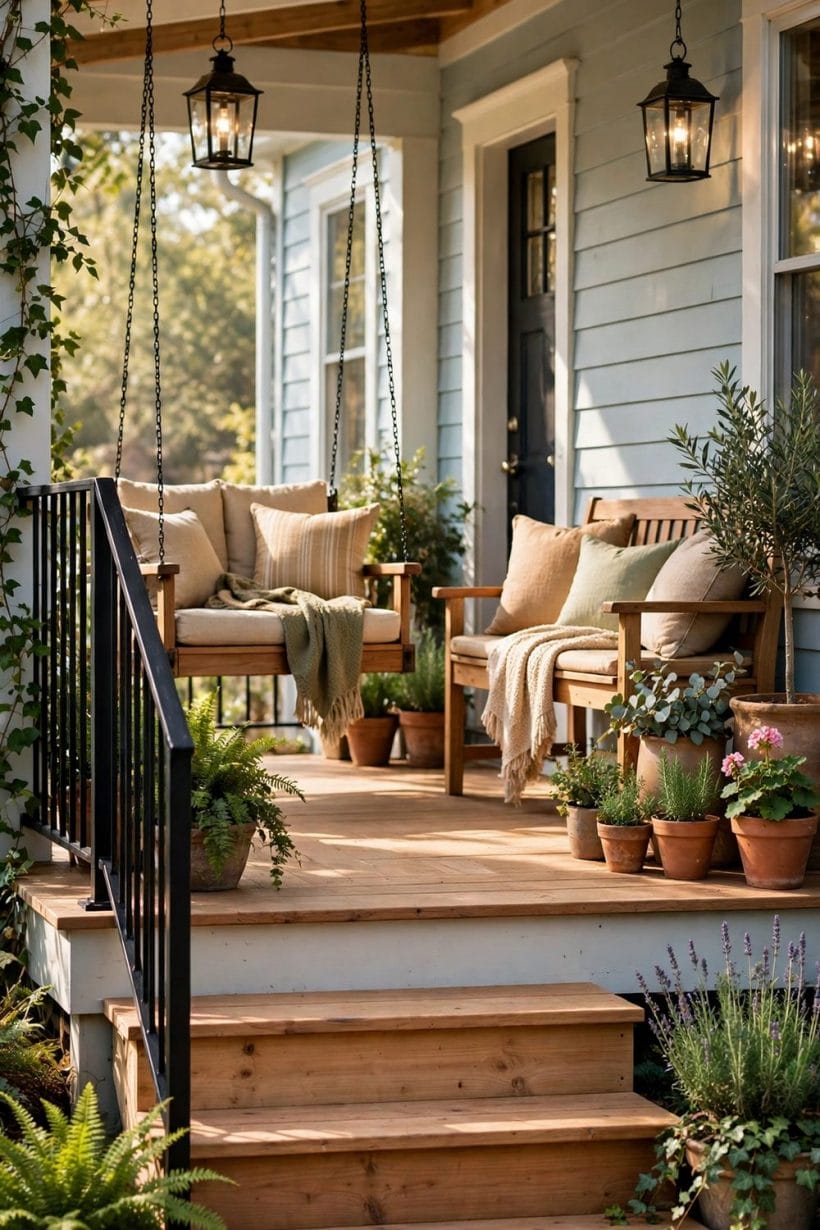
A handrail is the quiet hero of a steps redo, because it is the thing people actually hold. The best rails feel firm the moment a hand closes on them, run without interruption where they are needed, and sit at a height that suits the people who use the flight every day. Rails on both sides suit a wide flight or a household where steadiness matters, while a single well-placed rail may be enough for a narrow flight beside a wall. What matters is that the rail is there when a hand reaches for it, in daylight and after dark alike.
Fitting rails is another job where professional help is the right call, since a rail that looks solid but is weakly fixed is worse than no rail at all. A professional can judge the fixing points, the strength of the support and the way the rail meets the landing and the path, and can make sure the finished rail feels as secure as it looks. Once fitted, a rail should be checked now and then for any movement or loosening, and kept clear of trailing plants or stored items that would stop a hand reaching it in a hurry.
5. Make the Landing a Place to Sit
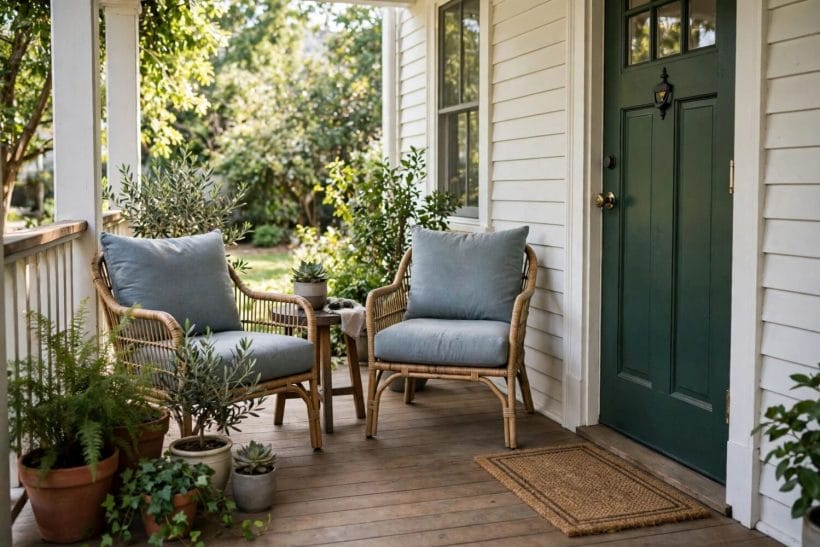
A landing that holds a seat stops being a corridor and starts being a place. A bench against the wall gives visitors somewhere to wait and gives the household a perch for putting on shoes or setting down bags. A pair of chairs with a small table between them turns a generous landing into a morning sitting spot, a place for a quiet drink while watching the street or the garden. The furniture should be chosen for the outdoors, able to live with rain and sun, and light enough in appearance that it does not crowd the doorway.
Scale is everything on a landing, so measure the space by living in it rather than by guessing. Sit in the chair and open the door behind you, stand up and step aside, and check that the path down the steps stays clear. Cushions in weather-friendly fabrics soften the seating without demanding indoor care, and a small table holds a drink or a book at exactly the height a seated person wants. Like the seating in tiny house patio ideas, landing furniture earns its place only when it is used often, so keep the arrangement simple enough that sitting down feels effortless rather than staged.
6. Bring in a Porch Swing
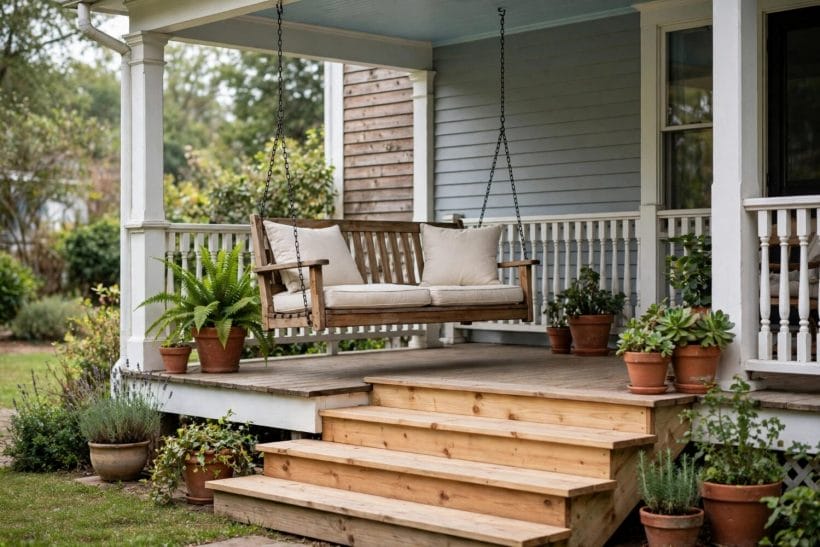
Few landing details change the mood of an entry as quickly as a porch swing. The gentle movement, the shared seat and the view out toward the garden all invite people to linger, and a swing turns a landing from a place of arrival into a place of rest. A swing needs a landing with real depth, because it moves as it is used and needs clear space around it, and it suits entries where the landing is wide enough that the swing never crowds the doorway or the top of the flight.
Hanging a swing is structural work, and it must be treated as such. The overhead support has to be assessed and fitted by a professional who can confirm it will carry the swing safely in use, and the finished swing should be checked regularly for wear in its fixings and hangers. Once that professional groundwork is done, the pleasure is in the simple choices: plain cushions that suit the house, a throw for cooler evenings, and a position that catches the garden view without blocking the way in. A swing that is safe, well hung and easy to reach will be used daily, which is the whole point of having one.
7. Light the Steps and the Door
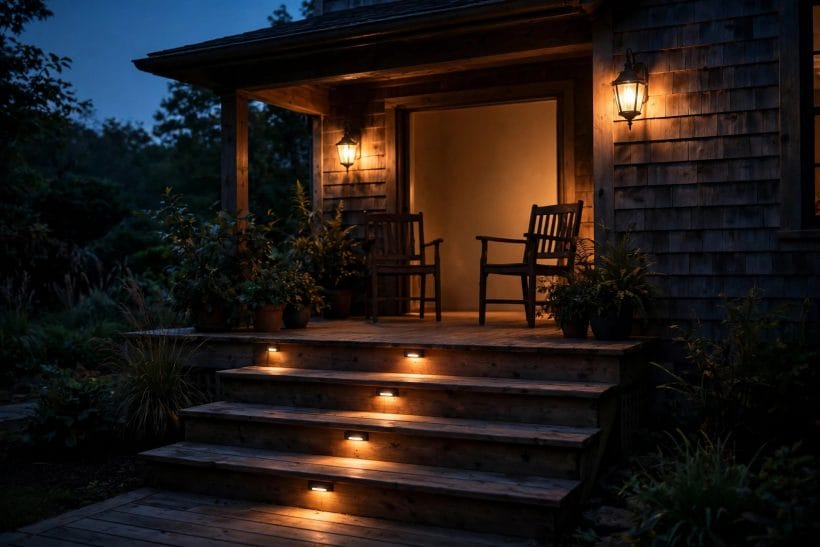
Lighting is what makes a steps redo work after dark, and it should be planned as carefully as the treads themselves. A lantern or wall light beside the door welcomes visitors and makes keys, faces and the door handle easy to see. Small lights set into or beside the flight mark each tread so that feet can find their way without hesitation, and a soft wash of light across the landing keeps the pause at the top from becoming a dark patch between a lit path and a lit doorway. Warm light suits most entries better than harsh light, because it flatters both the house and the people arriving at it.
Anything wired into the home is work for a qualified electrician, and that includes new wall lights, step lights and any changes to existing circuits. Solar-style lanterns and portable lights can add glow without wiring, but they should still be placed where they will not be knocked over or left to block the flight. The test for a finished lighting scheme is to walk the route at night exactly as a visitor would: every tread visible, the landing clearly lit, the door welcoming, and no dark step waiting to surprise anyone. As with tiny house exterior ideas, lighting that is planned for the route rather than for show alone is what keeps an entry safe and inviting after sunset.
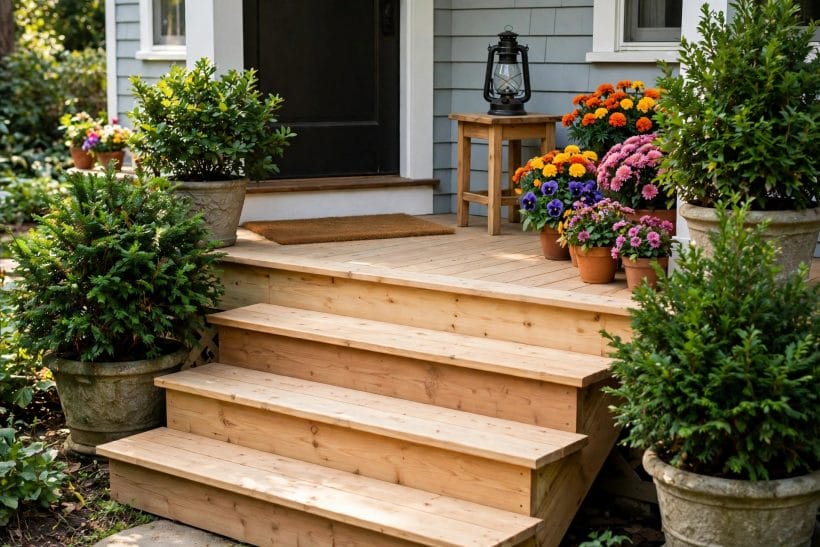
8. Add Planting and Welcoming Details
Planting is the soft edge of a steps redo, and pots are its most flexible tool. Large pots at the foot of the flight frame the climb and give the entry a sense of occasion, while smaller pots on the landing add colour and scent at exactly the height where visitors notice them. Evergreen shrubs keep the entry looking cared for through the quieter months, and seasonal flowers can be changed as the year turns, so the entry never looks frozen in a single season. The planting should frame the steps, never narrow them, so keep pots clear of the walking line and the handrail.
Beyond planting, the small welcoming details are what make an entry feel personal. A sturdy mat at the door, kept flat and clean, says that muddy shoes have been thought about. A lantern on a side table, a bench cushion in a colour that echoes the door, and a pair of pots that match the house all add up to an entry that feels considered rather than accidental. These are the details visitors remember, and they are also the easiest part of a redo to refresh: swap the flowers, change the mat, move a lantern, and the whole entry feels renewed. Gardeners looking for wider planting inspiration will find plenty among tiny house garden ideas and backyard landscaping ideas, but the planting beside steps should always stay subordinate to the flight itself.
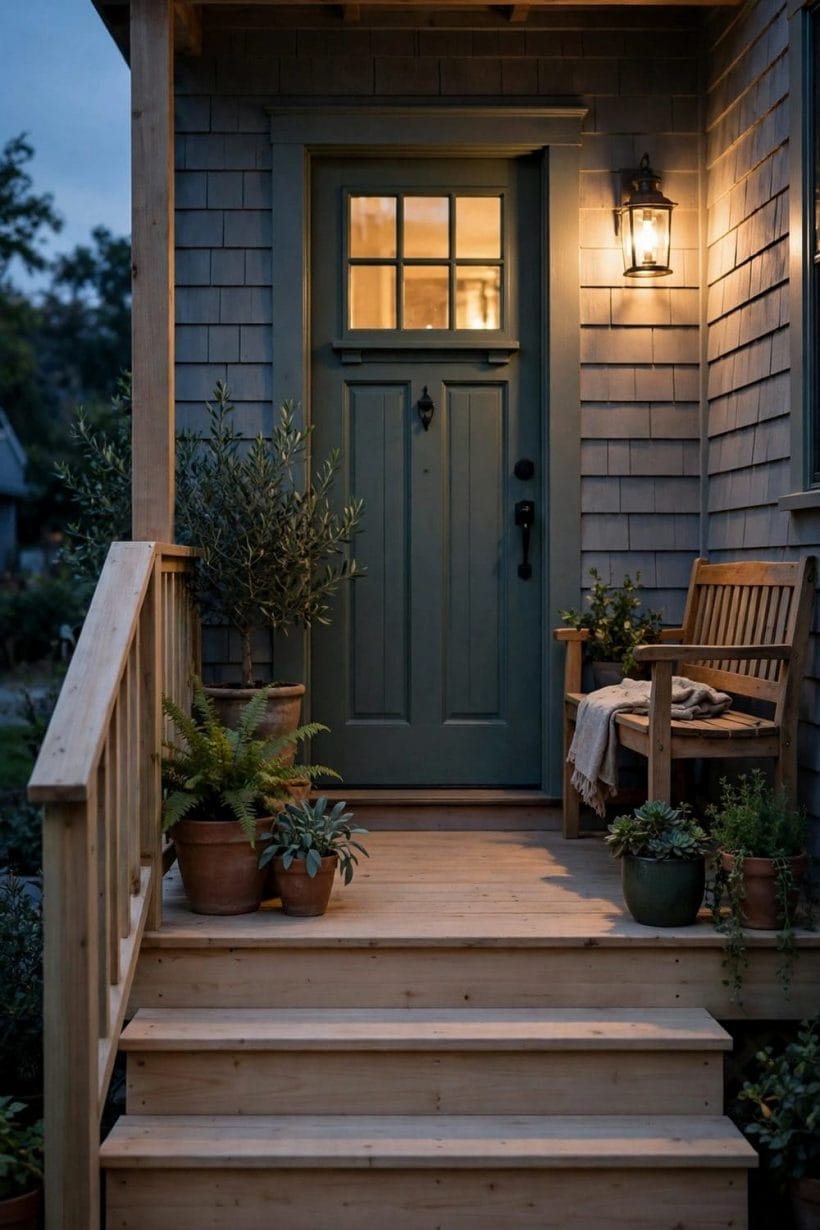
9. Keep Weather and Drainage in Mind
A steps redo that ignores weather will not stay looking redone for long. Rain should run away from the house and off the treads rather than pooling on the landing or washing toward the doorway, and the junction where the flight meets the house deserves particular attention, because that is where damp causes the most trouble. Surfaces that shed water cleanly, joints that stay sealed and a landing that dries quickly after rain are all signs that the weatherproofing underneath has been properly thought through.
Weatherproofing and drainage are professional territory, and a redo should include a professional look at them before decorative work begins. Once the professional work is in place, everyday upkeep is simple: sweep leaves and grit from the treads so they do not hold moisture, clear any channel or gap that carries water away, and check the edges and joints now and then for signs of wear. Seasonal care of this kind, done little and often, keeps a redo looking fresh and prevents small problems from becoming large ones. The same patient approach suits the wider outdoor spaces in tiny house deck ideas and tiny backyard ideas, where weather is likewise the main force to plan around.
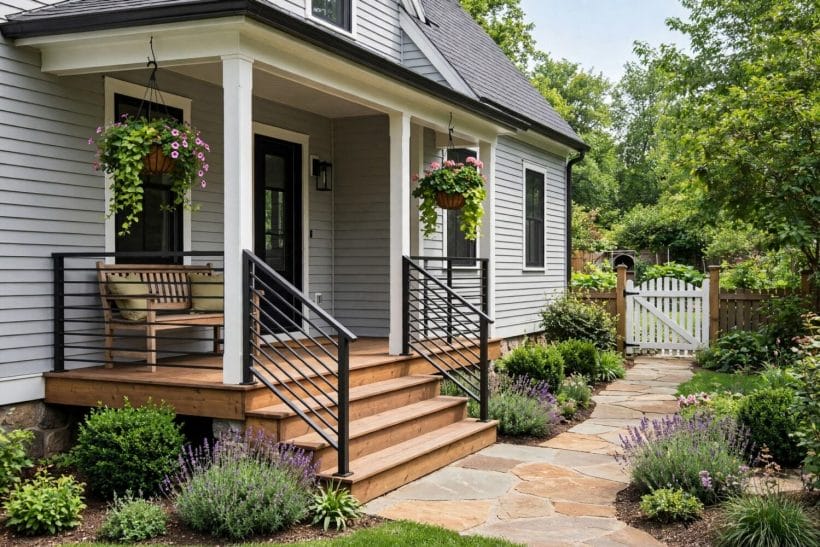
10. Plan the Redo in Sensible Stages
The most successful redos are planned in stages, starting with what must be sound before anything can look good. First comes the professional assessment of structure, weatherproofing and any electrical work, so that the foundations of the redo are certain. Next comes the flight itself: treads, edges and rails, chosen to suit the house and to feel steady underfoot. Only then come the landing furniture, the swing, the lighting details and the planting, in that order, so that each layer is chosen for a space whose shape and condition are already known.
Staging the work this way also makes it easier to live with the redo while it happens. The entry stays usable for longer, decisions are made one at a time rather than all at once, and any surprise found underneath the old surfaces can be dealt with before new finishes go over it. Keep a simple note of what was chosen and who carried out the professional work, so that future upkeep and any later change start from a clear record. A redo planned patiently, layer by layer, ends with an entry that feels inevitable, as though the steps and landing had always been meant to look and feel this way.
Final Considerations
A good steps-and-landing redo is judged by everyday use, not by any single feature. The treads should feel even, the landing should give room to pause, the rails should feel firm, the light should guide the way after dark, and the planting and furniture should welcome rather than obstruct. These front porch steps ideas work best when they are chosen together, as one small composition, with professional help for everything structural, weatherproofing or electrical, and with the household’s real daily route kept firmly in mind.
Start by standing on the path and looking at the entry with fresh eyes, then work through the sections above in order, keeping only the ideas that suit the size of the landing and the character of the house. A redo that respects those limits will feel calm and finished, and it will keep feeling that way through every season. The steps and the landing may be the smallest outdoor rooms a home has, but they are the ones every visitor meets, and they repay careful attention many times over.


0 Comments