
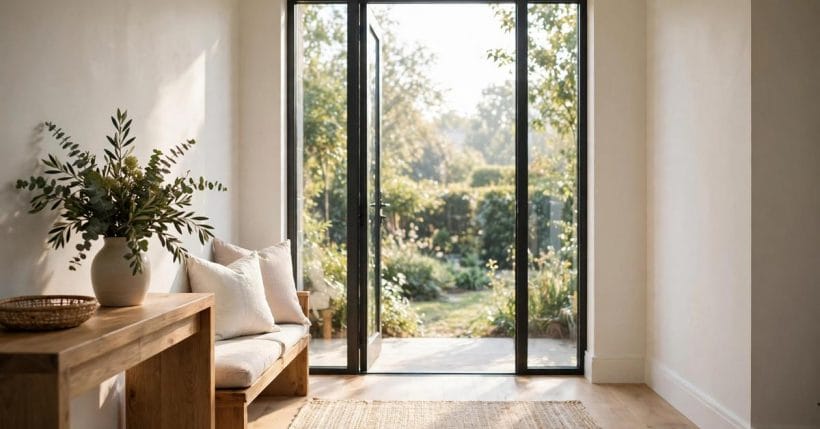
A glass front door changes the whole feeling of coming home, because daylight reaches the hall before a single lamp is switched on and the entrance feels open rather than shut away.
This guide gathers seventy-five ideas for an entryway with glass front doors, from layouts and glass styles to colour, storage, lighting and small-hall solutions, so you can pick the ideas that suit your house and leave the rest.
1. Layouts That Let the Light In
The layout decides how far daylight travels once it passes the glass. A clear route from the door into the hall, with nothing bulky blocking the light, makes even a modest entrance feel generous, while a bench or console placed to one side keeps the path open and the view uncluttered.
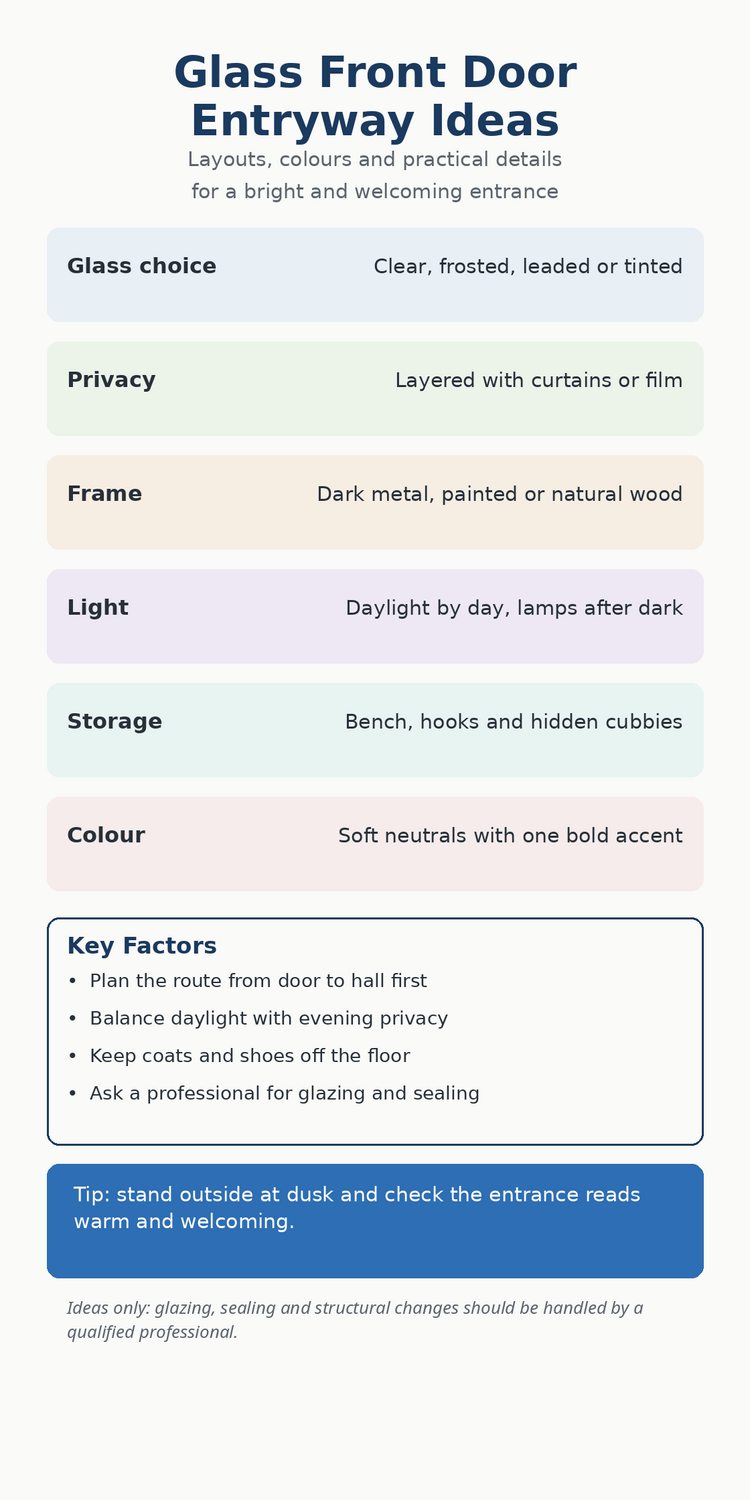
| Feature | Detail |
|---|---|
| Route | Clear path from door to hall |
| Glass | Clear, frosted, leaded or tinted panes |
| Furniture | Slim console, bench or wall hooks |
| Light | Daylight first, lamps layered after dark |
| Storage | Cubbies, trays and closed cabinets |
| Welcome | Rug, plant and a place for keys |
Storage planning belongs with the layout, not after it, and these storage ideas for small homes show how wall and hidden storage can carry a household without crowding the route indoors.
1. A Straight Route From Door to Hall
A straight route from the door into the hall gives every arrival a calm, easy welcome. Keep the path free of shoes, parcels and bulky furniture so daylight can travel with you, and let the first thing you see be something pleasant, such as a plant, a picture or a glimpse of the room beyond.
2. A Console to One Side of the Glass
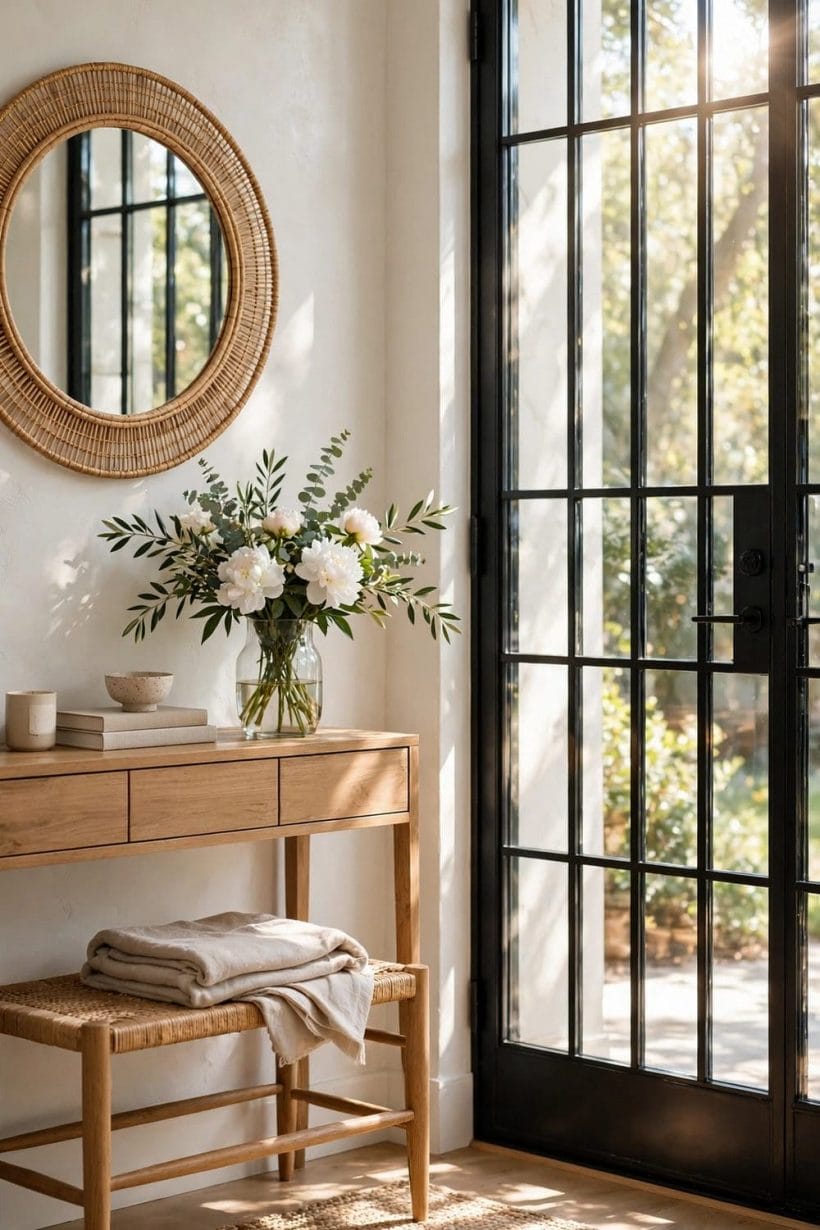
A slim console placed to one side of the door keeps the glass clear while giving keys, post and sunglasses a proper home. Choose a console narrow enough that the door swings freely, and style its top lightly so the entrance never looks crowded from the street or from the hall.
3. A Bench Beneath a Side Window
A bench beneath a side window turns waiting into a pleasure, giving visitors somewhere to sit while shoes are changed. A cushion in a washable fabric keeps the seat inviting, and baskets underneath swallow scarves, gloves and dog leads without a single item landing on the floor.
4. An Open Sightline Into the Living Room
An open sightline from the door into the living room makes a small house feel connected rather than boxed in. Avoid tall furniture directly opposite the glass, and let colour or a rug carry the eye gently from the entrance into the main room without any visual barrier.
5. A Half-Wall That Defines Without Blocking
A half-wall beside the entrance defines the hall without stealing daylight from the glass door. The low wall can carry a shelf for post or a small plant, while light still passes over it, so the entrance keeps its open feeling and the hall gains a sense of place.
6. A Wide Landing for Muddy Boots
A wide landing just inside the door gives muddy boots and wet umbrellas a place to stop before the rest of the house begins. A washable rug and a sturdy tray contain the mess, and the landing reads as a thoughtful threshold rather than a pile-up by the door.
7. A Coat Nook Tucked Around the Corner
A coat nook tucked just around the corner from the door keeps coats close at hand but out of the glass view. Hooks at two heights serve adults and children alike, and a small shelf above holds hats and bags so nothing dangles into the path of the door swing.
8. A Gallery Wall Facing the Glass
A gallery wall facing the glass door gives arriving eyes something warm to land on, with daylight falling across framed prints and photographs. Keep frames in one finish for calm, and leave breathing space between pictures so the wall feels collected rather than cluttered.
2. Glass Styles and Privacy Choices
Glass style sets both the look and the privacy of the entrance, so it deserves thought before colour or furniture. Clear glass celebrates daylight and the view, while frosted, textured or leaded glass softens the view inwards and still lets light pour through, and each choice changes how the hall feels at every hour.
Proportion matters as much as pattern, and these house design ideas show how door size, glazing and surrounding walls can stay in balance so the entrance feels intentional rather than oversized.
9. Clear Glass for Maximum Daylight
Clear glass suits entrances that face a garden or a quiet street, where the view itself is part of the welcome. Daylight floods the hall from morning onwards, plants and pictures gain a natural glow, and the house feels open to guests while still protected by a properly fitted door and lock.
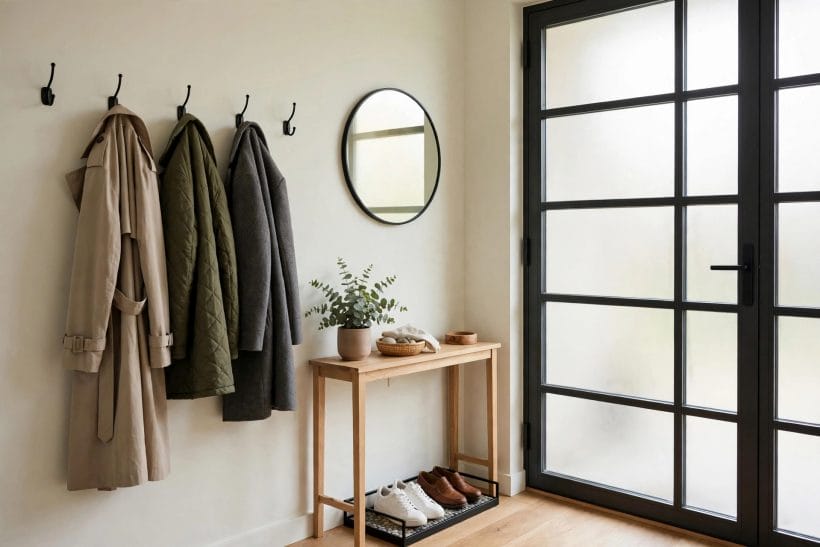
10. Frosted Glass for Gentle Privacy
Frosted glass keeps daylight while softening shapes on either side, so passers-by see only light and movement rather than detail. It suits entrances close to a pavement, and it pairs beautifully with pale walls, because the diffused light flatters every colour it touches.
11. Leaded Glass for Character
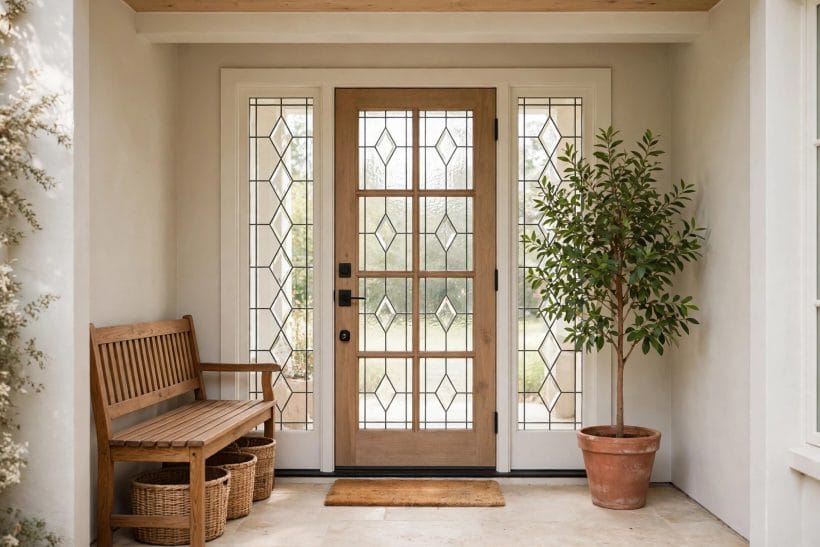
Leaded glass brings pattern and craft to the entrance, with diamonds, rectangles or gentle curves catching light in shifting colours through the day. It suits period houses especially well, and it gives the door a jewel-like quality that plain glass cannot match.
12. Tinted Glass for Softened Sunlight
Tinted glass softens strong sunlight in a south-facing entrance, easing glare on floors and furniture while keeping the view readable. Choose a tint that flatters the hall colours rather than fighting them, and check the effect at midday, when sunlight is at its strongest.
13. Textured Glass That Dances With Light
Textured glass, with ripples, reeds or hammered patterns, turns sunlight into moving pattern across the hall floor. It offers privacy without curtains, and it rewards a plain wall opposite, where the light patterns become a daily, changing decoration.
14. A Curtain Layer for Evenings
A curtain layer on the inside of the glass gives evening privacy at a touch, with linen or voile softening the door after dark. Hang the curtain on a slim rod that clears the handle, and choose a fabric that filters light rather than blocking it entirely.
15. Window Film for Flexible Privacy
Window film offers a changeable privacy layer, with frosted or patterned films applied to existing glass. It suits renters and experimenters alike, because the look can change with the seasons, though fitting should follow the film maker’s guidance for a smooth, bubble-free finish.
16. Stained Glass as a Focal Point
A stained glass panel turns the door into the entrance’s artwork, with colour glowing whenever light passes through. Keep the surrounding hall calm and neutral so the panel can shine, and let one colour from the glass repeat in a cushion or rug for quiet harmony.
3. Frames, Colours and Finishes
The frame is the picture frame around the glass, and its colour and material set the tone for the whole facade. A dark metal frame reads modern and crisp, painted timber feels warm and traditional, and natural wood brings grain and softness, so the frame choice should echo the house rather than compete with it.
The entrance should sit happily within the wider facade, and these exterior ideas show how door colour, porch details and planting can frame a welcoming front that still belongs to the house.
17. A Dark Metal Frame for a Crisp Look
A dark metal frame gives the glass a sharp, graphic outline that suits modern houses and simple facades. Pair it with pale walls and a plain rug so the frame reads as deliberate architecture, and keep handles and hinges in a matching dark finish for a coherent whole.
18. Painted Timber for a Classic Welcome
Painted timber frames bring a soft, crafted feeling to the entrance, with colour that can match shutters, trim or the porch. A satin finish resists scuffs from daily arrivals, and repainting the frame is a simple way to refresh the whole facade without changing the door itself.
19. Natural Wood Grain for Warmth
Natural wood grain warms a glass door entrance, especially beside stone, brick or pale plaster. Let the grain show through a clear protective finish, and repeat the timber tone in a bench or console so the entrance feels designed as one piece rather than assembled.
20. A Bold Door Colour Against Neutral Walls
A bold door colour, such as deep green, navy or warm red, makes the glass entrance unmissable from the street while the surrounding walls stay calm. Repeat the bold colour once inside, perhaps in a cushion or artwork, so the entrance and hall feel connected.
21. Soft Sage for a Gentle Facade
Soft sage suits houses surrounded by planting, because the colour sits naturally between foliage and stone. It flatters both clear and frosted glass, and it keeps the entrance feeling calm and leafy even in the depths of winter, when the garden is quiet.
22. Charcoal Frames With Brass Details
Charcoal frames paired with brass handles, letterbox and house number give the entrance a quietly luxurious feeling. The warm metal lifts the dark frame, and the combination suits both modern and period houses, provided the brass is kept polished and consistent.
23. White Frames for a Bright Coastal Feel
White frames give a glass entrance a bright, coastal freshness, especially beside pale walls and natural textures. The light frame keeps the glass feeling airy, and it pairs happily with woven baskets, pale timber and seaside-inspired planting by the door.
24. Two-Tone Frames for Depth
Two-tone frames, with one colour outside and another inside, let the entrance suit both facade and hall. The exterior tone can match the house front, while the interior tone blends with hall walls, so neither side has to compromise on colour.
4. The Approach: Porch, Path and Planting
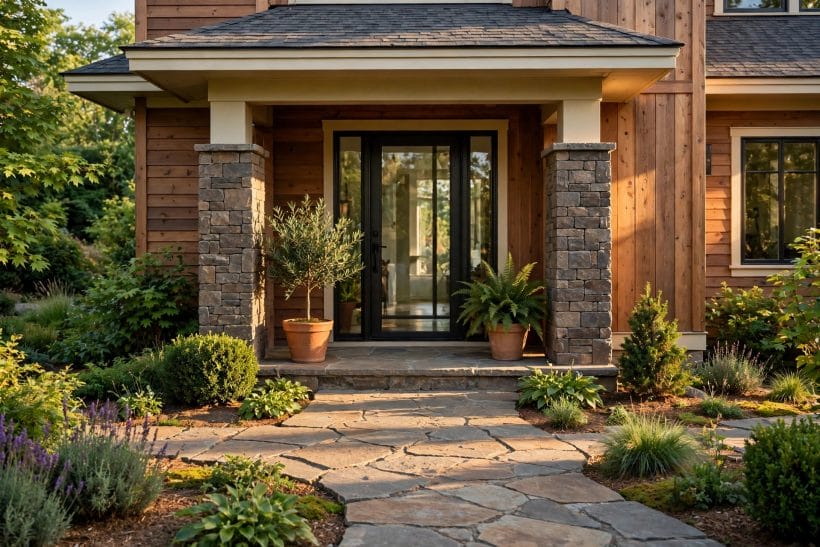
The approach is the overture to the glass door, and a sheltered porch, a clear path and a few well-chosen plants make arrival feel considered. Shelter keeps visitors dry while they wait, planting softens hard surfaces, and a clear path guides the eye straight to the glass and the welcome beyond.
Planting and path materials should suit the house and the local climate, and these backyard landscaping ideas offer planting and layout inspiration that translates happily to a front entrance too.
25. A Covered Porch for Shelter
A covered porch shelters visitors and parcels from rain while they wait, and it protects the door itself from weather. Keep the porch roof high enough that daylight still reaches the glass, and add a bench or a pair of chairs so waiting feels comfortable rather than exposed.
26. A Stone Path to the Glass Door
A stone path gives the approach weight and permanence, guiding feet and eyes toward the glass door. Wide, level stones suit every visitor, and planting tucked between stones softens the edges so the path feels like part of the garden rather than a separate corridor.
27. Potted Plants Flanking the Door
Potted plants flanking the door frame the glass symmetrically and bring life to the threshold. Choose pots large enough to anchor the composition, and select plants that suit the light and shelter of your porch, so they thrive rather than merely survive.
28. A Climbing Plant Over the Porch
A climbing plant over the porch softens the roofline and frames the glass door with seasonal change, from spring blossom to autumn colour. Train growth away from the glass and hinges, and prune lightly so the plant enhances the entrance without ever blocking the door.
29. Lighting the Path for Evening Guests
Path lighting guides evening guests safely to the glass door while making the entrance glow from the street. Low, warm lights along the path edges suit most houses, and they should point downward so visitors see the path rather than being dazzled.
30. A Doormat That Means Business
A generous doormat is the entrance’s first line of defence, catching dirt before it reaches the hall rug. Choose a mat wide enough for two feet side by side, with a coarse texture outside and a softer mat inside, so shoes arrive clean at the glass door.
31. A Parcel Nook Beside the Porch
A parcel nook beside the porch gives deliveries a sheltered home, with a lidded bench or a small cupboard keeping parcels dry and out of sight. Position it where the door can still open freely, and where a visitor can reach it without stepping onto planting.
32. Seasonal Wreaths on the Glass
A seasonal wreath hung on the glass door, or on a hook beside it, marks the changing year with colour and scent. Keep the wreath light and flat enough that it never presses the glass or blocks the view, and swap it with the seasons for an entrance that always feels current.
5. Storage That Keeps the Hall Clear
Storage is what keeps a glass entrance looking serene rather than chaotic, because everything arriving through the door needs a home within arm’s reach. Closed cabinets hide clutter, open cubbies suit everyday items, and a mix of both lets the hall stay tidy without feeling like a cupboard.
Bulky outdoor gear need not live in the hall at all, and these garden storage ideas show how sheds and outdoor cupboards can keep bikes, tools and sports kit close by but out of the entrance.
33. Closed Cabinets for a Calm Hall
Closed cabinets along one hall wall hide coats, shoes and cleaning supplies behind calm, flat fronts. The glass door stays the star of the entrance, because nothing competes with it, and the hall can be tidied in moments by simply closing a door.
34. Open Cubbies for Everyday Kit
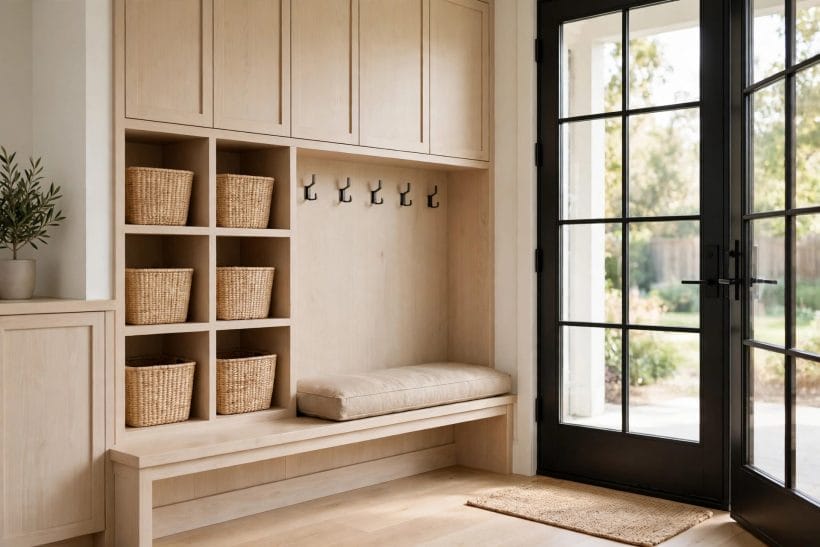
Open cubbies suit the items used every day, with each person given a cubby for bag, shoes and coat. Labels or coloured baskets keep cubbies personal, and the open fronts mean nothing gets lost behind a door when mornings are rushed.
35. A Shoe Drawer Under the Bench
A shoe drawer under the bench hides footwear while keeping it exactly where it is needed. The drawer front can match the bench timber for a fitted look, and a tray inside contains damp soles so the hall floor stays clean and dry.
36. Wall Hooks at Two Heights
Wall hooks at two heights make the entrance work for the whole household, with lower hooks for children and higher hooks for adults. Space hooks generously so coats hang without bunching, and fix them firmly into the wall so heavy winter coats never pull free.
37. A Slim Cabinet for Slim Halls
A slim cabinet, shallow enough to hug the wall, brings closed storage to halls too narrow for standard cupboards. Shoes, umbrellas and dog leads fit neatly inside, and the cabinet top doubles as a shelf for keys, post and a small plant.
38. Basket Storage for Soft Items
Baskets suit soft items such as scarves, gloves, hats and pet accessories, bringing texture to the hall while hiding small clutter. Choose baskets that fit their shelf or cubby exactly, and label them discreetly so every item returns to its proper home.
39. An Umbrella Stand by the Glass
An umbrella stand by the glass door keeps wet umbrellas contained and within reach on rainy departures. A stand with a drip tray protects the floor, and a tall, narrow shape suits the space beside the door without blocking light or the door swing.
40. A Key and Post Station
A key and post station, with hooks, a small tray and a letter rack, stops the daily scatter of essentials across hall surfaces. Mount it at hand height beside the door, and empty the post tray regularly so the station stays a help rather than another pile.
6. Seating, Tables and Daily Landings
Seating and a landing surface turn an entrance from a corridor into a room, giving arrivals a place to pause, set things down and gather themselves. A bench invites sitting, a console catches the day’s essentials, and a small stool suits halls too narrow for a bench, so every entrance can offer a pause.
41. A Bench With Hidden Storage
A bench with hidden storage beneath its seat gives the entrance seating and tidiness in one piece. Shoes, bags and sports kit disappear under the lid, while the bench top stays clear for sitting, so the hall looks calm even on the busiest mornings.
42. A Console With a Single Drawer
A console with a single drawer keeps small essentials, such as keys, chargers and dog treats, out of sight but close at hand. The drawer stops the console top becoming a dumping ground, and the surface stays free for a vase, a lamp or a welcoming candle.
43. A Stool for Narrow Entrances
A stool suits entrances too narrow for a bench, offering a perch for changing shoes without blocking the path. Tuck the stool beneath a console when not in use, and choose a sturdy shape that can also serve as a side table for parcels.
44. A Landing Tray for Pockets
A landing tray on the console catches everything emptied from pockets on arrival, from keys and coins to sunglasses and earphones. One tray per household member prevents mix-ups, and emptying the tray each evening keeps the entrance ready for tomorrow.
45. A Mirror Above the Console
A mirror above the console doubles daylight from the glass door and gives every departure a last glance before leaving. Choose a mirror wide enough to reflect the glass, and hang it at eye height so it serves the whole household, not just the tallest.
46. A Chair for Longer Waits
A proper chair beside the glass door gives waiting visitors real comfort, especially in houses where guests often arrive early. A cushioned chair with arms suits older visitors, and a small side table beside it holds a drink while coats are gathered.
47. A Wall Shelf for Display
A wall shelf above the console displays a few chosen objects, such as a vase, a photograph or a small sculpture, without using floor space. Keep the shelf lightly dressed, because a crowded shelf beside glass quickly turns an airy entrance into a busy one.
7. Light After Dark
After dark, a glass entrance changes character, becoming a lantern that glows from within, so lighting deserves as much care as daylight. Warm lamps flatter the glass, a pendant marks the entrance as a room, and dimmers let the mood shift from bright arrivals to quiet evenings.
Light should flow gently from hall to living room, and these small living room ideas show how lamps, mirrors and pale surfaces can carry warmth from the entrance into the main room.
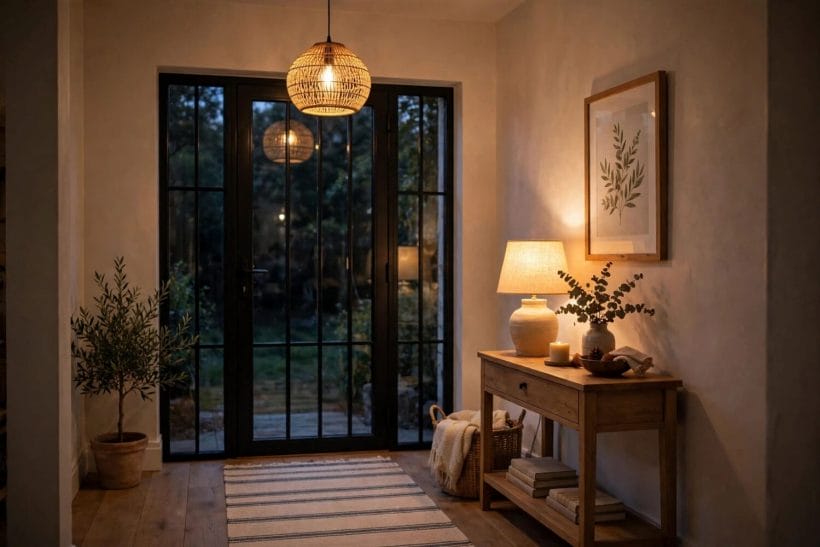
48. A Pendant Over the Landing
A pendant over the landing marks the entrance as a destination, drawing the eye upward and giving the glass door a glowing companion. Hang it high enough to clear the door swing, and choose a warm bulb so the light flatters faces and timber alike.
49. Wall Lights Flanking the Glass
Wall lights flanking the glass door inside the hall create symmetry and a soft wash of light across the walls. They suit halls without ceiling height for a pendant, and they make the entrance feel dressed and intentional from the moment guests step inside.
50. A Console Lamp for a Warm Pool
A console lamp creates a warm pool of light exactly where arrivals pause, softening the glass and the hall around it. A fabric shade diffuses the glow, while a lamp with a dimmer lets the entrance shift from bright welcome to gentle evening mood.
51. Dimmers for Every Mood
Dimmers on entrance lighting let one hall serve bright mornings, relaxed evenings and late-night returns. Bright light suits arrivals with parcels and shoes, while a low glow suits quiet evenings, and a dimmer fitted by a qualified electrician makes both possible.
52. Fairy Lights for Festive Evenings
Fairy lights wound around a porch plant or along a hall shelf bring festive sparkle to the glass entrance without any permanent change. Battery lights suit rented houses, and warm white suits the entrance better than coloured light, which can fight the hall colours.
53. A Lantern on the Porch
A lantern on the porch gives the glass door a traditional companion, glowing warmly for evening visitors and passers-by. Choose a lantern sheltered from wind, and keep its glass clean so the flame or bulb shines clearly through the entrance glass beyond.
54. Motion Lighting for Late Returns
Motion lighting on the porch welcomes late returns with light that appears exactly when needed, so keys are found and steps are seen. Position the sensor to cover the path and porch, and choose a warm, gentle glow rather than a harsh flood.
8. Colour, Texture and Seasonal Dressing
Colour and texture dress the glass entrance through the year, letting the hall change with the seasons while the door itself stays constant. Pale walls keep daylight generous, natural textures add warmth, and seasonal swaps of cushions, rugs and flowers keep the entrance feeling fresh.
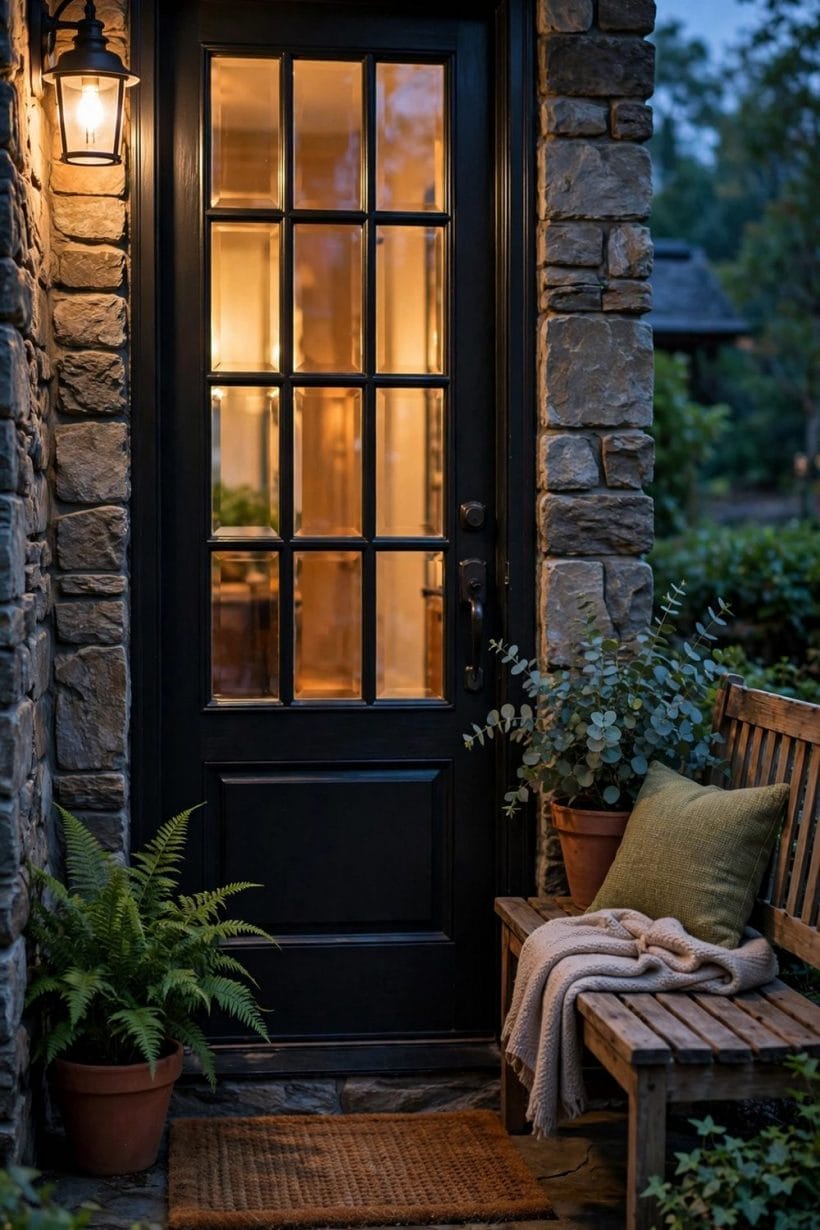
55. Pale Walls That Borrow the Light
Pale walls borrow daylight from the glass door and spread it through the hall, making the entrance feel larger than its measurements. Warm whites suit most houses, while a hint of colour in the pale tone can echo the door frame or the garden beyond.
56. Natural Textures for Warmth
Natural textures, such as woven baskets, woollen throws and timber benches, warm a glass entrance that might otherwise feel cool and hard. Layer textures rather than colours for depth, so the hall feels rich and tactile without becoming visually busy.
57. A Runner That Leads the Eye
A runner rug leads the eye from the glass door into the hall, defining the route while protecting the floor. Choose a washable runner in a pattern that hides dirt between cleans, and secure it firmly so it never slips underfoot on arrival.
58. Cushions That Change With Seasons
Cushions on the entrance bench change with the seasons, bringing spring greens, summer brights, autumn rusts and winter wools to the hall. Swapping cushion covers is a simple refresh, and it lets the entrance celebrate the year without repainting a single wall.
59. Fresh Flowers by the Glass
Fresh flowers by the glass door greet every arrival with scent and colour, glowing in daylight from the panes. A simple vase suits the entrance better than an elaborate arrangement, and seasonal stems keep the display feeling natural rather than staged.
60. Autumn Leaves and Harvest Touches
Autumn leaves and harvest touches, such as a bowl of conkers or a pumpkin by the porch, mark the season at the glass door. Keep decorations clear of the door swing and the path, so the entrance stays safe and welcoming for every visitor.
61. Winter Greenery and Warm Light
Winter greenery, with spruce, eucalyptus or holly arranged by the glass, brings life to the entrance when the garden rests. Pair greenery with warm lamplight, and the glass door glows like a lantern, welcoming guests in from the cold and dark.
9. Small Entryways and Narrow Halls
Small entryways benefit most from a glass door, because daylight is the one luxury that needs no floor space. Slim furniture, wall storage and mirrors multiply the sense of room, while pale colours and clear routes keep a narrow hall feeling generous rather than cramped.
Bulky kit that would swallow a small hall can live outside instead, and these sturdy outdoor storage ideas show how weatherproof cupboards keep bikes and tools close by without crowding the entrance.
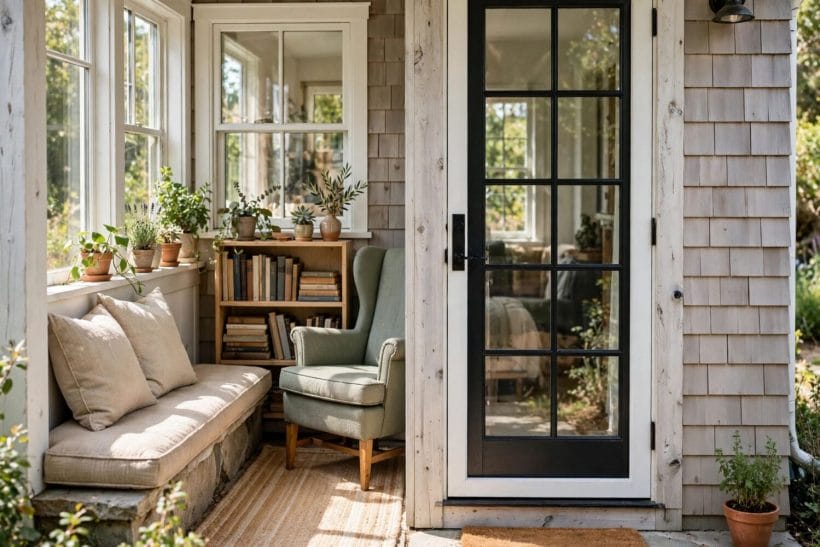
62. A Mirror That Doubles the Hall
A large mirror opposite or beside the glass door doubles the sense of space, reflecting daylight deep into a narrow hall. Keep the reflected view tidy, because a mirror doubles clutter as faithfully as it doubles light, and choose a plain frame for calm.
63. Floating Shelves Instead of Furniture
Floating shelves give a narrow hall storage and display without legs or bulk stealing floor space. A shelf for keys, a shelf for post and a shelf for a plant cover daily needs, while the floor beneath stays clear for feet and the door swing.
64. A Fold-Down Seat for Tiny Halls
A fold-down seat gives a tiny hall a place to sit for shoe changes, folding away flat against the wall when not needed. Fix it firmly and test the fold mechanism gently, so the seat feels safe and steady every time it is used.
65. Vertical Storage Up the Wall
Vertical storage up the wall uses height that narrow halls usually waste, with hooks, shelves and tall slim cabinets reaching upward. Keep everyday items at hand height and seasonal items higher, so the hall stays practical rather than merely tall.
66. A Glass Door With Slim Sidelights
A glass door with slim sidelights brings extra daylight into a narrow hall without widening the door itself. The sidelights stretch the glazed area gracefully, and frosted sidelights suit halls where privacy matters as much as light.
67. One Colour Throughout the Hall
One colour throughout a small hall, from walls to woodwork, removes visual breaks and makes the space feel larger. Vary the finish rather than the colour for interest, with matt walls, satin woodwork and a gloss accent on the door frame.
68. A Clear Floor Policy
A clear floor policy, where nothing lives on the hall floor except a rug and a mat, keeps a small entrance feeling spacious. Shoes go in a drawer, bags hang on hooks, and the glass door light falls uninterrupted across a clean, open floor.
10. Practical Details and Professional Help
The practical details of a glass entrance, from draughts and security to cleaning and upkeep, decide whether the door delights for years or disappoints within months. Planning these details early, and asking qualified professionals for glazing, sealing and structural work, protects both the house and the welcome.
69. Draught Sealing for Comfort
Draught sealing around a glass door keeps the hall comfortable in winter and quieter all year, so the entrance feels cosy rather than chilly. If draughts appear, ask a qualified professional to check seals and hinges, since a well-sealed door also protects floors and furniture from damp air.
70. Locks and Security for Glass Doors
Locks and security deserve care with a glass door, because the glazing changes how the door should be protected. Ask a qualified locksmith about locks suited to glazed doors, and pair good locks with porch lighting and clear sightlines so the entrance feels safe day and night.
71. Cleaning Glass Without Streaks
Cleaning glass without streaks keeps the entrance sparkling, with a soft cloth, warm water and a gentle cleaner suited to glass. Clean both sides of the panes, wipe frames dry afterwards, and clean on a cloudy day when possible, since strong sun dries cleaner too fast and leaves marks.
72. Protecting Floors From Wet Feet
Protecting floors from wet feet starts at the glass door, with a coarse mat outside, a softer mat inside and a tray for wet shoes. The layers catch dirt and water in stages, so hall floors stay beautiful, and rugs last far longer than they would unprotected.
73. Child and Pet Friendly Entrances
Child and pet friendly entrances plan for small hands and muddy paws, with hooks at child height, a washable rug and a basket for leads and toys. A stair gate or a door guard can suit houses with toddlers, keeping little ones safe while the glass door stays beautiful.
74. A Seasonal Entrance Checklist
A seasonal entrance checklist keeps the glass door at its best, with seals checked before winter, plants refreshed in spring, mats washed in summer and lights tested before dark autumn evenings. A short checklist on the hall cupboard door turns upkeep into a habit rather than a chore.
75. A Welcome That Grows With the House
A welcome that grows with the house leaves room for change, with furniture that can move, colours that can evolve and storage that can adapt as the household changes. The glass door stays constant, framing every new chapter with daylight, while the entrance around it grows gracefully.
Final Considerations
Choosing among seventy-five ideas is easier when you start with light, privacy and the route into the hall, then add storage, seating and colour around those essentials. The best entrances with glass front doors are not the grandest, but the ones where every detail earns its place, from a hook at the right height to a lamp that glows at dusk.
Walk your own entrance at different hours, notice where light falls and where clutter gathers, and let those observations choose your shortlist. With a clear route, a calm palette and professional help for glazing and sealing, your glass entrance will welcome you home beautifully for years to come.

0 Comments