
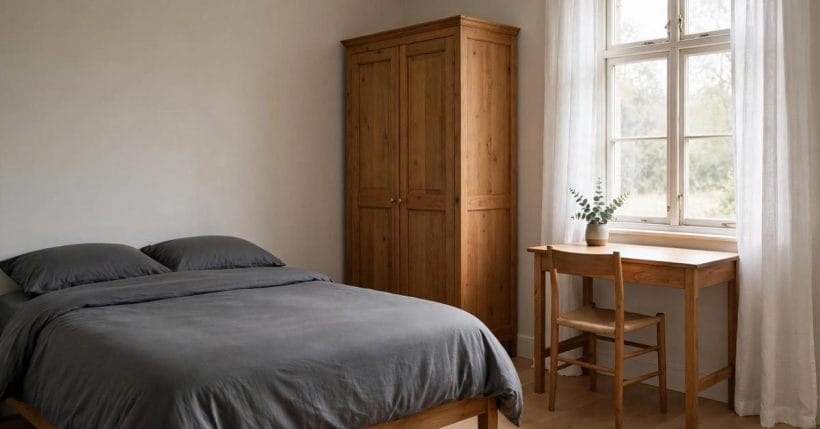
A bedroom planned for one person should feel calm, practical and easy to keep tidy. When every choice serves a single sleeper, the room stops fighting you and starts working for you.
This guide walks through layout, storage, colour, lighting and bedding in plain terms, so a guy bedroom can be planned with confidence and without clutter or fuss. You do not need a large room to get there, only a clear order of decisions.
1. Start With the Bed Position
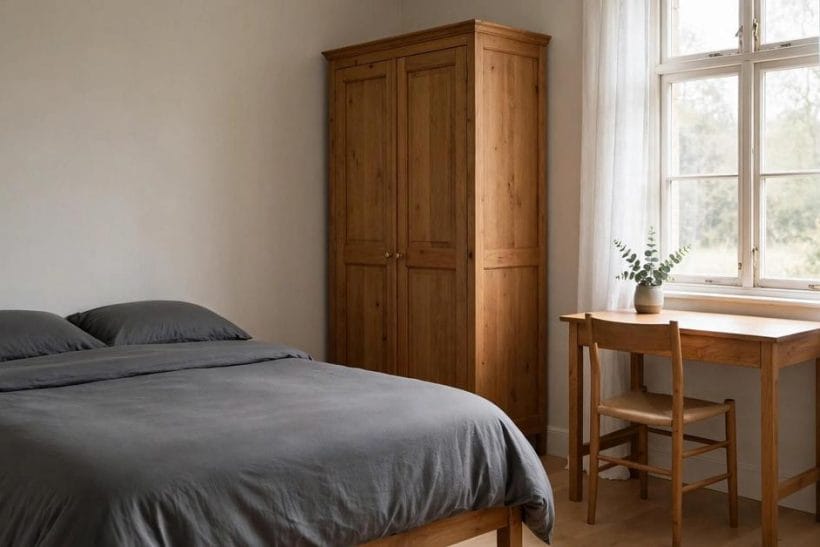
The bed is the largest piece in the room, so its position decides everything else. Place it where you can get in and out easily on the side you sleep on, and where the door can open without hitting it. A bed pushed against a wall can free floor space in a small room, while a bed with space on both sides feels more open in a larger one. Either way, the choice should follow how you actually use the room each day, not how a showroom arranges it.
Think about morning light as well. Some people like waking to daylight, while others prefer the bed away from the window so early sun does not disturb sleep. There is no single right answer here, only the answer that suits your routine. Test the position before committing to heavy furniture around it, because moving a bed later means moving everything else too. For broader small-room inspiration, see these tiny bedroom ideas and notice how the bed anchors each layout.
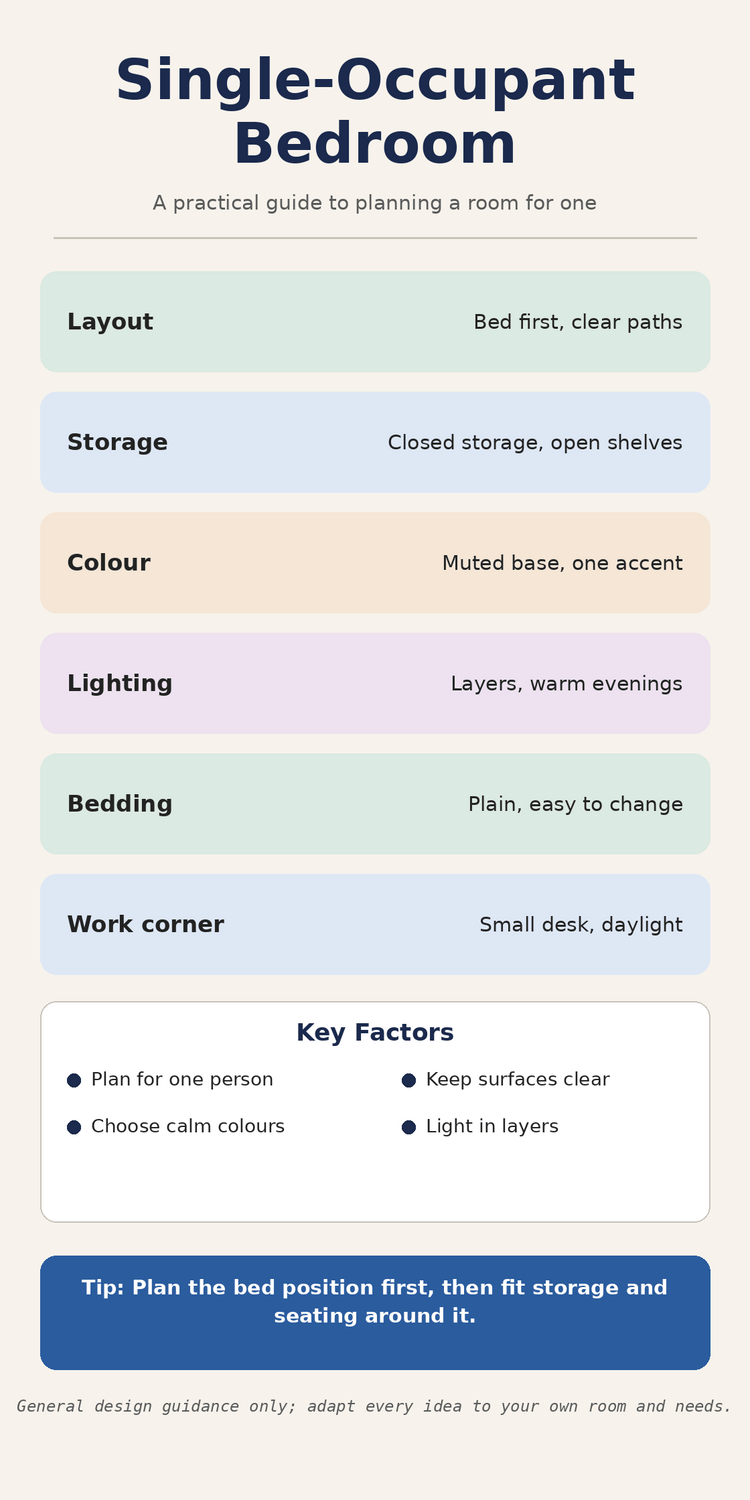
| Part of the room | What to settle first |
|---|---|
| Bed position | Easy access and a clear path to the door |
| Storage | Closed storage for clothes, open shelves for everyday items |
| Colour | A muted base with one restrained accent |
| Lighting | Layers for daytime, reading and winding down |
| Bedding | Plain, comfortable and easy to change |
2. Keep Clear Paths Around the Bed
A room feels larger when you can walk through it without sidestepping furniture. Leave a clear path from the door to the bed, and another to the wardrobe or the window if you open it often. Cluttered routes make even a generous room feel cramped, while a single clear walkway brings a sense of order that lasts.
Watch out for doors, drawers and wardrobe doors that swing into the path. A drawer that cannot open fully is storage you cannot really use, and a wardrobe door that blocks the walkway will annoy you daily. Check each opening before you settle the layout, and keep the floor near the bed free of bags, boxes and laundry piles. If the room also serves as a place to relax, the same clear-path thinking helps the seating area feel separate rather than squeezed in. These small living room ideas show how clear routes keep a compact space feeling open.
3. Storage for One Person
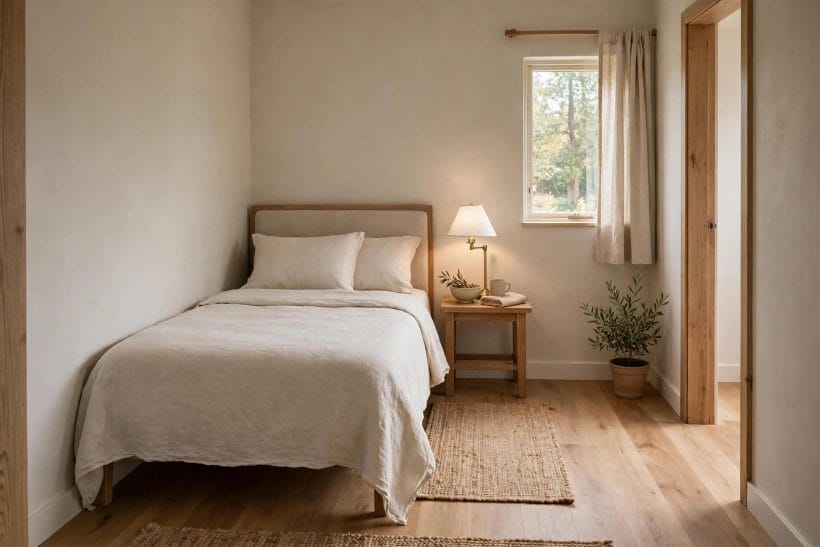
Planning storage for one person is simpler than planning for two, because everything in the room belongs to a single routine. Start by sorting what you own into daily items, weekly items and rarely used things. Daily items deserve the easiest reach, while rarely used things can live higher up or further away. This simple split stops the most-used clothes and gear from ending up in the hardest corner of the wardrobe.
One person still needs more storage than a single rail and a drawer or two, especially across seasons. Winter layers, spare bedding and bags all need a home, or they will migrate to chairs and the floor. Plan a place for each group before buying anything new, and measure the space you actually have rather than guessing. When every group has a spot, tidying becomes a short daily habit instead of a weekend project. For more storage thinking, browse these tiny house storage ideas for compact-room solutions that transfer well to a bedroom.
4. Wardrobes, Shelves and Boxes
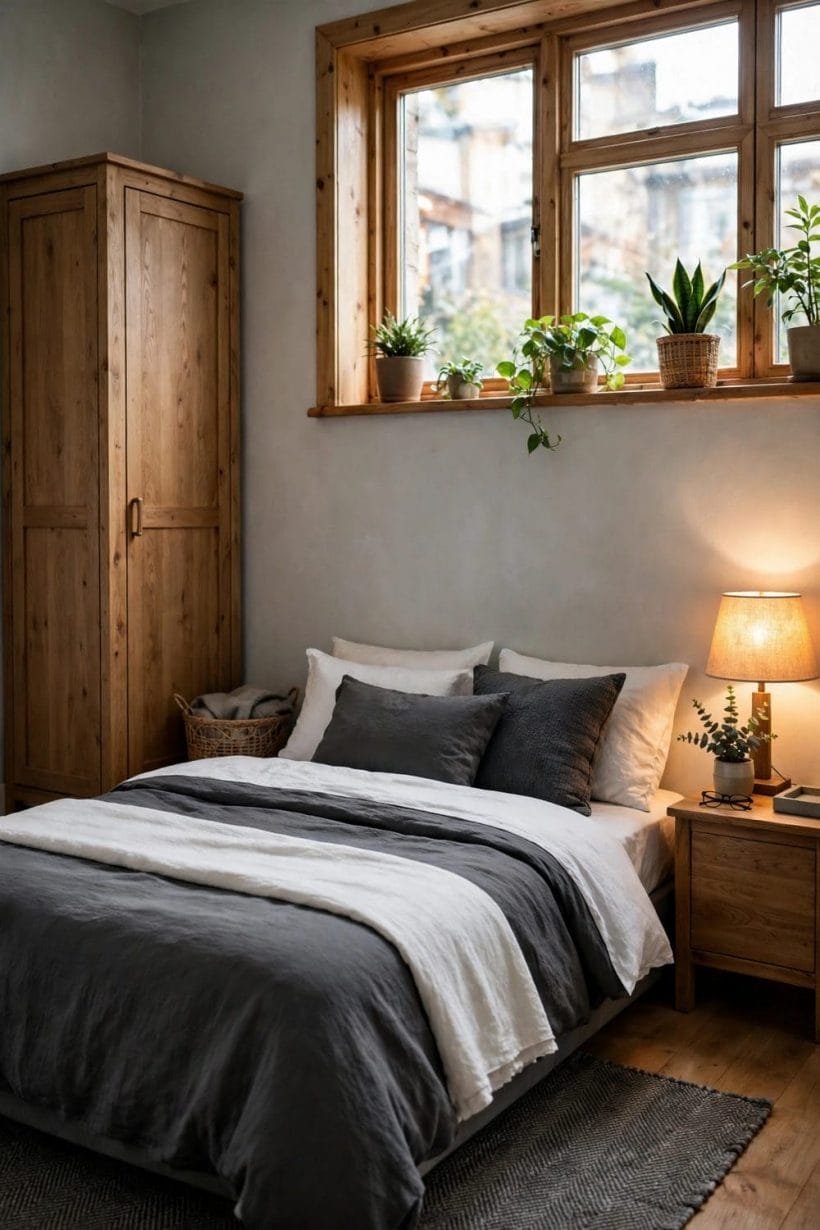
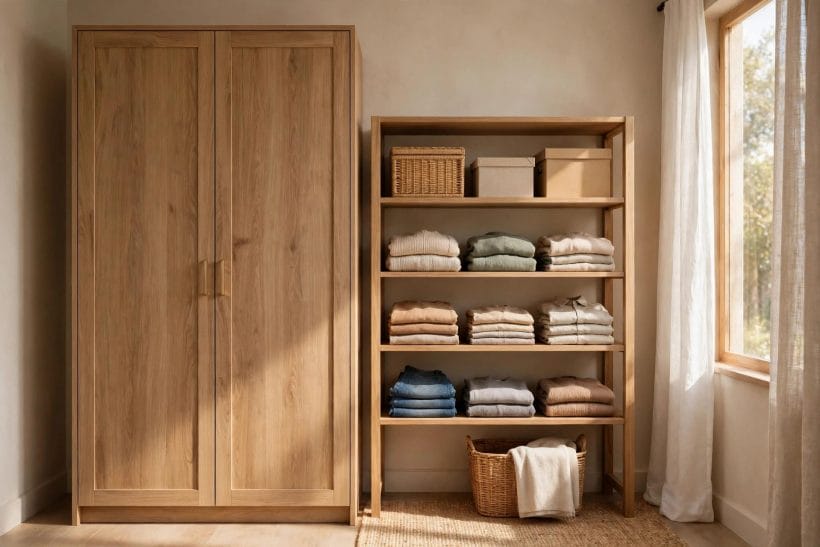
A wardrobe with closed doors keeps the room looking calm even when the inside is busy. Open shelving suits items you reach for every day, such as folded tops, gym gear or books, because you can see everything at a glance. The combination works well: closed storage hides visual noise, open shelves keep daily items fast to grab. Avoid filling every shelf to the brim, since a little breathing room makes it easier to find things and put them back.
Boxes and baskets earn their place by grouping small things that otherwise scatter. Use them for accessories, chargers, spare linens or hobby gear, and label them only if that helps you remember what is inside. A basket for laundry near the wardrobe also stops clean and worn clothes from mixing on chairs. Keep the top of the wardrobe for light, rarely used items, and keep heavy things low where they are safer to lift. These tiny house closet design ideas show how wardrobes and shelves can share a small room without crowding it.
5. Choose a Calm Colour Scheme
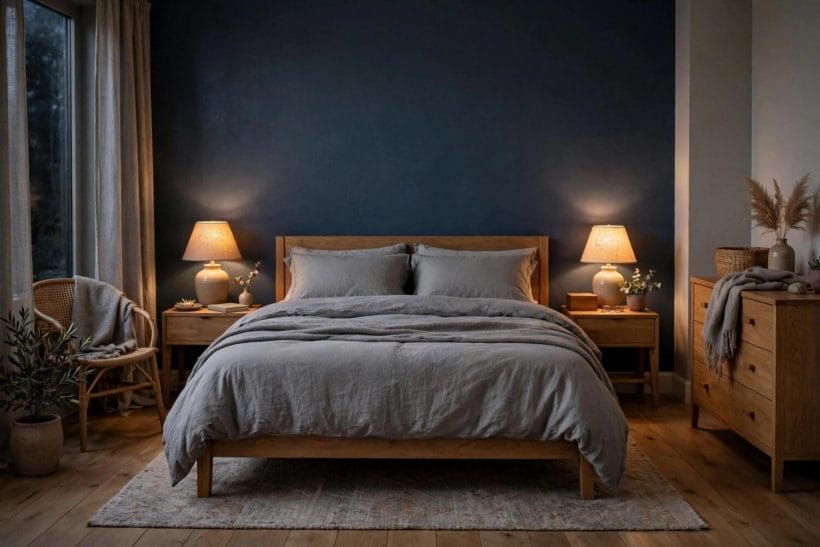
Colour sets the mood of the room more than any single object in it. Muted bases such as soft grey, warm white, sage or dusty blue tend to feel restful, and they make it easy to change the look later with bedding or art alone. A single accent colour, used sparingly on a throw, a cushion or one wall, adds character without making the room feel busy. Two or three strong colours competing at once usually do the opposite, pulling attention in every direction.
Test colours in the room itself before committing, because daylight and lamp light change how a shade reads. A colour that looks calm in a shop can feel cold or heavy at home under evening light. Paint a small patch or hold fabric samples against the wall at different times of day, and live with the choice for a few days if you can. Dark walls can work beautifully in a bedroom, but they suit rooms with good light and lighter bedding to balance them. For colour inspiration grounded in small homes, see these tiny house interior paint colors.
6. Layer the Lighting
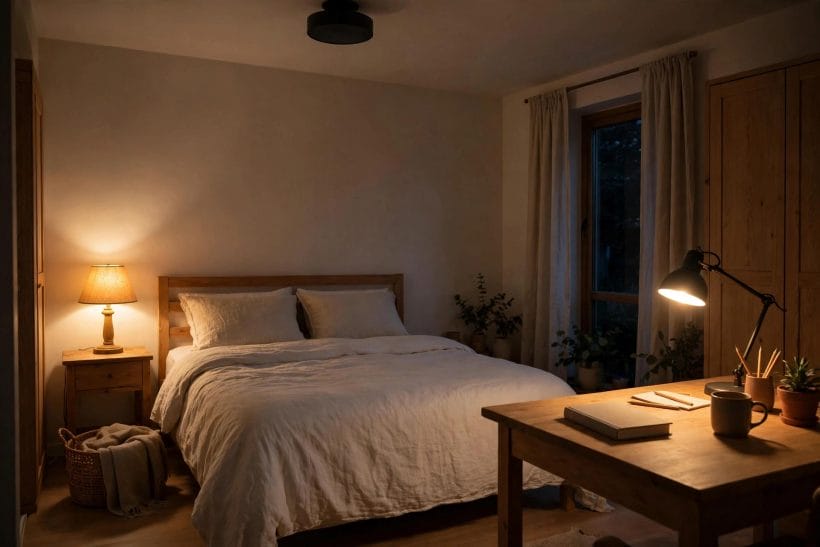
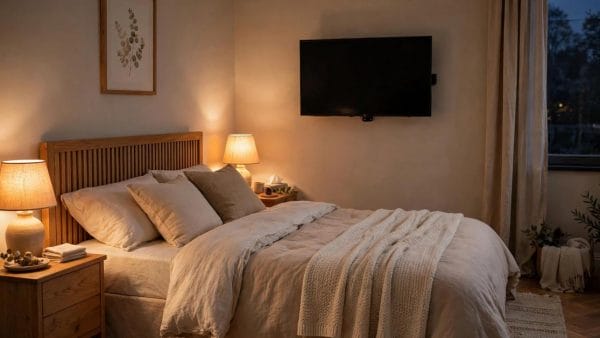
One ceiling light rarely suits every moment in a bedroom. Layered lighting means combining a general light for the whole room with smaller lights for specific jobs: a bedside lamp for reading, a desk lamp for work, and soft light for winding down in the evening. Each layer can be switched on or off as needed, so the room shifts from bright and practical to calm and dim without any redecorating.
Warm-toned light in the evening helps the room feel restful, while brighter, cooler daylight suits mornings and focused tasks. Keep bedside lighting within easy reach so you are not getting up to switch it off, and avoid placing a bright light directly behind a screen where it causes glare. If the room has one window, keep it as clear as practical during the day so natural light can do its work. Any electrical changes, such as adding new fittings or moving wiring, are work for a qualified professional rather than a do-it-yourself job. Good lighting also shapes the rooms next door, as these tiny living room ideas demonstrate with layered lamps and daylight.
7. Bedding That Is Easy to Live With
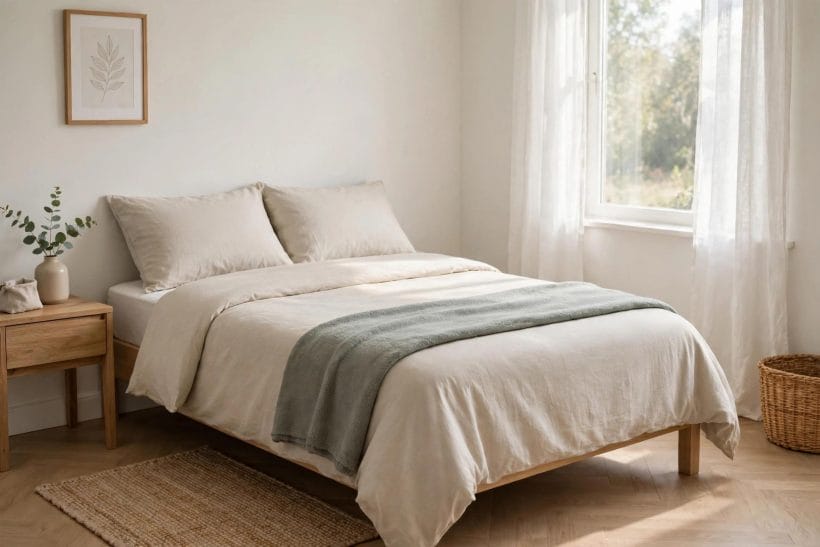
Bedding is the surface you see and touch every day, so it deserves more thought than an afterthought. Plain colours and simple textures are easier to match, easier to wash and less tiring to look at over time than loud patterns. Choose fabrics that feel comfortable against your skin and that you can launder without special care, because bedding you dread washing will stay on the bed too long.
Keep a spare set ready so changing the bed is a quick swap rather than a chore that waits for laundry day. A light throw at the foot of the bed adds warmth on cool nights and a finished look during the day, and it can be washed separately when needed. Pillows matter too: one or two that support your sleeping position beat a pile of decorative ones that end up on the floor each night. The goal is a bed that looks inviting and is genuinely easy to maintain, week after week.
Seasonal changes are worth planning for as well. A heavier cover for cold months and a lighter one for warm months can both live in the same storage spot if you swap them over rather than stacking both on the bed. Store the out-of-season set in a clean, dry place where it will not gather dust, and air it before it returns to use. This small routine keeps the bed comfortable all year without adding another pile to the room, and it means you are never caught out by the first cold night or the first warm one.
8. Make Room for Reading and Rest
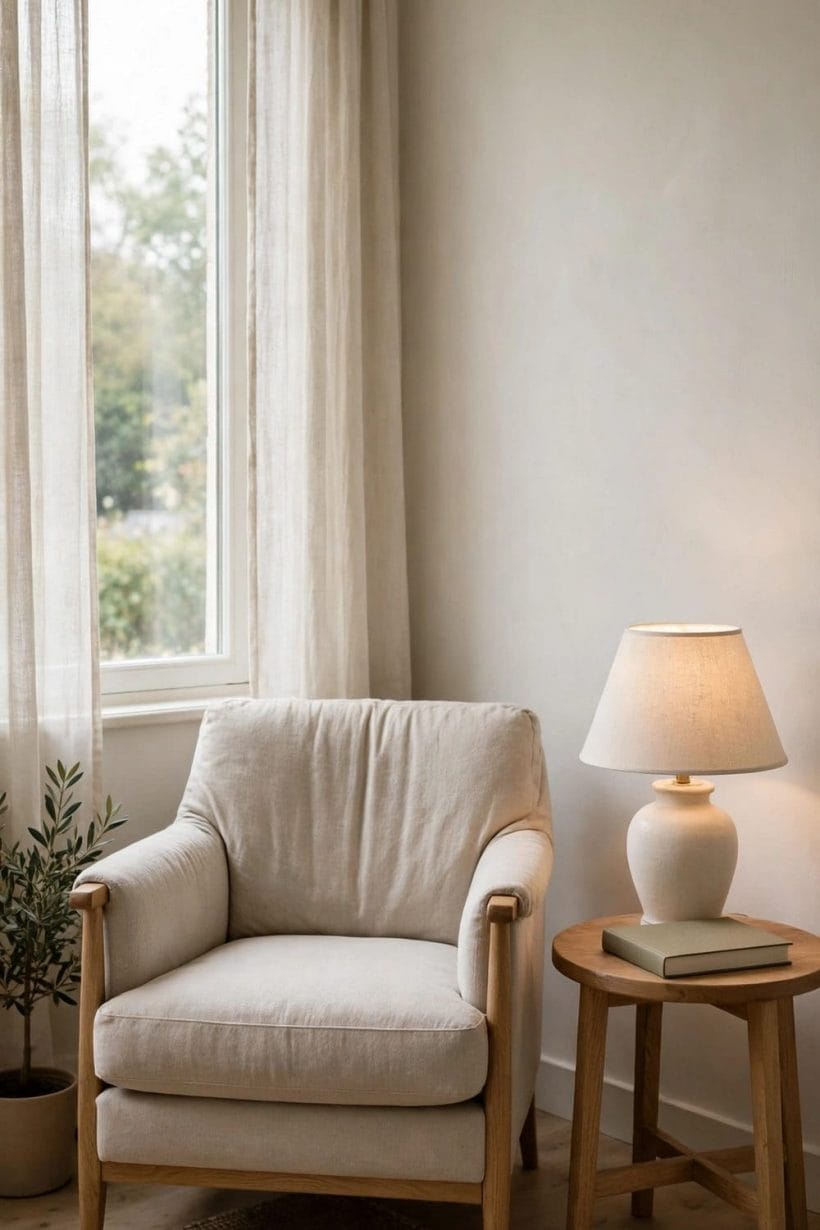
A bedroom planned for one person can still hold a quiet corner for reading or simply sitting. A comfortable chair near the window, a small side table and a lamp are enough to create a spot that feels separate from the bed without needing extra space. This corner gives the room a second use, so you are not always sitting on the bed for everything from reading to phone calls.
Keep the corner simple. A chair that is genuinely comfortable matters more than one that only looks good, and a side table should be large enough for a book and a drink but small enough not to block the path. If space is tight, a chair that can move easily lets the corner appear when you want it and disappear when you do not. The habit of sitting somewhere other than the bed also helps sleep, because the bed stays associated with rest rather than with every waking activity.
Personal touches belong in this corner more than anywhere else in the room. A framed print, a plant or a favourite book on the side table can make the space feel like yours without adding clutter, provided each item has a settled place. Resist the urge to fill the corner with ornaments, since a restful corner depends on breathing room. One or two meaningful pieces, kept tidy, will do far more for the feel of the room than a shelf crowded with things you no longer notice.
9. Fit a Small Work Corner
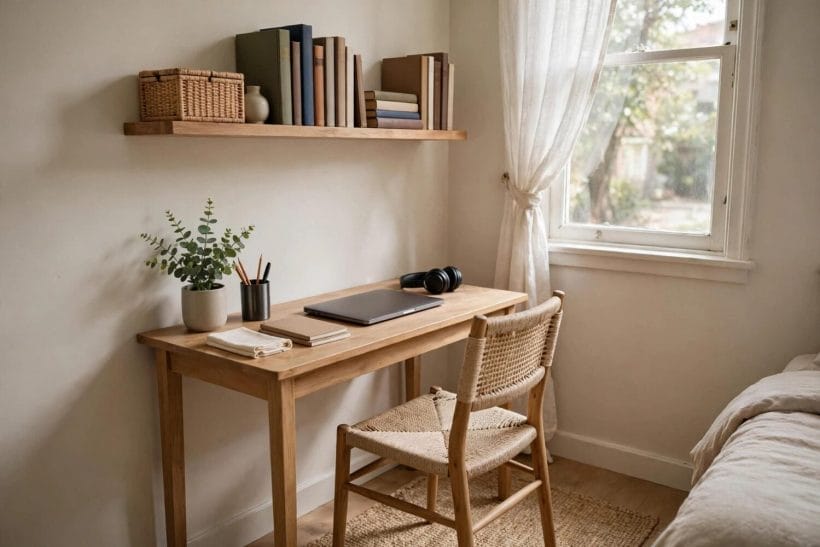
Many single bedrooms double as a place to work, study or handle paperwork, and a small desk can serve that role without taking over the room. Place the desk where daylight reaches it if possible, and keep it just large enough for the task at hand. A desk that sprawls invites clutter, while a compact one encourages you to clear it at the end of each session.
Storage near the desk matters as much as the desk itself. A shelf above or beside it holds books and supplies, while cables and chargers need a tidy route so they do not trail across the floor. A chair that supports a comfortable sitting posture makes longer sessions far easier, and it is worth choosing over a spare dining chair if the desk gets daily use. When work ends, closing the laptop and clearing the surface helps the room return to being a bedroom. If the bathroom sits beside the bedroom, planning both rooms together helps, and these tiny bathroom ideas show how compact adjoining spaces can stay practical.
10. Avoid the Usual Single-Room Mistakes
A few common mistakes undo otherwise good bedroom plans. The first is buying furniture before deciding the layout, which often leaves an oversized piece blocking a path or a door. The second is treating every flat surface as storage, so desks, chests and bedside tables disappear under piles. The third is copying a styled photograph wholesale, forgetting that photographs hide cables, laundry and daily clutter that real rooms must accommodate.
Another mistake is leaving no empty space at all. A room packed wall to wall can feel smaller than a room with one clear stretch of floor or wall, because the eye needs somewhere to rest. Finally, avoid planning only for today: seasons change, routines change and belongings grow, so leave a little spare capacity in storage and a little flexibility in the layout. A room that can absorb small changes without a full rearrangement will serve you far longer than one planned to the last inch.
It also helps to revisit the room a month after you finish it. By then you will know which drawer you never open, which chair gathers clothes and which lamp you actually switch on. Small adjustments at that point, such as moving a basket, swapping a lamp or clearing a shelf, often improve the room more than the original plan did. Treat the first arrangement as a draft rather than a final verdict, and let daily use shape the finishing touches.
Final Considerations
A well-planned single bedroom is not about a particular style or a long shopping list. It is about a bed in the right place, storage that matches one routine, calm colours, layered light and bedding that is easy to live with. Get those foundations right and the room will feel restful whether it is large or small, plain or richly decorated.
Start with the bed position, settle storage next, and add personal touches last, one at a time. Live with each change for a few days before adding the next, and keep anything that does not earn its place out of the room. Planned this way, a bedroom for one person becomes a place that supports good sleep, quiet mornings and easy days, which is exactly what a bedroom should do.


0 Comments